National Congress on School Transportation Writing Committees Seeking Input

The National Congress on School Transportation (NCST) is accepting change requests from any interested party on the National School Transportation Specifications and Procedures.

All change requests must be made on the NCST 2020 Change Request Form: The form and instructions are located on the NCST website. 

The deadline for submission of change requests is March 31, 2019.  All requests must be submitted by that date in accordance with the form instructions to allow the NCST Writing Committees time to review and properly research the proposals before the 2020 Congress.

Under the Congress’ procedures, the Writing Committee Chairs must notify all persons submitting change requests for the status of their respective requests following the committees’ deliberations and decisions.  This feedback to submitters must occur well prior to the on-site Congress.

The job of researching suggested changes to the National School Transportation Specifications and Procedures is performed by the NCST Writing Committees.  Questions about the NCST 2020 Change Request Form and submittals may be addressed to Patrick McManamon at patrick.mcmanamon@vermont.gov .

For information about Maine school transportation, please contact Pat Hinckley, Transportation and Facilities Administrator, at pat.hinckley@maine.org .
Resources to Help Schools Eliminate Browntail Moth Nests

The Maine Department of of Agriculture, Conservation, and Forestry has put together the resources and information below to help Maine schools eliminate Browntail Moth nests

Browntail caterpillars cause a severe poison ivy-like rash and can cause breathing problems in some people. If this insect is present on your school properties you should take action to destroy it now to protect the health of students, staff and visitors in the future. Unmanaged infestations can cause health risks for years because the caterpillars’ barbed and toxic hairs can remain in the environment for up to three years.

Browntail moth caterpillars overwinter in fist-sized silken nests on branch TIPS in oaks, birch, apples, cherries, crabapples and other hardwoods. Now is the time to remove these nests from trees on school grounds.

  • Clip webs BEFORE the caterpillars emerge in mid April
  • Burn them or soak them in a bucket of soapy water to kill the caterpillars inside
  • Don’t leave webs on the ground, the caterpillars will still emerge
  • Each web can have between 25-400 caterpillars inside so each web counts
  • If time or funding is an issue focus on trees with webs in high traffic areas

Browntail caterpillar webs can be found from the New Hampshire border to Deer Isle, and inland to Raymond, Turner, Rome, Smithfield, Burnham and Eddington. They are worst along the coast from Falmouth to Bristol and up the Kennebec River to Richmond. It has also been found in Belgrade, Burnham, Eddington, Liberty, Lincolnville, Turner and Whitefield. More information, a video showing how to clip the webs, a list of arborists willing to do prune webs and a list of licensed pesticide applicators can be found here: https://www.maine.gov/dacf/mfs/forest_health/invasive_threats/browntail_moth_info.htm

If you think you’ve found webs but aren’t sure, contact the Maine Forest Service at (207) 827-1813.

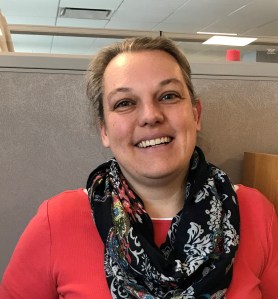
Employee of the Week: Sarah Adkins

Sarah Adkins, Student Assistance Coordinator, is the Maine Department of Education’s Employee of the Week. Get to know a little more about Sarah through this brief question and answer:

What are your roles with DOE?

I help schools and families in understanding Maine’s anti-bullying law; provide guidance to schools in regards to Student Behavior data collection – bullying, violent and harmful behavior, and restraint & seclusion; assist schools and parents in understanding Chapter 33 (Restraint and Seclusion); and support Maine’s school counselors in their role of providing academic interventions, social/emotional learning, and college and career readiness to students PreK-12th grade.

What do you like best about your job?

Interacting with parents, school leaders, and school counselors in finding ways to best support, help, and understand Maine’s students so that school is a safe, welcoming, and encouraging learning environment.

How or why did you decide on this career?

School is essential in providing not only relevant and meaningful academics but also experiential activities that develop well-rounded and happy children and adolescents.  I chose to have a career path in the field of education in which hard work and patience in needed in order to make sure all Maine kids are learning, that they are happy, and are provided opportunities to show and demonstrate their talents.  Maine kids are great and I am dedicated to the work in education that brings out the best in every Maine kid and those adults who work with them every single day.

What do you like to do outside of work for fun?

Skiing, kayaking, shopping at Goodwill, going on family adventures, camping, completing house projects, and attending sporting events for all four of my children

PRIORITY NOTICE: Maine Department of Education’s Position on School Mascots and Logos

Because our schools must provide safe, inclusive, and respectful learning environments, and because schools teach many lessons by example, DOE urges schools to refrain from using mascots and logos that depict Native American tribes, individuals, customs, or traditions. For information about the negative impact of using such mascots/logos:

https://www.apa.org/pi/oema/resources/indian-mascots

http://www.changethemascot.org/wp-content/uploads/2013/10/DrFriedmanReport.pdf

While we recognize that DOE does not have jurisdiction over local decisions like these, we encourage schools and communities to consider the impact of promoting symbols and stereotypes that marginalize individuals or groups of people.

The DOE is working to enhance our office of Student Supports with additional staff and resources to assist Maine schools and districts in the development and strengthening of practices that promote cultural competence and reduce bias and inequity.