Implementation of Master Contractual Agreement Delayed Until the 2027-2028 School Year

The Maine Department of Education (DOE) has reviewed feedback provided by the field during the second comment period for the revised master contractual agreement and determined that additional time is required before implementation. As such, the Maine DOE will continue to work with stakeholders from public and private schools to ensure the master contractual agreement is fully executed before the start of the 2027-2028 school year.

The Maine DOE initiated the process of instituting a master contractual agreement in order to satisfy the Individuals with Disabilities Education Act (IDEA) requirement that Maine DOE and school administrative units (SAUs) ensure that all students with disabilities who are placed by their SAUs in a private school to receive a free appropriate public education (FAPE) are given all of the rights and protections afforded to them by law. When placing a child in a private school, an SAU must ensure that the student has the same rights and procedural safeguards as a student served by a public agency or school.

The goal of the master contractual agreement is to ensure that all SAUs are compliant with the IDEA and meet existing Maine law, which requires that private schools seeking to provide special education programs enter into a master contractual agreement with the commissioner (M.R.S. Title 20-A, §7252-A).

In October 2025, the Maine DOE provided the draft of the master contractual agreement and sought feedback from stakeholders. After this initial 30-day comment period, the Maine DOE made significant revisions to the master contractual agreement and—based on a request from stakeholders—offered another 30-day comment period.

The comments provided during the second comment period reflected ongoing opposition to the master contractual agreement. If it were to have been implemented, private schools would have had until May 1, 2026, to sign the agreement, leaving SAUs little time to convene the IEP team meetings necessary to determine new placements in the event that a private school determined it would not sign.

In light of the updated timeline, the Maine DOE is holding an office hour to answer questions on Thursday, April 16, 2026, at 8 a.m. Please register for this session using this link.

The Maine DOE will continue to work closely with SAUs to ensure that the IDEA is satisfied and that students placed in private schools are given all of the rights and protections afforded to them by law. Information about the master contractual agreement can be found on the Maine DOE website.

Under the Hood and Ahead of the Curve: Sanford Student Turns Auto Shop Experience into Academic Credit

At 8 a.m. on a Tuesday morning, just as first period is starting at Sanford High School (SHS), senior Lucas Barrow is already under the hood of a car at Black Bear Automotive in Springvale. He’ll work until 10:30 a.m., drive to Sanford Regional Technical Center (SRTC) for class, and then head back to the shop until 5 p.m. On weekends, Barrow drives 45 minutes to work at VIP Tires & Service in Scarborough. As a second-year student in SRTC’s Automotive Technology program, Barrow has built a challenging schedule for himself, juggling two automotive jobs and balancing academics—but he is thriving.

Through SHS and SRTC’s Extended Learning Opportunities, Barrow has turned his Tuesday and Thursday shifts at Black Bear into academic credit. Additionally, he is gaining different learning opportunities through each of his jobs. At VIP, Barrow handles fundamentals: tires, oil changes, brake work, and wheel bearings. At Black Bear, where he has access to more specialized equipment, Barrow tackles radiators, engine work, and valve cover gaskets.

“I’m doing more risky jobs that make more money, [and provide] more benefit [to] the company,” Barrow said.

While Barrow explained that he enjoys suspension work, he said he is particularly drawn to engine repair.

“It’s more high risk. You can’t mess anything up or else it’s going to mess the car up,” Barrow said.

Barrow grew up working on cars with his stepfather, but he said the SRTC program has enhanced his knowledge considerably.

“We dive in really deep into the actual specifics of how machines work, how parts work in the car, how they all work together,” Barrow said. “Being able to put it in perspective of how the parts work to make the whole car work makes it easier to diagnose stuff.”

Barrow’s connection to Black Bear occurred through the industry relationships of his SRTC instructor, Rich Couture. The owner of Black Bear serves of the SRTC program’s advisory committee, meeting several times a year to discuss industry needs.

Couture said Barrow represents the kind of student who makes teaching rewarding. The

“This group of kids that I have is exceptional. I have some real go-getters in this class,” Couture said. “Lucas came in here with some automotive knowledge because he has always tinkered around with cars. That made it a little easier for him to make that transition to working professionally.”

To qualify for an internship, SHS/SRTC students must maintain an 80% average and demonstrate solid skill sets. Couture currently has four students in similar cooperative education placements, including one at Weirs GMC in Arundel, who has become the dealership’s sole Fisher plow technician.

“There’s a big need for new technicians,” Couture said, noting that employers value more than just technical knowledge. “A lot of it has to do with soft skills: showing up on time, staying off your phone, being a team player, being willing to learn.”

As graduation approaches, Barrow isn’t entirely sure what’s next, but right now, Black Bear feels like the right fit.

“I’m learning a lot but also doing a lot and making money,” Barrow said.

This story idea was submitted by the Sanford School Department. To submit a good news story to the Maine DOE, please fill out the good news submission form.

Applications Open for 2026 Maine DOE Literacy and Numeracy Summer Institute

The Maine Department of Education (DOE) Office of Teaching and Learning invites educators from across the state to apply for the 2026 Literacy and Numeracy Summer Institute, entitled “The Science of Learning: Building Literate & Numerate Minds.” This three-day, in-person professional learning experience will take place June 29–July 1 at the College of the Atlantic (COA) in Bar Harbor. Applications close May 6.

Designed for public school teachers, instructional coaches, administrators, and specialists across all grade levels and content areas, this immersive institute brings together educators committed to strengthening interdisciplinary approaches to literacy and numeracy. Participants will engage in deep content learning, collaborative inquiry, and the design of practical, classroom-ready instructional experiences.

Participants will learn within and from local environments, including community gardens, the iconic Beatrix Farrand Gardens, the Dorr Museum of Natural History, Allied Whale, COA’s greenhouses and learning labs, the intertidal zone, and the broader Bar Harbor community. Through these experiences, educators will explore high-impact instructional practices, examine ways to connect content to students’ lives and communities, and contribute to a statewide effort to advance meaningful, integrated learning across Maine classrooms.

Expectations of Participants

Educators selected for the institute will:

  • Attend the full three-day, in-person experience
  • Engage in keynote sessions and interactive workshops led by experts in literacy and numeracy education
  • Collaborate with peers to deepen their understanding of evidence-informed, interdisciplinary literacy and numeracy practices

Apply Now

Applications are open until May 6 at 5:00 p.m. All applicants will be notified by Thursday, May 14. Space is limited, and the Maine DOE will prioritize a cohort representing a diverse range of grade levels, geographic regions, and content areas across the state.

Please use this link to apply.

For more information or questions, please contact Interdisciplinary Instruction Specialist Heather Martin at heather.martin@maine.gov.

Title II funds received from the U.S. Department of Education (ED) support the implementation of this project. The project has an award totaling 156,494.00, of which 52% is federally funded and directly attributed to project implementation. The contents are those of the author(s) and do not necessarily represent the official views of, nor an endorsement by, ED or the U.S. government.

Building Confidence and Community: Oceanside Middle School’s Alternative Education Program

(Pictured: Oceanside Middle School students explore the river during their visit to Camden to observe a dam removal project.)

At Oceanside Middle School in RSU 13, a small alternative education program is helping students rediscover their potential by reconnecting them to learning and their community. Serving the communities of Owls Head, Cushing, Rockland, Thomaston, and South Thomaston, this program gives students in grades 6-8 the tools and confidence to thrive both inside and outside of the classroom through hands-on projects, supportive relationships, and real-world experiences.

For the past two years, Ryan Verill has led the program, guiding students through a model focused on relationships, hands-on learning, and meaningful connections to the local community. While the program has existed in various forms for many years, Verill has worked to shift it away from a behavior-focused model toward a learning environment where students build relationships with peers and teachers, develop agency in their education, and grow in confidence as learners.

“Many students come into the program feeling like school isn’t for them,” Verill explained. “We work to help them see that they are capable, that they are smart, and that learning can be meaningful.”

Hands-On Learning

At the heart of the Oceanside Middle School alternative education program is a commitment to relationship building. Small class sizes and flexible schedules allow Verill and Lucas Brower, an educational technician working with students in this program, to meet students where they are, respond to their needs in real time, and design learning experiences around students’ interests.


Verill is intentional about bringing students’ interests and learning experiences to life while aligning his curriculum with academic standards and the same grade promotion expectations as Oceanside Middle School. One way he does this is by ensuring students have access to a variety of hands-on tools that support engagement and creativity.

Technology is woven throughout the classroom, including coding kits, robotics sets, and 3D printers. These tools help students learn not only how to use digital resources but also how to use them responsibly.

“We talk a lot about AI and technology as tools,” Verill said. “We want to make sure students know how to use these resources thoughtfully and appropriately.”

Interdisciplinary projects are another key part of the program. Verill often connects literacy, history, and social issues to deepen student engagement. For example, students read books such as When Stars Are Scattered and Hidden Figures, exploring themes of resilience, identity, and leadership. They demonstrate their understanding through creative projects such as visual displays, posters, and timelines that connect the stories to their own experiences while also exploring perspectives beyond their small, rural coastal community.

Because the program serves a small group of students, Verill can incorporate field-based learning that brings academic concepts to life. Students have participated in Wabanaki Water Studies through the Maine Department of Education’s (DOE) MOOSE (Maine Online Open-Source Education) platform and visited Camden to observe a dam removal project. Students explored how restoring river systems impacts ecosystems and fish populations. Those who were once disengaged and not attending school are now showing up and ready to learn because of the experiential, interdisciplinary methods woven into this program.

Community Building

Community engagement is another defining feature of the Oceanside Middle School alternative education program. Students regularly walk into town to visit local businesses, purchase ingredients for cooking projects, and interact with community members. These experiences help students build positive relationships and reshape how they see themselves within their community—and how the community sees them.

Student participate in relationship building activities during their field trip to their local community.
Students participate in relationship-building activities during their field trip to their local community.

One of the program’s most meaningful traditions is preparing and serving meals for seniors at the town hall each month. Students cook the food themselves and stay to share the meal and play games with community members.

Students also help in the school cafeteria by packing lunches and supporting food preparation during early-release days, allowing them to stay connected to their school environment. 

“These experiences help students feel valued and connected,” Verill said. “Many of them haven’t always felt successful in school spaces. When they see that people in the community recognize their effort and appreciate their work, it makes a difference.”

Lucas Brower, an educational technician, and student have some fun after a field trip into the community.
Lucas Brower, an educational technician, and a student have some fun after a field trip into the community.

Preparing Students for the Future

With consistent support, humor, and trauma-informed practices, students in the Oceanside Middle School alternative education program are gradually rebuilding trust in their school and developing stronger self-awareness. Staff often see growth when students begin reflecting on their own behavior and taking responsibility for their choices.

“Sometimes students come to us with multiple school suspensions or a history of struggling in traditional classrooms,” Verill said. “When they start recognizing their own progress and advocating for themselves, that’s when we know the work is paying off.”

As students prepare for the transition to high school, this program helps them explore future pathways, rebuild their confidence, strengthen their connection to the community, and regain their ability to access learning. For many students, the alternative education program provides something they may not have experienced before: a sense of belonging. Students are rediscovering their potential and showing them that school can be a place where they thrive.

This story was written in collaboration with Oceanside Middle School, RSU 13, as part of an ongoing series to highlight alternative education programs across Maine. To submit a good news story to the Maine DOE, please fill out the good news submission form.

Professional Learning Opportunity: Crisis Management for School-Based Incidents

The Maine Department of Education (DOE) Maine School Safety Center (MSSC) is partnering with the Rural Domestic Preparedness Consortium (RDPC) to bring free incident response training to Maine schools.

“Crisis Management for School-Based Incidents: Partnering Rural Law Enforcement, First Responders, and Local School Systems” is an eight-hour Department of Homeland Security (DHS) and Federal Emergency Management Agency (FEMA) certified course that is designed to educate rural law enforcement personnel as well as school administrators and staff on the elements that would allow for an effective response to school-based emergencies. This course covers how affected parties collaborate on planning, preparing, communicating, responding, and recovering from a school-based incident.

The course will be offered three times in different locations across Maine. Registration is required through the RDPC website; links are provided below. Please register by midnight on the registration deadline listed for each course. Each in-person course runs from 8 a.m. to 5 p.m.

Please note: A FEMA student identification number is required for registration of these courses. You may register for your FEMA student identification number by visiting the FEMA website.

Course DateLocationRegistration DeadlineSponsoring Agency AddressRegister
May 11, 2026Caribou (PDF flyer)April 27, 2026Caribou High School
Performing Arts Center
308 Sweden Street, Caribou, ME 04736
Register.
May 13, 2026Augusta (PDF flyer)April 29, 2026University of Maine at Augusta
Classroom Capital Center 46 University Drive, Augusta, ME 04330
Register.
May 15, 2026Alfred (PDF flyer)May 1, 2026York County Regional Training Center Room 201 79 First County Way, Alfred, ME 04002Register.

For more information, please contact the Maine School Safety Center.

ATOMIM Conference Gathers Educators from Across Maine to Advance Mathematics Learning

On March 24, 2026, an Association of Teachers of Mathematics in Maine (ATOMIM) Conference convened more than 230 educators, instructional leaders, and partners for a full-day professional learning experience centered on the theme, “Developing Mathematical Reasoning for All: Ensuring Everyone Is Counted In.” Supported by partners including Imagine Learning, Texas Instruments, McGraw Hill, and the Maine Department of Education (DOE), the conference showcased a comprehensive program designed to translate research into classroom practice while advancing a more equitable mathematics learning ecosystem.

The conference theme was woven throughout every session, reinforcing that mathematical reasoning is not reserved for a subset of students but is a critical skill for all learners. Presenters consistently focused on removing barriers to participation, addressing math anxiety, and building confidence and identity in mathematics.

Opening keynote speaker Vanessa Vakharia set the tone by challenging traditional definitions of success in math education and stating, “There’s no such thing as ‘not a math person.’” Her message—reframing failure as a necessary part of learning—resonated across sessions that followed, many of which addressed math trauma, student mindset, and inclusive teaching strategies. Vakharia further emphasized that, “Success and failure are not mutually exclusive.I In an inclusive classroom, we must have both working together.”


Across three session blocks, attendees engaged in more than 20 breakout sessions spanning grade levels pre-K–12 and beyond. Topics reflected a balance of foundational skill-building and innovative approaches, including strengthening number sense and multiplicative reasoning in early grades; using games, models, and hands-on tools to deepen conceptual understanding; applying algebra and data science to real-world contexts such as energy and community issues; and integrating technology, AI, and coding to make mathematics interactive and relevant.

Sessions such as “Using Culture and Identity to Teach Mathematics in the Age of AI” and “Data-Rich Math Routines” highlighted how culturally responsive teaching and real-world data can make mathematics more meaningful and accessible—key components of broadening participation in STEM (science, technology, engineering, and mathematics) fields.

A central throughline of the conference was equity. Many sessions focused on differentiation strategies, multilingual learner support, and inclusive instructional frameworks such as Universal Design for Learning (UDL). Educators explored how to redesign lessons, assessments, and classroom routines to ensure all students can engage in rigorous mathematical thinking. Workshops on math therapy, rubric design, and brain-based learning provided actionable strategies to support diverse learners, reinforcing that equity is achieved not through simplification but through intentional, inclusive design.

Beyond content, the conference highlighted the importance of student identity and belonging in mathematics. Sessions explored how storytelling, discussion routines such as “Notice and Wonder,” and collaborative problem solving can help students see themselves as capable mathematicians. Interactive formats—ranging from hands-on games to panel discussions—encouraged participants to actively engage, reflect, and share practices. This approach fostered a strong sense of professional community and reinforced the idea that improving math education requires collective effort.

Several sessions addressed the evolving role of mathematics in preparing students for college, careers, and civic life. Innovative course pathways, such as financial algebra and career-focused math programs, were presented as alternatives to traditional sequences, helping align instruction with workforce needs. These discussions underscored the importance of equipping students with not only procedural skills but also the reasoning, problem-solving, and analytical abilities necessary for success in STEM-related fields.

Reflecting on the experience, one participant shared, “I enjoyed learning about the numeracy playbook and understanding how it will work. It was especially valuable to interact with educators from across the state and learn what they are doing, as well as ways I can change up my math teaching.”

The 2026 ATOMIM Conference demonstrated how a focused, theme-driven convening can advance both instructional practice and broader educational goals. With more than 230 participants engaged in deep learning and collaboration, the event highlighted a shared commitment to ensuring that every student has access to meaningful, high-quality mathematics education.

To learn more about the Association of Teachers of Mathematics in Maine (ATOMIM) please visit their website.

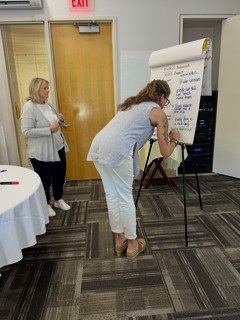
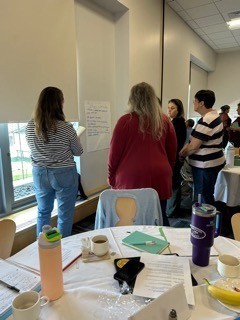
Maine DOE Office of Teaching and Learning Brings Choice-Driven Professional Learning to AOS 96

“The roads go both ways in Machias,” AOS 96 Superintendent Nicole Case said to a crowd of more than 200 educators as she welcomed them to Rose M. Gaffney Elementary School for a day of professional learning facilitated by the Maine Department of Education (DOE) Office of Teaching and Learning.

Educators from across the AOS, including from Jonesboro Elementary School, Rose M. Gaffney Elementary School (Machias), Machias Memorial High School, Elm Street Elementary School (East Machias), Whiting Village School, Bay Ridge Elementary School (Cutler), and Fort O’Brien School (Machiasport), came together for a learning experience grounded in a key idea: Professional learning is most impactful when educators have meaningful choice.

“It is so important for our teaching staff, teachers, and techs to be able to interact and learn from members of the Maine DOE,” Case said. “To truly improve our craft, we need opportunities to hear and see what is happening in education beyond our district, while also connecting and collaborating with our peers.”


The workshop featured sessions led by members of the Maine DOE Office of Teaching and Learning, Early Learning team, Interdisciplinary Instruction team, and MOOSE (Maine Online Open-Source Education) platform team. Throughout the day (and previous afternoon), educators selected from a range of options aligned to their roles, grade levels, and students. This choice-driven structure created space for meaningful collaboration and deep engagement with learning connected to play-based, literacy, numeracy, and inclusive instructional practices.

During the sessions, participants explored how literacy and numeracy can be strengthened through integrated, real-world learning experiences. Teachers examined how historical and geographic data can be used to design maps and models that support mathematical reasoning, while also considering how civic learning opportunities, such as analyzing primary source documents, can deepen analytical reading and evidence-based thinking. Other sessions focused on inquiry and purposeful questioning as tools to build student curiosity, strengthen comprehension, and foster ownership of learning.

Educators also explored the use of multimodal texts, including graphic novels and student-created visual storytelling, to support vocabulary development, inference, fluency, and comprehension across content areas. Hands-on numeracy learning highlighted how manipulatives, collaborative problem-solving, and mathematical discourse can build conceptual understanding and increase student confidence.

Sessions on Universal Design for Learning emphasized the importance of proactively planning for learner variability to create more equitable and accessible learning environments. Educators worked together to identify practical strategies for strengthening student agency while aligning instruction with clear literacy and numeracy goals.

Additional sessions explored how dispositions such as curiosity, persistence, and flexibility can be intentionally nurtured through authentic instruction. Participants reflected on how these habits of mind are already developing in their classrooms and discussed ways to strengthen them to support deeper engagement and a positive school culture.

By centering educator choice, the Maine DOE and AOS 96 created a professional learning experience that supported collaboration, practical application, and forward-looking instructional design. This shared commitment to strengthening literacy and numeracy through responsive, engaging learning continues to support educators across AOS 96 as they create meaningful opportunities for all students.

For more information on how to bring the Maine DOE Interdisciplinary Instruction team to your district-wide professional learning day, please contact Kathy Bertini, Maine DOE Interdisciplinary Instruction Coordinator, at Kathy.Bertini@maine.gov.

Celebrating Maine’s Future: Public Invited to Experience the Power of Extended Learning Opportunities

Educators, students, Maine Department of Education (DOE) community and agency partners, and members of the public are invited to the Hall of Flags at the State House in Augusta on April 30, 2026, from 1 to 4 p.m. for the Extended Learning Opportunities (ELO) showcase of student success, innovation, and partnership.

This event will highlight the transformative impact of ELOs on schools and communities statewide. Throughout Maine, ELOs are opening doors for students and bringing learning to life through hands-on, work-based learning and career exploration. These opportunities not only help students discover their passions and build essential skills but also connect them with local employers and career pathways in meaningful and lasting ways.

Attendees will have the chance to meet students and educators from schools including Gorham High School, Brewer High School, Noble High School, Maine Arts Academy, Telstar High School, and Brunswick High School, and hear firsthand how ELOs are shaping confidence, purpose, and possibility for Maine’s young people.

A featured program at 1:30 p.m. will include remarks from representatives of the Maine DOE, the Maine Department of Economic and Community Development, and students, who will share highlights of their ELO programs. There will be opportunity for students to take statehouse tours and participate in a mock public hearing.

For more information, please visit the Maine DOE Extended Learning Opportunities webpage or contact Lana Sawyer, Maine DOE Extended Learning Coordinator, at lana.sawyer@maine.gov. Registration for the event can be found here: Event Calendar | Maine Department of Education.

Maine Celebrates the Transformative Impact of Adult Education at State House Event

On Thursday, April 2, 2026, the Maine Department of Education (DOE), in collaboration with the Maine Adult Education Association, hosted a celebration of adult education in the Hall of Flags at the Maine State House. The event brought together educators, learners, state leaders, and partners from across Maine to highlight the powerful impact adult education has on individuals, communities, and the state’s economy.

Representatives from Maine’s nine adult education regional hubs, Maine Department of Labor (DOL) Commissioner Laura Fortman, Maine DOE Associate Commissioner of Public Education Megan Welter, members of the Maine DOE Adult Education Team, and members of the Maine Adult Education Association gathered from 8 a.m. to noon to share stories, data, and firsthand experiences that demonstrate the value of adult education.


During the 2024-2025 academic year, more than 12,400 adults in Maine participated in adult basic education, high school completion, college preparation, and workforce training programs offered through 65 adult education programs statewide. In addition, more than 3,000 workforce certifications were awarded in high-demand fields such as healthcare, manufacturing, and commercial driving—representing a 15 percent increase over the previous year.

The event showcased how these programs help adult learners build foundational and occupational skills, opening doors to new opportunities and strengthening Maine’s workforce.

“In Maine, it’s estimated that every dollar invested in adult education returns approximately four to seven dollars to the state economy through increased wages, higher tax revenue, and reduced reliance on public assistance,” Maine DOE State Director of Adult Education Megan Dichter said, highlighting the broader economic impact of these investments. “It’s not theoretical. That’s driven by real outcomes. Adult education contributes to more Mainers entering and staying in the workforce.”


At the event, Maine DOL Commissioner Laura Fortman emphasized the importance of collaboration across sectors.

“This is a system, and it does take all of us working together. Adult education is not simply about classes. It is a vital workforce pipeline. It connects education to employers and learning to real career opportunities in every corner of Maine’s economy, ” Fortman said.

Maine DOE Associate Commissioner of Public Education Megan Welter also spoke at the event, highlighting the vital role adult education plays within Maine’s broader education and workforce system.

“We’re getting to showcase the impact that adult education has on our state,” Welter said. “Adult learners are able to build their foundational and occupational skills…helping them advance in their work, support their families, and participate more fully in their communities.”

Welter also underscored the system’s importance and connectivity, explaining that “adult education is not a separate system…It is an integrated part of Maine’s education and workforce ecosystem,” creating clear pathways for learners to achieve their goals.

At the heart of the event were the voices of adult learners, whose stories brought the impact of these programs to life.

Questia Kabemba, a student at Lewiston Adult Education, shared a powerful sentiment about her journey:

“I stand here before you for reflection. I want you not just to remember my name, but I want you to remember what happens when opportunity meets someone who is ready to receive it.”


She described the welcoming and empowering environment at Lewiston Adult Education.

“At Lewiston Adult Education, I found more than just a building. I found a place where people like me were not defined by where we came from but rather where we could go,” Kabemba said. “We were not judged. Rather, we were given opportunity. We were welcomed with our accents, with our cultures, with our stories, and with our unfinished journeys.”

Kabemba added the opportunities at Lewiston Adult Education were life-changing.

“These are not just a list of accomplishments. These are transformations,” Kabemba said.

Brian O’Donnell, a student at Oxford Hills/Nezinscot Adult Education, shared how adult education continues to support learners at every stage of life.


“I have been employed in the construction industry for more than 50 years. I began my career in the plumbing trade and have held the master plumber’s license for 42 years. I believe the heat pump and solar panel technology training is a true asset to expand my knowledge and expertise to actively work to incorporate green technology to my resume,” O’Donnell said.

He also commented on the quality of instruction and hands-on learning: “The course was extremely instructive in introducing people unfamiliar as well as trained people…in construction safety, basic electrical knowledge, photovoltaic solar panel theory and installation, as well as heat pump theory and installation.”

O’Donnell expressed his appreciation for the accessibility of the program.

“The opportunity to access this course through a partnership of a federal government and state government grant was truly appreciated by all participants who attended the program,” O’Donnell said.

Together, these stories and perspectives underscore the critical role adult education plays in Maine—empowering individuals, strengthening families, supporting employers, and driving economic growth. As highlighted throughout the event, adult education is not only transforming lives but also building a stronger, more resilient Maine for the future.

Maine DOE Hosts Successful Regional Farmer-School Matchmaking Event in Bangor

On March 13, 2026, at the James F. Doughty School in Bangor, the Maine Department of Education (DOE) Child Nutrition team hosted an interactive “speed-meeting” event, designed to help school nutrition programs connect with local producers and distributors. Organized by Maine DOE Regional Local Foods Project coordinators Martha Poliquin (manager), Roxanne Bruce (Aroostook and Northern Washington Counties), Sandy Fortin (Hancock and Southern Washington Counties), and Amanda Junkins (Penquis, Somerset, and Waldo counties), the gathering was intended to help schools gain strong community partnerships and resources in their areas. This was the first event of its kind in the Bangor region.

The afternoon kicked off with a panel discussion of school nutrition directors, regional Local Foods Project coordinators, and representatives from the Maine Coast Fishermen’s Association, FarmDrop, and Native Maine Produce. Topics of conversation included success stories, challenges, and explanations of the “why” behind buying local.

Panelists were Dr. Roxanne Bruce, Regional Local Foods Project Coordinator; Melanie Lagasse, Director of Food Services for the Madawaska School Department, MSAD 27, and RSU 33; Laura Baker, MSAD 1/RSU 79 Food Service Director; Rosie Villano, Downeast FarmDrop Manager; Susan Olcott, Director of Strategic Partnerships, Maine Coast Fishermen’s Association; and Alex Powell from Native Maine. The panel was moderated by Alida Peterson from the Maine Farm and Sea to School Network.

“We live so far up north that resources are very limited, so we often have to work miracles and jump through hoops to make things happen,” Melanie Lagasse, Director of Food Services for the Madawaska School Department, MSAD 27, and RSU 33, said. “One of the best parts of participating in the local program is being able to drive down to Portland and pick up fish right off the pier. Last week, I picked up 860 pounds of flash-frozen haddock. Honestly, I’m surprised my van made it back! Because of that trip, I was able to provide fish not just to my three school districts but to another district, as well. It really gives us the opportunity to bring more—and healthier—food into our schools.”

MSAD 1/RSU 79 Food Services Director Laura Baker shared a recent example of how using locally grown food has played out in her district.She said last summer, when local growers had an overabundance of squash, her response was immediate: “Just drop it. I don’t care what kind you bring me—just bring it and drop it.”.

Baker said initially, her kitchen staff was surprised and unsure of what to do with so much squash.

“We’re going to process this, and we’re going to freeze it, and we’re going to have it for later. Don’t stress,” Baker explained to her staff. “They’re adapting. They’re doing better—because the kids are liking it.”

Rosie Villano, Downeast FarmDrop Manager, described the organization’s “small but mighty” relationship with schools. Its primary buyer over the past year has been Mount Desert Elementary in AOS 91 with Chef Tasha Higgins. FarmDrop provides the school primarily with salad bar greens and bulk spring mixes, as well as scallions, cherry tomatoes, and other items that can be purchased in small quantities.

“[They are] able to place a $30 order and just get what they want,” Villano explained. “The reason we’re able to do that and the reason why we’re able to get it from the farms is because it’s built off of our retail program.”

Villano described the process: “So, every week we go to Mount Desert Island to deliver retail customer orders, and Tasha can pick up her order at the same time as any other customer, and that has been really cool to be able to have this infrastructure that supports multiple types of buyers.”

Following the panel discussion, a round-robin format among buyers, producers, and distributors took place, allowing for deeper conversations. A common theme among buyers of small districts was a lack of storage and challenges meeting the case minimums of distributors. Participants brainstormed options to overcome these obstacles, including purchasing in smaller volumes to meet the needs of all buyers.  


The day ended with taste tests and samplings of various local food items, including a local fish stew from Hurricane’s Soup and Chowder, pizza dough from The Good Crust, and fresh fruits and vegetables from local farmers and distributors.

The event was a great networking opportunity for farmers and schools. It inspired confidence that there is more than one way to expand local options in school nutrition programs. With knowledge, resources, and grit, school districts in the state are finding creative ways to provide students with the freshest, most nutritious ingredients that Maine has to offer.


Participants got to sample a spread of local fruit and vegetables with assorted dressings.

Pictured: Roxanne Bruce, Regional Local Foods Project Coordinator, and Martha Poliquin, Regional Local Foods Project Manager

Federal grant funds received from the U.S. Department of Agriculture (USDA) support the implementation of this project. The project has an award totaling $494,000. The contents are those of the author(s) and do not necessarily represent the official views of, nor an endorsement by, USDA or the U.S. government.