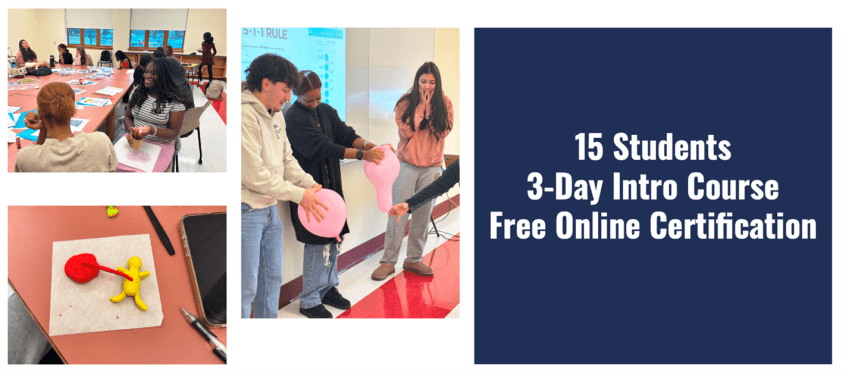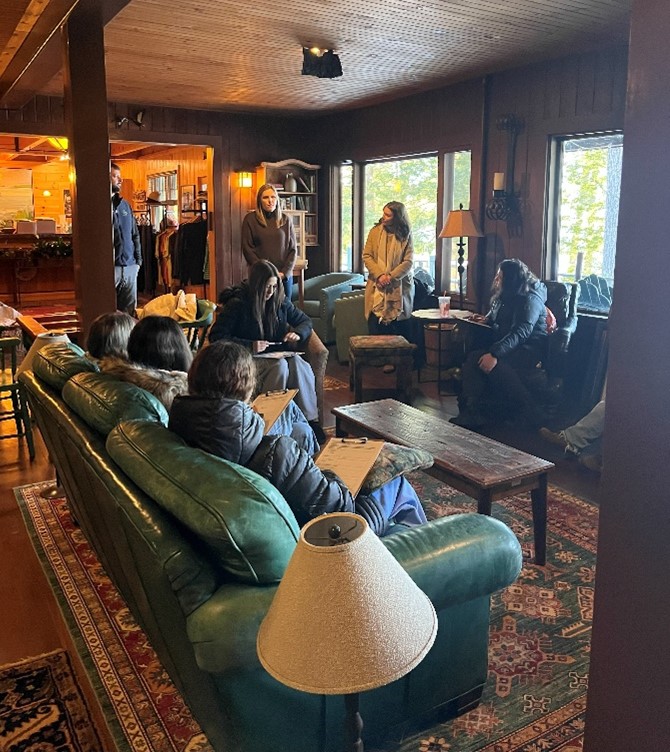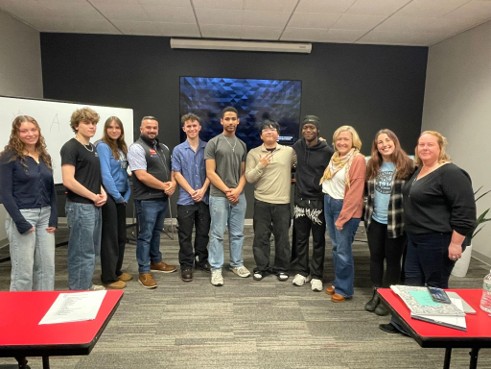
The Maine Department of Education (DOE) along with several school and community-based organizations continue to advance high-quality, career-connected learning through extended learning opportunities (ELOs) that connect students with real-world experiences, local partners, and emerging career pathways. An example of this work is the Youth Doula Initiative, a three-day community-based ELO that recently engaged 15 South Portland High School students in hands-on learning focused on maternal health, pediatrics, and public health.
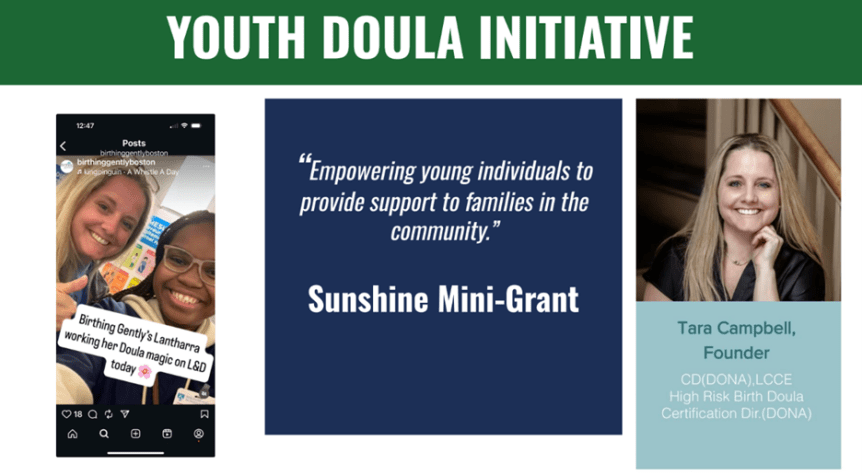
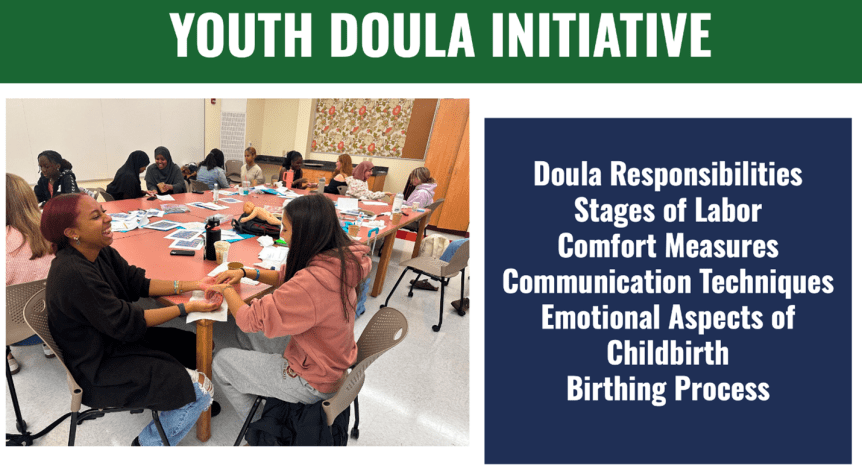
Slated for two more sessions this school year, the ongoing Youth Doula Initiative was developed through a partnership between Justine Carlisle, Jobs for Maine Graduates (JMG) ELO Navigator at South Portland High School, and Tara Campbell, founder of Birthing Doula and Birthing Gently. After researching opportunities that could provide authentic clinical exposure for students under 18 years old, Carlisle connected with Campbell, who has extensive experience in introducing young people to the doula profession. Carlisle described the initiative as one of the most meaningful programs she has facilitated, noting that childbirth touches nearly every family; yet, misconceptions and gaps in understanding are common. Through this experience, students gain accurate, practical knowledge about anatomy, medical options, and the social-emotional responsibilities of healthcare providers.
Campbell shared that the Youth Doula Initiative has “a significant positive impact on both students and their communities,” noting that participants gain essential healthcare knowledge while learning how trust-based, relatable support can improve outcomes for pregnant families. She also emphasized that the initiative opens ethical, paid pathways through Medicaid-supported doula work and continued no-cost training opportunities.
Youth Doula Initiative
Through the Youth Doula Initiative, students have not only the opportunity to explore an accessible healthcare career but also gain meaningful experience that deepens their understanding.
“I was super excited to learn about something I thought was years beyond me in school,” senior Esperanza Kunieki said. “We learned about different aspects of birthing—things I didn’t even know about—and it really excites me to learn more about this career.”
Another senior, Zeila Monteiro, shared, “The Youth Doula Initiative helped me understand what it truly means to be a doula and gave me a deeper understanding of each stage of pregnancy. It focuses on communication, support, and emotional reassurance, which are important skills for us as young adults.”
The Youth Doula Initiative reflects the broader impact of Maine’s ELO framework, empowering students through authentic learning, strengthening community partnerships, and preparing young people to make informed, confident decisions about their futures. The initiative was supported in part by the statewide Sunshine Mini Grant Program, which advances the mission of the Maine Community Coordinators Collaborative (C3). Since 2023, the Sunshine Mini Grant Program has awarded $88,000 across 18 grants, reaching approximately 300 students statewide. These grants help schools with limited resources to pilot innovative ELOs by addressing barriers such as transportation challenges, poverty, and limited access to professional mentors. Collectively, the program has expanded access to experiential learning that informs students’ career interests and post-secondary planning.
For further information about ELOs and Maine’s efforts to expand career exploration for Maine students, please visit the Maine DOE ELO webpage or contact Maine DOE Extended Learning Coordinator Lana Sawyer at Lana.Sawyer@maine.gov.
Youth Doula Initiative
This story was written in collaboration with South Portland High School. To submit a good news story to the Maine DOE, please fill out the good news submission form.
This story was written by Yarmouth High School senior Vagni Das as part of her Extended Learning Opportunity with the Maine DOE.
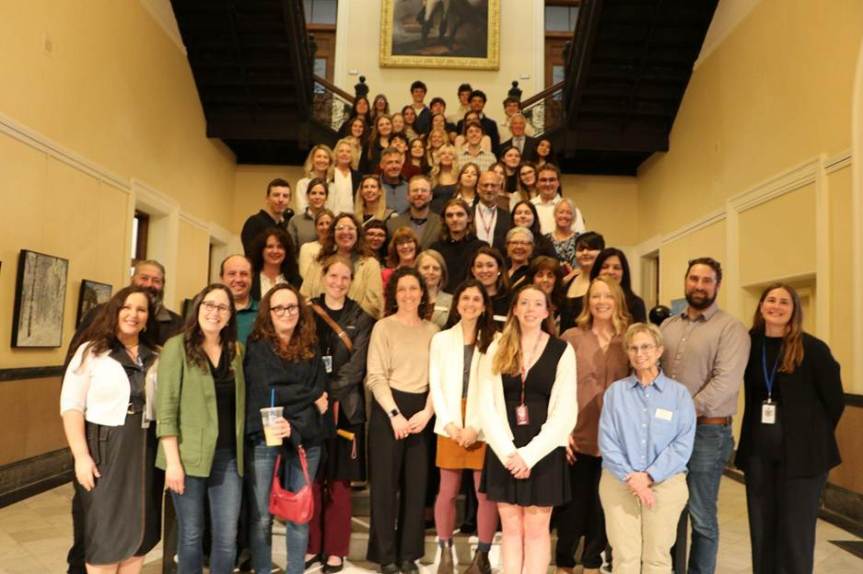
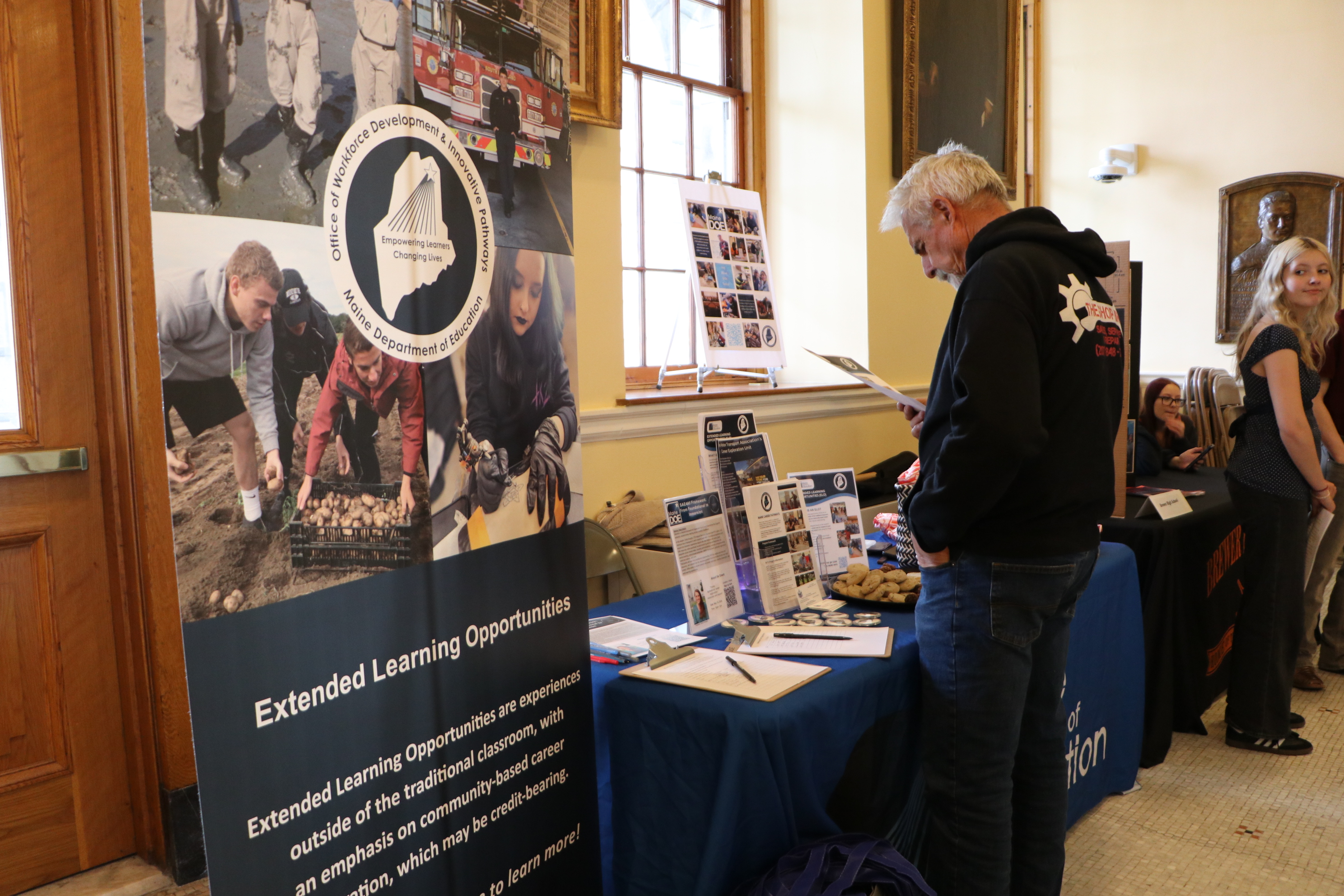
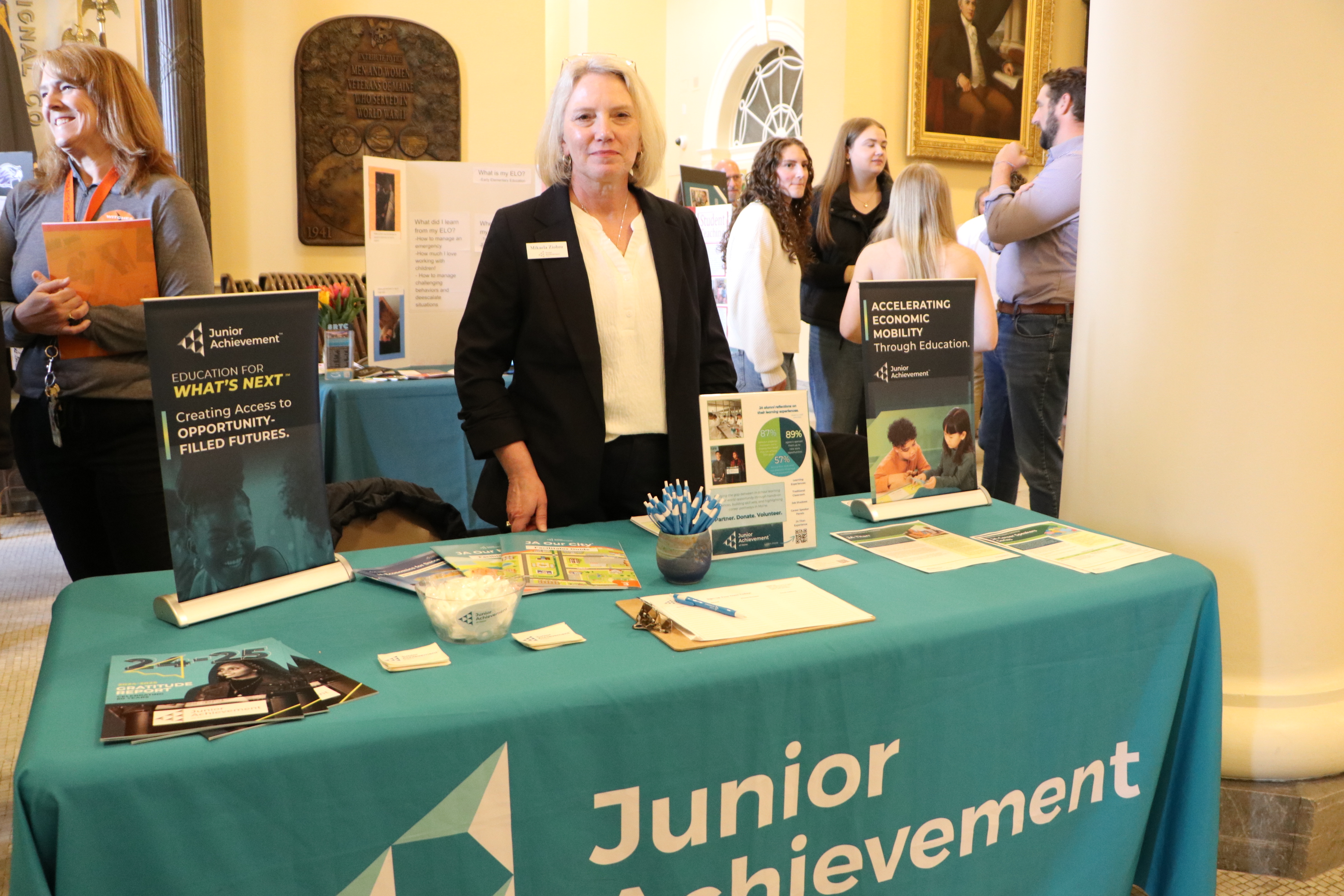
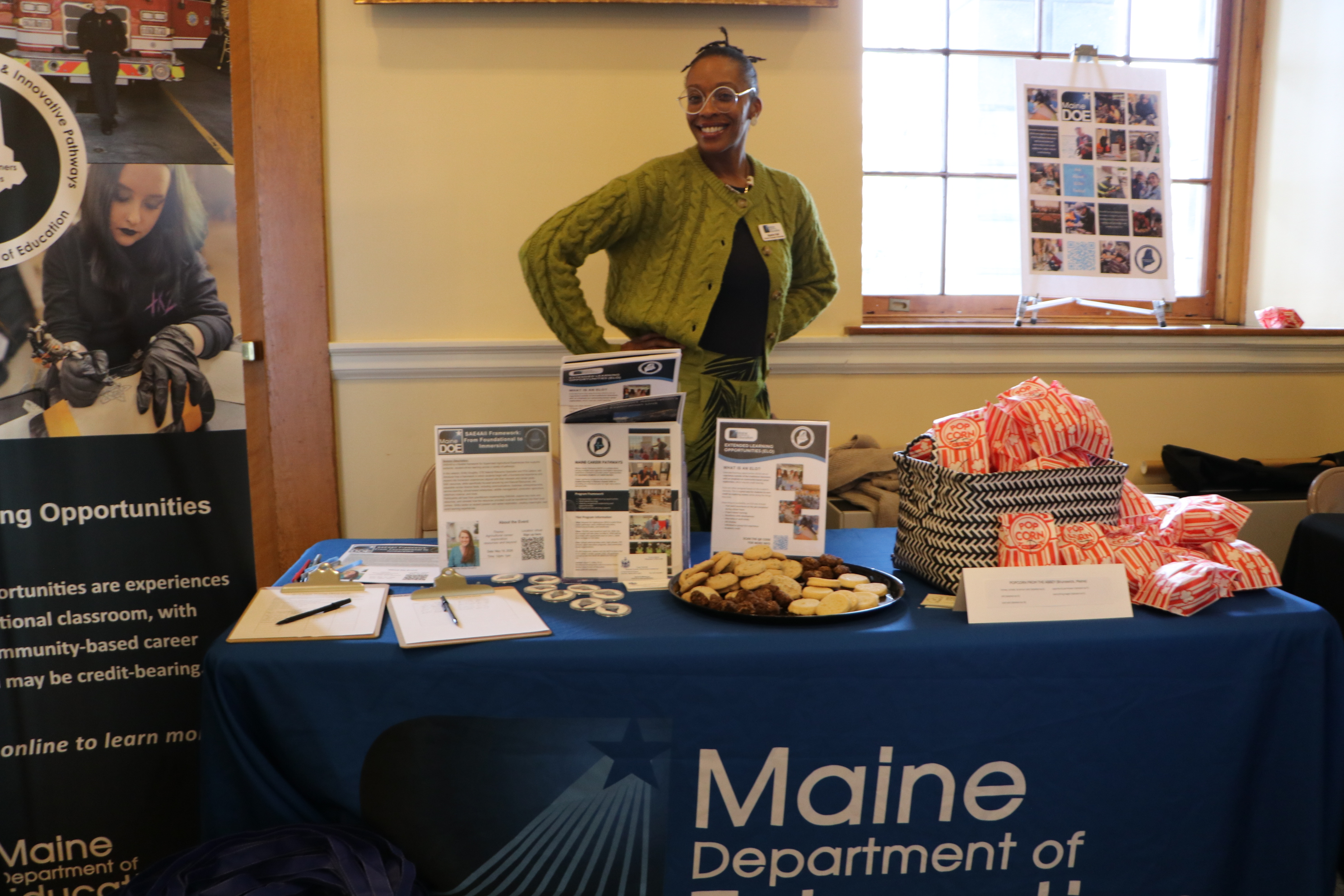
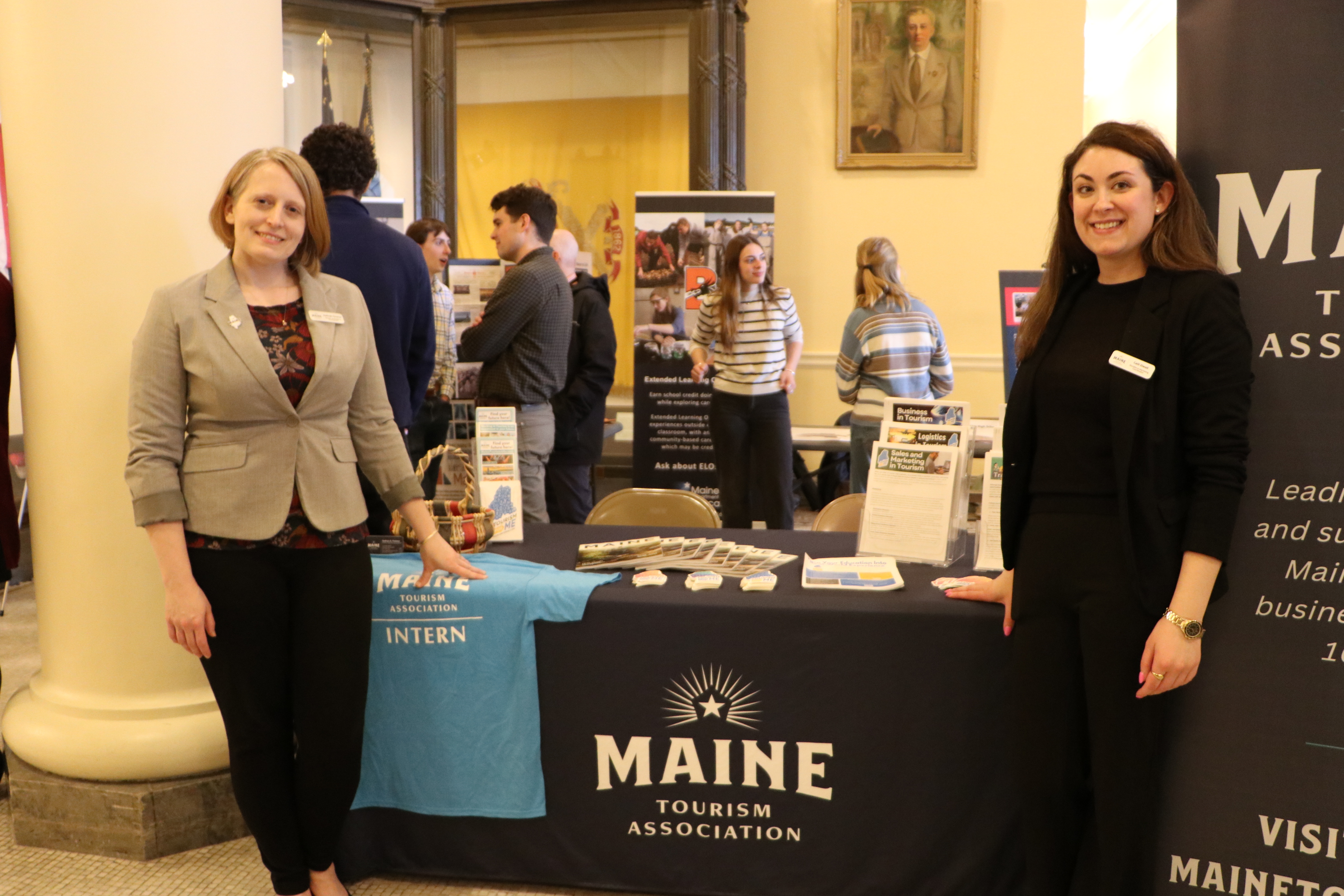
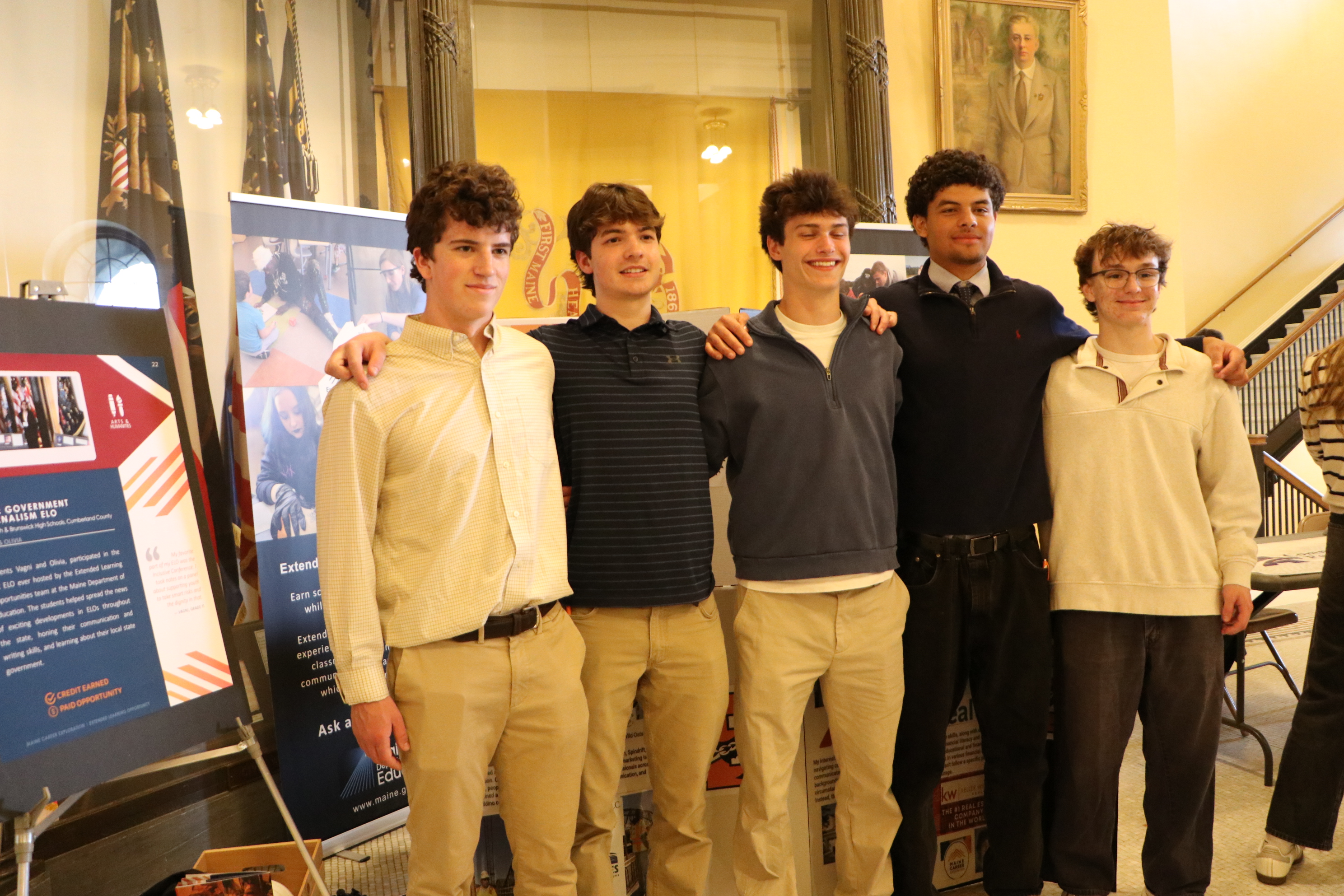
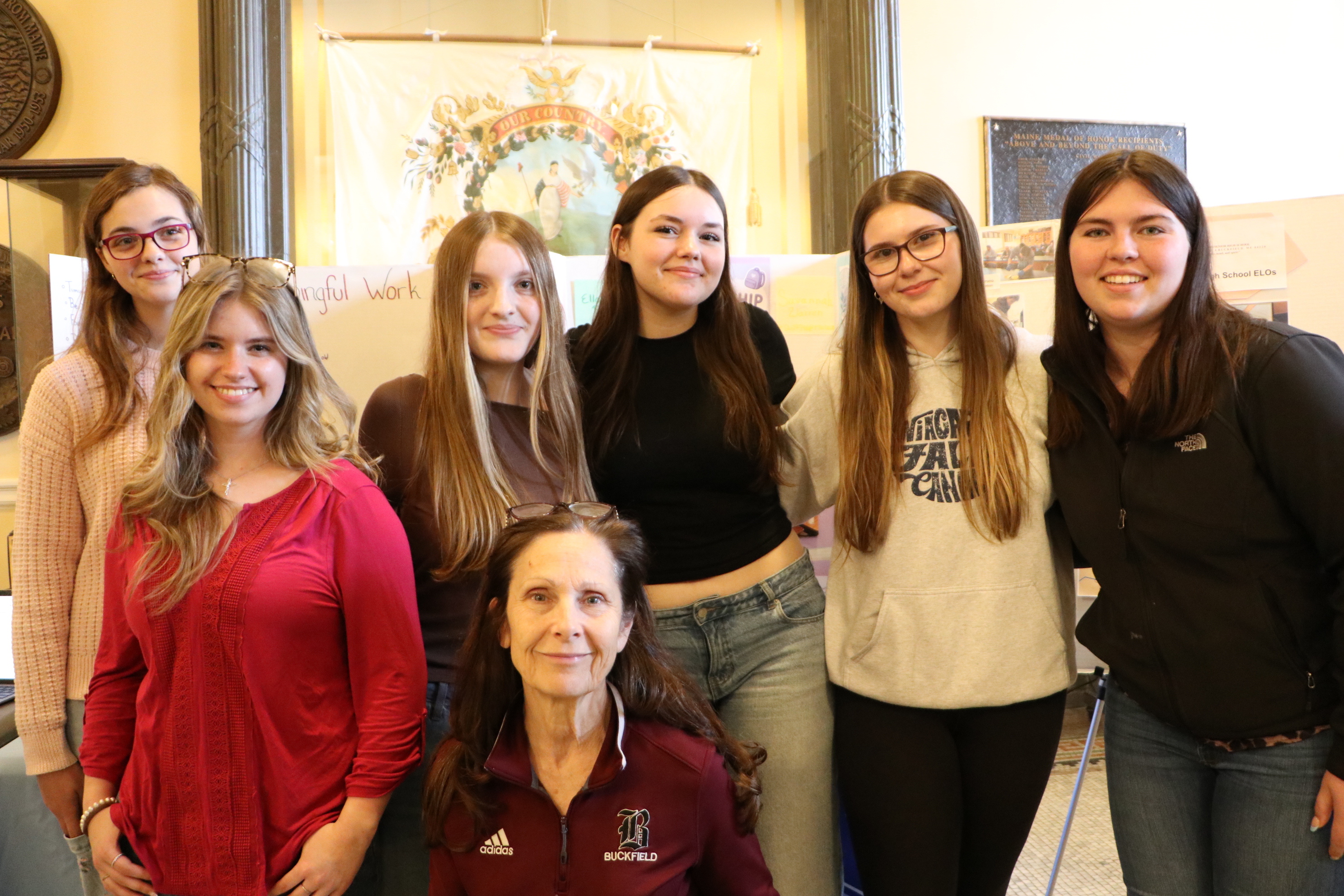
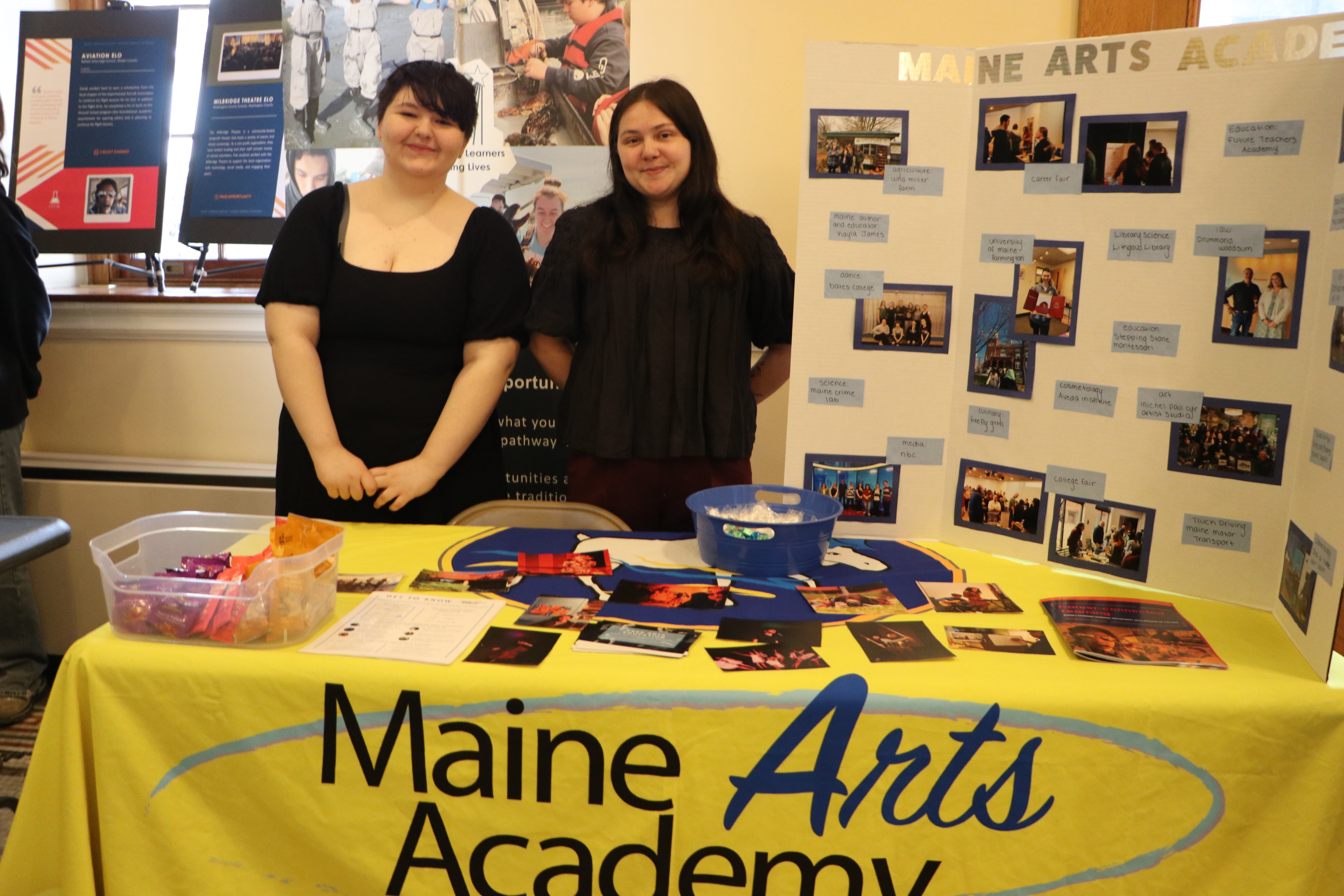
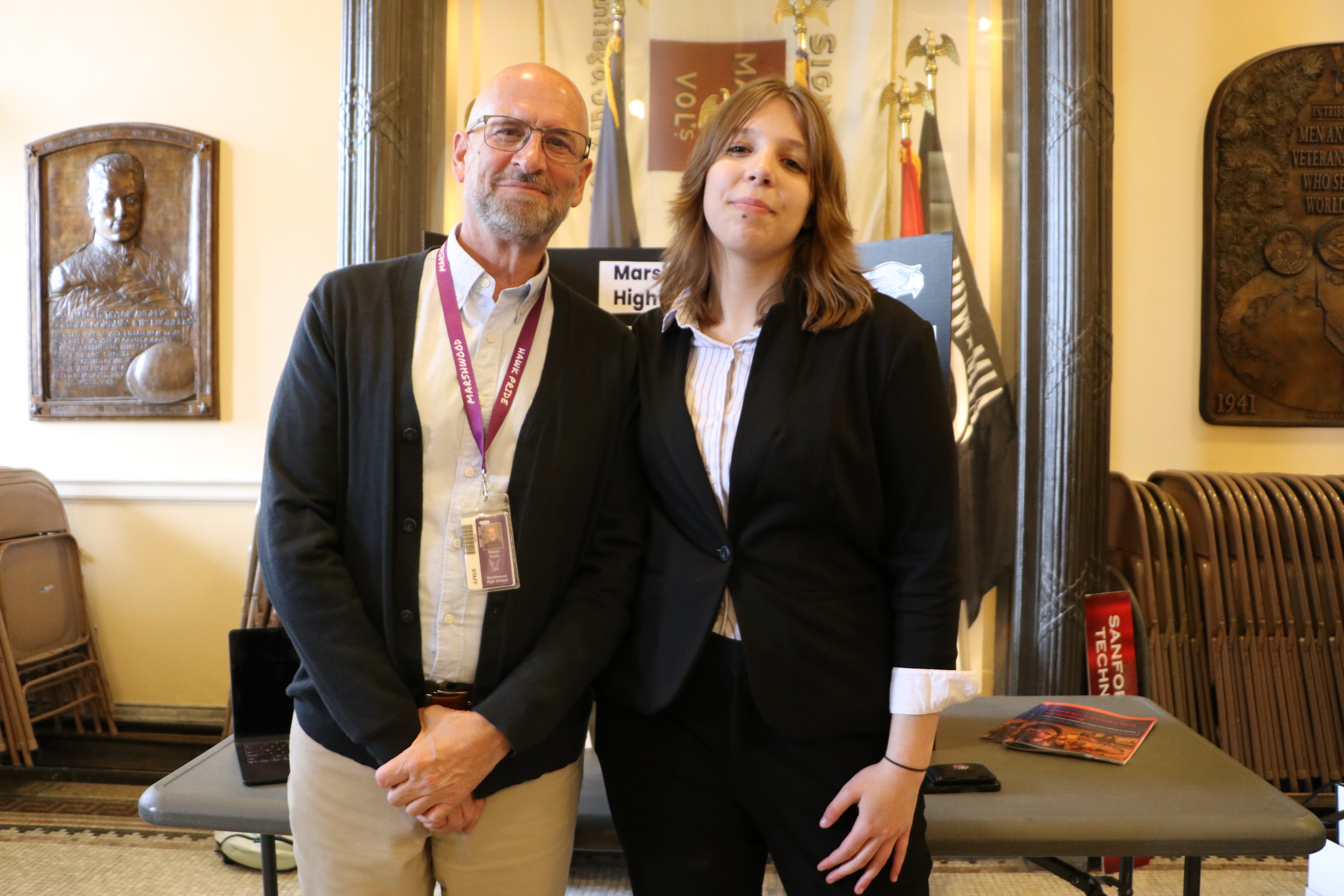
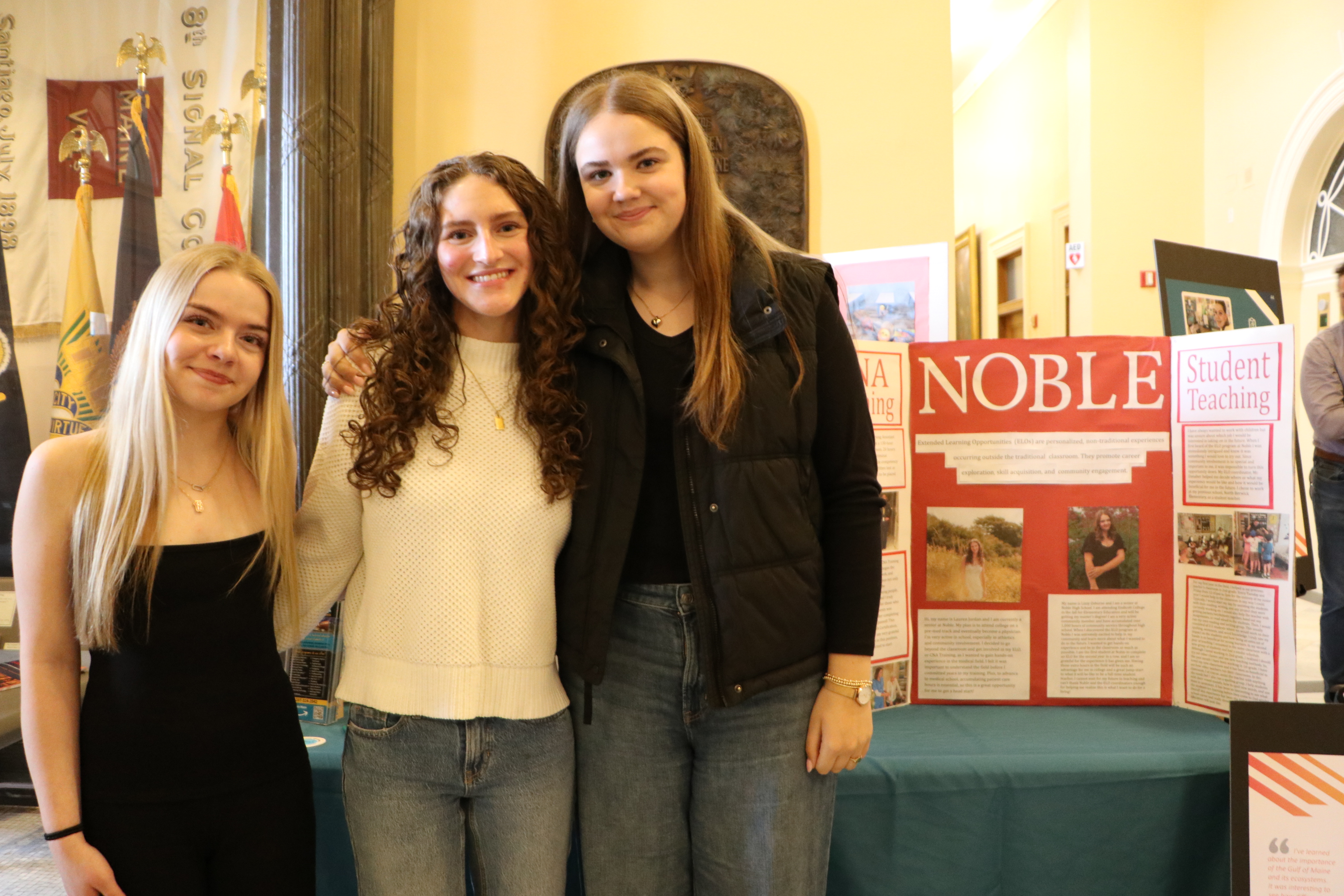
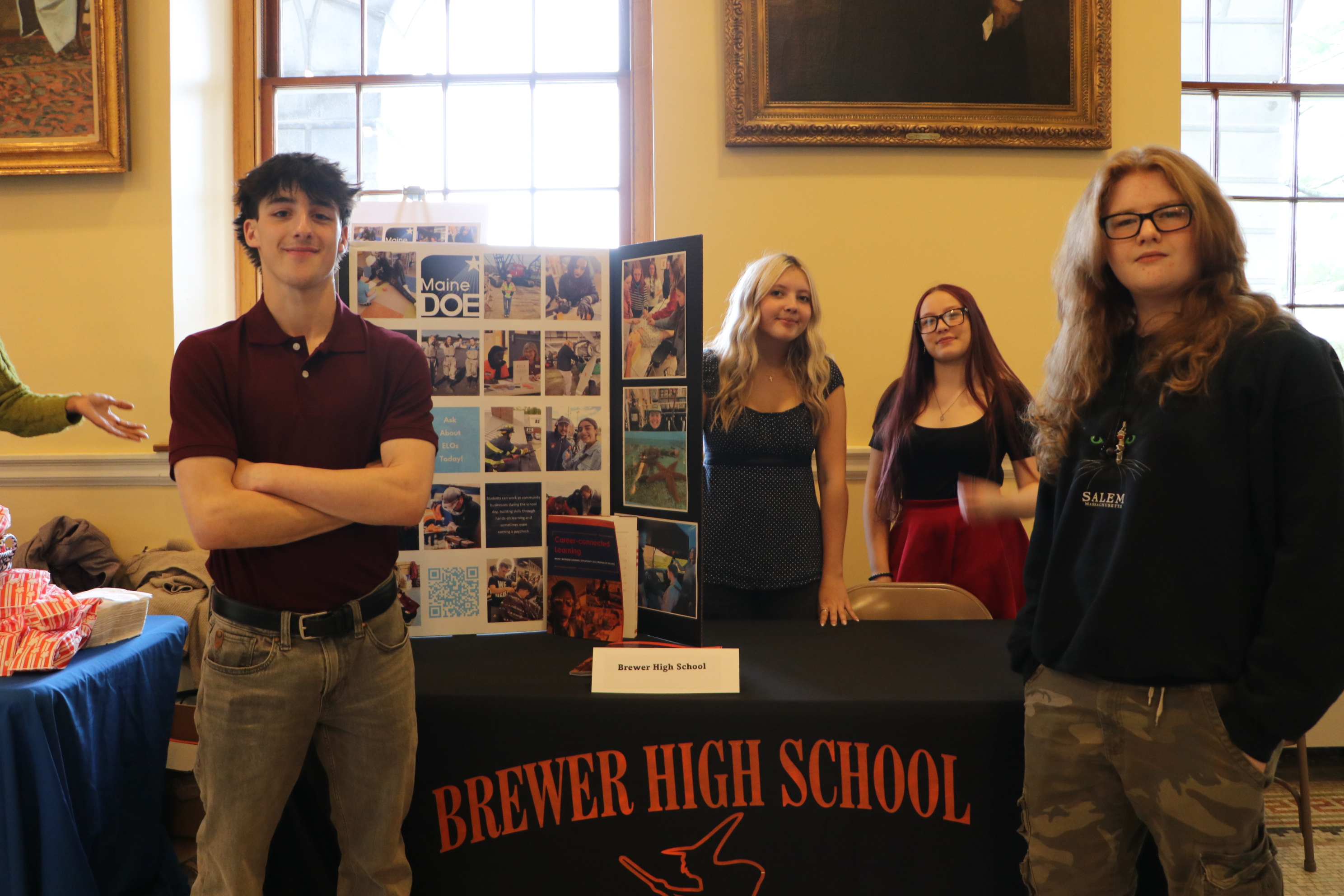
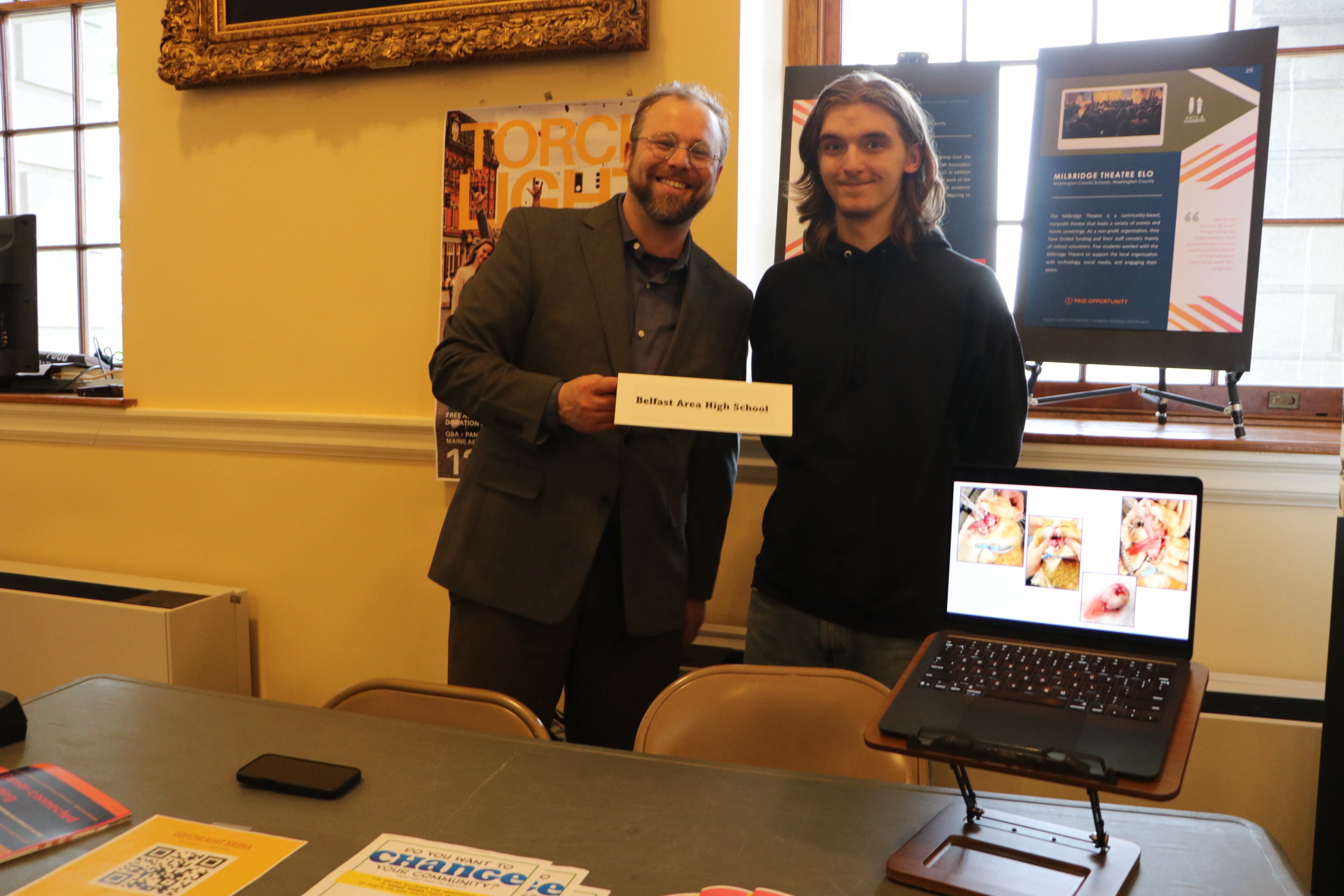
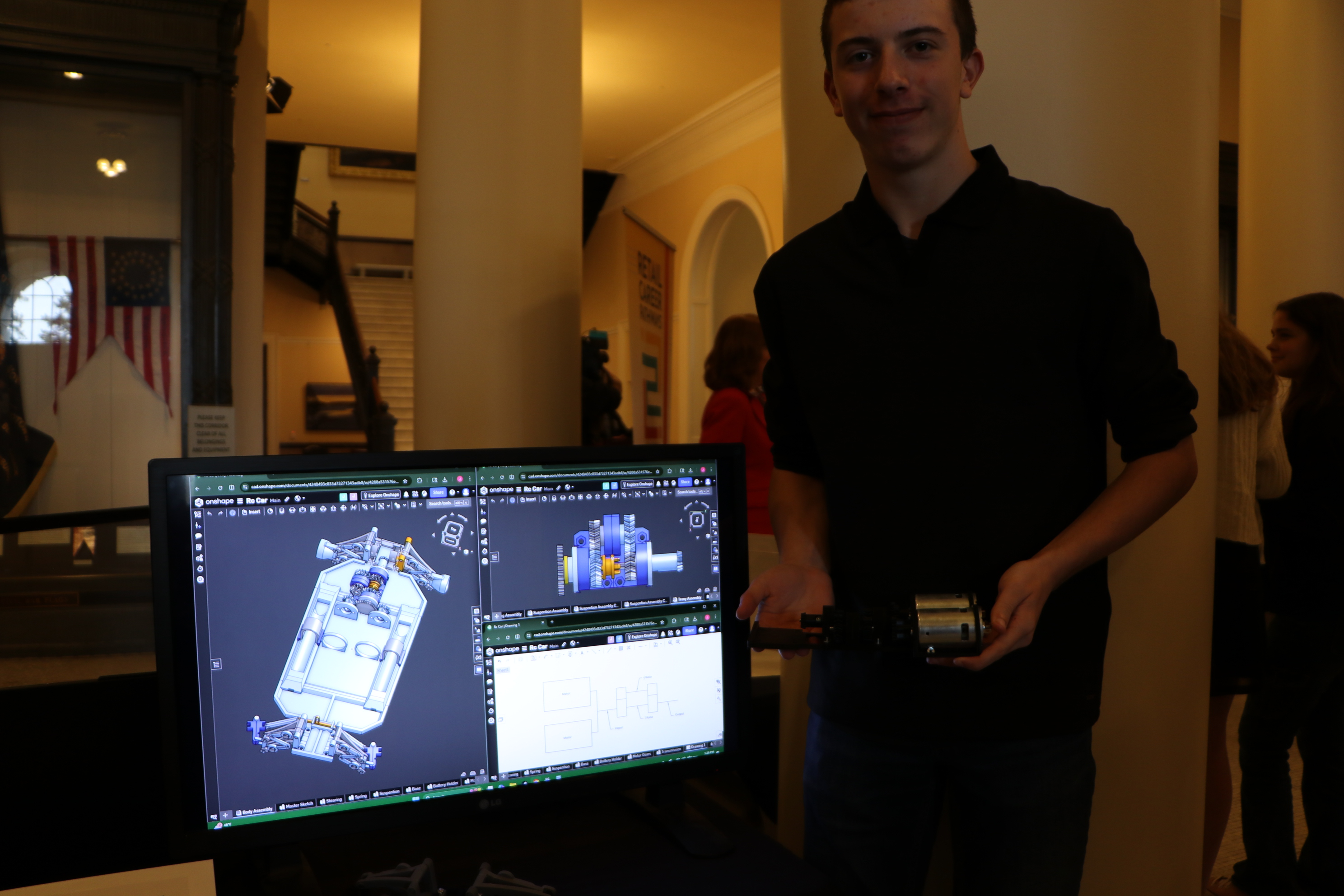
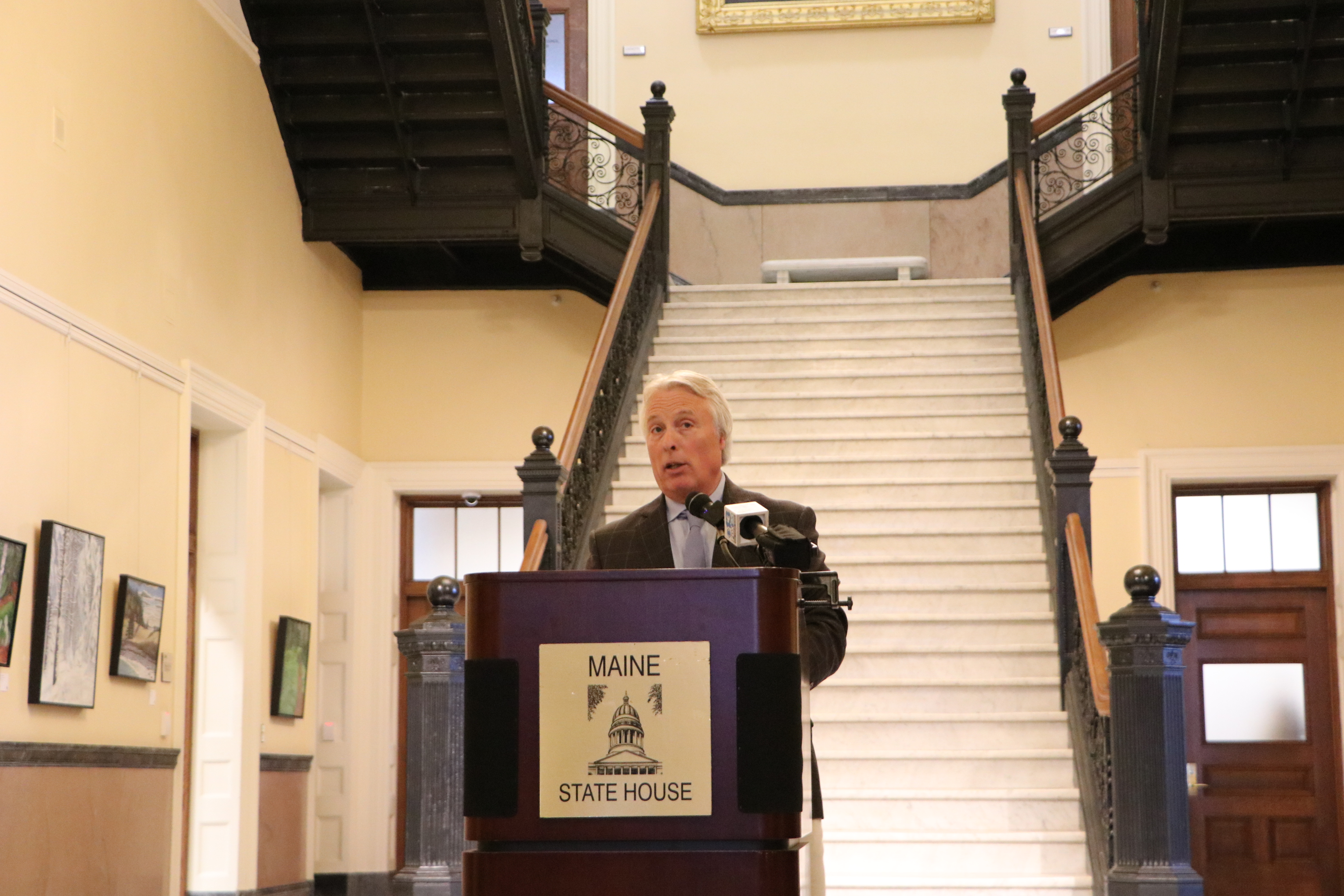
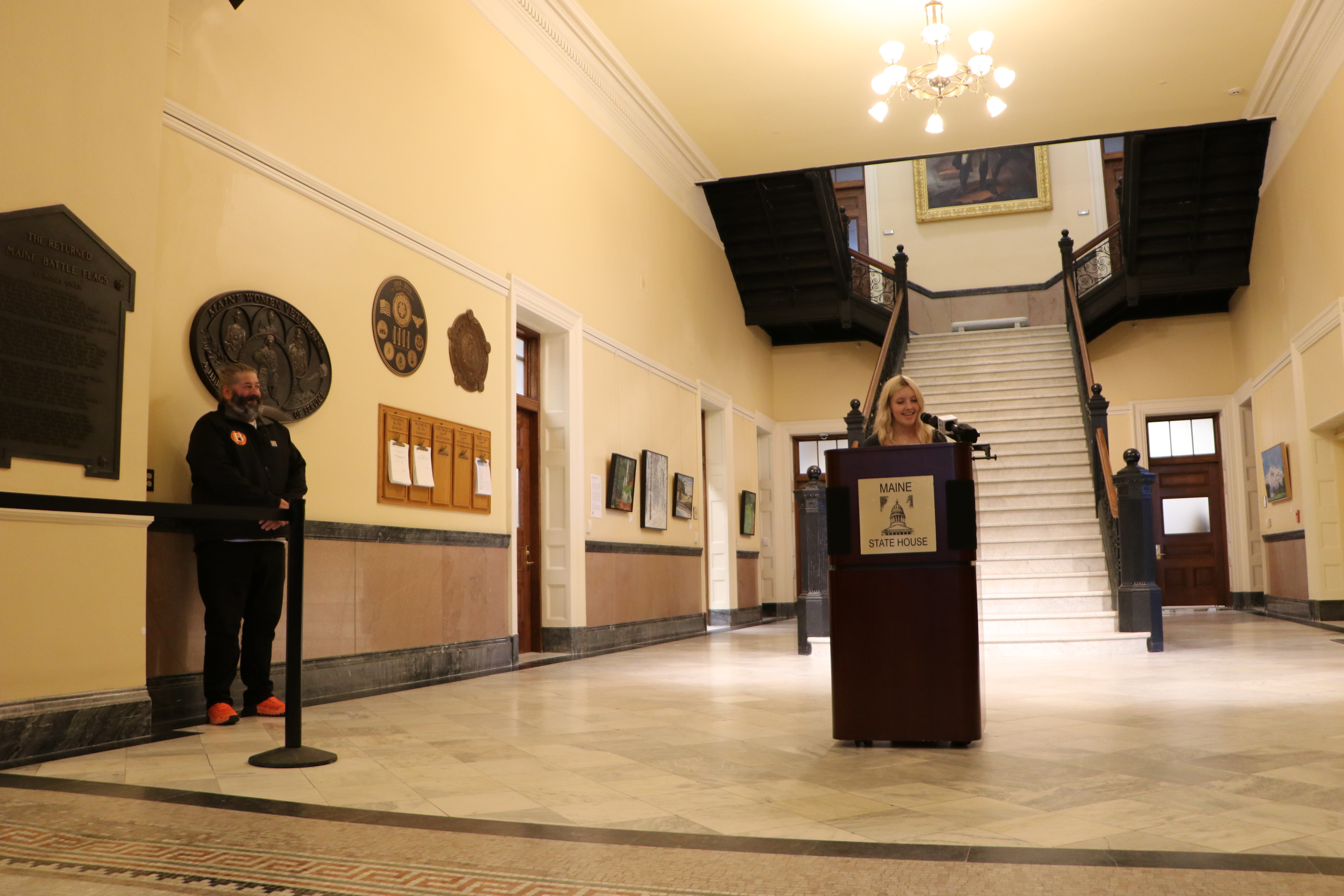
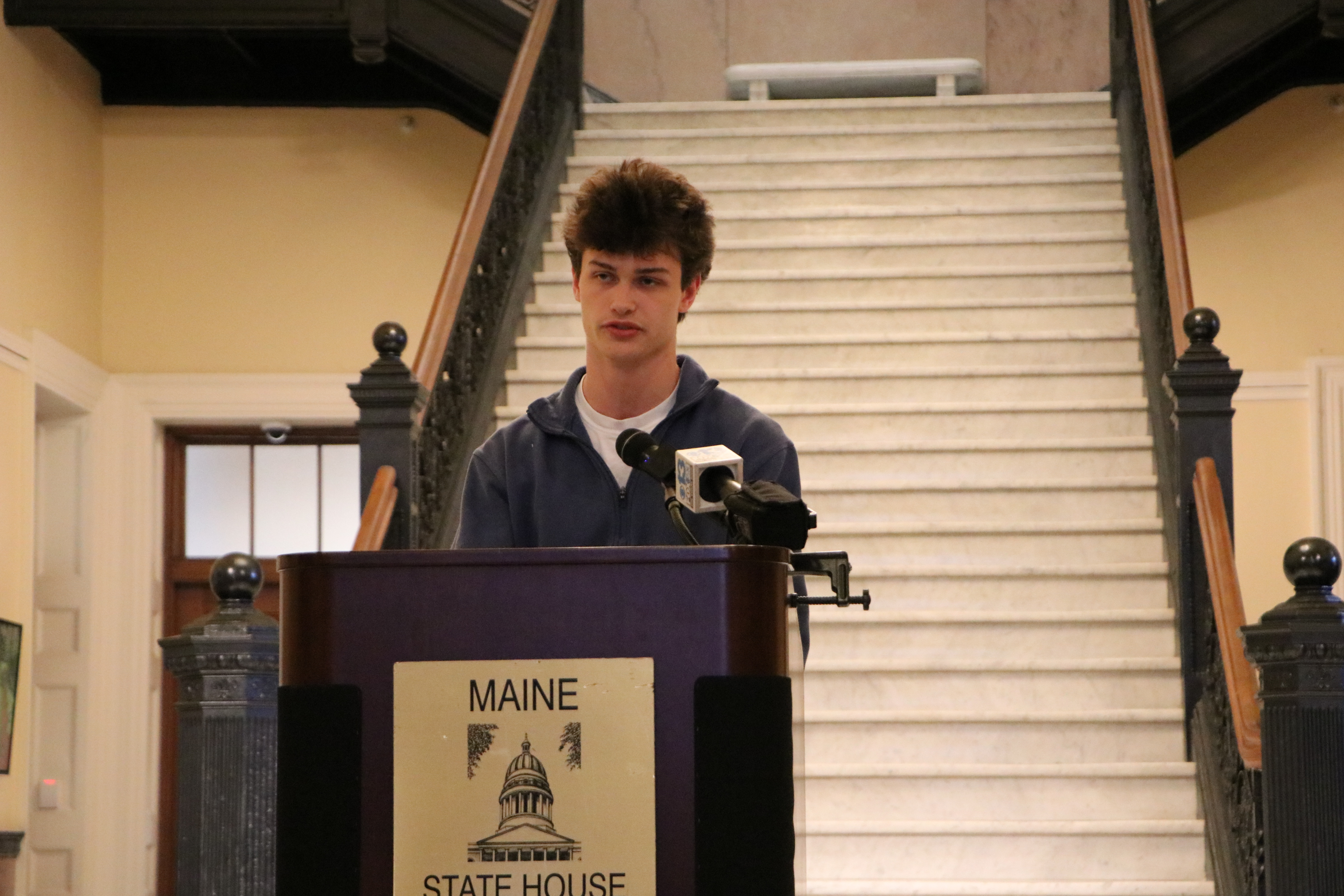
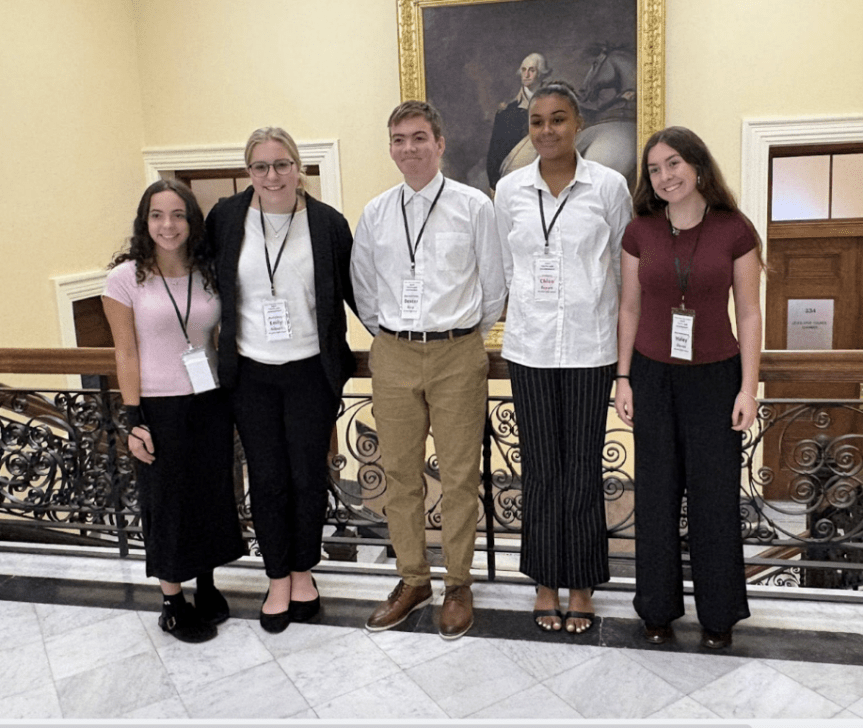
The Hall of Flags at the Maine State House was alight with energy on April 30, 2026, as students, educators, and business leaders came together from across the state to celebrate the impact of Extended Learning Opportunities (ELOs). From one side of the hall to the other, the space was filled with students presenting their ELOs, professionals sharing their knowledge, and attendees networking with others who are similarly passionate about expanding hands-on, career-connected education in Maine.
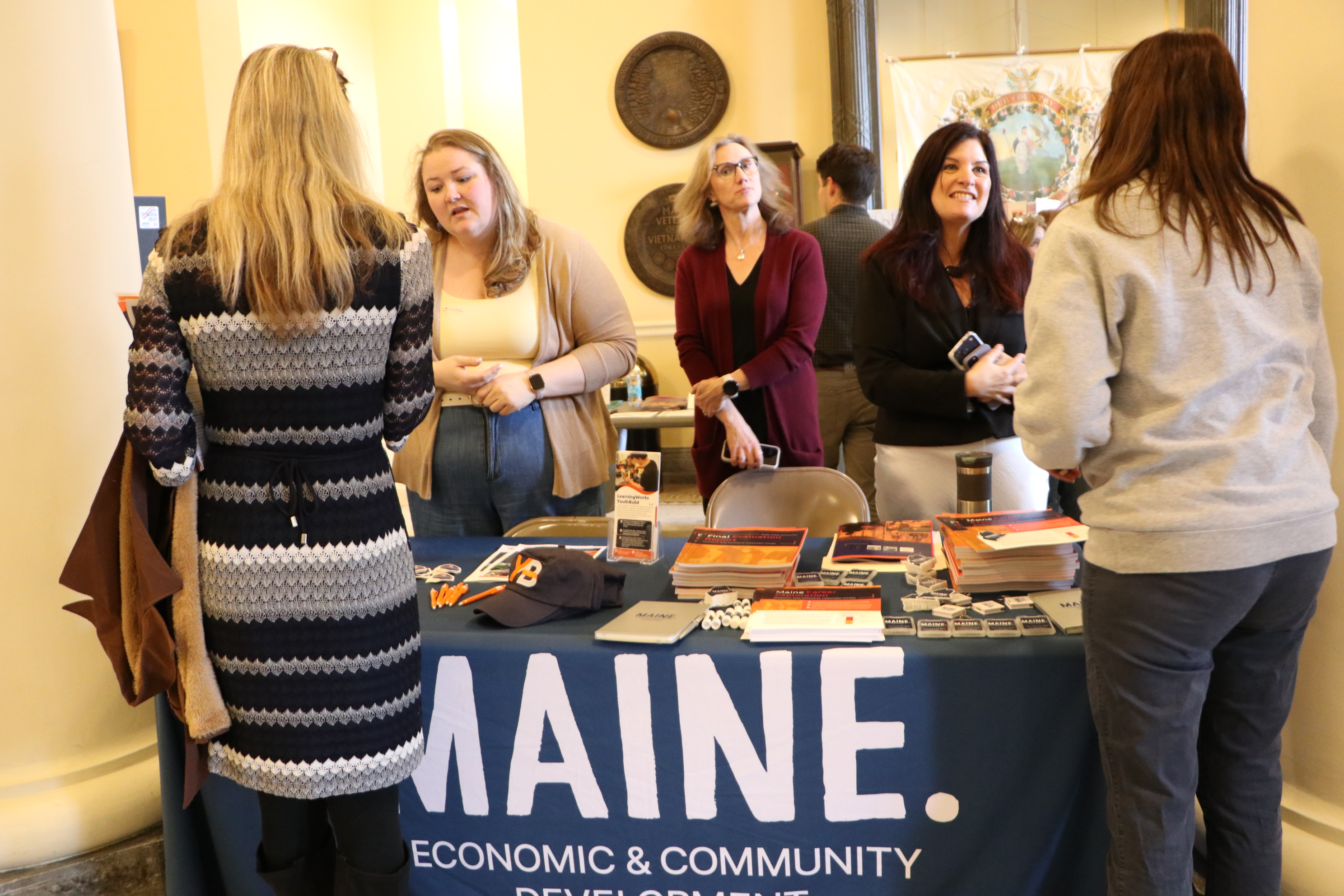
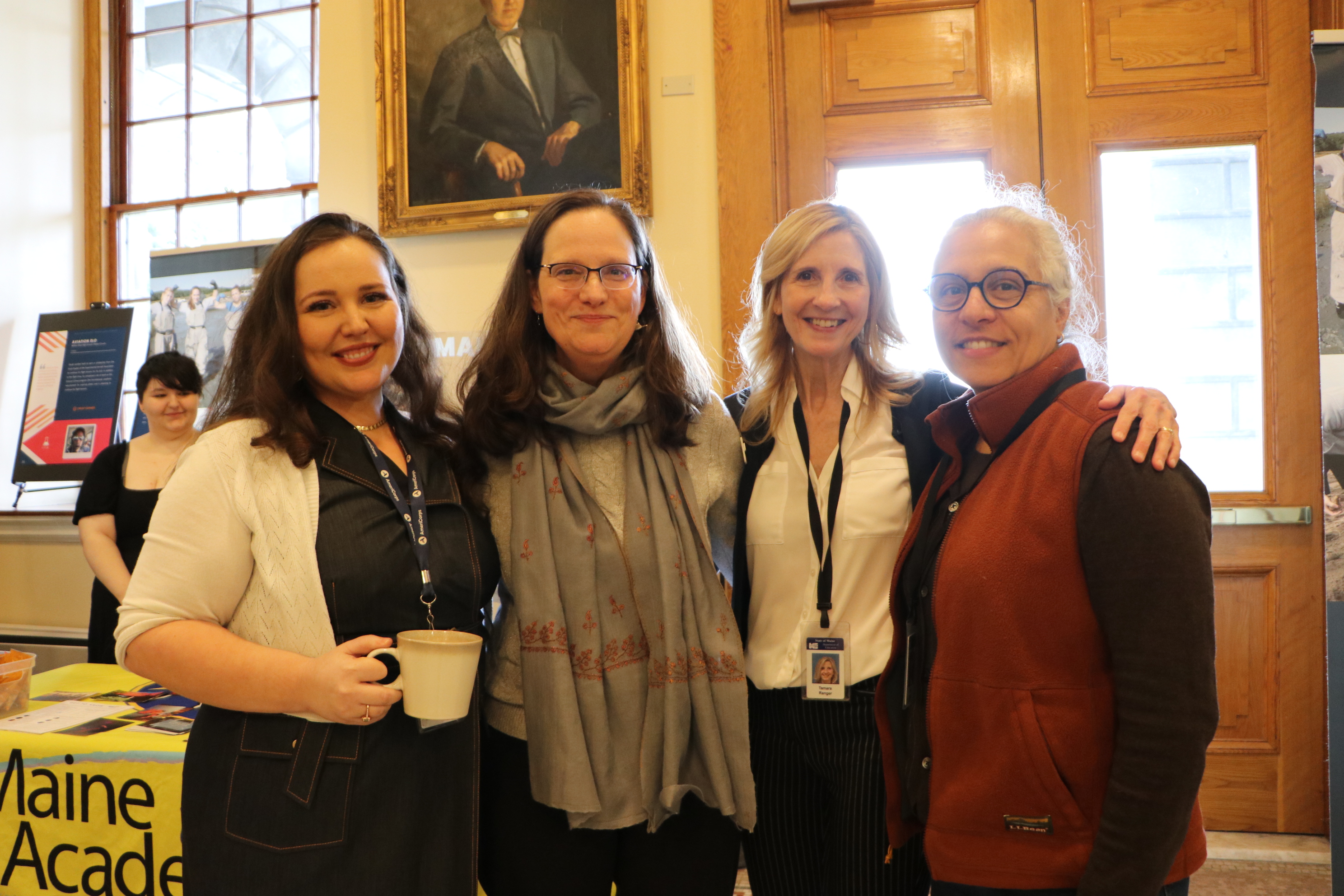
Hosted by the Maine Department of Education (DOE) Extended Learning Team, the event featured an ELO showcase, where attendees had the opportunity to meet students and ELO coordinators from schools across Maine, as well as state-level career planning partners, such as the Maine Department of Economic and Community Development (DECD), the Community Coordinators Collaborative (c3), and others. There was also a mock public hearing and tours of the State House available to give students the full experience of the Maine State Capitol.
Since 2022, Maine has made a strong investment in expanding ELOs through dedicated funding, support, and resources. Initial funding through the Maine Jobs and Recovery Plan (MJRP) helped launch and expand 26 ELO programs in schools statewide. Building on that momentum, the Maine DOE’s ELO 2.0 Expansion Grant program has continued to support both the sustainability of existing programs and the development of new opportunities for students. To date, more than $7.1 million in ELO Expansion Grants has been awarded to support 38 ELO programs serving schools across 13 of Maine’s 16 counties.
The ELO showcase at the Hall of Flags demonstrated how hands-on learning is helping students build real-world skills and connections that go beyond the classroom to help them discover a stronger sense of purpose and vision for their future. Throughout the afternoon, in speeches and interviews, students shared stories of how programs like internships and personal projects have shaped their educational journeys and goals.
Brewer High School senior Haileigh Pinkham shared how her internship at the Eastern Maine Emergency Veterinary Clinic allowed her to pursue a lifelong passion for animals, while gaining firsthand experience in veterinary medicine.
“Shadowing at the clinic has allowed me to see real procedures, operations, and how emergency situations are handled. Without this opportunity, I may not have otherwise been able to see these things,” Pinkham said. “Something that I really enjoy about my ELO is that I get to step out of the traditional classroom setting and still continue to learn but about something I’m genuinely passionate about.”
Similarly, Brunswick High School senior Jansen Weaver spoke about how ELOs changed the trajectory of his future and guided him toward his path in finance.
“A year ago, if you had asked me what my future looked like, I don’t know if I would have had a clear answer,” Weaver said. “Today, I stand before you with a clear path in finance and a professional foundation to pursue it.”
Weaver explained that the experience gave him confidence and practical skills that are preparing him for college and a future career in ways a classroom alone could not.
“These are skills you simply cannot develop from a textbook alone,” Weaver said.
While students remained at the heart of the ELO showcase, the work that they do would not be possible without the educators and coordinators standing beside them. Brewer High School ELO Coordinator Kevin Napolillo explained the value of these programs in a speech at the event.
“It’s not about being in the vet clinic,” Napolillo said while introducing Pinkham. “It’s about talking to actual veterinarians. It’s about being able to pick the brains of people who are in the industry.”
Napolillo added that students gain something far more valuable than information alone: perspective. Through conversations with professionals, students learn the realities of careers and their broader impact.
By giving students the opportunity to engage directly with industry professionals, ELO programs are helping young people develop practical skills while also building a collaborative network throughout the state. The partnerships created through ELOs strengthen relationships between schools and local businesses, encouraging a more community-centered approach to education, in which learning becomes tied directly to real-world opportunities and Maine’s ever-evolving workforce.
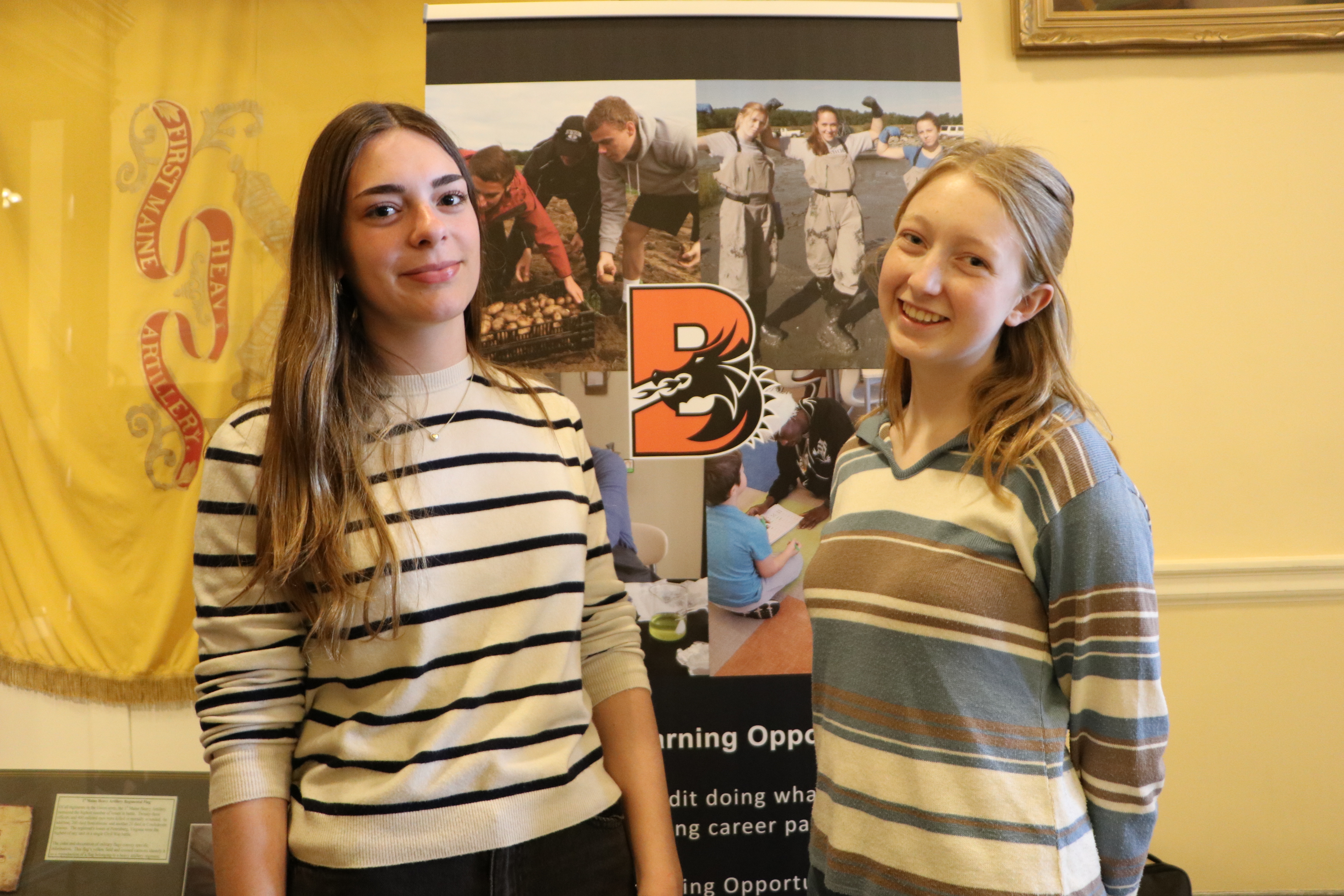
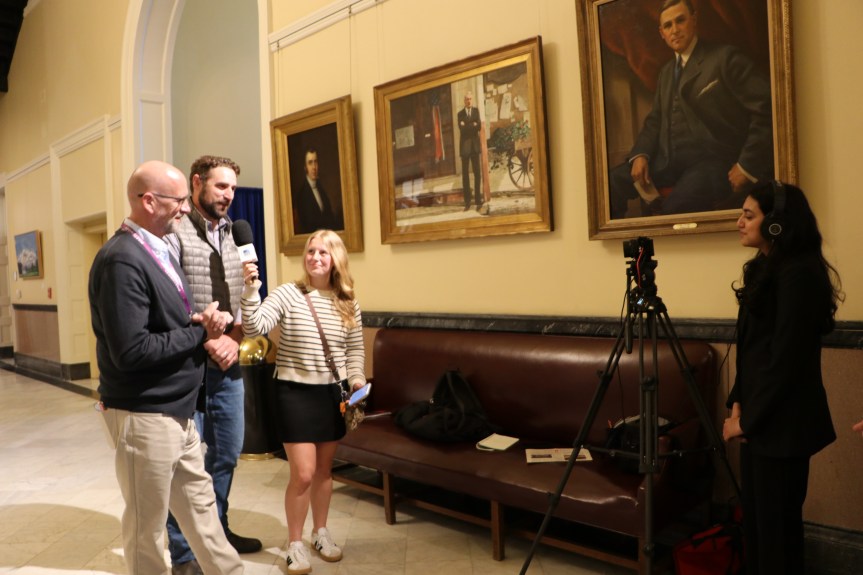
Noble Middle and High School School ELO student Anna and Yarmouth ELO student Vagni interviewed event participants.
By the end of the event, it was clear that students’ ELO experiences are some of the most impactful learning experiences happening—not only within a school building but out in the world that students are preparing to enter. A highlight of the event was the launch of “Career-connected Learning: Maine’s Extended Learning Opportunity (ELO) Profiles of Success”, a publication that features a variety of ELO students and different sectors throughout Maine. It was a collaborative effort of the Maine DOE, DECD’s Maine Career Exploration program, and the Data Innovation Project at the Catherine Cutler Institute at the University of Southern Maine.
For more information about ELOs, please visit the Maine DOE website or contact Maine DOE Extended Learning Coordinator Lana Sawyer at lana.sawyer@maine.gov.
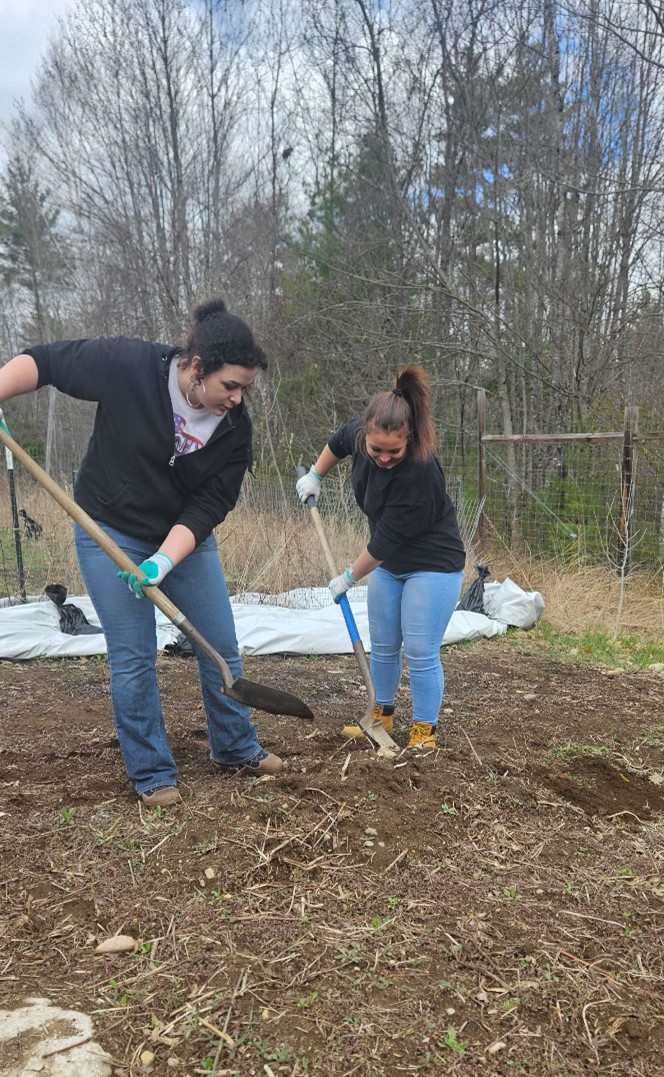
Pictured: Students dug their hands in the soil as they explored agriculture in Maine at Avalon Acres, a MOFGA certified organic farm in Hollis. Before this soil-filled adventure, they learned the art of indoor gardening from an RSU 14 STEM teacher, touring the Katahdin program’s hydroponic garden that grows lettuce and spinach for the Windham High School cafeteria.
Windham High School has launched a hands-on, career-connected learning initiative called “Student Exploratory Adventures” (SEA), made possible through funding from the Maine Community Coordinators Collaborative’s (C3) Sunshine Mini-Grant Program.
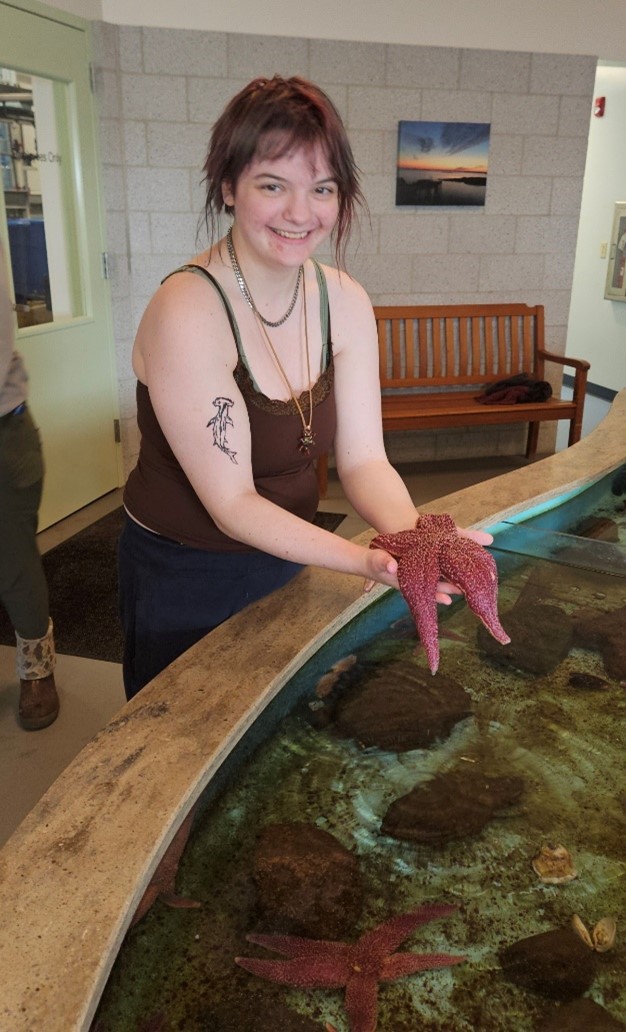
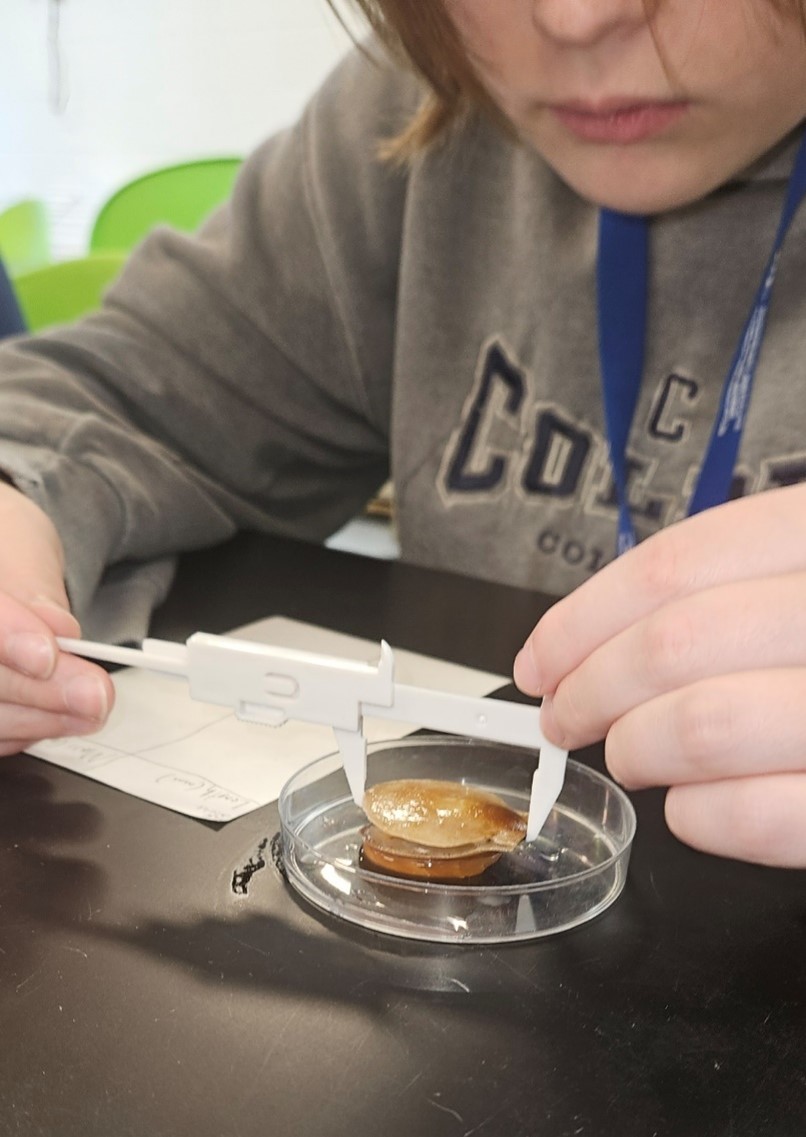
SEA is designed to connect students with employers, community leaders, and industries across Maine, offering real-world experiences that extend learning well beyond the classroom. Through quarterly extended learning opportunities (ELOs), students explore Maine’s workforce and economic landscape while gaining exposure to potential career pathways in fields such as aquaculture, hospitality, law, agriculture, manufacturing, and forestry.
“The Aquaculture ELO really solidified my interest in biology, and I made new friends with similar interests,” one student shared.
“I gave it a five-star rating because it was something completely new to me and allowed me to experiment with different career paths,” another student reflected.
SEA emphasizes direct engagement through site visits to local businesses, cultural institutions, colleges, and community organizations, paired with conversations with professionals in these fields. These experiences encourage students to step outside their comfort zones and imagine futures they may not have previously considered.
“I hadn’t thought about a career in aquaculture before, but this experience gave me real insight into what that could look like,” one participant said.
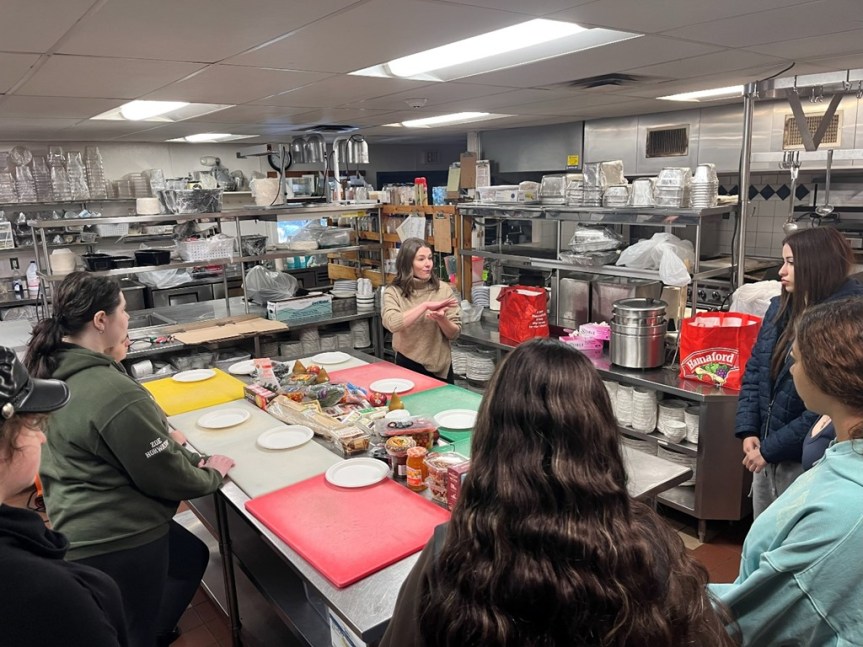
While at Migis Lodge in Casco, students created their own charcuterie boards while learning about presentation, pricing, and profit. By applying math skills, they calculated that each board would need to sell for $20 to turn a profit. This hands-on adventure was led by the owner of Ironclad Eats Food Truck based out of Windham.
SEA has been running throughout the 2025-2026 school year, offering one experience per quarter. SEA’s mission is to support students’ intellectual, creative, and social growth by fostering curiosity, confidence, and informed decision-making through hands-on learning. By connecting students directly with Maine’s workforce and communities, SEA is helping young people broaden their horizons and take meaningful steps toward their future.
Windham High School’s Director of Community Connections, Lorraine Glowczak, leads this effort and has demonstrated a commitment to high-quality, career-connected learning and expanding ELOs that link students and potential career pathways. (Check out this article by Glowczak.) Windham High School started its ELO program in 2022 with the support of the Maine DOE. SEA is an example of this impactful work, which was expanded and made possible in part through the Sunshine Mini-Grant Program.
Before diving into charcuterie board creation, students heard from staff at Migis Lodge in Casco about the wide range of careers in Vacationland’s hospitality industry. Inspired by the visit, several students have applied and will be joining the Migis Lodge team this summer.
Since 2023, the Sunshine Mini-Grant Program has awarded 18 grants, totaling $88,000, engaging approximately 300 students statewide. Administered through Maine C3, the program supports schools with limited resources in piloting innovative ELOs while addressing barriers such as poverty, transportation challenges, and limited access to mentors. Collectively, these efforts have expanded student access to real-world learning experiences that inform career interests and future educational decisions.
For further information about ELOs and Maine’s efforts to expand career exploration for Maine students, please visit the Maine DOE ELO webpage or contact Maine DOE Extended Learning Coordinator Lana Sawyer at Lana.Sawyer@maine.gov.
This story was written in collaboration with Windham High School. To submit a good news story to the Maine DOE, please fill out the good news submission form.
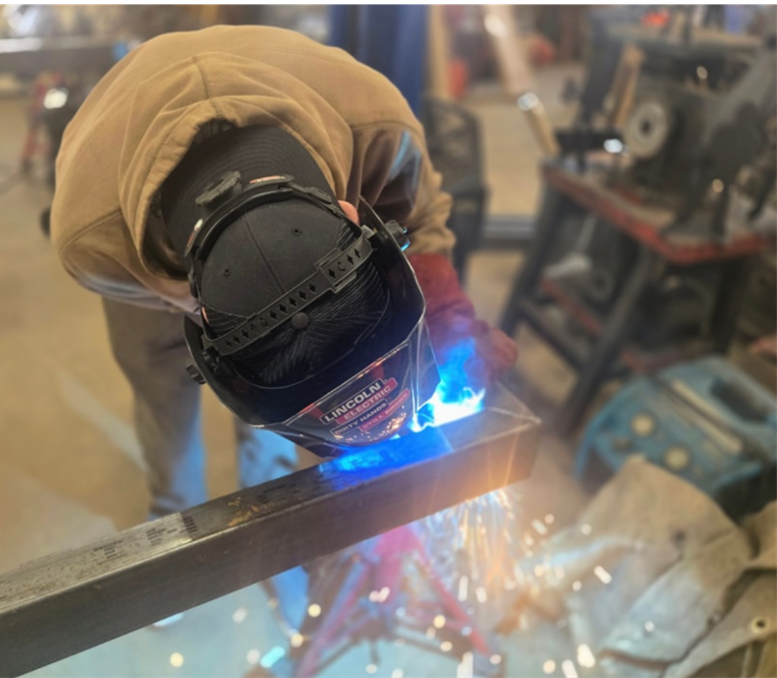
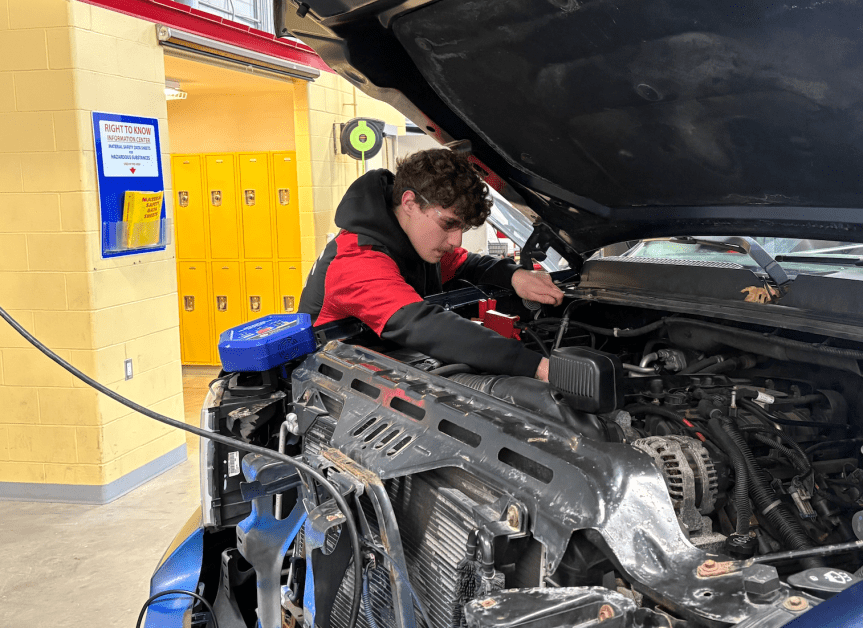
At 8 a.m. on a Tuesday morning, just as first period is starting at Sanford High School (SHS), senior Lucas Barrow is already under the hood of a car at Black Bear Automotive in Springvale. He’ll work until 10:30 a.m., drive to Sanford Regional Technical Center (SRTC) for class, and then head back to the shop until 5 p.m. On weekends, Barrow drives 45 minutes to work at VIP Tires & Service in Scarborough. As a second-year student in SRTC’s Automotive Technology program, Barrow has built a challenging schedule for himself, juggling two automotive jobs and balancing academics—but he is thriving.
Through SHS and SRTC’s Extended Learning Opportunities, Barrow has turned his Tuesday and Thursday shifts at Black Bear into academic credit. Additionally, he is gaining different learning opportunities through each of his jobs. At VIP, Barrow handles fundamentals: tires, oil changes, brake work, and wheel bearings. At Black Bear, where he has access to more specialized equipment, Barrow tackles radiators, engine work, and valve cover gaskets.
“I’m doing more risky jobs that make more money, [and provide] more benefit [to] the company,” Barrow said.
While Barrow explained that he enjoys suspension work, he said he is particularly drawn to engine repair.
“It’s more high risk. You can’t mess anything up or else it’s going to mess the car up,” Barrow said.
Barrow grew up working on cars with his stepfather, but he said the SRTC program has enhanced his knowledge considerably.
“We dive in really deep into the actual specifics of how machines work, how parts work in the car, how they all work together,” Barrow said. “Being able to put it in perspective of how the parts work to make the whole car work makes it easier to diagnose stuff.”
Barrow’s connection to Black Bear occurred through the industry relationships of his SRTC instructor, Rich Couture. The owner of Black Bear serves of the SRTC program’s advisory committee, meeting several times a year to discuss industry needs.
Couture said Barrow represents the kind of student who makes teaching rewarding. The
“This group of kids that I have is exceptional. I have some real go-getters in this class,” Couture said. “Lucas came in here with some automotive knowledge because he has always tinkered around with cars. That made it a little easier for him to make that transition to working professionally.”
To qualify for an internship, SHS/SRTC students must maintain an 80% average and demonstrate solid skill sets. Couture currently has four students in similar cooperative education placements, including one at Weirs GMC in Arundel, who has become the dealership’s sole Fisher plow technician.
“There’s a big need for new technicians,” Couture said, noting that employers value more than just technical knowledge. “A lot of it has to do with soft skills: showing up on time, staying off your phone, being a team player, being willing to learn.”
As graduation approaches, Barrow isn’t entirely sure what’s next, but right now, Black Bear feels like the right fit.
“I’m learning a lot but also doing a lot and making money,” Barrow said.
This story idea was submitted by the Sanford School Department. To submit a good news story to the Maine DOE, please fill out the good news submission form.
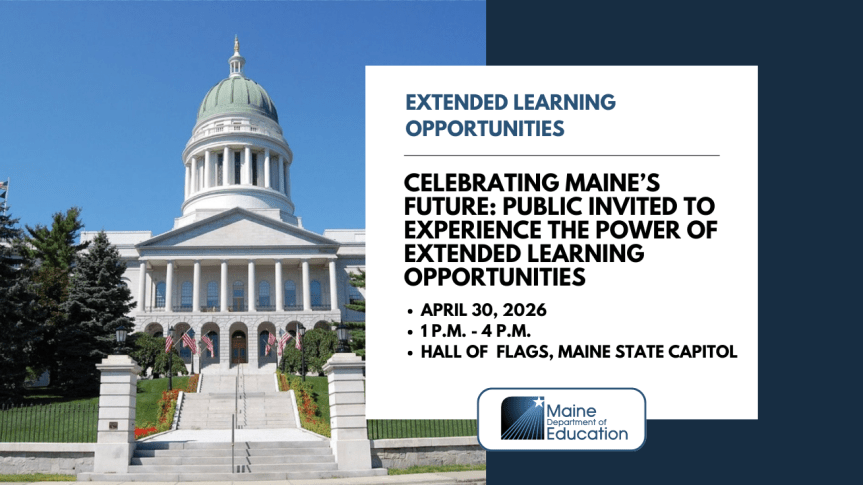
Educators, students, Maine Department of Education (DOE) community and agency partners, and members of the public are invited to the Hall of Flags at the State House in Augusta on April 30, 2026, from 1 to 4 p.m. for the Extended Learning Opportunities (ELO) showcase of student success, innovation, and partnership.
This event will highlight the transformative impact of ELOs on schools and communities statewide. Throughout Maine, ELOs are opening doors for students and bringing learning to life through hands-on, work-based learning and career exploration. These opportunities not only help students discover their passions and build essential skills but also connect them with local employers and career pathways in meaningful and lasting ways.
Attendees will have the chance to meet students and educators from schools including Gorham High School, Brewer High School, Noble High School, Maine Arts Academy, Telstar High School, and Brunswick High School, and hear firsthand how ELOs are shaping confidence, purpose, and possibility for Maine’s young people.
A featured program at 1:30 p.m. will include remarks from representatives of the Maine DOE, the Maine Department of Economic and Community Development, and students, who will share highlights of their ELO programs. There will be opportunity for students to take statehouse tours and participate in a mock public hearing.
In 2023, the Sunshine Mini Grant program was launched with funding from a private trust group, resulting in $88,000 in grants to 18 schools across Maine to expand career exploration for students—including through extended learning opportunities (ELOs). This initiative has positively impacted approximately 300 students from various Maine counties and school administrative units (SAUs), including in programs at Windham, South Portland, and Mountain Valley High Schools.
The Sunshine Mini Grant program is designed to support schools—particularly those with limited resources—in piloting innovative, career-connected learning experiences. In addition to funding, participating schools benefit from professional networking, mentoring, and shared best practices that promote collaboration and long-term sustainability. Collectively, the grants have supported partnerships across a wide range of industries while addressing barriers such as poverty, transportation challenges, language access, and limited exposure to professional role models.
These examples of Sunshine Mini Grant-supported initiatives highlight the power of innovation and collaboration in action:
Windham High School’s Student Exploratory Adventures (SEA) program was created to give students access to industries, workplaces, and sites they might not otherwise experience. Through hands-on learning and site visits, participating students explored careers in aquaculture, hospitality, law, agriculture, manufacturing, and forestry, while learning how these industries contribute to Maine’s economy and communities.
South Portland High School’s Youth Doula Initiative engaged 15 students in a three-day, hands-on training experience focused on maternal health, pediatrics, and public health. Through strong community partnerships, students gained early exposure to meaningful healthcare careers, while addressing real community needs.
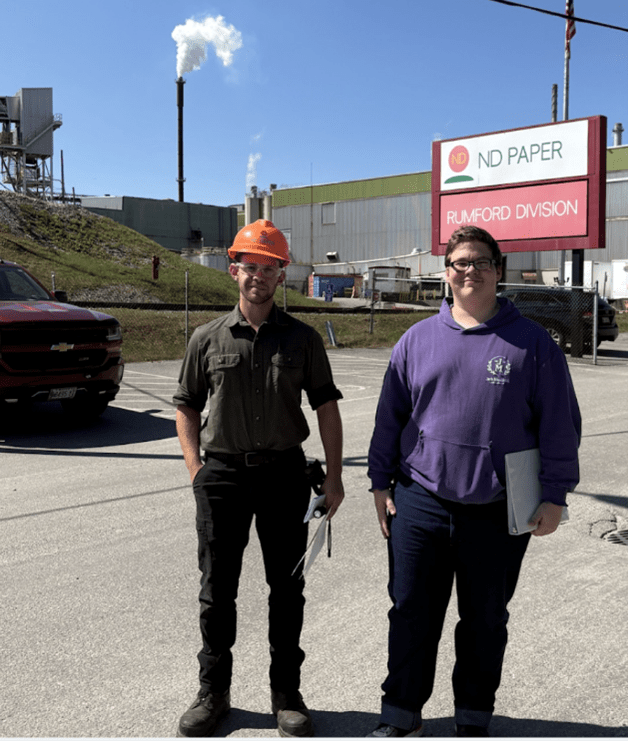
Mountain Valley High School’s expanded ELO programming now includes semester-long internships in healthcare, education, construction, engineering, finance, counseling, and skilled trades; work studies focused on building essential workplace skills; job shadowing with organizations such as the National Weather Service and the Rumford Police Department; and extensive college and employer tours across Maine and New England.
A defining strength of the Sunshine Mini Grant program is its ability to help SAUs “start small,” collect meaningful data, and demonstrate the need for sustainable career exploration programming. This approach has allowed schools to innovate, adapt, and scale programs based on student interests and community needs, resulting in measurable gains in student engagement, career awareness, and equitable access to extended learning beyond the traditional classroom.
The management of the grant funds and oversight of project reporting is handled by the Maine Business Education Partnership, a 501(c)(3) nonprofit organization dedicated to promoting workforce initiatives that enhance Maine’s retail and broader business sectors. This vision focuses on building strategic alliances to develop a well-trained, dynamic workforce. Through its support for the Sunshine Mini Grant program, the Maine Business Education Partnership is helping equip schools and communities to foster lifelong learning and assist businesses in recruiting, developing, and retaining future talent.
Central to this work, the Sunshine Mini Grant program also advances the mission of the Maine Community Coordinators Collaborative (Maine C3) by helping schools expand ELO programming and strengthen partnerships between education, industry, and community organizations.
Together, these initiatives reflect the Maine Department of Education’s (DOE) commitment to supporting and elevating innovative, collaborative approaches to education that connect learning to life beyond school. Through continued recognition of programs like the Sunshine Mini Grant and strong partnerships with Maine C3 and the Maine Business Education Partnership, the Maine DOE remains focused on telling the story of high-quality ELOs that prepare students for success in college, careers, and their communities by linking them with real-world experiences, local employers, and emerging career pathways.
For further information about ELOs and Maine’s efforts to expand career exploration for Maine students, please visit the Maine DOE ELO webpage or contact Maine DOE Extended Learning Coordinator Lana Sawyer at Lana.Sawyer@maine.gov.
Pictured: Students practice landing a plane with an aviation simulator.
Community outreach and extended learning coordinators wear many hats inside a school. This role often sits at the intersection of academics, career readiness, partnerships, and student support, connecting what happens inside the building to real-world opportunities outside of it.
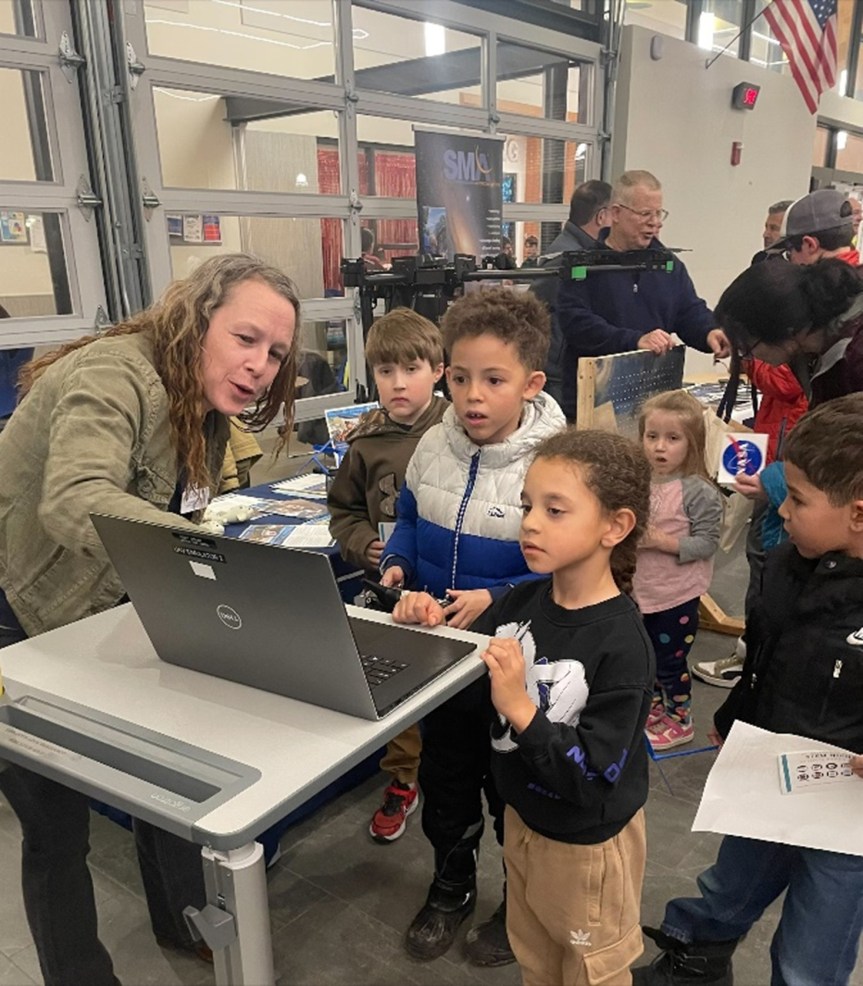
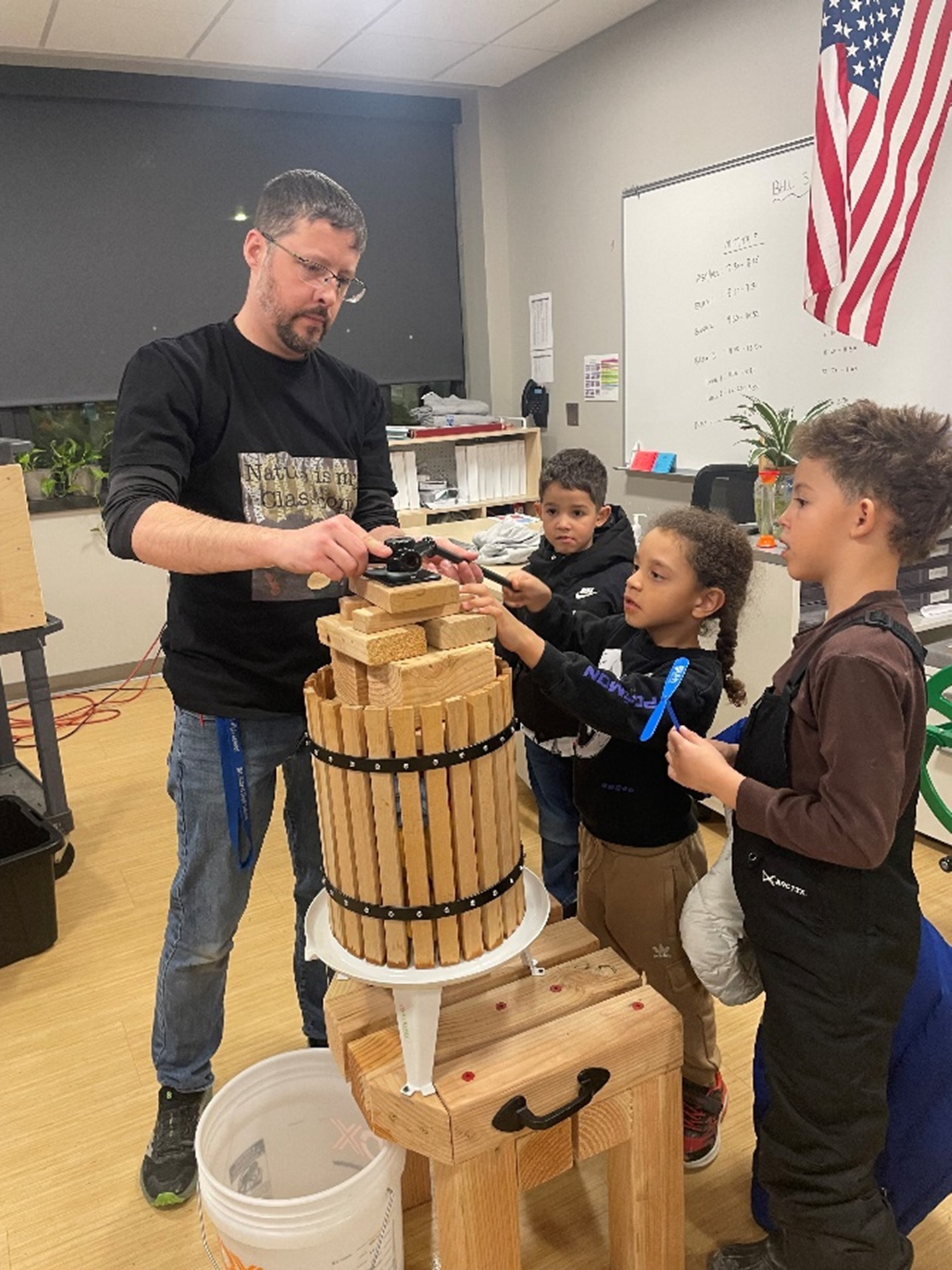
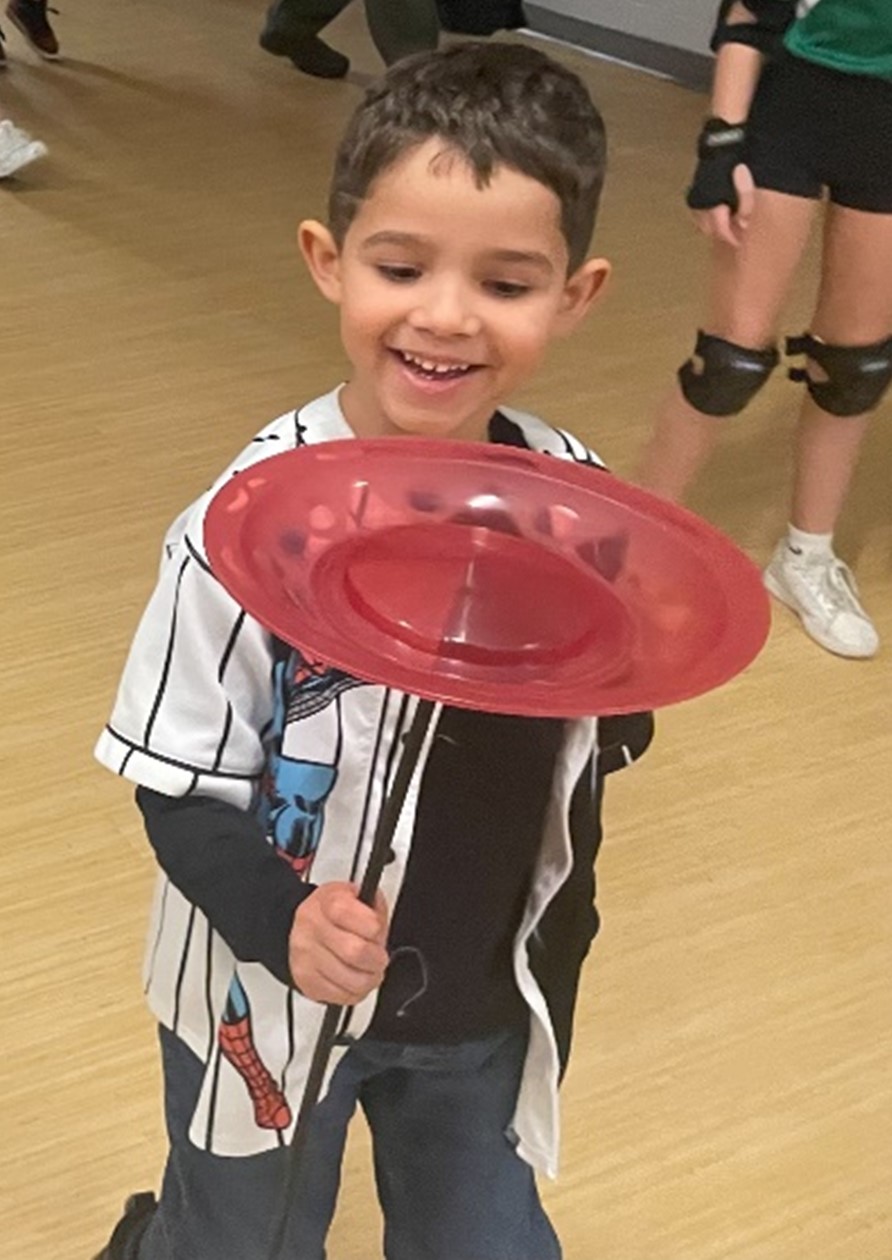
That work was on full display recently as Mt. Ararat High School in Topsham, under the co-leadership of Community Learning and Extended Learning Opportunities (ELO) Coordinator Doug Ware, hosted its second annual STEM (Science, Technology, Engineering, and Mathematics) Night on January 30, 2026. The event drew approximately 500 attendees and featured more than 40 vendors, transforming the school into a dynamic hub of innovation, collaboration, and hands-on discovery.
During this event, families and community members from MSAD 75 joined local businesses, industry leaders, and educators for a vibrant evening celebrating STEM. Participants of all ages engaged in activities ranging from virtual medical simulations and Lego robotics to tours of the Bath Iron Works virtual reality trailer and digital arts showcases.
For many attendees, the event highlighted the strength of Maine’s local STEM ecosystem. Paul McGuire, a local alum, entrepreneur, father, and veteran, attended with his family.
“Seeing employers represented from construction to aviation reminded me how strong our STEM community is,” McGuire said. “It’s great to know students can find those opportunities right in our backyard.”
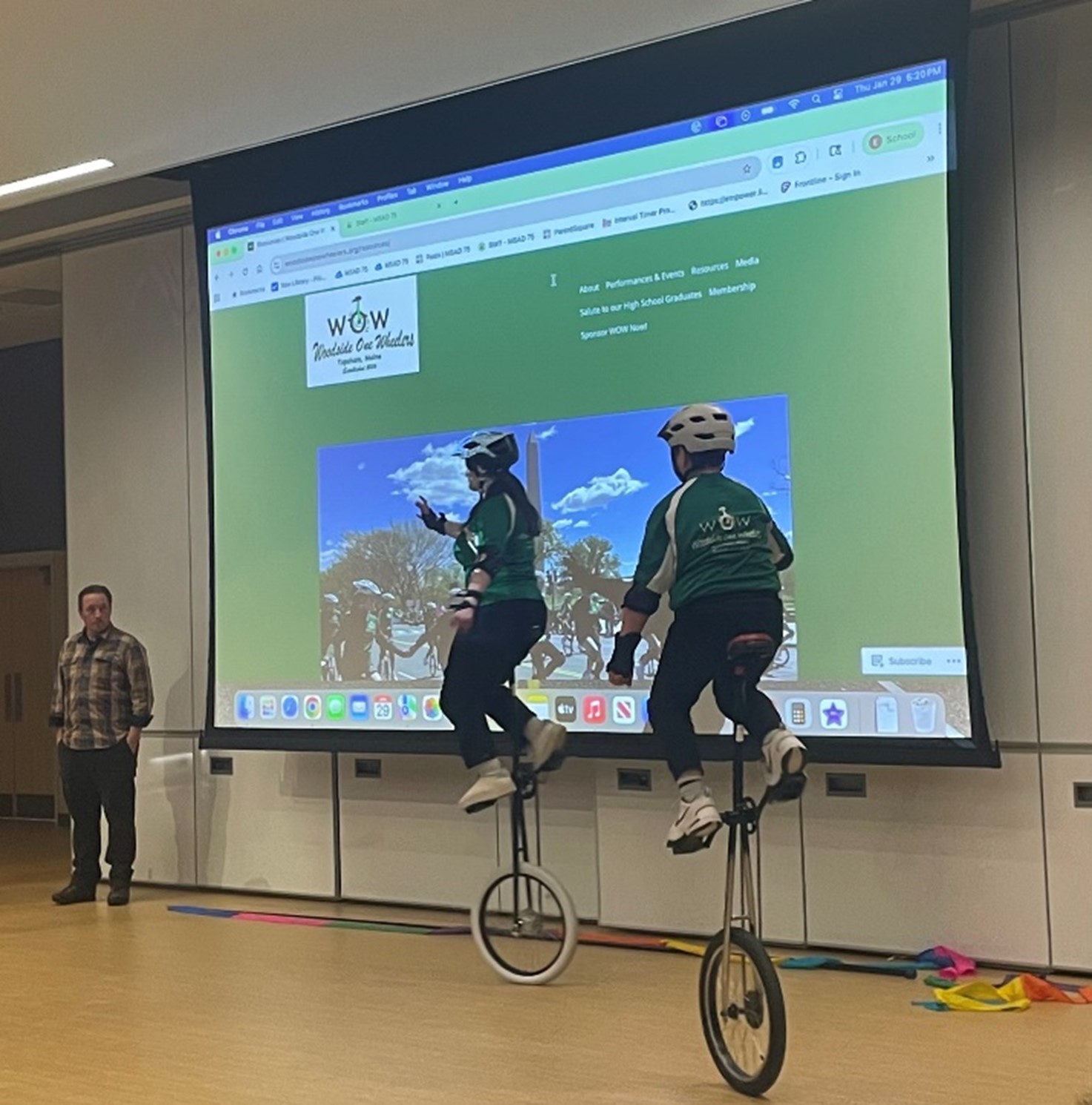
A highlight of the evening was a performance by the Woodside One Wheelers, a juggling and unicycling group from Woodside Elementary School. Students attached sensors to their unicycles to demonstrate how scientific data is gathered and how physics principles apply in motion, blending performance, engineering, and applied science in a way that captivated the audience. The group later performed at the halftime of a local girls’ basketball game, extending the celebration of learning beyond the STEM exhibits.
Events like STEM Night exemplify the multifaceted impact of community outreach and extended learning coordination. The role includes building community partnerships that bring businesses and civic organizations into the school experience; managing ELOs that allow students to earn credit through internships, job shadows, and real-world projects; supporting career and workforce development; encouraging student leadership and service; collaborating with faculty to connect curriculum with experiential learning; removing barriers to access; and telling the story of student success in ways that inspire continued investment and innovation.
Mt. Ararat High School has demonstrated exemplary leadership in advancing high-quality ELOs through its Maine DOE ELO Expansion grant. The school’s work demonstrates how innovative, community-connected learning deepens student engagement, supports informed postsecondary decisions, and helps students envision futures grounded in real experience, meaningful relationships, and opportunity.
STEM Night was an event that reflected what is possible when schools and communities work together. By bridging classroom learning with hands-on exploration and professional partnerships, Mt. Ararat High School continues to model how education can be both rigorous and relevant—preparing students not just for graduation but for life beyond it.
For further information about ELOs and Maine’s efforts to expand career exploration for Maine students, please visit the Maine DOE ELO webpage or contact Maine DOE Extended Learning Coordinator Lana Sawyer at Lana.Sawyer@maine.gov.
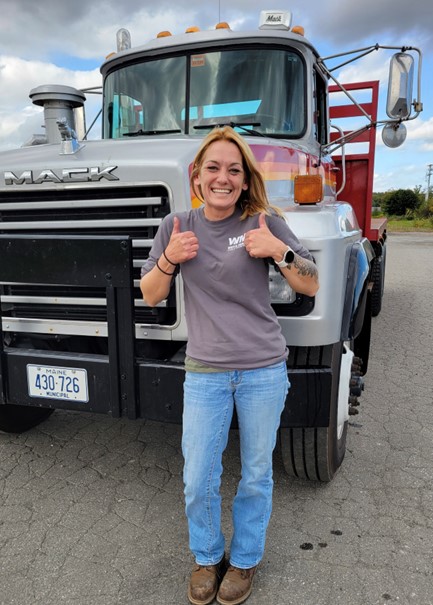
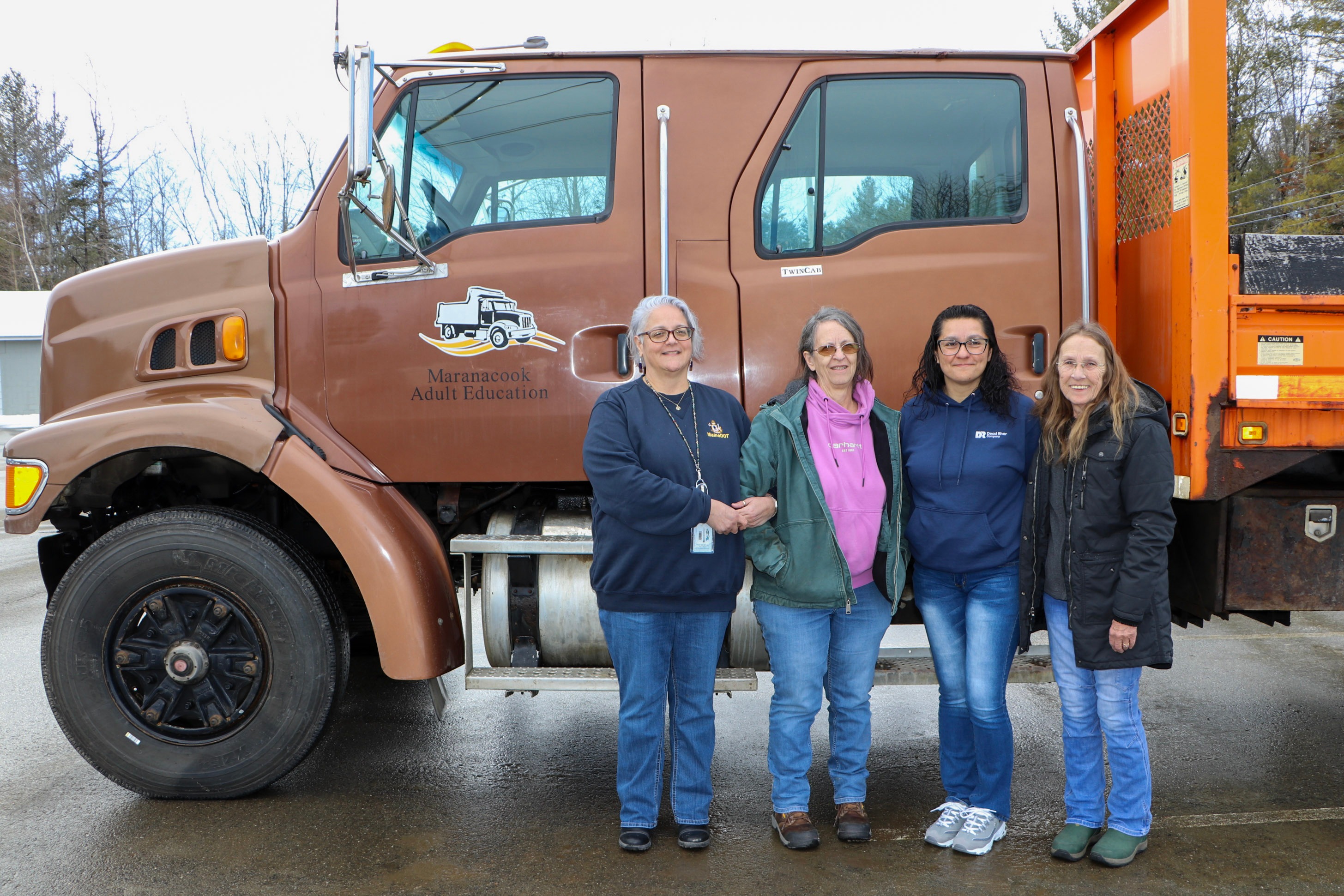
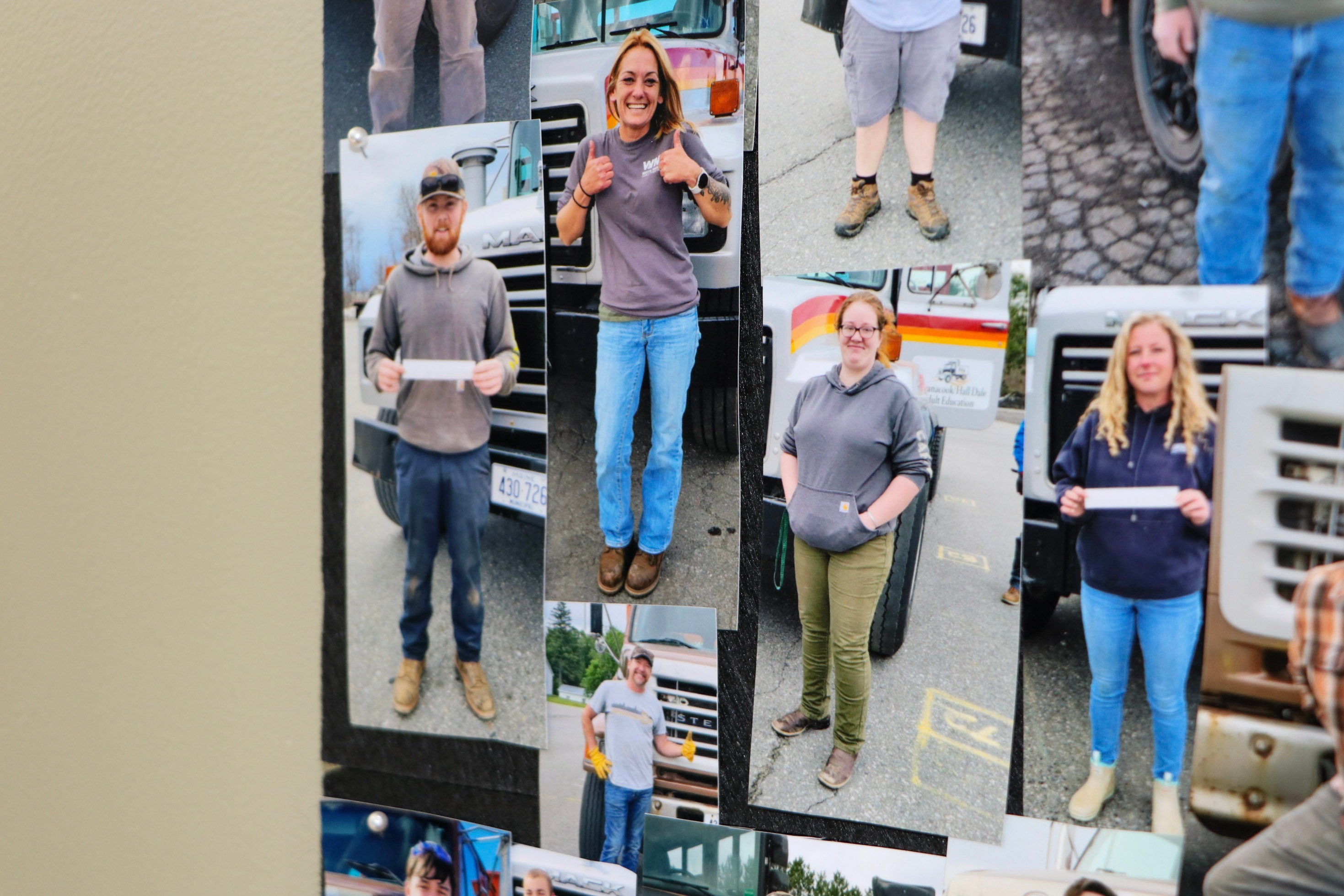
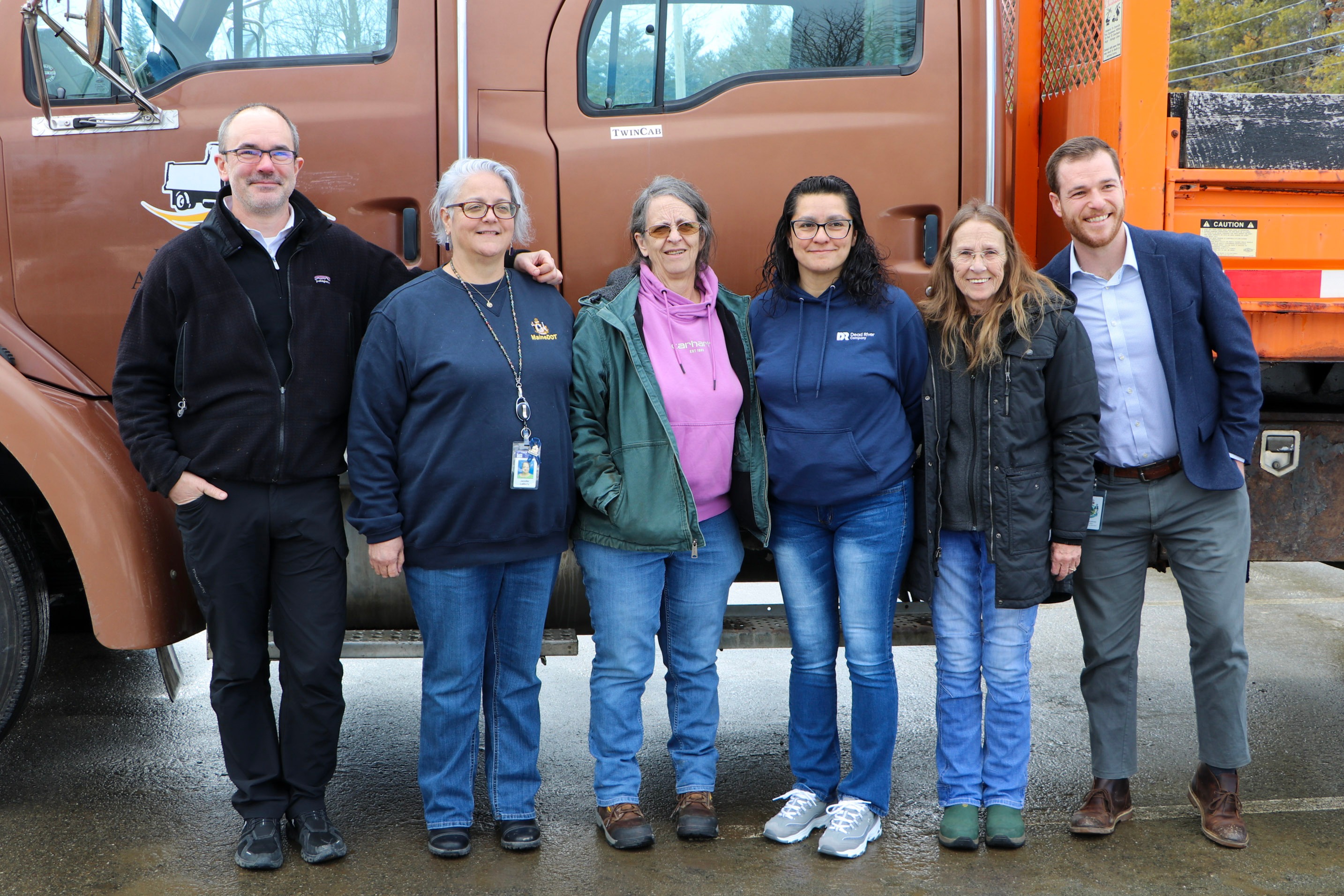
Pictured: Angela Mantha recently completed her CDL at Maranacook Adult Education.
In Maine, women from high school to adulthood are charting their paths into the state’s skilled trades workforce. By participating in hands-on experiences through career and technical education (CTE), Extended Learning Opportunities (ELO), and adult education, these students are mastering equipment, learning industry standards, and engaging in real-world problem-solving, gaining practical experience and marketable skills aligned with high-demand industries.
There is a greater trend at hand: More women are now entering career and technical programs with clear goals and a strong sense of direction, seeing the trades not as unconventional options but as viable, rewarding professions. The Maine Department of Education (DOE) is pleased to highlight some of stories from across the state for Women in the Trades Month in March.
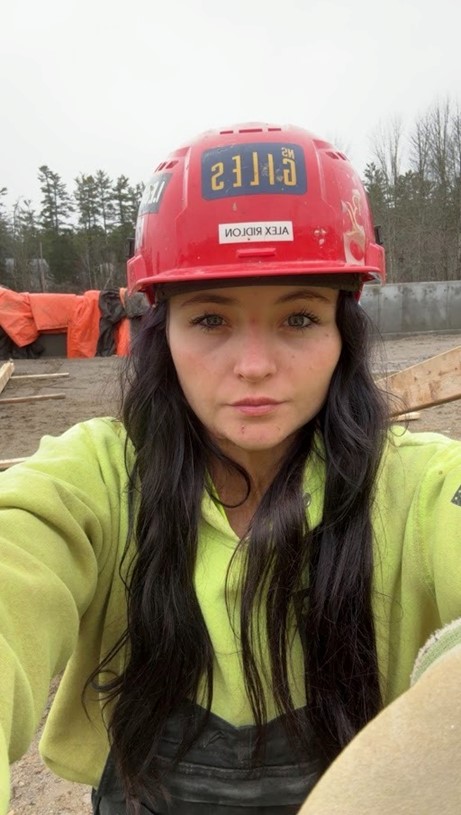
Alex Ridlon, Brewer High School
Back in 2020, when I was 12 years old, I was burned in a fire, and I lost my father; both are experiences that profoundly changed my perspective on life. Facing such a significant loss at a young age and the deforming of my skin forced me to mature quickly and shaped the direction I chose for my future.
From an early age, I enjoyed working outdoors and being active. As I entered Brewer High School, however, I often felt out of place.
My family was going through financial hardships, and I experienced bullying as a result. Rather than allow those challenges to define me, I made the decision to focus on building a future for myself. I chose to pursue a career in construction, both because I enjoy working outside and because it offered me a practical path toward independence and growth.
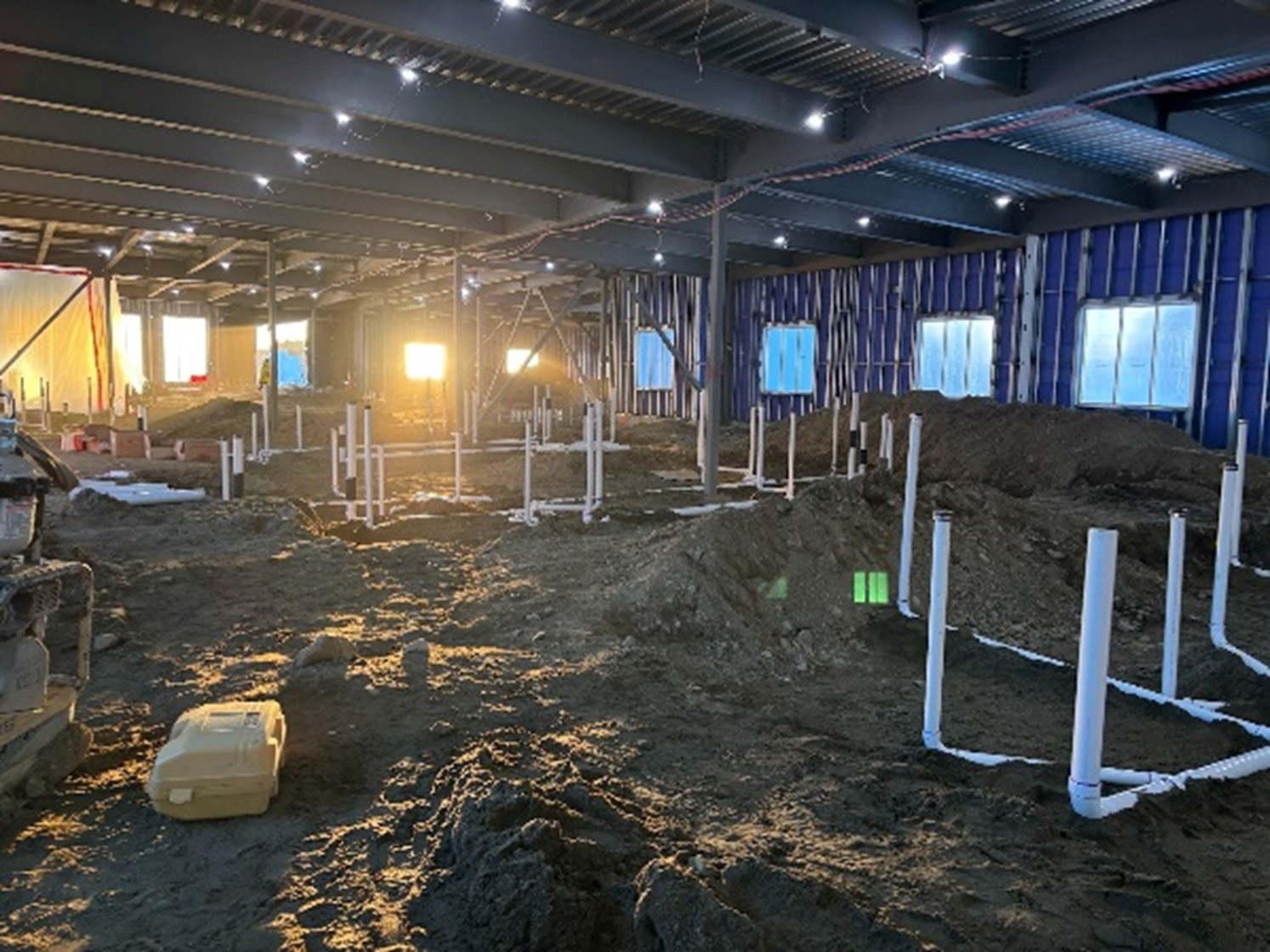
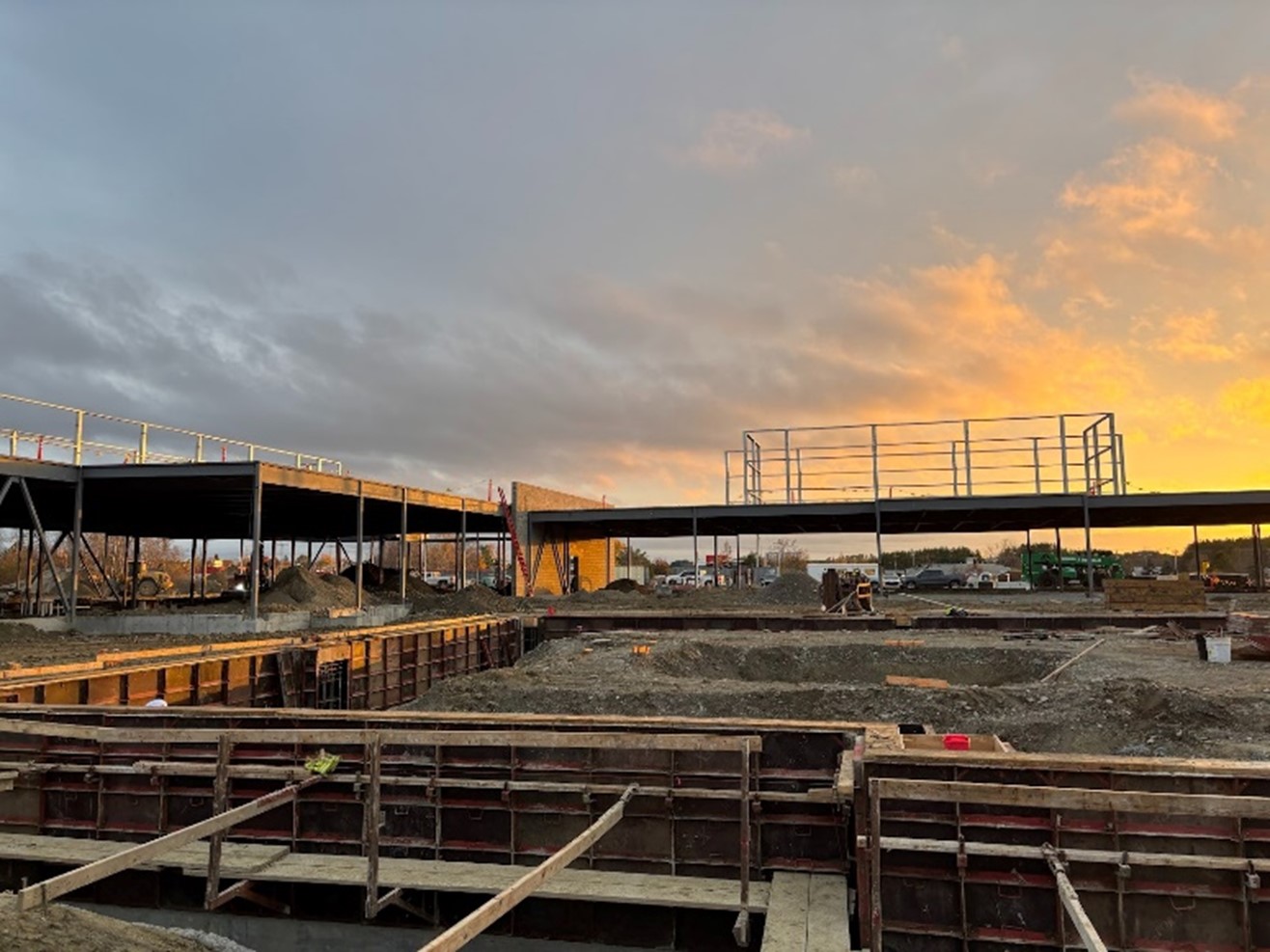
So far, I have primarily worked on medical facilities. It is especially meaningful to me to know that the buildings I help to construct will one day serve people in need. Contributing to projects that positively impact others gives my work a deeper purpose.
During that difficult time in high school, I sought guidance from one of the smartest, most helpful, easy-to-talk-to people, Mr. Kevin Napolillo, my ELO coordinator, who became an important source of support. He encouraged me to invest time in preparing for the real world. Over the course of four weeks during the summer, I dedicated myself to daily reading, learning, and hands-on preparation. That experience opened my eyes to what I was capable of achieving and helped me develop both confidence and direction.
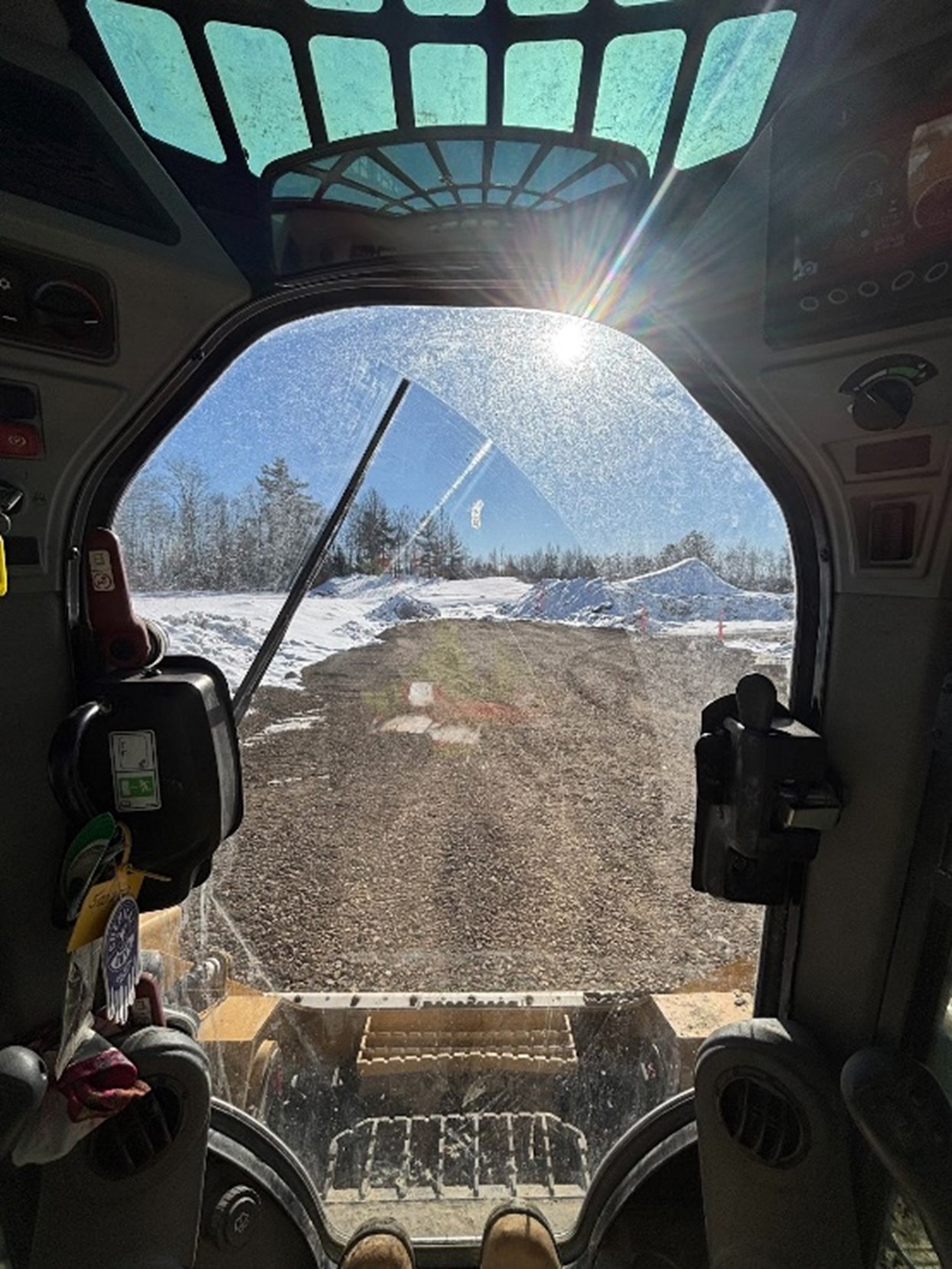
I decided to begin working with concrete as a way to enter the field and start building toward my long-term goal of becoming a heavy-equipment operator. Throughout my journey, I have learned the importance of resilience and focus. I have found that the more determined you are to succeed, the more important it becomes to stay committed to your goals and not be discouraged by negativity.
As a young woman entering the construction industry at 17 and now 18 years old, I have gained valuable experience and perspective. I graduated earlier than the rest of my class—an accomplishment that strengthened my confidence and reaffirmed my determination. Working alongside experienced professionals has shown me the clear difference between classroom learning and real-world application. In many ways, I have learned more through hands-on experience in construction than I did in a traditional classroom setting. My journey has been shaped by hardship, perseverance, and a strong desire to build not only structures but also a meaningful and independent life for myself.
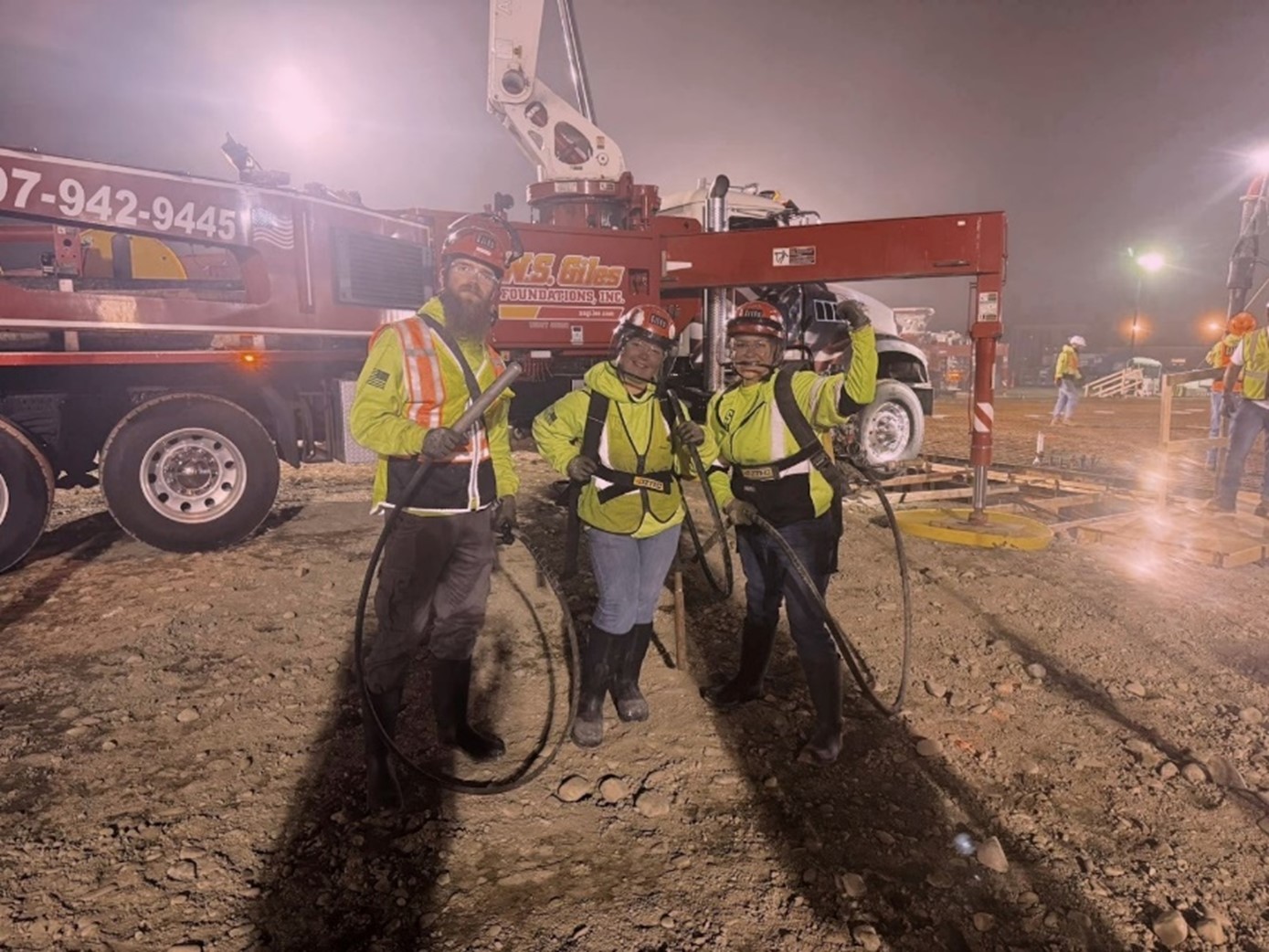
Isabella (Izzy) Moore, Brewer High School/Maine Construction Academy
During my junior year of high school, I knew it was nearly time to choose my career path post-graduation. I didn’t know what path I wanted to take, but I did know that I needed some hands-on work. I heard about the Maine Construction Academy, so I decided to check it out. I signed up and got approved for it but was still unsure; as it turns out, it was the best decision I ever made for myself, and I have no regrets.
This program gave me the opportunity to do an apprenticeship during my senior year of high school through N.S. Giles Foundations, which transferred to Sargent, [my current place of employment], after graduation. It was here that I learned how to use heavy equipment. Both companies have welcomed me with open arms and given me amazing mentors and opportunities.
Without all of this, I would not be the woman I am today. I feel as though construction gave me more structure and discipline, along with a lot of confidence. I have been able to not only become more independent mentally but financially, as well. At just 19 years old, I have my own apartment, bought my first “big girl” car on my own, and have taken a few vacations. Now, that’s just the fun stuff—but you get what I’m saying. If it weren’t for this program, I wouldn’t be where I am today, nor would I have the life I have built for myself so far.
What started out as “I’m just going to test the waters and see what happens” turned into such a growing passion for this field. I can’t see myself doing anything else, and I look forward to doing this for the rest of my career. I am extremely grateful to all the people who have taken a chance on me during this path, along with all of the opportunities that have been given to me.
Lily Kick, Sacopee Valley High School
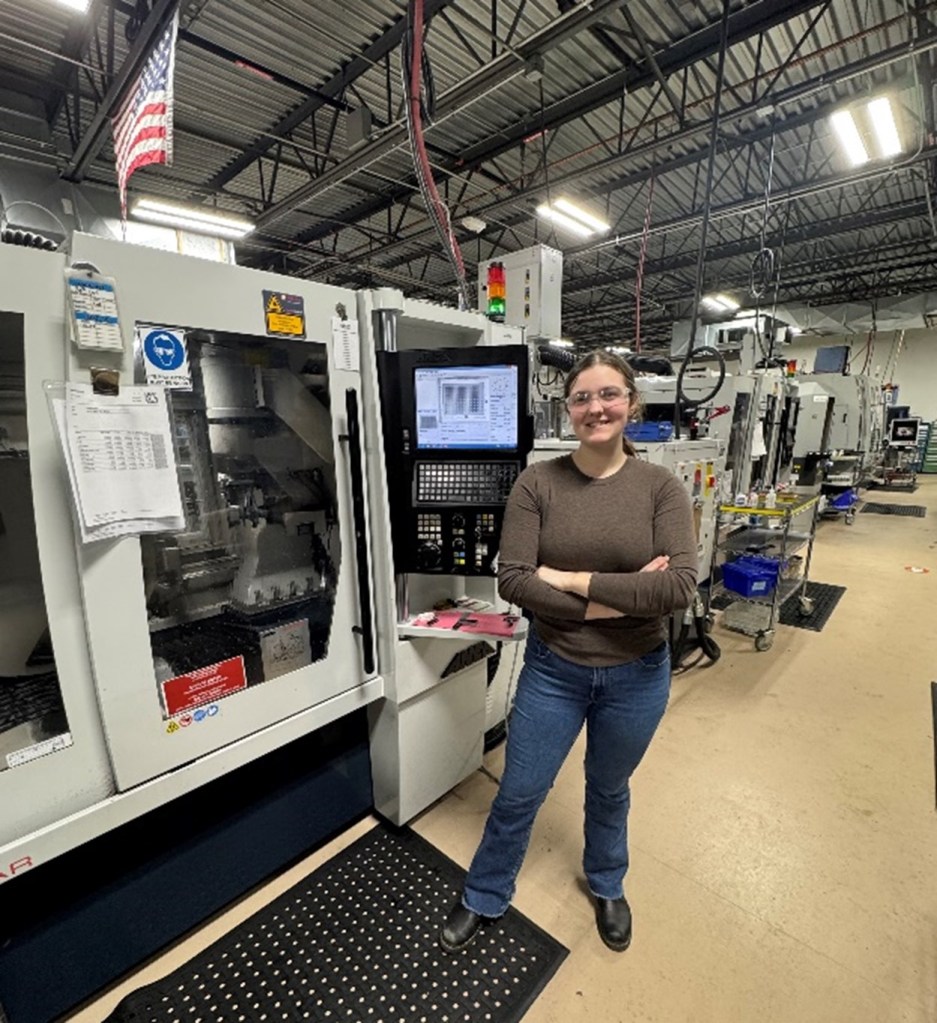
Lily Kick is a senior at Sacopee Valley High School who plans to pursue a career in the manufacturing industry.
“Manufacturing is a field full of innovation, and that is what I want to invest my future in,” Kick said. “Career surveys often pushed me toward architecture or actuary. Through some research and a few job shadows, I learned that these were not career pathways for me.”
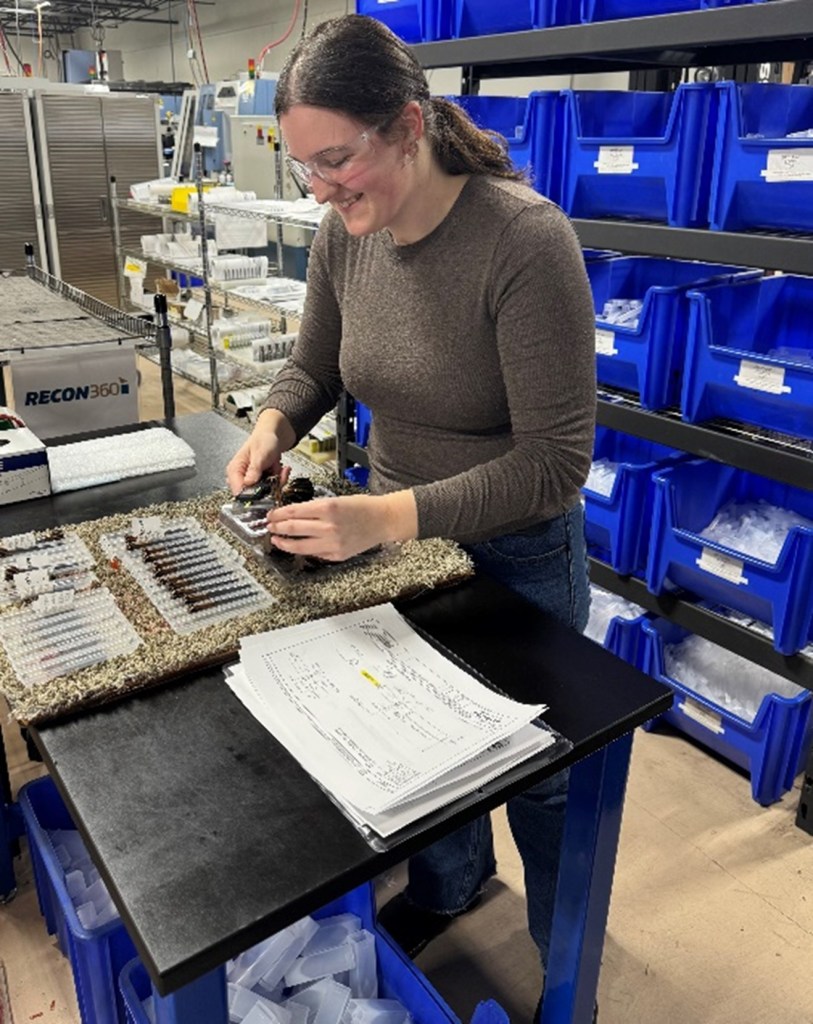
As a junior, Kick interned at New England Castings in Standish, a local manufacturer of precision alloy castings using the lost-wax casting method. This year, she is participating in an internship at ARCH Cutting Tools in Cornish, a company that manufactures metal removal cutting tools for a variety of industries.
“My two internships have solidified my decision to obtain a mechanical engineering degree and hopefully contribute to the innovation in the manufacturing industry,” Kick said.
Kick explained that she does not think she would enjoy a predictable office job. Instead, she prefers the field’s constant new tasks and issues that require immediate attention, as well as its adaptability and unpredictability.
Kick credits the support of her ELO teacher, Dr. Elizabeth Sanborn, whom she says, “undoubtedly made the most impactful difference in my future pursuing engineering and manufacturing.”
Kick noted she also feels her ELO experiences have helped to strengthen her personally as a young woman.
“It is notorious that trades are a male-dominated field; however, my success has taught me there is always room for change,” Kick said.
Maranacook Adult Education
One of the programs offered at Maranacook Adult Education is aimed at addressing a critical need in the workforce: truck driving.
“Both nationally and here in Maine, we are facing a critical shortage of truck drivers. There simply are not enough qualified drivers to meet the needs of the industry,” Steve Vose, Director of Maranacook Adult Education, said.
Vose said part of the solution entails getting more women involved by demonstrating that truck driving is a safe, viable career path with good pay—typically above minimum wage. He said he was pleased when the Maine Department of Labor and Maine Department of Transportation announced a $96,000 Women in Trucking grant for Maranacook Adult Education to help more women afford to get their Commercial Driver’s License (CDL).
“I am extremely encouraged to see state governments, employers, and nonprofit organizations recognizing this challenge and beginning to provide truck-driving schools with the financial support and resources necessary to help address these staffing shortages,” Vose said. “For far too long, the trucking industry has overlooked a vital resource: women drivers. Women are the future of trucking and deserve to be recognized and valued as such.”
Vanessa Mercado recently received her CDL from Maranacook Adult Education and is now driving for Dead River Company—an experience that she has called “life changing.” Mercado said the Maranacook Adult Education program helped her to gain confidence in her skills, allowing her to now do this job that she finds meaningful.
“I know that I’m providing to the community as a delivery driver,” Mercado said. “I’m able to do something that gives back.”
Nancy Frost, one of two female truck-driving instructors at Maranacook Adult Education, said that she is pleased to see more female representation in the truck-driving industry.
“I think it’s a lot easier for women now,” Frost said. “I think that this grant is going to be wonderful.”
Vose shared that all Women in Truck Driving scholarships are spoken for in the July program, but Maranacook Adult Education is currently accepting scholarship applications for November. Those interested should please contact Vose at 207-242-8795.
Please visit the Maine DOE website to learn more about ELOs, adult education, and CTE across the state.
Pictured: Students in Washington County learn how to grow crops.
Since 2022, Maine has invested a historic $7.1 million to expand Extended Learning Opportunities (ELO) programming throughout the state. ELOs provide schools with opportunities to create meaningful connections with employers statewide. In turn, they help young people better understand career opportunities and acquire valuable foundational career skills, including initiative, adaptability, problem-solving, teamwork, and communication.
Through ELOs, Maine students are learning by doing. They are earning credentials, such as certified nursing assistant; installing boilers alongside skilled tradespeople; training to become future educators; participating in law-related ELOs; and engaging in countless other hands-on, career-connected experiences.
In 2024, the Maine State Legislature codified ELOs in statute as an approved education pathway. This statute, intentionally written with flexibility, empowers schools and communities to design ELO programs that meet local workforce needs, while honoring student interests and goals.
ELOs by the Number
There have been two rounds of Maine DOE ELO grants. The first round, $5.6 million of the Maine Jobs and Recovery Plan (MJRP), was awarded in 2022 to 26 schools and community-based organizations throughout the state, covering 13 counties. In 2025, the state invested a second round of $1.5 million to support ELO 2.0, which funded 12 ELO programs. These awardees included expansions of existing ELO programming and the launch of new programs.
Between the fall of 2022 and fall of 2025, the Maine DOE grant-funded ELO programs have seen:
3,000+ core and elective credits earned.
6,000+ student participants.
3,000+ new school-employer partnerships.
8,000+ community and business engagements.
These numbers represent more than participation; they reflect aspiration, engagement, and strengthened collaboration among educators and employers, as ELOs continue to become part of the fabric of Maine’s education landscape. (Please note that this data does not include the outcomes of other ELO programs in Maine, such as those that are supported locally or funded through other agencies.
Some examples of these recent investments include ELOs at:
Mountain Valley High School, focused on building local aspirations and local talent.
Brewer High School and Marshwood High School, embedding ELOs schoolwide.
A partnership between the Rural Aspirations Project and Healthy Acadia, expanding ELO access to all high school students in Washington County.
Together, these programs demonstrate that ELOs are not isolated efforts; they are becoming part of the fabric of Maine’s education landscape.
The ELO program at the Maine DOE also works closely with the Maine Career Exploration Program, housed within the Maine Department of Economic and Community Development. This program provides 75 hours of paid career exploration for youth ages 16-24, supporting job shadows, internships, mentorships, apprenticeships, digital learning, independent study, community service, and work-based learning experiences, including ELOs.
Regional Collaborations
Throughout Maine, the Community Coordinators Collaborative (C3) serves as an active educator-led network dedicated to building strong business partnerships that expand students’ access to meaningful career exploration experiences, including job shadows, career talks, workplace tours, and internships. By connecting students directly with employers, C3 helps Maine youth navigate future career pathways and strengthens efforts to retain talent and grow Maine’s workforce. Likewise, there are several regional collaborations, both newly formed and long established, such as the York County, Washington County, and Midcoast Collaboratives, all working to deepen partnerships and expand opportunities within their communities.
Current and Future ELO Opportunities
Career Exploration Survey: On February 6, 2026, a short survey was shared through the Maine DOE newsroom.This survey was designed to identify which school administrative units (SAUs) and Career and Technical Education (CTE) schools are currently engaged in career exploration activities—and to gather insights into what is working, what is needed, and where additional support could make the biggest impact. Responses will help inform statewide efforts related to resources, professional development, and technical assistance for pre-K–12 students and school staff.
Monthly, no-cost, virtual, synchronous professional development hosted by the Maine DOE ELO team: Professionals in the field will share their best practices and resources, and agency partners will present on their programs and how students and school ELO programs may access them. The Maine DOE ELO team will also host office hours for ELO grantees. Please see the Maine DOE ELO webpage for upcoming opportunities.
ELO celebration at the Hall of Flags: Join the Maine DOE ELO team and students/staff from ELO programs statewide on April 30, 2026, from 1-4 p.m. at the Hall of Flags in Augusta.This afternoon will be spent celebrating and raising awareness about ELOs in Maine by highlighting the impactful work of communities, students, staff, and partners. Students will display their ELO work through a student showcase of statewide ELO profiles.
Supporting younger learners in careerexploration: The Maine DOE ELO team will be launching a community of practice (COP) for educators who provide career exploration experiences for younger learners (preK-8). This COP builds on the successful summer pilot, Maine Out of School Time program. (MOST) which supported career exploration for students in grades 4–6. To learn more about MOST, please watch this short video and stay tuned for updates on how to join the community of practice. This expansion reflects the understanding that career exploration does not begin in high school; it begins with early exposure, curiosity, and possibilities!
For further information about ELOs and Maine’s efforts to expand career exploration for Maine students, please visit the Maine DOE ELO webpage or contact Maine DOE Extended Learning Coordinator Lana Sawyer at Lana.Sawyer@maine.gov.
The Maine Department of Education (DOE) is committed to expanding career pathways that lead students toward meaningful, in-demand professions. In partnership with the Maine Motor Transport Association (MMTA), the Maine DOE is proud to highlight the “Go. Your Way. Maine” workforce development campaign and Career Exploration Unit, an experiential learning resource designed to introduce students to careers in Maine’s trucking industry.
Maine’s economy depends on the movement of goods and services, and the trucking industry offers a broad range of stable, high-growth career paths that extend far beyond the driver’s seat. This Career Exploration Unit—a mobile, interactive learning experience—allows students to explore career paths such as commercial truck driving, diesel and heavy equipment technology, supply chain and logistics, fleet and safety compliance, and dispatch and operations by bringing career discovery directly to school, community events, and workforce programs. Through this unit, students can:
Commercial truck driving
Diesel and heavy equipment technology
Supply chain and logistics
Fleet and safety compliance
Dispatch and operations
The Career Exploration Unit is a mobile, interactive learning experience that brings career discovery directly to schools, community events, and workforce programs. Inside the unit, students can:
Utilize a simulator to experience commercial truck driving.
Test out a virtual reality forklift operation.
Use a video game to disassemble and repair components of a semi-truck.
Gain insight into training pathways and career progression.
Explore the essential careers that fuel local communities and the national economy.
School administrative units (SAUs) that have partnered with MMTA on Career Exploration Unit events report high levels of student engagement, and learners benefit from the hands-on, real-world career exposure. This effort aligns closely with statewide goals for Extended Learning Opportunities (ELOs), workforce preparedness, Career and Technical Education (CTE), and post-secondary planning.
“The MMTA commercial trucking simulation gave our students a hands-on look at one of our state’s vital industries,” Michael Routhier, Brunswick High School Off-Campus Learning Center Teacher, said. “Theengagement and curiosity of students show how powerful real-world learning can be in preparing the next generation for high-demand careers.”
Students from the Brunswick School Department echoed Routhier’s enthusiasm, with many commenting on the realism and challenge of the simulator.
“I learned that it’s a lot harder than it looks to drive a truck,” Brook Hinkley noted.
“I learned that it’s very hard to break a semi and why,” Bella Duval added.
The experience was also personally significant for some students.
“It was meaningful because I got to see what it was like when my dad used to drive a truck,” Hinkley shared.
Other Brunswick students, like Quincy Garrett, said they appreciated the career insight that the experience offered, noting, “It was interesting to learn how much you can make in a year.”
The Maine DOE encourages SAUs to explore opportunities to request a visit from MMTA’s Career Exploration Unit. This unit may be requested for visits to schools serving grades 6-12. Other opportunities include:
Career days and job fairs.
ELO programs.
CTE programs.
Student leadership or workforce development events.
Experiential learning initiatives.
Alternative Education programs.
Adult Education programs.
Colleges and universities.
Early exposure to emerging career fields plays a powerful role in student decision-making, and programs like the “Go. Your Way. Maine” campaign expand student awareness of opportunities that offer financial stability, technical skill-building, and long-term growth.
The “Go. Your Way. Maine” website features information about trucking careers, where to attend trainings, and a grant opportunity for students entering the trucking industry. Through the John Austin Trucking Foundation, MMTA awards up to eight grants per month, each valued at up to $2,000, to support training in trucking careers.
To learn more or request a visit, schools may contact Derek Kennedy, MMTA Industry Image and Marketing Coordinator, at dkennedy@mmta.com or 207-623-4128. You can also visit the MMTA website for further details.