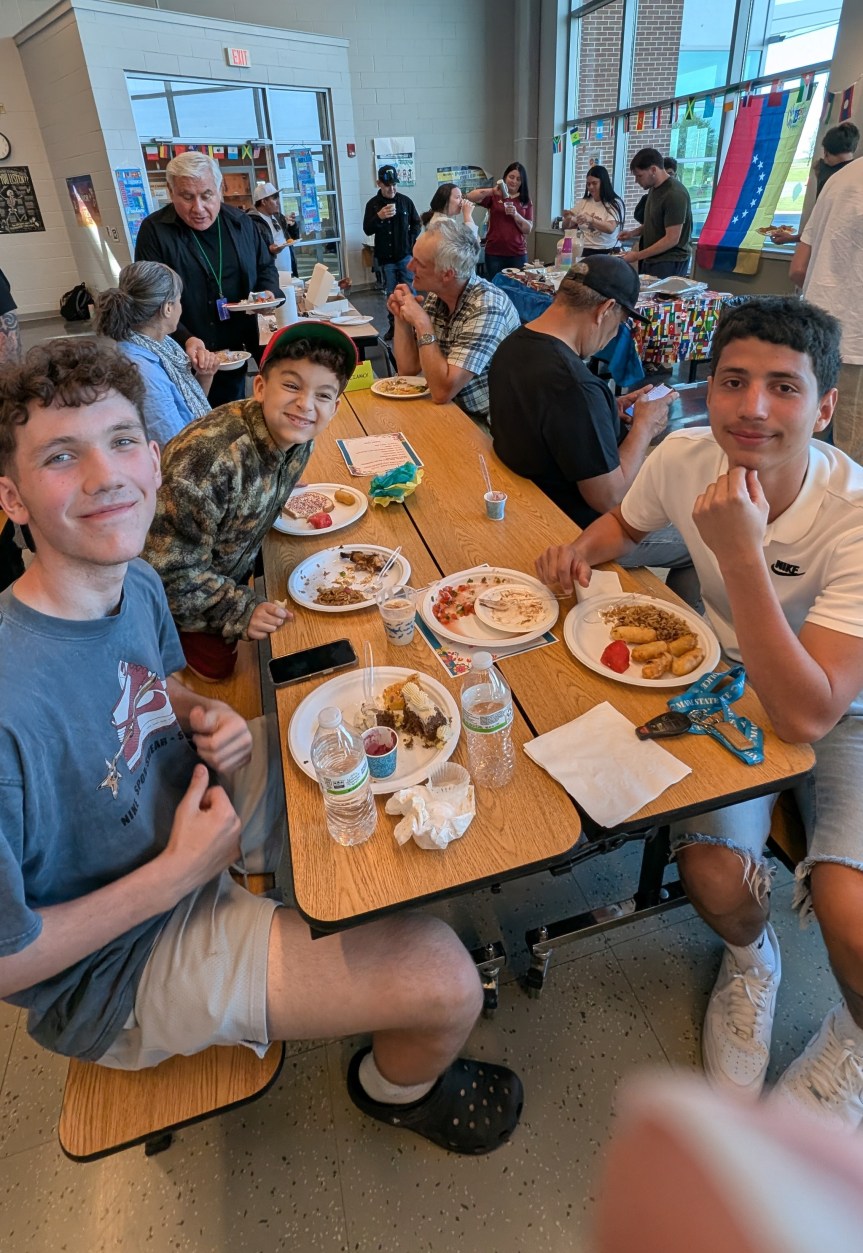
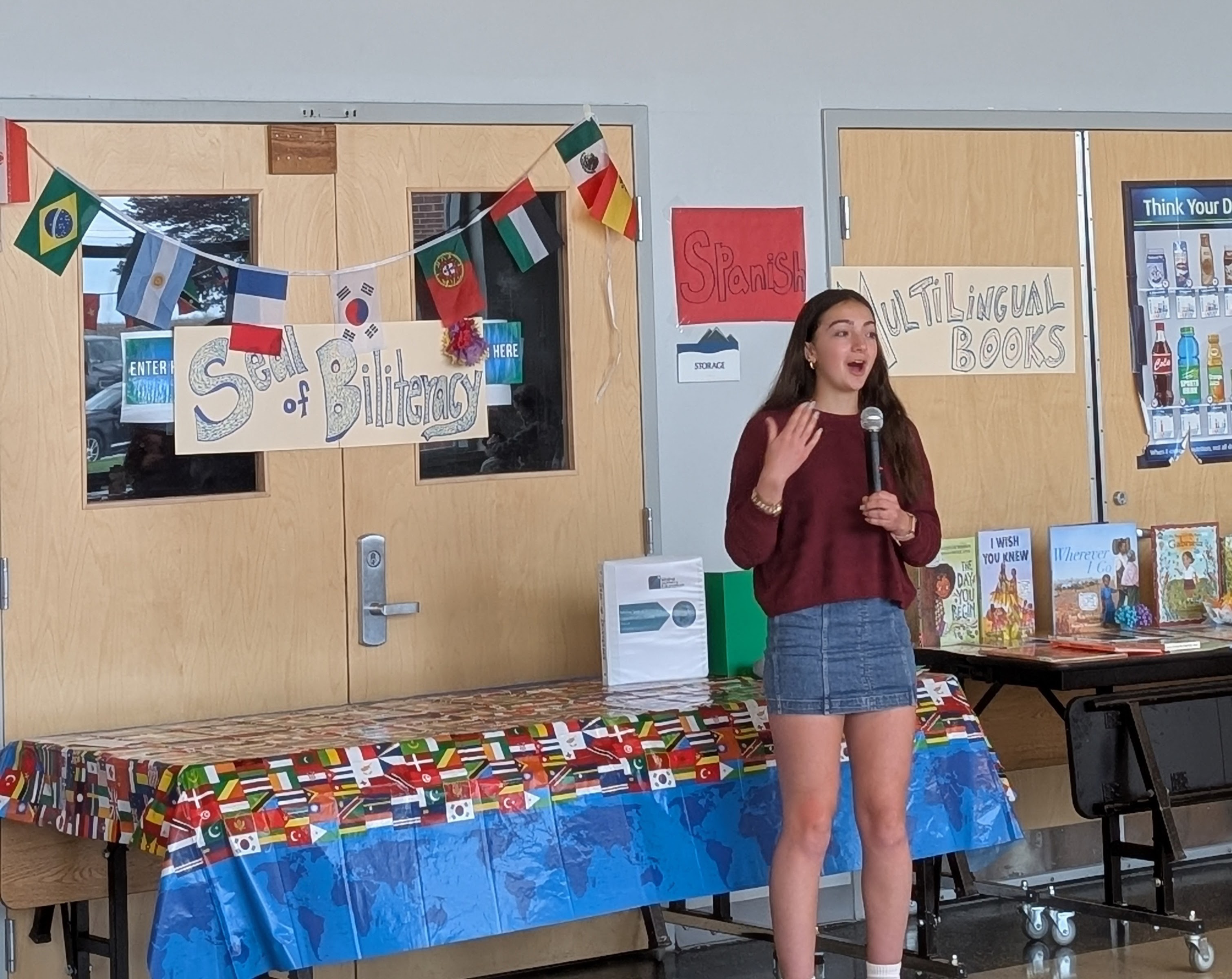
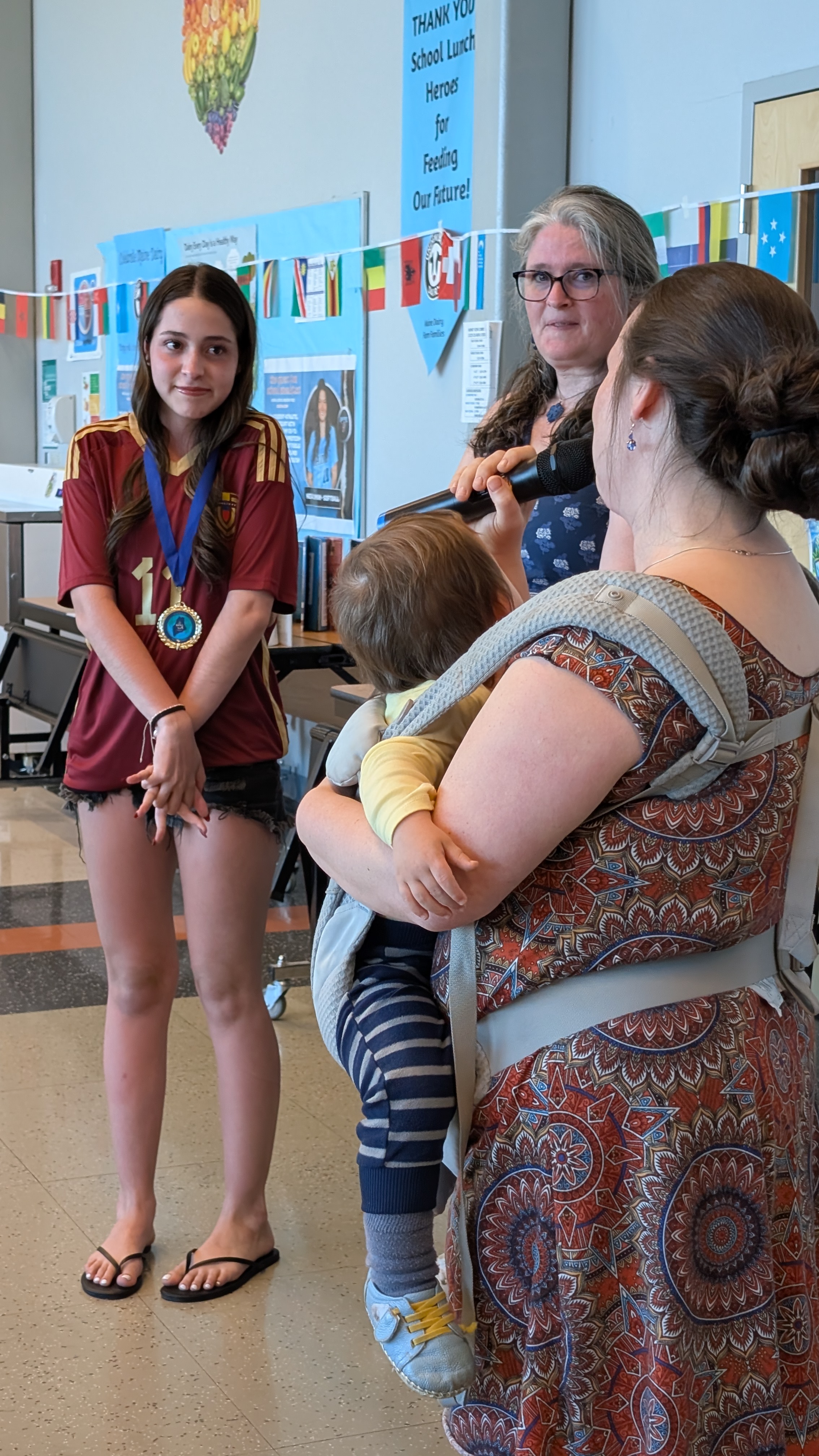
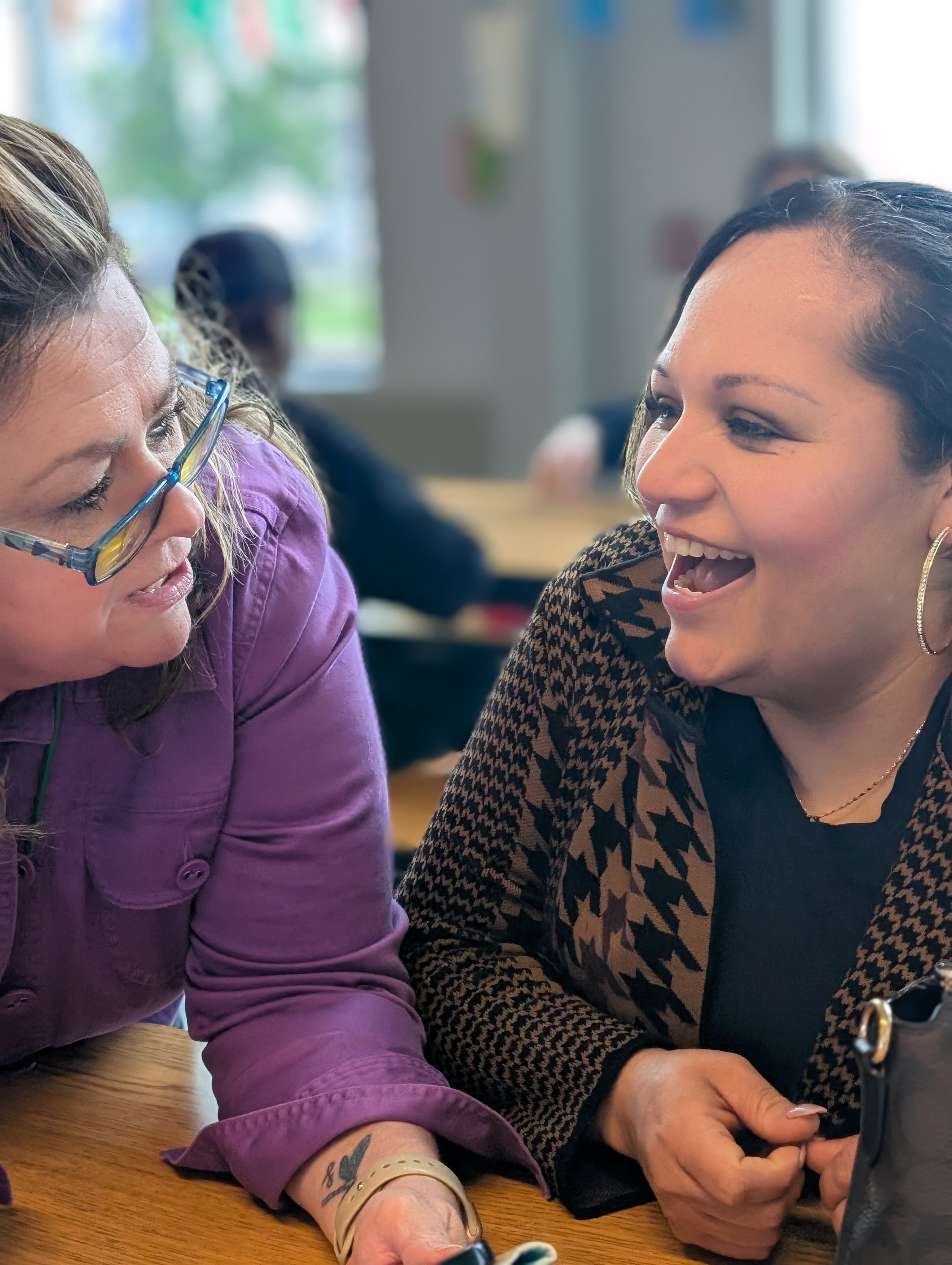
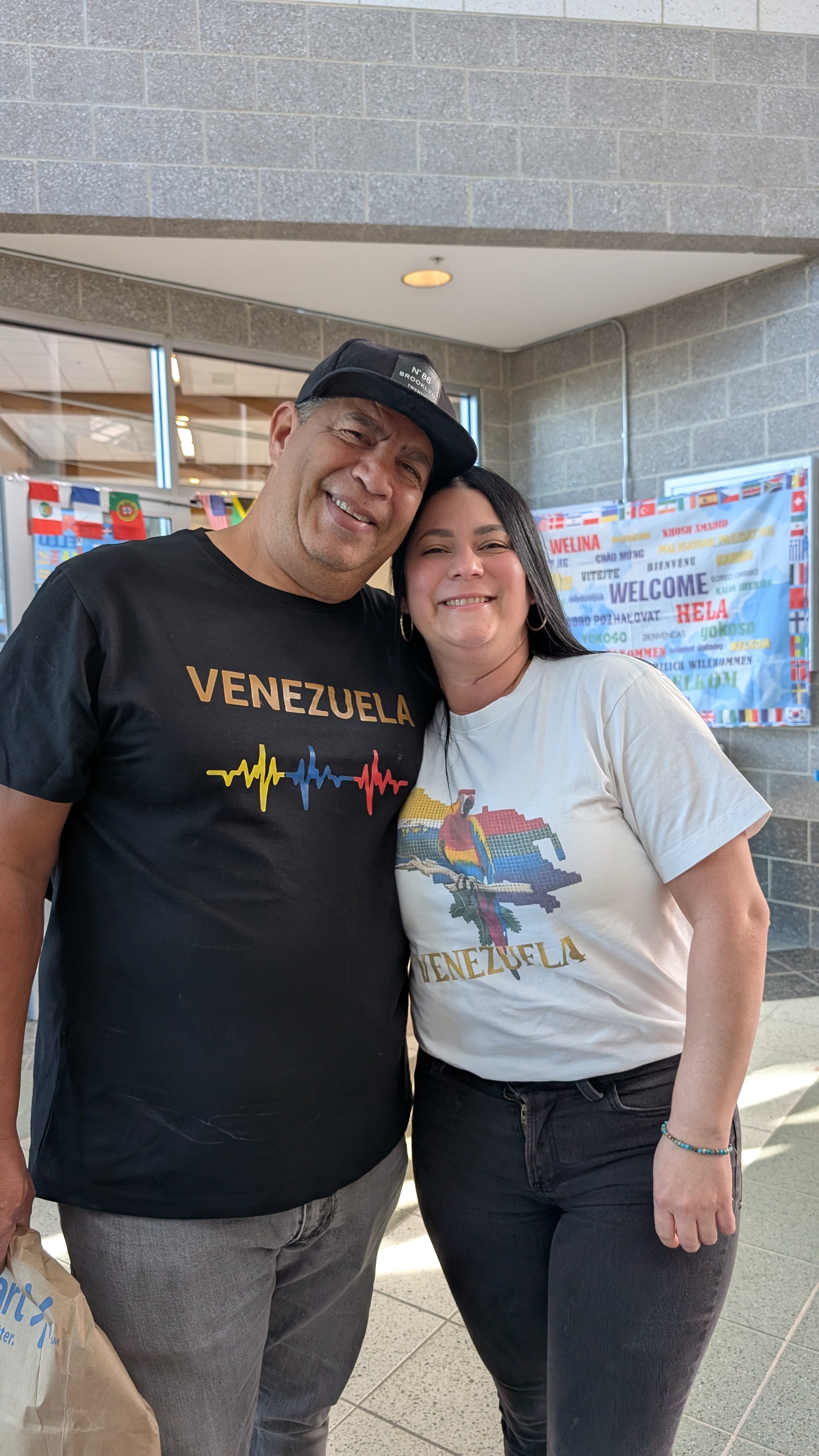
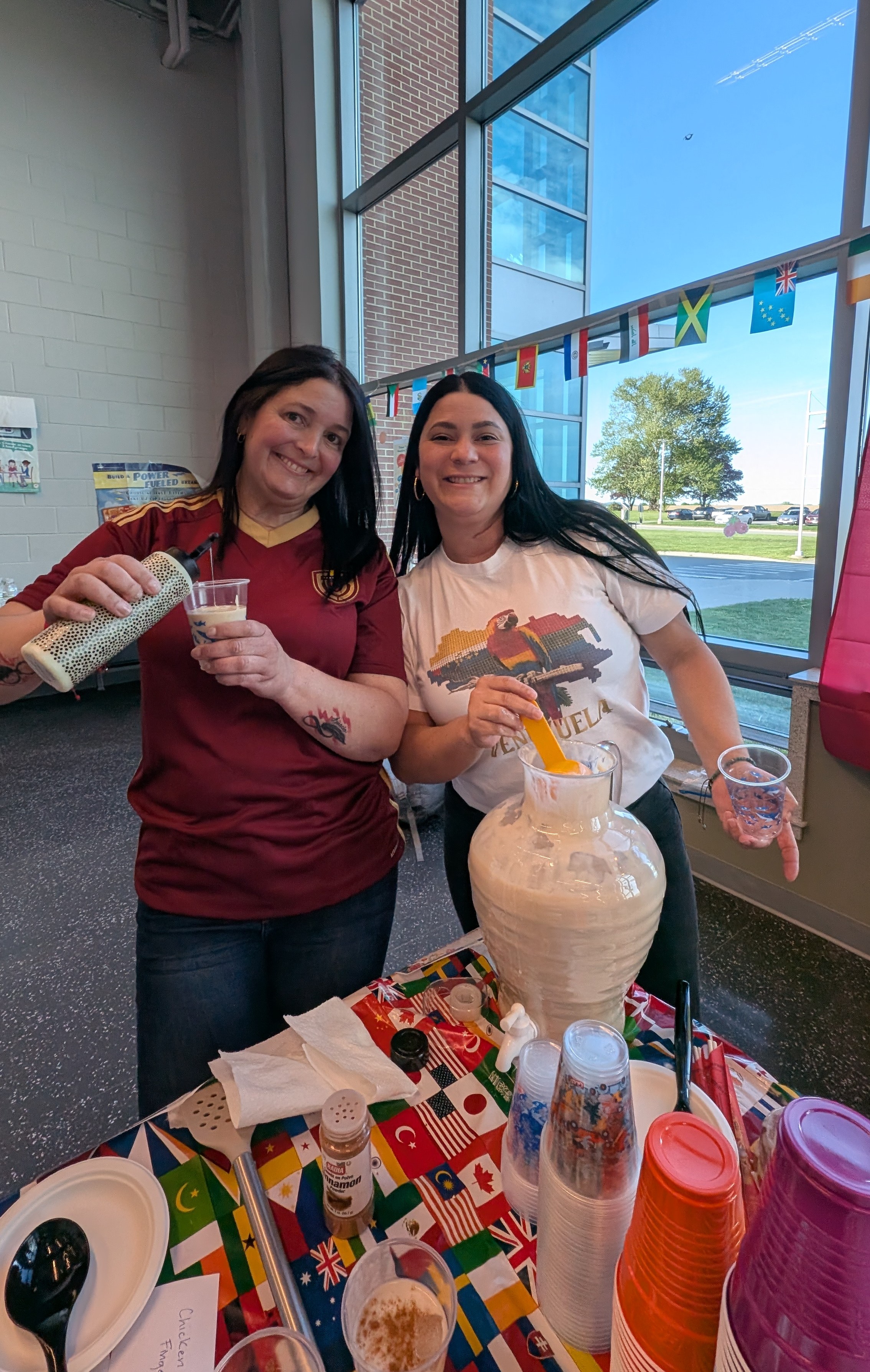
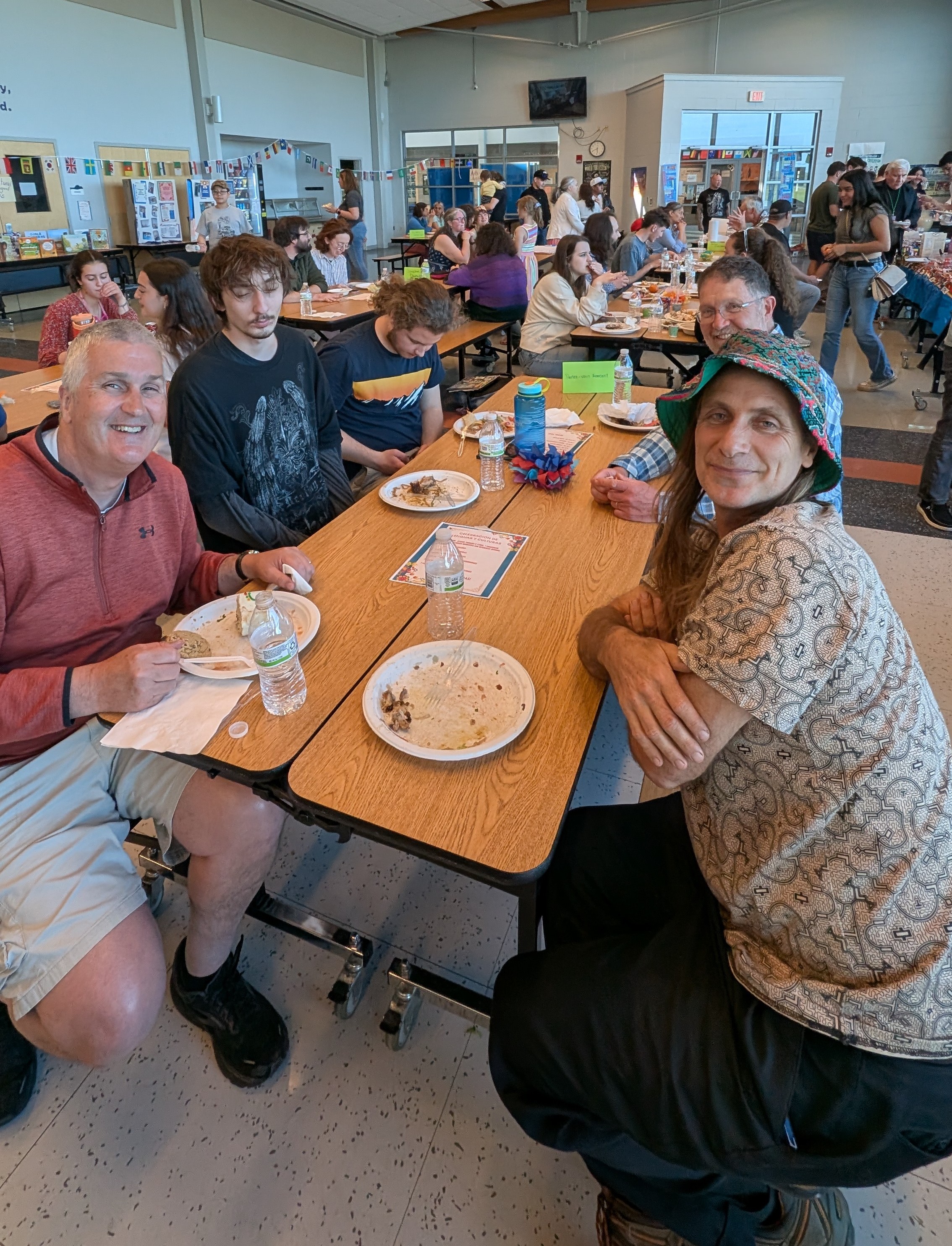
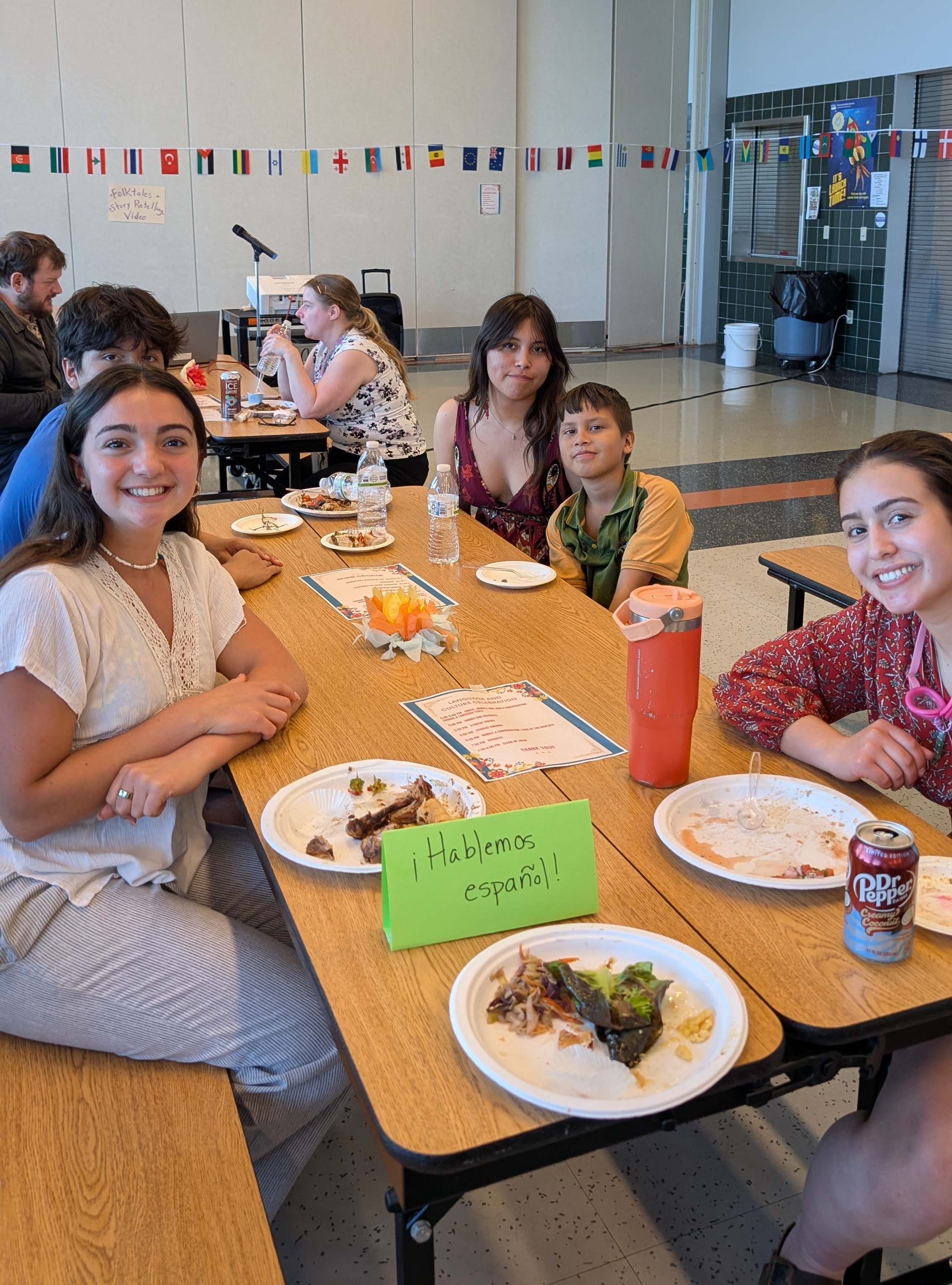
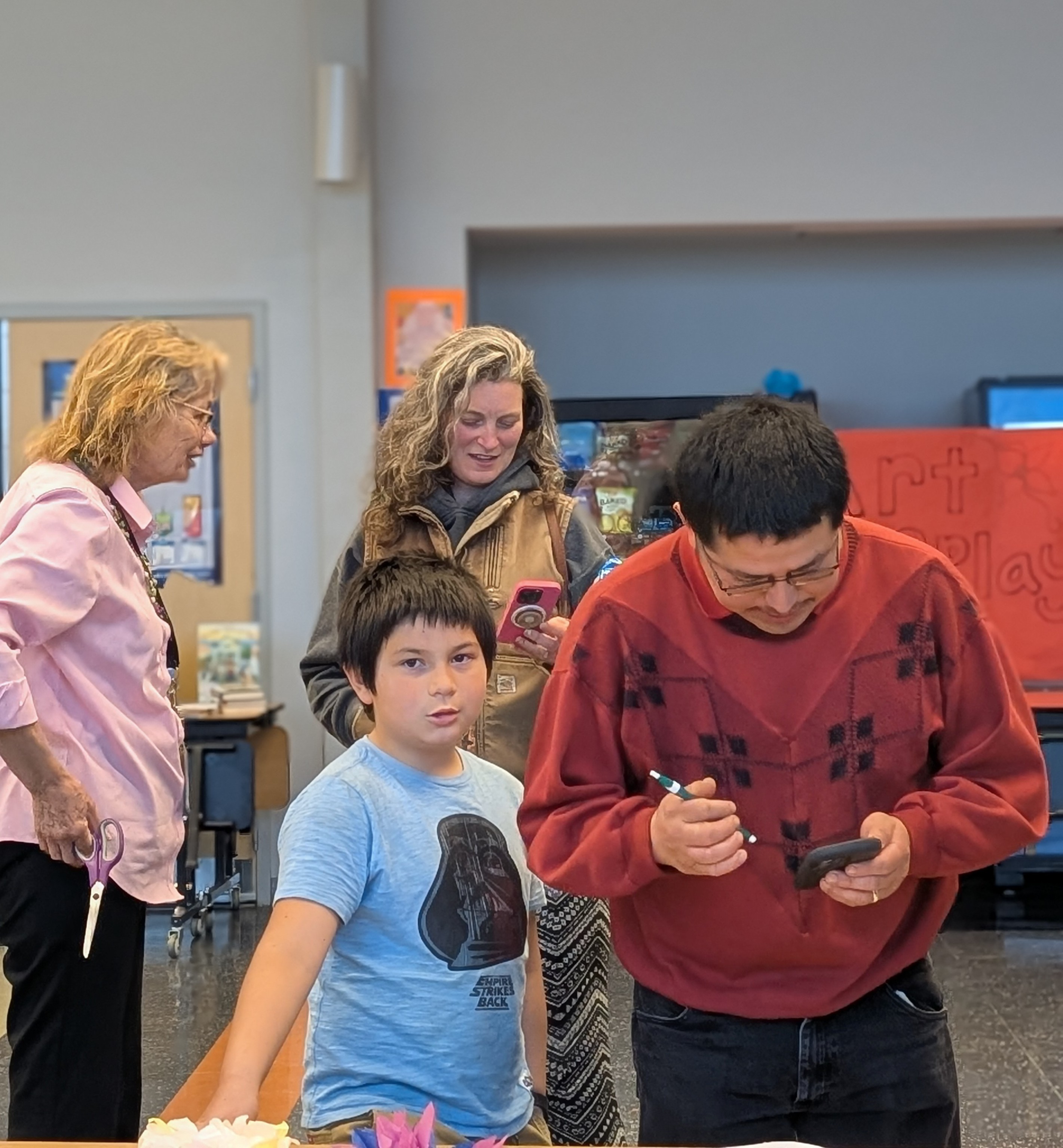
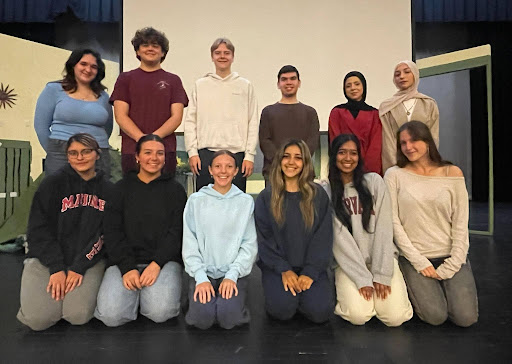
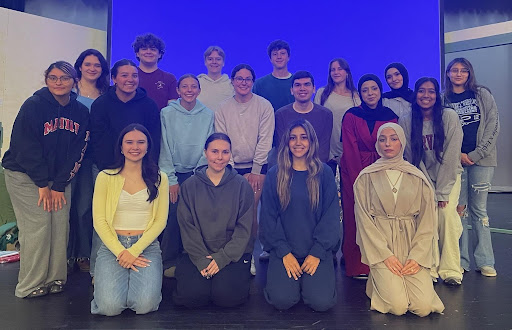
Mt. View High School and Elementary School students are joined by RSU 3 Adult Education students at a Language and Culture Celebration held by the district.
A collaboration between the World Languages and Multilingual Learners departments at Mount View High School in RSU 3 is creating more opportunities for students to demonstrate, celebrate, and build on their language skills.
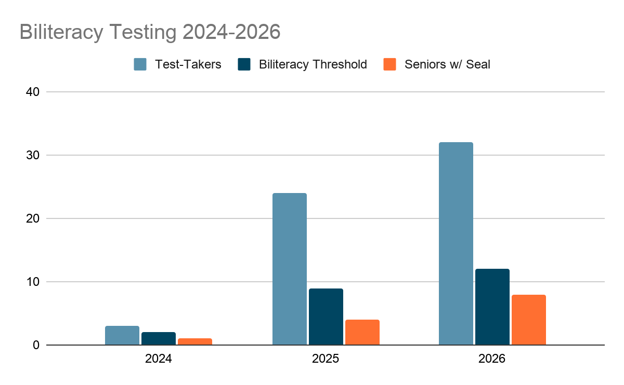
The school’s Seal of Biliteracy Program launched in spring 2024, when one graduating senior earned the Maine Seal of Biliteracy. Participation grew from 24 students in 2024–2025 to 33 students in 2025–2026. This spring, eight graduating seniors earned a total of nine Seals of Biliteracy, including the first student in the program to earn two awards.
The school has also expanded its language assessments. In spring 2024, students were assessed in Spanish and Italian. By spring 2026, Mount View High School had administered assessments in seven languages: Spanish, German, French, Italian, Mandarin, Portuguese, and Japanese.
The Seal of Biliteracy is a national academic award that recognizes students’ proficiency in two or more languages and celebrates the knowledge and skills they develop at school, at home, and in their communities.
At Mount View High School, educators have seen the assessment process become an important part of students’ language-learning journeys. For students studying a world language, it provides a clear goal, feedback on their progress, and motivation to keep learning.
For heritage language learners, it also recognizes and celebrates connections to family and community.
Mount View High School Seal of Biliteracy Coordinator and World Language educator, Dr. Anna Thomas shared that, “For our heritage learners, it has meant a great sense of pride and helping them see the value of their family’s language and set goals for biliteracy.”
The program has strengthened collaboration between World Languages and Multilingual Learner educators. Educators and students establish ambitious goals for students, reflect on student progress, and evaluate and strengthen programming to better support language development.
Dr. Thomas emphasized that, “The testing is giving our language students clear targets for advancement, feedback on progress, and motivation for steps forward. As educators, this is also helping us set ambitious goals and evaluate and fortify our programming through constant collaboration across our departments.”
Mt. View Biliteracy Testing 2024-2026 by World Language Teacher Anna Thomas
The school’s commitment to multilingualism extends beyond assessment.
In May, Mount View High School hosted its second annual Language and Culture Celebration, welcoming an estimated 150 students, staff, and community members. The event continued the school’s Language Stories series, which invites members of the school and broader community to share their experiences with language, culture, and bilingualism.
Leading up to this year’s event, as part of a Language Stories series, the school hosted three guest speakers who shared their personal journeys with bilingualism: Dr. Melissa Cuba of the University of Maine, Amelia Rukema of Maine Mobile Health, and musician Jubal Greenwood.
Hearing from bilingual and multilingual professionals helps students see how language skills can connect to their identities, communities, education, and future careers.
Mount View High School’s Biliteracy Program also helps students explore opportunities beyond high school.
Resources and advocacy from the Maine Department of Education have helped raise awareness of opportunities to earn college credit for demonstrated language proficiency. Students are also learning about careers that value multilingual skills.
Connections with multilingual educators and professionals have given students role models who demonstrate how language learning can open doors.
In two years, Mount View High School’s Biliteracy Program has grown from one Seal recipient to a program serving dozens of students, with assessments offered in seven languages. Its growth shows how cross-departmental collaboration can expand opportunities and help students recognize the value of the languages they know and use.
The Maine Department of Education celebrates Mt. View’s progress and the educators, students, families, and communities across Maine working to recognize multilingualism as an academic, cultural, and career strength.
This article was developed in collaboration with Mount View High School in RSU 3.To submit a good news story to the Maine DOE, please fill out the good news submission form.
(Images courtesy of Augusta School Department, The Portland Public Schools, and Bangor School Department)
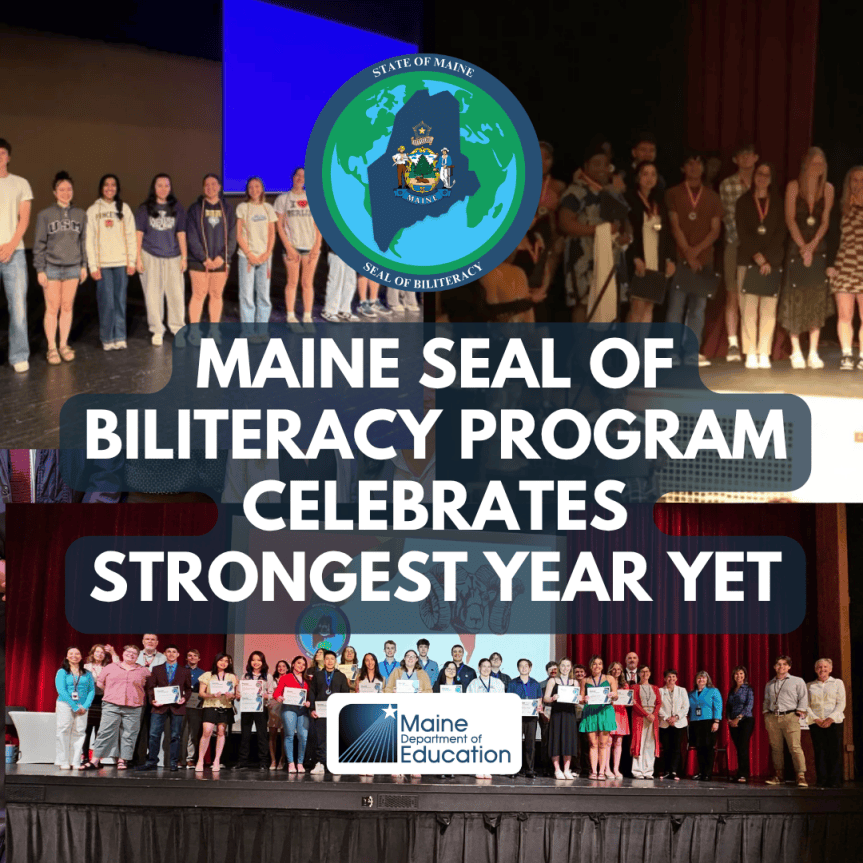
Maine students are earning the Seal of Biliteracy in record numbers, with an 18 percent increase in the number of students earning the distinction this year and an 11.5 percent increase in Maine high schools offering the opportunity.
The Maine Seal of Biliteracy recognizes graduating students who demonstrate proficiency in English and one or more additional languages. The statewide recognition celebrates students’ dedication to language learning and highlights bilingualism and multilingualism as valuable assets that support academic, career, and community opportunities.
“This year’s growth reflects the dedication of Maine students, families, educators, and school and district coordinators who support language learning and help students pursue the Seal of Biliteracy,” said Melanie Junkins, Assistant Professor of Education at the University of Maine at Presque Isle “The Seal recognizes a significant achievement and affirms that bilingualism and multilingualism are lifelong skills that benefit students throughout their education, careers, and lives.”
Recognizing Language as an Asset
For many Maine students, bilingualism and multilingualism are part of their everyday lives. Students may speak another language with family members, study a world language in school, or develop language skills through community, cultural, and international experiences.
The Seal of Biliteracy recognizes these experiences and abilities as assets.
The distinction provides students with an opportunity to show what they can do in English and an additional language through approved assessments and established criteria. Earning the Seal requires preparation, persistence, and strong language skills across multiple areas of communication.
The Seal also supports the goals of the Maine Learning Results, including the World Languages standards, which emphasize communication and intercultural understanding. These skills help prepare students to participate meaningfully in an increasingly interconnected world.
The Seal gives students a meaningful way to celebrate their language skills while recognizing an achievement that can continue to serve them beyond high school.
Resource Kit Supports Growing Interest
The continued growth of the Seal of Biliteracy program reflects increasing awareness of the value of multilingualism and the opportunities available to Maine students.
The Maine Seal of Biliteracy Resource Kit supports schools and educators by providing tools to promote the Seal, communicate with students and families, and build awareness of the process for earning the distinction.
As more schools use the Resource Kit to share information and encourage students to consider the Seal, students have more opportunities to learn how their bilingual and multilingual abilities can be recognized and celebrated.
Increasing awareness is an important part of expanding access to the Seal. Students need to know that the opportunity exists and understand the steps they can take to earn it.
Schools can support students throughout their educational journey by encouraging continued language learning, supporting students in developing their home and heritage languages, and providing opportunities to develop and demonstrate proficiency in a world language.
An Earned Distinction and Lifelong Skill
Earning the Seal of Biliteracy is a significant accomplishment. The distinction recognizes students who have demonstrated proficiency in English and an additional language and provides a formal acknowledgment of their achievement as they transition from high school to college, career, and civic life.
For students, the Seal can serve as evidence of valuable skills they carry with them beyond graduation. The ability to communicate across languages and cultures can support future educational opportunities, careers, relationships, and community engagement.
This year’s 18 percent increase is more than a program statistic. It means more Maine students being recognized for their dedication to language learning and for skills they have worked hard to develop.
The growth also reflects the work of educators, families, and communities across the state who recognize the languages students speak and study as important assets.
As Maine celebrates its strongest year yet for the Seal of Biliteracy, these students’ achievements highlight the value of bilingualism and multilingualism and the importance of providing opportunities to demonstrate their full range of knowledge and skills.
More Maine students than ever are earning recognition for their biliteracy, affirming that the languages they speak, study, and develop are valuable assets in schools, work, and life.
Twelve of the 19 Cony High School students who received the State of Maine Seal of Biliteracy gathered for a group photo at the recognition assembly held May 26, 2026.
Nineteen members of Cony High School’s Class of 2026 were recently recognized for earning the State of Maine Seal of Biliteracy, a distinction that honors students who have demonstrated proficiency in English and at least one additional language.
This year’s recipients earned the Seal in four languages: Spanish (11 students), German (4 students), Arabic (3 students), and French (1 student), reflecting both the diversity of Cony’s student body and the strength of its World Languages program.
The Seal of Biliteracy is a statewide initiative supported by the Maine Department of Education (DOE) that recognizes students who have attained high levels of proficiency in multiple languages. The Seal is added to a student’s transcript and can provide significant advantages in college admissions, opportunities for college credit, career readiness, and participation in global learning experiences.
Since Maine launched the Seal of Biliteracy program in 2018, participation has continued to grow. This year, 52 schools across Maine participated, with 517 students working toward earning the Seal in 33 different languages. Since the 2021-2022 school year, approximately 1,741 Maine students have earned the distinction.
At Cony, the Seal of Biliteracy represents more than language proficiency; it reflects a school culture that values global citizenship, cultural understanding, and meaningful opportunities for students to connect with the wider world. This is especially notable, as Cony’s World Languages department is led by two educators who have recently been recognized as being among the state’s best. Spanish teacher and department head Gretchen Livingston was named the 2026 Kennebec County Teacher of the Year, and German teacher Deborah Backman earned the same honor in 2025.
“Cony Middle and High School is so fortunate to have a World Languages department with two Kennebec County Teachers of the Year—Gretchen Livingston this year and Deb Backman last year,” Cony Principal Kimberly Liscomb said. “The teachers create amazing opportunities for students, like the Maine Seal of Biliteracy and Global Seal of Biliteracy. The Augusta School Department has supported our students and staff with these important endeavors, and with our growing population of multilingual learners, opportunities have expanded to include Arabic.”
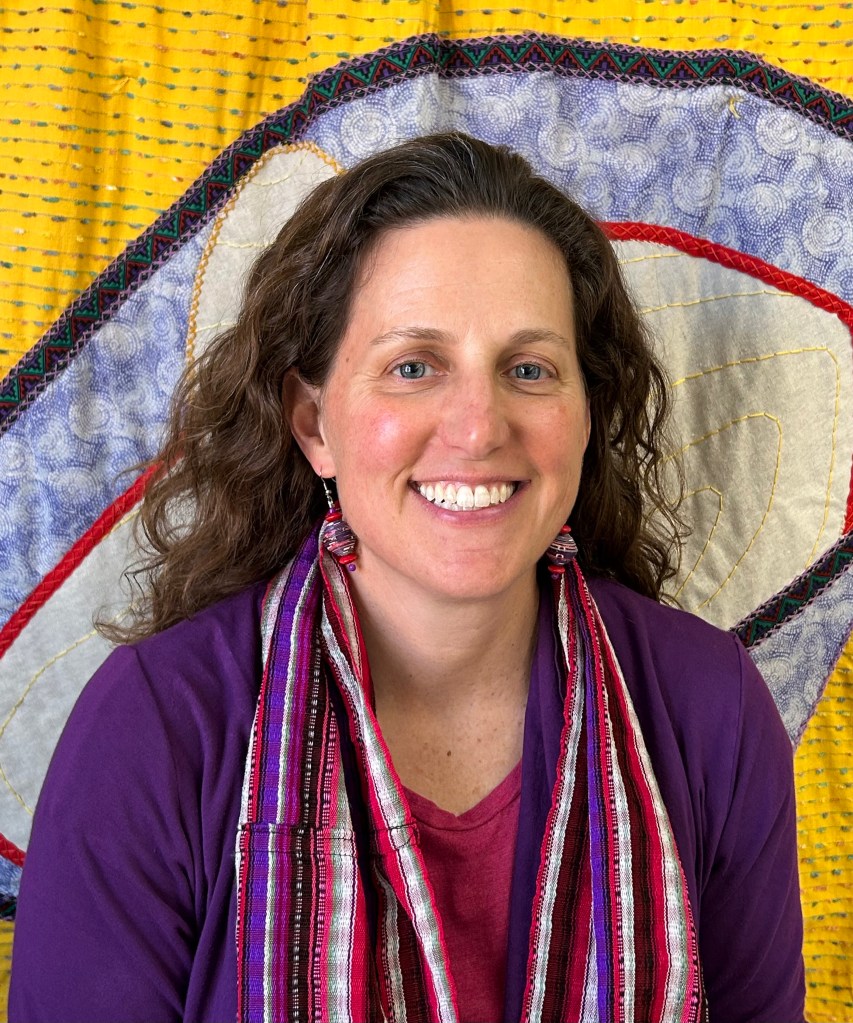
Deborah Backman, 2025 Kennebec County Teacher of the Year and German Teacher at Cony Middle and High SchoolGretchen Livingston, 2026 Maine County Teacher of the Year and Spanish Teacher at Cony Middle and High School
Livingston says her passion for language education is rooted in helping students build meaningful, cross-cultural connections.
“I began teaching to share my love of language learning and to help people connect across cultures, opening doors to new perspectives and opportunities,” Livingston said. “I take my role as department head of World Languages at Cony Middle and High School very seriously because I believe that one of our main goals is to foster cultural empathy and awareness. When we open our minds to different cultures, we enrich our daily lives through new ways of thinking and connecting.”
Backman emphasized the transformative impact that international experiences can have on students.
“Living and studying in Germany and Austria gave me a perspective on American culture and history that I couldn’t have gained at home,” Backman said. “Many Americans don’t have the opportunity to look at their country from an outside perspective. In teaching German, I share the insights that I have gained through my experiences abroad, while inspiring students to seek out their own international experiences. These experiences foster a deeper appreciation of other cultures and, in turn, a greater understanding of their own.”
Cony’s World Languages program is successful because of its cohesive team, which, in addition to Livingston and Backman, includes Spanish teacher Rocio Carey and French teacher Sarah Moore, who has also taught Latin in the Augusta School Department.
Cony’s World Languages program initially introduces all seventh-grade students to language learning through a Unified Arts course that explores French, German, and Spanish. Eighth-grade students may then choose a language to study for high school credit, with students able to continue through advanced levels in high school.
Beyond the classroom, students have access to language clubs, international travel opportunities, cultural exchanges, and service-learning experiences. Cony’s German program, for example, has been part of the prestigious PASCH global network since 2017, making it one of only 14 schools in the United States with that designation. Through the partnership, students can earn full scholarships to participate in German immersion programs in Germany. Cony also offers opportunities to volunteer in Guatemala, travel to France and Italy, and participate in the German American Partnership Program (GAPP) exchange.
These experiences have had a lasting impact on students and graduates.
“Having the Seal of Biliteracy has been really helpful in continuing my language learning journey post high school,” Savier Littlejohn, a 2023 Cony graduate who now studies Political Science and International Affairs at the University of Southern Maine (USM), said. “At USM, I was able to get eight college credits, allowing me to skip directly to advanced courses instead of starting again from scratch. It has also been helpful on numerous applications and study abroad programs, as proficiency in a second language is something well looked upon.”
Similarly, 2021 graduate Kiara Henry said her Seal of Biliteracy translated directly into college savings. She explained that she didn’t have to take a language class in college because her Seal counted for eight college credits. She was able to take other classes instead, which allowed her to save time and money.
For many current Cony students, earning the Seal represents both a culmination of years of hard work and a pathway to future opportunities.
“Getting the Seal of Biliteracy, to me, feels like the one, all-encompassing award of recognition for all the work I’ve put into language learning. It also highlights all of the amazing opportunities offered by our World Languages department,” 2026 Cony graduate JohnPeter Caruso said. “Our German program provided me with an opportunity to spend a summer in Germany, speaking German with people from all over the world. Not only was this an amazing experience, but it helped me feel confident about enjoying all opportunities, even if they initially seemed intimidating.”
In addition to the World Languages department, Cony provides a comprehensive ESOL (English for Speakers of Other Languages) program for students. The Seal of Biliteracy program, coordinated by Livingston, gives ESOL students the opportunity to earn the Seal in their native language, recognizing the diverse linguistic skills they bring to the school.
Bayan Salamhi and Sham Alsaleh graduated from Cony this year and received the Seal of Biliteracy in Arabic and English.
“For me, receiving the Seal of Biliteracy is more than just an award,” Salamhi said. “It represents an important part of who I am and the journey I have taken to grow academically and personally. Knowing more than one language has allowed me to appreciate different cultures, communicate with more people, and feel proud of an ability that will stay valuable throughout my entire life.”
“Receiving the Seal of Biliteracy means a lot to me because it represents the hard work, dedication, and perseverance it took to become confident in two languages,” Alsaleh said. “As someone who learned English while maintaining my native language, this recognition reminds me that being bilingual is a strength that allows me to connect with different people, cultures, and opportunities. I am honored to receive this recognition and proud to celebrate the value of multilingualism.”
Classmate Allyson Dumont said she now sees multilingualism as an important part of her future career.
“Having my Seal of Biliteracy is important to me as someone pursuing a career in health care,” Dumont said. “I’m glad I had this opportunity in high school because it means being able to communicate with a larger group of people.”
Students noted that the impact of language learning also extends past academics and career preparation.
“Being a multilingual student goes beyond speech and into my jazz improvisation, so I find a home in learning languages while at the same time expressing myself through music,” 2026 Cony graduate Arlo Shargo said.
Batool AlBraihi, who earned the Seal after studying Spanish at Cony for five years, praised the educators who helped make the achievement possible.
“Having studied Spanish at Cony for the past five years, I have experienced firsthand the commitment and encouragement our language teachers provide,” she said. “Their recognition as County Teachers of the Year reflects not only their excellence as educators but also the strong and supportive language program they have built.”
For 2025 Cony graduate Luca Hardy, language learning became life changing.
“Learning Spanish has been one of the greatest opportunities of my life,” Hardy said. “What started as a single Spanish class at Cony ended up changing the trajectory of my future. Spanish has opened doors to new opportunities, experiences, cultures, and people I never would have met otherwise. It is one of the main reasons I am now at Princeton University.”
Eighteen of 19 the seniors who received the Global Seal of Biliteracy gather for a group photo.Twelve of the 19 seniors who received the Maine Seal of Biliteracy gather for a group photo during marching practice.
As Maine schools continue expanding multilingual learning opportunities, Cony’s Seal of Biliteracy recipients demonstrate how language education can help students develop academic skills, cultural competence, and global perspectives that prepare them for success far beyond graduation.
Additional information about the Maine Seal of Biliteracy, including statewide participation data and resources, is available on the Maine Seal of Biliteracy Dashboard. For more information, resources, and tools to help students earn a Seal of Biliteracy, visit the Maine DOE website.
This article was written in collaboration with Cony Middle and High School (Augusta School Department). To submit a good news story to the Maine DOE, please fill out thegood news submission form.
The Maine Department of Education (DOE) Office of Teaching and Learning is seeking a contracted educational professional to support statewide work related to world language education during the 2026-2027 school year.
This contracted role will support several ongoing statewide initiatives, including:
Communication and engagement with Maine world language educators.
Related technical assistance and support for school administrative units (SAUs) and educators.
Coordination related to Pine Project contact hours and associated educator supports.
Resource sharing, communications, and alignment work connected to multilingualism and world language learning across Maine schools.
The anticipated scope of work is approximately 20 hours per month during the 2026-2027 school year. Compensation is anticipated at a rate of $50 per hour.
The ideal candidate will have:
Experience in world language education and/or multilingual learner support.
Familiarity with the Maine Seal of Biliteracy and proficiency-based learning.
Experience supporting educators through professional learning, coaching, or technical assistance.
Strong organizational, communication, and collaboration skills.
Familiarity with Maine schools and statewide educational initiatives (preferred).
The contractor will work closely with the Maine DOE Office of Teaching and Learning. Transition planning and onboarding support will be provided to ensure continuity of work.
To apply for this position, please send the following materials to Beth Lambert, Maine DOE Chief Teaching and Learning Officer, at beth.lambert@maine.gov by June 10, 2026:
A letter of interest that includes a brief description of relevant experience related to world language education, Maine Seal of Biliteracy implementation, educator support, or related work.
Are you looking to deepen your understanding of evidence-based instructional practices for multilingual learners? Would dedicated time to collaborate with colleagues, reflect on practice, and translate research into actionable strategies for your classroom, school, or school administrative unit (SAU) be valuable?
If so, consider joining a five-part professional learning series designed for Maine educators and centered on the book, Unlocking Multilingual Learners’ Potential: Strategies for Making Content Accessible. The series is developed and facilitated by Maine Department of Education (DOE) Teacher Leader Fellow Rebecca Carey, with book author and national expert Diane Staehr Fenner joining select sessions.
Each participant will receive a copy of the book and explore high-impact instructional practices that support multilingual learners’ academic success, engagement, and sense of belonging. Sessions emphasize asset-based approaches, language development, and equitable access to rigorous content across subject areas. They will include structured learning, grounded in the text and current research; facilitated discussions and collaborative activities; time for instructional planning and integration; and opportunities for application, feedback, and resource sharing.
Intended Audience
ESOL (English for Speakers of Other Languages) teachers and specialists
General education teachers across grade levels and content areas
Instructional coaches
School and SAU administrators
Any educators supporting multilingual learners
Schedule
Sessions will be held virtually via Zoom from 3:30-5 p.m. on:
March 16, 2026 (featuring author Diane Staehr Fenner)
April 2, 2026
April 30, 2026
May 14, 2026 (featuring author Diane Staehr Fenner)
June 2, 2026
Complimentary books will be provided to the first 45 registrants who commit to attending all five sessions, as full participation is required to receive a copy. Additional participants are welcome to join and may purchase the book independently. Participants may earn 10 total contact hours, including 7.5 hours of live participation and 2.5 hours of supplemental work.
The Teacher Leader Fellows program is a part of the Maine Department of Education (DOE) Office of Teaching and Learning. For more information about this opportunity, please contact Jane Armstrong, Maine DOE State ESOL Specialist, at jane.armstrong@maine.gov.
The Maine Department of Education (DOE) is offering a new, six-part professional learning series titled, “Beyond Compliance: Integrated Supports for Multilingual Learners with Disabilities,” to be facilitated by Maine DOE Teacher Leader Fellow Melissa Frans.
When students are both multilingual learners and students with disabilities, the supports they receive sometimes operate in parallel rather than in partnership. In Maine during the 2024-2025 school year, 17 percent of identified multilingual learners were also identified as requiring special education services. This data underscores the importance of coordinated, interdisciplinary approaches that address language development and disability-related needs together rather than separately.
This new professional learning series will promote a collaborative, integrated approach and support educators in designing cohesive systems that build on student strengths while aligning ,supports across language development and disability services. Participants will move beyond compliance-driven practices toward meaningful, coordinated action that addresses the full range of student strengths and needs.
Through active, collaborative learning, teams will:
Build unified support systems.
Integrate asset-based instructional models.
Co-create and apply practical resources.
Exchange feedback and strategies.
Engage in professional dialogue grounded in real-world practice.
Audience Interdisciplinary teams are strongly encouraged to attend together. This opportunity is relevant for:
Classroom teachers.
Special educators.
ESOL (English for Speakers of Other Languages) specialists.
Instructional coaches.
Interventionists.
Special education and multilingual directors/coordinators.
School and school administrative unit (SAU) administrators.
Schedule Virtual sessions (via Zoom) will be held on the following Wednesdays from 3:30 to 5 p.m.:
March 4 and 18, 2026
April 1 and 15, 2026
May 6 and 20, 2026
Participants may earn 12 total contact hours, including nine hours of live participation and three hours of supplemental work. Registration is required; please register here.
This series reflects the Maine DOE’s ongoing commitment to helping schools implement cohesive, student-centered systems that integrate language development and disability-related supports. Offered through the Teacher Leader Fellows program within the Office of Teaching and Learning, it is part of the Maine DOE’s broader effort to strengthen instructional leadership statewide.
The Maine DOE Multilingual Learner Dashboard offers educators and leaders an interactive view of key data to inform decisions and strengthen support for multilingual learners statewide.
For more information or with questions, please contact Jane Armstrong, Maine DOE ESOL State Specialist, at Jane.Armstrong@maine.gov.
Are you looking for a clearer, more confident approach to creating effective language goals for multilingual learners? If so, consider participating in a two-part virtual series, led by Maine Department of Education (DOE) Teacher Leader Fellow Rebecca Carey. Participants will learn how to strengthen their practice surrounding Individual Language Acquisition Plans (ILAPs) by engaging in a clear and collaborative process for creating meaningful, measurable language goals that support and monitor student growth, connecting directly to classroom learning
Every multilingual learner must have an ILAP—a required, school-based plan designed to reflect and support their language development needs. High-quality ILAPs include well-crafted language goals that are measurable, instructionally relevant, and aligned to students’ learning contexts.In these sessions, participants will:
Learn effective approaches to developing high-quality language goals.
Engage with a variety of WIDA resources to support language goal development.
Explore collaborative pathways and approaches for ILAP development.
Draft, refine, and receive feedback on language goals with guided support.
These sessions are intended for English for Speakers of Other Languages (ESOL) teachers, directors/coordinators of multilingual programs, and general education teachers who support multilingual learners. Each session includes one hour of structured learning, followed by 30 minutes of guided workshopping, discussion, and sharing. Participants who attend both sessions will receive three contact hours.
This two-part virtual series will be held from 3:30-5 p.m. on:
The Teacher Leader Fellows program is a part of the Maine DOE Office of Teaching and Learning. For more information, please contact Jane Armstrong, Maine DOE ESOL State Specialist, at jane.armstrong@maine.gov.
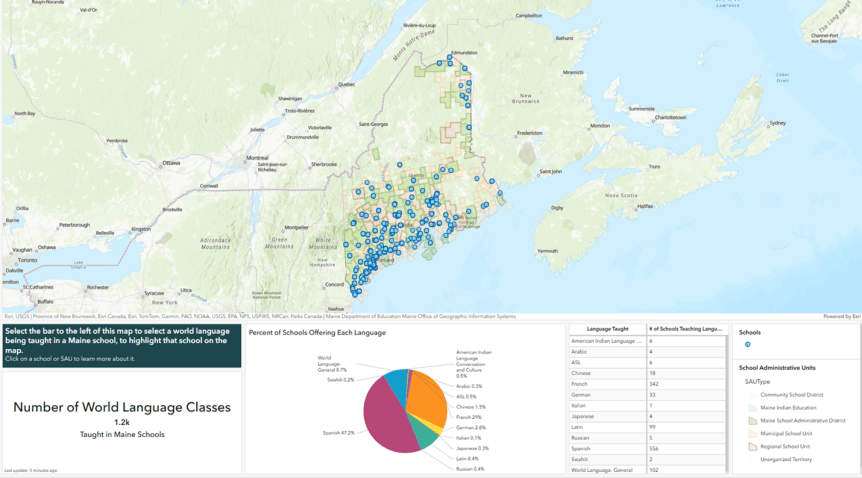
The Maine Department of Education (DOE) is introducing a new resource designed to support the expansion of world language opportunities for students across the state: the Graphic Information System (GIS) World Language Educator Map.
Available on the Maine DOE World Languages webpage, this interactive map provides a statewide view of where world language instruction is offered and the language options available. On the map, each Maine school offering world language instruction appears as an interactive point, displaying the school administrative unit (SAU) that the school is a part of, as well as the language(s) taught.
By making this data visible and actionable, the map makes regional trends easier to identify, supporting intentional planning, targeted recruitment, and stronger collaboration among higher education institutions, SAUs, and educator preparation partners. Ultimately, the goal of the map is to help SAUs and higher education partners make informed decisions about program expansion, teacher learning possibilities, and long-term language-learning sequences.
These insights directly support the development of pre-K–12 pathways that prepare students for the Maine Seal of Biliteracy, the state’s recognition of students who demonstrate proficiency in English and at least one additional language.
Please note: This map was created using SAU-reported data from the Maine DOE’s NEO reporting system. If you believe this information is inaccurate, please check with your SAU’s data personnel and contact Maine DOE Bilingual/Multilingual Education Specialist Melanie Junkins at melanie.junkins@maine.gov.
Monthly World Language Office Hours
To support statewide use of this tool, the Maine DOE is launching monthly office hours for educators, administrators, and partners. These sessions will:
Offer guidance on using and interpreting map data.
Highlight strategies for building or expanding world language pathways.
Connect educators across Maine to share promising practices.
Explore how the 5 Cs of the Maine Learning Results (Communication, Cultures, Connections, Comparisons, and Communities) can be leveraged to strengthen programs.
These office hours are intended to create a space for collaboration, problem solving, and shared vision building, helping to ensure that all students, no matter where they live, can access high-quality language learning. Registration for office hours is required. You may register here: World Language Educators Office Hours.
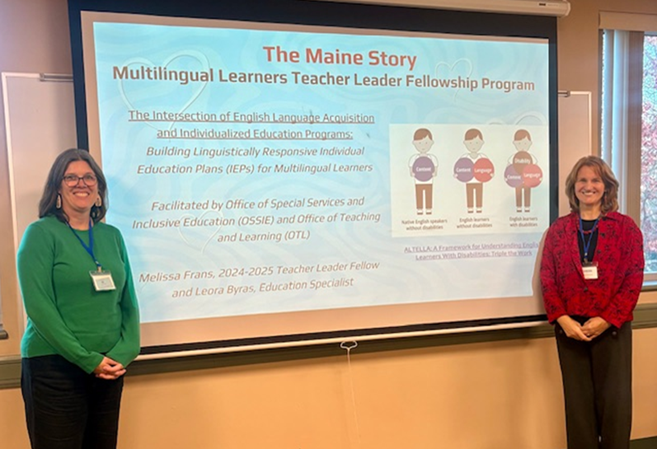
The Maine Department of Education’s (DOE) professional learning on multilingual learners with disabilities was in the spotlight at this year’s Northern New England Teachers of English Speakers of Other Languages (NNETESOL) 2025 Annual Conference, themed, “Opening Doors Through Language and Literacy Instruction” and held on November 15 at Southern New Hampshire University. Through a joint session, Maine’s leadership in advancing collaborative, equitable instruction for multilingual learners with disabilities took center stage, bringing this emerging area of practice to educators from across New England.
This joint session, “Implementing Joint Professional Learning About Dually Identified Multilingual Learners,” was presented by Melissa Frans,a Maine DOE Teacher Leader Fellow and Special Education Multilingual Coordinator for Portland Public Schools, and Dr. Andrea Honigsfeld, a professor in the School of Education and Human Services at Molloy University. Dr. Honigsfeld teaches graduate courses on cultural and linguistic diversity, language and literacy development, educational equity, and collaborative practices supporting multilingual learners with disabilities. She has authored more than 30 books.
“When I learned that my book, ‘Collaboration for Multilingual Learners with Exceptionalities: We Share the Students,’ coauthored with Dr. Audrey Cohan, was integrated into a statewide professional learning series led by Melissa, I was honored to see my work utilized in such a thoughtful and creative way,” Dr. Honigsfeld shared. “With the Maine DOE providing numerous high-quality, open-access resources on the topic of dually identified multilingual learners, I wanted to learn more about the Maine initiative and invited Melissa to submit a proposal to the 2025 NNETESOL conference with me.”
Frans and Honigsfeld’s session explored the complex needs of dually identified multilingual learners, students who are both multilingual learners and eligible for special education services, and underscored the importance of coordinated, cross-disciplinary professional learning to support them effectively. Frans and Honigsfeld introduced key models for collaborative professional development that deepen shared understanding, strengthen communication, and promote instructional alignment between English for Speakers of Other Languages (ESOL) and special education teams.
“Presenting with Andrea at NNETESOL was a masterclass in collaboration!” Frans said. “I was proud to highlight the Maine DOE Teacher Leader Fellow program in strengthening our collective efficacy across Maine and beyond for supporting multilingual learners.”
The presentation also highlighted the Maine DOE’s statewide efforts to expand joint professional learning for educators serving dually identified multilingual learners. This initiative brings ESOL and special education professionals together to build expertise, align practices, and ensure equitable learning experiences for students.
“Dr. Honigsfeld has a reputation for writing accessible books that are grounded in research and sensibly designed for educators,” Frans added.
For more information about related Maine DOE resources and professional learning offerings, please visit the Multilingual Learners with Disabilities webpage. Details about Dr. Honigsfeld’s publications and work are available here.
The Maine DOE remains committed to expanding knowledge, strengthening collaboration, and opening doors for multilingual learners across the region. Multilingual learners thrive when school administrative units (SAUs) implement a coordinated approach through an Integrated Multi-Tiered System of Support (iMTSS), enabling educators to provide timely, individualized support that honors each student’s language needs, identities, and strengths.
The Teacher Leader Fellow program is part of the Maine DOE Office of Teaching and Learning.
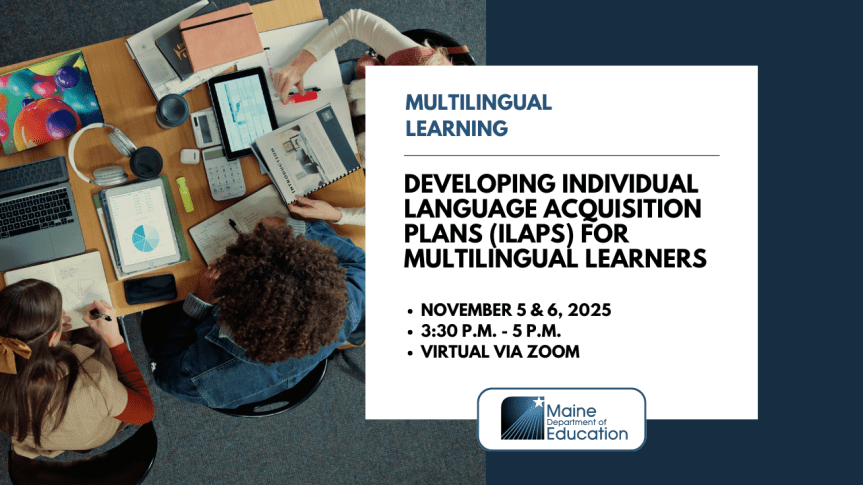
Are you new to Individual Language Acquisition Plans (ILAPS) or looking to strengthen your team’s approach? Do you serve a small multilingual learner population and want a practical framework that ensures compliance with state and federal guidelines and promotes student growth? If so, consider attending a two-part virtual series that the Maine Department of Education (DOE) is hosting to offer a clear, collaborative process for developing ILAPS that reflect each student’s language profile, strengths, and instructional needs.
An ILAP is a required, school-based plan for every student identified as a multilingual learner. An effective ILAP clarifies educator roles, targets timely and individualized supports, and honors students’ identities and assets to foster growth, engagement, and belonging. Led by Maine DOE Teacher Leader Fellows Rebecca Carey and Melissa Frans, this series will help participants to learn how to design ILAPs that meet state and federal requirements, while advancing equity, access, and belonging through intentional instructional planning and partnership.
Format:
Participants must attend both sessions of this series. Each session includes one hour of structured learning followed by 30 minutes of collaborative sharing and discussion. Registration is required. Please register here.
Applying and Integrating the ILAP in Daily Instruction
Assessment Participation Guidance
Intended Audience:
English Speakers of Other Languages (ESOL) teachers, directors/coordinators of multilingual programs, and general education teachers who support multilingual learners may find this series beneficial. Participants will develop actionable, collaborative approaches to ILAPs aligned with WIDA Standards and supportive of instructional planning.
Schedule:
This two-part virtual series will be held from 3:30-5 p.m. on:
Wednesday, November 5, 2025
Thursday, November 6, 2025
Participants who attend both sessions will receive three contact hours.
The Teacher Leader Fellows program is a part of the Maine DOE Office of Teaching and Learning. For more information, please contact Jane Armstrong, Maine DOE State ESOL Specialist, at jane.armstrong@maine.gov.