Professional Learning and Resources to Support Improved School Attendance

The Maine Engagement and Attendance Center (MEAC), a statewide collaboration working to strengthen student engagement and attendance and to address chronic absenteeism in Maine schools, is focused on weaving together Maine Department of Education (DOE) initiatives to coordinate practical tools and opportunities for educators to learn from one another to improve student attendance.

To support this work, MEAC has cultivated a growing collection of resources and professional learning opportunities on data use, family engagement, school leadership, progress monitoring, and Tier 1 attendance strategies.

Check out the MEAC webpage to find updated resources and tools, including the Maine Attendance Toolkit. For more information on how the toolkit can strengthen your classroom, school, or district practices, view this four-part recorded series highlighting aspects of the Attendance Toolkit:

Be Pine Tree Present Logo

Consider adopting the MEAC motto to support attendance efforts: “Rooted in Learning, Growing Every Day: Be Pine Tree Present!”


September is National Attendance Awareness Month, and MEAC will add Maine-themed resources throughout the month to help educators improve attendance.  One resource to support our Maine educators is this Pine Tree Present Fact Sheet.

MEAC has also developed a two-page Attendance Tracker designed to help families monitor missed school days and identify when additional support may be needed. The resource pairs a family-facing tracker with Maine DOE’s Evidence-Based Interventions and Attendance Support Plan. Educators can share copies with families or design their own to support their learning community.  Research shows that families underestimate how quickly absences add up throughout the school year.  

Count ME In!, a state partner and member of MEAC, has a collection of attendance communication tools. These tools support clear, proactive, and relationship-centered outreach with students and families. Find those resources here and sign up for the monthly newsletter today: Count ME In! Attendance Help for Maine Schools, Teachers, Principals and Students | Everyone Counts! 

This month, MEAC will launch a virtual Attendance Support Series for those seeking technical assistance from data experts at Maine DOE and school personnel throughout the state, including classroom teachers, building administrators, school counselors, and attendance team members. 

The series’ topics are aligned with the natural rhythm of the school year and will highlight positive relationship-building and effective use of data, barrier identification and intervention, and reflection and planning for next steps.  

Monthly attendance topics:  

Dates Each session will take place from 3:30-4:30 p.m.Topics
September 17, 2026  Using Attendance Data to Drive Action  
October 22, 2026Building Routine, Relationships, and Relevance  
November 19, 2026Creating Emotionally and Physically Safe Learning Environments
December 17, 2026Using Consistent, Growth-Focused Attendance Messaging
January 21, 2027Removing Logistical and Emotional Barriers to Learning  
February 25, 2027Strengthening School-Home Partnerships  
March 18, 2027Engaging Families Through Proactive, Supportive Outreach
April 29, 2027Implementing Positive Recognition and Motivation Strategies
May 20, 2027Establishing Early Warning Systems and Team-Based Responses


Please use this link to register for the Attendance Support Series. 

For further information and questions about MEAC, please visit the Maine DOE MEAC webpage or reach out to Sarah Nelson, Maine DOE Attendance and Engagement Specialist at  Sarah.Nelson@maine.gov. 

Maine Engagement and Attendance Center Continues Bringing Statewide Partners Together to Strengthen Student Attendance

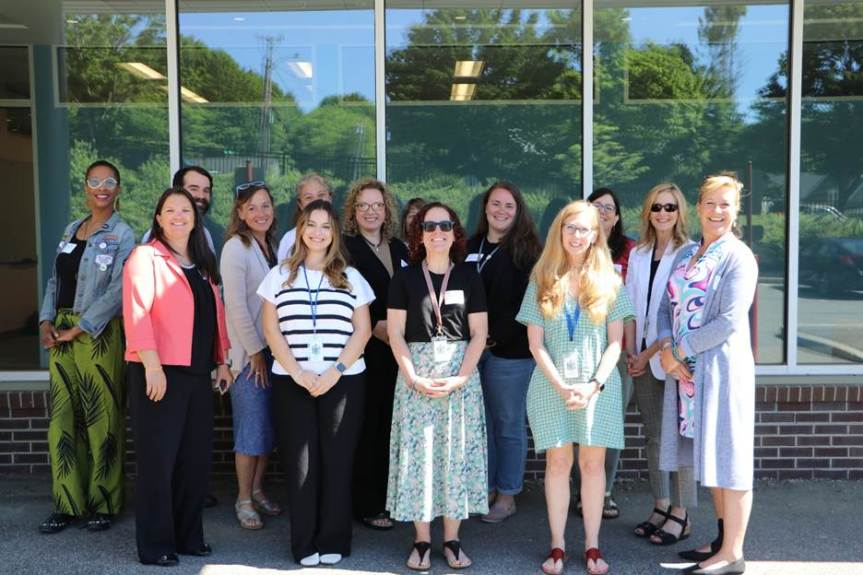
Back left to right – Ayesha Hall, Bryan Lescord, Julie Smyth, Marcy Whitcomb, Courtney Angelosante, Sue Gallant, Alexandra Cookson, Monique Sullivan, and Tamara Ranger. Front left to right – Shelley Chasse-Johndro, Intern Piper Hallen, Jennifer Belanger, Ann Hanna, and Sarah Nelson (arriving after the photo – Jess Anderson)

On June 17, educators from the Maine Department of Education (DOE) and partners from across Maine gathered for a meeting of the Maine Engagement and Attendance Center (MEAC), a statewide collaboration working to strengthen student engagement and attendance and to address chronic absenteeism in Maine schools.

MEAC Responds to Attendance in Maine

Established by the Maine DOE in 2024, MEAC brings together Maine DOE teams with partners, including Count ME In! and Maine Positive Behavioral Interventions and Supports (PBIS). The collaborative was created in response to the persistent challenge of chronic absenteeism and, through technical assistance and guidance, is designed to help schools move from responding to attendance problems after they occur toward proactive, evidence-based strategies that address the root causes of absenteeism.

MEAC’s strength is the breadth of expertise within the collaborative. Maine DOE teams and partners connect work across attendance, family engagement, multi-tiered systems of support, early learning, school climate, health, data, and community-based supports. Working across these areas helps to align efforts, identify gaps, and provides schools with more coordinated resources and strategies.

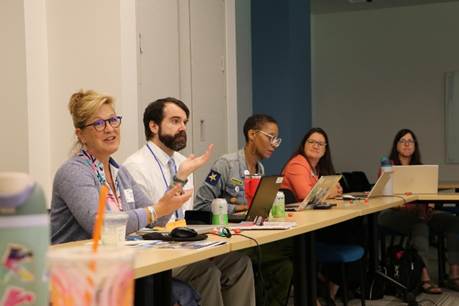
Engagement Specialist Sarah Nelson and Director of Office of School and Student Supports Julie Smyth share exit slip data from last year’s MEAC Office Hours. MTSS Specialist Bryan Lescord; Director of Strategic Partnerships Ayesha Hall; ESEA Federal Programs Director Shelly Chasse-Johndro; and Continuous School Improvement Coordinator Monique Sullivan listen in on the reflection.

In Maine, chronic absenteeism is defined as missing 10 percent or more of enrolled school days for any reason, including excused, unexcused, or disciplinary absences. As the 2026-2027 school year begins, attendance remains an important focus for schools across the state, as nearly 1 in 4 Maine students miss at least 3 weeks of school each year.

The June gathering offered an opportunity to review Maine’s attendance data, reflect on the past year’s work, and begin planning resources and professional learning for the 2026–27 school year.

The data-driven dialogue focused on Maine’s current attendance data, including grade level, county, and student demographics. 

The conversation emphasized that attendance challenges can look different depending on students’ age and circumstances.

  • For elementary students, where approximately 1 in 5 students are chronically absent, MEAC is focusing on family engagement and removing barriers to attendance.
  • At the middle school level, where approximately 1 in 4 students are chronically absent, the focus is on developing a sense of belonging.
  • For high school students, where approximately 1 in 3 students are chronically absent, MEAC emphasizes the importance of creating a sense of relevance and helping students see why school matters.

MEAC’s work has focused on weaving together Maine DOE initiatives to coordinate practical tools and opportunities for educators to learn from one another. The Maine DOE MEAC webpage features a growing collection of resources focused on data use, family engagement, school leadership, progress monitoring, and Tier 1 attendance strategies, including the Maine Attendance Toolkit.  MEAC recorded a four-part series highlighting aspects of the Attendance Toolkit, which can be accessed on the MEAC webpage. The toolkit serves as a foundational springboard for building strong attendance systems across Maine schools.

Attendance Is Everyone’s Work

MEAC’s work reflects the understanding that regular attendance is connected to students’ ability to fully benefit from the learning opportunities, relationships, and supports their schools provide. The resources highlighted above emphasize that addressing attendance means looking beyond unexcused absences to consider the range of health, family, school climate, and other factors that can affect students’ ability to attend school consistently.

For MEAC, the work continues beyond any single meeting. As Maine schools prepare for another school year, the collaborative continues to develop resources, professional learning, and shared strategies to help more students attend school regularly and remain connected to their learning communities.

For further information and questions about MEAC, please visit the Maine DOE MEAC webpage or reach out to Sarah Nelson, Maine DOE Attendance and Engagement Specialist at  Sarah.Nelson@maine.gov.

Building Belonging and Improving Attendance at Eliot Elementary School

At Eliot Elementary School (EES), a dedicated team of educators is working intentionally to build trust and strong relationships with students from the moment they arrive, helping children to feel known, valued, and supported and want to come to school. This pre-K–grade 3 school serves approximately 275 students and is committed to fostering a safe, inclusive environment. With dedicated educators, supportive families, and strong community connections, EES is a place where students and staff grow together each day.

“I get to see my friends and teachers while learning and playing,” an EES student said about what makes them feel excited or happy to come to school each day. Another EES student added, “I decide if I make good choices or bad ones, and teachers will help me.”

In recent years, chronic absenteeism was an increasing concern for EES. Before the pandemic, chronic absenteeism rates ranged from approximately 9-12 percent. Following the disruptions of remote and hybrid learning, however, the rate rose sharply, peaking at 23 percent during the 2022-2023 school year. The good news: Chronic absenteeism rates dropped to 11 percent in the 2023-2024 school year, fell to six percent in the 2024-2025 school year, and has remained between five and six percent so far in the 2025-2026 school year.

This meaningful change began when the district openly acknowledged chronic absenteeism as a districtwide challenge. Principal Ann Shisler served EES as a classroom teacher for 31 years and is now in the second year of her current role. She brings a deep respect for the school’s history and a strong connection to its community to her work—reflected in the ways that she has worked to address this challenge.

“Sharing the school’s absenteeism rate monthly—paired with small, clear pieces of information about why attendance matters—helped families understand the impact without feeling blamed or overwhelmed,” Shisler explained.

At the core of EES’ approach to addressing chronic absenteeism is a simple belief: When children feel safe, cared for, and connected, they want to come to school.

“Instead of viewing absenteeism as a problem tied to specific students or families, the school began seeing it as something the entire school could influence and improve together,” Shisler said.

Shisler said one of the most impactful strategies has been strengthening daily connections with students. EES’ goal is for every child to have at least two trusted adults they can rely on. Currently, 93 percent of EES students report feeling safe at school, and 96 percent say they enjoy coming to school.

“Because we know our students so well, we can respond with care and understanding,” Shisler said. “Often, we’re able to support students in quiet, thoughtful ways—sometimes, without them even realizing, while meeting each child where they are.”

Each morning, students enter the building in a calm, structured manner and are greeted by three to five staff members before reaching their classrooms. Students may stop in the cafeteria to pick up breakfast, if they choose, and then head directly to their classrooms, creating a predictable and welcoming start to the day. Arrival is staggered over approximately 20 minutes, reducing congestion and supporting a smoother, quieter transition into the building.

Staff greetings include the use of eye contact, students’ names, and positive comments or gestures—small moments that collectively make a powerful difference. As a result, the school has seen increased student engagement, reciprocal greetings, and a warmer, more regulated start to each day, setting a positive tone for learning.

Having an established morning routine also reinforces shared expectations and provides leadership opportunities for students. Schoolwide expectations are revisited daily: taking care of oneself, taking care of others, taking care of property, listening and following directions, and staying safe. Student-led morning announcements give children a sense of voice and ownership, fostering pride and responsibility within the school community.

Students who have participated in these morning announcements said:

“Sharing the school rules every day—it’s a reminder that helps little kids.” 

“We get to use the phone as a speaker.”

“We get to share information and jokes.”

Connections are further strengthened through lunch groups, small-group projects, and mentoring opportunities.

“The positive relationships fostered between students and staff through morning greetings and small group work are for all students at EES,” an EES educator said. “Many times, building relationships with the students who need them the most is the hardest. EES has seen an improvement in classroom behavior directly related to the relationships built outside the classroom.” 

Currently, 10 EES students participate in the Hawk Buddies program, which pairs elementary students with high school mentors. Additionally, approximately 20 EES students work individually or in small groups with specialists in art, physical education, music, and library. These supports are fluid and can be adjusted throughout the year, based on student needs.

“I’m pleased with the relationships I’m fostering in the small groups I have each week, outside of my library classes,” another EES educator said. “I have noticed that behaviors have decreased during class time and that I can more easily get [students] back on track when they’re not following directions, etc. I believe they know they can trust me and that they can come to me when they’re struggling, sad, or upset—and, conversely, they like to share when things are going well.” 

Enrichment opportunities also play a key role in promoting engagement and attendance at EES. The school’s parent group, PEEPS, generously funds all enrichment experiences—more than $18,000 annually—making learning engaging and exciting for students. These experiences include an annual STEAM (Science, Technology, Engineering, Arts, and Mathematics) Day facilitated by the Portsmouth Naval Shipyard, as well as other whole-school and grade-level activities that provide students with meaningful opportunities to look forward to throughout the year.

The school’s Multi-Tiered System of Supports (MTSS) plays an important role in supporting students’ academic, social, and behavioral needs. Each week, a team consisting of the principal, guidance counselor, reading interventionist, special education teacher, and grade-level staff meets to review academic, social-emotional, and attendance data. Unlike prior years, when MTSS discussions focused on a limited number of students brought forward by classroom teachers due to concerns, the team now reviews data for all students on a rotating basis by grade level. This proactive approach allows for early identification, prevention, and timely support, ensuring that needs are addressed before challenges escalate and that every student is considered in the process.

EES has also made significant investments in staff professional learning. Thirteen staff members recently participated in state-funded The Regulated Classroom training, representing more than $20,000 in professional development, provided at no cost to the school. This training has strengthened staff understanding of co-regulation, trauma-informed practices, and how to create calm, supportive learning environments.

Additional efforts, including student leadership roles, school jobs, service-learning projects, and the presence of the school’s therapy dog, Ria, further enhance students’ sense of belonging.

To maintain family partnerships, the school sends a monthly memo that shares attendance data and reinforces the importance of consistent attendance. A recent January memo celebrated maintaining a six-percent chronic absenteeism rate, thanked families for thoughtful decision-making surroudning absences, and emphasized the importance of the winter months for academic and social-emotional growth. EES values families’ partnerships in keeping children home when they are sick, while being mindful of nonessential absences—recognizing that both health and consistent attendance are essential to student success.

The impact of these efforts at EESis clear: Student engagement has increased, and attendance has improved significantly. A recent survey highlighted a strong sense of community, warmth, collaboration, and trust between families and the school. Families describe EES as kind, data-driven, and a place where children are excited to learn and belong.

“Daily routines, including greetings and small group connections, have created a stronger, more authentic community within EES,” an EES educator said. “Adult-student relationships are stronger than ever, allowing students to feel safe and connected, creating an environment where students want to be and are ready to learn.”

For schools seeking to address chronic absenteeism, the experience at EES reinforces a clear takeaway: Strong, authentic relationships with students and families matter. When children feel seen, supported, and connected, attendance improves naturally. Relationships are not a program; they are the foundation.

This article was submitted by Eliot Elementary School. To submit a good news story to the Maine DOE, please fill out the good news submission form.

Medomak Valley High School Student Wins Logo Design Contest for Maine Attendance Campaign

The Maine Engagement and Attendance Center (MEAC), a cross-departmental collaborative within the Maine Department of Education (DOE), is excited to announce the winner of its logo design contest, launched earlier this fall as part of Attendance Awareness Month in September.

This initiative invited schools across the state to host their own logo design contests based on the slogan, “Rooted in Learning, Growing Every Day: Be Pine Tree Present!”, which was established earlier this year through a separate MEAC contest, aimed at garnering excitement and participation in Maine’s attendance efforts. Schools that chose to participate in the logo design contest determined the parameters of the contests within their own school communities. Following the local-level contests, winning logos from participating schools were submitted to the Maine DOE for selection of a state-level winner.

Eleven schools, representing grades K-12 in regions from across the state, participated in the logo design contest. The winning logo was designed by Madison, a senior at Medomak Valley High School. Madison’s design will be used to accompany MEAC resources, as the Maine DOE continues to promote attendance and engagement in Maine’s schools. Congratulations, Madison, and thank you for sharing your talent with us!

Winning logo design created by Medomak Valley High School senior Madison.

The Maine DOE would like to thank all participants and the educators who organized the local-level contests, allowing students to participate in this initiative. “Rooted in Learning, Growing Every Day: Be Pine Tree Present!” has become an integral part of Maine’s attendance celebration, highlighting how educators and staff are supporting their learning communities through increased attendance and engagement. The Maine DOE is hopeful that schools across the state will use these words in their own local contexts when supporting students and families with school attendance.

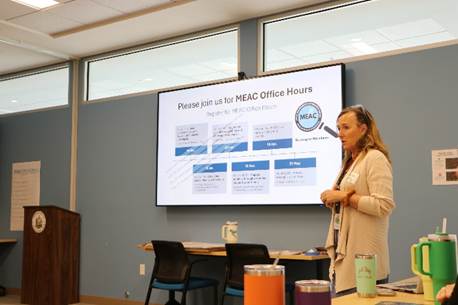
Coming up, please mark your calendar for December 18 from 3:30-4:30 p.m. for the next MEAC Office Hours. These Office Hours are offered in a year-long series of monthly virtual meetings focused on evidence-based practices positively impacting attendance. These Office Hours take place on the third Thursday of each month. The session on December 18 will focus on Tier 1, the foundational practice of using consistent, growth-focused attendance messaging. Please register here to attend.

MEAC is a cross-office collaborative initiative of the Maine DOE. For further information and with questions, please contact Sarah Nelson, Maine DOE Student Engagement Specialist, at Sarah.Nelson@maine.gov or visit the MEAC webpage.

Every Day Counts: SeDoMoCha Students Take Pride in Attendance

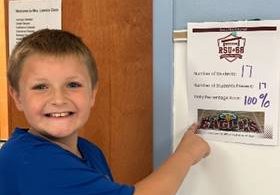
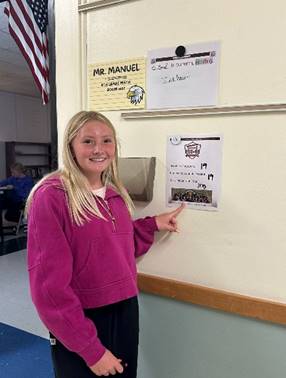
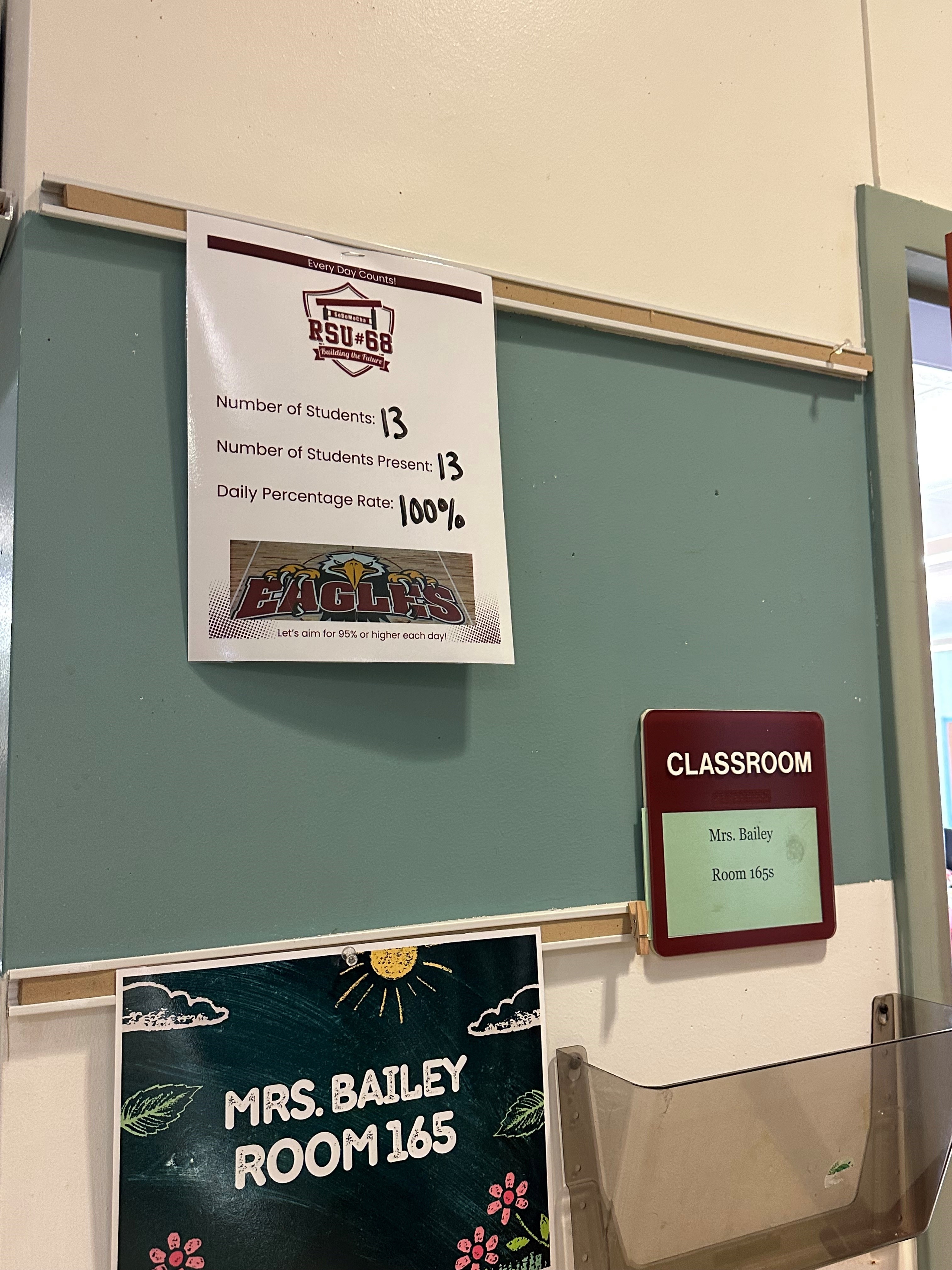
At SeDoMoCha Elementary School in RSU 68, showing up matters—and everyone takes notice. This year, students have taken an active role in making attendance a top priority. Each classroom tracks their daily attendance percentage and proudly posts it right outside of their classroom door for everyone to see.

Seventh-grade science teacher Mrs. Kendrah Fisher was one of the SeDoMoCha teachers who started integrating the taking of attendance into her morning routine at the beginning of the school year. Doing so allowed her students to take ownership of tracking attendance.

“They now do it for our class each morning without being prompted,” Fisher said. “Getting students invested in attendance has had a very positive impact by drawing attention to the importance of coming to school for my students.”


“It shows who comes to school and who takes accountability in coming to school, and it also teaches kids percentages,” eighth-grade student Kaydiense Nelson said about the effort. “It shows that kids want to be here to try to succeed and build a good school environment.”

What started as a simple idea has quickly become a source of pride and motivation throughout the school. The visible reminders spark friendly competition, celebrate consistency, and keep the importance of attendance front and center for students, staff, families, and visitors alike. 

“My class has been so excited to celebrate when our whole class is here. We have a five-second dance party many mornings to celebrate that all of our friends are here. In addition, when a friend is gone, they show so much care and concern,” second-grade teacher Mrs. Abigail Ziegra said. “We send them love waves from our morning meeting and look forward to seeing them again soon.”

“Tracking attendance has helped to develop a larger sense of community among all students in our homeroom,” Fisher said. “My students recognize when their peers are absent, and I have observed them checking in on each other when they return to school. It makes all of my students feel like they matter and are a valuable member of our classroom because they know that they are noticed and missed when they are gone.”

The effort has been warmly received by the entire community, thanks to the dedication of teachers and students who understand that strong attendance leads to stronger learning and stronger connections. At SeDoMoCha, showing up truly makes a difference.

“Seeing our students and teachers take pride in positive daily attendance fosters a strong sense of community,” SeDoMoCha assistant principal Mrs. Davan Walker said. “It highlights the importance of learning each and every day.”

This story was submitted by SeDoMoCha Elementary School in RSU 68. To submit a good news story to the Maine DOE, please fill out the good news submission form.
Deadline Extended for Attendance Messaging Campaign Logo Design Contest; Details on How Schools Can Submit

The Maine Department of Education (DOE) is pleased to announce that schools will have additional time to participate in the Maine DOE’s attendance messaging campaign, which launched in September.

Background: In the summer of 2025, the Maine Engagement and Attendance Center (MEAC) held an attendance campaign name and slogan contest. The winning selection was “Rooted in Learning, Growing Every Day: Be Pine Tree Present!” This slogan has become an integral part of Maine’s attendance celebration, highlighting how educators and staff are supporting their learning communities through increased attendance and engagement.

In September, MEAC invited schools across the state to host their own logo design contests based on this campaign name/slogan. Schools may determine the parameters of their contests. Their winning logo must be submitted to the Maine DOE by Friday, October 24, 2025, at 5 p.m. (extended from the original submission date of October 10). This is an excellent opportunity for potential statewide recognition, as we all consider our vital role in increasing attendance in Maine schools.

Submissions should please be sent to Sarah Nelson, Maine DOE Climate Culture Resilience Engagement Specialist, at Sarah.Nelson@maine.gov. When submitting, please consider the following guidelines:

  • The graphic must be high-resolution (at least 300 pixels per inch).
  • The graphic must have a transparent background.
  • The graphic must be saved in PNG format.
  • The Maine DOE will only accept original artwork. Copyrighted or previously published images are not allowed.
  • Please include the name of the artist who submitted the winning logo, where they attend school, and the municipality.
  • Optional: Consider including one to two sentences in student voice about what “Be Pine Tree Present!” means to them.

For continued resources supporting increased attendance, please mark your calendar for the upcoming MEAC Office Hours, a new, year-long series of monthly virtual office hours focused on evidence-based practices positively impacting attendance. These meetings occur on the third Thursday of each month from 3:30-4:30 p.m. The session on October 16 will explore the power of building routine, relationships, and relevance. Please register here to attend.

MEAC is a cross-office collaborative initiative of the Maine DOE. For further information and with questions, please contact Sarah Nelson at Sarah.Nelson@maine.gov or visit the Maine DOE website.

Maine Schools Invited to Participate in Logo Design Contest for Attendance Awareness Month

The Maine Department of Education (DOE) is excited to share resources throughout the month of September to draw attention to the importance of attendance and engagement in Maine schools. Our hope is that this will help to set a strong foundation for the 2025-2026 school year.

To help your schools and school administrative units (SAUs) maintain their focus on attendance, we have curated a collection of actionable steps for your consideration:

  • Governor Janet Mills has proclaimed September as School Attendance Awareness Month in Maine! Please share this information with your school boards and communities at-large. You can find a link to the proclamation here. 
     
  • Bookmark the Maine DOE’s Maine Engagement and Attendance Center (MEAC) webpage—and encourage an administrator on your team to submit a “good news” story through the linked form. We are hoping to highlight examples of how local schools and SAUs have found success in addressing attendance and engagement among their students.
     
  • Involve your school/SAU in our messaging campaign! Over the summer, MEAC held the Maine Attendance Campaign Name and Slogan Contest. “Rooted in Learning, Growing Every Day: Be Pine Tree Present!” was selected as the winning campaign name/slogan and will become an integral part of Maine’s attendance celebration, highlighting how educators and staff are supporting their learning communities through increased attendance and engagement. Now, we invite every school in Maine to host their own logo design contest based on this campaign name/slogan and send the winning logo our way by October 10, 2025! Each school can determine the parameters of their contest; we simply want to offer the opportunity for potential statewide recognition. Please keep an eye out for details at the end of the month regarding where to send the winning entry—and in the meantime, create your contest opportunity.
     
  • Check out Maine’s Count ME In! website. Sign up for the monthly newsletter, get data-informed ideas to approach attendance improvement, and learn about ongoing professional development events.
     
  • Sign up for the national Attendance Works 2025 Attendance Awareness Campaign.
     
  • Mark your calendars for the upcoming MEAC Office Hours, a new, year-long series of monthly virtual office hours focused on evidence-based strategies to support increased attendance. These meetings will occur on the third Thursday of each month from 3:30-4:30 p.m. Please register here.

MEAC is part of the Maine DOE Office of School and Student Supports. Please contact Maine DOE Student Engagement Specialist Sarah Nelson at Sarah.Nelson@maine.gov, if you have questions or would like additional information.

Maine Engagement and Attendance Center (MEAC) to Offer Monthly Office Hours

You are invited to join the Maine Engagement and Attendance Center (MEAC) in a new series of monthly virtual office hours. These sessions will focus on exploring Tier 1 evidence-based strategies to support increased attendance. Sessions will be held on the third Thursday of each month from 3:30 to 4:30 p.m., beginning September 18, 2025, and running through May 21, 2026.

Each practice assists in establishing the conditions under which regular attendance can flourish. Whether you’re a classroom teacher, instructional coach, family member, administrator, or community partner, monthly MEAC moments are designed to offer practical insights, the research behind them, and actionable steps for increasing attendance.

Session topics are as follows:

  • September 18 – Create emotionally and physically safe environments
  • October 16 – Build routine, relationships, and relevance
  • November 20 – Establish early warning systems and a team-based response
  • December 18 – Strengthen school-home partnerships
  • January 15 – Use consistent, growth-focused attendance messaging
  • February 26 – Implement positive recognition and motivation strategies
  • March 19 – Engage families through proactive, supportive outreach
  • April 16 – Steps to refocus on increased attendance
  • May 21 – Reflect, recognize, and reset

To join MEAC monthly office hours, please register here.

The Maine Engagement and Attendance Center is part of the Maine DOE Office of School and Student Supports. With questions, please contact Maine DOE Student Engagement Specialist Sarah Nelson at Sarah.Nelson@maine.gov.