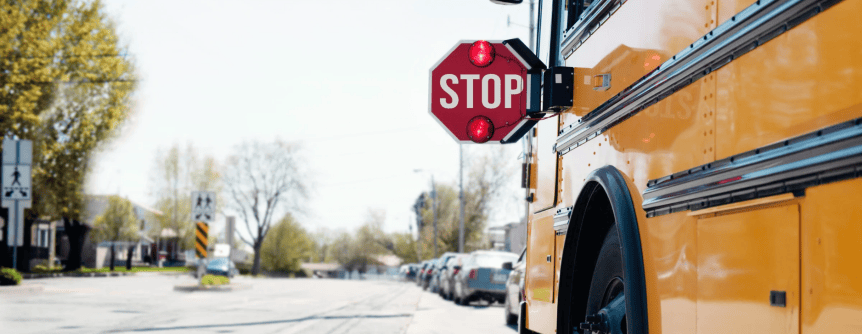
The Maine Department of Education (DOE), Maine School Safety Center (MSSC), is pleased to announce the release of the first phase of training modules developed for school bus drivers. The training modules are available in EnGiNE, the Maine DOE’s online professional learning platform.
The self-paced modules are designed to provide school bus drivers and school transportation professionals with the information and resources they need to train students in safe school bus riding practices. One of the goals of this initiative is to establish consistent safety standards across Maine so that students throughout the state receive the same safety messages from their school bus drivers.
The training modules were developed using nationally recognized school transportation safety guidance and best practices, including resources and recommendations from the National Highway Traffic Safety Administration (NHTSA), the National Association of State Directors of Pupil Transportation Services (NASDPTS), the National Transportation Safety Board (NTSB), the National Congress on School Transportation (NCST), and other recognized school transportation safety organizations.
The modules use a “train-the-trainer” approach. School bus drivers across Maine will complete the modules followed by a short quiz at the end of each course. The training provides drivers with consistent information and talking points they can use when teaching students about staying safe on and around the school bus.
The first phase includes modules to teach students about:
Waiting at the Bus Stop
Crossing in Front of the Bus
The Danger Zone
Loading and Unloading Practices
Riding on the Bus
Respect on the Bus
Emergency Exits
Railroad Crossing Awareness
Each module also includes an information sheet for parents and families. Schools may share these materials with parents so they are aware of the safety topics being taught to their children and can reinforce the same messages at home.
To access the modules, log in toEnGiNE. EnGiNE is the Maine DOE’s online professional learning platform. Those who do not already have login credentials can easily create them using their school email address. For support in creating an account and/or using EnGiNE, please visit the EnGiNE Support Page.
When a module is completed by the school bus drivers, the transportation directors will be able to access the information and keep proof of the training on record.
The Maine School Safety Center is proud to be part of Maine’s continued efforts to strengthen school transportation safety throughout the state. These training modules provide schools and transportation programs with a consistent resource for teaching students how to safely ride, board, exit, and interact around the school bus.
By providing school bus drivers with consistent training materials and safety messages, Maine can work toward a standardized approach to student school bus safety education across the state, while incorporating nationally recognized safety guidance and best practices.
For more information, please reach out to Maine DOE Transportation Specialist Cheryl Brackett at Cheryl.Brackett@maine.gov.
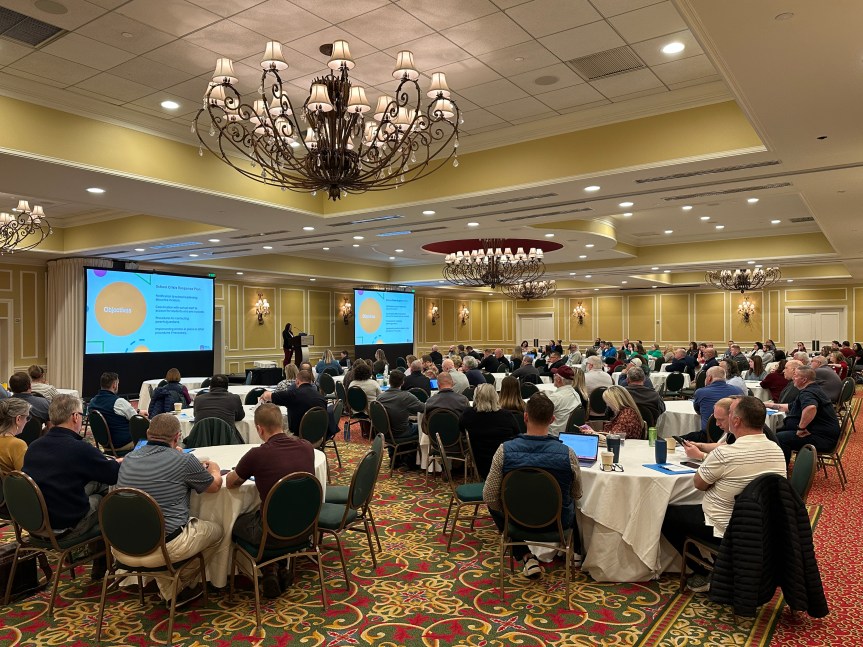
From March 10-12, 2025, the Maine Department of Education (DOE) Maine School Safety Center (MSSC) hosted the first annual Maine School Safety & Transportation Conference at the Samoset Resort in Rockport. This three-day event brought together transportation administrators, district and building administrators, law enforcement, school health teams, and safety experts to explore effective strategies for maintaining safe and supportive learning environments.
The conference began with an evening networking event, fostering connections among participants from across the state. The following morning, a general session led by the MSSC team set the stage for an in-depth exploration of school safety and transportation topics.
MSSC Assistant Director Jeffery Upton welcomed attendees, emphasizing the significance of hosting a conference tailored to Maine’s unique demographics and geography. Upton highlighted the need for comprehensive, localized strategies that address the state’s distinct challenges.
Following Upton, Bridgette Gilbert, the Maine DOE School Emergency Management Coordinator, stressed the value of tabletop exercises—discussion-based activities that simulate emergency scenarios in a low-stress environment. She provided participants with materials and scenarios to bring back to their schools, helping to refine emergency response plans and identify areas for improvement.
Michelle Legare, Maine DOE School Safety and Security Coordinator, highlighted the importance of law enforcement involvement and discussed considerations before, during, and after an incident.
Maine DOE Transportation Training Coordinator Cheryl Brackett then addressed the critical role of transportation safety, noting the impact of natural and human-made disasters on school transportation systems. She underscored the importance of equipping all school staff with emergency preparedness training.
Maine DOE Restorative Practices Coordinator Stacey Barlow also provided a brief presentation to discuss the importance of using restorative practices following emergencies, focusing on building and maintaining relationships among students and staff.
Audience members contributed valuable insights during the general session, such as the benefit of conducting unscheduled fire or lockdown drills to ensure genuine preparedness. Additionally, the complexities of student cell phone use during emergencies and the need for accurate, timely communication with parents were discussed.
Throughout the remainder of the conference, participants engaged in breakout sessions hosted by partners across Maine and the nation on topics like Behavioral Threat Assessment Management (BTAM), exploitation prevention for students, restorative practices, bomb threat assessment, drug identification and trends, FERPA compliance, bus evacuation procedures, dangerous student behavior prevention and intervention law, Security At First Entry (SAFE) Assessment, emotional intelligence, specialized sessions for school nurses, Transportation Director 101, CDL information session, vaping awareness, and wheelchair securement.
Participants also had the opportunity to attend a Drug and Alcohol Supervisor Certification course held by the Maine Motor Transport Association, enabling them to leave the conference certified to identify the physical, behavioral, speech, and performance indicators of probable alcohol misuse and use of controlled substances.
One standout session highlighted a year-long initiative by the transportation team at MSAD 6, Bonny Eagle. That team has partnered with Maine DOE Social Emotional Intelligence Consultant Kellie D. Bailey to train staff and bus drivers in emotional intelligence, mindfulness practices, and understanding brain science to better address challenging youth behavior.
The initiative aims to cultivate self-awareness and self-regulation and to develop an understanding of these concepts to help with student relationships and student behavior.
“Safety on the bus begins with the person behind the wheel. Having drivers who are best equipped to manage their own responses to the multiple environmental, behavioral, and emotional factors that they encounter daily is essential, as we strive to continue to elevate our [team] and our industry as a whole,” said MSAD 6 Assistant Director Mitzii Smith. “We are excited to be blazing a new trail with this work, as we are the only Transportation Department in the State of Maine to have initiated this collaboration.”
Right to left: Sherri Zulick, MSAD 6 Transportation Trainer; Kellie D. Bailey Maine DOE Consultant; Mitzii Smith, MSAD 6 Transportation Assistant Director; Sarah Marean, MSAD 6 Transportation Director
Check out a video clip of MSAD 6 bus drivers talking about the project.
Attendees left the conference equipped with new tools, strategies, and connections to strengthen school safety and transportation practices statewide. The Maine School Safety & Transportation Conference reaffirmed the collective commitment to creating secure and supportive environments for Maine’s students.
Here is a video of transportation directors and bus drivers being interviewed by Nokomis High School students during the conference, using the Maine DOE Mobile Learning Van.
MSSC plans to host a School Safety & Transportation Conference annually in the late winter/spring.
Anyone working with school safety is encouraged to check out MSSC’s eight-week School Safety Specialist Program. Provided at no cost to Maine schools, the courses are available asynchronously through Eastern Maine Community College and the Federal Emergency Management Agency.