
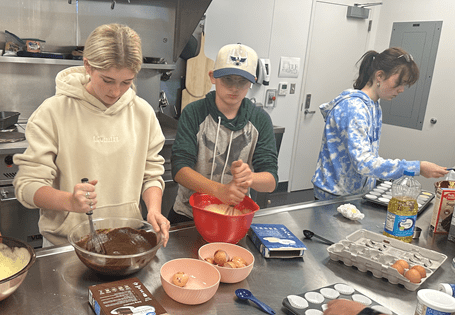
Pictured: Dirigo Program students make mini cupcakes for an open house to welcome RSU 24 community members to learn about the new alternative education program.
At Sumner Memorial High School in RSU 24 (Eastbrook, Franklin, Gouldsboro, Mariaville, Sorrento, Steuben, Sullivan, Waltham, and Winter Harbor), a new alternative education program is helping students reconnect with their education.
A few years ago, Sumner Memorial High School’s previous alternative education program, Pathways, was dissolved. Not long after that, school leaders noticed a troubling trend: The local dropout rate had increased. Determined to respond, Amy Watson, principal of Sumner Memorial High School, partnered with staff to reimagine a program that could once again support students whose needs were not being met in traditional settings.
The result is the Dirigo Program, which in its first year has created an environment designed to balance flexibility, accountability, and strong student support. The program currently serves 16 students in grades 10-12. Led by teachers Lexi Tracey and Michael Mutlu, it offers a highly individualized, relationship-centered approach to alternative education, helping students reconnect with their learning and stay on track for graduation.
A Personalized Approach to Learning
At the heart of the Dirigo Program is a commitment to student-centered learning. Students follow a variety of schedules. Some attend full-time, while others split their day between mainstream classes, online coursework, and the alternative education program. This flexibility allows students to stay connected to school while managing responsibilities outside the classroom.
“We recognize that not all students learn the same way, and not all students are navigating the same life circumstances,” Mutlu shared. “Our goal is to provide structure and support while also honoring their independence.”
Enrollment in the program is intentional. Students may self-refer or be referred by a school counselor, social worker, administrator, or family member. Before joining, prospective students meet with Tracey and Mutlu. Each student participates in an interview, shadows the program, and learns about and commits to the program’s expectations through a signed agreement. This process helps ensure students are enrolling in the program for the right reasons, are ready to engage, and will benefit from the opportunity.
Reengaging Students Through Flexibility and Support
This personalized approach is especially impactful for students who have struggled in traditional settings. For many, the Dirigo Program offers a critical second chance. One student, now enrolled in a hybrid schedule through an online platform, had previously struggled to stay engaged in the mainstream setting. After facing challenges during their sophomore and junior years, they found renewed motivation through the program.
“They like the accountability and guidance,” Tracey explained. “They also, though, appreciate that we understand life can be complicated.”
Now back on track, this student is expected to graduate on time, which they shared seemed impossible to them at one point.
In this coastal community, many students work in the local lobstering industry, often taking on long hours or overnight shifts to support their families. In the past, these responsibilities sometimes led students to disengage from school altogether. This program, though, takes a different approach.
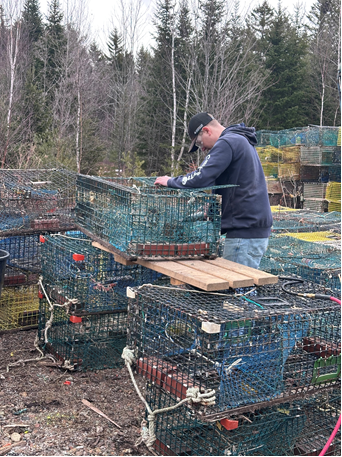
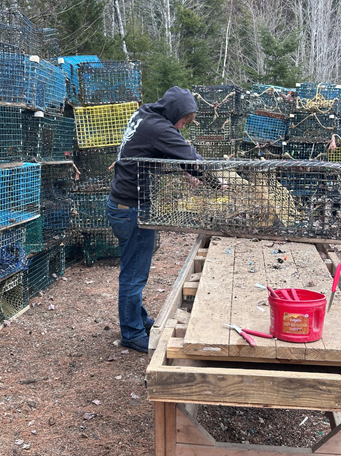
Two Dirigo Program seniors break down traps at Traps 2 Treasure, an OceansWide project focused on cleaning ghost gear out of Maine oceans and recycling the materials, for a community service project in March 2026.
Through a structured check-in system, students communicate with teachers about their work schedules. This allows staff to provide flexibility around attendance while maintaining high academic expectations. Tracey and Mutlu have developed individualized tracking systems to monitor each student’s progress, breaking coursework into weekly goals and manageable steps. This model helps students balance real-world responsibilities with their education without feeling penalized for circumstances beyond their control.
“It’s about respect,” Mutlu noted. “These students are contributing to their families and communities, but they are still kids who need support and opportunities to succeed.”
Looking ahead, Tracey and Mutlu say they hope to expand opportunities for these students for extended learning opportunities (ELOs) and strengthen pathways into the trades. These efforts would further align students’ education with their career goals while supporting local workforce needs.
Hands-On, Interdisciplinary Learning
In addition to flexible structures and strong relationships, instruction in the Dirigo Program emphasizes project-based, interdisciplinary learning aligned with school and state standards and is held to high academic rigor.
Students have engaged in a range of creative and rigorous projects, including:
- Designing and scaling a large window display, integrating math and art.
- Researching influential women for an International Women’s Day project, combining English and history.
- Participating in a mock legislative session, where students developed and defended positions on real-world issues.
- Completing interactive, project-based work in science and social studies.
Tracey and Mutlu collaborate closely with their mainstream colleagues to ensure students remain on track academically, even as their learning experiences look different. The success of the program relies on strong collaboration across the school community. Regular coordination with the school counselor, school social worker, and administrators is critical for monitoring students’ progress and providing wraparound supports.
Tracey and Mutlu also maintain consistent communication with families, sending weekly updates that highlight attendance, academic progress, and student growth. Families have expressed appreciation for this level of connection, allowing them to know that their students are being supported.
“RSU 24’s students’ families typically only get calls from the school when something bad has happened,” Tracey said. “Our weekly updates in the Dirigo Program shift this narrative by sharing the positives and building trust with our families, so we can work together to support our students.”
Celebrating Success and Changing the Narrative
The Dirigo Program is not only redefining how students learn but also reshaping how they are celebrated and recognized for their work and contributions to the school community.
At Sumner Memorial High School, the Positive Behavioral Interventions and Supports (PBIS) framework is deeply embedded in the school culture, with a strong emphasis on recognizing student achievement. As a result, Tracey and Mutlu ensure that students in the the program are acknowledged at the school level during monthly assemblies. This visibility helps both students and staff better understand the program and appreciate the positive impact it is having across the school.
These efforts reflect a broader goal: ensuring that every student feels seen, valued, and capable of success.
“We want our students to know they belong here and that their story isn’t finished yet,” Tracey shared.
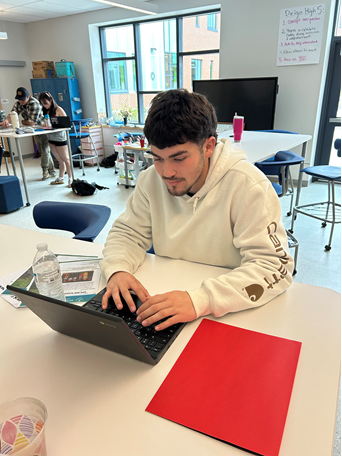
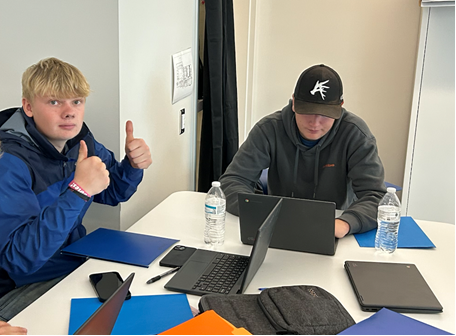
At the Dirigo Program’s Senior Application Day, seven seniors gathered with a school counselor to apply to post-secondary programs. The underclassmen cooked and served breakfast for the seniors, as they worked on scholarship applications.
Although the Dirigo Program is only in its first year, it is already making a meaningful impact on the RSU 24 school community. Tracey and Mutlu will have six seniors graduating from the Dirigo Program this spring who are planning to pursue a variety of post-secondary plans, including college and the workforce.
This story was written in collaboration with Sumner Memorial High School (RSU 24) as part of an ongoing series to highlight alternative education programs across Maine. For more information about alternative education, please visit the Maine DOE Alternative Education webpage or contact Aubrie Howard, Maine DOE Student Success and Wellbeing Specialist, at aubrie.howard@maine.gov. To submit a good news story to the Maine DOE, please fill out the good news submission form.

