
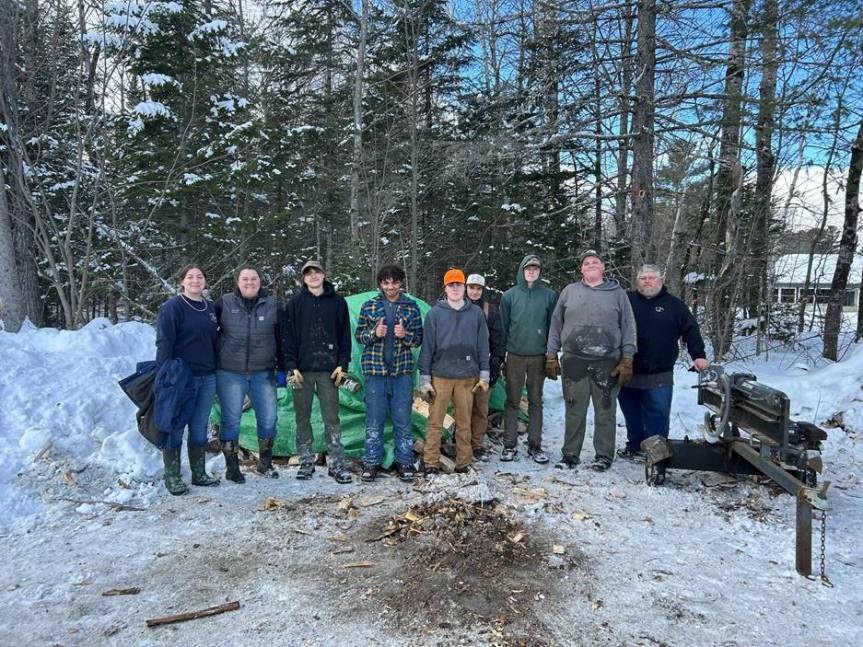
Students and teachers from the Mount Abram Alternative Education Program stacked emergency wood this past winter for the United Methodist Economic Ministry to support the community.
At Mount Abram High School (MSAD 58), a new approach to learning is helping students reconnect with school through experiential, student-centered practices.
Funding from the Carrabassett Valley Innovative Education Grant Program served as the catalyst for the Mount Abram Alternative Education Program’s launch, supporting the construction of a greenhouse and advancing a clear vision centered on project-based, hands-on learning for students who have become disengaged in traditional classroom settings. In its first year, the program was developed through a collaborative effort involving a former principal, school staff, and special educator Christie Naas, who identified a growing need for a more personalized and supportive learning environment.
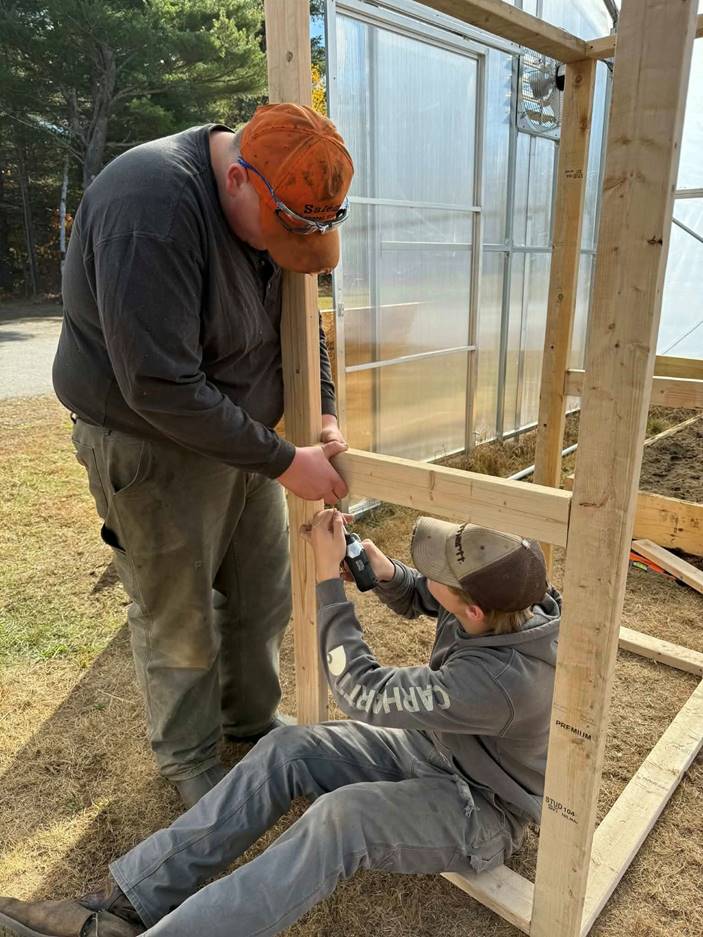
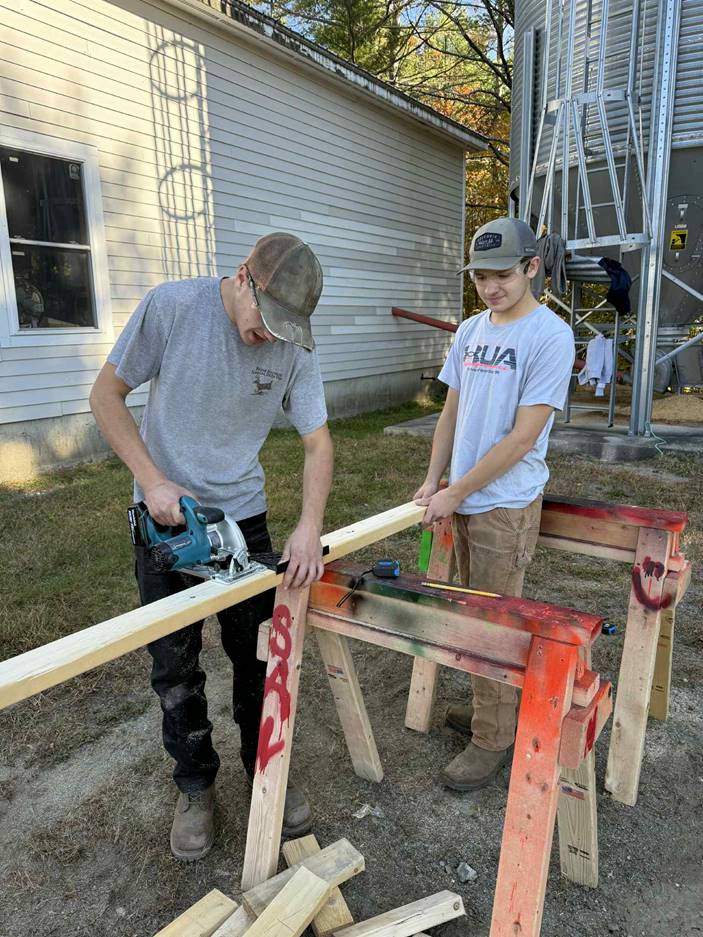
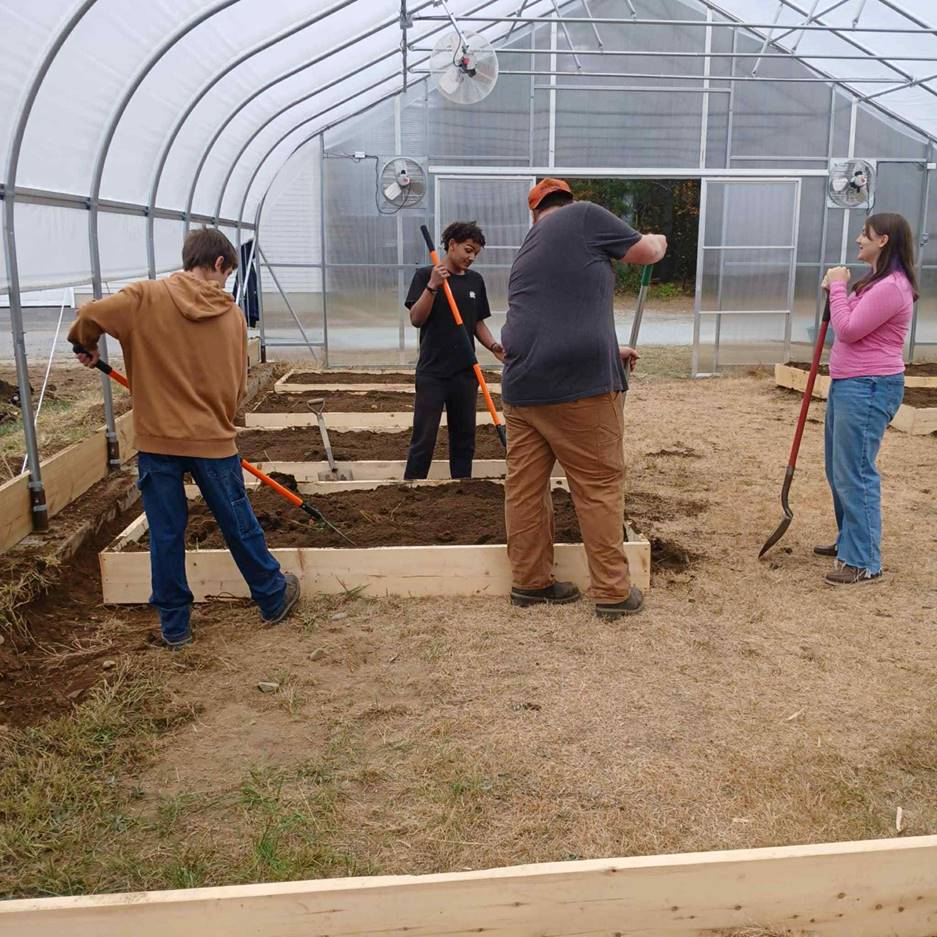
Mount Abram Alternative Education Program students worked together to get their greenhouse ready for use. They designed growing systems, including benches, raised beds, and vertical planting structures. They plan to continue to improve the space throughout the year and for years to come.
A Small Program with Big Impact
The Mount Abram Alternative Education Program currently serves students in grades 11 and 12. The program meets every other day and is staffed by one teacher and one educational technician. In less than a year, students have demonstrated significant academic progress, with several moving from failing grades to honor roll status.
“I didn’t really like school before this,” one student shared. “Here, I actually want to show up. I feel like what we’re doing matters.”
Participating students can earn up to four credits per year toward the 24 credits required for graduation while benefiting from a flexible model that emphasizes relationship-building and individualized support.
Learning by Doing
Grounded in project-based and experiential learning, the Mount Abram Alternative Education Program allows students to apply academic concepts through hands-on work.
In the greenhouse, students have taken ownership of designing and maintaining growing systems, including benches, raised beds, and vertical planting structures. Through a partnership with the Maine Mathematics and Science Alliance (MMSA), students are also engaging with “smart greenhouse” technology, using coding and data collection to monitor plant growth under varying environmental conditions.
A highlight of the year has been the development of student-designed hydroponic systems. Working within a $15 budget, students plan, build, and test controlled growing environments, integrating science, engineering, and problem-solving skills.
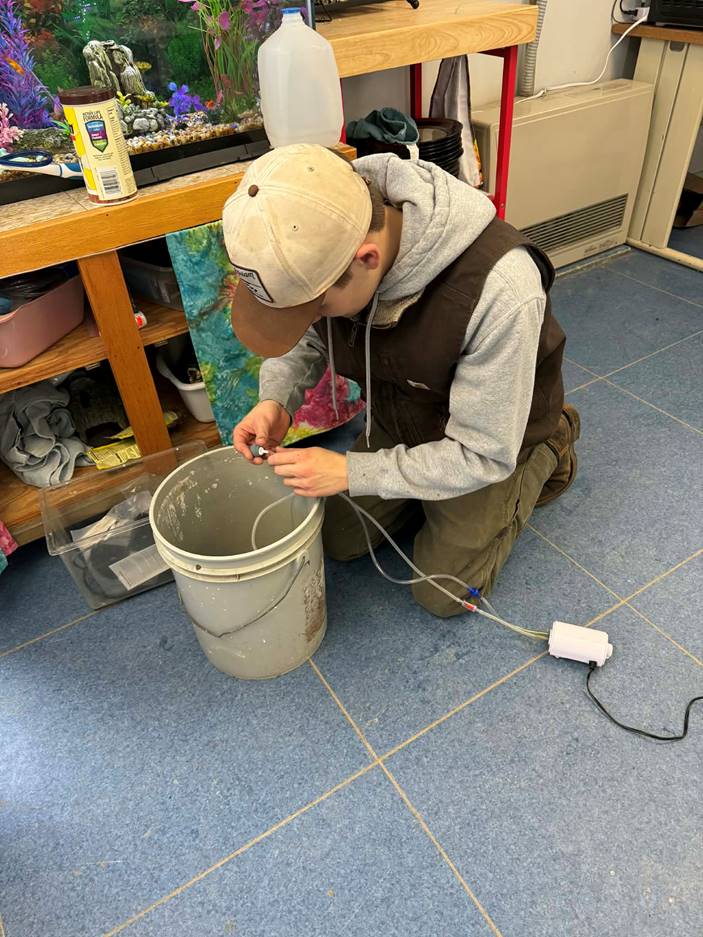
A Mount Abram Alternative Education Program student put together a hydroponic system that he self designed.
Beyond agriculture, students participated in a maple syrup unit that included tapping trees, building stoves, and studying forest ecology. These experiences connect classroom learning to Maine’s natural environment and local traditions.
“The hands-on work changes everything,” Naas said. “Students aren’t just learning concepts; they are applying them right away, which builds confidence and deeper understanding.”
Building Skills for Life
The Mount Abram Alternative Education Program also emphasizes real-world skill development. Students explore topics such as budgeting, taxes, and financial literacy, while gaining hands-on experience through internships and community service. Projects have included cutting firewood and supporting local food pantries, helping students build responsibility and a sense of purpose.
Looking ahead, the program aims to expand its food production efforts, with goals of growing vegetables for community distribution and, eventually, introducing livestock.
A Supportive, Student-Centered Environment
Creating a safe, respectful, and inclusive learning environment is central to the Mount Abram Alternative Education Program’s success. Staff utilize a trauma-informed approach to ensure students feel valued and supported. The small group setting fosters strong relationships, with many students describing the program as “like a family.”
“It feels different here,” a student expressed. “People listen to you. The small class size makes it feel less overwhelming than traditional classes.”
Learning is tailored to students’ interests and needs, encouraging independence, creativity, and critical thinking. By integrating academics with real-world applications, the program helps students see the relevance of their education.
Early Success and Future Growth
In its first year, the Mount Abram Alternative Education Program has already demonstrated meaningful impact. Students are attending more consistently, engaging more deeply in their learning, and achieving academic success. They are also gaining confidence, practical skills, and a renewed sense of connection to their school and community.
Mount Abram High School’s work highlights how experiential, student-centered approaches can transform student outcomes by providing not only a pathway to graduation but a strong foundation for lifelong success. As the program continues to evolve, school leaders are working to formalize a referral process and establish clear participation criteria to ensure that more students can benefit from this innovative model.
For more information on alternative education, please visit the Maine DOE Alternative Education webpage or contact Aubrie Howard, Maine DOE Student Success and Wellbeing Specialist, at aubrie.howard@maine.gov.
This story was written in collaboration with the Mount Abram Alternative Education Program, MSAD 58, as part of an ongoing series to highlight alternative education programs across Maine. To submit a good news story to the Maine DOE, please fill out the good news submission form.

