Maine DOE Engages Stakeholder Input Through Regional Think Tank Series

Drawing its largest gathering of stakeholders, the Maine Department of Education (DOE) hosted its 5th event in a series of Think Tanks held at various locations throughout the state this spring and summer. The Think Tanks are a way for the Department to discuss various topics and gain feedback from stakeholders about ongoing initiatives, long term programming, and to inform future decision-making.

In this first round of Think Tanks, the following topics were discussed: redefining school success, the Maine Learning Through Technology Initiative (MLTI), educator readiness, educator excellence, and special education.

The July 8th event held in Augusta started off with a warm introduction from Deputy Commissioner Daniel Chuhta thanking participants for making the trek to Augusta, in some cases from as far away as Washington County. Shortly after, attendees split off into three large groups to discuss specific topics for the day.

The discussion about MLTI, hosted by Beth Lambert, Maine DOE Coordinator of Secondary Education and Integrated Instruction, was introduced with an explanation of the 20 year history of MTLI, an acknowledgement that information will be forthcoming in regards to the recent passage of the budget and the coming school year, and that the day’s feedback will aid in the planning of the future of MLTI beyond 2021 when all of the current contracts have come to an end.

“Before we begin, I want to mention that there is only one thing that is off the table for today’s discussion,” said Lambert in her opening remarks. “We will not be talking about whether or not to end the MLTI Program,” she noted. “MLTI has been around for 20 years, and we would like it to be around for many, many more years to come.”

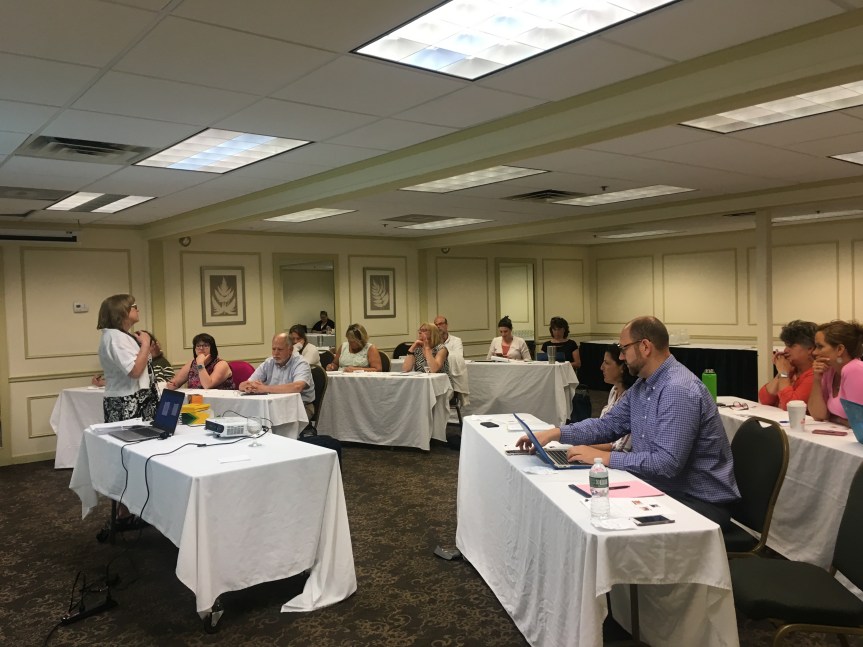
Stakeholder presenting feedback

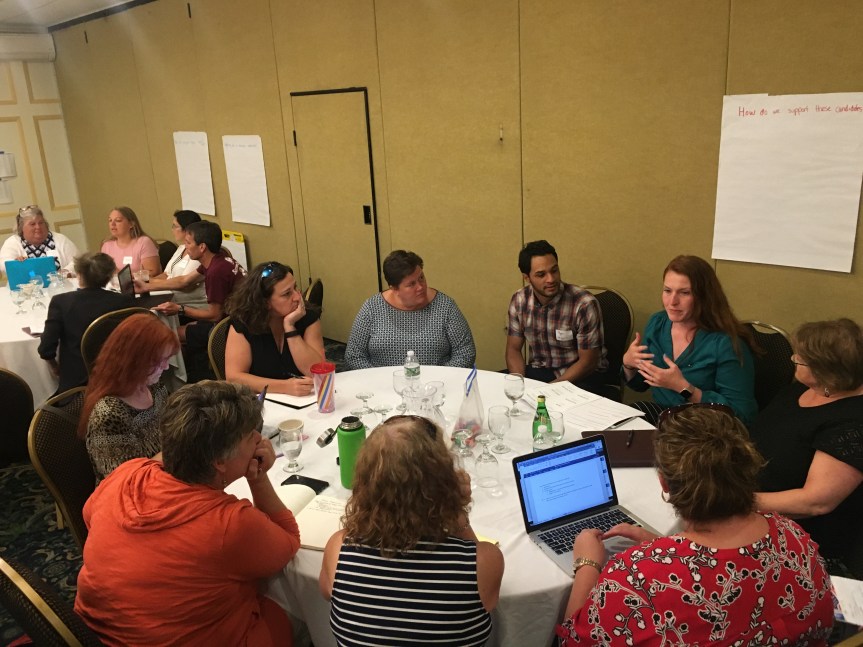
Over the course of the next few hours the group was split off into four smaller groups, each tasked with identifying values, concerns, and suggestions on large sheets of chart paper. A summary of those lists was then shared out with the entire group before the session ended prior to lunch.

Meanwhile in another session, a group was discussing the answers to a specific set of questions posed by Maine DOE Deputy Director of the Office of Special Services, Ann Belanger:

  • What is the most challenging aspect of the special education process?
  • Do you find the Maine Unified Special Education Regulations (MUSER) user friendly? What would make them more user friendly?
  • How can the Maine Department of Education support districts and parents in providing services to students with disabilities?
  • Are there topics/issues about which you feel that more information and/or training is needed? What are they?
  • Are there practices and/or policies that create barriers for students with disabilities?
Stakeholders engaged in worksessionParticipants then shared their collaborative responses with the entire group, working together to carefully record all the responses in notes. The group then worked together to create the ideal special education program, detailing the processes that would need to be involved to create this type of ideal setting.

For the session about redefining school success, Mary Paine, the Director of a new Office of School Success, introduced an initiative that engages educators, students, parents, and communities in conversations about what they think makes a school successful. Her session worked to further engage with stakeholders on this topic. The framework that results from the Maine Defines School Success statewide dialog will eventually complement Maine’s Every Student Succeeds Act (ESSA) plan by providing a broader set of indicators of success in Maine’s schools. In addition to being part of the Think Tanks series, the school success discussion will continue in school communities throughout the state over the course of the next school year.
IMG_3330

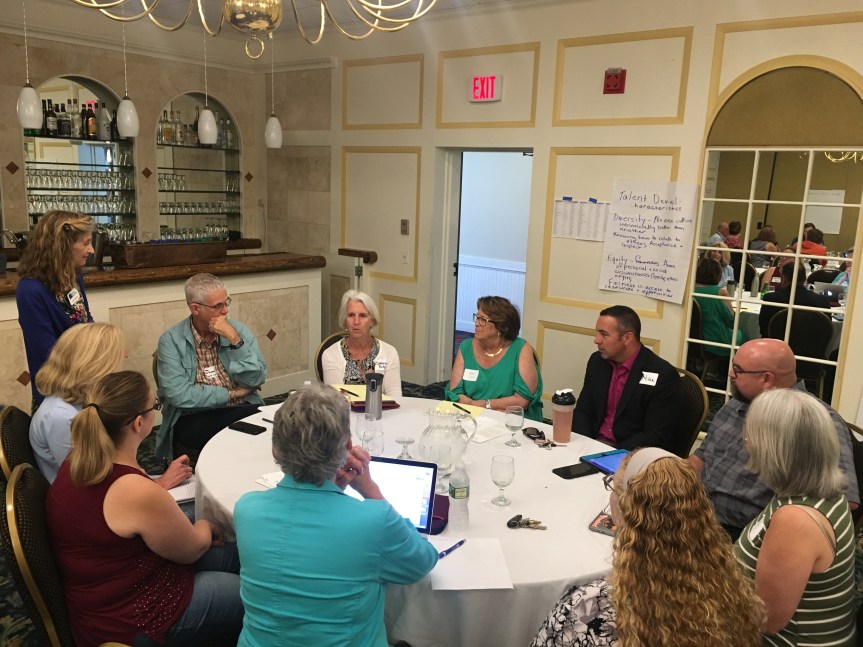
Led by Maine DOE’s Office of Higher Education and Educator Support Services, the educator readiness session prompted participants to discuss talent needs that are ideal for teacher candidates including pre-service and in-service, as well as what is needed to ensure teachers are prepared for equity and diversity in the classroom.

Each session resulted in walls of chart paper filled with written notes detailing suggestions, ideas, concerns, values, and much more. “We are pleased with the participation and appreciate that folks were willing to join us in these discussions across the State,” said Deputy Commissioner Chuhta.

IMG_3304

Following the July 8th event there will be an additional Think Tank held in Winter Harbor this fall to discuss the same topics and the Department is also planning to release a survey for those unable to participate in discussion topics at the Think Tanks already held.

“In the works is a new section of the Maine DOE website dedicated to the Think Tanks where the transcribed notes from each of the sessions will be available along with other information,” said Chuhta. “In the coming months, the notes will be synthesized to help us determine next steps and guide decision making on the topics discussed,” he added.

In a continuation of the Think Tank Series, the Department is expecting to launch another round of Think Tanks on a different set of topics over the course of the coming school year.
PRIORITY NOTICE: School Year 2019-2020 Enacted ED279 Subsidy Printouts Now Available

Thank you for your patience as we finalized School Year 2019-2020 ED 279 subsidy printouts to reflect the enactment of Public Law 2019 Chapter 343.  You may find these on the Maine Department of Education website:

FY 2019-2020 ED 279 Printouts

The subsidy amounts allocated to each school administrative unit are calculated using the Essential Programs and Services (EPS) funding model, based on $1.163 billion in General Purpose Aid (GPA) funding appropriated in the biennial budget.  Governor Mills proposed a $41.3 million increase for GPA in her biennial budget, resulting in a lower mill expectation from the prior year, down to 8.28 from 8.48.

The legislature approved the Governor’s budget, and appropriated an additional $3 million in funds to GPA for FY 2019-20, targeted toward Career and Technical Education schools and the Maine Education Center for the Deaf and Hard of Hearing.

The majority of school administrative units will not see a change in the enacted ED 279 from the preliminary ED 279, published on February 15, 2019, which were calculated based on the proposed budget.

If you have questions or need additional information as you review your enacted ED 279, please contact our School Finance Team:  Tyler Backus at tyler.backus@maine.gov    Ida Batista at ida.batista@maine.gov  or Paula Gravelle at paula.b.gravelle@maine.gov

Middle School Career and Technical Education Has a New Web Page! Grant Information and Resources: Check it Out!

Middle School Career and Technical Education (CTE) provides an opportunity for Maine middle school students to experience hands on learning, workplace skills, and career exploration. CTE empowers them to explore interests and discover activities that are inspiring. It allows students to experience potential career pathways, and gives them an awareness of the many options that are available.

In June of 2017, the legislature enacted law to expand CTE opportunities by requiring Maine schools to provide access to developmentally appropriate CTE for middle school students (grades 6-8). To assist with this new opportunity, there is currently a new grant application available for CTE centers and regions to implement pilot programs in  the 2019-2020 and 2020-2021 school years. To kick off this new initiative, the Maine State Board of Education provided federal and special revenue funding in school year 2018-2019 for pilot programs.

Through the current pilots, middle school students are discovering the many opportunities that are available to them in CTE! These pilots have included summer CTE camps, professional development opportunities, hands on CTE tours, as well as after school CTE programs.

The Middle School CTE programs rely on collaboration between the CTE centers, regions and the middle schools. CTE centers and regions have oversight of the CTE programming and can assist with resources. The middle schools and CTE centers/regions work together to design programs that meet the needs of the students, and provide an engaging learning experience. Alignment with the middle school CTE standards is required for all programs. These standards are in draft form, and are being reviewed and revised through the implementation of the current pilot programs. The current draft standards can be found here.

For additional information please visit our new web site at https://www.maine.gov/doe/learning/cte/schools/middleschool or contact Margaret Harvey at margaret.harvey@maine.gov


Who’s in Charge? Let Us Know!

Do you have new leadership in your school or district? Maine Department of Education asks that you please update new superintendents, principals, and other leadership contact information in NEO Staff as soon as possible.  The contact information in NEO Staff is used to send Department of Education communications, and is also used to keep the ESSA Data Dashboard as up to date as possible for the public.

If you need help entering in NEO Staff, please review our Staff Data Entry Guides.

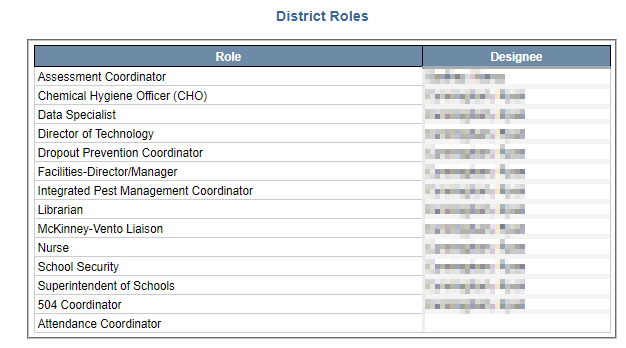
Once you have updated the Staff Assignments, if the staff member should be assigned a District Role within NEO Staff Certification, please ensure to update him/her there as well. Within SAU Staff Certification (which is under Certification within NEO Staff), scroll to the bottom of the certification page and click one of the roles to change the previous person to the new person. Anyone with the Staff Assignment of that role will be an option in the dropdown. Please note that if you do not have someone for a role, such as school nurse, the Superintendent can be selected without giving him/her a nurse staff assignment).

Image of District Roles

If you have any questions, please call the Data Systems Helpdesk at (207) 624-6896, or email at MEDMS.Helpdesk@maine.gov.

WHY DATA MATTERS: SAU Leaders Invited to Train and Talk!

Are you a school or district leader who wonders why the Department of Education collects certain data sets, and what they are used for?  Have you ever wanted to have a frank discussion with the DOE’s Data Team about the data collections and how they could be improved?  Charlotte Ellis, the Maine Department of Education’s Data Manager will be hosting open discussion sessions throughout the state during the first two weeks of August.  These sessions will be held from 1-3pm in the same locations as the MDOE Data Team Summer Trainings.

The sessions will be geared toward each location’s participants, and the topics they have indicated interest in during the registration process.  Please use the following link to register and select the topics for the session you wish to attend.  Tip – if you have any interest in a topic, please move the indicator bar.  Leaving the bar in the middle without moving it registers a null response.

https://mainedoe.co1.qualtrics.com/jfe/form/SV_8owiimlOciexsEt\

Dates and Locations – all sessions 1-3PM

August 6, Caribou High School

August 7, Brewer High School

August 8, Ellsworth Elementary/Middle School

August 12, Cony High School (Augusta)

August 13, Mt. Blue High School (Farmington)

August 14, Mt. Ararat Middle School (Topsham)

August 15, Buxton Center Elementary School

Please contact Charlotte Ellis with any questions at Charlotte.ellis@maine.gov 207-624-6696 or 207-485-3445

Public Preschool Annual Report due July 31, 2019

In the event that you missed the announcement of the Public Preschool Annual Report, this is a friendly reminder that the report is now available  and due to the Department of Education no later than close of business on July 31, 2019.  All public preschool programs are required to complete the Public Preschool Annual Report.

If you accidentally submit the report before finalizing, please email Nicole Madore for a link to access and continue your work.

A preview of the report can be found here.

Before you start the survey, the following information will be useful to have available:

  • Information related to staff turnover
  • Program operation:
    • Hours/day
    • Days/week
    • Any major changes to the program including but not limited to:
      • partners
      • curriculum
      • location
  • Successes/challenges experienced over the course of the year
  • Student attendance-
    • percentages for Free & Reduced Lunch
    • chronic absenteeism
    • transient students
  • Student’s identified for additional support:
    • English Learners- screening process
    • Individualized Education Plan (IEP) information including but not limited to:
      • referrals
      • active identifications
      • no longer qualify
  • Student growth in all learning domains

Any questions should be directed to Nicole Madore at Nicole.madore@maine.gov  or 624-6677.


Certification Renewals Due July 1, 2019: Update

At this time 57% of those with certifications that were set to expire on July 1 have submitted their renewal application and materials.  To avoid complications and delays, SAU leaders are encouraged to check the certification portal, to ensure your staff members hold valid certification.  Educators can easily check their current certification status by following the directions on how to create an account, and further information on the renewal process can be found here. For assistance, please contact our certification team at cert.doe@maine.gov or by phone: 207-624-6603.


Maine School Counselors Attend Annual Conference in Boston

70 school counselors from Maine attended the American School Counselor Association (ASCA) Annual conference in Boston from June 29 – July 2  for an opportunity to network with school counselors from across the country, hear from inspirational keynote speakers, and attend an array of breakout sessions to explore hot topics in the school counseling profession.

Conference participants came back with information about developing and designing the elements of a Comprehensive School Counseling Program, which includes aligning lessons to the ASCA Mindsets and Behaviors Standards, collecting and analyzing attendance, academic and discipline data, and collaborating with district and school staff on multi-tiered systems of support (MTSS).

A wonderful example of Maine’s outstanding school counselors striving to ensure that all students are provided with the programming they need to address social emotional learning, college and career readiness, and academic supports and interventions.

The images below were graciously provided by Bonnie Robbins from RSU 16, Jennifer Simmons from MSAD 5, and Sarah Adkins from the Maine DOE.


Maine DOE Update – July 10, 2019

From the Maine Department of Education


Reporting Items

Maine DOE Data Management Systems Summer Training

The Maine Department of Education Data Team is holding their annual summer training during the first two weeks of August.  The focus of the training this year will be on tips and resources to assist districts with their data reporting and viewing/certifying their reports. The sessions will be focused on sharing resources to assist districts with the data tasks required. | More

| Visit the DC&R Reporting Calendar |


News & Updates

Questions & Answers regarding An Act to Prevent Food Shaming in Maine’s Public Schools

In an effort to support schools and districts as they align their practices and policies in response to the passing of Public Law 2019, Chapter 54, please see the Question and Answer document and resources, below.  | More

Updated Maine DOE Home Instruction Portal Release

In March of this year, the Department of Education (DOE) released the online Home Instruction Portal. Since then, home instruction parents all over the state have begun to utilize the new portal, and have reported that the new process is less burdensome than the former paper-only process, which required double-reporting and greater expense and time due to mailing and requesting proof of receipt. | More

Maine FFA Joins Forces with Other New England States

On June 25-30, 2019, three student State Officers of the Maine FFA Association (formerly known as “Future Farmers of America”) joined 23 of their counterparts from the other New England States for a regional leadership training held for the first time at Northern Vermont University (NVU) in Lyndon. | More

Maine DOE Employee of the Week: Trevor Burns

Student Data Coordinator, Trevor Burns is being highlighted this week as the Maine DOE’s Employee of the Week! Learn a little more about Trevor | More


Maine Schools Sharing Success Stories

| Submit your Maine School Success Story |


Professional Development & Training Opportunities

| Visit the Professional Development Calendar |


Latest DOE Career/Project Opportunities

Maine FFA Joins Forces with Other New England States

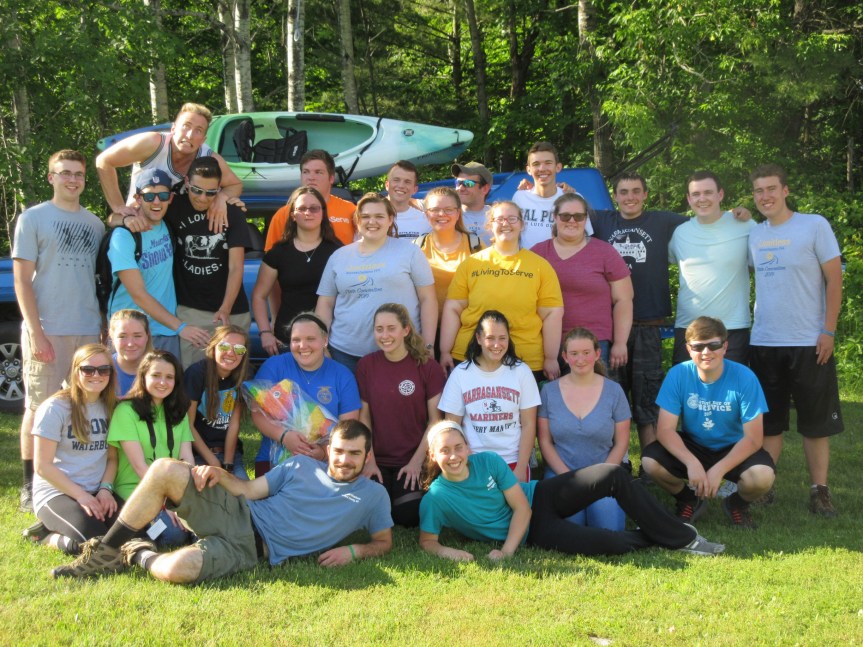
On June 25-30, 2019, three student State Officers of the Maine FFA Association (formerly known as “Future Farmers of America”) joined 23 of their counterparts from the other New England States for a regional leadership training held for the first time at Northern Vermont University (NVU) in Lyndon.  Most costs for this event were generously supported by a grant from the AgEnhancement Program of Farm Credit East, along with additional funding by Farm Credit East and by Yankee Farm Credit.  Maine FFA State Officers Graham Berry (President), Camryn Curtis (Vice President) and Ava Cameron (Secretary-Treasurer), were eager to gain leadership skills for the coming 2019-2020 school year.  They traveled to Vermont with State FFA Advisor Doug Robertson, from the Maine Department of Education.  On the way, they had the chance to experience the agriculture of Vermont, including a visit to Shelburne Farms, a 1,400 acre historic agricultural education facility on the shores of Lake Champlain, dating from the 1800s.

The purpose of the training was to prepare State FFA Officers to serve nearly 7,000 FFA members, grades 7 to 12, in the six New England States.  As representatives of one of the largest student leadership organizations in the country, State FFA Officers are expected to organize leadership workshops, conferences and other events for their membership, composed of students studying subjects related to agriculture and natural resources, whether through middle/high school science curricula infused with agriculture topics, or through technical programs in areas such as horticulture, forestry, landscaping, natural resource management, and outdoor leadership.

In Vermont, three National FFA facilitators from California, Kentucky and Oregon led training sessions on areas related to Communication Skills and Workshop Development/Delivery, helping student State FFA Officers begin to create their own workshop sessions to bring back to their home states.  Training logistics were overseen by host Vermont FFA Executive Director Suzanne Buck and Maine FFA State Advisor Doug Robertson.  To complement their formal training, State FFA Officers also participated in hands-on teamwork/leadership training on NVU’s high and low ropes courses, successfully undertaking team and individual challenges.  Students interviewed a local Lyndonville Institute agriculture teacher, observing his students’ projects related to gardening and maple syrup production, and learned more about opportunities in the agriculture industry through guest speakers from Case New Holland Tractors.

State FFA Officers commented on the high quality of their National FFA facilitators, the idyllic setting of NVU, with its excellent food and amenities, and the overall effectiveness of the training program and learning environment.  They left the training with increased confidence and excitement to serve FFA members in the coming year, along with strong personal connections to their New England peers, whom they will next see at events in Massachusetts, Washington, DC and Indianapolis.

Those wishing to learn more about Maine FFA, including the possibility of connecting with an existing FFA chapter or beginning a new one, should contact State FFA Advisor Doug Robertson:  doug.robertson@maine.gov, (207) 624-6744.