Old Town Elementary School Celebrates School Garden

Information for this article was submitted by Jeanna Tuell, Principal of Old Town Elementary School.

Old Town Elementary School has developed a beautiful and effective school gardens that students and teachers alike can use as a space to learn, grow, and experience the outdoors.

Described as an outdoor learning classroom, for several years the students have planted and harvested food to give to their school community. In addition, the students have the benefit of using the space as an outdoor environment to explore and experience a variety of other topics.

In September, the School hosted a garden party for their students and families. Families were able to take a tour of the garden, harvest some of the vegetables, and have a wonderful Saturday pressing apples and tasting new recipes.

MLTI Bridge Year

The Maine Department of Education, through the Maine Learning Technology Initiative (MLTI), has been providing 7th and 8th grade students and teachers access to, and support for, educational technology since 2002. While the goal has remained constant – provide State support for access to technology-enhanced education experiences for all students – the program has changed in many ways and will continue to grow and evolve in the future. The Department remains committed to this goal.  

As many school administrative units (SAUs) are aware, the final contracts for the existing MLTI program are set to expire on June 30, 2020. During the 2020-2021 academic year, the Department has designed a “bridge year,” to provide support for devices, infrastructure, and professional learning while we continue to work with stakeholders to design what is the next phase of the MLTI program. With the support of the 129th legislature, the Department has designed the bridge year to mitigate and minimize disruption to SAUs. The details of the bridge year are the following: 

  • The Department will purchase all of the MLTI devices at the end of the lease. 
  • The Department will transfer ownership to SAUs in cohort 4 (lease begun in 2016) for 7th & 8th grade and staff devices in July 2020. JAMF licenses on these devices will continue at no charge to SAUs through June 30, 2021. Systems Engineering will continue to support the WiFi infrastructure of 7th and 8th grade classrooms during the bridge year. 
  • SAUs who are currently leasing additional devices (elementary or high school student and staff devices) from the Department will have the option to buy out their devices from the Department at the 2015 rates, $28/ iPad and $48/ laptop in July 2020. JAMF licenses will be available on these devices for the cost of $6/ iOS device and $12/MacOS.
  • No new grants will be awarded during the 2020-2021 academic year. 
  • The Department will provide statewide and regional professional learning,  
  • The Department will host the MLTI student conference in May 2021.  

Over the past several months, the Department has hosted Think Tank conversations regionally around the state to reflect on the past 17 years of the MLTI program and envision innovative ideas about the possibilities for the next 20 years of the program. We will continue to use the additional time afforded by the “bridge year” to meet with stakeholders throughout the state. Discussions will include topics such as portable computer devices, device management and deployment, software, wireless networking, technical support, and professional development, as well as financial models to support these efforts. The Department will also convene a workgroup to synthesize this information and help to create a plan for the state. 

Below is the estimated timeline for MLTI through 2021. 

  • June 2019 – August 2020: The Department holds meetings with stakeholders regarding the future of MLTI (post SY 2020-2021) and convenes a workgroup to develop a State plan 
  • July 2020 – June 30, 2021: Bridge Year 
  • October 2020: The Department announces plan for MLTI post SY 2020-2021 (including the release of any necessary RFPs) 
  • July 2021: launch of MLTI 2.0 

For more information about the Maine Learning Technology Initiative, contact Beth Lambert, beth.lambert@maine.gov, 207-624-6642. 

WCC Educator Profile: Lewis Collins

Washington County Consortium (WCC): Washington County Educator Profile, submitted by Sarah Woog, Executive Director of the WCC.

Meet Lewis Collins, Superintendent of Moosabec CSD and Union 103

Moosabec CSD and Union 103 is a school district in Washington County nestled in the coastal communities of Jonesport and Beal Island. It includes Jonesport-Beals High School, Jonesport Elementary School, and Beals Elementary School. The district is a relatively small district, one familiar to many of us, with generations of pride in its schools, combined classrooms, contract disputes, packed gyms for basketball games, and a part time superintendent. These characteristics represent significant strengths and challenges, and Lewis (Lew) Collins is excited to leverage the strengths of the district to meet the challenges of a small rural district in Maine.

Lew started as Superintendent of Moosabec CSD and Union 103 in July of this year, and shortly began listening to the staff at the schools and community members he signed on to serve. He sees listening as one of the most important things he can do this year, and recognizes that the voice and values of the people in the district will help him determine how to best support them and increase student outcomes. Lew plans to spend much of his time this year “going into schools, getting diverse perspectives, listening to staff and teachers.” So far, he likes what he’s hearing and said the district’s greatest strengths are “first, its kids; and next, its staff, who are completely dedicated to student success.”

Complete dedication to student success has been a hallmark of Lew’s long career in education. He began his career in Camden, NJ, where he was a teacher at an alternative education school for adjudicated youth. He’s proud of the on-the-job training the school provided, and the work-study with pay opportunities the students were able to take advantage of. The school, and Lew’s work within it, supported students in discovering, defining, and pursuing their own paths to success, paths that took them off the troubled roads they had already traversed, and supported them on a journey toward meaningful and fulfilling lives. 

This theme of supporting students in finding fulfillment and success determined by their own passions and values is one with which many educators in Washington County can relate. This theme is evident in the current work being done to expand Career and Technical Education opportunities, and is pervasive in all of our schools. We all know the lobsterman’s daughter who takes a half day work-study her senior year to work on the boat, or the third-grader who designs a four-wheeler for his lego-engineering project. In fact, in Lew’s own district, students at Beals Elementary learn science by posing hypotheses and designing experiments in their own backyards, working with the Downeast Institute (DEI) to address the green crab problem, or to determine the best conditions under which mussels may thrive.

Lew is continuing his listening tour of his district. It’s important work. He is excited to see how his “understanding of the needs of his district translates into success for kids.” I have a sneaking suspicion he’ll find the needs and values that surface are already familiar to him, are harmonious with his own values and experiences, and provide a rich foundation for inspiring and supporting student success.  And Lew, as you listen to the folks in Washington County you are here to support and serve, I hope one message is loud and clear: Welcome. It’s good to have you.

Maine DOE Update – October 3, 2019

From the Maine Department of Education


Reporting Items

CORRECTION: Data Reporting Deadlines That Impact Subsidy Calculations (ED279)

The initial post on 9/26/2019 indicated that the Student Data and Staff Data Certifications would both be due by October 15, 2019; we apologize for this error and have corrected the due dates below to October 31st for both certified reports.  The Student Data certification period begins on October 15, 2019 and ends on October 31, 2019.  The Staff Data certification period begins after July 1, 2019 and also ends on October 31, 2019. | More

Reminder of Initial Audit Requirement Due November 1

We would like to remind business managers, and those with fiscal reporting responsibilities for SAUs, that the statements of assurance and the Maine Education Financial Systems (MEFS) Financial reconciliations are due by November 1st, as required by Title 20-A MRSA §6051 (4). | More

Important Reminder and Webinar Assistance: Due Date Approaches for Quarter 1 (Q1) Attendance, Behavior, Bullying, and Truancy Data Review

In order to assist SAUs with their legislatively mandated data reporting, the Maine Department of Education Data Team is offering a free webinar to review the requirements and new features. The webinar is strongly encouraged for those responsible for the compilation and entry of the required data.| More

| Visit the DC&R Reporting Calendar |


News & Updates

Maine DOE Convenes Local Educators to Review Career and Educational Development Standards

The Maine Department of Education hosted a group of local educators for a series of work sessions that will take place last month to review the Career and Educational Development (CED) standards. | More

Guidance on Enrollment, Attendance and Education of Children Age Six and Younger

There have been questions about the laws and rules that govern the enrollment, attendance, and education of our youngest learners, as schools consider recent legislation, and the expanding number and size of public preschools programs. | More

Maine Adult Education System Receives Champion of Education and Workforce Development Award

At the 2019 Annual Meeting and Awards Luncheon hosted by the Maine Development Foundation (MDF), Maine’s Adult Education System, comprised of over 70 local Adult Education Programs, the Maine Department of Education’s Office of Adult Education, and the Maine Adult Education Association (MAEA), was one of six award recipients. | More

Seeking U.S. Presidential Scholar Nominations!

The Maine Department of Education invites school districts to nominate graduating high school seniors for the U. S. Presidential Scholars Program. Each district may nominate one senior who is a U.S. citizen or legal permanent U.S. resident and has demonstrated excellence in a Career and Technical Education (CTE) program and one senior who had scored exceptionally well on either the SAT of the College Board or the ACT of the American College Testing Program. | More

MLTI Bridge Year

The Maine Department of Education, through the Maine Learning Technology Initiative (MLTI), has been providing 7th and 8th grade students and teachers access to, and support for, educational technology since 2002. While the goal has remained constant – provide State support for access to technology-enhanced education experiences for all students – the program has changed in many ways and will continue to grow and evolve in the future. The Department remains committed to this goal.   | More

Get to know the Maine DOE Team: Meet Nena Cunningham

Maine DOE team member Nena Cunningham is being highlighted this week as the part of a Get to know the DOE Team campaign! Learn a little more about Nena in the brief question and answer below. | More


Maine Schools Sharing Success Stories

| Submit your Maine School Success Story |


Professional Development & Training Opportunities

 Professional Learning Opportunity: Lenses on Learning- Leadership for Elementary Mathematics (3-Part Series)

This professional learning opportunity is specifically designed for a team from K-8 schools consisting of Principal, Math Coordinator and Classroom Teachers | More

| Visit the Professional Development Calendar |


Latest DOE Career/Project Opportunities

Cultivating Positivity at Noble Middle School

Submitted by Melinda Luders, Assistant Principal at Noble Middle School. 

If you need a dose of positivity and lots of smiles to start your day, just join the parent morning drop off line at Noble Middle School in Berwick, Maine! It doesn’t matter what day of the week you choose or the weather outside, the morning crew will be there to greet you with a smile. The crew consists of principal Mike Roberts, SRO Fogg and PE teacher Becky Good. We asked Becky to share her story.

It all began a year ago when I volunteered to trade in my lunch and recess duties for everyday morning duty. As the first couple weeks went by I noticed that not everyone was as happy as I, so I got to thinking … How could I start their morning off on more of a positive note? What could I do to make them smile? After all, good energy and positive vibes are contagious; I wanted to build the momentum in our community.

I decided to print and laminate different smile emojis and mount them on paint stirrers. I found that by putting the smiley face in front of my face it would almost always elicit a smile from my passers by. As the weeks and months went by, more and more parents and children arrived with smiles on their faces wondering what crazy thing Ms. Good would be doing next. The response I love the most is when a parent rolls the window down and says, ‘Thanks for making me smile!’

One morning a parent and her four passengers arrived holding emojis up in front of their faces giving back smiles. Our greetings then evolved from smiles to other funny emojis, big head cut outs, Wednesday’s hump day hat, rollerblading in Bruins attire, serving up hot chocolate and sometimes even having a real fire pit where we roast marshmallows for some of the lucky students being dropped off.

The smiles and the kindness kept spreading throughout the school year. One parent even nicknamed Friday as ‘Kind Friday’. He gives each of us a Kind bar as he passes through the line. Another dad would bring coffee and tea on Thursdays. It’s not uncommon that the three of us often get handed an occasional whoopie pie as well.

Another school year has begun and the smiles and waves are still going strong. Even the new 6th grade parents have jumped on board with the positive start to the day. “I couldn’t think of a better way to begin my day.”

Seeking U.S. Presidential Scholar Nominations!

The Maine Department of Education invites school districts to nominate graduating high school seniors for the U. S. Presidential Scholars Program. Each district may nominate one senior who is a U.S. citizen or legal permanent U.S. resident and has demonstrated excellence in a Career and Technical Education (CTE) program and one senior who had scored exceptionally well on either the SAT of the College Board or the ACT of the American College Testing Program. Application materials will be sent directly to Superintendents and CTE Directors by Friday, October 4th. Application are due to the Maine DOE by Friday, October 25th.

Students chosen as U.S. Presidential Scholars receive an expense-paid trip to Washington, D. C. in June and are presented the U.S. Presidential Scholars medallion at a ceremony sponsored by the White House, in commemoration of their achievements. During their visit to Washington, scholars have access to important national and international figures, including government officials, educators, authors, musicians, scientists and other accomplished people.

For more information please contact Beth Lambert, Coordinator of Secondary Education or Dwight Littlefield, Coordinator of Career and Life Education.

Get to know the Maine DOE Team: Meet Nena Cunningham

Maine DOE team member Nena Cunningham is being highlighted this week as the part of a Get to know the DOE Team campaign! Learn a little more about Nena in the brief question and answer below.

What are your roles with DOE?

My role as the Head Start State Collaboration Director is to assure state agencies and policies align to support our Head Start and Early Head Start programs throughout the state.  I am also leading the department’s efforts to create a Parent, Family and Community Engagement Framework to support districts as they work with families in their schools and communities.

What do you like best about your job?

The best part of my job is that no two days are the same!  I get to meet and work with people from across Maine, New England and across the country, and share my passion for Head Start!

How or why did you decide on this career?

I have worked in local Head Start programs my entire adult career.  When this position opened up, it seemed to be a natural fit!  Working with vulnerable young children and their families has been my focus throughout my educational journey.  Watching infants, toddlers and their families grow is my absolute favorite part of my career!

What do you like to do outside of work for fun?

Outside of work, I love to spend time with my family and friends.  My husband and I have two (not so small anymore) boys who keep us on our toes!  I enjoy spending time “upta” camp and just being outdoors!

Maine Adult Education System Receives Champion of Education and Workforce Development Award

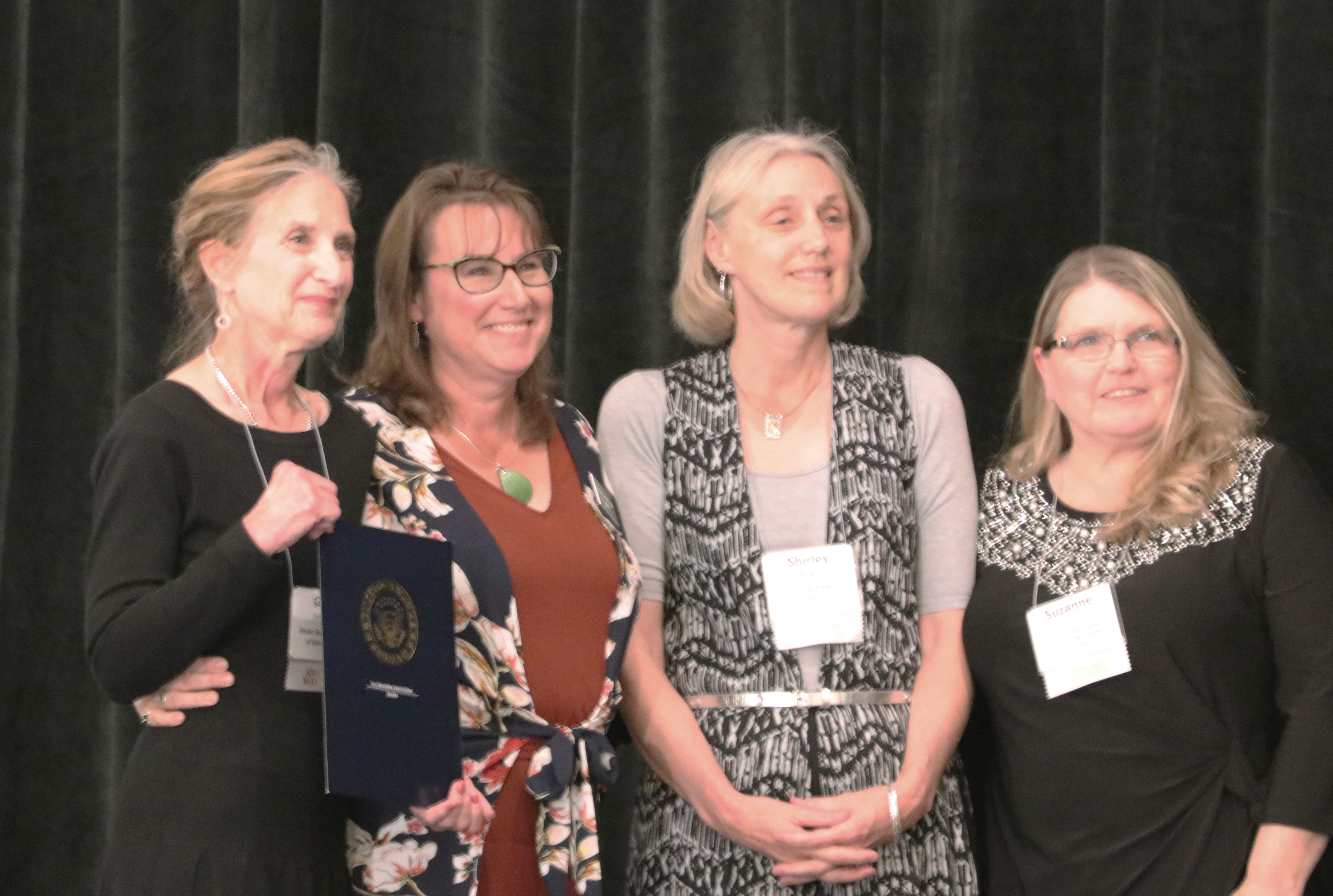
Gail Senese, Maine DOE Director of Adult Education, Lisa MacDonald Cooper, MDF Program Director, Education & Workforce, Shirley Wright, Executive Director of MAEA, and Suzanne Nowinski, President of MAEA.

At the 2019 Annual Meeting and Awards Luncheon hosted by the Maine Development Foundation (MDF), Maine’s Adult Education System, comprised of over 70 local Adult Education Programs, the Maine Department of Education’s Office of Adult Education, and the Maine Adult Education Association (MAEA), was one of six award recipients.

As part of the award presentation, MDF described the Maine Adult Education System in the following way:

Local adult education programs throughout Maine provide a range of instructional services to help adults develop the skills for further education opportunities, job training, and better employment, and to realize their full potential as productive workers, family members, and citizens. Adults seeking to further their education or advance their careers can enroll in adult education courses in literacy and adult basic education, high school completion, English language acquisition courses, Maine College Transitions, and career preparation and enrichment. Instruction is aligned with adult learners’ goals and focuses on supporting their efforts to meet the College and Career Readiness Standards. The Maine Adult Education System partners with Maine CareerCenters, local employers, higher education, and community agencies to maximize the education and training opportunities for its adult learners. And, most importantly, it embodies the very spirit of lifelong learning, which enriches individual lives and whole communities.

Accepting the award on behalf of adult education programming statewide were Gail Senese, Maine DOE Director of Adult Education, Suzanne Nowinski, President of MAEA, and Shirley Wright, Executive Director of MAEA.

GailonStage
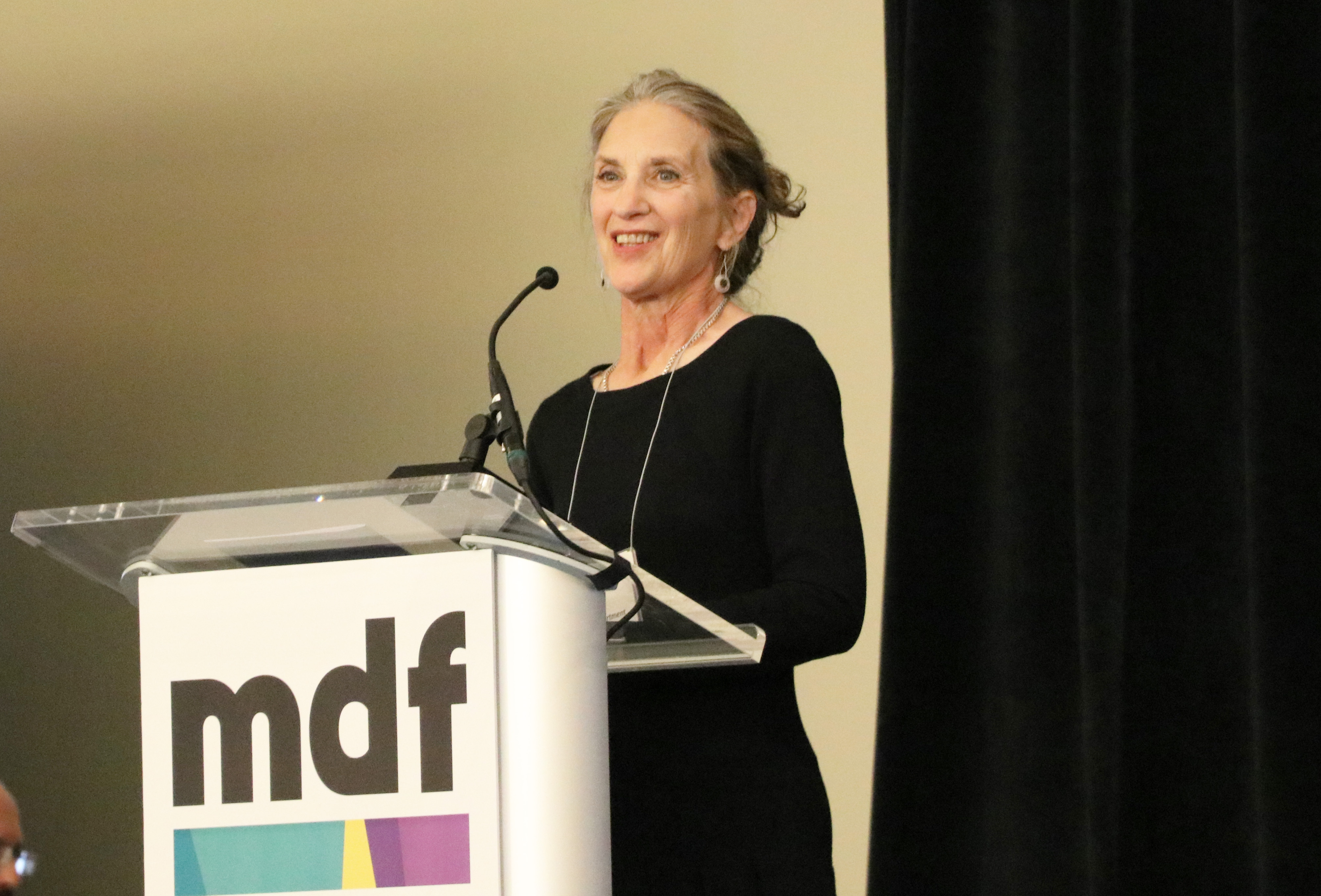
Gail Senese, Maine DOE Director of Adult Education.

“This means so much to all of us,” said Dr. Gail Senese in an acceptance speech she gave on behalf of the Maine Adult Education System. “We see ourselves as part the economic development chain in this State, preparing people to be good workers, and good community members, and good neighbors. We thank you so much for this recognition, for not only the people who work in this field but for the people who deserve to be served.”

Guidance on Enrollment, Attendance and Education of Children Age Six and Younger

There have been questions about the laws and rules that govern the enrollment, attendance, and education of our youngest learners, as schools consider recent legislation, and the expanding number and size of public preschools programs.

During the 129th Legislature, LD 150 and LD 151 both addressed the age of compulsory attendance.

LD 151 lowered the compulsory age for attendance in school to age 6.  This includes children who are accessing private or home instruction options.  In addition, there is clarification that children five years of age who are enrolled in a public or publicly-funded educational setting are required to attend, unless a parent/guardian has formally withdrawn them from school. All student attendance data should be reported and monitored for chronic absenteeism and truancy.  For further guidance regarding truancy, please see our website.  We encourage districts to consider their policies and protocols for supporting student attendance, and for reporting concerns to, and engaging with, partner agencies as needed.

This clarification is also a reminder that students, regardless of age, cannot be removed or unenrolled from a school that is receiving public funds without the due process afforded to those students and families in 20-A M.R.S. § 1001(8-A and 9). In addition, school administrative units may not unilaterally determine that a child attend on a modified schedule (e.g. abbreviated school day, reduced school week).  Parents/guardians must be involved in, and agree to, this decision and understand thoroughly the reasons for the request.

There are additional considerations for preschool students who have been identified as eligible to receive special education or English language acquisition services.

In accordance with Federal and State law, a child may not be excluded from enrollment in a public preschool program based solely on the presence of a disability or English language acquisition needs.  Enrolled children who are referred to Child Development Services (CDS), based on program concerns regarding the child’s development or behavior, must be considered a child with a disability and afforded the same rights as his/her K-12 peers until the child’s Individualized Education Program (IEP) team makes determinations.

The parents/guardians of all public preschool students must be administered the Maine DOE Language Use Survey, and if the student has a primary/home language other than English, an English language proficiency screener must be administered. If a student is identified as an English learner, English language acquisition services must be provided. A student cannot be denied access to public preschool on the basis of language acquisition needs.

We are committed to providing ongoing resources and support to educators, and to fostering partnerships with other educators and service providers. We encourage all to reach out to our staff and to watch for upcoming professional development opportunities on building an inclusive classroom, using trauma-informed practices, and integrating social-emotional learning into curriculum.

  • For resources and support with public preschool programs, please contact Nicole Madore, Early Childhood Specialist at 624-6677 or Nicole.madore@maine.gov
  • For CDS questions and support, contact Kris Michaud, State Early Childhood Special Education Technical Advisor at 592-1406 or kristopher.michaud@maine.gov with questions or comments about the guidance.
  • For questions and support regarding general attendance or truancy, please contact Gayle Erdheim at 207-624-6637 or gayle.erdheim@maine.gov, or refer to our webpage.
  • For questions and support regarding students who are English learners, contact April Perkins, Director of ESOL/Bilingual Programs & Title III, at 624-7726 or april.perkins@maine.gov.

Maine DOE Convenes Local Educators to Review Career and Educational Development Standards

The Maine Department of Education hosted a group of local educators for a series of work sessions that will take place last month to review the Career and Educational Development (CED) standards.

The review is part of an established fourteen step review that rotates through the eight content areas of Chapter 132 (doc) over a 5 year period, during which educators from across the state consider and revise standards to reflect the rigorous expectations and provide guidance to schools.

The career and education development standards are divided into three subgroups of knowledge and skills (Learning About Self-Knowledge and Interpersonal Relationships; Learning About Exploring Education, Career, and Life Roles; and Learning to Make Decisions, Plan and Create Opportunities, and Make Meaningful Contributions). Within each of these subgroups are performance indicators and descriptors that describe what students should know and be able to do across four grade bands (K-2, 3-5, 6-8, 9-Diploma). The career and education development standards also include an introduction and a note regarding embedding career and education development instruction.

As part of the ongoing review process for content standards, revised standards for social studies and science have been adopted.  In addition, writing teams for the career education and development, English, and math standards are drafting revisions that will be finalized by the end of September.

The Department of Education will then initiate the rulemaking process for Chapter 132 for final review and adoption of the revised career education and development, English, and math standards. This fall, the Maine DOE will begin a review of the health education and physical education, visual and performing arts, and world language standards. For more information about the standards or the standards review process, check out our web page.