The goal of this convening is to build capacity, communication, and collaboration among youth serving practitioners based in schools, law enforcement, community corrections, and community programs to cultivate safe, equitable, strengths focused school communities where all youth experience positive outcomes. The meeting will advance effective and ongoing multidisciplinary partnerships to increase communication, expand training and resources, align strategies, and measure progress across youth serving systems.
When:
Tuesday, July 30, 2019
8am-4pm
Where:
Cony High School
60 Pierce Dr.
Augusta, ME 04330
More Details:
Registration and breakfast open at 8 am, the program will begin at 9 am. The full agenda, featuring Judge Steven Teske presenting the School Justice Partnership Model, will be published in July.
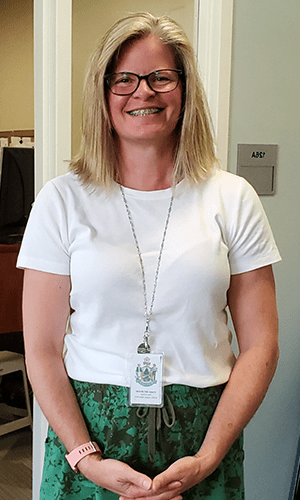
Business Manager in the Unorganized Territory , Rhonda Casey is being highlighted this week as the Maine DOE’s Employee of the Week! Learn a little more about Rhonda in this brief question and answer:
What are your roles with DOE?
I am the Business Manager in the Unorganized Territory. My role within the DOE is to support education services for all residents of the unorganized territory, its students, staff who are employed by the UT, the UT schools, monitoring education expenses, establishing sufficient a budget, reporting yearly education expenses to the Department of Audit for reimbursement, monitoring federal grants and expenses.
What do you like best about your job?
I like the variety of my position, the people I work for and with. In my position, there is always something new or different to challenge me. I began employment with the state 1988 as a Clerk Typist I working for the Controller’s Office part-time. A few short months later a full-time position was offered to me filing tax certificates – not something that I enjoyed, but a full-time job none the less. Then in April of that same year, I began employment with what was known as Management Information Systems(MIS) within the Department of Education. Today, MIS is School Finance and Operations. I quickly found that I enjoyed the fast pace work of this agency as well as the variety of the position.
How or why did you decide on this career?
In high school I took the business track career path and began working as a secretary when I was very young. My parents taught me to work hard, do my best, keep an open mind, and to continue to learn and grow. In state government advancement opportunities were available, I worked hard and took advantages of opportunities when these opportunities presented themselves. My state career path has taken me from full-time filing to traveling from Kittery to Presque Isle to Vinalhaven, working with special education students to CEO’s, as well as teachers and parents.
What do you like to do outside of work for fun?
This is an easy one! Outside of work I spend time with my husband of 27 years, our parents, two dogs, four children, their spouses, and five grandchildren. My husband and I like to disc golf, garden, go camping, fly fish, ice fish, ride our motorcycles, snowmobile, and snow shoe. I enjoy the four seasons Maine offers and we spend as much time outside as we can.
Do you have new leadership in your school or district? Maine Department of Education asks that you please update new superintendents, principals, and other leadership contact information in NEO Staff as soon as possible. The contact information in NEO Staff is used to send Department of Education communications, and is also used to keep the ESSA Data Dashboard as up to date as possible for the public. | More
In the event that you missed the announcement of the Public Preschool Annual Report, this is a friendly reminder that the report is now available and due to the Department of Education no later than close of business on July 31, 2019. | More
Thank you for your patience as we finalized School Year 2019-2020 ED 279 subsidy printouts to reflect the enactment of Public Law 2019 Chapter 343. | More
At this time 57% of those with certifications that were set to expire on July 1 have submitted their renewal application and materials. To avoid complications and delays, SAU leaders are encouraged to check the certification portal, to ensure your staff members hold valid certification. | More
In her opening remarks at the Opiate Response Summit, Governor Janet Mills expressed her appreciation for Gordon Smith. One of the Governor’s first actions, post-inauguration, was to found the Opiate Response and Prevention Taskforce directed by Smith. Mills’ founding of this taskforce underscores what a large priority the Opiate Epidemic represents for Mainers. | More
Drawing its largest gathering of stakeholders, the Maine Department of Education (DOE) hosted its 5th event in a series of Think Tanks held at various locations throughout the state this spring and summer. The Think Tanks are a way for the Department to discuss various topics and gain feedback from stakeholders about ongoing initiatives, long term programming, and to inform future decision-making. | More
In June of 2017, the legislature enacted law to expand CTE opportunities by requiring Maine schools to provide access to developmentally appropriate CTE for middle school students (grades 6-8). To assist with this new opportunity, there is currently a new grant application available for CTE centers and regions to implement pilot programs in the 2019-2020 and 2020-2021 school years. To kick off this new initiative, the Maine State Board of Education provided federal and special revenue funding in school year 2018-2019 for pilot programs. | More
Shana Goodall, a teacher at Orono High School, has been named the 2019 Maine History Teacher of the Year, an award presented annually by the Gilder Lehrman Institute of American History. | More
Shana Goodall, a teacher at Orono High School, has been named the 2019 Maine History Teacher of the Year, an award presented annually by the Gilder Lehrman Institute of American History, the nation’s leading organization dedicated to K-12 American history education.
Inaugurated in 2004, the History Teacher of the Year Award highlights the crucial importance of history education by honoring exceptional American history teachers from elementary school through high school. The award honors one K-12 teacher from each state, the District of Columbia, Department of Defense schools and US Territories. In fall 2019, the National History Teacher of the Year will be selected from the pool of state winners.
Ms. Goodall is a lifelong learner, as evidenced by her embrace of technology in the classroom and her continuous quest to find new, engaging ways to present material. She earned an undergraduate degree in Growth and Structure of Cities from Bryn Mawr College (Bryn Mawr, Pennsylvania) and graduate degrees in teaching and educational leadership from the University of Maine (Orono, Maine). In her classroom, she creates a flexible environment for all learners to explore history while stimulating, directing, and pacing whole class instruction while at the same time encouraging independent inquiry. Shana is noted for her sense of humor and laugh, and students view Shana as a mentor and valuable source of information and guidance.
In addition to a $1,000 honorarium, Shana Goodall’s school will receive a core archive of American history books and Gilder Lehrman educational materials and recognition at a ceremony at the annual fall conference of the Maine Council for the Social Studies to take place on Monday, November 5, 2019.
The National History Teacher of the Year Award will be presented by John Avlon, Senior Political Analyst and anchor at CNN, at a ceremony in New York City on October 2, 2019. Past presenters at the ceremony include the Honorable Sandra Day O’Connor, Good Morning America‘s Robin Roberts, First Lady Laura Bush, former US Secretary of Education Arne Duncan, and former New York City Mayor Michael Bloomberg.
Nominations for the 2020 History Teacher of the Year awards are now open. Students, parents, colleagues, and supervisors may nominate K-12 teachers for the award by visiting gilderlehrman.org/nhtoy. The deadline for 2019 nominations is March 31, 2020.
Submitted by Kristen Levesque, Principal at Maranacook Community Middle School
Podcast audiences have grown exponentially in the past few years and so has my enthusiasm for having students extend their writing skills with this new genre. After many trials and semi-successful experiments, the students have identified and operationalized the attributes of a captivating podcast adventure to the extent that two of them were recently announced as winners of the second annual New York Times Podcast Contest. Designed for students age 13 to 18, Silas Bartol and Mila Barnes-Bukher, were among the youngest contestants of the 12 winning podcasts.
Class member, Maggie Morrill, deserves credit for the inspiration provided in her original story entitled: “Alexa, and the Start of the Robot Revolution.” The story was adapted by Silas and Mila to conform to a podcast format based on several weeks of study on “What makes a great podcast.” All three students were 7th graders at Maranacook Middle School in Ms. Godin’s GT English/Language Arts class when this assignment and contest challenge was undertaken.
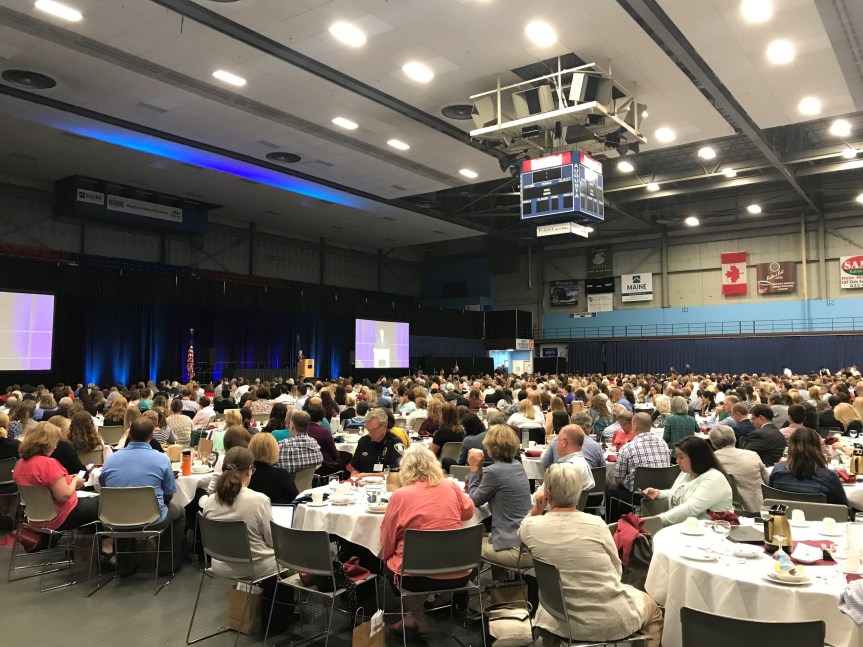
In her opening remarks at the Opiate Response Summit, Governor Janet Mills expressed her appreciation for Gordon Smith. One of the Governor’s first actions, post-inauguration, was to found the Opiate Response and Prevention Taskforce directed by Smith. Mills’ founding of this taskforce underscores what a large priority the Opiate Epidemic represents for Mainers. Turning the Tide: Maine’s Path Forward in the Opiate Crisis, a summit which packed the Augusta Civic Center with over 1,000 people on the 15th, represented an overwhelmingly hopeful attitude towards harm reduction and prevention. Several days prior to the event, Smith commented that the need to cap registration at 1,050 people was a good problem to have. Many are invested in solving this Crisis.
The Governor opened the event with a grave message stressing the urgent need for awareness, and what is at stake for Maine families. In the past five years, 1,700 Mainers have died of drug overdose. If 1,700 baby seals washed up dead on the beach, said Mills, there would be a massive public response. “These are not ‘druggies’,” said Mills, “they are neighbors.” The Governor stressed in her speech that people affected by substance use disorders are family members: they are sons and daughters and parents, employees and employers, neighbors and friends.
Commissioners from many government Departments such as Health and Human Services, Public Safety, and Law Enforcement were present. Department of Education Commissioner Pender Makin was also in attendance. Following the Governor’s remarks, attendees heard from Sam Quiones, author of Dreamland, a book which outlines the evolution of an American Opioid Crisis.
Afterward, the nine morning breakout sessions began. These were hosted by a variety of experts. The diverse topics from both morning and afternoon sessions included the following critical subjects:
· Addressing Stigma: Using Researched-Based Evidence
· Building Public Health Infrastructure
· Needle Exchanges and Naloxone Distributions
· Challenges in Recovery Centers and Housing
· Community Prevention Services at Work
· Data to Action: Harnessing Information to Tackle the Opioid Crisis
· Emerging Threats: Current and Predictive Trends
· Harm Reduction with Neonatal Focus
· How to Best Navigate Jobs and Transportation During Recovery
· Improving Access to Medications for OUD: Considerations for Special Populations
· Improving Access to Medications for OUD: Engaging More Clinicians to Offer Treatment
· Law Enforcement and its Role of Bringing Hope to Recovery
· MaineWorks: Offering Dignity, Trust, and a Path Forward
· OD Mapping and Overdose Response Through Community Partnerships
· Responsible Prescribing and Pain Control Debate: Has the Pendulum Swung Too Far?
· State Prevention Services: Opioid Task Force Update
· The Importance of Law Enforcement in Community Based Recovery
· The Power of Community Coalitions
· Voices of Recovery: Panel of Individuals in Recovery
Peter Michaud, Debate Moderator addressed the audience at the Responsible Prescribing and Pain Control Debate breakout session.
At lunch, the parents of two young men who lost their lives to substance abuse disorders spoke and shared their story before the assembled audience. Former White House Director of National Drug Control Policy, Michael Botticelli, then spoke on the importance of community support in the recovery process. Speaking on his own experience with the disorder, he highlighted the stigma which only perpetuates the issue. “Epidemics don’t happen in a vacuum,” he said. Botticelli stressed the ways in which the epidemic is exacerbated by poor data, over-prescription, and lack of information and resources. He closed his remarks by pointing out the number of options that Maine should employ moving forward, saying “We cannot dictate other people’s paths to recovery.”
The panel of speakers who following the afternoon breakout session demonstrated a deluge of support from state government bodies all over New England and the North East. The Senior Advisor to the Governor of Rhode Island Tom Coderre, Senior Advisor to the Governor of New Hampshire David Mara, and the Commissioner of Health in Vermont Dr. Mark Levine sat on the panel, as well as the President of the American Medical Association Dr. Patrice Harris. Coderre succinctly represented the mentality of support shared by those in attendance when he encouraged Maine to “flatter Rhode Island by mimicking any of their ideas.” The goal of the Summit was to build on existing positive information so New England can better tackle this unprecedented Crisis.
Turning the Tide: Maine’s Path Forward in the Opiate Crisis served as a lightning rod for activists who wish to generate a reason for hope. And there are reasons to be hopeful. The Summit alone demonstrates an effort by the administration and the public to address an Opiate
Crisis sweeping Maine and America. Those in the recovery process are being given a larger voice at the table. Maine Law Enforcement is now prepared to administer Naloxone to those experiencing an overdose. In fact, 2017 was Maine’s high water mark for overdoses. We are turning the tide, and this Summit was among the first steps of many more to come.
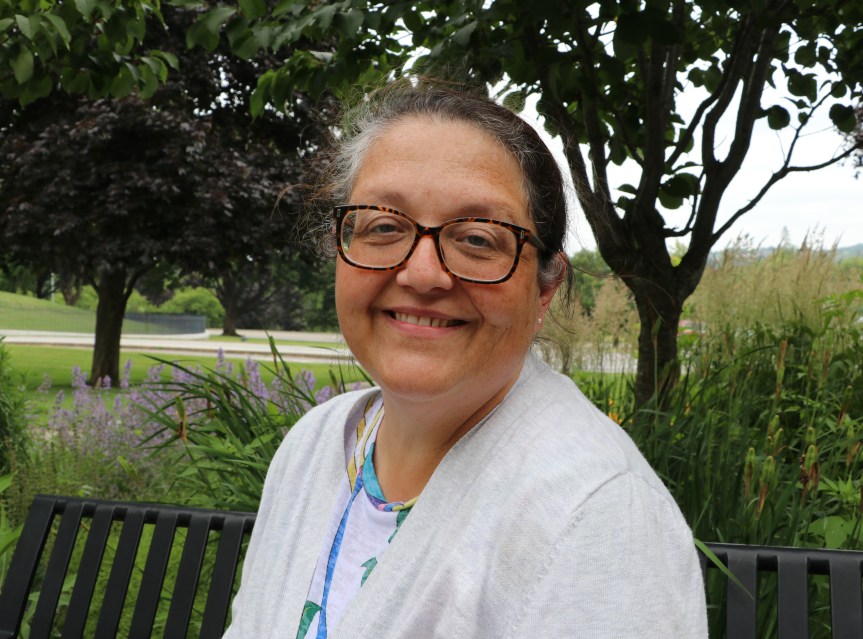
Education Specialist Leora Byras is being highlighted this week as the Maine DOE’s Employee of the Week! Learn a little more about Leora in this brief question and answer:
What are your roles with DOE?
My position at the DOE is on the Public School Monitoring Team within the Special Services Department. We work with public schools, regional programs and charter schools to ensure that children with disabilities have access to FAPE and the best programming possible to not only meet their needs, but to grow and thrive. This includes professional development with the administration and teachers, and helping to oversee compliance to federal indicators.
What do you like best about your job?
I love to go out to the districts and meet the teachers, conduct professional development with them, and meet the children they teach.
How or why did you decide on this career?
I entered the field of special education over 25 years ago to help children who were not having positive experiences in school. I was blessed to work alongside amazing people over the years who shared my vision of building a positive, welcoming classroom environment where children who had trauma backgrounds, or autism, for example, would be welcomed and supported through their academic and emotional growth.
What do you like to do outside of work for fun?
I recently joined a roller derby league (Go Androscoggin Fallen Angels!) and am having so much fun learning the sport! I also love to read and do crafty things.
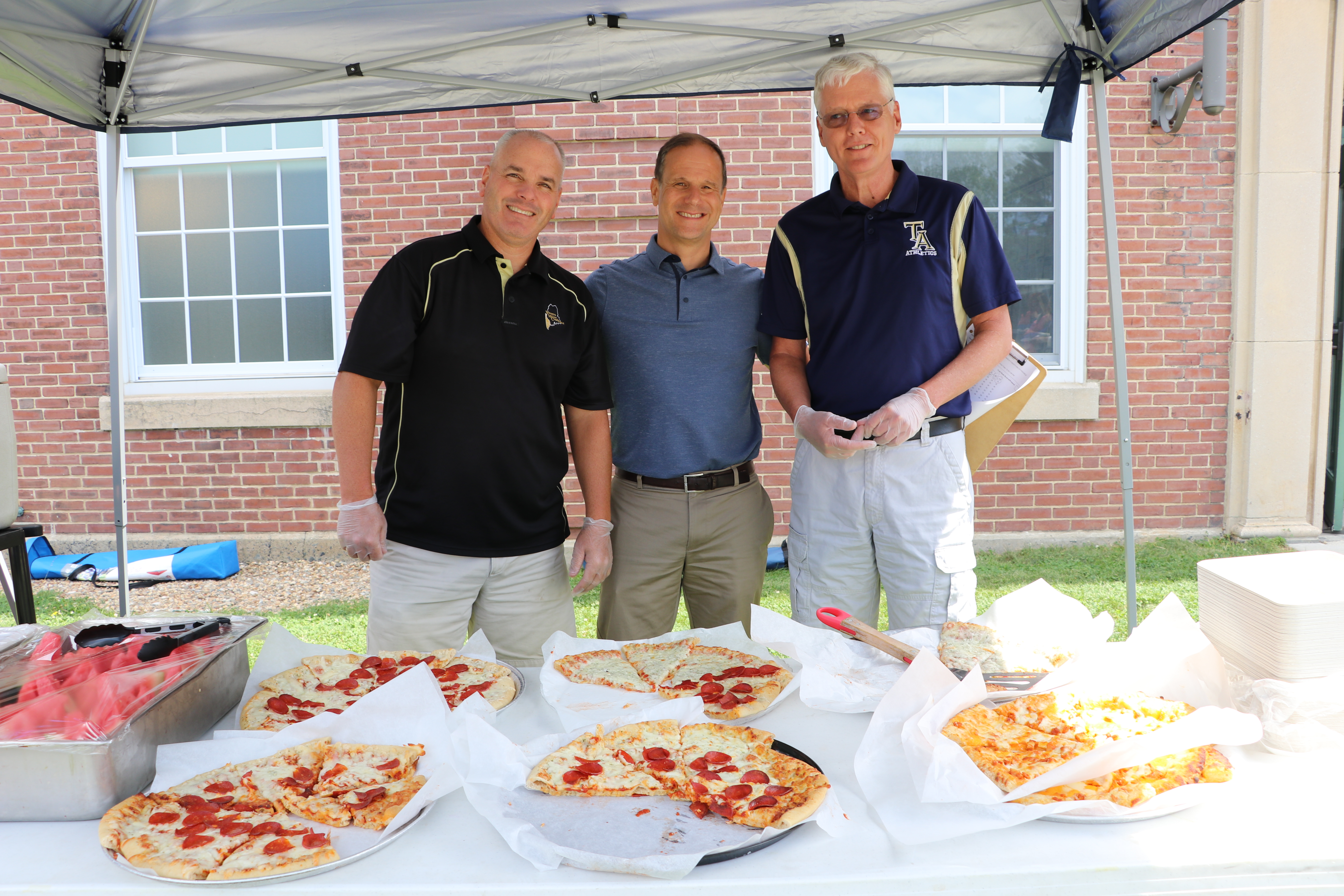
Kittery School Department hosted a kick-off pizza party this week welcoming children in their community to enjoy free lunch all summer long. At the event they served pizza, watermelon, chocolate hummus with strawberries, snacks, and milk. This event is hosted annually to let the community know about the Summer Food Service Program that provides free lunch to all kids Monday through Friday throughout the summer months, completely free, no questions asked.
Kaitlin Beach, Shapleigh School Assistant Principal and Alli Gamache, Mitchell Primary School Principal
Funded by the U. S. Department of Agriculture and administered by the Maine Department of Education in partnership with local sponsors throughout the state, the Summer Food Service Program is an extension of the Federal Child Nutrition program found in schools across the nation which provides free or reduced priced meals to families who qualify. The Kittery School Department is one of 463 sites located in Maine this summer who offer the Summer Food Service Program.
Traip Academy Assistant Principal/Athletic Director, Kittery School Department Superintendent, Eric Waddell, and Michael Roberge, Traip Academy Principal John Drisko serving pizza at the event
The strong connections between the Kittery School Department and their community allow them to not only host the summer meal program at the Kittery Community Center where kids are in and out all day participating in summer activities through the recreational department, but also provides the kids with other opportunities and activities available through community partnerships. For example, at the event this week, each student received a free backpack with school supplies tucked inside. The backpacks and the supplies are donated with the help of United Way and the Portsmouth Naval Shipyard. Each time kids come back for a meal this summer they will get an additional item for their backpack. Wendy Collins, Kittery School Department School Nutrition Director and the organizer of the Summer Food Service Program, hopes it will help get kids to come back and eat each day and spread the word about this wonderful service to the community.
Sarah Perkins and Catherine Hoffmann, from the Maine Dairy & Nutrition Council
Also present at the event was the Maine Dairy & Nutrition Council who have helped support the Kittery School Department through grant funding. During the event they helped serve the milk for lunch that day and promoted their Fuel Up to Play 60 initiative. In addition, there were representatives from Let’s Go! promoting their statewide initiative 5-2-1-0 Goes to Child Care to help communities maintain and improve upon their healthy food choices and physical activity opportunities. They provided activities and games for kids to enjoy after lunch, along with the many other fun things available including face painting and a large Thomas & Friends themed bounce house.
The event served 193 kids who all got to enjoy a delicious and nutritious meal provided by a school department and its community who care so very much about the children and families who live in their community.
To find summer meal sites near you, visit http://www.fns.usda.gov/summerfoodrocks, and type in your address. The map will be populated with the sites nearest to you. You can also text “Summer Meals” to 97779 or call Maine 211.
Representatives from Let’s Go! 5-2-1-0 Goes to Child Care doing activities with kids
Kids doing face painting
Sarah Perkins and Catherine Hoffmann, from the Maine Dairy & Nutrition Council pose Adriane Ackroyd from the Maine Department of Education’s Child Nutrition Team.
Drawing its largest gathering of stakeholders, the Maine Department of Education (DOE) hosted its 5th event in a series of Think Tanks held at various locations throughout the state this spring and summer. The Think Tanks are a way for the Department to discuss various topics and gain feedback from stakeholders about ongoing initiatives, long term programming, and to inform future decision-making.
In this first round of Think Tanks, the following topics were discussed: redefining school success, the Maine Learning Through Technology Initiative (MLTI), educator readiness, educator excellence, and special education.
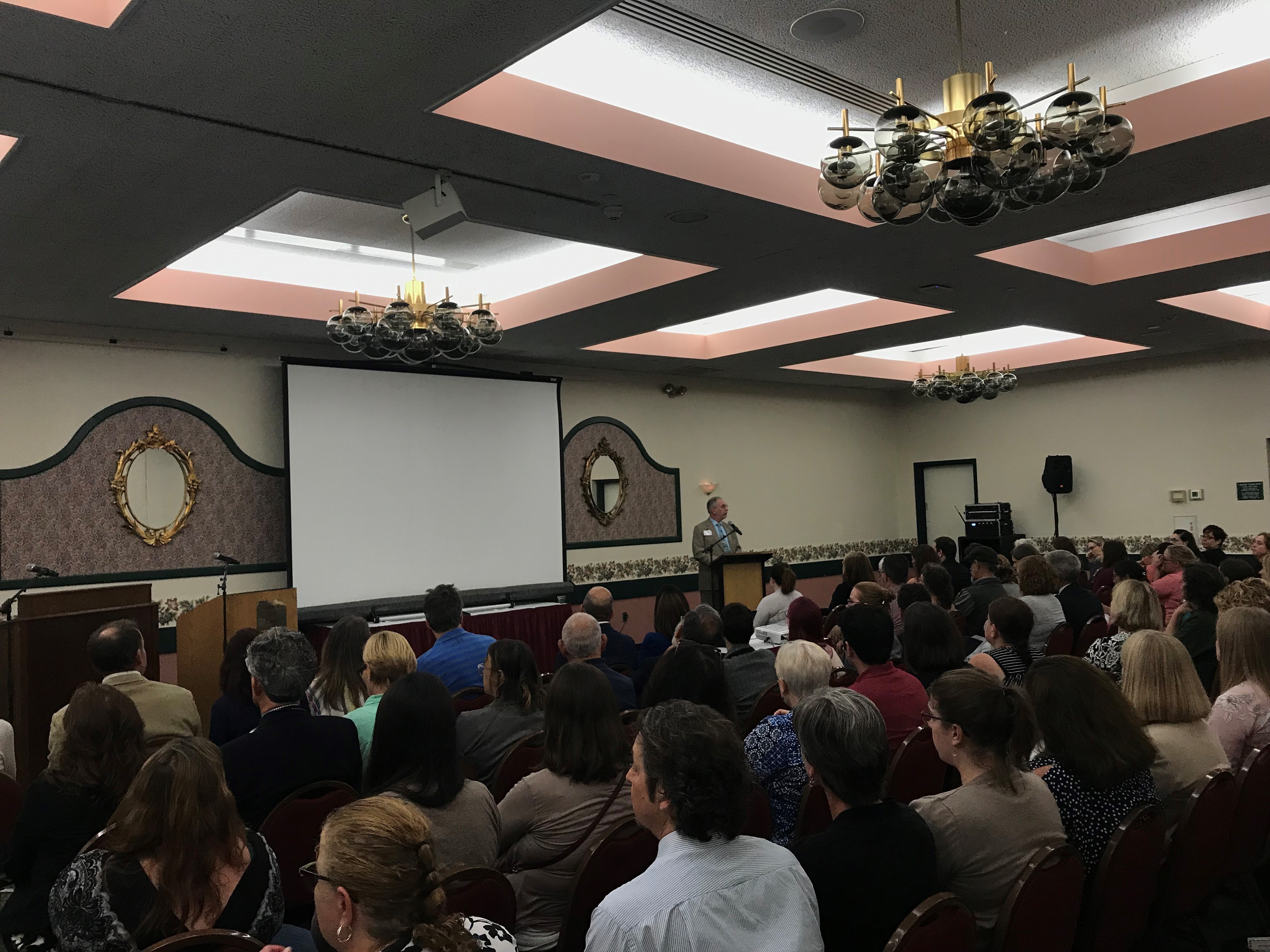
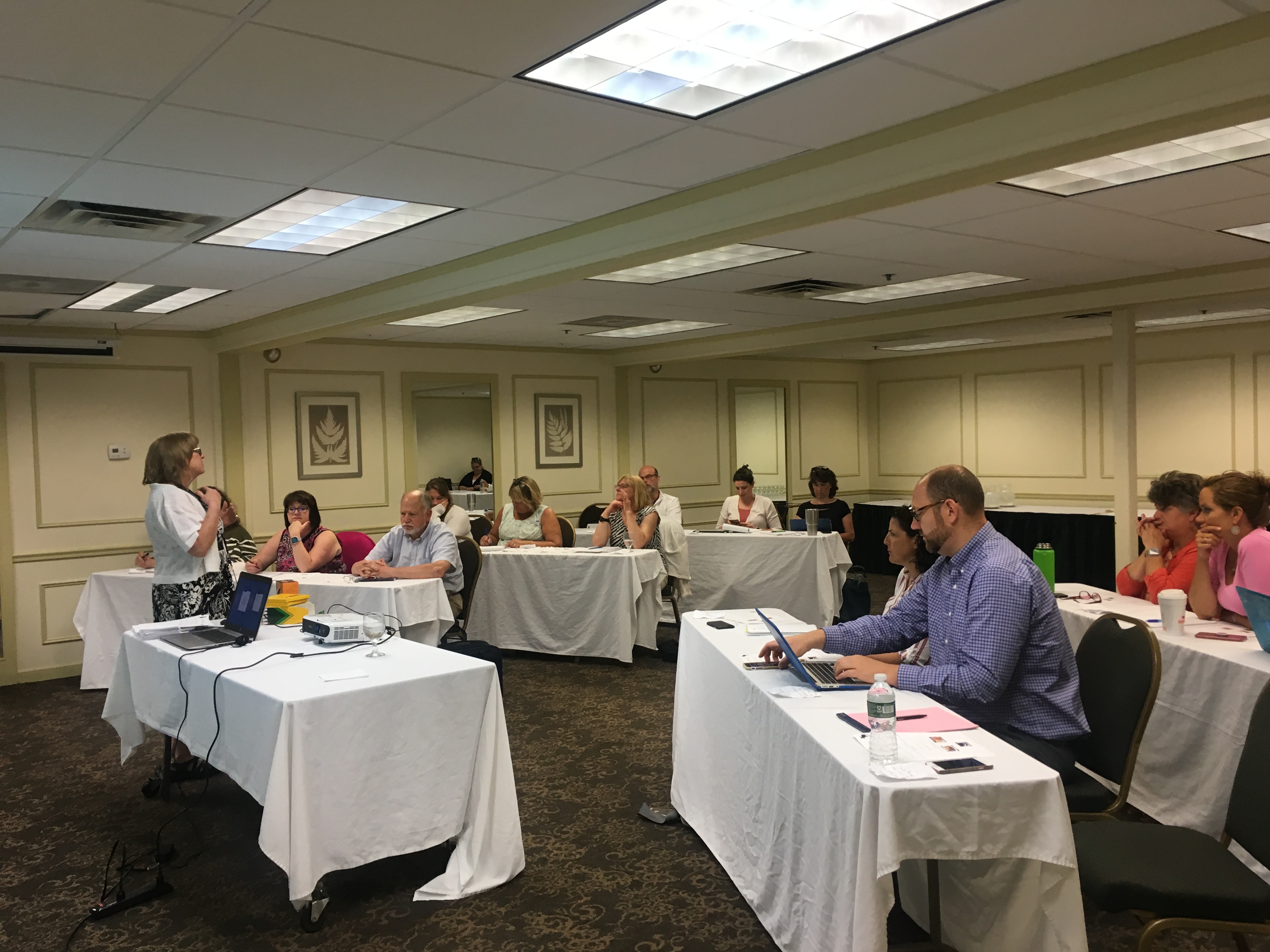
The July 8th event held in Augusta started off with a warm introduction from Deputy Commissioner Daniel Chuhta thanking participants for making the trek to Augusta, in some cases from as far away as Washington County. Shortly after, attendees split off into three large groups to discuss specific topics for the day.
The discussion about MLTI, hosted by Beth Lambert, Maine DOE Coordinator of Secondary Education and Integrated Instruction, was introduced with an explanation of the 20 year history of MTLI, an acknowledgement that information will be forthcoming in regards to the recent passage of the budget and the coming school year, and that the day’s feedback will aid in the planning of the future of MLTI beyond 2021 when all of the current contracts have come to an end.
“Before we begin, I want to mention that there is only one thing that is off the table for today’s discussion,” said Lambert in her opening remarks. “We will not be talking about whether or not to end the MLTI Program,” she noted. “MLTI has been around for 20 years, and we would like it to be around for many, many more years to come.”
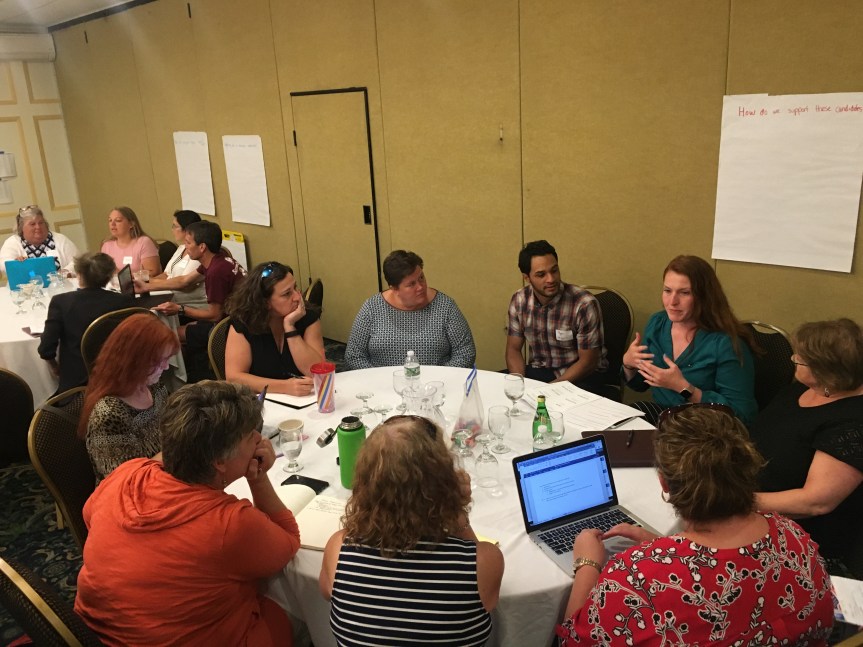
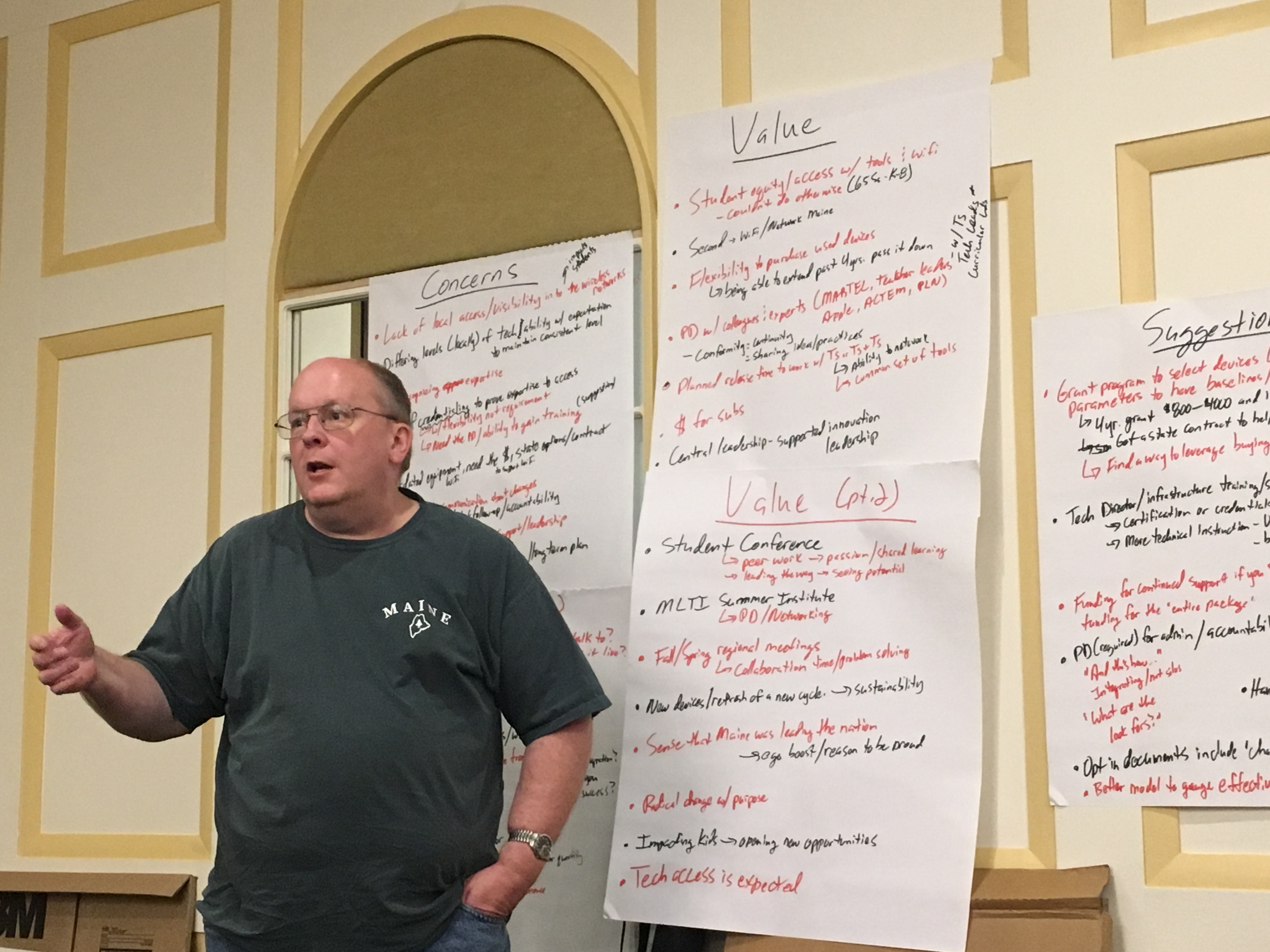
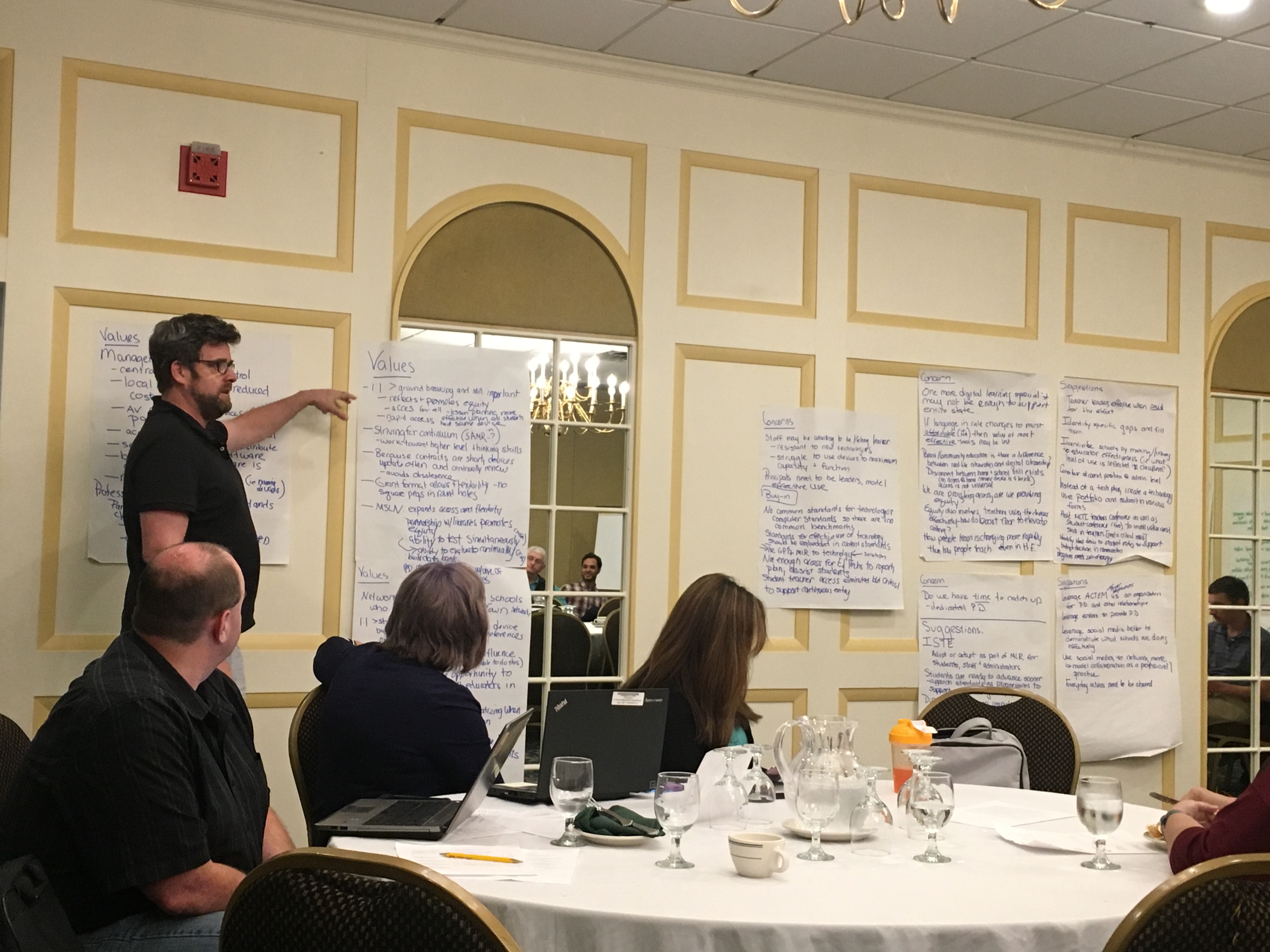
Over the course of the next few hours the group was split off into four smaller groups, each tasked with identifying values, concerns, and suggestions on large sheets of chart paper. A summary of those lists was then shared out with the entire group before the session ended prior to lunch.
Meanwhile in another session, a group was discussing the answers to a specific set of questions posed by Maine DOE Deputy Director of the Office of Special Services, Ann Belanger:
What is the most challenging aspect of the special education process?
Do you find the Maine Unified Special Education Regulations (MUSER) user friendly? What would make them more user friendly?
How can the Maine Department of Education support districts and parents in providing services to students with disabilities?
Are there topics/issues about which you feel that more information and/or training is needed? What are they?
Are there practices and/or policies that create barriers for students with disabilities?
Participants then shared their collaborative responses with the entire group, working together to carefully record all the responses in notes. The group then worked together to create the ideal special education program, detailing the processes that would need to be involved to create this type of ideal setting.
For the session about redefining school success, Mary Paine, the Director of a new Office of School Success, introduced an initiative that engages educators, students, parents, and communities in conversations about what they think makes a school successful. Her session worked to further engage with stakeholders on this topic. The framework that results from the Maine Defines School Success statewide dialog will eventually complement Maine’s Every Student Succeeds Act (ESSA) plan by providing a broader set of indicators of success in Maine’s schools. In addition to being part of the Think Tanks series, the school success discussion will continue in school communities throughout the state over the course of the next school year.
Led by Maine DOE’s Office of Higher Education and Educator Support Services, the educator readiness session prompted participants to discuss talent needs that are ideal for teacher candidates including pre-service and in-service, as well as what is needed to ensure teachers are prepared for equity and diversity in the classroom.
Each session resulted in walls of chart paper filled with written notes detailing suggestions, ideas, concerns, values, and much more. “We are pleased with the participation and appreciate that folks were willing to join us in these discussions across the State,” said Deputy Commissioner Chuhta.
Following the July 8th event there will be an additional Think Tank held in Winter Harbor this fall to discuss the same topics and the Department is also planning to release a survey for those unable to participate in discussion topics at the Think Tanks already held.
“In the works is a new section of the Maine DOE website dedicated to the Think Tanks where the transcribed notes from each of the sessions will be available along with other information,” said Chuhta. “In the coming months, the notes will be synthesized to help us determine next steps and guide decision making on the topics discussed,” he added.
In a continuation of the Think Tank Series, the Department is expecting to launch another round of Think Tanks on a different set of topics over the course of the coming school year.
Thank you for your patience as we finalized School Year 2019-2020 ED 279 subsidy printouts to reflect the enactment of Public Law 2019 Chapter 343. You may find these on the Maine Department of Education website:
The subsidy amounts allocated to each school administrative unit are calculated using the Essential Programs and Services (EPS) funding model, based on $1.163 billion in General Purpose Aid (GPA) funding appropriated in the biennial budget. Governor Mills proposed a $41.3 million increase for GPA in her biennial budget, resulting in a lower mill expectation from the prior year, down to 8.28 from 8.48.
The legislature approved the Governor’s budget, and appropriated an additional $3 million in funds to GPA for FY 2019-20, targeted toward Career and Technical Education schools and the Maine Education Center for the Deaf and Hard of Hearing.
The majority of school administrative units will not see a change in the enacted ED 279 from the preliminary ED 279, published on February 15, 2019, which were calculated based on the proposed budget.







 Participants then shared their collaborative responses with the entire group, working together to carefully record all the responses in notes. The group then worked together to create the ideal special education program, detailing the processes that would need to be involved to create this type of ideal setting.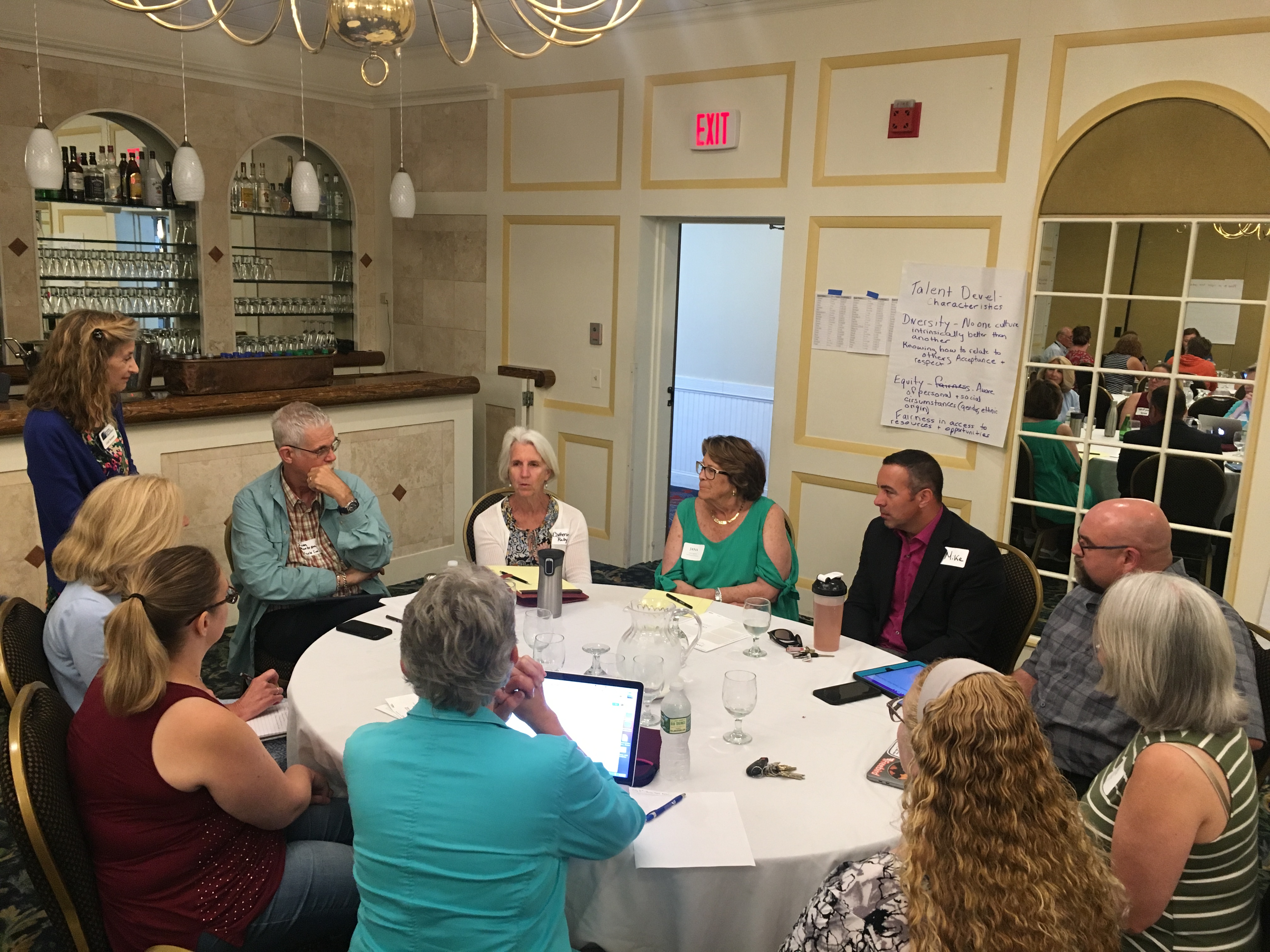
 Maine DOE Newsroom