Nominate an MLTI Educator for the End of Year Expo!

MLTI is launching an End of Year Expo event to celebrate educators and the work they do to support the use of technology in teaching and learning. Are you or someone you know an MLTI educator using technology in fun and innovative ways? Submit an entry to the expo and join us to share these achievements at our exhibition!

The exhibition will take place at the University of Maine in Orono, at the Collins Center for the Arts, on June 25, 2022. All entries will have the opportunity to present at the expo and share their work with other educators. The expo will be free and open to all MLTI educators. Exhibiters will be treated to a luncheon and an awards ceremony after the exhibition to celebrate their exciting use of technology in teaching and learning.

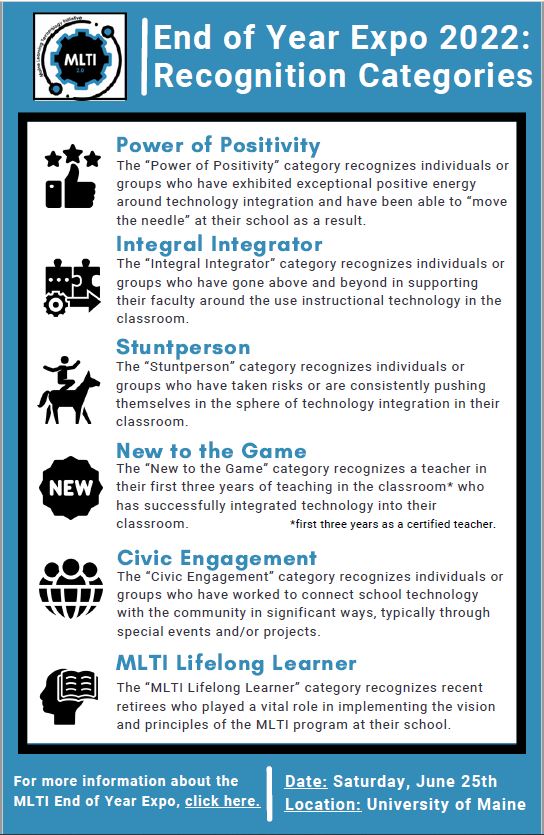
The MLTI End of Year Expo features six categories of recognition. To learn more about these categories, check out this infographic and nominate an educator using this form!

For more information about the MLTI End of Year Expo, check out our website.


Dedicated Maine State Board Member Peter Geiger Celebrated as Term Ends

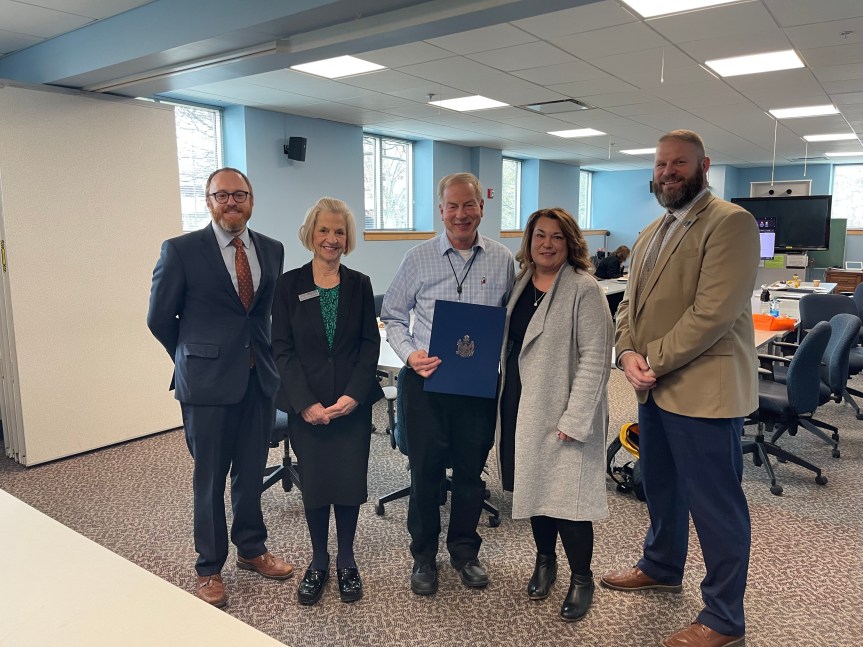
Pictured (L to R): Senator Nathan Libby, Representative Margaret Craven, Peter Geiger, Representative Kristen Cloutier, and Representative Jonathan Connor.

Peter Geiger, past Vice Chair for the Maine State Board of Education, was presented a Legislative Sentiment by Senator Nathan Libby at the Board’s April 13th business meeting prior to Geiger’s term ending at the end of April.

Geiger served almost 13 years on the State Board, including two years as Chair and over three years as Vice Chair.  He recently chaired the School Construction Committee and Legislative Action Committee of the Board, served on the Professional Standards Board, Maine Teacher of the Year Committee, and numerous other committees during his tenure on the State Board, 1992-1997, 2012-2017, and 2019-2022.

Fern Desjardins, Chair of the State Board of Education, stated, “Peter works tirelessly in support of policies and services to strengthen educational opportunities for Maine’s students and schools.  His strong advocacy for education has been a life-long passion that has benefited students and educators throughout Maine for many years.”

Geiger is the Editor of the Farmers’ Almanac and Executive Vice President of Geiger, a family owned business for four generations.  He has been active in numerous community and education organizations.  Geiger is a resident of Lewiston.

Replacing Geiger from District I is Kristin Bishop of Madison.  Bishop previously served on the Maine State Board of Education as a Student Representative in her junior and senior year at Madison Area Memorial High School.  She is a graduate of Bowdoin College in Brunswick and works in the Office of Civic Engagement and Community Partnerships at Colby College in Waterville.  Bishop will be joining the State Board for her first Business Meeting on May 11 at the Cross State Office Building in Augusta.

Portland Public Schools Developing Culturally Important School Lunch Menu

The Portland Public Schools Food Service Department, in partnership with local nonprofits and consultants, is working to introduce culturally important menu items to the school lunch options served at the district’s high schools.

This spring, students at Deering, Casco Bay, and Portland high schools are taste-testing food items adapted from traditional Central African cuisine and providing feedback that will help the district decide if the new food items will be incorporated onto the high school lunch menu for next school year. Another goal of the project is to encourage more student engagement and participation in school lunch.

This project is funded by Full Plates, Full Potential, and led by Food Service Director Jane McLucas and local food justice nonprofit Cultivating Community. It is being implemented by several community partners that include FoodCorps, Cumberland County Food Security Council (CCFSC), Good Shepherd Food Bank, and the University of Southern Maine (USM).

“We are Maine’s largest and most diverse school district, and this project is an important – and delicious – way to help us acknowledge and celebrate our diversity,” said Superintendent Xavier Botana. “All our students should have the opportunity to enjoy a wider variety of culturally diverse menu items, which could encourage more students to participate in our nutritious school lunch program. We are very grateful to the wide variety of community partners working with us on this and other projects to ensure food security for all our students.”

This initiative was born from Food Fuels Learning, a network of school and community partners working to build food security in the Portland Public Schools. It is made possible due to the recipe development work done by Khadija Ahmed and Chef Samantha Cowens-Gasbarro with Westbrook Public Schools’ Nutrition Director Mary Emerson.

Ahmed is the owner-operator of Food For All African Mobile Market and the Community Impact Manager for Equity, Diversity and Inclusion (EDI) at Good Shepherd Food Bank. Cowens-Gasbarro is the executive chef for Healthy School Recipes and a school nutrition consultant. These two adapted traditional Central African cuisine into meals that meet federal nutrition guidelines. Replicating the recipes developed in Westbrook, Ahmed and Cowens-Gasbarro are now working with district high school cafeteria staff to test similar recipes in Portland, while also educating staff about the importance of cultural representation in school food.

Food service staff are learning how to cook these new dishes this spring. Every high school student in the district will also have the opportunity to try and provide feedback on potential menu items. This work aims for students to see more familiar dishes offered at school and encourage higher participation in school meals – a proven strategy for increasing food security and reducing stigma around accessing these nutritious foods.

FoodCorps Service Member and Deering High School graduate Mercia Ckaba-Thomas created posters to educate students about the event: “We share a bond through food that creates better connections between cultures, and celebrates the many differences that exist in the Portland community.”

The first taste test took place on March 24. A meal of smashed kidney beans, spiced beef, and cabbage slaw was offered to students, with great success. Taste test coordinators Mercia Ckaba-Thomas (FoodCorps), Zoe Grodsky (CCFSC), Lily Chaleff (Cultivating Community) and Cowens-Gasbarro offered samples and collected feedback from over 250 students with the support of students from USM Professor Jamie Picardy’s “Food, Power, and Social Justice” class and Food Fuels Learning (FFL) high school interns, Anna Behuniak (Portland) and Leaticia Hannah (Deering).

“I would absolutely be more interested in school lunch, especially if this dish was served.” reported one Casco Bay student. Other recipes expected to be tested are chickpeas and chicken over jollof rice and a chicken and spinach stew. A second student taste test is slated for May 19.

In addition to voting and short-form feedback on the day of the taste tests, students are able to sign up to participate in one-hour focus groups. These sessions aim to gather more in-depth insights on cultural representation in school meals and how to better create an inclusive cafeteria environment that is reflective of the diverse student body here in Portland. The three focus groups are coordinated by Kristina Kalolo (CCFSC) along with facilitation training and support for the FFL interns so they can lead their peers in these conversations.

Professor Picardy’s USM students will conduct data analysis of the feedback to help inform the next stages of the project. Youth leadership and youth voice are centered in each step as an important part of the long-term success of this work. Last year, FFL interns conducted a survey on school meals that received feedback from over 800 students. A main takeaway was that there is a strong desire for more culturally representative and culturally important foods in school meals. This project is an extension of the findings that emerged from this student-led research.

Project members Chaleff, Kalolo, and Cowens-Gasbarro recently presented at a Maine Farm to School Network meeting about this work, with the hope that other districts across the state will be inspired and take on similar work to build more equitable and representative school meals. To learn more about how this work unfolds, you can subscribe to the FFL newsletter at foodfuelslearning.org and follow Food Fuels Learning on Facebook.

If the project is successful at the high school level, the district would consider adding culturally important menu items in the middle and elementary school lunch program in the future.

MEDIA RELEASE: Maine Department of Education Releases Teach Maine Plan to Develop, Support, and Sustain a Robust Education Workforce

The Maine Department of Education released the Teach Maine Plan, a comprehensive roadmap to develop, support, and sustain a robust educator workforce in the state. Unveiled during Teacher Appreciation Week, the Teach Maine Plan and new website provide a set of strategies and actions to inspire a talented and diverse future educator workforce, and to support and develop Maine’s current educator workforce.

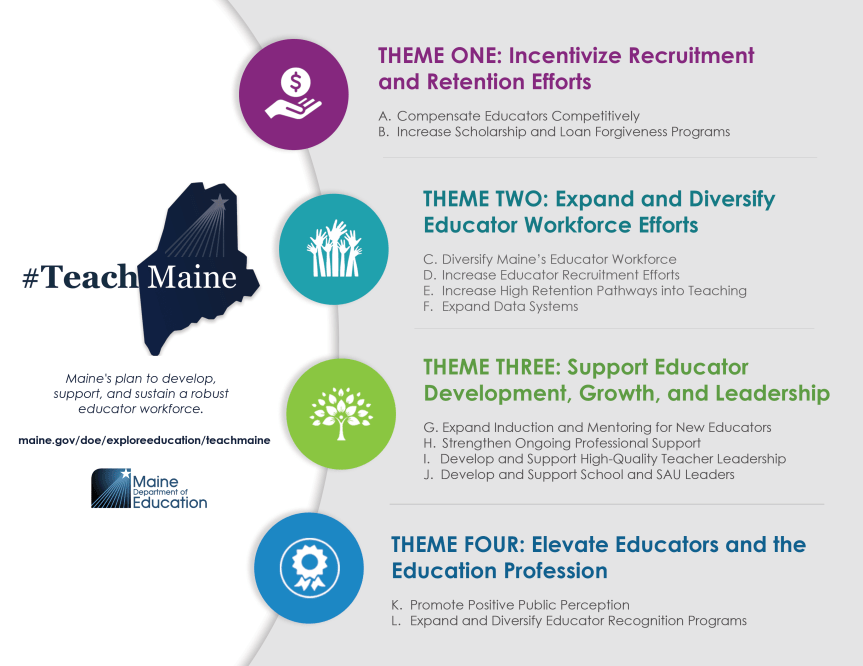
The Teach Maine Plan is organized around four key themes: incentivize recruitment and retention efforts; expand and diversify educator workforce efforts; support educator development, growth, and leadership; and elevate educators and the education profession. While the Teach Maine Plan has multiple themes, strategies, and actions, they are interdependent and not designed to be implemented in isolation.

“The Maine Department of Education is committed to developing, supporting, and sustaining a vibrant and diverse education workforce, and honoring the expertise and leadership of Maine’s education professionals,” said Maine Education Commissioner Pender Makin. “Maine’s educators give it their all each and every day to teach, inspire, and nurture their students, and the Teach Maine Plan provides the resources and supports they need to keep doing what they do best while also attracting more amazing educators into our schools. I want to thank the many educators and stakeholders who contributed to this effort and we look forward to collaborating on moving this plan into action.”

The report is the result of contributions by education stakeholders throughout Maine, who provided feedback via multiple channels, including regional Think Tanks, focus groups, surveys, organizational meetings, and informal conversations. Additionally, the Department of Education convened an Educator Talent Committee, a core group of internal and external stakeholders, to share their experiences, look at research and trends, and to make recommendations on how to address Maine’s educator shortage.

“Teach Maine provides a blueprint that will help to develop, attract, and retain quality educators that the children in Maine deserve. The future of Maine’s economy is grounded in providing our students with a diverse and rigorous educational experience. Teach Maine will provide the foundation to ensure that Maine students graduate with the passion, knowledge, and skills to be productive members of the world they will lead,” said Maine School Superintendents Association Executive Director Eileen King.

“The themes of the Teach Maine Plan hit upon key issues to ensure that our system of public education in Maine will continue to be strong. Recognizing, respecting, and rewarding our educators for the vital work they do every day is critical to providing the education our students deserve,” said Maine Education Association President Grace Leavitt.

“We are very excited to see the impact that Teach Maine will have on our profession. By having a stronger emphasis on recruitment, and then providing mentoring and ongoing support that educators and educational leaders need, will only help keep high quality professionals in education. This is what our students deserve,” said Maine Principals’ Association Executive Director Dr. Holly Blair.  

“Teachers are the most important element in ensuring Maine has a well-educated citizenry that is essential for our future workforce and democracy. These strategies will help strengthen the teaching profession in Maine,” said Educator Talent Committee member and University of Southern Maine Chair and Associate Professor of Teacher Education Dr. Flynn Ross. 
The first theme of the Teach Maine Plan, incentivize recruitment and retention efforts, focuses on compensating educators competitively; providing financial incentives for high-needs subjects and locations; providing financial incentives for teacher expertise and teacher leadership; encouraging alternative compensation strategies, including housing, transportation, childcare, creative use of time, and sabbaticals; increasing scholarship and loan forgiveness programs; expanding service loan forgiveness and tax incentive programs; and increasing awareness of funding sources.

Research shows that low salary scales continue to negatively impact the educator pipeline, as well as the retention of practicing teachers. Compared to college-educated professionals in other fields, beginning teachers earn about 20 percent less, with the gap widening to 30 percent by mid-career. While the Mills administration made a significant step in addressing overall teacher compensation to guarantee a minimum salary of $40,000, more must be done to make working in education a financially sustainable career.

The second theme, diversify and expand educator workforce efforts, includes strategies to recruit, prepare, and hire racially, ethnically, and linguistically diverse educators; retain diverse educators by addressing the policies and practices of structural racism; increase educator recruitment efforts; reduce costs; increase marketing for active recruitment of educators; increase high retention pathways into teaching such as teacher residencies, grow your own, and education career pathways starting in high school; promote teacher residencies for high-need School Administrative Units (SAUs) and content areas; promote additional dual certification programs for high-needs content areas; grow your own education technician and community college partnerships; and education career pathways in high school/CTE schools.

Building an educator workforce that reflects the racial, ethnic, and linguistic diversity of the student population has been shown to have positive impacts on student achievement. Research has shown that matching teacher racial identity with student identity can improve academic achievement, high school graduation rates, and college enrollment rates. And all students who have had teachers of diverse races or cultural backgrounds are better prepared for success in a global world.

The report finds that to make progress towards recruitment and retention initiatives, Maine needs a comprehensive and transparent data collection and management system. The strategy to expand data systems includes actions to characterize the current educator population in greater detail; determine educator needs geographically in Maine; create a statewide job board; and collect SAU-level data such as exit interviews and surveys.

Theme three, support educator development, growth, and leadership, includes strategies to expand induction and mentoring for new educators; strengthen state and SAU supports for mentoring and induction; scaffolded induction with time to learn, including not just orientation and access to mentors but also access to coaches, common planning time with mentors, and resource allocation to support success; establish a network of new educators for peer support; strengthen ongoing professional support through professional learning opportunities at the school, SAU, regional, and state level; develop and support high-quality teacher leadership; and develop and support well-qualified school and SAU leaders.

The support that new educators are given throughout their pre-service career and first few years of teaching has a direct impact on their retention as career educators. Key elements of high-quality induction strongly associated with reduced rates of teacher turnover include assigning mentors from the same field, common planning time and opportunities to collaborate with teachers in the same subject area, and being part of an external network of teachers.

Theme four, elevate educators and the education profession, includes strategies and actions to promote the positive public perception of public education and the education workforce, and expand and diversify educator recognition programs. To recruit and retain a vibrant educator workforce and make teaching an attractive profession also requires strengthening public perception and confidence in Maine schools and demonstrating appreciation for educators not just during teacher appreciation week, but every week of the year.

Third Grade Students Send Hygiene Kits to Ukrainian Refugees in Poland

Third grade students from MSAD 72’s Molly Ockett School collected and assembled hygiene kits for Ukrainian refugees in Poland recently as part of a school project. Assisted by their teacher Brian Cushing, the students assembled the kits and sent them with friends who are traveling to volunteer at the World Food Kitchen and can deliver the kits to a nearby Ukrainian Refugee Center in Poland, which is ten miles from Ukrainian border.

“I am so proud of my students and their international outreach,” said Cushing.

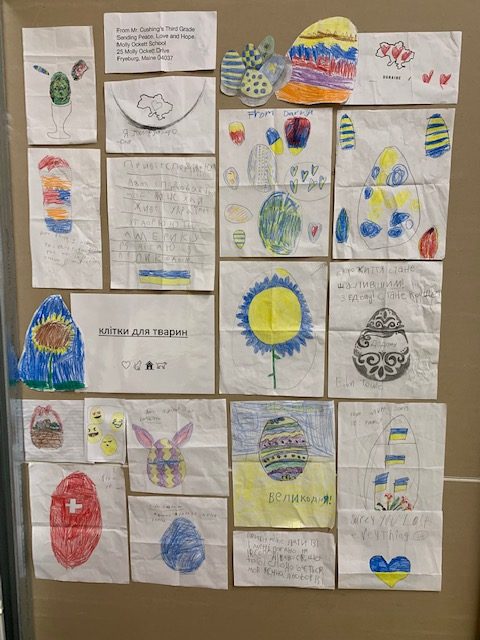
Pictured is a collection of student artwork and messages, in Ukrainian that students included with the two suitcases of care kits.

30 Days to the MLTI Student Conference- MLTI Launches High Altitude Balloon!

The 19th Annual MLTI Student Conference will be held virtually on Thursday, May 26, 2022, from 8:30am-2:00pm for registered 7&th grade MLTI students. This year’s theme is MLTI launches space2connect, and with the partnership of the UMaine High Altitude Ballooning program, MLTI will be launching a high-altitude balloon into space!

The high-altitude balloon will launch into the stratosphere and can reach up to 118,000 feet or more! MLTI students will be able to track the flight and learn about the recovery of the payload including an estimation of where the balloon will land! MLTI schools attending the conference will receive a special gift that traveled in the balloon up to space that can be displayed in their schools for years to come!

The UMaine High Altitude Ballooning program is made possible by Dr. Rick Eason with funding from the Maine Space Grant Consortium. To learn more about this program please visit the Website- https://umaine.edu/hab/.

For more information, please visit the MLTI Student Conference page or contact Brandi Cota at Brandi.M.Cota@Maine.Gov.

Lessons from the Field – AmeriCorps + High Impact Tutoring = Student Success

The U.S. Department of Education is hosting a webinar series to address hot topics that are on the top of educators’ minds. After sharing federal updates, the series features lessons learned and best practices from faculty, staff, schools, districts, institutions of higher education, and other places of educational instruction. It also shares a variety of useful resources.

On behalf of the U.S. Department of Education, Office of Elementary and Secondary Education’s Office of Safe and Supportive Schools, the National Center on Safe Supportive Learning Environments (NCSSLE) invites you to join the next Lessons from the Field webinar.

AmeriCorps + High Impact Tutoring = Student Success
Wednesday, May 4, 2022
3:00-4:30pm ET/2:00-3:30pm CT/1:00-2:30pm MT/12:00-1:30pm PT.

Exploring the role evidence-based, high impact tutoring can play in addressing learning loss experienced by students during the COVID pandemic and beyond. National, state, and local strategies will be shared, including direct examples from field practitioners via AmeriCorps partnerships.

This event will be recorded and posted to the event page a day after the event. All other materials can be found on the event page as well.

  • Event page
  • RegistrationNCSSLE does not offer certificates or CEUs, but if you email ncssle@air.org after the event, they will be able to confirm your participation.

Celebrating Asian/Pacific American Heritage Month

May is Asian/Pacific American Heritage Month and the Maine Department of Education joins organizations across the United States in paying tribute to the generations of Asian and Pacific Islanders who have enriched America’s history and are instrumental in its future success.

Find resources, stories, and online events to support teachers on this webpage sponsored by the Library of Congress, National Archives and Records Administration, National Endowment for the Humanities, National Gallery of Art, National Park Service, Smithsonian Institution and United States Holocaust Memorial Museum.

More Resources:

Thomas College Hosts First-ever ‘Educators Rising’ Conference in Maine; Two Students Named Preservice Teachers of the Year

Eighty-three students enrolled in teacher preparation courses in 14 colleges, high schools, and Career and Technical Education (CTE) schools across Maine gathered at Thomas College last month for Maine’s first-ever Educators Rising Conference!

The conference was planned primarily by Thomas students who are part of Maine’s first Educators Rising Chapter. A national, community-based movement, Educators Rising is an organization with a presence in all 50 states that seeks to cultivate a new generation of highly skilled educators by guiding young people on a path from high school to college and into their teaching careers. Educators Rising provides “Grow Your Own” programming through Educators Rising curriculum, standards, micro-credentials, chapters, conferences and other activities.

The Thomas Educators Rising Chapter Chair, Abby Bolvin, opened the conference by welcoming her fellow pre-service peers to the conference, and reviewed logistical details, including room locations, photo tips, and conference hashtag #EdRising22.

Dr. Monte Selby, principal at Vinalhaven School and a talented musician, engaged the aspiring educators with an entertaining musical keynote address that stressed the importance of building strong relationships with students, and some tips on how to forge authentic, trusting connections. After the keynote, students chose from a wide variety of breakout sessions to attend. The session topics were selected by the Educators Rising Chapter students.

Bolvin explained that having the option to be part of the conference planning was a significant learning experience for her and her fellow Educator Rising Chapter members. They initially came up with a list of 50 session topics that they wanted to learn more about, and eventually narrowed it down to the topics on the program, which included classroom management, talking about controversial topics, what to expect in your first year of teaching, assessments, innovative math practices, and more.

During a delicious lunch catered by Thomas College, the students heard from Pamela Thompson, Professor and Chair of Thomas’ Education Department, and the 2022 Maine Teacher of the Year Kelsey Stoyanova. Thompson stressed the importance and impact of teachers, and Stoyanova shared, “we are not just teaching how to read to understand and write to show understanding, we are engaging learners to be global citizens—to offer them a glimpse of what it looks like to own their education, their futures, their voice, and do something with it.”

Tammy Ranger, 2017 Maine Teacher of the Year and the Director of Workforce Development and Innovative Pathways at the Maine Department of Education presented Maine’s first “Preservice Teacher of the Year” awards. Earlier this year, all Maine preservice teachers were were invited to apply  for the award. The top three preservice teachers were selected from a pool of over 20 applications from students in teacher preparation programs throughout Maine. “The future of the education profession in Maine certainly looks bright” said Ranger, commenting on the passion, creativity and commitment demonstrated in the preservice teachers’ application packets.

Students Mohamed Kilani (Bowdoin ’21) and Ivy Robinson (University of Maine Machias ‘22) were named Preservice Teachers of the Year, and Chelsea Whiting-Puckett (Bowdoin ’22) was named a runner up.  The selection committee, made up of Maine State and County Teachers of the Year, said the following about these promising teachers:

“Kilani’s work with anti-racism, bridging intercultural relationships, and restorative practices is remarkable. All students (and colleagues) will benefit from the classroom culture he creates.” 

 Ivy is a voracious learner—soaking up wisdom and practices from every teacher she works with. Her willingness to learn and improve her practice will only make her a better teacher year after year.

Chelsey’s robust and honest English and social studies classes reflect her commitment to inclusion, representation, and equitable learning environments for all students.

As part of being named Preservice Teacher of the Year, both Kilani and Robinson were awarded $1,000 each to help jumpstart setting up their classroom, and runner up Whiting-Puckett was awarded $200.

Special thanks to the Peter and Paula Lunder School of Education at Thomas College, the Maine Association for Middle Level Educators (MAMLE), Educate Maine, UNUM, and representatives from the Maine Department of Education for making this event possible.

To learn more about Educators Rising, visit the national website or reach out to Tamara Ranger (tamara.ranger@maine.gov) at the Maine Department of Education.


Maine Nurses Attend New England School Nurse Conference

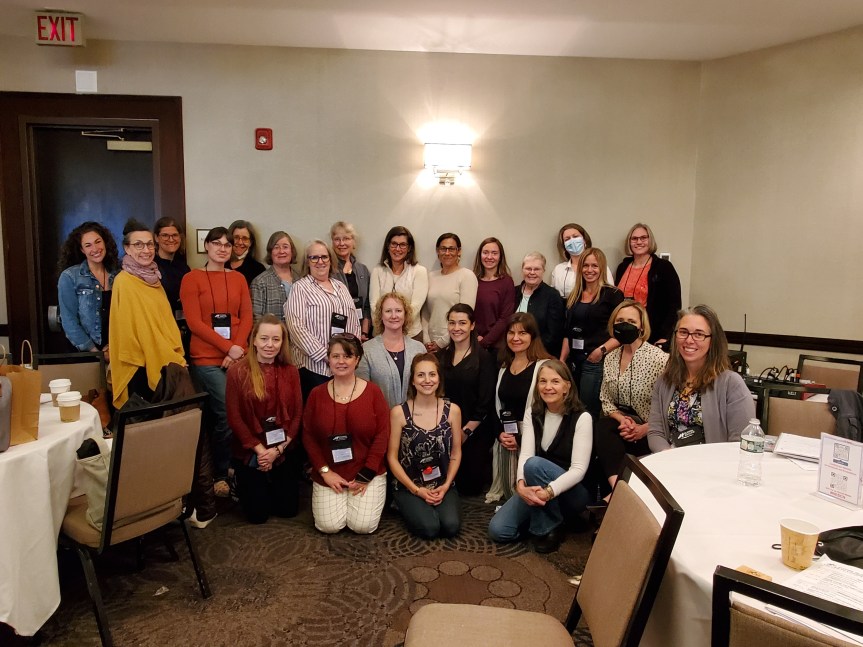
Over 25 Maine nurses (not all are pictured here) joined school nurses from across New England for their first in-person professional development event in two years.

The New England School Nurse Conference is an annual event, hosted by one of six New England School Nurse Associations (Connecticut, Maine, Massachusetts, New Hampshire, Rhode Island, Vermont).

Hosted by New Hampshire School Nurse Association, the conference was held in Portsmouth, NH with a theme of, “Schools Nurses: The Link to Student Success.”

For more information about the New England School Nurses Association visit: https://nesnconference.nursingnetwork.com/