Retired Teachers Share Their Wisdom with 8th Graders at Caribou Community School

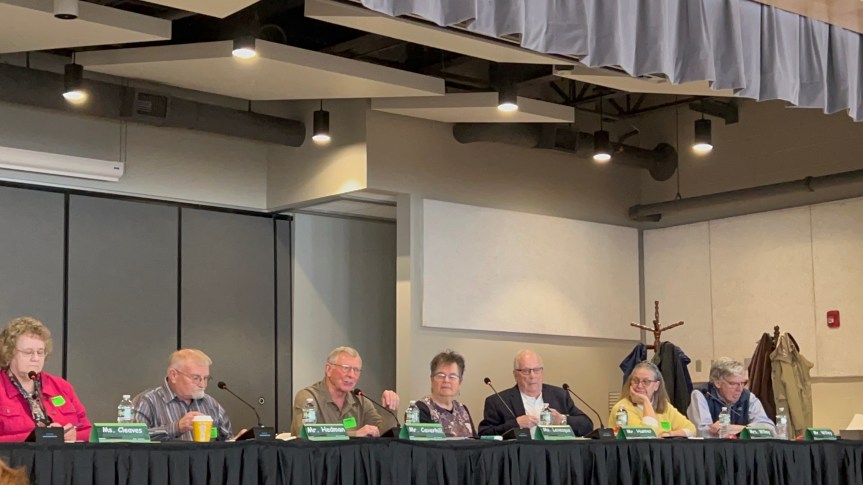
“You can learn to make our world a better place. We’re all different and no one has to fit into the same role.  I look forward to what you’ll bring to our future.”  That’s just one of the many pieces of advice Ms. Diane Fitzpatrick and other retired educators shared with grade 8 students at Caribou Community School during the retired teacher panel on March 27th.  

8th grade teachers Heather Anderson, Kim Barnes, Troy Barnes, Holly Rhinebolt, and Twyla Learnard take advantage of RSU 39’s Professional Collaboration Days to creatively plan events like this to connect students to each other and to the community.  Their innovative practices effectively engage students in the learning process. “Collaboration is at the heart of all we do and what makes teaching together so much fun. We laugh together daily, even when the days are hard.”  

Through one of these collaborations, an idea was born to bring together students and retired educators. Students would gain an up close and personal look at what schools were like in the past and retired teachers would have the opportunity to share their vast knowledge and wisdom as well as important life lessons. Learnard shared, “Though there were generations between the retired teacher panel and the student body audience, the connection was palpable. Curriculum advances,  technology evolves, and assessment practices trend, but the relationship between teachers and pupils is ageless. You can’t define it. It’s a respect, a trust that simply is.” 

The grade 8 team had previously met with Christina Kane-Gibson of the Caribou Historical Society to discuss creating podcasts to accompany the many artifacts on display at their museum. Adding student-created podcasts that share stories of retired Caribou teachers was one more way that students could immerse themselves in their town’s history and the rich stories that Caribou has to share.  Kane-Gibson and 8th grade teachers hope to have the artifacts and podcasts available for public enjoyment this summer.  

Panelists were asked questions generated by students on topics such as what inspired them to teach, changes in technology, and how gender roles have changed.  “When I was in high school, there wasn’t much of a choice for young women at that time.  You were either a nurse, a secretary, you got married or you were a teacher,” shared Margaret Cyr when asked why she chose to be a teacher.  Mrs. Cyr went on to talk about how, because she had played piano since the age of 5, it made sense that she become a music teacher.  

Kim Barnes orchestrated a photo opportunity that demonstrated the 4 generations of teachers present.  Barnes stated, “Mr Hunter was Mr. Willey’s teacher, Mr. Willey was my teacher and Lyndsey is my student who wants to be a teacher one day. So the idea that we can pass the torch is important because teaching is a wonderful profession. Teachers are amazing people and schools do so much more than educate in the classroom.” 

Lyndsey Ouellette shared what this experience has demonstrated for her, “Definitely to stick to it.  To always be prepared.  Know your kids and don’t just teach them, be a good influence for them.” Baylee Wright, another 8th-grade student, saw the importance of building relationships with students in what panelists shared, “Getting to know who you teach is just as important as what you teach.” 

Students will begin compiling their notes from the panelist discussions and will begin writing scripts during the week of April 3rd.  They hope to have podcasts recorded before April break and are very excited to practice their own storytelling by sharing these stories with the community.

Curriculum Leader of the Year and Instructional Coach of the Year Nominations Open

The Maine Curriculum Leaders Association (MCLA) is now accepting nominations for the Curriculum Leader of the Year and the Instructional Coach of the Year. Nominations close on April 28, 2023 and you can find more details on the nominating process below.

The Curriculum Leader of the Year:

  1. Has successfully served as a curriculum leader (designated curriculum director, assistant superintendent, or teacher leader) in public education for at least five years.
  2. Is an MCLA member at the time of nomination.
  3. Is a proven champion of curriculum, instruction, and assessment policies and practices that enhance learning both within and outside the district, who also promotes and provides opportunities to learn and to share learning and develops partnerships and networks with other districts and organizations to support learning.

Nomination Process:

Send a nomination letter describing how the nominee is a champion of learning (criteria 3 above) both in and outside the district to the CLOY selection committee. Provide details about how the nominee’s curriculum, instruction, and assessment leadership impacts teachers and students in the district and the nominee’s leadership activities outside the district.

Please include email and phone contact information for you and your nominee. Send recommendation letters to: MCLA CLOY Selection Committee and email as a pdf or Google document to director@mainecla.org.

The Instructional Coach of the Year:

  1. Has successfully served as an instructional coach (working at least .5 time as a designated coach) in public education for at least two years.
  2. Is an MCLA Coaching Co-Op member at the time of nomination.
  3. Is a leader who promotes instructional quality through learner-centered coaching practices: modeling effective instructional practices, working with teachers to make evidence-based decisions, actively working to promote coaching, encouraging, and promoting reflection for teachers, focusing on collaboration and student growth.

Nomination Process:

Send a nomination letter describing how the nominee is a highly effective, student-centered instructional coach to the ICOY Selection Committee. Provide details about the structure and organization of the nominee’s coaching program/practices and how it impacts student learning and the school /district culture and community.  Send nomination letters to: MCLA ICOY Selection Committee and email as a pdf or Google document to director@mainecla.org

Withdrawal of Amendment Version of Chapter 101: Maine Unified Special Education Regulation

The Department of Education has decided to withdraw the version of the emergency amendment to rule Chapter 101: Maine Unified Special Education Regulation that was posted on March 24, 2023. The Department is no longer receiving comments on this proposed amendment.

The proposed amendment to Chapter 101 can be found here: https://www.maine.gov/doe/about/laws/rulechanges


Students Confront Climate Change with Possible Solutions in 2023 Maine State KidWind Challenge

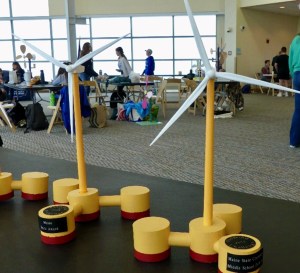
Twenty-one teams filled the Ocean Gateway in Portland as the Maine State KidWind Challenge returned following a three-year hiatus. “KidWind is a hands-on design celebration that engages students through the lens of wind and solar energy. Student teams design, construct and test small scale wind turbines and solar structures at events all over the world.” The national competition, which ballooned in size in 2009, has engaged over 40,000 students across 33 states. For this event, teams from five different Maine public schools brought turbines and presentations that they have been working on for weeks. They presented their materials to a panel of judges, and  their turbines were put to the test in a wind tunnel to see how much power they generate. The results are projected up for competitors to watch as an energy sensor measures the voltage and current output of the turbines.

Retired Portland teacher Gus Goodwin successfully rallied many of the teachers who had participated in the past. The event is one that Goodwin has been championing for years, feeling that it helps students confront climate change with possible solutions. “We’re talking about climate change, but it left the students with a sense of agency… a sense that they can do something,” he told Newscenter Maine. As with many in-person events around the state, the Maine State KidWind Challenge was not quite back to its 2019 participation levels. Winslow Junior High School teacher Ginny Brackett recounted March of 2020 to her current group of four teams when she left her classroom with partially completed turbines. Her students, who were then elementary students, were grateful for the opportunity.

The day opened with a Q&A with Taylor Ward from UMaine’s Advanced Structures & Composite Center and Steve Nolet, Senior Director of Innovation & Technology for TPI Composites, who manufacture wind blades. The students were also presented a keynote from Tagwongo Obomsawin, who shared her own journey from rural life in Western Maine to her current position as the Clean Energy Partnership Program Manager in the Governor’s Energy Office.

The top-ranking teams, “W Group” from Mt. Ararat Middle School and “West End Whales” from Portland and Casco Bay High School, will be invited to compete at the national KidWind event in May at the University of Colorado. The “NCL Wind Turbines” from Massabesic Middle School were the runners-up and “MTA 1” from Mt. Ararat won the Spirit Award.

Prior to the event, Mt. Ararat Middle School STEM teacher Sandy Bickford appeared on MLTI’s Teaching with Tech podcast episode and she highlighted the KidWind Challenge as her favorite project to work on with students. “It’s a lot of work, it’s a lot of steps, it’s a lot of teaching, but… it’s relevant.”

The KidWind Challenge highlights many of the best qualities of STEAM learning. The teams of students who gathered at the Ocean Gateway exemplified the type of engagement in a project and resilience in problem-solving that many educators strive to introduce into their classrooms.


Public Pre-K Expansion Distinguished Educator Opportunity

As part of Maine’s Jobs and Recovery Plan (MJRP), the Maine Department of Education (DOE) was awarded $10 million in American Rescue Plan funding to support the expansion of public pre-k opportunities in Maine.  To assist with the provision of technical assistance and professional learning for the new and expanding pre-k programs being funding through this opportunity, the Maine DOE is seeking a Distinguished Educator to be part of its Early Learning Team.  Under the Distinguished Educator program, the Maine DOE contracts with a public school system or community agency to borrow an educator for a designated period, in this case the 2023-24 school year.  Following service in the program, the Distinguished Educator returns to their sending school system/community agency.

Maine educators who meet the qualifications described below are strongly encouraged to consider applying for this opportunity. Distinguished educators share their expertise with the Maine DOE and other Maine educators while also growing as professionals through a range of new and exciting experiences. The application period for this position will remain open until April 25, 2023.  Interested applicants should submit a letter of interest and resume to Lee Anne Larsen, Director of Early Learning (leeann.larsen@maine.gov).  Candidates selected for interviews will be notified by May 5, 2023.

Questions may be directed to Leeann.Larsen@maine.gov.

Maine Department of Education Distinguished Educator Public Pre-K Expansion Technical Assistance Provider

POSITION DESCRIPTION

The Public Pre-K Technical Assistance Provider engages in professional work related to planning and providing technical assistance and professional learning for public preschool programs, including programs in partnership with Head Start and private providers.  The position conducts technical assistance visits, including observations of classrooms, and reviews data to help support program improvement.  The position is part of the Early Learning Team within the Maine Department of Education’s Office of Innovation.  The position coordinates regularly with the DOE’s Early Childhood Specialist and Public Pre-K Consultant.  Statewide travel is required.

REPRESENTATIVE TASKS of this position include but are not limited to:

  • Delivering appropriate technical assistance and professional learning to enhance program implementation — may specifically address evidence-based early childhood curriculum, learner-centered instruction, differential learning, assessment, developmental education and/or experiential learning, developing and implementing MOUs with community providers, etc.
  • Providing interpretation and explanations of statutory provisions to local school authorities, CDS contracted providers, and the public.
  • Supporting SAU compliance with the Chapter 124 Public Preschool Program Standards and providing technical assistance related to program improvement.
  • Analyzing data contained in SAU annual reports of pre-k programming.
  • Other duties applicable to support of public pre-k expansion efforts, as assigned.

KNOWLEDGE, SKILLS, AND ABILITIES REQUIRED to successfully perform the work assigned:

  • Experience with the early childhood general education and special education communities in Maine and with public school education in Maine.
  • Knowledge of current learning research and exemplary early childhood educational instructional strategies in all early learning domains.
  • Knowledge of current and emerging state and federal legislation, rules and regulations impacting early childhood education, including Department of Health and Human Services (DHHS) childcare licensing and Child Development Services (CDS).
  • Knowledge of exemplary evidence-based early childhood curriculum, learner-centered instruction, differential learning, assessment, developmental education, and experiential learning, and understanding of the relationships among these areas.
  • Knowledge of and experience with Maine’s College and career Ready Learning Results and Maine’s Early Learning and Development Standards.
  • Knowledge and experience with developing and implementing public pre-k programs in partnership with community providers (e.g. Head Start, Child Care, etc.).
  • Knowledge of community involvement issues in education policy decisions and operations.
  • Ability to interpret and explain statutory provisions to local school authorities, community providers, and the public.
  • Ability to effectively provide information, technical assistance, professional development and program development support and expertise.
  • Ability to use technology-based communications (i.e., Internet, Web) and e-mail systems and both laptop and desktop computer systems, word processing and data applications.
  • Ability to communicate effectively orally and in writing.
  • Ability to effectively facilitate meetings, organize and manage multiple projects.
  • Ability to apply and facilitate group dynamics and to use exemplary interpersonal skills in order to work collaboratively, develop positive working relationships, and involve stakeholders at the local and state level.

MINIMUM QUALIFICATIONS:  A Bachelor’s Degree in Early Childhood Education or a related field and two (2) years of professional level experience in public pre-k programming is required.  A Master’s Degree in Early Childhood Education and five years of early childhood teaching and/or administrative experience is preferred. CLASS Observer certification at the pre-k level is also preferred.

Media Release: Maine Department of Education Awards $900,000 in RREV Funding to Support Education Innovation

The Maine Department of Education (DOE) today awarded an additional $900,000 in Rethinking Responsive Education Ventures (RREV) funding to support education innovation at Rose M Gaffney Elementary School in Machias, Upper Kennebec Valley Jr/Sr High School, North Haven Community School, RSU 10 schools, Union 103 schools, and Trenton Elementary School. These federal funds will be used to invest in strategies to engage students through outdoor learning, extended learning opportunities, and creating multiple education pathways.

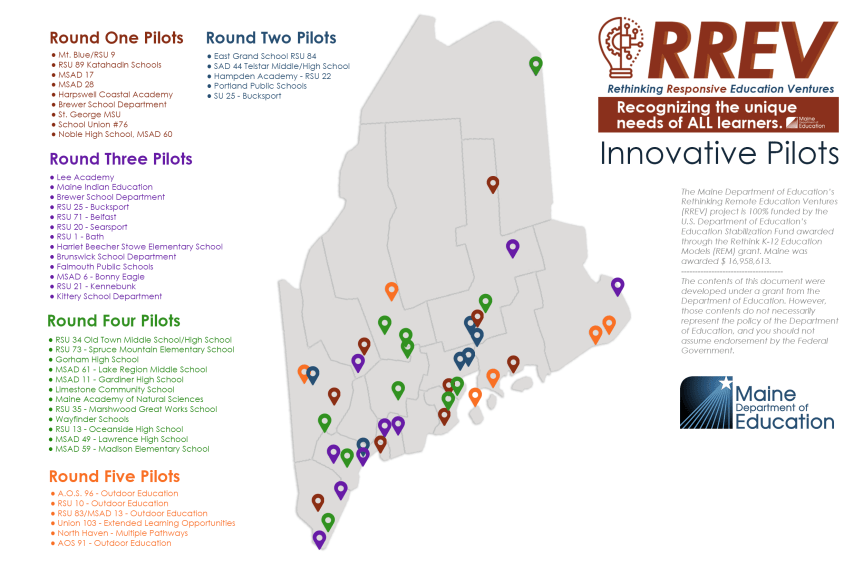
RREV investments now total $8.5 million to 45 awardees. The Maine DOE was awarded $16.9 million from the U.S. Department of Education’s Rethink K-12 Education Models Funding. As one of 11 States to receive funding, Maine created RREV to support the work of visionary educators to develop innovative pilot programs around remote and outside of the classroom learning, including professional development and pilot design classes. Courses in innovative design process are available through several of Maine’s public and private universities at no cost to Maine educators who wish to participate. In addition to the innovative pilot development classes, the Department is also offering asynchronous, innovative principles webinars which are available to all educators in self-paced, independent modules.

“We are going to be creating kits that teachers can grab and go and take to their outdoor learning space. The kits provide engaging activities to supplement classroom learning. Our goal is to increase the amount of outdoor learning happening at school so that we will see happier kids, kids who are more focused and engaged, and kids who appreciate and respect the environment around us. We’re eager to build a large collection of kits that will be fun and engaging,” said Rose M Gaffney Elementary School 5th Grade Teacher Kelly Woodward.

“Caring for honeybees has the potential to deepen our students’ connection with nature and drive their passion for making positive changes for their future and the future of our planet. It also has the potential to build a unique partnership with the community that will help build engagement. We believe that this pilot program, using an apiary and partnering with the Western Maine Beekeepers Association, will have a positive impact on attendance, engagement, and wellbeing for our 4th and 5th graders,” said RSU 10 teacher Maggie Corlett.

“We are using our RREV pilot to step up our programming on outdoor education, wildlife studies, and agricultural studies. We will use these funds to heat our greenhouse so that our egg studies can continue in the greenhouse year-round, we’re establishing a property use agreement with a local nonprofit ski mountain so that our outdoor studies class will have access to a satellite campus and 50 acres of wilderness to explore, and we will purchase boats and equipment for our wildlife studies program,” said Upper Kennebec Valley Jr/Sr High School Principal James Tyler.

“Our purpose was to spark innovation with our students and provide engaging and inspirational opportunities where they can take ownership of their learning. We built off a lot of programs we already have going and wanted to make them even more engaging and available to all of our students. Students will get to see a new greenhouse where they can watch their projects literally grow from seed to product and be able to work them into recipes in a kitchen and sell to their own community members. We will also have a trail built around the school where students can create products and have opportunities for community members to come and participate as part of the school,” said Jonesport-Beals High School Co-Teacher Leader & English Teacher Becky Coffin.

“We have a makerspace building on our school’s campus and we want to transform that into a lifelong learning hub for our k-12 students to use during the day and bring in adults from our community for classes at night. We have an hour and fifteen-minute ferry ride to get here so we have to do a lot for ourselves. We have to train and uplift from within at the grassroots level. Our RREV grant is going to support this lifelong learning hub to work with our town administration to diversify our workforce and help prepare young people and adults for the different kinds of work and professions that we need,” said North Haven Community School Principal Shaun Johnson.

“We named our initiative TREE—Trenton Rethinking Experiential Education—and it’s a k-8 initiative to get our kids outside learning in the community, not just on our school property. We want to think about how all of our students get their needs met want to increase independence, peer relationships, self-awareness, and kids overall mental health,” said Trenton Elementary School teacher Snow Ross.

Schools will use this funding in a variety of innovative ways, including:

  • Rose M Gaffney Elementary School in Machias will create and implement pre-k through 8th grade outdoor education lessons. These lessons will provide learners with the opportunity to use the trail system behind the school and materials to continue their classroom learning in an outdoor setting. The school’s team observed that academic work in an outdoor setting helped learners to be more engaged, happy and focused. By increasing the amount of outdoor learning, students will be supported in their social and emotional growth. RREV funding will be used to create kits with engaging activities for educators to use in an outdoor learning environment and the school will work alongside community partners such as Downeast Coastal Conservancy to implement the lessons.
  • Upper Kennebec Valley Jr/Sr High School will grow their innovative outdoor-based education program to increase student engagement and better prepare students for their lives after high school. By participating in the program, students will develop and exercise a host of skills including problem solving, critical thinking, creativity, communication, collaboration, marketing, salesmanship, and financial management. Valley Outdoors will partner with Baker Mountain, a community non-profit, to ensure all students in grades 5-12 have access to nature-based learning opportunities. Under the guidance of teaching staff, students will be able to use the base lodge and over 50 acres of trails and wooded land at Baker Mountain to engage in project-based learning activities. In addition, the school will scale up current greenhouse operations, expand hands-on project offerings, and develop water exploration and research activities for our wildlife studies program. The SAU anticipates 100% of the student body will be able to engage in at least one integrated unit of study.
  • North Haven Community School will partner with their town administration to support their efforts of economic diversification and workforce development, chiefly in response to the impending impacts of climate change and sea level rise on the long-term viability of the fishing and lobstering industry. In coordination with the community, North Haven Community School will develop programming to support lifelong learning outcomes for both K-12 and adult learners, housed in their auxiliary classroom space dubbed the “Projects Building.”
  • RSU 10 will pilot a program to support students struggling with adverse childhood experiences. The work will provide strategies to enhance engagement, improve attendance, foster resilience skills, and promote positive behaviors. Meroby Elementary and Mountain Valley Middle School will team up to develop and expand The MV Bee Academy in the RSU#10 School District. A bee apiary and storage facility will be built to provide the infrastructure needed for beekeeping experiences. 4th and 5th-grade students will work closely with a local bee club. As their knowledge base grows, these children will mentor other grade levels and share their knowledge with community members. To maintain the sustainability of this program, students will develop a small business. In it, they will sell queen bees, honey, wax products, and other bee-related items.
  • Union 103 schools will support creative opportunities and innovative practices for students and teachers at all of their schools. All students and staff will have access to a new greenhouse which will foster creativity and learning through aquaponics and aquaculture. With an outdoor lab, students will also take part in a space dedicated to learning in ways not yet offered inside the four walls of a classroom, such as a native pollinator garden, raised beds, and fruit trees. A new learning lab with access to a multipurpose classroom will provide a much-needed creative and innovative space for students. This space will provide students and teachers with flexibility to help spark creativity and experiential learning as they continue to foster initiatives throughout the year with involvement in marine science activities with Downeast Institute and author visits each year. All students will also have the opportunity to explore a new walking path and outdoor learning trail around Beals Elementary School.
  • Trenton Elementary School’s TREE-Trenton’s Rethinking Experiential Education is a K-8 initiative that embeds outdoor learning into a child’s school experience that increases independence, peer relationships, self-awareness, and overall mental health. The school will integrate therapeutic services, STEM based learning, and outdoor collaborative experiential learning into the student experiences. They will use field work and place-based learning in the living world in each child’s school day. Students will participate in engaging, outdoor experiences that will help them to build social connections and increase their self-esteem while reconnecting with our natural world. The aim is to increase student attendance, engagement, and self-regulatory skills.

The RREV initiative was also granted a no-cost-extension year, meaning that all 45 pilots will have an extra year to utilize their available funding for their innovative pilots.

For more information on RREV and the pilots, visit https://www.maine.gov/doe/rrev. 

Interviews are available with RREV grant recipients upon request as well as the recording of the announcement featuring RREV grant recipients discussing their projects. 

MaineCare Seed Adjustments to be Made; Review Q2’23 Reports by April 20, 2023

The recovery of Q2’23 MaineCare Seed will occur in the April 2023 subsidy payment. The Maine DOE is asking Districts to review their reports by April 20, 2023, to ensure accurate adjustments to subsidy. SAU staff must review, and submit disputes, student by student claims on both the public and private MaineCare reports for Q2’23 by April 20, 2023.

To access the MaineCare Seed reports, please follow the instructions below.

  1. Log into NEO: https://neo.maine.gov/DOE/neo/Dashboard
  2. Click on the Student Data tab
  3. Click on the Student Report tab
  4. Select MaineCare in the Reporting Area drop-down
  5. save iconChoose the quarterly Seed report and the report type (private/public)
  6. Click view report button
  7. Once the report appears on the screen, choose the export button.

You may export the reports to Excel but, please be aware that there may be multiple worksheet tabs within the workbook. Save the file to your computer.

To dispute a claim:

If you disagree that a particular student or time period should not be on the report, please send an email with the following information for each State Student ID to Denise.towers@maine.gov.

  • State Student ID
  • The reason that you disagree
  • Identify the type of report: public or private
  • Quarter in which the claims are located
  • Service provided dates (From and To)
  • Total amount of Seed being disputed

Summer services:

Students must be enrolled for the time period they are receiving educational services. This means that students that are receiving extended school year services in district or extended school year services in an out of district placement must have a primary enrollment for that time period in order for the MDOE to have the most accurate enrollment data to determine SAU responsibility for MaineCare Seed.

If you have difficulty logging into NEO:

Anyone who currently has Special Education Director permissions to the Special Education module, will automatically have permissions to access MaineCare reports.

As in the past, if a new staff member needs permission to access this module, a request from the Superintendent to the Maine DOE helpdesk will be necessary. The helpdesk contact information is medms.helpdesk@maine.gov or 207-624-6896.

Please contact Denise.towers@maine.gov

for more information or technical assistance related to MaineCare Seed.

Students Showcase Their Expertise at Annual SkillsUSA Championships in Bangor

(Pictured: A student operating heavy equipment in a simulator as part of the Heavy Equipment contest at SkillsUSA)

Career and Technical Education (CTE) is growing in Maine, and it was all the more evident at the SkillsUSA Maine State Championships held in Bangor recently. Students enrolled in the many career and technical education (CTE) programs found in schools across Maine gathered in Bangor for an exciting two-day event where they got the chance to showcase the skills they have mastered. (See Maine DOE’s 2023 CTE Infographic to learn about CTE expansion in Maine.)

SkillsUSA is a national career and technical student organization serving more than 395,000 high school, college, and middle school students, and professional members enrolled in training, trade, technical, health, and skilled service occupations. Maine’s Chapter hosts an annual Championship event each year where students get the opportunity to showcase their skills by competing in various contests that allow them to show off what they know.

Contests include everything from wedding cake decorating to firefighting, computer programing, auto tool identification, everything in between, and then some! There were over 70 different contests that students participated in over the two-day event that columnated with an awards ceremony at Bangor’s Cross Insurance Center.

For many of the students, coming to SkillsUSA is an incredible accomplishment that they take a lot of pride in, and this year was extra special because they got the chance to share it with family and friends for the first time in a few years. The event, held at United Technologies Center (UTC), Eastern Maine Community College, and Cross Insurance Center, was held in person and the public was allowed to attend for the first time since before the height of the COVID-19 pandemic.

The exciting event bustled with groups of students, educators, instructors, and administrators, as well as TV news crews, family members, and supporters observing, snapping pictures, and taking videos of students while they competed.

Braden Luce competed in the Welding Sculpture contest along with twelve other students this year. Braden is enrolled in school at both Madomack Valley High School and Mid-Coast School of Technology where he participates in the welding program. He says he loves the program because of the hands-on aspect of it. Braden tells us that he looks forward to school every single day and is even disappointed when school gets closed on snow days.

Ahna Higgins competed in the Job Interview competition where she placed third earning a bronze medal. “I am very satisfied with my work in this competition because it helped me create connections in my technical center and become more confident in my interviewing skills,” she said. Ahna is a student at Somerset Career and Technical Center (SCTC) and Skowhegan Area High School. Last year she was enrolled in SCTC’s Certified Nursing Assistant Program and this year, her senior year, she has been part of the Early Education and Teaching program.

Higgins describes the work she does at SCTC as very fulfilling. “I get to spend my time in class doing things that really matter to me like working with children and learning about their development,” she said. “While preparing for SkillsUSA I also got the opportunity to prepare myself for an interview in the Education field,” she added. In the fall Higgins is planning to attend the University of Maine at Farmington to major in Elementary Education.

The Maine Department of Education congratulates all of the students who competed in SkillsUSA this year! We extend a special thank you, as well, to Maine’s Career and Technical Education schools for their continued dedication to providing quality career and technical education pathways to students across Maine.

Find the names of award recipients from the 2023 SkillsUSA Championships here.

Find more pictures from the conference, including the awards ceremony on the SkillsUSA Facebook Page.

See more media coverage of this event at the following links:

To learn more about SkillsUSA, check out Maine’s website here. To learn more about Career and Technical Education in Maine visit the Maine Department of Education’s website.

Comments Sought on Maine’s IDEA Part B Application

The Maine Department of Education (DOE) is seeking comments from the public on its annual application for federal funds under Part B of the Individuals with Disabilities Education Act (IDEA), which covers services to children with disabilities ages 3-22.

The application, which covers Maine fiscal year 2024 (starting July 1, 2023) is posted on the Maine DOE’s webpage at https://www.maine.gov/doe/learning/specialed/ideapublic. The Part B budget is estimated/projected on the basis of Maine’s award for the State’s current award, pending the State’s receipt of the finalized federal award for the coming year. Both documents will be posted from March 24, 2023, through May 23, 2023.

Written comments will be accepted from, March 24, 2023, until 4 p.m. on Friday, April 28, 2023. Please send comments to Erin Frazier at erin.frazier@maine.gov or 23 State House Station, Augusta, ME. 04333.

Filing of Chapter 101: Maine Unified Special Education Regulation Emergency Rulemaking

The Maine Department of Education has identified a barrier to its obligation pursuant to the Individuals with Disabilities Education Act (IDEA) and the Maine Unified Special Education Regulation (MUSER) to ensure the provision of a free, appropriate public education (FAPE) to all eligible students, including the availability of a continuum of educational placements. The current funding structure outlined in Section XVIII.3.C(2) of MUSER for private schools that serve exclusively students with disabilities (referred to throughout as “special purpose private schools”) is causing those schools to limit or cease operations, leaving some of Maine’s most significantly impacted children without the educational placements they are entitled to by law. Further breakdown of this critical component of the continuum of educational placements will leave the State unable to maintain compliance with IDEA and MUSER. 

The Department has determined that a rule change is necessary on an emergency basis in order to protect the public health, safety and general welfare by ensuring that there is a continuum of placements available for all students with individualized education programs (IEPs) in accordance with federal and state law as follows: 

  • Change #1: Section XVIII.3.C(2) is amended to change the required number of instructional days to the “sum of the days on which instruction was provided in accordance with the school’s calendarrather than the actual days of student attendance for the year.  Rationale:  The current funding formula penalizes the private school when a student is unable to attend, even if the lack of attendance is due to a disability-related reason, despite the obligation of the private school to have staff and supports available for the student every day of the school year. 
  • Change #2: adds a section (2A) to allow the Department to “recalculate the number of student days for the remainder of the fiscal year 2023 and the entirety of fiscal year 2024 using the number of days on which instruction was provided in accordance with the school’s fiscal year 2022 calendar and recalculate each school’s allowable expenditures and 2023 tuition rate using the revised number of student days.  The Department shall notify each special purpose private school of its revised tuition rate, which shall be effective immediately and applies to the remainder of fiscal year 2023 and the entirety of fiscal year 2024.”  Rationale:  The current funding formula operates on a one-year delay – this change ensures that additional monies will flow to the impacted schools now, to prevent closures or cutbacks.    
  • Change #3: adds a section (4A) which provides that nothing in subparagraph (4) shall limit any increase in the tuition rate resulting from the change in calculating the number of student days in subparagraph (2) from the actual days of student attendance to the days on which instruction was provided in accordance with the school’s calendar.”  Rationale:  This change ensures that any increase in tuition resulting from the change in 2023 does not get reduced by the cap on the percentage of increase from year to year. 

A period of public comment opens today, March 24, 2023. Due to the need to prevent imminent harm to the students who depend on these educational placements and the emergency status of this rule change, the public comment period has been reduced to 10 days.  

Written comments may be submitted to DOE Legislative Team member Laura Cyr, State House Station #23, Augusta, Maine 04333; 207-446-8791 or laura.cyr@maine.gov until 5:00 p.m. on April 3, 2023. 

In addition, a public hearing for the proposed new rule will be suspended due to the emergency nature of this change. As an emergency filing, the proposed changes become active upon filing and are in effect for a period of one year from the filing date.  

Timeline for Rulemaking for Chapter 101 – Emergency, Major Substantive  

Comment Period Begins: March 24, 2023 

Comment Period Ends: April 3, 2023 

Anticipated Date of Adoption: April 10, 2023 

The proposed amendment to Chapter 101 can be found here: https://www.maine.gov/doe/about/laws/rulechanges