Celebrating Women in CTE: Meet Welding Student Emma Koch from Rumford

The Maine Department of Education, in collaboration with Career and Technical Education (CTE) schools throughout Maine, is celebrating CTE month this February by highlighting some of the amazing women who have found their path in life through career and technical education. We hope their stories inspire you the way they have inspired us. (Here are the other stories featured in February: Danica Wooster, Madison Jackson, Amanda Baker.)

Emma Koch is currently in her senior year at Mountain Valley High School in Rumford, Maine, and in her second year at Region 9 School of Applied Technology where she participates in the metal trades program. The two-year program combines the hands-on use of machine tools and equipment with different types of welding and fabrication of metals through lab exercises and a variety of projects.

“Originally I wanted to do lathe work and carving but they only had building construction which wasn’t what I was looking for,” explained Koch. Instead, she took a chance with metal trades to try their lathes and precision machining.

“Going into it, I was hoping to become proficient in machining but soon realized that was not for me, so I shifted to the other end of the shop where the welders were,” said Koch.

After a short time in the booth, she realized she had a natural knack and love for stick arc welding, and that love soon spread to TIG (Tungsten Inert Gas) welding.

“It’s been fun to watch Emma become a welder,” said Region 9 Metal Trades Instructor Curtiss Hallock. “It didn’t take long for her to discover that machining was not for her – she was pretty clear about that by lunchtime of her first day of machining.  It really validated her innate talent as a welder.”

As the only female in her class, Koch explains that the trades have always been largely dominated by men, making them quite an intimidating environment for women to try and be a part of. Looking past all that, Koch explains that she was actually excited to get into welding because her Pepere was a welder, and both her brothers-in-law knew the craft as well. “I was excited to be able to show them up,” she added.


Koch continues to develop her craft and aspires to continue being a high achiever in her program. “Last year, I passed my flat stick welding test, and I am hoping to pass my vertical test this winter,” she said. Passing this test will give her American Welding Society (AWS) certification.

“She raises the bar for everybody in the shop,” added Hallock. “But many of her natural strengths are the ones that can be hard to learn:  focus, determination, and drive.  She’s really good at blocking out distractions.  She stays with a project until it’s done.  She’ll be an outstanding welder if she chooses to pursue that path, but if not those skills will make her successful no matter what she chooses to do.”

As for the future, Koch has yet to figure out exactly what she wants to do but she has a plan to get the process started. “I know I want to go to college,” she said. “I’ll be starting at Central Maine Community College in Auburn next year to play soccer and iron out my future plans.” Koch says she is planning on participating in the upcoming statewide Skills USA competition happening next month in Bangor. This is the first time Region 9 has participated since COVID.

“We are very proud of Emma for being open to trying new experiences which has helped her discover a passion for welding,” said Region 9 Director Brenda Gammon.

When asked what advice she had for current and future CTE students, especially young women, Koch said, “The most important thing is to hold your ground and be open to their advice and help, but don’t let them believe that ‘girly’ stereotype we are given; we are strong, we are powerful, and we can do the trades just as good as anyone.”

Emma and her dad.
Emma and her dad.

A Celebration of Outdoor Learning

(A group photo of  the Celebration of Outdoor Learning attendees.)

The Maine Department of Education (DOE) joined Maine environmental education organizations at the State House’s Hall of Flags in celebration of outdoor learning and the release of the 2022 Census of Community-Based Outdoor and Environmental Learning. 

Olivia Griset, the Executive Director of the Maine Environmental Education Association (MEEA), helped organize the event with Teach Maine Outside, a collaborative project between MEEA, the Maine Math and science Alliance, and the Nature Based Education Consortium.

“The goal of the event is to really showcase the importance of environmental education and outdoor learning in Maine,” explained Griset. “We wanted to create a space to share our new amazing census report, where we study the field and try to understand what the needs of educators are, as well as just create a space to shout out all of the amazing statewide networks that exist, invite students and teachers to celebrate their hard work to get people learning outside.”

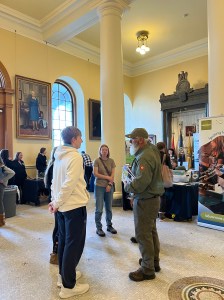
In a crowded room, a group of teenagers speak to two uniformed Maine Game Wardens.
Outdoor Education students connect with Maine Game Wardens at the Celebration of Outdoor Learning.

Students from throughout the state came to connect with their peers, explore the State House, and attend a panel of young professionals in environmental policy. At the panel, students discussed translating their love for nature into tangible actions for meaningful change through advocacy. Students also had an opportunity to share their outdoor education experiences.

Liam Lemire, a sixth grader from Lillian Parks Hussey School in Augusta, reflected on his experience learning about ecosystems at an after school snowshoeing program.

“We learn how one thing in the outdoors connects to everything else, and how if one thing goes away, it will change the whole outdoors,” he said.

After the panel, ten speakers shared their passion for outdoor education. Among the speakers were four Maine DOE representatives. First up from the DOE was Chief Innovation Officer Page Nichols, who expressed her pride in the Maine DOE and Mills Administration’s dedication to outdoor learning. Nichols informed attendees that “the Department of Education has invested nearly $20 million to support the expansion of nature-based programming and climate education. In 2022, with support from a number of other state agencies, we updated the 2011 environmental literacy plan to help advance environmental literacy for Maine students. The updated plan also positions the state to receive federal funding to further support this important work.”

Climate Education Specialist Teddy Lyman spoke after Nichols, thanking the crowd for their attendance, updating them on the success of the Climate Education Personal Development Grant, and announcing a new task force.

“This task force will spend the spring designing the future of climate education for the department over the next four years so we’ll have meetings both in person and virtually. And if you are a partner to education groups, if you are a teacher, if you are a school administrator, and if you are a youth, we would love to have you participate in this task force,” he said. You can click here to complete the taskforce form.

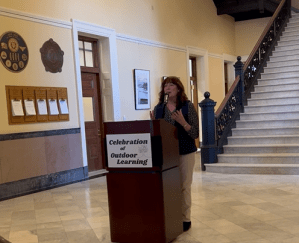
Commissioner Pender Mekin stands at a wooden podium with a white sign that says “Celebration of Outdoor Learning” in green. The Commissioner is speaking and holding her hands up in emphasis.
Maine Department of Education Commissioner Pender Makin speaking at the Celebration of Outdoor Learning.

Following Lyman, Brianne Lolar, a Panawahpskek citizen and the DOE Wabanaki Studies Team Leader, took center stage to illustrate the critical role Maine’s indigenous people play in climate education.

“Wabanaki traditional ways teach us to honor and strengthen our relationships with the environment as well as the people around us,” shared Lolar. “This is not easy work by any means, but together we will be stronger for our use across Wabanaki homelands.”

Lastly, Commissioner Makin used her time at the podium to emphasize the significance of encouraging young people to spend time outdoors.

“There is something qualitatively important about being in nature and just being outdoors. There are neurological impacts of 30 seconds of listening to the sound of birds or nature in general that are so critically needed by all kids,” said Makin.

Learn more about Maine’s Outdoor Learning Opportunities here.

Paid Professional Learning Opportunity Provided by Maine DOE

The Maine Department of Education (DOE) is accepting applications from individuals interested in learning more about the competitive grant process. Selected applicants will be trained to serve as peer reviewers who assist the Maine DOE in reviewing, assessing, and scoring competitive grant proposals for the 21st Century Community Learning Centers (21st  CCLC) Program. The 21st CCLC program is a federally funded education program that helps schools and communities develop before-school, after-school, and summer educational programs that support students and their families.

This year’s Request for Proposals (RFP) for the 21st CCLC program was released to the public on January 9, 2024, and is available online here. The Maine DOE anticipates receiving proposals from local education agencies, community-based organizations, and other eligible entities seeking awards under this RFP.

Qualifications:

Peer review applicants will be selected based on their experience in providing effective academic support, enrichment, youth development, and related support services for children and youth. The most qualified candidates will be individuals who have experience in the administration of high-quality youth development programs within schools and communities. Examples of the experienced individuals sought include, but are not limited to:

  • 21st CCLC program directors and site coordinators
  • Teachers and principals
  • College and university staff
  • Youth development workers
  • Community resource providers

Required Tasks:

Selected applicants must be able to participate in online training and review grant proposals through a web-based system. Applicants will work individually to read each assigned proposal and create detailed, objective, constructive, and well-written comments on approximately 10 proposals based on the criteria established in the RFP. These comments will be submitted to the Maine DOE prior to participating in the scheduled consensus scoring sessions. It is anticipated that peer reviewers will have a three (3) week window in which to complete their individual review of assigned proposals.  Following the individual review of proposals, each successful applicant will be required to participate in a series of two (2) online/virtual consensus scoring sessions hosted by the Maine DOE. It is during these consensus scoring sessions that the peer review team will score each grant proposal.

Selected applicants must complete the following tasks during the following date(s):

Task Date(s) Time(s)
Participate in an online training webinar April 3, 2024 1:00 PM – 2:30 PM
Review grant applications through a web-based system and provide individual, written comments on each application (which must be submitted to the Department) April 12, 2024 – May 1, 2024 Any Time
Participate in online/virtual consensus scoring sessions with other members of the peer review team (applicants MUST be available on all four scoring days, but will only be selected to participate for two days) May 6, 2024 – May 7, 2024; or
May 8, 2024 – May 9, 2024
9:00 AM – 4:00 PM

Compensation for Services:

Selected reviewers who complete the required tasks will be provided an honorarium of $100 per assigned application.

Previous participants have also found that serving as a member of the peer review team is an excellent opportunity for professional development and growth. It is likely that, if selected, applicants will be exposed to new program models, strategies, and practices. These new concepts may provide ideas and support for ongoing work as well as future grant writing efforts. Most importantly, the time given to this effort will help ensure the funding of quality education programs for the children and families of Maine.

How to Apply:

Interested parties must contact Travis Doughty at travis.w.doughty@maine.gov to obtain a copy of the 2024 peer reviewer application and then return the completed application along with a current resume or CV.

Pursuant to Title IV, Part B of the Elementary and Secondary Education Act, as amended by the Every Student Succeeds Act of 2015, peer reviewers may not include any applicant, or representative of an applicant, who has or will submit a proposal in response to the current grant competition.

Deadline:

The Maine Department of Education will continue accepting peer reviewer applications through March 14, 2024, or until the needed positions are filled. Interested parties are encouraged to apply as soon as possible.

Contact:

For more information, contact Title IV State Coordinator, Travis Doughty at travis.w.doughty@maine.gov or 624-6709.

Pre-K for ME, K for ME, and 1st Grade for ME Program Overviews and Summer Training Opportunities

Since 2018, the Maine Department of Education (DOE) has adapted and piloted open-source instructional programs for early elementary grades based on the Boston Public School’s evidence-based Focus Curricula.  Pre-K for ME was launched in 2019,  K for ME was launched in 2021, and 1st Grade for ME was launched in 2023. 2nd Grade for ME is being piloted in Maine classrooms next year and will be made available for the 2025-2026 school year. These developmentally appropriate learning programs are interdisciplinary and align with Maine’s learning standards. While Maine schools are responsible for the purchase of classroom materials that support the use of these programs, lesson plans, outlines and other supporting documents can be accessed at no cost via the Maine DOE’s website.

An informational overview of the programs will be provided on March 7 from 3:30-4:30. The overview session will be recorded and posted for anyone unable to attend the live session. The overview session will share the basic program structures and review the materials needed to implement the programs.  If unfamiliar with the programs, attending the overview (or watching the recording) is highly recommended.

Overview Session on March 7th,  3:30-4:30 – Register here.

Educators/schools/programs interested in utilizing Pre-K for ME, K for ME and/or 1st Grade for ME in the coming year may take advantage of initial trainings scheduled this summer.  These trainings are provided at no cost to promote understanding of program design and to support successful program implementation.  School administrators are strongly encouraged to attend the trainings with their Pre-K, Kindergarten and/or first grade teachers.  Special educators, education technicians, and instructional coaches/curriculum leaders who work with pre-k, kindergarten and first grade teachers are also encouraged to attend. There is no cost to attend summer trainings.

This year’s training opportunities will be held in person from approximately 8:30 a.m. to 3:30 p.m. 2-day trainings are provided for each program.

  • Pre-K for ME– During the week of 7/29-8/2 (exact dates and location TBD)
  • K for ME– July 29th and 30th in the Augusta/Waterville area (exact location TBD)
  • 1st Grade for ME– July 31st and August 1st in the Augusta/Waterville area (exact location TBD)

For teachers learning the K for ME and 1st Grade for ME programs, an additional training day will occur on Wednesday, June 26th from 8:30 to 3:30 (location TBD).  Registration for these trainings should be completed by principals/educators with one registration on behalf of their school/program per grade.  Details about how to prepare for the trainings and the training locations will be provided via email after registrations are received. Registrations for the 2-day training for each instructional program should be received by May 24, 2024.

The Summer Training Registration Link is now open. Please submit a separate response for each grade level in which you are registering educators: Pre-K for ME, K for ME, and/or 1st Grade for ME.

For additional information about Pre-K for ME, contact Marcy.r.Whitcomb@maine.gov and for K for ME and 1st Grade for ME, contact Leeann.Larsen@maine.gov or Nicole.Madore@maine.gov.

Solar Eclipse Resources for Educators

On April 8th, a scientific phenomenon that hasn’t occurred since 1963 will darken the skies.  A total solar eclipse will pass over central and northern Maine! To support educators across the state, the Maine Department of Education (DOE) has created a website with solar eclipse resources for the classroom. Don’t be left in the dark; check out these engaging Maine DOE resources for this exciting celestial event.

For more information or support, please get in touch with Erik Wade at erik.wade@maine.gov or Nicole Karod at Nicole.karod@maine.gov.

Learning Series for Supporting Children, Families, and Communities to Thrive: Promoting Positive Childhood Experiences and Resilience

The Maine Department of Education’s (DOE) Early Learning Team and Maine Department of Health and Human Services (DHHS) Office of Child and Family Services, in partnership with The Maine Resilience Building Network, are excited to announce a professional learning opportunity for childcare and public-school educators working with children from birth to 8 years old. Supporting Children, Families, and Communities to Thrive: Promoting Positive Childhood Experiences and Resilience will bring together early care and education practitioners working across the birth to grade 3 span to participate in professional learning programs during 2024-2025. These free virtual (via Zoom) opportunities are funded through Maine’s Preschool Development Renewal Grant.  Two contact hours are available for each session.

Review these descriptions of each session’s content:

The Impact of Experience: How Adverse Childhood Experiences (ACEs) and Positive Childhood Experiences (PCEs) Impact Healthy Child Development (Part I)

Join this training to gain a comprehensive understanding of how both adverse and positive childhood experiences sculpt the foundation of individual development and uncover the transformative potential of PCEs in nurturing the children with whom you work.

Learning Objectives:

  • Grasp the nuances of early brain development influenced by ACEs and PCEs
  • Gain insights into ACEs and PCEs and how PCEs can nurture healthy development
  • Learn cognitive reframing techniques to focus on protective factors and strengths

A Framework for Implementing Positive Childhood Experiences to Support Healthy Child Development (Part II)

Join this training to learn the framework for promoting positive childhood experiences and support healthy childhood development through the lens of relationships, environment, engagement, and emotional growth. Attendance at Part 1 is strongly encouraged but not required to attend this training.

Learning Objectives:

  • Summarize the way positive and negative experiences impact brain development
  • Employ practical strategies for fostering positive environments in educational and caregiving settings
  • Gain insights into creating safe, stimulating, and inclusive spaces that encourage exploration, creativity, and positive interactions

Addressing Compassion Fatigue and Resilience Strategies in Educators and Caregivers

Join this training to explore stress impact and address compassion fatigue by developing strategies that promote resilience and reconnect you with the “why ” of your work.

Learning Objectives:

  • Help participants identify how stress presents to them
  • Understand the signs and symptoms of compassion fatigue
  • Develop 5 personal and professional resilience strategies that address compassion fatigue and foster wellbeing

Participants may choose to register for one, two or all three trainings in any order between March-August 2024. It is recommended, but not required, that participants register for Part I and Part II in sequence.

Session Title Dates Offered Registration Link
 

The Impact of Experience: How Adverse Childhood Experiences and Positive Childhood Experiences Impact Healthy Child Development (Part I)

Monday, 3/04/24
3:00-5:00 PM
https://maineresilience.org/event-5616732
Tuesday, 4/9/24
6:00-8:00 PM
https://maineresilience.org/event-5616738
Wednesday, 5/08/24
3:00-5:00 PM
https://maineresilience.org/event-5616745
Monday, 6/03/24
6:00-8:00 PM
 https://maineresilience.org/event-5616755
Monday, 8/05/24
9:00-11:00 AM
https://maineresilience.org/event-5616800
 

A Framework for Implementing Positive Childhood Experiences to Support Healthy Child Development (Part II)

Monday, 3/11/24
3:00-5:00 PM
https://maineresilience.org/event-5617531
Tuesday, 4/23/24
6:00-8:00 PM
https://maineresilience.org/event-5617532
Wednesday, 5/15/24
3:00-5:00 PM
https://maineresilience.org/event-5617534
Monday, 6/10/24
6:00-8:00 PM
https://maineresilience.org/event-5617536
Monday, 8/12/24
9:00-11:00 AM
https://maineresilience.org/event-5617537
 

Addressing Compassion Fatigue and Resilience Strategies in Educators and Caregivers

Monday, 3/18/24
3:00-5:00 PM
https://maineresilience.org/event-5617542
Tuesday, 4/30/24
6:00-8:00 PM
https://maineresilience.org/event-5583415
Wednesday, 5/22/24
3:00-5:00 PM
https://maineresilience.org/event-5617548
Monday, 6/24/24
6:00-8:00 PM
https://maineresilience.org/event-5617550
Monday, 8/19/24
9:00-11:00 AM
https://maineresilience.org/event-5617551

Register for InnovatED: Igniting Innovation in Education

The Maine Department of Education DOE’s MOOSE and Interdisciplinary Instruction teams are hosting a FREE virtual workshop day with John SpencerKatie Novak, and Lynn Cuccaro on March 28th. This day-long workshop features morning keynotes from all three speakers and your choice of a two-hour afternoon breakout session with either John, Katie, or Lynn.

Limited spots are available for in-person workshops at the Senator Inn in Augusta. The Maine DOE will pay for mileage for in-person participants and, if you live more than 50 miles from Augusta, lodging for the night of March 27th. In-person attendees will be notified on March 7th. Anyone registering after the 7th will fill open in-person spaces on a first-come, first-serve basis.

Sign up here to be part of the virtual workshop and indicate whether you would be interested in participating in person in Augusta if the opportunity were available. Descriptions of keynotes and workshops are available on the workshop web page.

This opportunity is a collaboration between the Maine Online Open-Source Education (MOOSE) project and the Interdisciplinary Instruction Team. The MOOSE project is funded entirely (100%) through Federal money under the Coronavirus Response and Relief Supplemental Appropriations Act (CRRSA) and American Rescue Plan (ARP), totaling $4,598,000 for the current 2023-2024 funding cycle.

Step Inside Hancock County Technical Center

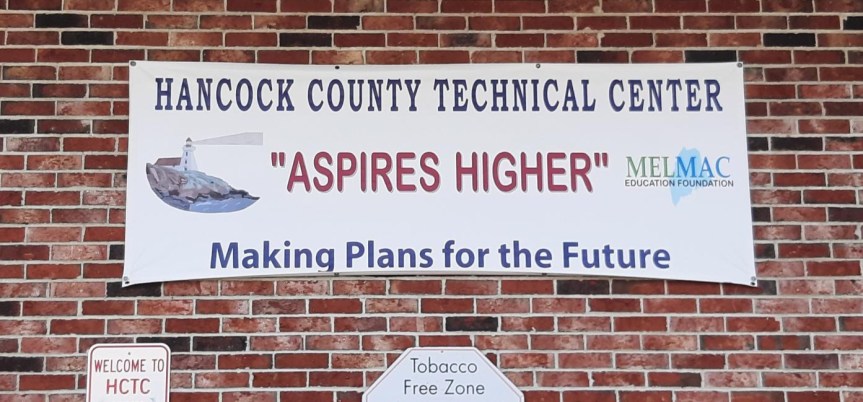
Hancock County Technical Center (HCTC) opened its doors to the Maine Department of Education (DOE) on Valentine’s Day to provide a glimpse of what a day looks like within its walls. Upon arrival, the smell of baked scallops drifted down the hallway from the culinary program at work preparing a special meal for staff. The office was buzzing with the anticipation of another day of learning, with students and staff discussing college plans, transportation routes, and what they are looking forward to as the season changes. HCTC offers programs such as biomedical research, various types of automotive and technical specialties, early childhood education, health careers, hospitality and tourism, law enforcement, and more. Sophomores, juniors, and seniors from all over Hancock County have the opportunity to learn from specialists in their field of interest, with Director Bill Tracy and his dedicated staff there to oversee their endeavors.

Sabrina, a biomedical research support student, explained that she was drawn to the program after a 6th-grade field trip to HCTC opened her eyes to the possibilities available. After a 7th-grade STEM unit utilizing microscopes to investigate onion cells ignited her love for research, she knew that was the path she wanted to go on. HCTC’s biomedical program opened the doors for her to fully explore the field.

As a result of support from her HCTC educators and the Bridge Program, a dual enrollment opportunity that allows students to participate at HCTC while simultaneously taking college credits at their participating high school, Sabrina was accepted to the Aspirinaut High School Summer Internship Program at Vanderbilt University Medical Center in Tennessee. Sabrina is also participating in an ongoing collaboration with Jackson Labs to give her even more exposure to the worlds of scientific and medical research. Sabrina says she has learned a lot from her experience with HCTC and it helped fuel her passion. “This is what I was meant to do,” she said. She also observed from the professionals she interacts with that a career can be more than a job, realizing that, “your work can be your career and be emotionally satisfying.”

Hancock County Technical Center also boasts award-winning educators. Recent Milken Educator Award recipient Meghan Stubbs teaches early childhood education, working with students considering the classroom as their career. An in-house preschool started by Ms. Stubbs provides interactive, hands-on experience for her students while also providing a service to the community. The classroom boasts a full preschool room experience, complete with early childhood level tables and chairs, a “centers” area, and colorful student-created décor.

Her students are quick to point out what makes her an excellent role model and mentor. One of her third-year students, Isabell says, “She has a different way of teaching and gears it toward how we want to learn.”

She said if she could use one word to describe Ms. Stubbs it would be “passionate”. That passion was easy to see as Meghan led a class discussion about ADHD in children and adults.  Meghan led a class discussion on how to identify potential behaviors, as well as strategies for working with all learning types in the classroom. What stood out in this discussion was how open the dialogue was between Meghan and her students, with many sharing personal stories of their own experiences with students with ADHD.  Not only were her students learning the content, but they were able to articulate how that information would be relevant for them in their future classrooms. In Meghan’s classroom, everyone has a voice and is invested in how they can use that voice to impact their own lives and the lives of others.

It doesn’t take long to see what an impact CTE is making in Ellsworth. Instead of learning concepts in the abstract, students at HCTC are doing medical research, teaching children, preparing and serving meals, and so much more. Hancock County Technical Center is an important part of preparing Maine students with the skills needed to turn their passions into careers.

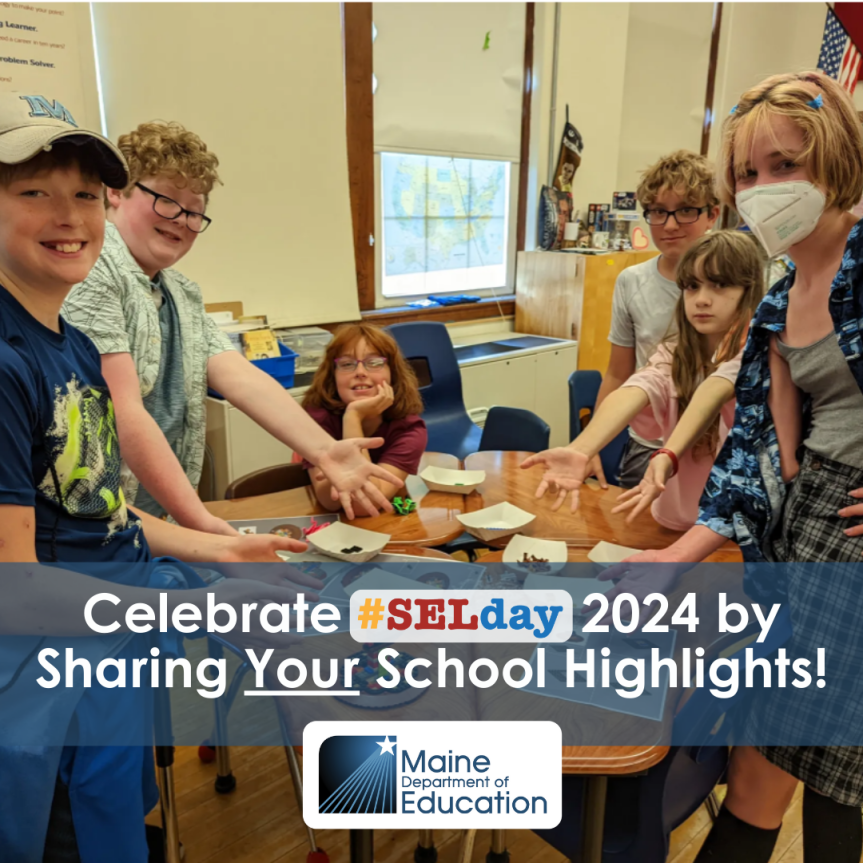
Celebrate #SELday 2024 by Sharing Your School Highlights!

(Pictured: Orono Middle School Students participating in a teacher designed, summer program focused on social-emotional student needs)

Maine schools will celebrate the 4th annual International Social Emotional Learning (SEL) Day celebration on March 8, 2024, and the week leading up to it.

We know that Maine schools are doing amazing things to cultivate the social and emotional learning of all of their students and we want to share that collective success with the nation. With that in mind, this year we are asking you to participate in this national effort by sharing your SEL highlights during the school year and beyond and/or share your school’s 2024 SEL Day activities and initiatives by filling out this form.

Submissions received from this form will help Maine come together as a state to recognize the amazing work of Maine schools at a national level to be included on the SEL4US Leader Board. Together, let’s make Maine a shining example of SEL excellence!

You can also share your #SELdayME2024 highlights during the week of March 8th by posting to your school’s social media and tagging Maine DOE, using #SELday or #SELdayME2024 and tag the Maine DOE at @MaineDepartmentofEducation1 on Facebook and @mainedepted on Instagram.

Check out some of the toolkits and resources for #SEL Day that the Maine DOE shared earlier this month here. For more details on the day or on inclusive ideas, send questions to DOESchoolandStudentSupports@maine.gov.

Maine DOE Podcast Highlights Hands-On Career and Technical Education Experiences

Commissioner Makin Talks with CTE Directors Randy Crockett from Oxford Hills Technical School, Bobby Deetjen from Mid-Coast School of Technology, and Bill Tracy from Hancock County Technical Center

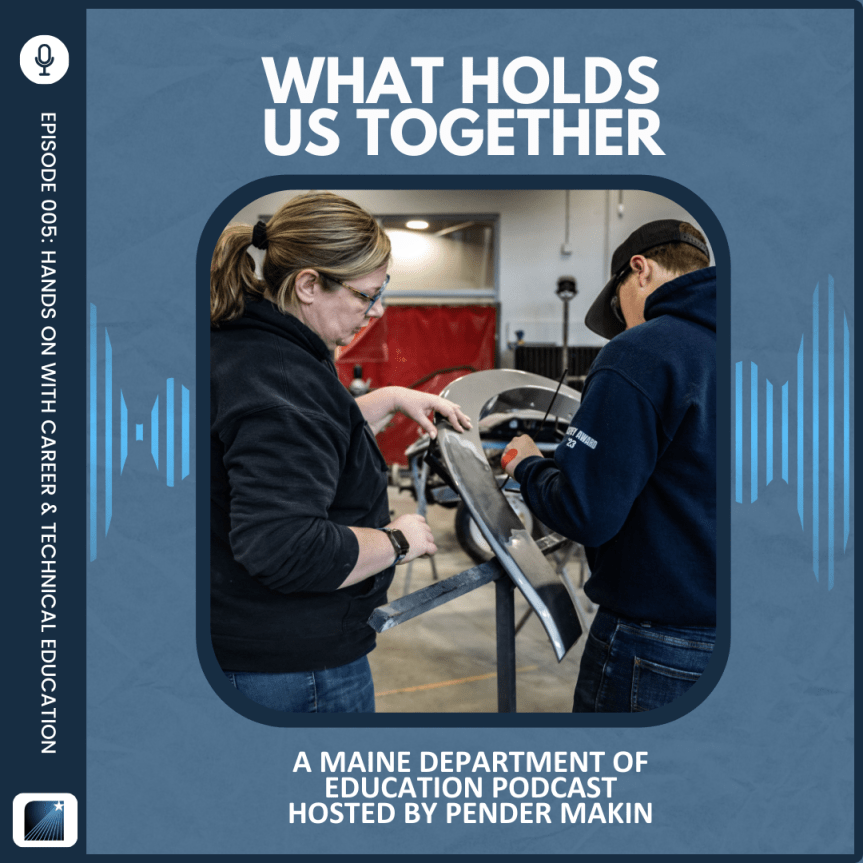
Career and Technical Education (CTE) programs provide Maine students with hands-on experiences in programs like culinary arts, welding, auto, law enforcement, early childhood education, and so much more. On this month’s What Holds Us Together podcast, Maine Education Commissioner Pender Makin talks with three CTE leaders about this engaging learning pathway, Randy Crockett from Oxford Hills Technical School, Bobby Deetjen from Mid-Coast School of Technology, and Bill Tracy from Hancock County Technical Center. They share how CTEs help students build the skills, knowledge, and real-world experiences they need to thrive. Listen here.

“We’re big believers in the hands-on, real-world, interdisciplinary learning that’s happening at Maine’s Career and Technical Education schools. [Students are] learning skills, they’re learning academic content, they’re solving problems and using critical thinking, they’re developing teamwork skills and communication skills—it’s such a robust model of education,” said Education Commissioner Pender Makin on the podcast.

“What happens in our school is pretty magical on a daily basis. We’re dealing with students who are future doctors, engineers, electricians, welders, you name it. These are going to be contributing members of our communities and we get to watch them at 16 and 17 really grow and make decisions that are going to impact our communities as a whole,” said Mid-Coast School of Technology Director Bobby Deetjen.

“It’s nice to be able to offer things that students need and want in the community,” said Hancock County Technical Center Director Bill Tracy. “That model of being able to learn and then immediately apply and practice is something that our students talk a lot about and being able to have that hands-on opportunity.”

“Our spaces are intermingled with the academic areas as well, so a student can walk from engineering and architectural design to their calculus class. It really makes a big difference in terms of access,” said Oxford Hills Technical School Director Randy Crockett, who also talked about the importance of hands-on learning. “That actual application is going to deepen their learning. They have to problem-solve in real time instead of abstract thinking.”

The group also discussed how the CTE model encourages students to take risks and be confident in trying new things.

“We tell our students, if you don’t fail at something that means you are not going to learn to your fullest potential. That’s going to increase engagement right there where students are going to have that kind of opportunity to feel at ease and take a chance,” said Deetjen, who explained that when students are worried about the social pressures around them if they fail, they’ll never take that chance to begin with and CTE programs take that pressure away.

Tracy summed up the power and potential of what CTEs in Maine offer.

“You can walk down the hall and see welding going on, you can see a car being taken apart, you can see [students] looking at electrical systems, and then you can go up and see three-year-olds running around in a classroom, and then you can step over to another classroom where they’re turning cockroaches into cyborgs and learning to control them. Then you walk down the hall and they’re making this amazing meal. What is this world? It’s just an amazing thing,” he said. “That is the world, and we’re just this small-scale piece of what reality is.”

Maine CTE program enrollment surpassed 10,000 students this year, and communities and the State continue to invest in this transformational learning pathway. Maine’s 27 Career and Technical Education regions and centers enroll students in 85 programs. The Mills administration invested $20 million from the Governor’s Jobs Plan to expand CTEs in Maine. In addition to the Jobs Plan funding, the Governor and the Legislature have increased funding for CTEs by more than $10 million.