
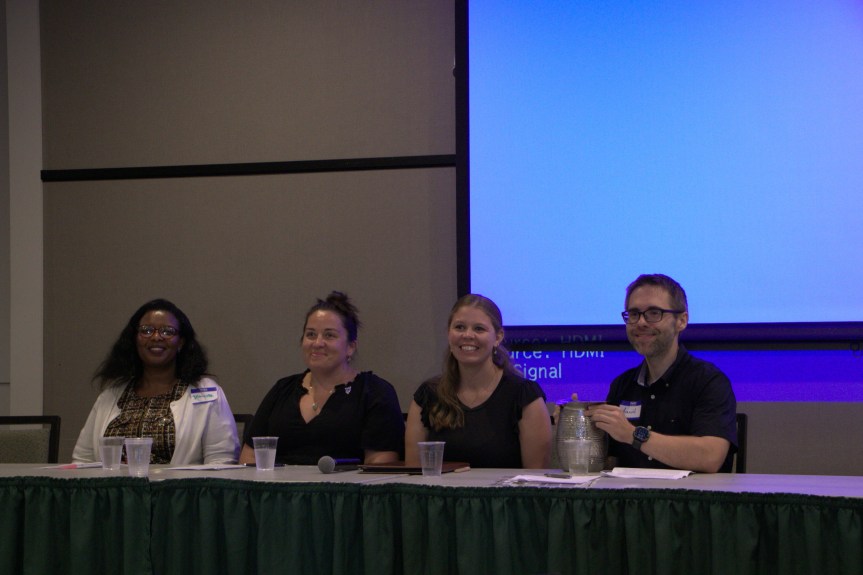
Family Partnership Panel (pictured left to right): Jeannette Umugwaneza, April Tardiff, Cori Cantrell, and David Motel share lived experiences and insights to strengthen early childhood systems across Maine.
In July, early childhood educators, family advocates, childcare providers, and community leaders from across Maine gathered in Brewer and in Portland for the 2025 Early Childhood Summer Summits—two days full of connection, collaboration, and forward-thinking solutions.
The events focused on strengthening early childhood systems through innovation, partnership, and family engagement, with a special emphasis on meeting the needs of Maine’s rural communities. Similar agendas were followed in both locations, with Maine educators from across the state sharing powerful examples. The summits were funded through Maine’s Preschool Development Grant (PDG), which supports coordinated efforts across Maine’s Early Care and Education Systems.
The day in Brewer began with a warm welcome from leadership at Maine School Administrative District 54 and the Kennebec Valley Community Action Program, setting the tone for an engaging and impactful agenda. One of the highlights early on was the Fireside Chat, where representatives from Regional School Unit 14 and two community-based child care programs, Tu Casa and A Child’s World, shared success stories and real-life challenges from their work in early care and education. Their insights showcased how community-rooted approaches and cross-sector teamwork can lead to stronger outcomes for children and families alike.
During the breakout sessions, attendees had the chance to explore targeted topics in smaller settings. In the session “Planning, Partnerships and Progress: Meeting the Rural Early Care and Education Challenges,” leaders from the Aroostook County Action Program shared how partnerships with local schools and providers, such as their collaboration with Easton Community School, are expanding access and offering comprehensive services in rural areas.
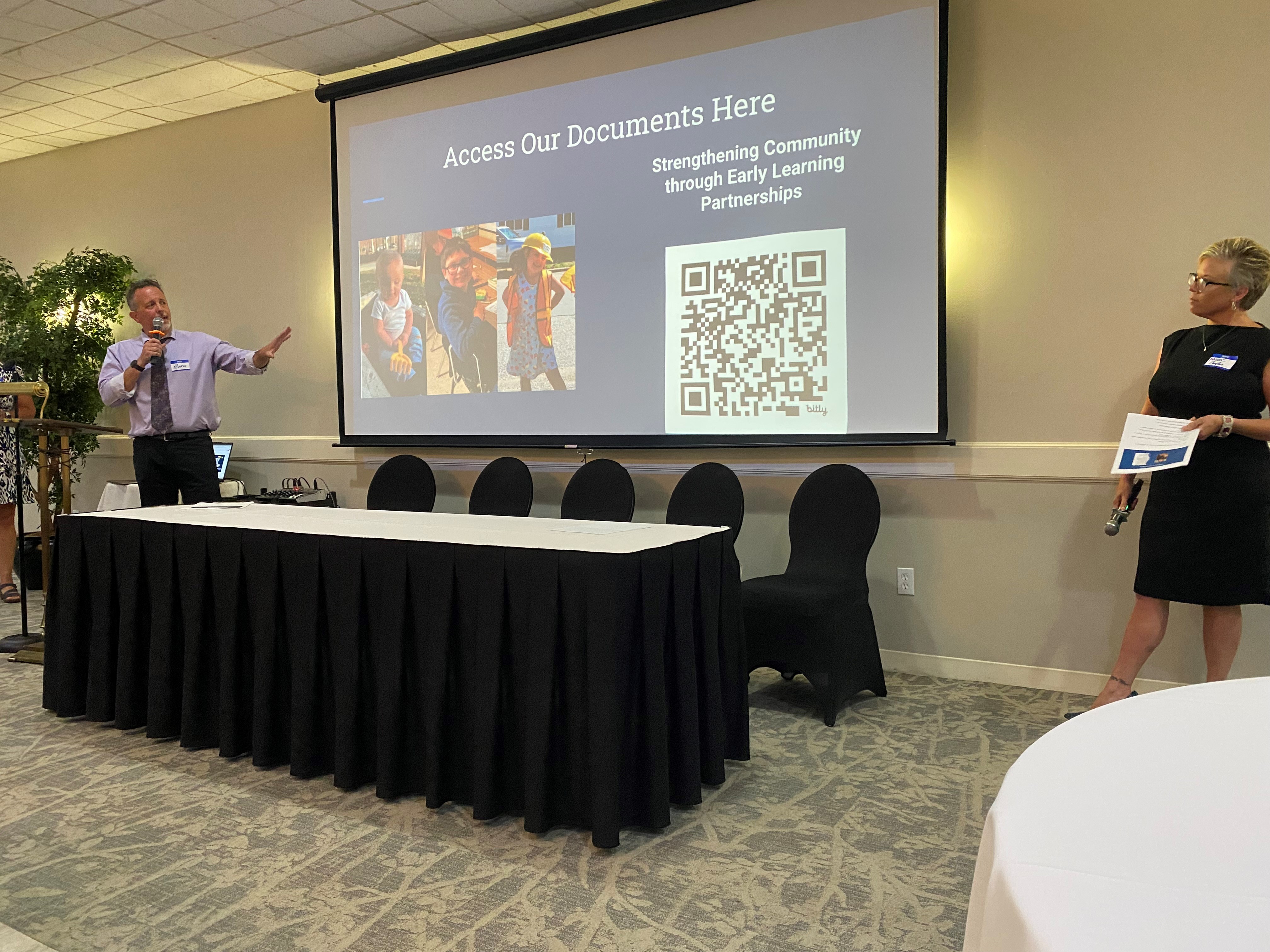

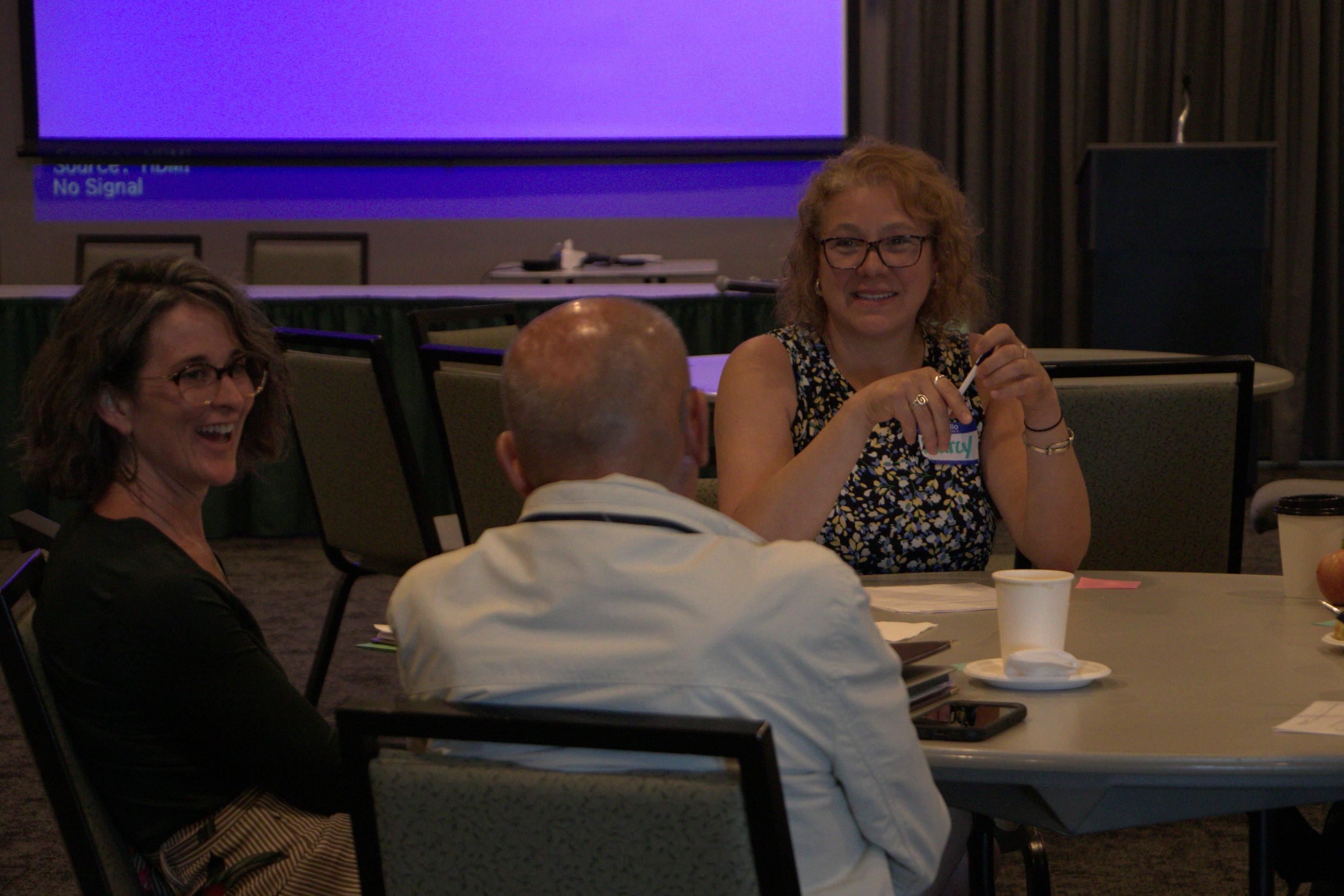
“It was amazing to see how engaged everyone was, especially during the breakout sessions where people were truly excited to share ideas and learn from one another. It showed just how invested these communities are in supporting young children and their families,” Brooklynne Blockler, Communications Intern for the Maine Department of Education, said. She was onsite capturing pictures and videos throughout the event.
A second breakout session, “Preschool Special Education Services Partnerships,” offered insight into Regional School Unit 29’s work with Laugh & Learn Academy, highlighting the value of inclusive preschool models that serve children with Individual Education Plans (IEPs) in integrated settings.
After lunch, keynote speaker Elaine Zimmerman, former Regional Administrator for the Administration for Children and Families, brought a powerful perspective to the room. Her remarks encouraged attendees to think beyond programs and toward long-term systems change, emphasizing the role of public policy, family voice, and sustainable funding in driving progress.
The afternoon Family Partnership Panel was a standout session. Parents shared personal stories about their experiences navigating Maine’s early education landscape. Their honesty and passion underscored just how vital strong family-program relationships are—and how impactful those partnerships can be for both child development and family wellbeing.
Likewise, the Portland Summit featured wonderful examples of school system and community coordination in support of children and families, followed by Elaine Zimmerman and the panel of parents. School/community partner presentations in Portland featured:
- Brunswick Public Schools, Family Focus, and the Midcoast Maine Community Action Program—focused on public pre-K partnerships
- The First 10 Community School initiative in Sanford
- Wiscasset Elementary School and Midcoast Maine Community Action Program
Throughout both days, table discussions and group report-outs created space for idea-sharing, networking, and regional collaboration. The event celebrated what’s working in early childhood care and also inspired new momentum for what’s next. The 2025 Early Childhood Summits proved that when communities come together with shared goals, open dialogue, and a focus on family, meaningful change is not only possible but already happening across Maine.
For more information and resources about early childhood, please visit this webpage. You may also contact Maine DOE Director of Early Learning Lee Anne Larsen at Leeann.Larsen@maine.gov.
 Maine DOE Newsroom