
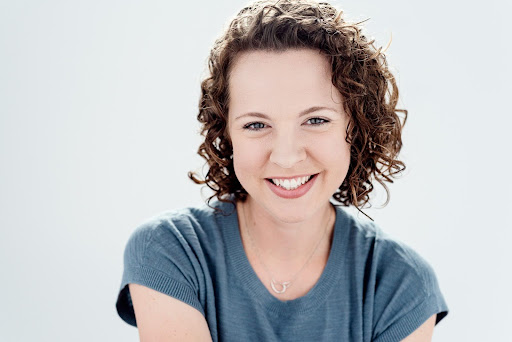
Credit: (2022) Wohler & Co.
Get to know 2026 Maine Teacher of the Year Julia Edwards, a choral music teacher at RSU 16’s Bruce Whittier Middle School and Poland Regional High School. Julia shares more about herself in this Q&A, as she begins her year of service.
What or who inspired you to pursue a career in education, and how did you ultimately decide to teach music?
In high school, I attended a camp and took a leadership class called, “I Will Get Things Done” with my friend, David Cranson. The message of the day was: “When we have abundance, it is then our responsibility to share.” That stuck with me. At the core of my teaching philosophy is this concept of “abundance;” music has given me countless opportunities, connected me to incredible people and places, and helped me find my place in the world. If I can take that abundance and share it with others, I see no other way to spend my career.
This “abundance” stems from the fact that my entire family considers music a second language. In fact, in many ways, it feels like our first language. It is the one thing we all share on both sides of our families, so my sister and I grew up attending rehearsals, concerts, and musical community events. While I also had a deep interest in science growing up, I realized I couldn’t just have music as a hobby; it needed to be my day job. I have never truly been a performer at heart, so my love of science, desire to share, and passion for music led me to pursue a degree in music education.
Role models I have had throughout this process include my grandfather, Floyd Corson, who began the music education program at Westfield State University and taught high school chorus for years; my elementary music teacher, Lynn Songdahl Sweet, who nurtured my curiosity and enthusiasm and gave me so many opportunities to grow; and Dr. Deanna Joseph, who was the first professional conductor I could truly see myself in—and who challenged me to lean into developing my own leadership skills in college. There are hundreds more, but this trifecta truly made “more” seem possible to me in a crucial way.
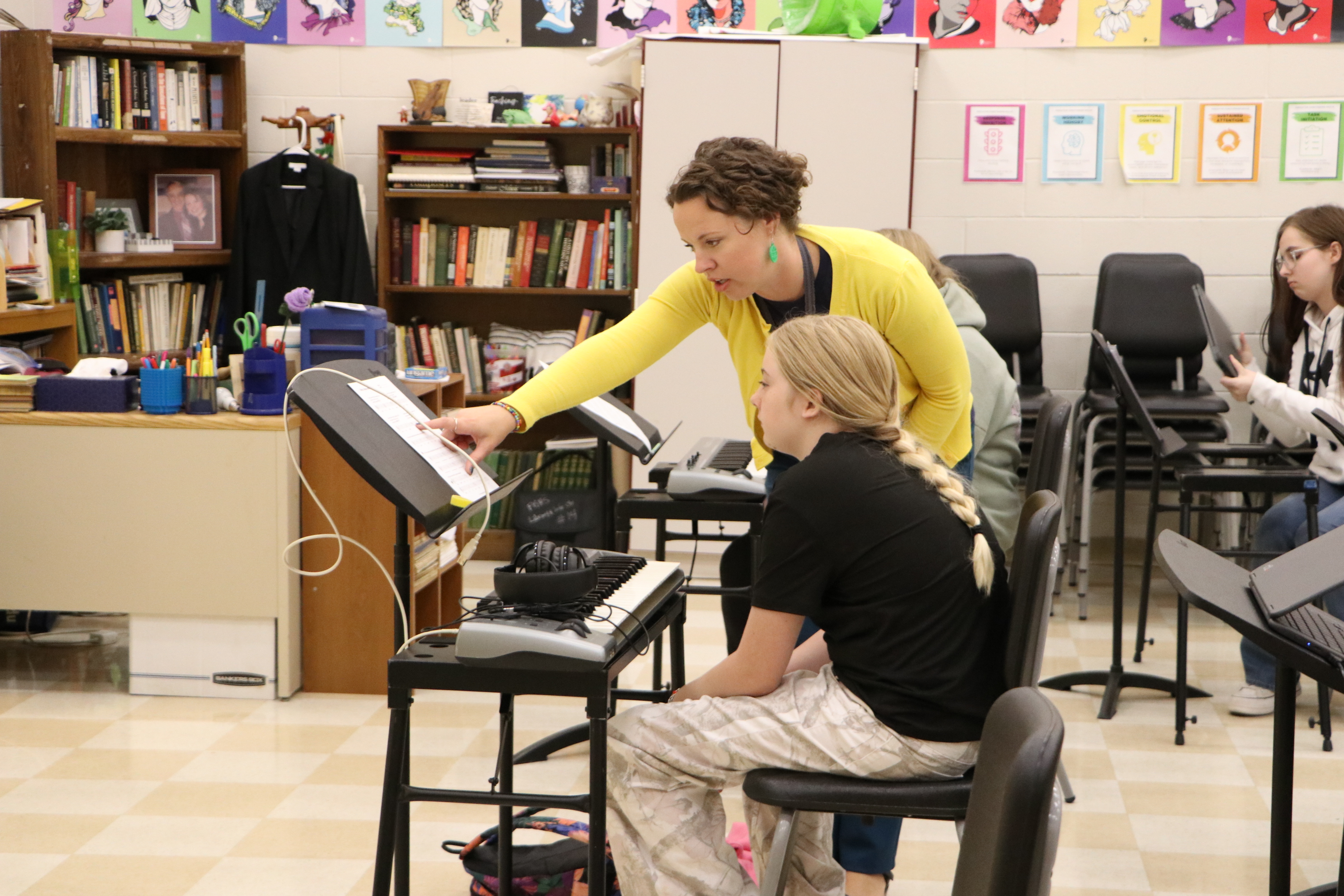
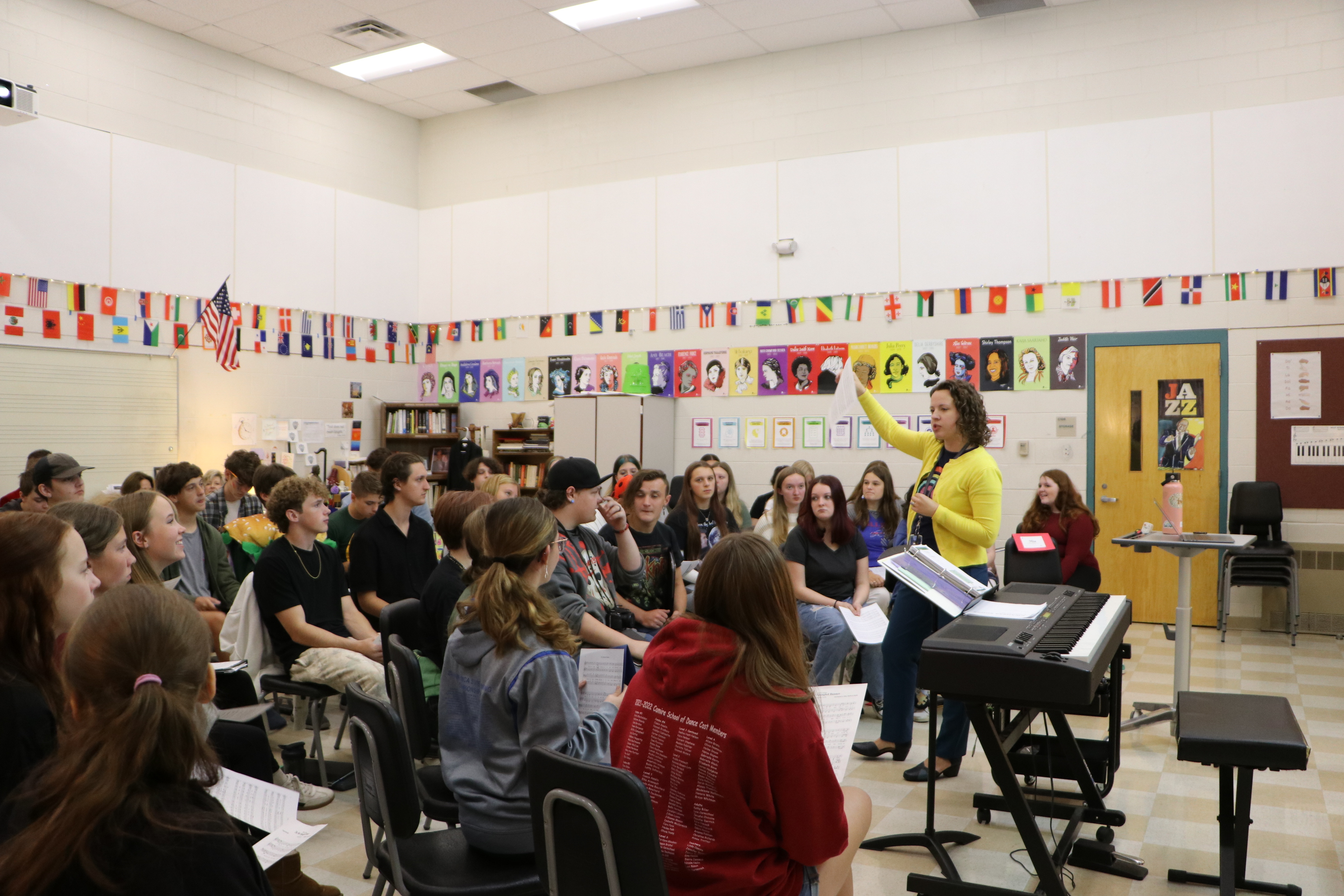
Images taken in Julia’s classroom during the Teacher of the Year selection process.
With many years of experience in the classroom now under your belt, what continues to bring you joy and purpose in your work as an educator?
Most of the folks I know who teach—and especially those who have taught for a long time—tend to respond to this question with two answers: The first is that teaching is always changing, growing, and moving. Students and best practices are constantly evolving, which makes this career quite dynamic and challenging in ways that are really engaging. The second is that it can be deeply rewarding to witness one’s students grow.
While both of these answers hold true for me, there is something else I’ve been noticing in what drives me. I like to think of myself as a mirror; so often, my students don’t realize the extent of what they are capable of or how much joy they bring to their community or what good people they are. If I can help them to see the good in themselves—academically, musically, and socially—then perhaps they will be a bit more willing to use that good to better their communities and world. This happens through skill-building and performance and assessment—but the end goal really is to watch my students leave my door for the last time with a deeper appreciation for the world and the desire to exist in it with the tools and commitment to make it better.
As 2025 Androscoggin County Teacher of the Year—and now as 2026 Maine State Teacher of the Year—you have spoken about the importance of music in education. Why do you continue to advocate for the preservation of the arts in education?
Music is found in everything we do. Our physiological existence has rhythm. Our earliest artifacts of human existence show evidence of rhythm. Language has cadence and melody. We mark our most important moments with music (for example, imagine a wedding or graduation without it). Everywhere around the world, music and the arts are what form the constant undercurrent of cultural identity. While I could profess its importance in an academic setting, there is no need; the science is irrefutable in consistently revealing that music and the arts are not supplementary to a quality education; they are fundamental to it.
For every argument against funding music education, there is a clear rebuttal. Cost per student, test scores, scheduling, etc., all fall short as reasons when you look at the benefits of music education. We have identified social-emotional learning, executive functioning, community engagement, and critical thinking as skills that students are in dire need of at this point in time. All of those skills have been among the benefits of music education for centuries and will continue to be. The more we lean into embracing and promoting the role of the arts in developing such skills, the better our students—and communities—will be.
On a personal level, I think the most important reason why we need to support the arts in education is that our communities so desperately need the arts right now. Music is the most powerful way to engage folks across generations and cultural differences, and our communities deserve more opportunities to share positive common experiences.
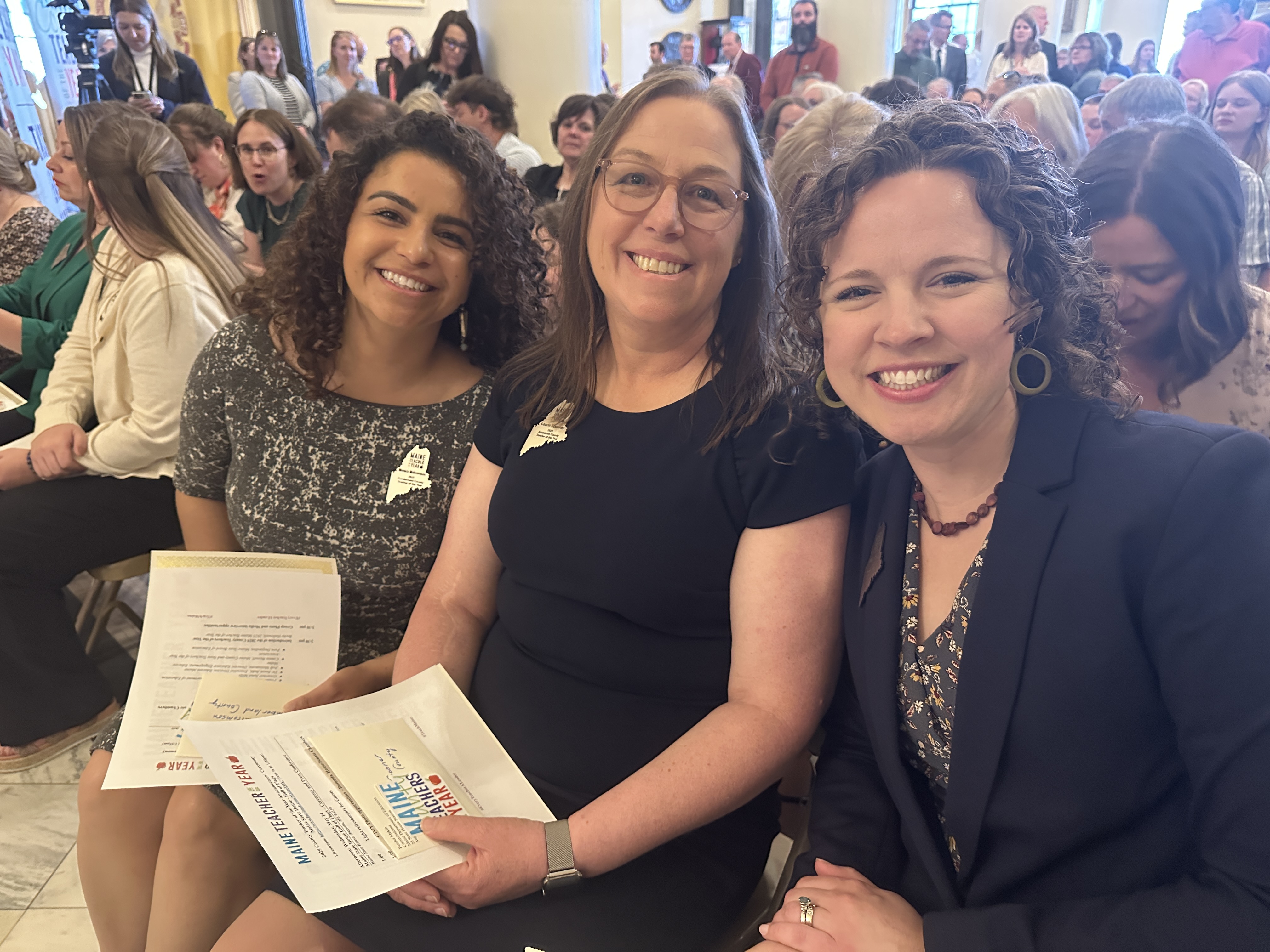
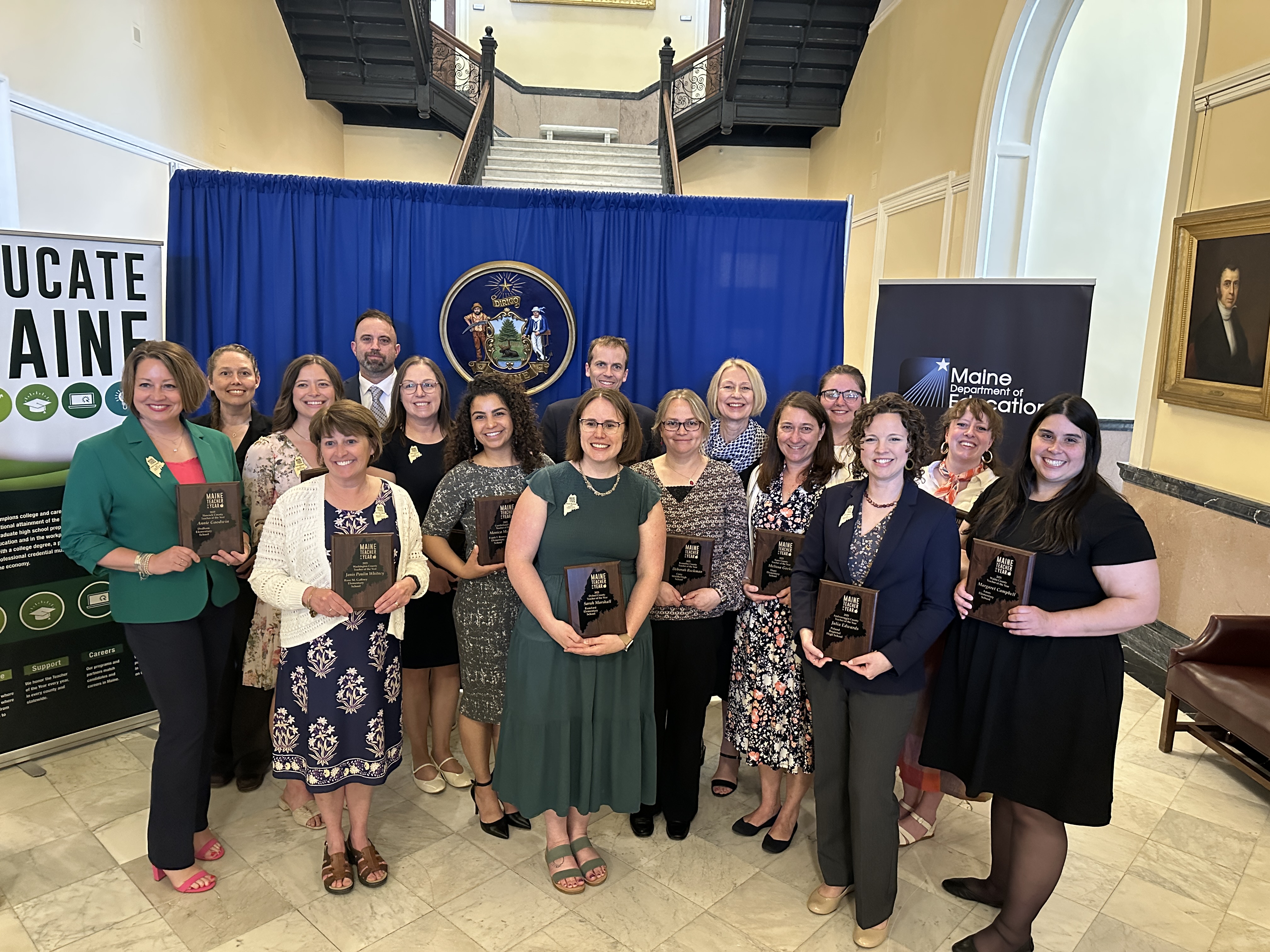
Images taken at the 2025 County Teacher of the Year announcement in May of 2025, where Julia was named 2025 Androscoggin County Teacher of the Year.
In your opinion, what makes your school community—and the students you work with—unique?
RSU 16 is home to a large handful of folks who have been County Teachers of the Year, Maine Teacher of the Year finalists, Maine State Teachers of the Year, and Principals of the Year. Folks visit from across the state and remark how special our district is. Part of this is administrative balance—the support of teachers and students, balanced with respect for teacher autonomy and efficacy—and part of it is the set of values that our schools were founded on. More than anything, I think what makes our community and district so special is similar to what makes Maine great: We show up.
I really believe that the community where I teach does a lovely job of demonstrating that folks from different backgrounds and experiences can find common ground to invest in their community. I have always been impressed by the way my students treat each other in general—holding the door for each other, demonstrating an interest in each other’s passions, cheering each other on in their endeavors, and showing an interest in the world at large. The teachers in our schools are some of the most innovative, engaged professionals I’ve ever met. When you work with students and fellow teachers like this, it’s easy to get through the days and trust that any struggles will be met with creative problem-solving and positive outcomes.
Looking back on your career so far, what is one lesson that has had a lasting impact on how you approach teaching and working with students?
It’s simple: Show up. When I was student teaching, I had one particularly bad day. I was “off” and struggling to reach students with the way that I was teaching. My cooperating teacher said a few things that made me question whether I should teach at all. At the time, I was the teaching fellow for a community children’s choir, which had rehearsal that afternoon. I called the director and told him I couldn’t come in that evening, vaguely explaining what had happened. His response was to ask me essentially this: “Is your need to go home and sit in your grief greater than the children’s need to have a stable adult consistently showing up for them? Perhaps you’ll find it’s good for the kids andfor you if you show up anyway, even though you’re feeling discouraged.” So, I showed up. We had an amazing rehearsal, and many of the students made remarks about how much they’d learned or the fun that they’d had. I felt like a teacher again. I felt joy in teaching again. It reminded me that the most important thing we can do as teachers—as adults—is to show up consistently and to remember that we are connected to each other in ways that can make us capable of both saving our community and being saved by it.
Additionally, what is one of your favorite memories from your classroom?
This will always be a difficult question to answer. We have a lot of fun in the music room! I’ve also spoken before about how much I love our Community Service Day and bringing students to the local memory care facility. The first time we did that was life-changing, and seeing the impact it had on my students and on the residents was a gift that I hold dear.
My favorite concert/community moment happened when two seniors performed, “If I Can Dream,” a song about Martin Luther King, Jr. that was popularized by Elvis. One student sang the Elvis solo, while the other signed the song. What’s important to know about this situation is that the student who was signing had found out only a few years prior that she had degenerative hearing loss and would eventually be naturally deaf. She began learning ASL for basic communication but didn’t know how she would continue her love of singing. She decided to learn how to create signed lyrics (which often differ from conversational ASL) for her senior capstone project.
So, we had a duet of sorts—one student belting out Elvis with all of the charisma and passion he could muster, and the other student creating beautiful, signed gestures to communicate the powerful lyrics. While it was an impactful performance, that’s not what made it my favorite memory; the applause was.
I have never been someone to work for the applause, nor are my students, but this moment was special. Folks erupted in response to the performance by clapping, hooting, and cheering for the soloists. Then, one person (my signer’s father) began the ASL sign for applause. The auditorium fell silent, as more and more people caught on, enthusiastically shaking their palms back and forth in the air, in a giant wave of deaf applause. My signing student felt so seen and appreciated in her growing identity as a member of the deaf community—all while participating fully in her music community. The best part was that I had to turn her around to see all of her peers behind her, applauding her in silence. When I say music is for everyone, I mean it.
During your tenure as 2026 Maine Teacher of the Year, what key themes or priorities are you most excited to elevate on behalf of educators across the state?
Beyond my reminder that, “Music can do that!,” I think on a broader scope, I want to remind folks of just how much quality there is in Maine’s public schools—both in students and teachers. We are humble folk, but we are capable folk, and it’s exciting to be reminded of that in every way as I work with folks outside of our state.
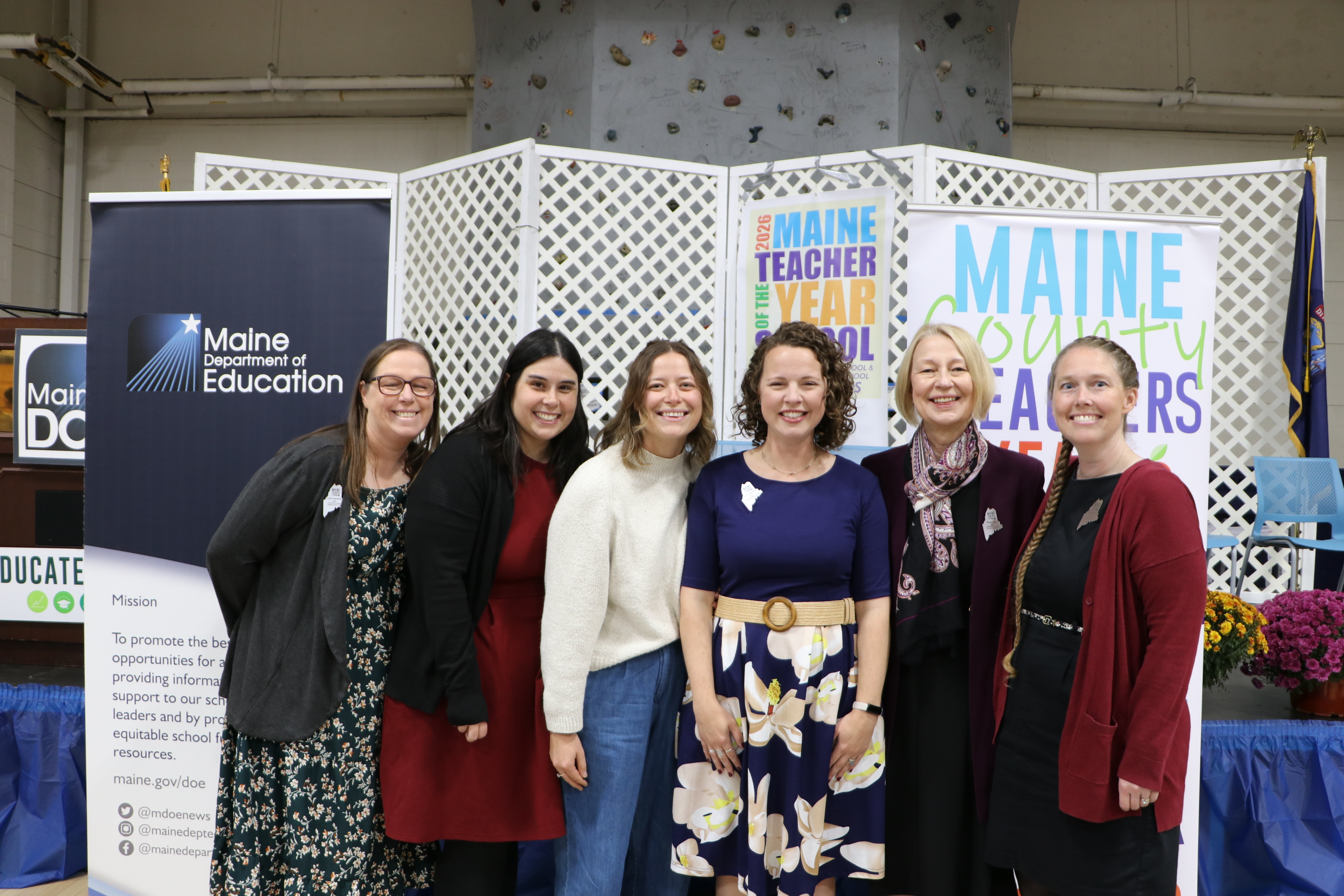
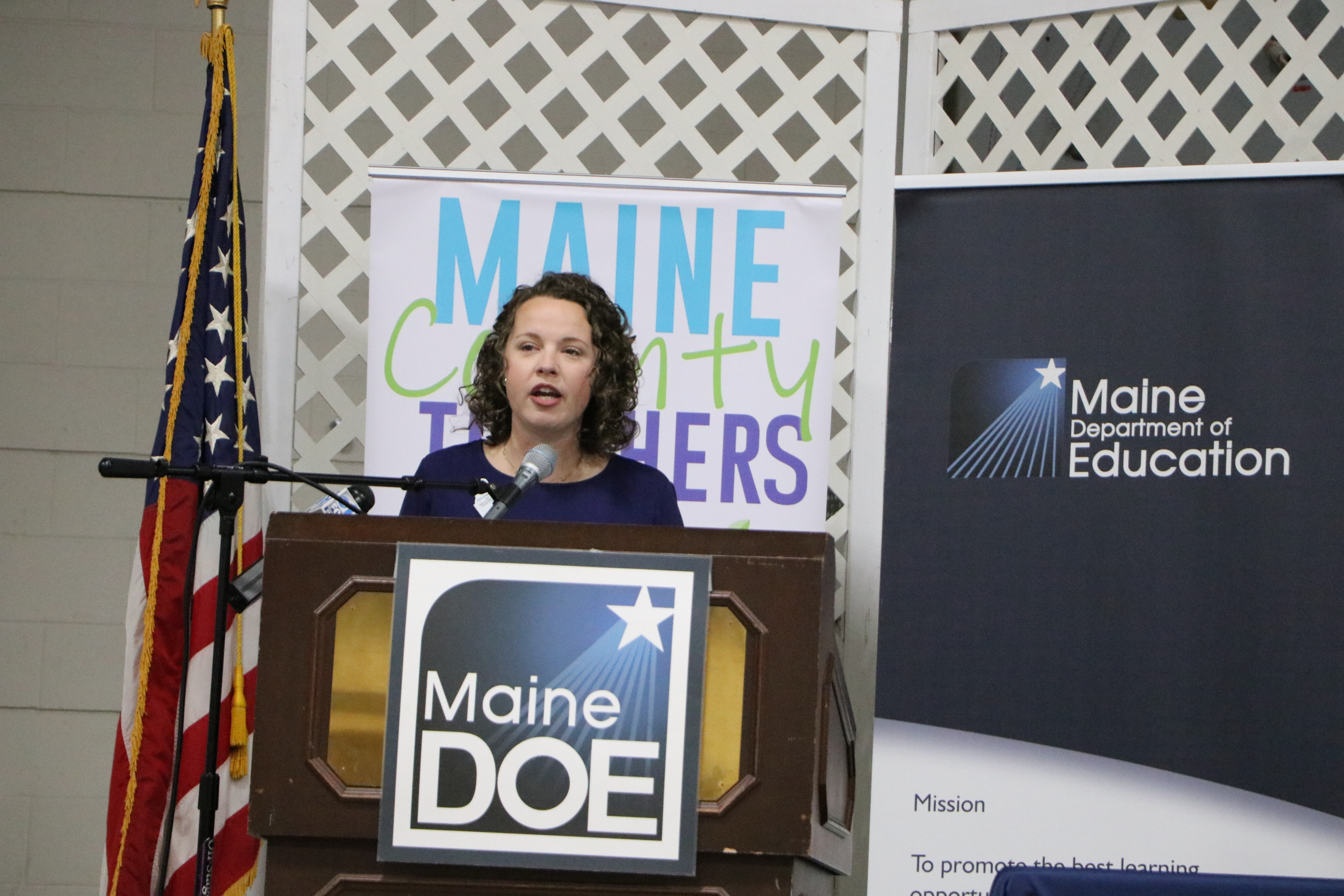
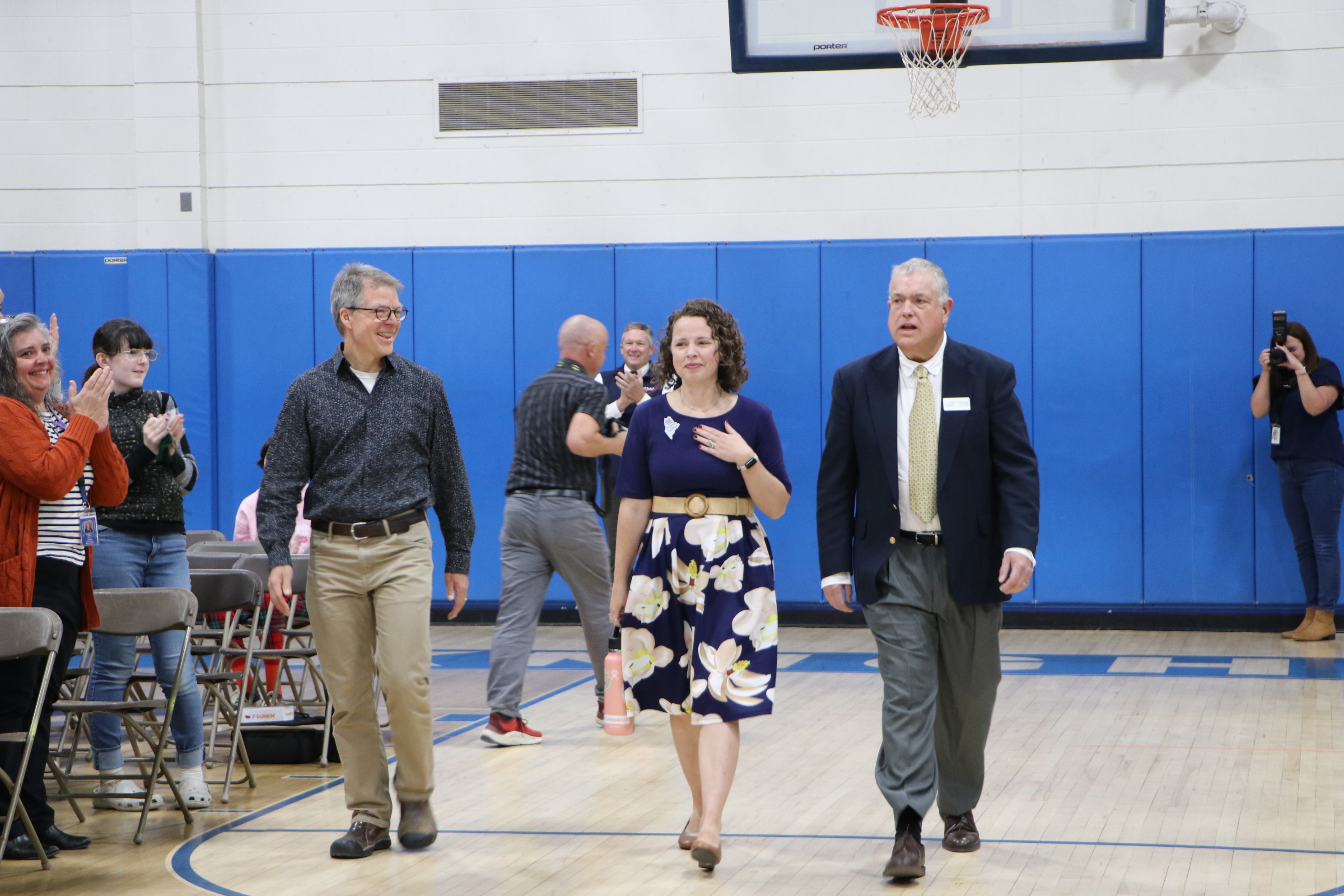
Images taken when Julia was named 2026 Maine Teacher of the Year in a surprise celebration at Poland Regional High School/Bruce Whittier Middle School in October of 2025.
From your perspective, why is public education such a vital part of Maine’s communities and the future of our state—and nation?
If you think about it, public schools are such special places. Where else do we meaningfully build a space that is designed to include every person who walks through its doors, regardless of their resources, circumstances, beliefs, or perceived aptitude? To teach at a public school means to greet every single student who comes through your classroom with the intent of finding the level of skill and understanding that they possess and raising it to meet their potential. Public school teachers have so much faith, trust, and persistence. We actively seek what students are capable of and employ countless tools to help them reach the full extent of their capabilities.
Public education in Maine is special because I think we strike a nice balance of incorporating national learning standards while honoring the roots and values of our state and its inhabitants. I loved taking Maine Studies in middle school and hearing about how folks include Maine history and culture in their classrooms.
Nationally, I truly believe we cannot have a functioning democracy without a comprehensive public education system. There is something to be said for a common understanding amongst citizens that unites them in their American identity. In some ways, this is logistical and procedural—like understanding the Constitution—but in most ways, this is cultural by finding a shared language in our lessons and references and knowing where our common ground lies.
For those who may be considering a career in teaching, what would you like them to know about the profession?
I have been fortunate to have the right things line up in my career: equal amounts of love for both the subject I teach and for the students I teach, administration that is supportive while preserving my autonomy in the classroom, colleagues who challenge my thinking and whose company I enjoy, students who want to learn what I’m teaching, and a community who shows up.
Teaching is hard work; I won’t pretend otherwise. And, indeed, it is getting more difficult, as we navigate the rapidly changing landscape of technology, shifts in child development, cultural paradigms, and school structure challenges—such as class size and political divide. There is so much beauty, though, in navigating those challenges and changes with people who are excited to be a part of a positive school community. It feels good to be involved in the process of providing students with tools to be good citizens and good people.
Iris Dement has a song that states, “I’ve been workin’ on a world I may never see.” Teaching is just that for me. So much of the growth happens in moments that we as teachers don’t get to witness, but the faith and trust that it requires can be exhilarating.
What else would you like to share with educators, students, or community members who are following your journey as 2026 Maine Teacher of the Year?
I want folks to know how much power they have in helping to nurture future generations by collaborating with schools, demonstrating support for teachers, and asking good questions. Gratitude goes a long way, as does clear communication—on the part of educators, students, and community members. The 2025 County Teachers of the Year cohort’s message is that, “Great schools make great communities, and great communities make great schools.” I’d love to see us all find more ways to collaborate between schools and communities, and I’m excited to see how music can be one part of that important mission.
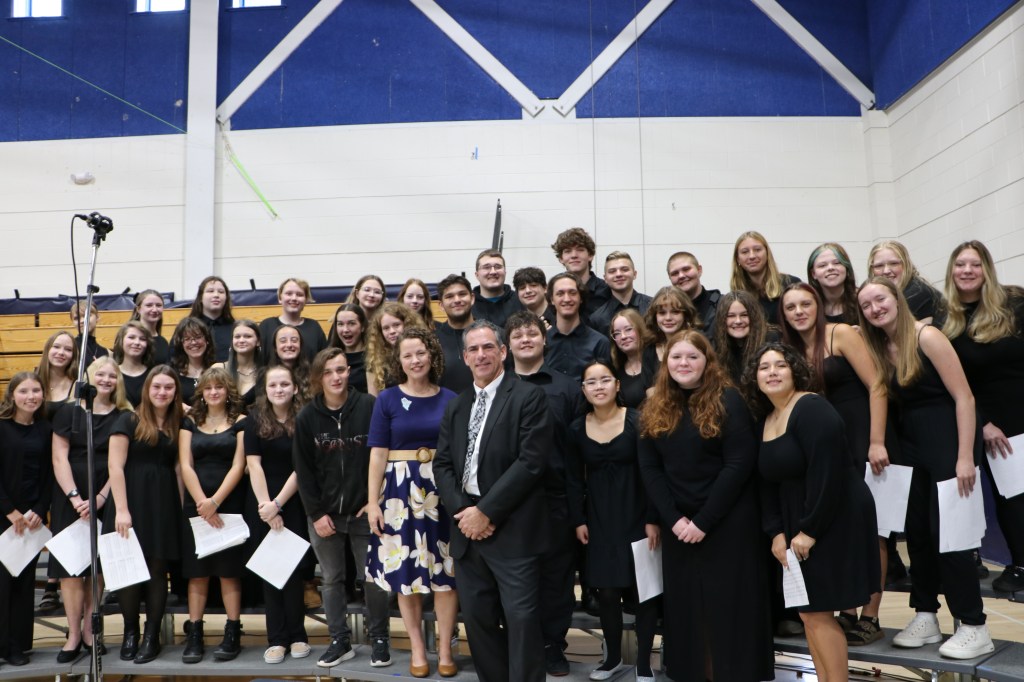
Julia poses with colleague, Larry Williams, Poland Regional High School Band Teacher, and her choral students during the 2026 Maine Teacher of the Year announcement.
 Maine DOE Newsroom