
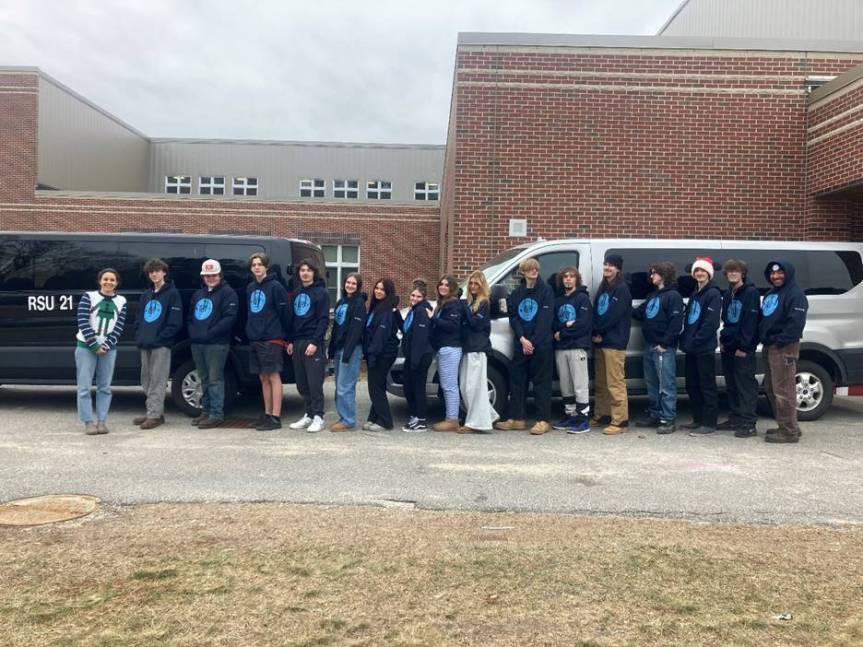
KHS Alternative Education Program students gather with their teachers, Jacqui Holmes (far left) and Edward Sharood (far right), for a group picture.
At first glance, the Alternative Education Program at Kennebunk High School (KHS) might look different from the traditional high school classroom. Students may be weatherizing a historic barn, building the foundation for their future business, or collaborating with local organizations—but they are still meeting the academic standards required to receive the same high school diploma as their peers. The difference is how they get there.
Program Creation
The KHS Alternative Education Program began as a small initiative and has evolved over time. Today, its curriculum is fully aligned with Maine’s Learning Results and KHS’ academic standards, ensuring students meet all required graduation benchmarks and complete a 24-credit diploma.
For more than 20 years, KHS alternative educator Edward Sharood, alongside his colleague, Jacqui Holmes—who has been with the KHS Alternative Education Program for a decade—has emphasized an approach to education centered on belonging, community connection, and project-based learning.
“We’re not lowering standards,” Sharood said. “We’re redesigning the path.”
Many students arrive at the KHS Alternative Education Program having struggled in the traditional school setting and in need of an opportunity to redefine their educational experience. The program is capped at 14 students and serves grades 10-12. That relatively small size fosters a relationship-centered culture in which students help create and set expectations, develop a shared code of conduct, and actively shape the program’s culture. Those who have participated in the program say they feel more comfortable, confident, and connected to their learning because they are part of a close-knit community.
Learning Structure
Mornings at the KHS Alternative Education Program focus on independent or collaborative academic projects targeting specific standards. Afternoons often shift to large-scale community projects. Seven interdisciplinary projects are woven throughout the school year to ensure core content areas (e.g., English, social studies, science, math, and financial literacy) are addressed in meaningful ways that honor the individualized needs and interests of members of the group.
Community partnerships are a central pillar of the program. Participating students are fully embedded in their local communities, gaining exposure to potential careers, apprenticeships, and workforce pathways they may not have known existed or that they were capable of achieving. These partnerships are intentionally symbiotic; sudents gain exposure and purpose, while partners—such as local businesses and organizations—gain energy and ideas and complete projects that benefit the broader community.
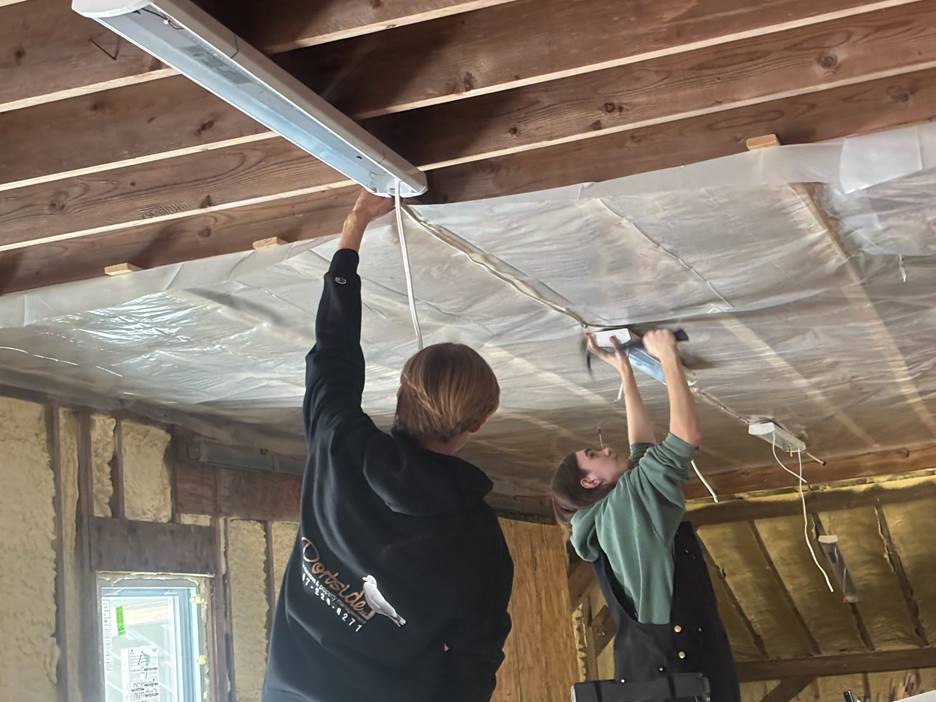
KHS Alternative Education Program students work to weatherize a three-story barn that will serve as a heated meeting space for students to learn about, and complete community projects on behalf of, the Kennebunkport Conservation Trust.
One of the most impactful partnerships is with the Kennebunkport Conservation Trust. Students spend time at the Trust learning and developing their skills in a variety of areas. They have renovated a house, restored a barn, contributed to trail-improvement projects, and supported field trips for younger students visiting the Trust. They have also partnered with the Kennebunk Land Trust. One student mapped the accessibility of trails, presented those findings, and saw that work adopted and shared more broadly. It was a tangible reminder for these students that their learning has real-world value and impact.
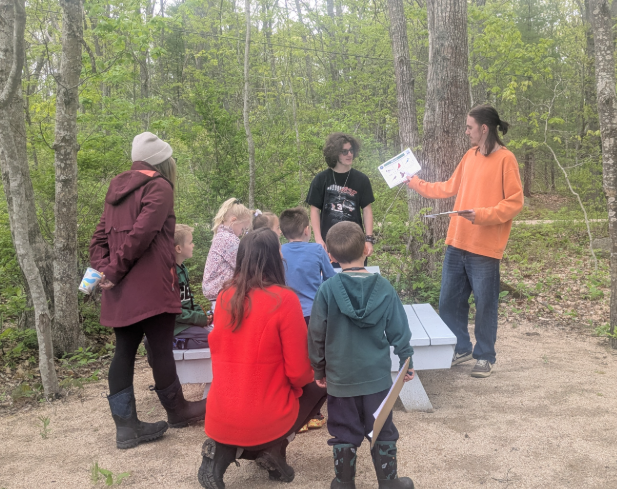
KHS Alternative Education Program students read to local elementary students.
Participating students say they like the community partnerships model because it allows them to learn through a hands-on approach. It also teaches them to communicate, create and manage projects, build relationships, and develop countless professional skills, ultimately preparing them for the workforce.
The KHS Alternative Education Program emphasizes wellness and social-emotional learning, too. Every Wednesday is “Wellness Wednesday.” Plus, initiatives like S.E.E.D (Students Empowered to End Dependency) support and empower students to make healthy decisions. This additional layer is woven into the program’s framework, helping to shape traditions while upholding expectations and creating a culture built on accountability, respect, and shared responsibility.
The path out of the KHS Alternative Education Program is not the same for everyone. Some students transition back to mainstream high school as they meet their goals, creating openings for new students. That allows the program—which has a growing waitlist—to operate with rotating enrollment. Other students complete high school through the program and enroll in community college or a four-year college.
Others move directly into their careers, equipped with clarity and confidence. Former KHS Alterative Education Program students have gone on to earn worker licenses, secure employment, and even return to mentor others navigating a similar path.
The KHS Alternative Education Program has shifted the culture of school for many students from survival to belonging. Students who once hid in the bathroom are leading projects. Students who felt disconnected are present at community events.
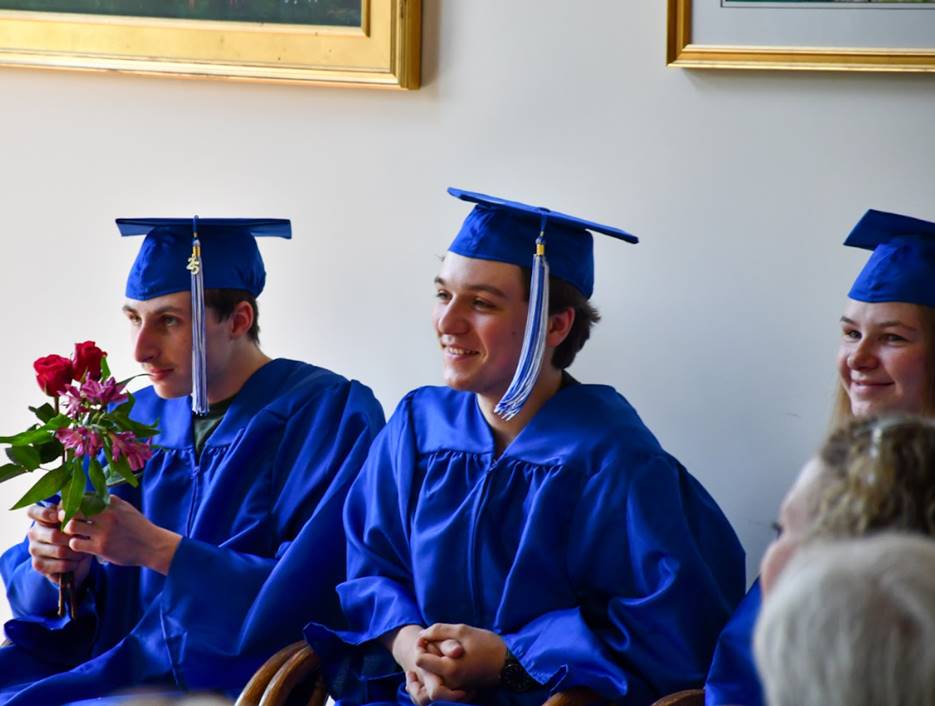
KHS Alternative Education Program class of 2025 (from left to right): Wyatt Boulette, Eric Schoener, and Eliza Herring
Changing the Narrative on Alternative Education
Sharood and Holmes say there is often a misunderstanding about alternative education. To them, this program is a different model of learning for students whose potential is not realized in the traditional school setting. Within their school community, Sharood and Holmes note that they have observed generally three populations: students with a clear plan, students who “just do school,” and students who carry enormous, untapped potential. The KHS Alternative Education Program exists for that third group: students capable of far more than their academic journey might suggest.
The KHS Alternative Education Program dispels myths daily. Students earn the same diploma. They meet the same standards. They just demonstrate their learning through a different educational pathway. That work is visible across the community—in restored buildings, improved trails, strengthened partnerships, and meaningful contributions to local organizations. Most importantly, their growth is also visible within themselves.
To learn more about the KHS Alternative Education Program, click here.
 Maine DOE Newsroom