
On March 13, 2026, at the James F. Doughty School in Bangor, the Maine Department of Education (DOE) Child Nutrition team hosted an interactive “speed-meeting” event, designed to help school nutrition programs connect with local producers and distributors. Organized by Maine DOE Regional Local Foods Project coordinators Martha Poliquin (manager), Roxanne Bruce (Aroostook and Northern Washington Counties), Sandy Fortin (Hancock and Southern Washington Counties), and Amanda Junkins (Penquis, Somerset, and Waldo counties), the gathering was intended to help schools gain strong community partnerships and resources in their areas. This was the first event of its kind in the Bangor region.
The afternoon kicked off with a panel discussion of school nutrition directors, regional Local Foods Project coordinators, and representatives from the Maine Coast Fishermen’s Association, FarmDrop, and Native Maine Produce. Topics of conversation included success stories, challenges, and explanations of the “why” behind buying local.
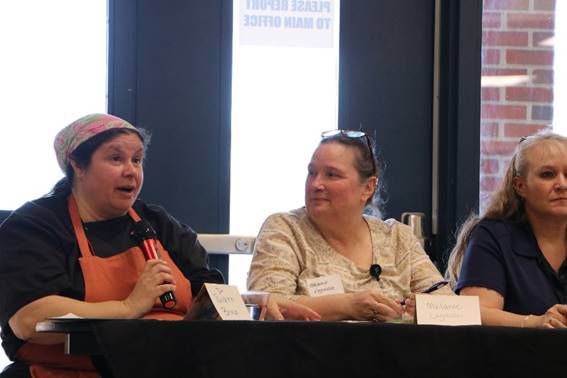
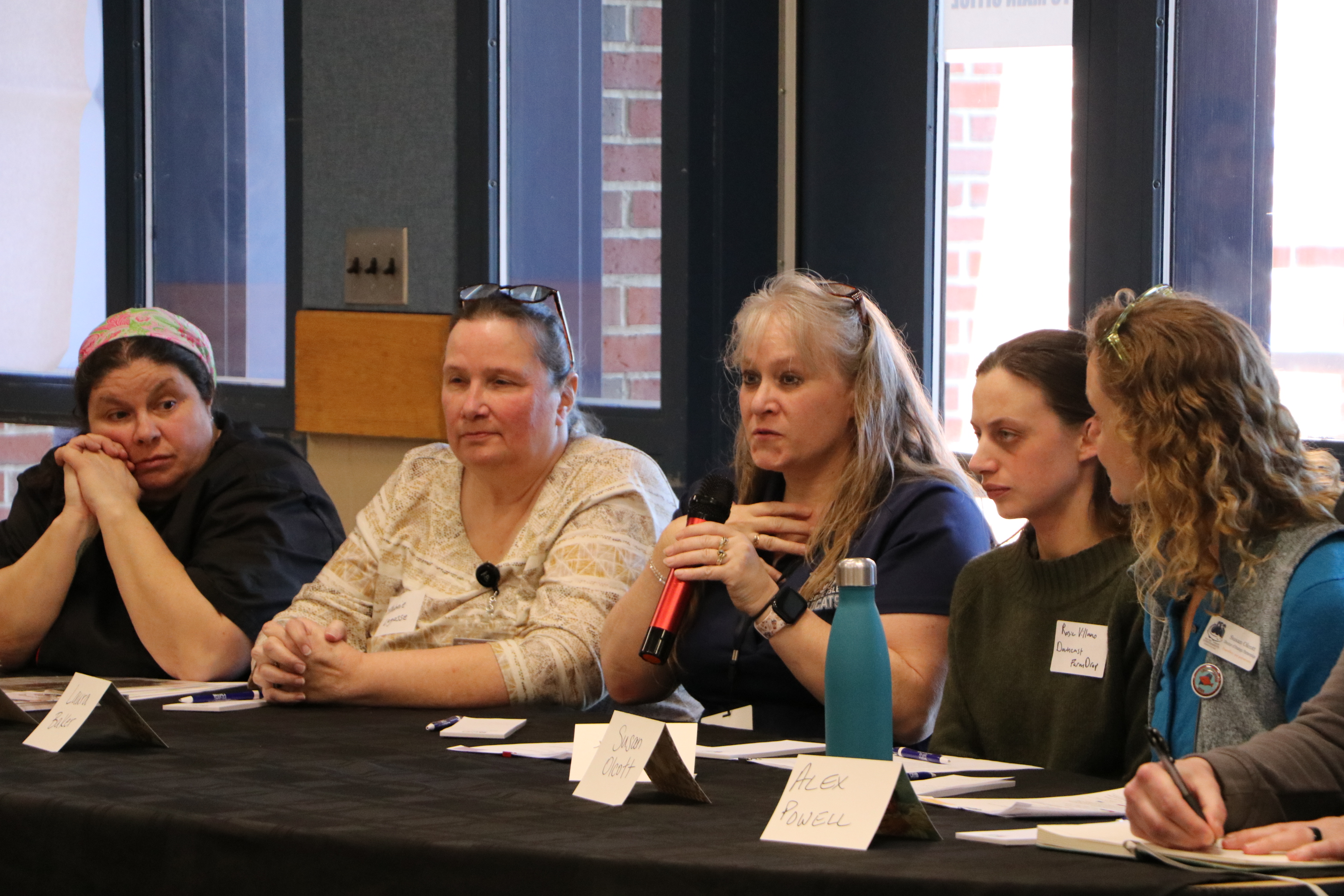
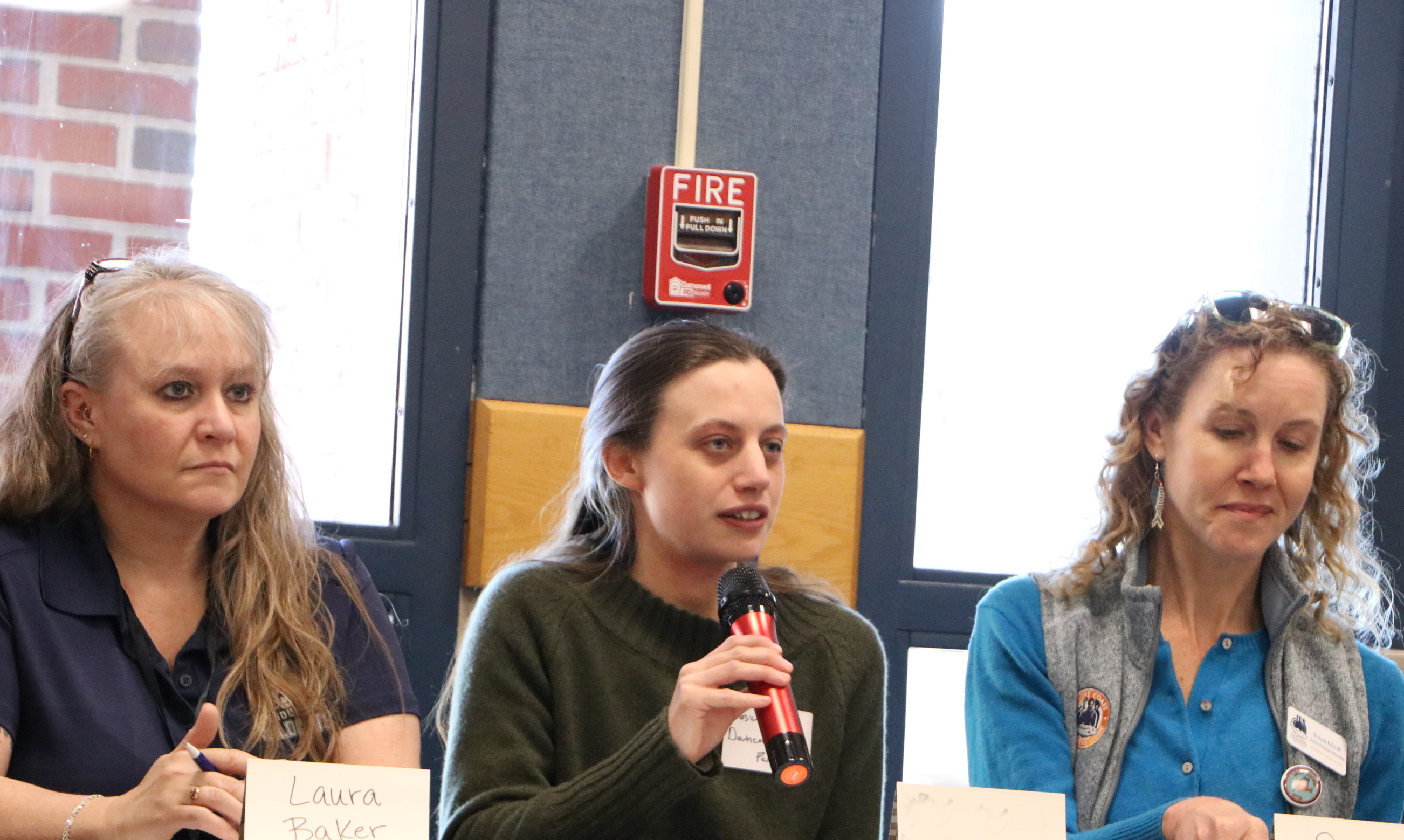
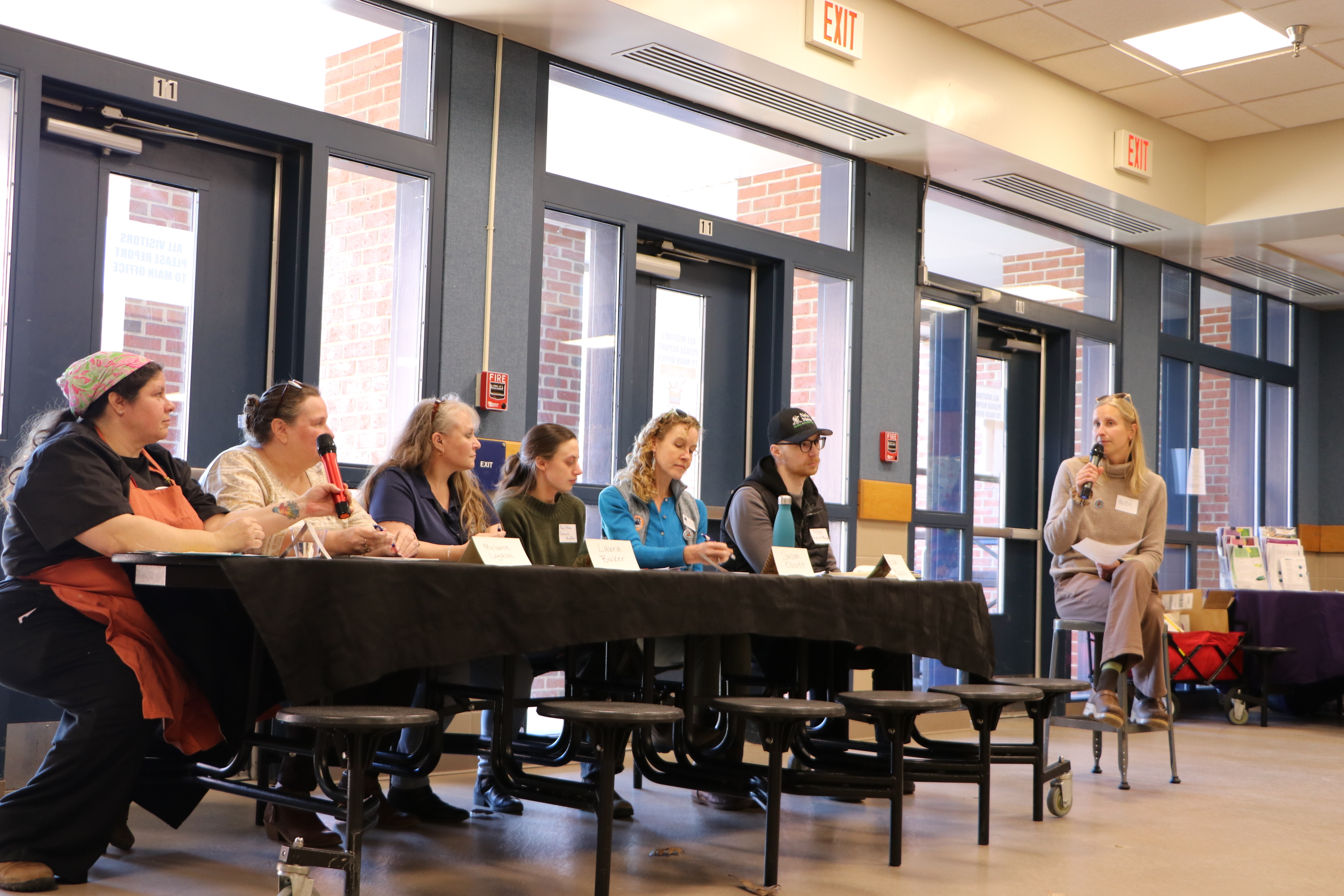
Panelists were Dr. Roxanne Bruce, Regional Local Foods Project Coordinator; Melanie Lagasse, Director of Food Services for the Madawaska School Department, MSAD 27, and RSU 33; Laura Baker, MSAD 1/RSU 79 Food Service Director; Rosie Villano, Downeast FarmDrop Manager; Susan Olcott, Director of Strategic Partnerships, Maine Coast Fishermen’s Association; and Alex Powell from Native Maine. The panel was moderated by Alida Peterson from the Maine Farm and Sea to School Network.
“We live so far up north that resources are very limited, so we often have to work miracles and jump through hoops to make things happen,” Melanie Lagasse, Director of Food Services for the Madawaska School Department, MSAD 27, and RSU 33, said. “One of the best parts of participating in the local program is being able to drive down to Portland and pick up fish right off the pier. Last week, I picked up 860 pounds of flash-frozen haddock. Honestly, I’m surprised my van made it back! Because of that trip, I was able to provide fish not just to my three school districts but to another district, as well. It really gives us the opportunity to bring more—and healthier—food into our schools.”
MSAD 1/RSU 79 Food Services Director Laura Baker shared a recent example of how using locally grown food has played out in her district.She said last summer, when local growers had an overabundance of squash, her response was immediate: “Just drop it. I don’t care what kind you bring me—just bring it and drop it.”.
Baker said initially, her kitchen staff was surprised and unsure of what to do with so much squash.
“We’re going to process this, and we’re going to freeze it, and we’re going to have it for later. Don’t stress,” Baker explained to her staff. “They’re adapting. They’re doing better—because the kids are liking it.”
Rosie Villano, Downeast FarmDrop Manager, described the organization’s “small but mighty” relationship with schools. Its primary buyer over the past year has been Mount Desert Elementary in AOS 91 with Chef Tasha Higgins. FarmDrop provides the school primarily with salad bar greens and bulk spring mixes, as well as scallions, cherry tomatoes, and other items that can be purchased in small quantities.
“[They are] able to place a $30 order and just get what they want,” Villano explained. “The reason we’re able to do that and the reason why we’re able to get it from the farms is because it’s built off of our retail program.”
Villano described the process: “So, every week we go to Mount Desert Island to deliver retail customer orders, and Tasha can pick up her order at the same time as any other customer, and that has been really cool to be able to have this infrastructure that supports multiple types of buyers.”
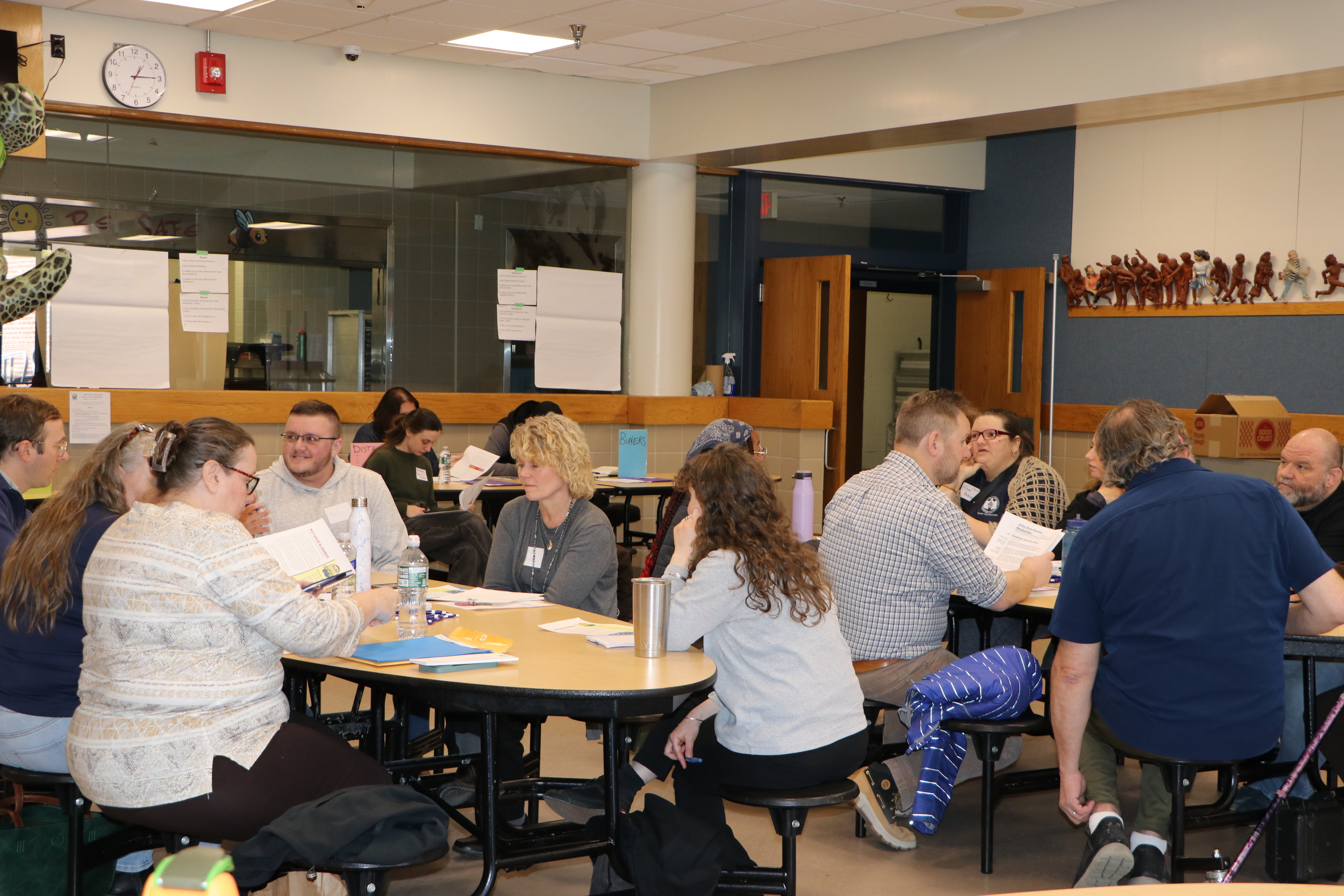
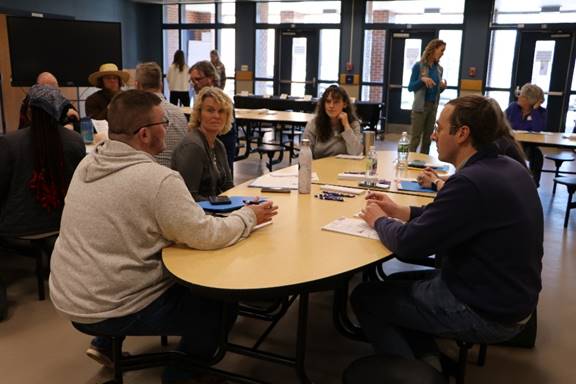
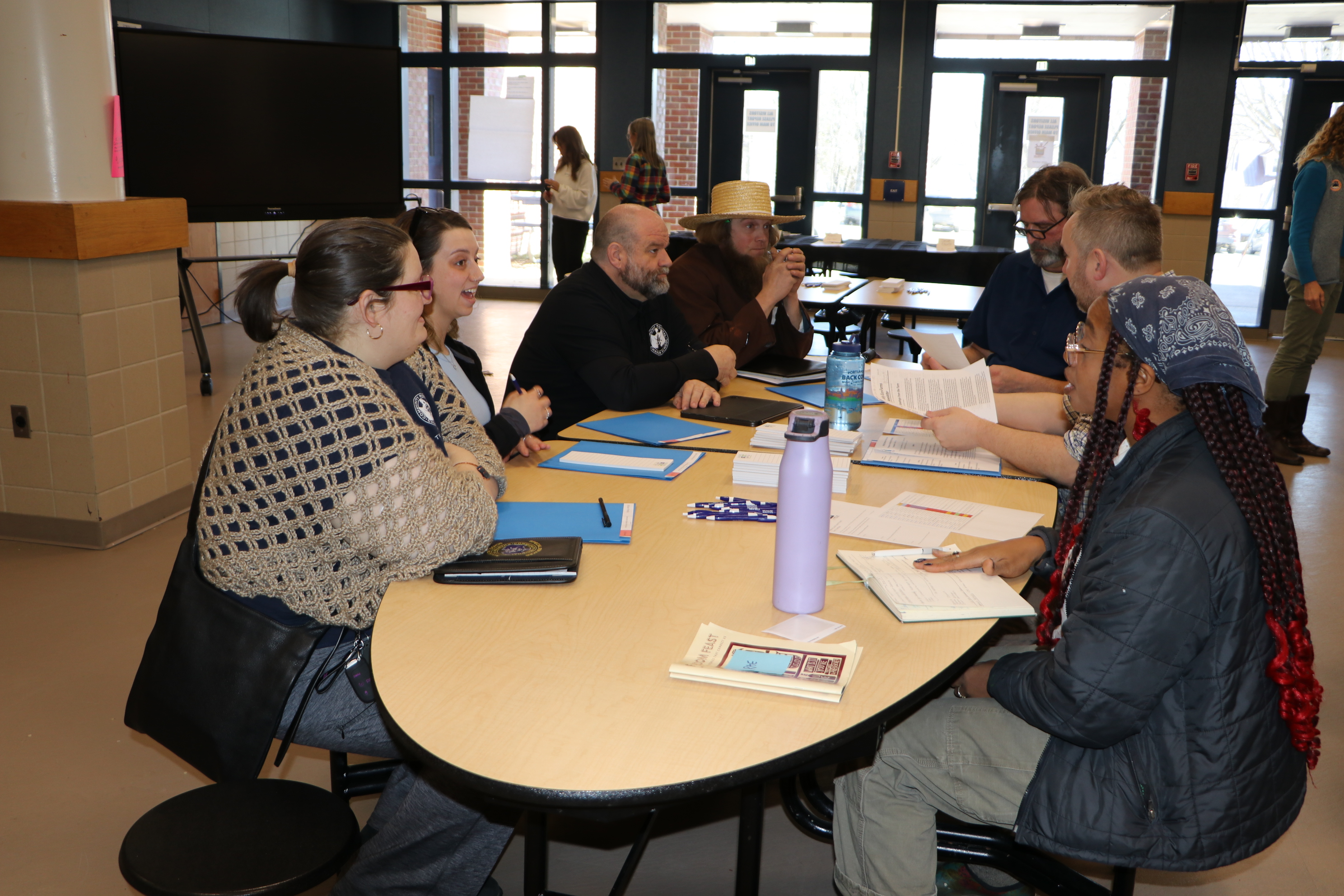
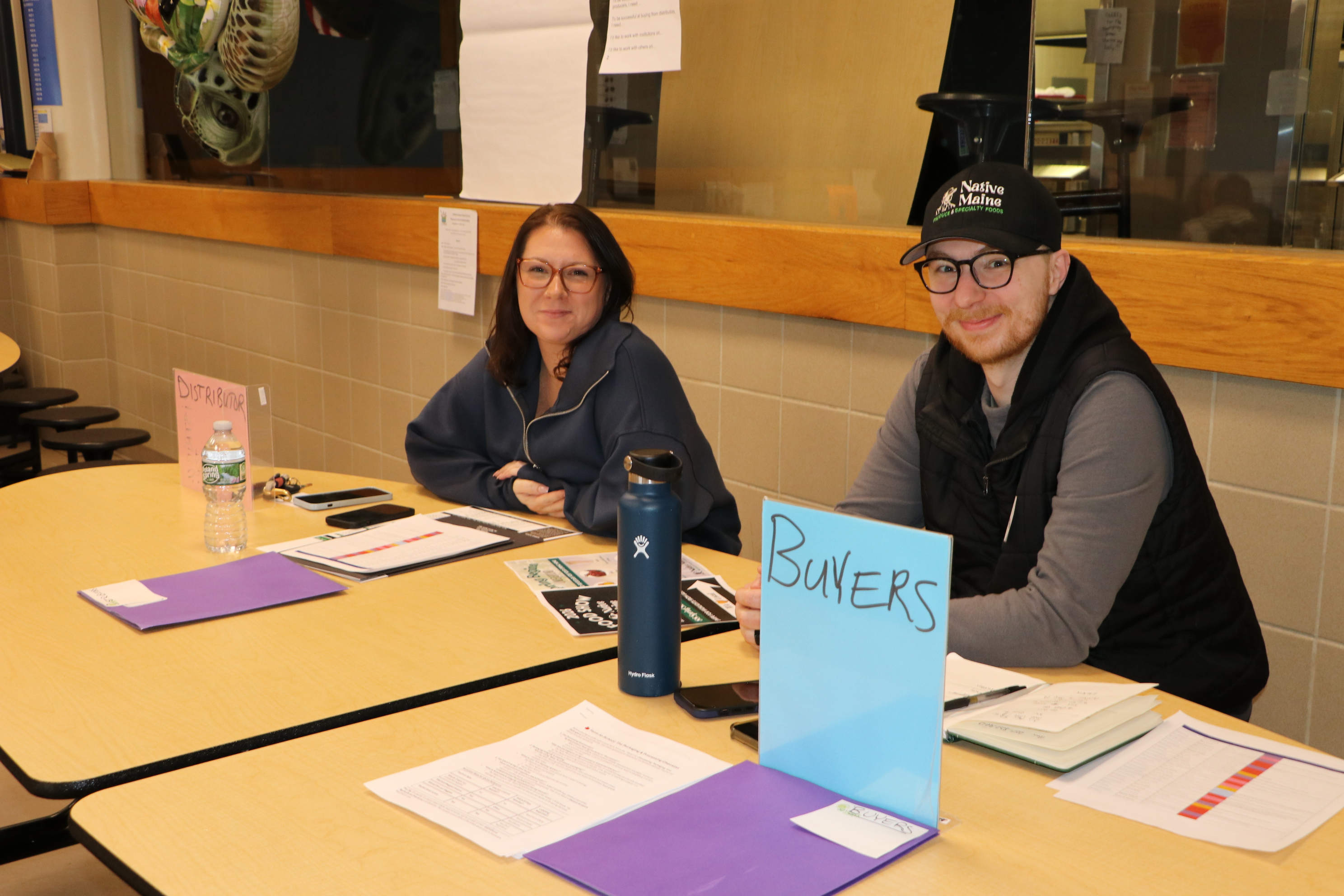
Following the panel discussion, a round-robin format among buyers, producers, and distributors took place, allowing for deeper conversations. A common theme among buyers of small districts was a lack of storage and challenges meeting the case minimums of distributors. Participants brainstormed options to overcome these obstacles, including purchasing in smaller volumes to meet the needs of all buyers.
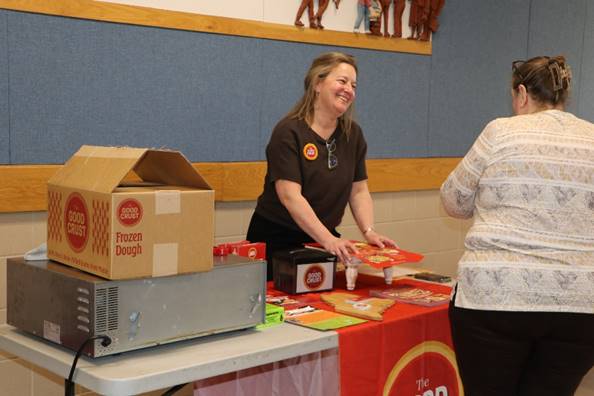
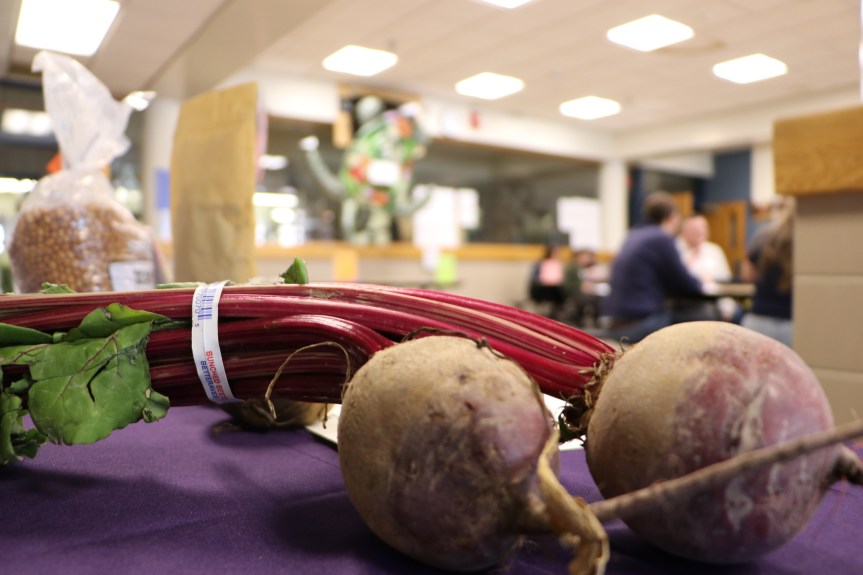
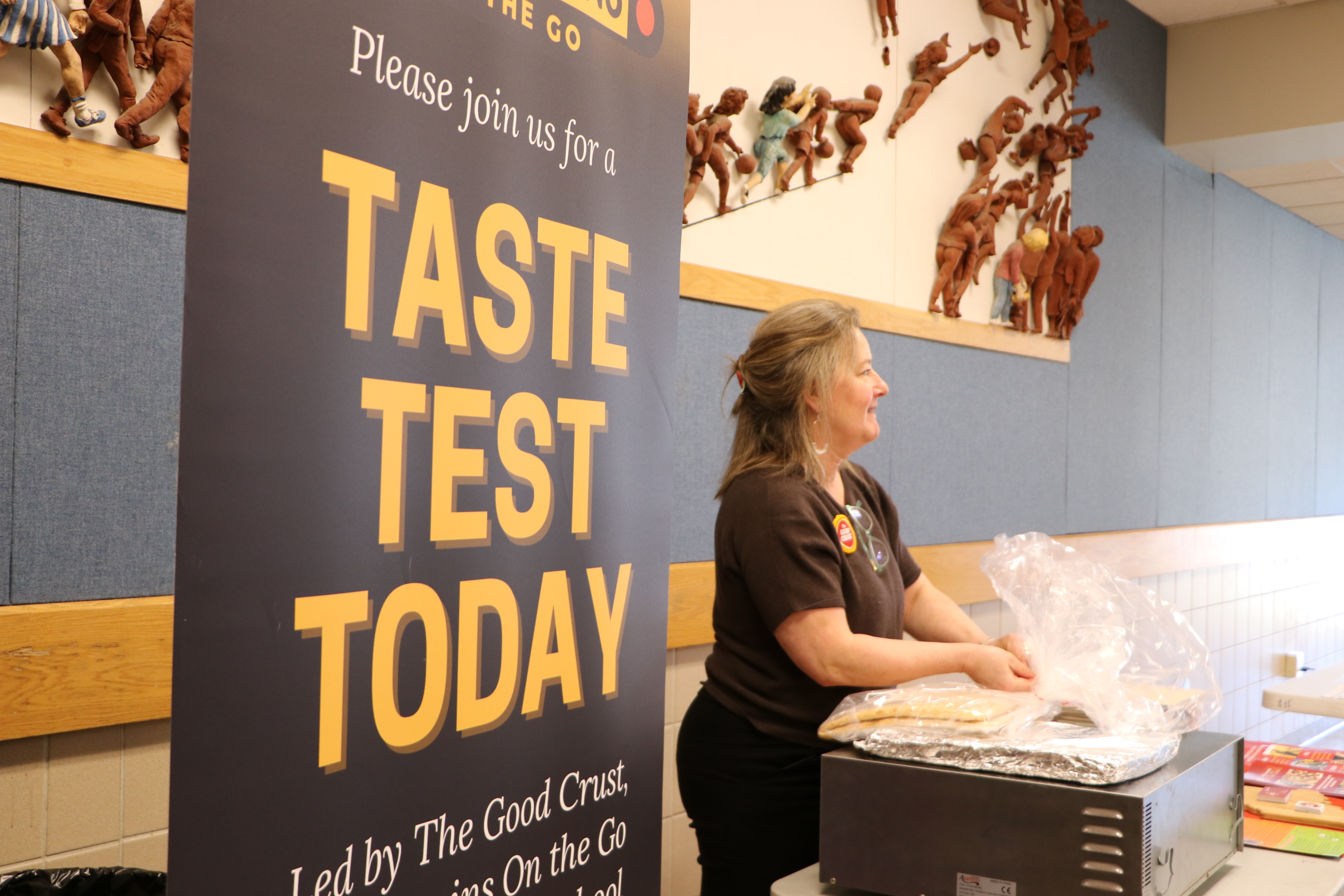
The day ended with taste tests and samplings of various local food items, including a local fish stew from Hurricane’s Soup and Chowder, pizza dough from The Good Crust, and fresh fruits and vegetables from local farmers and distributors.
The event was a great networking opportunity for farmers and schools. It inspired confidence that there is more than one way to expand local options in school nutrition programs. With knowledge, resources, and grit, school districts in the state are finding creative ways to provide students with the freshest, most nutritious ingredients that Maine has to offer.
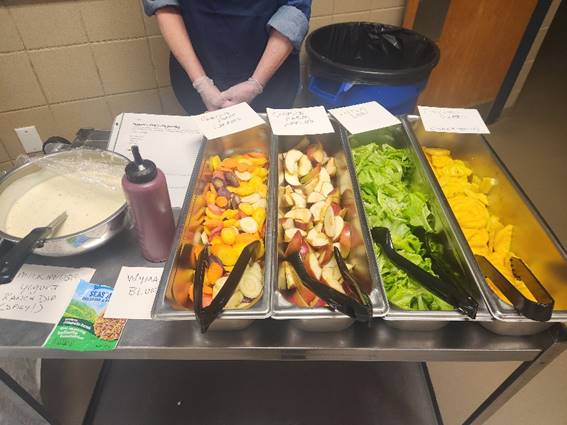
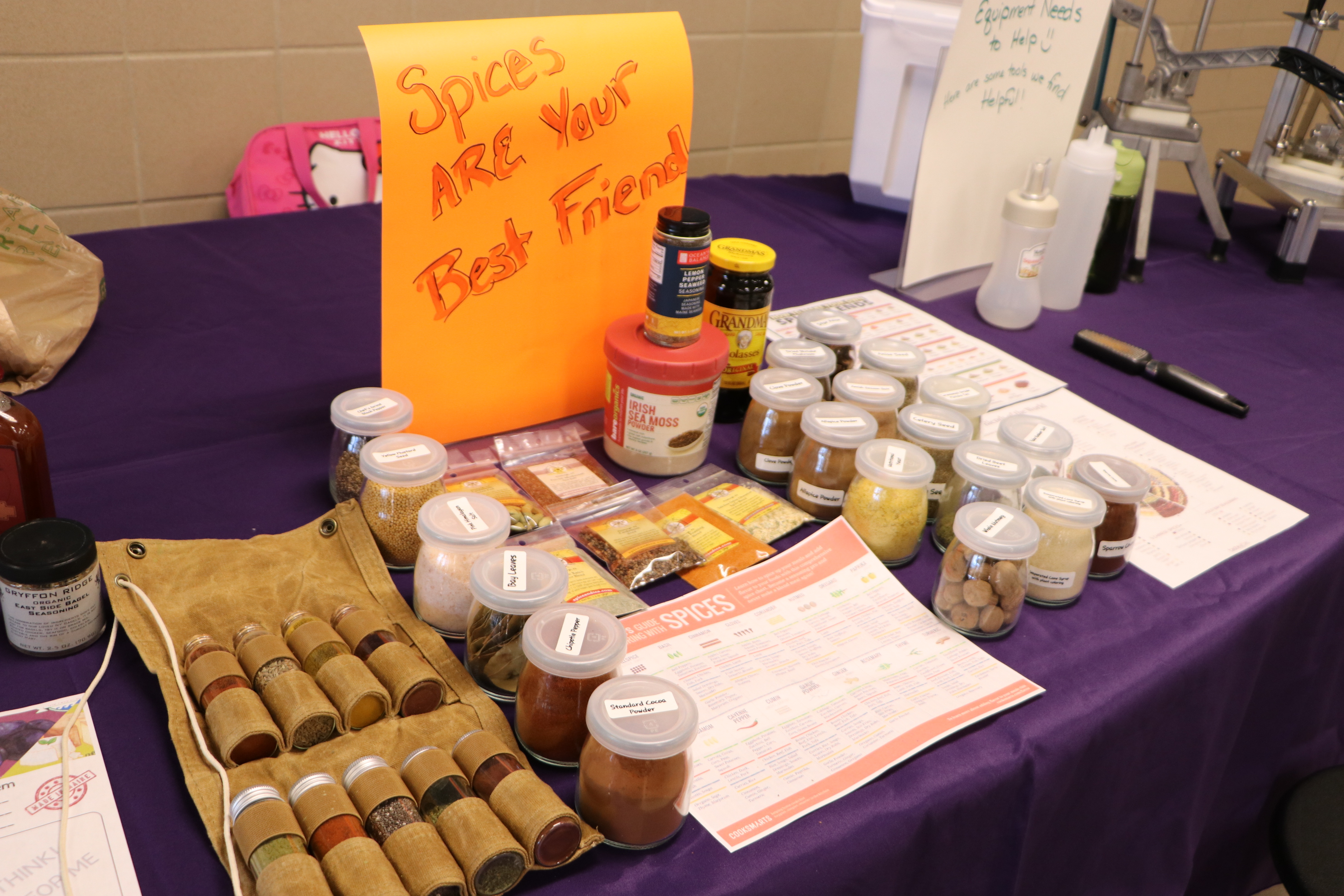
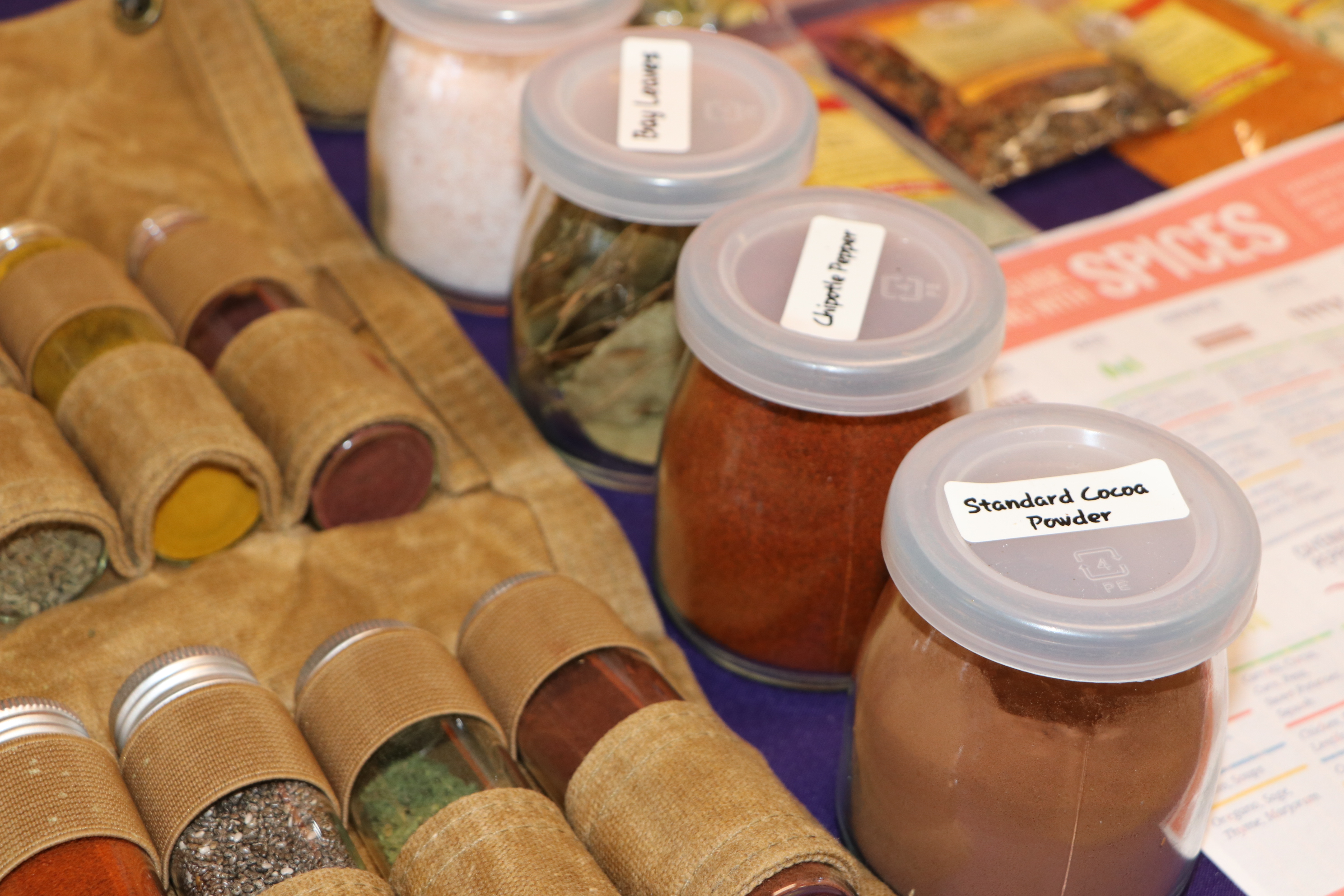
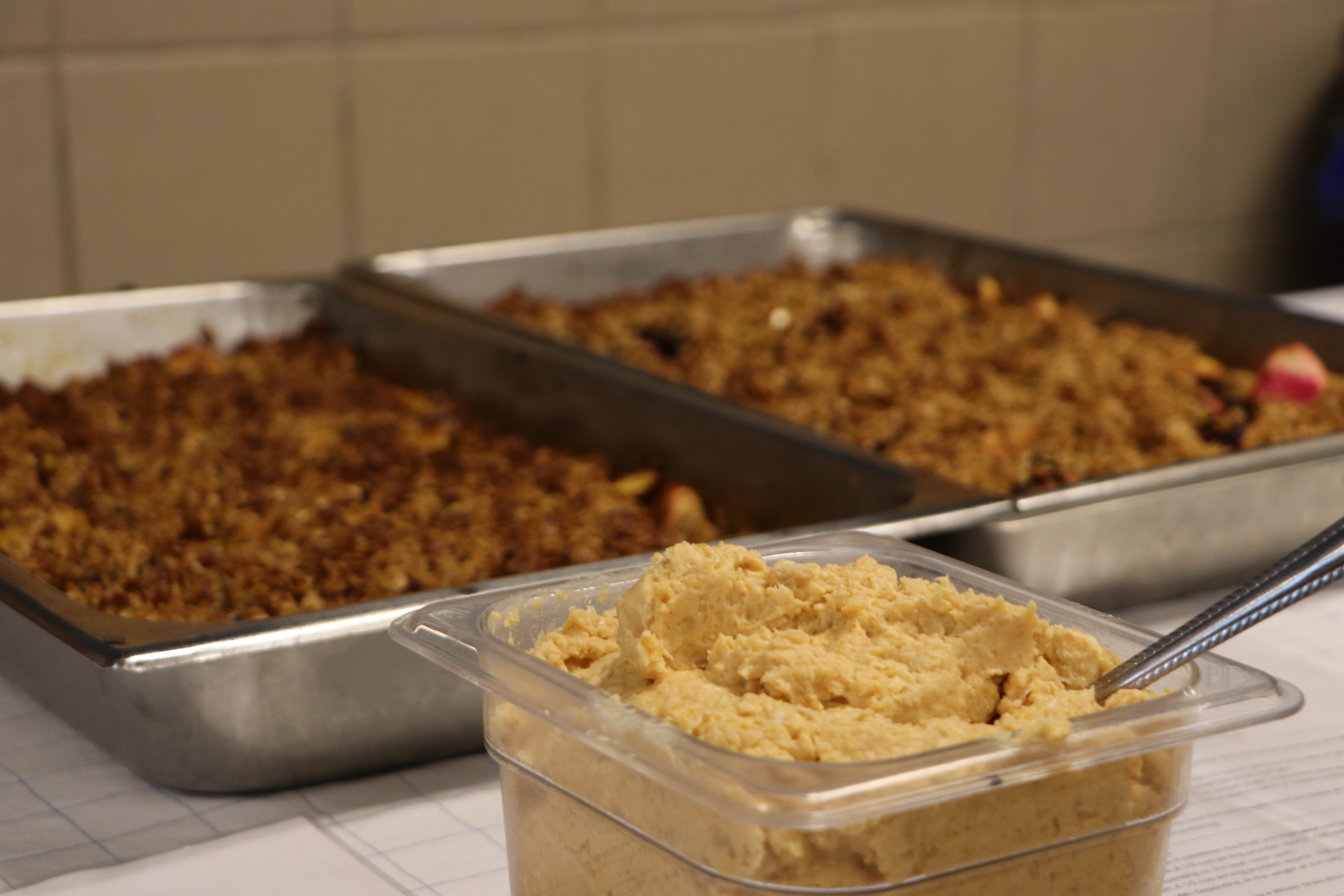
Participants got to sample a spread of local fruit and vegetables with assorted dressings.
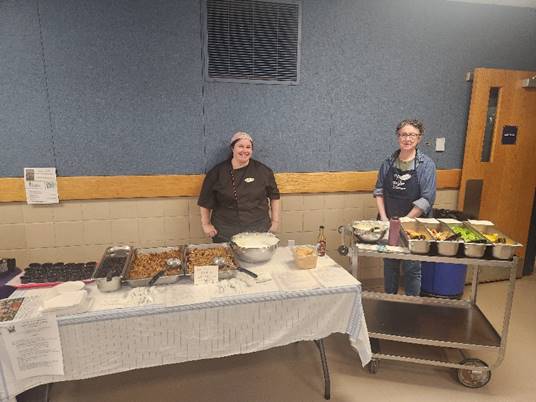
Pictured: Roxanne Bruce, Regional Local Foods Project Coordinator, and Martha Poliquin, Regional Local Foods Project Manager
Federal grant funds received from the U.S. Department of Agriculture (USDA) support the implementation of this project. The project has an award totaling $494,000. The contents are those of the author(s) and do not necessarily represent the official views of, nor an endorsement by, USDA or the U.S. government.
 Maine DOE Newsroom