
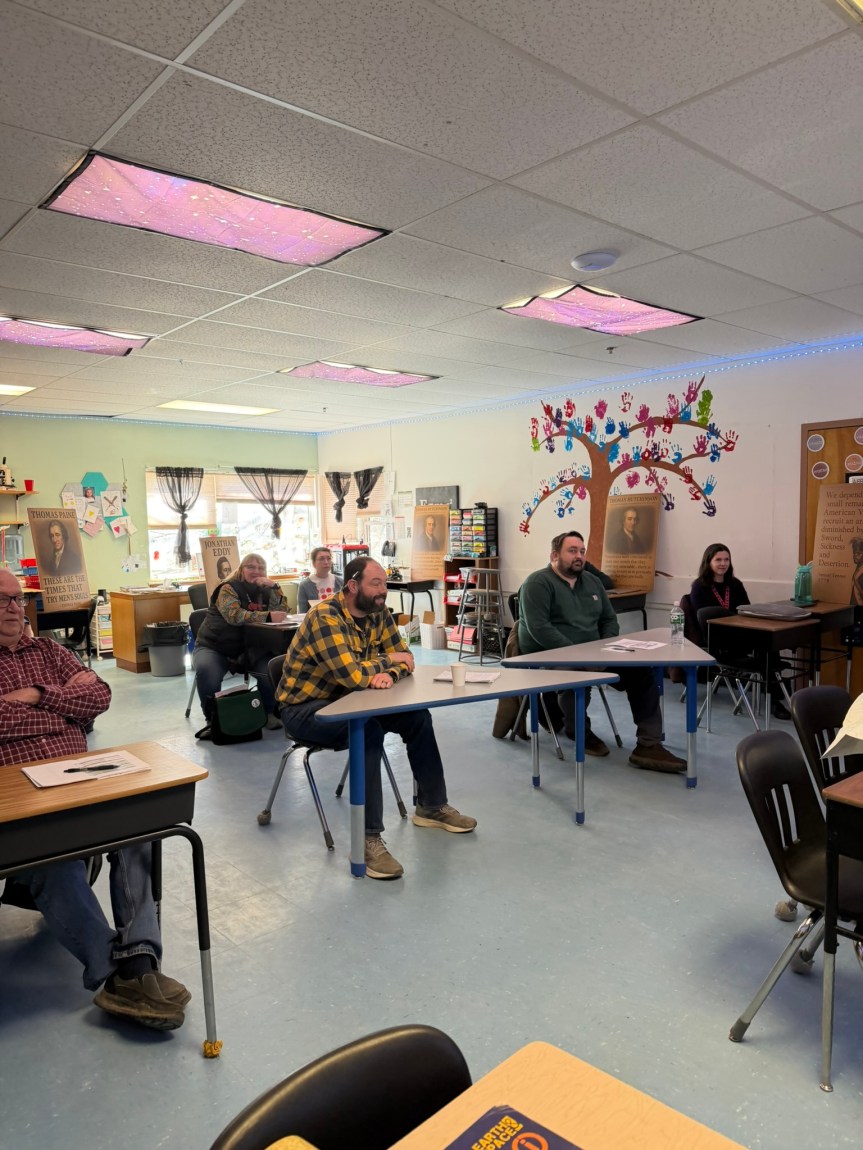
“The roads go both ways in Machias,” AOS 96 Superintendent Nicole Case said to a crowd of more than 200 educators as she welcomed them to Rose M. Gaffney Elementary School for a day of professional learning facilitated by the Maine Department of Education (DOE) Office of Teaching and Learning.
Educators from across the AOS, including from Jonesboro Elementary School, Rose M. Gaffney Elementary School (Machias), Machias Memorial High School, Elm Street Elementary School (East Machias), Whiting Village School, Bay Ridge Elementary School (Cutler), and Fort O’Brien School (Machiasport), came together for a learning experience grounded in a key idea: Professional learning is most impactful when educators have meaningful choice.
“It is so important for our teaching staff, teachers, and techs to be able to interact and learn from members of the Maine DOE,” Case said. “To truly improve our craft, we need opportunities to hear and see what is happening in education beyond our district, while also connecting and collaborating with our peers.”
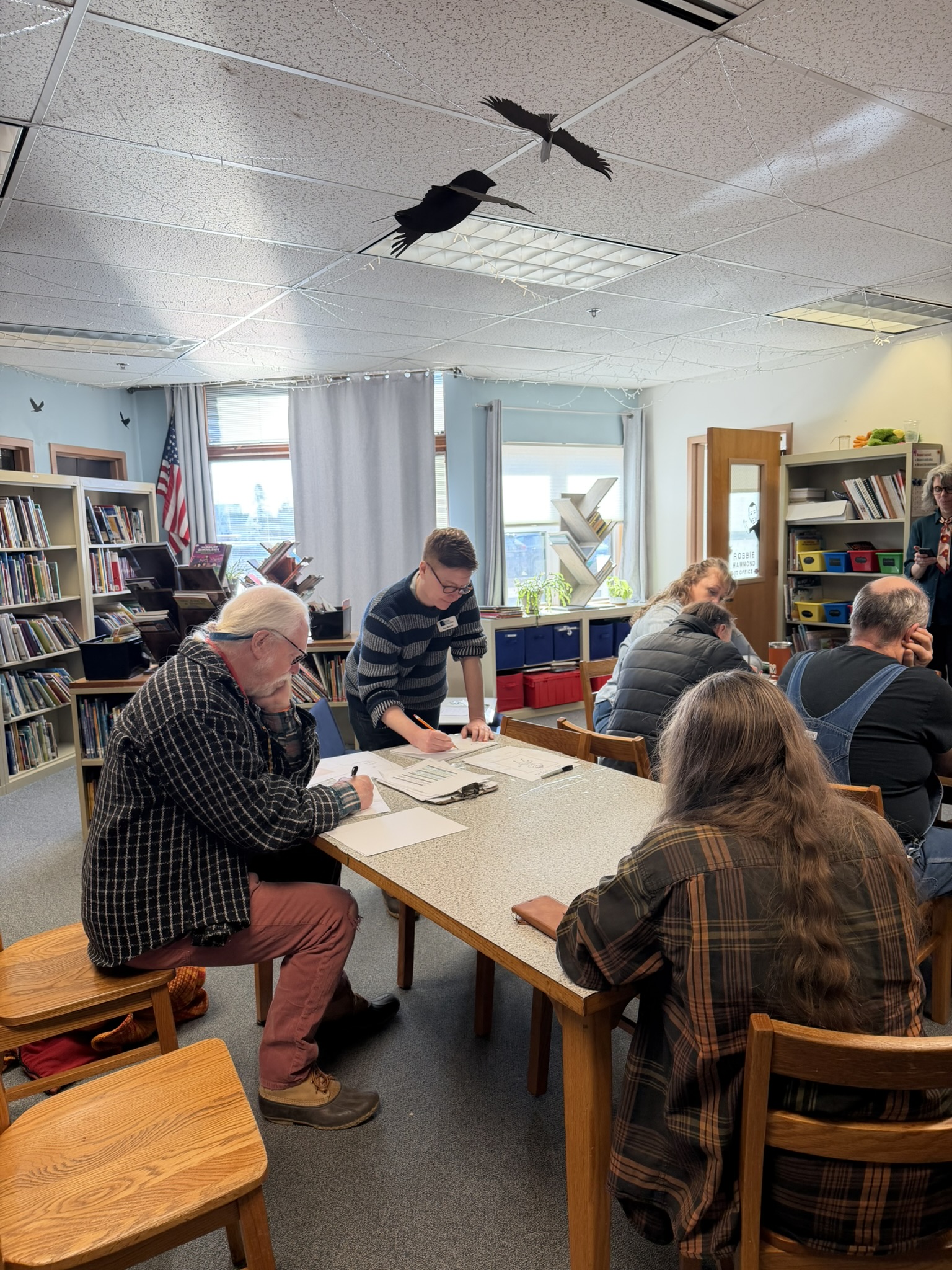
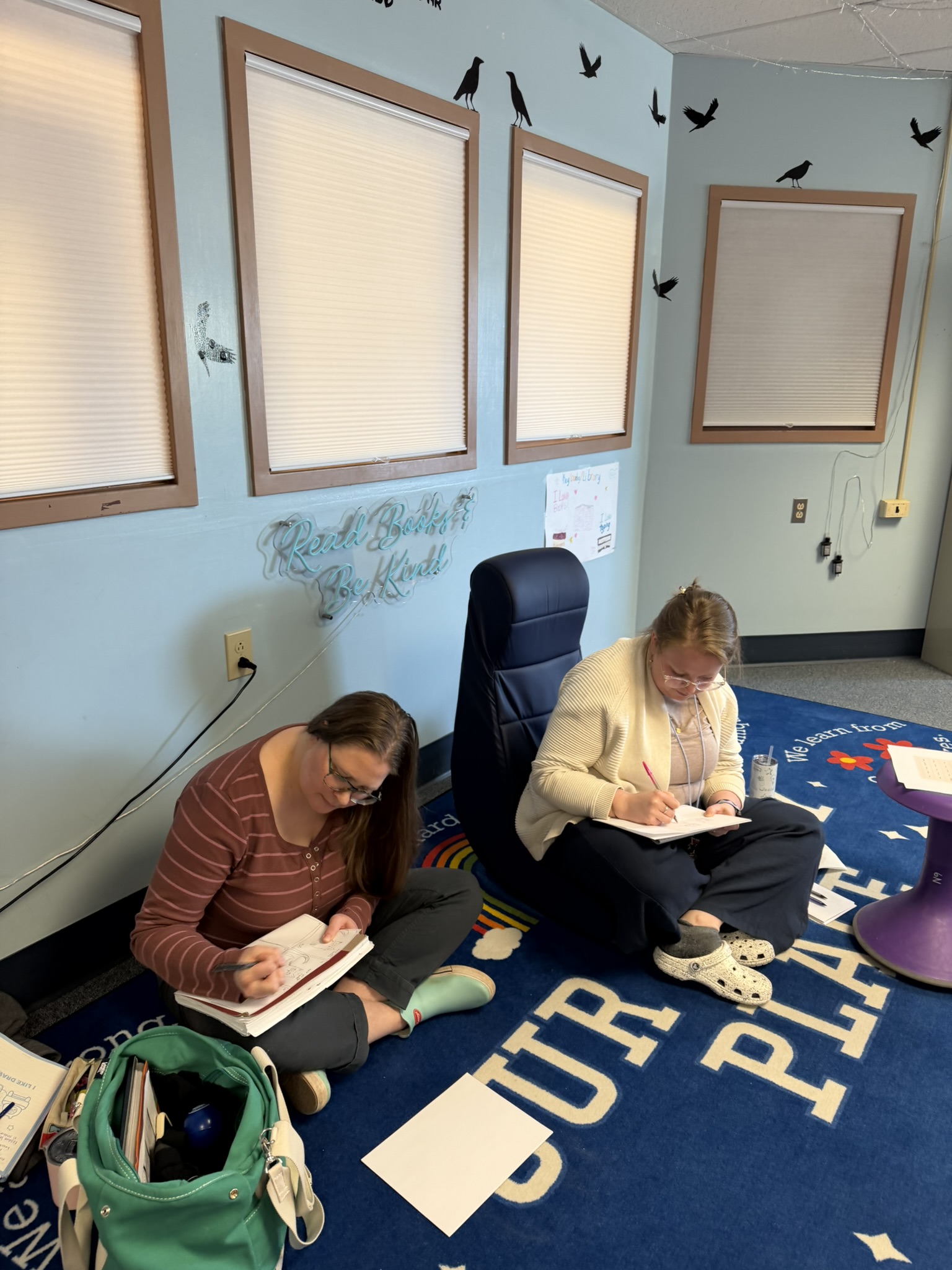
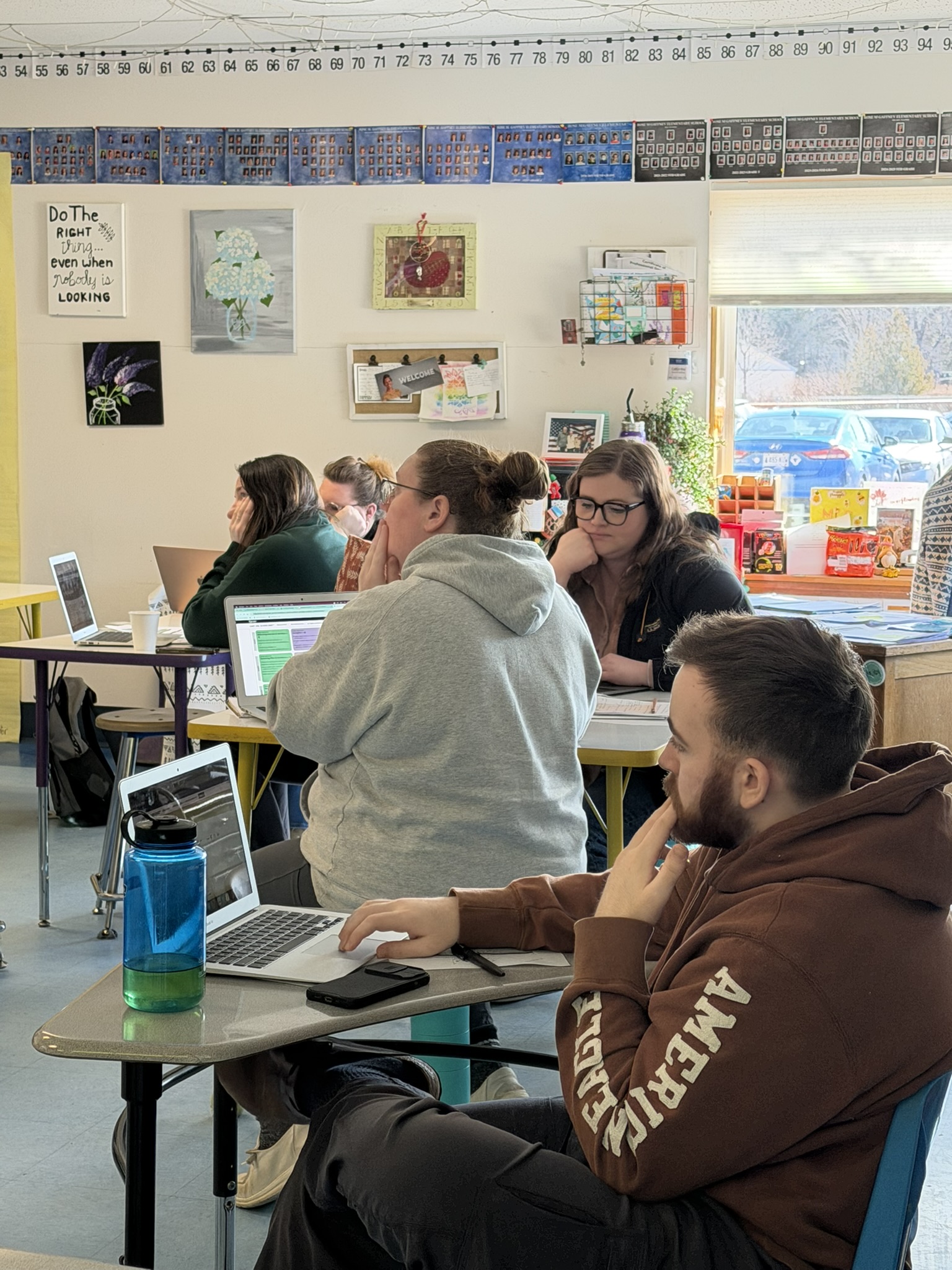
The workshop featured sessions led by members of the Maine DOE Office of Teaching and Learning, Early Learning team, Interdisciplinary Instruction team, and MOOSE (Maine Online Open-Source Education) platform team. Throughout the day (and previous afternoon), educators selected from a range of options aligned to their roles, grade levels, and students. This choice-driven structure created space for meaningful collaboration and deep engagement with learning connected to play-based, literacy, numeracy, and inclusive instructional practices.
During the sessions, participants explored how literacy and numeracy can be strengthened through integrated, real-world learning experiences. Teachers examined how historical and geographic data can be used to design maps and models that support mathematical reasoning, while also considering how civic learning opportunities, such as analyzing primary source documents, can deepen analytical reading and evidence-based thinking. Other sessions focused on inquiry and purposeful questioning as tools to build student curiosity, strengthen comprehension, and foster ownership of learning.
Educators also explored the use of multimodal texts, including graphic novels and student-created visual storytelling, to support vocabulary development, inference, fluency, and comprehension across content areas. Hands-on numeracy learning highlighted how manipulatives, collaborative problem-solving, and mathematical discourse can build conceptual understanding and increase student confidence.
Sessions on Universal Design for Learning emphasized the importance of proactively planning for learner variability to create more equitable and accessible learning environments. Educators worked together to identify practical strategies for strengthening student agency while aligning instruction with clear literacy and numeracy goals.
Additional sessions explored how dispositions such as curiosity, persistence, and flexibility can be intentionally nurtured through authentic instruction. Participants reflected on how these habits of mind are already developing in their classrooms and discussed ways to strengthen them to support deeper engagement and a positive school culture.
By centering educator choice, the Maine DOE and AOS 96 created a professional learning experience that supported collaboration, practical application, and forward-looking instructional design. This shared commitment to strengthening literacy and numeracy through responsive, engaging learning continues to support educators across AOS 96 as they create meaningful opportunities for all students.
For more information on how to bring the Maine DOE Interdisciplinary Instruction team to your district-wide professional learning day, please contact Kathy Bertini, Maine DOE Interdisciplinary Instruction Coordinator, at Kathy.Bertini@maine.gov.
 Maine DOE Newsroom