
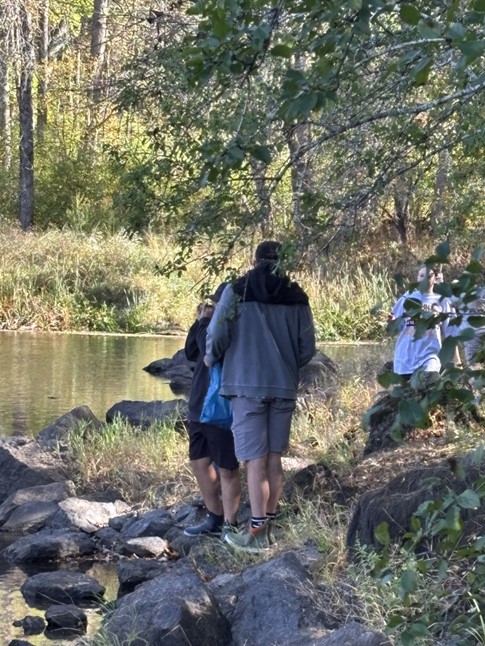
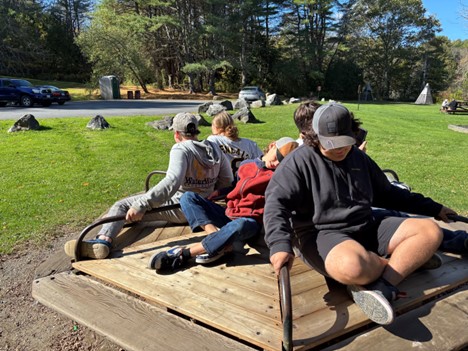
(Pictured: Oceanside Middle School students explore the river during their visit to Camden to observe a dam removal project.)
At Oceanside Middle School in RSU 13, a small alternative education program is helping students rediscover their potential by reconnecting them to learning and their community. Serving the communities of Owls Head, Cushing, Rockland, Thomaston, and South Thomaston, this program gives students in grades 6-8 the tools and confidence to thrive both inside and outside of the classroom through hands-on projects, supportive relationships, and real-world experiences.
For the past two years, Ryan Verill has led the program, guiding students through a model focused on relationships, hands-on learning, and meaningful connections to the local community. While the program has existed in various forms for many years, Verill has worked to shift it away from a behavior-focused model toward a learning environment where students build relationships with peers and teachers, develop agency in their education, and grow in confidence as learners.
“Many students come into the program feeling like school isn’t for them,” Verill explained. “We work to help them see that they are capable, that they are smart, and that learning can be meaningful.”
Hands-On Learning
At the heart of the Oceanside Middle School alternative education program is a commitment to relationship building. Small class sizes and flexible schedules allow Verill and Lucas Brower, an educational technician working with students in this program, to meet students where they are, respond to their needs in real time, and design learning experiences around students’ interests.
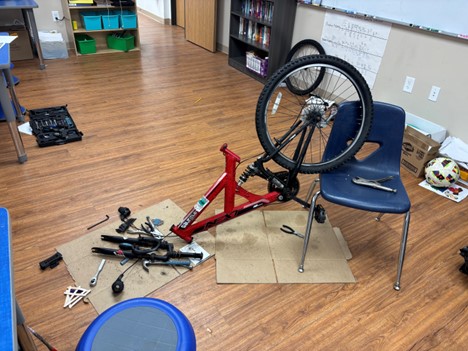
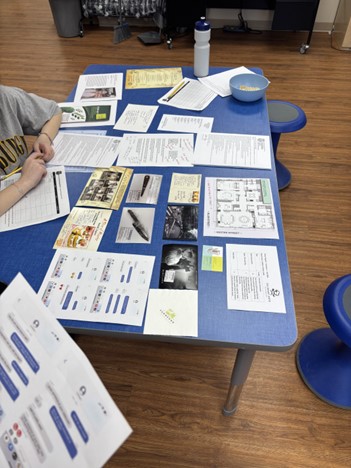
Verill is intentional about bringing students’ interests and learning experiences to life while aligning his curriculum with academic standards and the same grade promotion expectations as Oceanside Middle School. One way he does this is by ensuring students have access to a variety of hands-on tools that support engagement and creativity.
Technology is woven throughout the classroom, including coding kits, robotics sets, and 3D printers. These tools help students learn not only how to use digital resources but also how to use them responsibly.
“We talk a lot about AI and technology as tools,” Verill said. “We want to make sure students know how to use these resources thoughtfully and appropriately.”
Interdisciplinary projects are another key part of the program. Verill often connects literacy, history, and social issues to deepen student engagement. For example, students read books such as When Stars Are Scattered and Hidden Figures, exploring themes of resilience, identity, and leadership. They demonstrate their understanding through creative projects such as visual displays, posters, and timelines that connect the stories to their own experiences while also exploring perspectives beyond their small, rural coastal community.
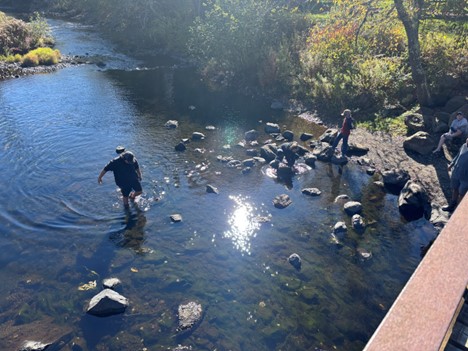
Because the program serves a small group of students, Verill can incorporate field-based learning that brings academic concepts to life. Students have participated in Wabanaki Water Studies through the Maine Department of Education’s (DOE) MOOSE (Maine Online Open-Source Education) platform and visited Camden to observe a dam removal project. Students explored how restoring river systems impacts ecosystems and fish populations. Those who were once disengaged and not attending school are now showing up and ready to learn because of the experiential, interdisciplinary methods woven into this program.
Community Building
Community engagement is another defining feature of the Oceanside Middle School alternative education program. Students regularly walk into town to visit local businesses, purchase ingredients for cooking projects, and interact with community members. These experiences help students build positive relationships and reshape how they see themselves within their community—and how the community sees them.
One of the program’s most meaningful traditions is preparing and serving meals for seniors at the town hall each month. Students cook the food themselves and stay to share the meal and play games with community members.
Students also help in the school cafeteria by packing lunches and supporting food preparation during early-release days, allowing them to stay connected to their school environment.
“These experiences help students feel valued and connected,” Verill said. “Many of them haven’t always felt successful in school spaces. When they see that people in the community recognize their effort and appreciate their work, it makes a difference.”
Preparing Students for the Future
With consistent support, humor, and trauma-informed practices, students in the Oceanside Middle School alternative education program are gradually rebuilding trust in their school and developing stronger self-awareness. Staff often see growth when students begin reflecting on their own behavior and taking responsibility for their choices.
“Sometimes students come to us with multiple school suspensions or a history of struggling in traditional classrooms,” Verill said. “When they start recognizing their own progress and advocating for themselves, that’s when we know the work is paying off.”
As students prepare for the transition to high school, this program helps them explore future pathways, rebuild their confidence, strengthen their connection to the community, and regain their ability to access learning. For many students, the alternative education program provides something they may not have experienced before: a sense of belonging. Students are rediscovering their potential and showing them that school can be a place where they thrive.
This story was written in collaboration with Oceanside Middle School, RSU 13, as part of an ongoing series to highlight alternative education programs across Maine. To submit a good news story to the Maine DOE, please fill out the good news submission form.
 Maine DOE Newsroom