The Maine Department of Education (DOE) is proud to announce that Maine has been recognized in the 2025 Government Experience Awards, presented by the Center for Digital Government (CDG). These national awards honor states, cities, counties, and agencies leading the way in delivering accessible, equitable, and engaging digital services.
Maine received a Project State Government Experience Award for its Maine Online Open-Source Education (MOOSE) platform. MOOSE provides free, optional resources for pre-K–grade 12 educators that are aligned to the Maine Learning Results. Developed by Maine educators, the platform features modules in topic areas and themes identified as high-need by teachers across the state.
Launched in response to varying levels of access to in-person education during the COVID-19 pandemic, MOOSE was designed to harness the expertise of Maine educators and create a free, statewide resource for online learning. Now in its fourth year, MOOSE continues to evolve—expanding its dedicated online platform and offering modules built within pre-K–grade 12 learning progressions to support student success.
This national recognition highlights Maine’s ongoing commitment to digital equity and human-centered design, ensuring that students, families, and communities can access education in clear, inclusive, and equitable ways.
Winners from across the country were celebrated at the GovX Summit on September 25, a virtual event showcasing innovation in public service.
Several fall data reports are now open in the Maine Department of Education’s (DOE) NEO system, including Dropout, October 1 Enrollment, and Staff Certification. Superintendents must review, validate, and certify the following reports in October:
Dropout Report – Due October 15, 2025.
EPS October 1 Student Enrollment Report (including EF-S-05 Part 1) – Currently Open for review only. Certification opens on October 16, 2025. This report is due on October 30, 2025.
MEDMS Support recommends waiting until October 30 to certify this report.
Certification is required by superintendents and special education directors.
Staff Certification Report (including EF-S-05 Part 2)– Due 10/30/2025.
Certification of the EF-S-05 Part 2 is required by special education directors prior to superintendent certification.
During the first session of the 132nd Maine Legislature, Public Law 2025, Chapter 453 was passed, taking effect on September 24, 2025. It is effectively a continuation of the Preventing Student Homelessness Pilot Program that the Maine Department of Education (DOE) implemented over the past two years.
For Fiscal Year (FY) 2024 and FY25, this program was funded at $1.5 million per year. The funding approved for FY26 totals $125,000. Due to this significant reduction of funding, the Maine DOE is reassessing its allocation method and will communicate with school administrative units (SAUs) when and how this limited funding will be available.
An Update on the Closeout of the State-Funded Preventing Student Homelessness Pilot Program
Effective July 1, 2023, the Preventing Student Homelessness Pilot Program funding was distributed to all SAUs based on the number of students experiencing homelessness reported in the Student Information System, with each SAU receiving a minimum of $750. SAUs had the option to accept the allocated funds on Grants4ME or opt out of receiving these dollars.
The Maine DOE consolidated the funds that were not expended in FY24 and funds that were declined by SAUs in FY25 to offer a July 2025 reallocation to participating SAUs to be utilized during the 2025-2026 school year. This reallocation amount is available within the FY25 Preventing Student Homelessness Funding Application on Grants4ME.
Allowable uses of Preventing Student Homelessness funds include:
With the July reallocation of funds within the FY25 funding application, the Maine DOE has adjusted the obligation and final invoice timeline for the FY25 Preventing Student Homelessness funding to allow additional time for the drawdown of funds to assist students. Authorized expenses must fall between July 1, 2024 and March 31, 2026, with final invoices due by May 1, 2026.
Please direct any questions related to Preventing Student Homelessness to Signe Lynch, Maine DOE McKinney-Vento Specialist, at signe.lynch@maine.gov.
Thank you for your continued support in providing school stability for students experiencing housing instability.
The Maine Department of Education (DOE) is thrilled to announce Maine’s first-ever Green Schools Symposium—a groundbreaking event celebrating climate education and sustainability leadership across Maine’s schools. It will take place on Friday, November 7 from 8:30 a.m. to 3 p.m. at Thomas College in Waterville.
This unique, statewide gathering will bring together school leaders, educators, youth, environmentally-focused nonprofit organizations, and private entities for a full day of networking, resource sharing, and cross-sector collaboration. Please register here and attend to hear inspiring stories of school-led sustainability efforts and explore practical tools for improving energy efficiency, cutting facilities costs, and creating healthier learning environments.
The Symposium will offer four workshop tracks:
Leadership Engage with students, principals, and superintendents, as they share innovative case studies of sustainability efforts across the state. Breakout sessions will explore tangible strategies to drive change at both the school- and school administrative unit-levels.
Facilities Receive hands-on guidance from facilities managers to explore cost-effective, sustainable infrastructure solutions—from clean energy systems to waste reduction to green campus design.
Learning Resources Discover age-appropriate, interdisciplinary approaches to climate education and pathways to integrate classroom learning with school facilities and operations. Breakout sessions will offer practical strategies to build and expand outdoor learning programs.
Career Pathways Meet industry professionals to learn about green trades and professional development opportunities in Maine. Breakout groups will help attendees to identify their skills and discover how to align them with Maine’s green career opportunities.
Limited funds are available to subsidize the cost of substitute teachers and transportation for schools to reduce financial barriers to attending the Symposium. Please contact Lucy Van Hook at Lucy.Van-Hook@maine.gov, if financial assistance is needed to attend the Symposium. Contact hours for Maine educators will be available.
We look forward to celebrating and advancing climate education and resiliency in Maine schools with you on November 7 in Waterville.
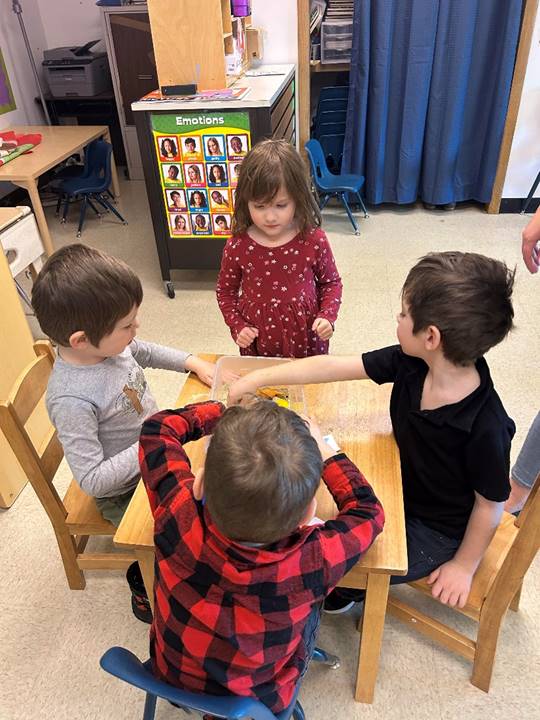
Students in the pre-K program at RSU 29 (courtesy: RSU 29)
Innovation in education comes in many forms, whether from a teaching or an administrative angle. During the 2023-2024 school year, staff at RSU 29 in Houlton learned about an upcoming major opportunity for innovative leadership: joining Cohort 1 of the transition of early childhood special education services from Child Development Services (CDS) to school administrative units (SAUs).
The affirmative decision to hop on board came following a conversation between RSU 29 Superintendent Joe Fagnant and Director of Special Services Renae Foley.
“We thought that we could take this on, that it was important for the district to look at early childhood, to look at special education to try to get these children in as early as possible to receive services,” Fagnant said.
RSU 29 has had a pre-K program in place since 1998. Even before this transition, the district had been looking at opportunities to work with organizations like Head Start to add to that program and deliver services in a more flexible way. Fagnant explained that as soon as word got out that this transition was underway, parents began contacting RSU 29 to ask how they could access services for their children.
“There were a lot more parents out there that had that need than we realized,” Fagnant said.
In order to begin providing early childhood special education services in the 2024-2025 school year, RSU 29 had to make a few significant shifts in terms of staffing and responsibilities. After all, some three-year-olds would now be coming to the district with various needs that, in many cases, had not previously been met. Fagnant credits the relative success of the transition to teamwork.
“Kudos to the staff for taking that on because it was a huge change,” Fagnant said.
“We’re problem solvers,” Foley said. “Anything that would come up, we would put our heads together to say, ‘Okay, so how are we going to do this?’ If we had to think outside of the box to meet a child’s needs, our team was definitely willing to do that.”
Foley said flexibility, a strong sense of support from the Maine Department of Education (DOE) through meetings and informational documents, and close work with community partners and transportation staff have also been integral to a smooth transition.
“We’re closing the gap,” Foley mentioned. She remarked how essential early intervention (from birth-age 2 through CDS) is for children—and now, RSU 29 has picked up the responsibility of the next stage, ensuring that the needs of children ages 3-5 are also met.
Student in the pre-K program at RSU 29 (courtesy: RSU 29)
“I have seen phenomenal growth from all of the kids who have entered the program,” Makala Swallow, an early childhood special education teacher in RSU 29, said.
Swallow credits that growth in large part to the relationships that she has been working hard to build with families and community partners.
“I’m just really, really excited to see it continue, to see these kids come and grow and just continue to flourish, as they continue on through their years,” Swallow expressed.
One of the students who has already experienced that growth is RSU 29 parent Heather Jones’ son. He is speech-delayed, but Jones said that within two weeks of his joining the pre-K program with early childhood special education supports at the district, her family noticed improvements.
“You just saw a change. He loved going to school. I think the Houlton Elementary School altogether is one of the most supportive schools around,” Jones said, later adding, “We just want him to have the best foot forward.”
Jones said that the frequent evaluations and meetings that are offered for this program through RSU 29 provide an essential opportunity for parents to speak with providers about goals and items to work on with their children.
“ [My son] knows the teacher. He knows the routine,” Jones said. “We have seen measurable goals met with him, and we’ve been needing that for four years.”
Amanda Howe, a pre-K teacher and team leader at Houlton Elementary School, said she is also looking forward to seeing how the early childhood special education supports that Jones’ son received at RSU 29 as a three-year-old help to shape his pre-K experience as a four-year-old.
“I’m really excited to see that next continuing growth,” Howe said. “I’m intrigued to see that amazing carryover.”
Howe has worked at the district since 1999 and said the issue of children not receiving referrals for services because of long waitlists and a lack of providers had become significant. For that reason, there was a push to ensure that Cohort 1 would be successful.
“We wanted to be the best of the best from day one,” Howe said.
Ideally, the hope is that early intervention can lead to long-term benefits, too.
“Your goal is to meet these needs earlier so that long-range, they’re being transitioned away from special education services,” Fagnant said, noting the positive effect that this work can have on financial and staffing factors.
As this transition is ironed out over the years, Fagnant said he plans to continue fostering partnerships with groups like daycares in an effort to amplify the thriving mixed-format system. He said that in the long-term, he would love to have a school in RSU 29 like the new Margaret Chase Smith Community School in Skowhegan that serves as a hub with help from partners, housing all services in one facility.
One element that is clear in RSU 29’s achievement thus far: “It’s the people,” Fagnant said.
RSU 29 and the Maine DOE Office of Special Services and Inclusive Education contributed to this article, written as part of a series highlighting the ongoing efforts of CDS and public schools in providing comprehensive educational services to Maine’s children with special needs. To submit a good news story to the Maine DOE, please fill out the good news submission form.
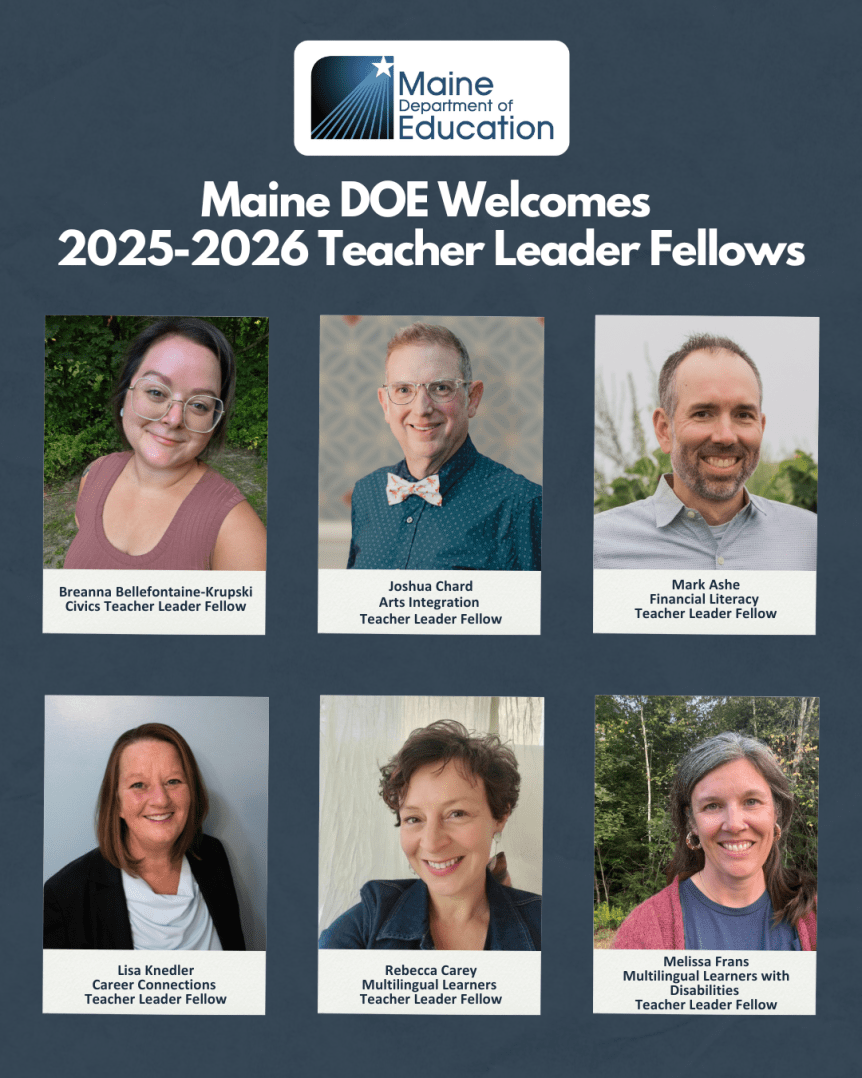
The Maine Department of Education (DOE) Office of Teaching and Learning is proud to welcome the 2025-2026 Teacher Leader Fellows. These exceptional educators bring diverse expertise and passion to their work, helping to strengthen teaching and learning across the state. Each Fellow will engage educators in their focus area, curate resources, and provide professional learning opportunities that expand access, equity, and excellence in Maine classrooms. | More
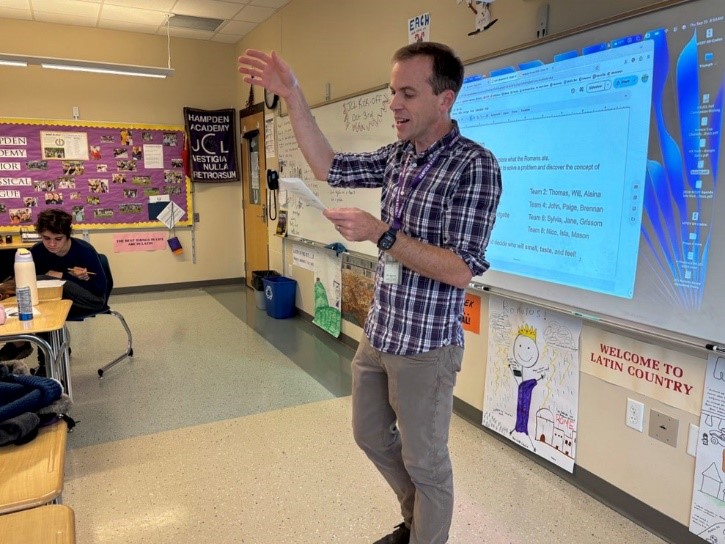
Walk into Benjamin Johnson’s classroom at Hampden Academy, and you will find teenagers who are enthusiastic, laughing, and engaged. Placed on a desk in the corner of the room is a bottle of olive oil, sprigs of thyme, and an open bag of almonds. This isn’t a cooking class, though; it’s Latin I. | More
Bridget Wright, the 2025 Lincoln County Teacher of the Year and a finalist for 2026 Maine Teacher of the Year, welcomed a panel of selection committee members to Lincoln Academy this week to see her teaching in action and hear from those who know her best. | More
In the hallways of Morse High School, the sense of school pride is palpable. On a regular Tuesday in September, cerulean attire—representing the Shipbuilders’ school spirit color—dots the sea of students transitioning from class to class. Teenagers smile at one another, occasionally shouting a name to wave a greeting excitedly from a distance. One word comes to mind in this cheerful, bustling morning moment: inclusivity. | More
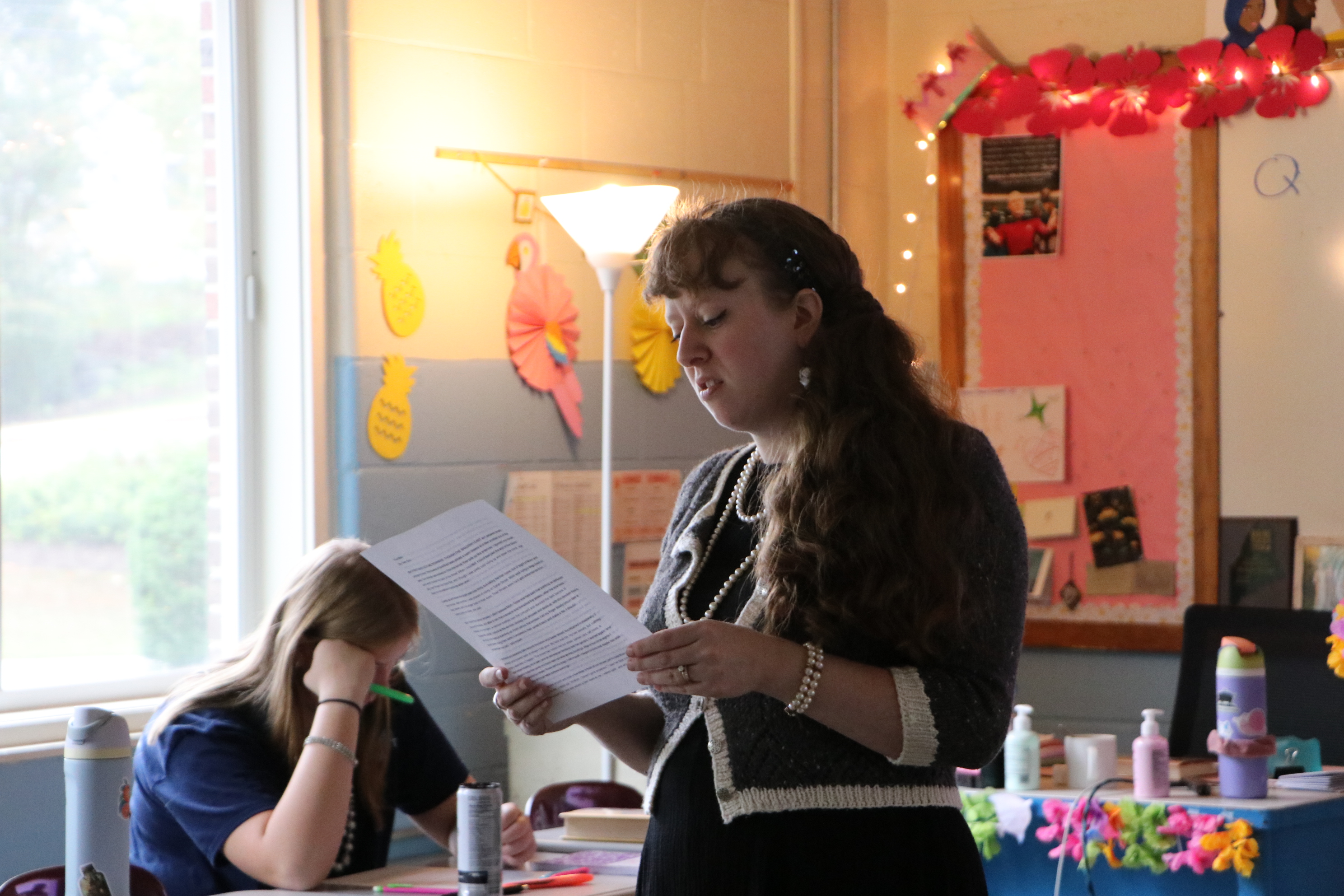
Julia Edwards, choral music teacher at Poland Regional High School and Bruce Whittier Middle School, is the 2025 Androscoggin County Teacher of the Year and one of four finalists for 2026 Maine Teacher of the Year. This week, as part of the final round for the Teacher of the Year selection process, a panel of state leaders visited RSU 16 to see Edwards in action and hear from the students, colleagues, administrators, and community members who know her best. | More
The Maine Department of Education (DOE) is seeking a Grant Program Administrator to oversee implementation of the new Later Secondary School Start Time Fund, established by the Maine Legislature in 2025. | More
The Maine Department of Education (DOE) Office of Teaching and Learning is proud to welcome the 2025-2026 Teacher Leader Fellows. These exceptional educators bring diverse expertise and passion to their work, helping to strengthen teaching and learning across the state. Each Fellow will engage educators in their focus area, curate resources, and provide professional learning opportunities that expand access, equity, and excellence in Maine classrooms.
We are excited to introduce this year’s cohort:
Breanna Bellefontaine-Krupski Civics Teacher Leader Fellow Scarborough High School Teacher
Breanna Bellefontaine-Krupski, known to her students as Mrs. B-K, returns for a second year as the Civics Teacher Leader Fellow. A lifelong Mainer, she has spent 14 years teaching civics, including at Scarborough High School and in rural schools across the state. Along the way, she earned National Board Certification in Social Studies, participated in the 2019 Maine Teacher Leader Cohort, and collaborated with civic organizations nationwide.
Most recently, Bellefontaine-Krupski served as a Constitutional Fellow with the National Constitution Center and continues to serve on their Teacher Advisory Board while also working as a Teacher Ambassador for Retro Report Education.
In her second year as a Fellow, she plans to gather a monthly cohort of civics teachers, share a newsletter of resources and opportunities, and deepen connections across the Maine civics world.
Joshua Chard Arts Integration Teacher Leader Fellow East End Community School Teacher
Joshua Chard, the 2024 Maine Teacher of the Year, returns for a second year as the Arts Integration Teacher Leader Fellow. A second-grade teacher at East End Community School in Portland, Joshua has spent 33 years in education. His work is rooted in culturally responsive teaching and the belief that joyful relationships are at the heart of student learning.
Joshua’s classroom is very diverse, with students speaking more than a dozen home languages. He emphasizes equity, student voice, and the arts as tools to help students thrive and to anchor schools as vital parts of their communities.
Beyond the classroom, Joshua is an accomplished theater director who uses stories to build empathy and expand understanding. Above all, he describes himself as a joyful teacher who loves the fresh start each September and the chance to help children discover their voices.
Mark Ashe Financial Literacy Teacher Leader Fellow Cape Elizabeth High School Teacher
Mark Ashe, a social studies teacher at Cape Elizabeth High School, is the 2025-2026 Financial Literacy Teacher Leader Fellow. With 21 years in Maine classrooms and a background in Economics and Social Studies Education, Ashe connects personal finance to broader issues of justice and democracy. He helps students to see how topics like compound interest or student debt intersect with systemic inequities and national policy.
Ashe also runs a financial planning and investment advisory firm, bringing real-world expertise into his teaching on business, investing, and financial planning. He looks forward to continuing his mission of promoting financial literacy as a foundation for equity and civic engagement.
Outside of teaching, Ashe enjoys traveling and watching sports with his wife and two sons.
Lisa Knedler Career Connections Teacher Leader Fellow Gray-New Gloucester High School Teacher
Lisa Knedler, a Career Explorations Teacher and International Baccalaureate Coordinator at Gray-New Gloucester High School, is the 2025-2026 Career Connections Teacher Leader Fellow. Knedler’s passion for student aspirations has shaped her career, from serving as Maine’s first College and Career Access Coordinator to designing career pathways and events like “Career Day” and “Curious about College.”
Currently teaching an Early College Career Exploration course through the University of Maine, Knedler equips students to align their interests and goals with career plans while earning transferable credit. She looks forward to creating resources grounded in Maine’s Life and Career Ready standards and collaborating with educators, career organizations, and employers to expand opportunities statewide.
Rebecca Carey Multilingual Learners Teacher Leader Fellow English Speakers of Other Languages (ESOL) Teacher/Coordinator, RSU 3
Rebecca Carey returns for a second year as a Teacher Leader Fellow, continuing her work with Early Learning educators and leaders. Last year, she focused on culturally and linguistically responsive programming and helped to develop tools to welcome families and guide instructional planning.
As the 2025-2026 Multilingual Learners Teacher Leader Fellow, Carey will collaborate with the Maine DOE’s ESOL team to support multitiered systems of support (MTSS) for multilingual learners. Her focus will include creating family-facing documents that educators can share with culturally and linguistically diverse families, as well as curating resources that help teachers to plan intentionally for their multilingual learners.
Melissa Frans Multilingual Learners with Disabilities Teacher Leader Fellow Special Education Multilingual Coordinator, Portland Public Schools
Melissa Frans returns for a second year, continuing her focus on supporting educators of dual-identified multilingual learners with disabilities. Through her leadership last year, a professional learning community explored strategies for integrating Individual Language Acquisition Plans (ILAP) with Individualized Education Programs (IEP).
This year as the 2025-2026 Multilingual Learners with Disabilities Teacher Leader Fellow, Frans will expand on that work by enhancing instructional practices and building interdisciplinary collaboration so that all students—especially those at the intersection of language acquisition and disability—have equitable access to learning.
Together, these six Fellows bring expertise, creativity, and passion to the Maine DOE’s work. Their leadership will provide educators with tools, resources, and opportunities to strengthen teaching and learning across our state.
Please join us in welcoming the 2025-2026 Teacher Leader Fellows!
Benjamin Johnson commands the room during his Latin I class at Hampden Academy.
Walk into Benjamin Johnson’s classroom at Hampden Academy, and you will find teenagers who are enthusiastic, laughing, and engaged. Placed on a desk in the corner of the room is a bottle of olive oil, sprigs of thyme, and an open bag of almonds. This isn’t a cooking class, though; it’s Latin I.
Johnson has worked at Hampden Academy as a Latin teacher for more than 20 years. When he first joined the school in the early 2000s, the Latin program was very small and lacked student interest. Ruey Yehle, former Hampden Academy principal who hired Johnson, said she remembers when that dynamic began to change.
“Within a few years [of Johnson’s hiring], the [Latin] program just exploded—and it was because of Ben’s reaching out to kids,” Yehle explained. “He welcomed everybody, and he made it so that they were successful.”
A running joke among Hampden Academy administrators past and present is how Johnson has turned an antiquated language into a subject that many students end up pursuing for all four years of high school—even pushing through the challenging AP Seminar with Johnson’s help.
“The enthusiasm that he brings to others and that dead language just speaks to him as a person,” Reg Ruhlin, former RSU 22 principal, said.
“What I’ve noticed about Ben is that he talks to the kids like they’re young adults,” Ryan Crane, RSU 22 assistant principal, said. “I can see students going to him and having authentic conversations with him about meaningful stuff.”
Benjamin Johnson conducts a sensory activity in Latin I that amuses students and gets them to think about ancient Rome.
In May, Johnson was announced as 2025 Penobscot County Teacher of the Year, and he is now one of four state finalists for 2026 Maine Teacher of the Year. During the week of September 22, as part of the final stage for the Teacher of the Year selection process, a panel of state leaders visited RSU 22 to see Johnson in his classroom—and to hear from the students, colleagues, administrators, and community members who know him best.
One of those colleagues—who Johnson met through his deep involvement with the National Junior Classical League (NJCL) Convention—flew all the way to Maine from Texas to share his thoughts.
“Ben is one of the few educators who truly inspired me to be better,” Lee said. “What truly sets Ben apart is that he is an advocate and a champion of all children.”
Lee recalled an instance at a recent NJCL Convention when a student from a school without a lot of resources in Louisiana decided to run for the position of secretary of the organization. Johnson felt that there was a moment of injustice, as other students were acting unkindly to her, and he spoke up on this student’s behalf—despite the fact that they did not know one another.
“He truly believes that Latin is for all,” Lee expressed.
A poster at Hampden Academy recruits students for the Junior Classical League club.
A board in Benajmin Johnson’s classroom shows the wide impact that the Junior Classical League club has had on Hampden Academy.
That sense of welcoming has made a major impact on school culture. At Hampden Academy to-date, there are more than 70 students involved in the Junior Classical League (JCL) club, making it one of the most popular groups at the school. Johnson leads Hampden’s and Maine’s JCLs, organizing trips for students to the NJCL Convention and to Greece/Italy. Johnson took the initiative to create scholarships for students in need, ensuring that no one misses out on a learning opportunity for reasons beyond their control.
“Latin continues to have the largest numbers [at Hampden Academy]—for a language that is no longer in use! People want to take Latin,” Nick Raymond, RSU 22 superintendent, said.
“My son signed up for Latin to do two years of a language and be done. The next thing I knew, he had joined JCL. The next thing I knew, I was sewing togas,” school nurse Barb Parent recounted. “When I said to [my son], ‘Why are you signing up for Latin III?’ He said, ‘Because I can’t not have Mr. Johnson again.’”
Benjamin Johnson’s Latin I class is filled to the brim with dedicated students.
The Hampden Academy Junior Classical League club has won so many trophies that they don’t all fit into the school’s display case!
Other parents shared similar stories about their kids’ experiences with Johnson. One mother testified that her son told her that learning Latin with Johnson was helping him to improve in other classes, like Spanish and English Language Arts. Another mother expressed her gratitude for Johnson’s reliable communication with families. A third said that Johnson’s students not only like him; they respect him.
“Part of what makes Ben so great is that he expresses to the kids a sincere belief that they can do it—and he doesn’t let the bar down,” mother Cindy Isenhour expressed.
With Johnson’s humble disposition, you would never guess that he has made a name for himself on the national and international levels, as well, for his use of technology in the Latin classroom. Johnson runs the LatinTutorial YouTube channel with more than 125,000 subscribers. He has also created digital tools like Latintutorial.com and Hexameter.co that are used by tens of thousands of learners worldwide.
“My daughter came home [from an NJCL Conference] and said, ‘Everybody knows who Mr. Johnson is!’” Cora Swalec, parent of five former Hampden Academy students who all took Johnson’s Latin classes, said. “She was amazed even being from little old Hampden, Maine how famous Ben was.”
Benjamin Johnson is known for integrating modern-day technology into his Latin program.
When observing Johnson lead his students during class—with a cheerful disposition yet persistent encouragement to have them try their best and step outside of their comfort zones—it is clear why he is beloved.
“I don’t really believe in myself sometimes, and I doubt myself. Every year, I have doubted my ability in Latin to succeed, and Mr. Johnson has told me that I can do it. And, I’m still in it!” Coleman Chase said.
“He is like Superman. He does so many things for our school and our community,” Katie Dysart added.
“He speaks to the principle that you should learn to learn and not learn for the grades,” Leif Isenhour noted.
Students in Latin I work diligently to translate and solve a riddle.
Johnson said that no matter the result of the 2026 Maine Teacher of the Year selection process, he is excited to continue the work that he cares so deeply about—keeping the lure of Latin alive in public schools.
“Latin has a problem with elitism, and we need to break that down,” Johnson said.
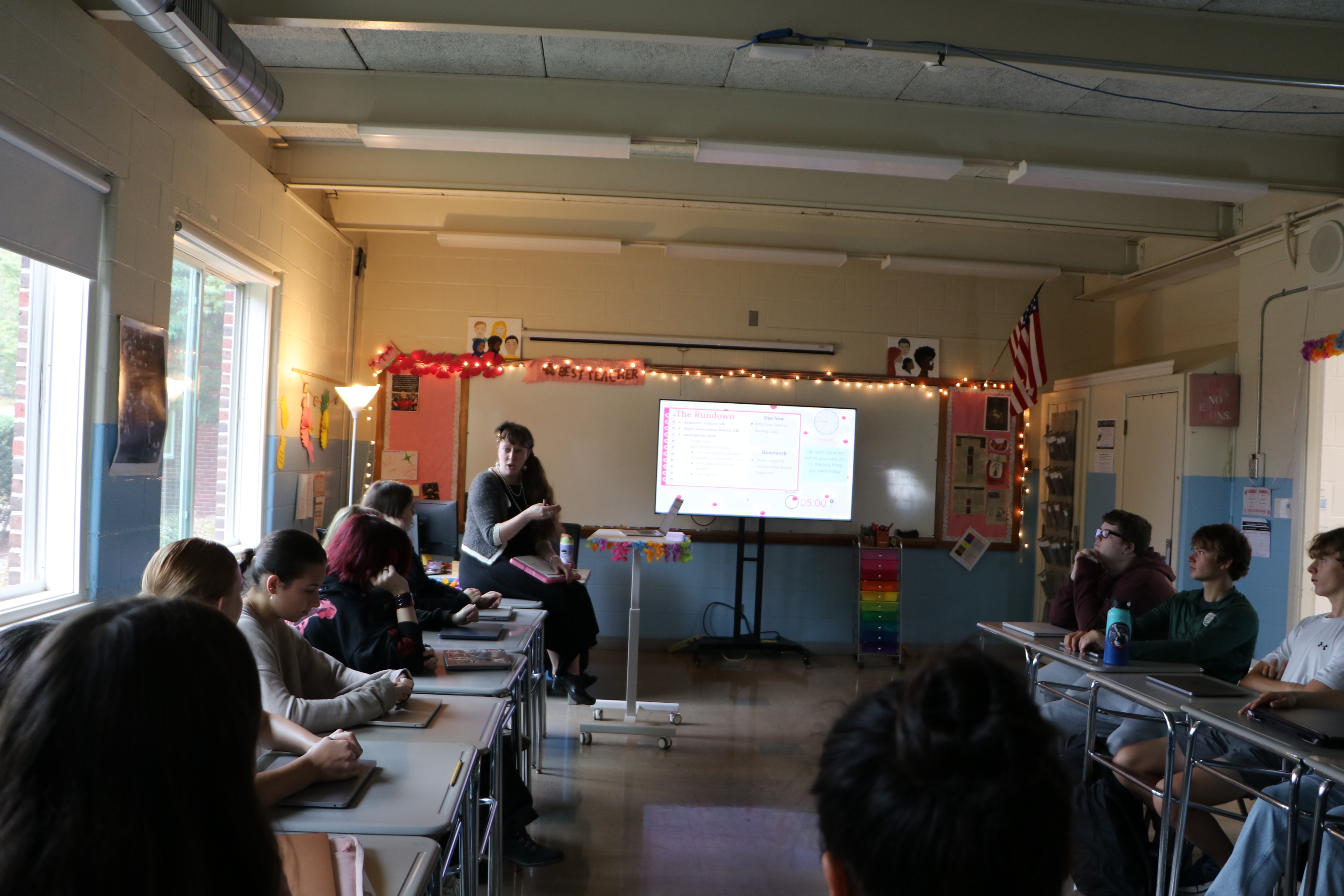
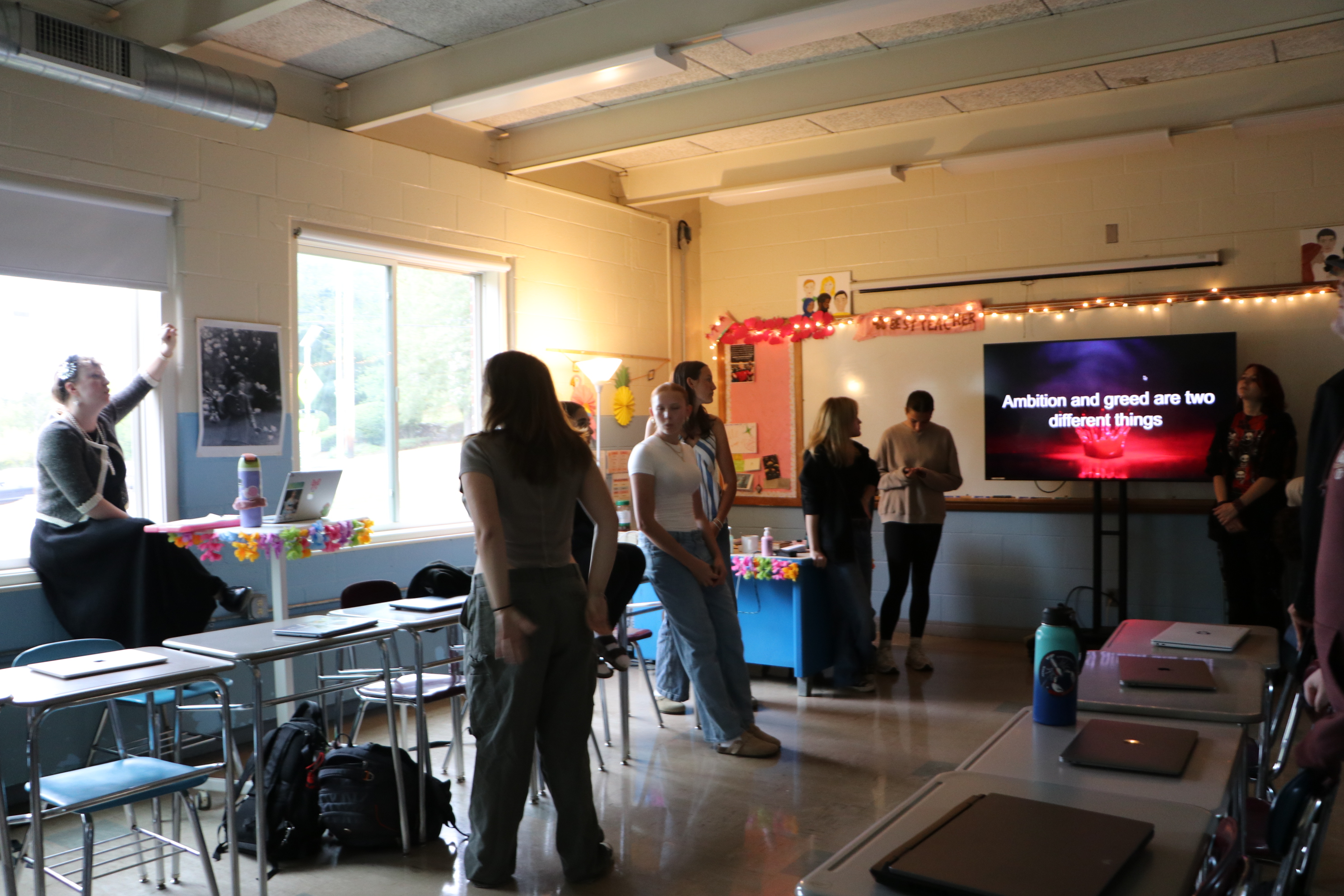
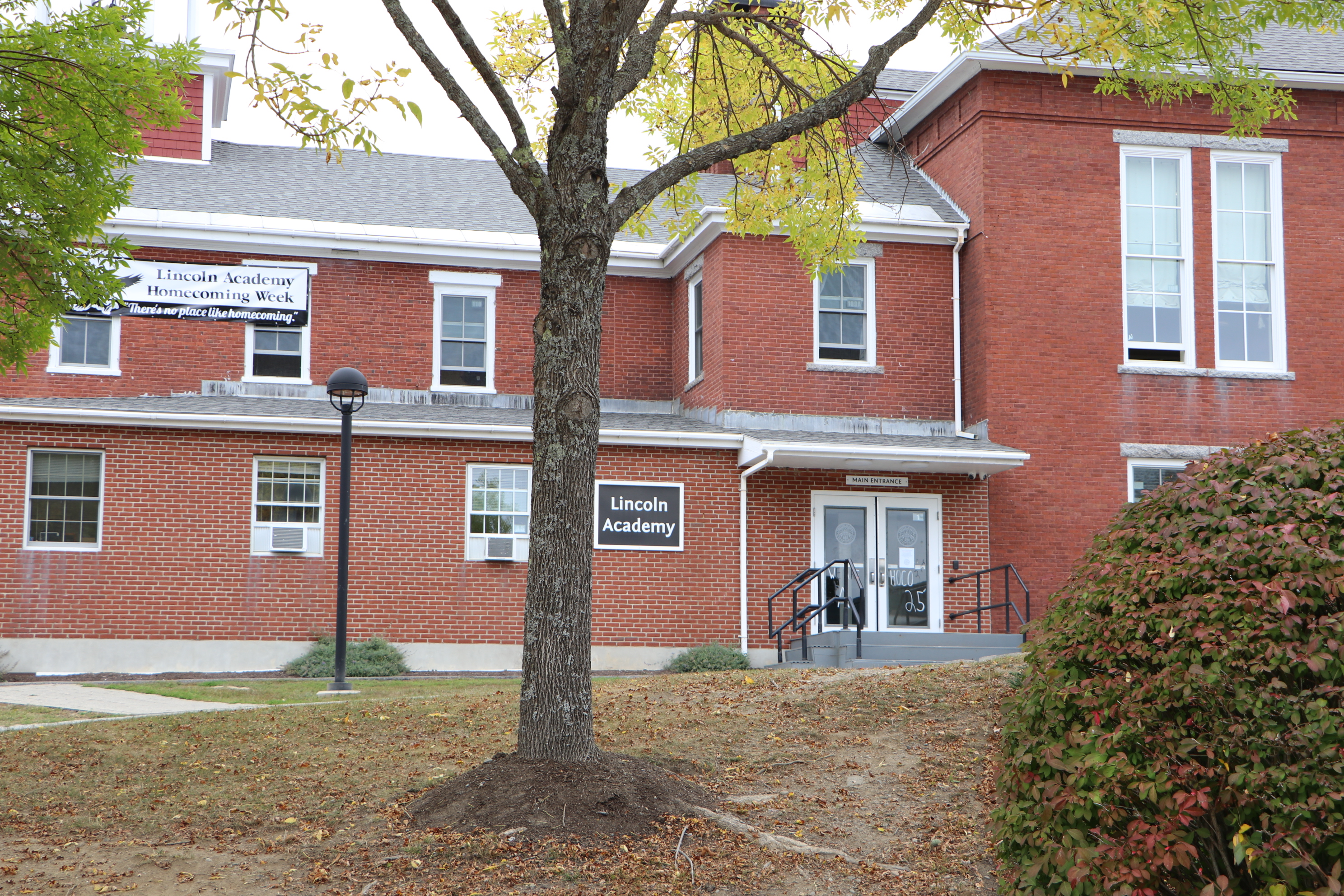
Bridget Wright, the 2025 Lincoln County Teacher of the Year and a finalist for 2026 Maine Teacher of the Year, welcomed a panel of selection committee members to Lincoln Academy this week to see her teaching in action and hear from those who know her best.
An English teacher at Lincoln Academy in Newcastle, Wright is known for fostering curiosity, encouraging academic risk-taking, and creating classrooms where students grow as writers, readers, researchers, and critical thinkers. Her teaching blends creativity with rigorous academic practice, using outside-of-the-box approaches to meet students where they are.
While visiting the school, the panel met with administrators, faculty members, students, and community members who shared stories and insight into what makes Wright such an exceptional educator and human being. Panelists also toured the school and visited Wright’s classroom to see her innovative teaching in action.
A student shared that they had previously disliked Shakespeare and felt anxious about studying his work until they took Ms. Wright’s class. Wright made the “Romeo and Juliet” unit engaging and fun by adapting a popular online format into an activity called “Am I the Arse?” Students wrote posts from the perspective of characters, blending humor with deep character analysis. The activity kept the class entertained while also helping them to gain a richer understanding of the play, which the student described as a genius idea. Students also regularly act out Shakespeare scenes, including light saber duels, to explore character development and descriptive writing.
Wright goes above and beyond to emphasize reflective learning. Lincoln County Executive Assistant Trish Jonason, who is also a parent and community member, shared that during a challenging sophomore research project, Wright supported her son and other students by pausing the work and introducing a reflective “Books that Raised You” assignment, which reignited her son’s creativity and joy in writing. The project became deeply meaningful for not only her son but the entire family, connecting them to childhood reading experiences and highlighting the lasting impact of those moments.
Wright’s focus on writing development has transformed student learning at Lincoln Academy. She founded a student-staffed Writing Center, giving students leadership experience and peer mentoring opportunities. Located in the library’s annex, the Writing Center is a space where students can get peer input and review on writing assignments. A student involved in the center explained, “It’s not about telling someone what a good paper is. It’s about listening to their ideas and helping them get closer to what they want.”
Lincoln Academy senior Eleri Jordan sits in the Writing Center ready to help students who stop by for help with their writing assignments.
Colleagues also praised Wright’s collaboration and innovation with the school’s “I-Search Project.” This capstone assignment challenges students to choose a research topic and write an in-depth paper—a major undertaking for students.
“She pushed the I-Search Project forward in ways that made it relevant to more students and elevated their critical thinking,” Director of Library Services Laura Phelps said. “Her impact on students has been profound.”
A student described Wright’s approach to helping with the I-Search Project, which felt overwhelming at first: “She made it very personal. It could be about any topic you wanted, as long as it interested you. She mapped out the process in baby steps, so it wasn’t overwhelming. That was something I needed to learn, and it applies to all my writing now.”
“She really works with kids to help them simultaneously understand what their areas of interest are and how to learn more about something that they care about,” Kelley Duffy, Director of Curriculum and Instruction, and one of Wright’s nominators for 2026 Maine Teacher of the Year, added. “The work that she’s doing there, the practice she’s having in her classes with that, is really informing how we now design some of the capstone work.”
Lincoln Academy Head of Schools Jeffrey Burroughs further highlighted Wright’s influence beyond the classroom: “She has a voice here because of the work that she has done that’s affecting what we’re doing from a policy standpoint. There’s a lot to her that is beyond just what you see in the class.”
The entire school community has a wealth of stories of connection, generosity, and personal growth to share about Wright. Her dedication to students and the community extends beyond academics. She is known not only as a safe space for students to share struggles but also as someone who celebrates birthdays with a specially baked treat, keeps chocolate on hand for students who are having a bad day, and ensures that kids have essentials like glasses wipes.
“She takes individual relationships with students really seriously,” a student shared. “She’ll write a letter at the end of the year or leave a sticky note appreciating something you did. She makes sure people feel appreciated.”
“She is fantastic with students and is also just a fantastic coworker,” colleague Prema Long said. Long shared a story of watching Wright’s class for 20 minutes one time and being thanked the next day with a pumpkin-spice latte and a thank-you Post-it note.
“We shared an adjoining door for three years. She was the best person to work next to,” fellow English teacher Jack DeAngelis added. “We never taught the same classes, but having her voice right there was so important to me—to talk with her about big picture things but also exactly what I was going to ask my students to do in the next 10 minutes.”
Parents also celebrate Wright’s compassion and innovation. A Lincoln Academy parent shared how his daughter struggled academically from an early age due to a learning disability. When she entered high school, she continued to fail most of her classes except English. Wright recognized that while the student had difficulty writing, she was highly verbal and articulate. By allowing her to express her thoughts out-loud, and then helping to translate them into written form, Wright revealed the student’s brilliance and gave her a way to succeed.
Holly Arbuckle, a parent and local business leader, emphasized that while all teachers are caring and hardworking, what sets Wright apart is her innovation. She has transformed how writing is taught by focusing on process over product—helping students to measure growth against themselves rather than others. By allowing rewrites with clear feedback, she creates space for all students, regardless of background or starting point, to develop as writers. Her approach encourages vulnerability, restores confidence, and makes writing meaningful rather than punitive.
“She is really good at seeing the big picture and then instituting systems and processes that will get both herself and her students where they need to be,” English Academic Lead Brenda Sawyer said.
As the Maine Teacher of the Year selection process enters its final stages, Wright’s innovative teaching, compassion, and collaborative spirit exemplify the qualities that make Maine educators exceptional.
“It’d be great if she got the award, but I don’t think it’s going to stop anything,” parent and community member Sara MacCorkle said. “She’s not doing this to get an award. This is just who she is and how she moves.”
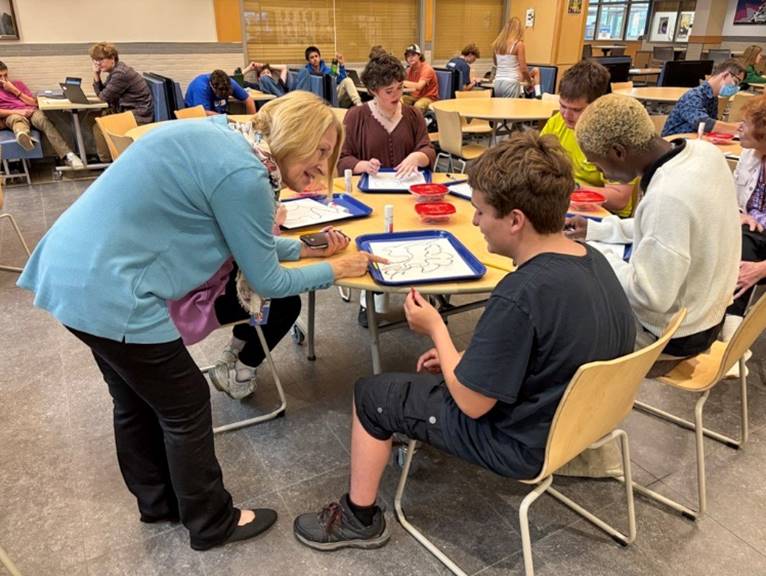
Dawn Lee connects with a student over artwork during a Unified Literacy class.
In the hallways of Morse High School, the sense of school pride is palpable. On a regular Tuesday in September, cerulean attire—representing the Shipbuilders’ school spirit color—dots the sea of students transitioning from class to class. Teenagers smile at one another, occasionally shouting a name to wave a greeting excitedly from a distance. One word comes to mind in this cheerful, bustling morning moment: inclusivity.
For Morse High School librarian Dawn Lee, inclusion has been a focal point of her career. She is a founding leader of the school’s Unified Literacy program, which has been recognized at the national level for bringing students with and without intellectual disabilities together through reading, writing, and art. Lee is also the 2025 Sagadahoc County Teacher of the Year and one of four state finalists for 2026 Maine Teacher of the Year.
Dawn Lee is dedicated to capturing moments of inclusivity among her students through photography.
During the week of September 22, as part of the final stage for the Teacher of the Year selection process, a panel of state leaders visited RSU 1 to see Lee in her classroom—and to hear from the students, colleagues, administrators, and community members who know her. The feelings expressed and memories shared by all were warm, thoughtful, and telling.
“She is the perennial advocate, the positivity, the cheerleader, and the doer,” Eric Varney, Morse High School principal, gushed about Lee. “She is the person who is constantly thinking about the way that things could be better.”
Dawn Lee’s Honors English 10 class provides students with an opportunity to explore a meticulously curated book selection in the library.
Administrators and colleagues expressed that Lee has forever been on a mission to create an environment in which inclusion is the standard. When students returned to an in-person educational model following the pandemic, Lee and other educators noticed that the kids were not talking to one another. That separation ignited the spark that fueled Lee’s push to create the Unified Literacy program, based on the school’s Unified Athletics program—led by physical education teacher Charlie Bingham.
“She’s looking out for the best interest of all kids,” Bingham said.
“In working with Charlie to create Unified Academics, Dawn has changed the culture of this school,” Julia LaRosa, Morse High School Unified Science teacher, expressed. “Everyone is a learner, and everyone deserves to be everywhere.”
Even before Unified Academics existed at the school, Lee was cultivating that kind of an environment. In her decades of teaching at Morse High School, Lee has seen many students graduate, some of which are now her present-day colleagues. Angelique Tamburo, an instructor at Bath Regional Career and Technical Center, said she remembers the library—and Lee and library assistant Brenda Fagan—being her safe space as a student when she was experiencing a challenging home life.
“One of the things that Ms. Lee and Ms. Fagan taught me is that I mattered. My birthday never went by without them celebrating me,” Tamburo expressed. “Now, I get to help kids and tell them, ‘You’re not alone.’ I get to be that person now, and that’s thanks to Ms. Lee.”
Dawn Lee’s Unified Literacy class allows students of all abilities to connect over reading, writing, and art.
Tucked into the back corner of the library is a closet, replete with boxes of dry goods, canned food, and hygiene products. Lee has been running this food pantry for more than 15 years, recognizing that in order to successfully learn, students must first have their basic needs met. The pantry is open to all, no questions asked—leaving no room for stigma. On “Produce Tuesdays,” at Morse High School, Lee and Fagan also set up tables at the front of the building with fresh produce for kids to take home.
“She is a gentle warrior for our kids. She fights for them every day behind the scenes,” John Dever, a Morse High School educator and 2017 Sagadahoc County Teacher of the Year—who nominated Lee for the title in 2025—said.
Dawn Lee has run the Morse High School food pantry for more than 15 years.
Lee’s generosity is also not lost on her students.
“It’s really refreshing to see someone who cares so much about her community,” student Grace Kirk said.
“She’s very patient, and she’s very loving,” Avery Steenstra, another student, added. “It’s really important to see that a teacher cares about you and that she’s going to do anything to help you.”
Students likened Lee to a flattering variety of fictional characters including Miss Honey from “Matilda,” Mary Poppins, Molly Weasley from “Harry Potter,” Joy from Inside Out, Maria from “The Sound of Music,” Ms. Frizzle, and Inspector Gadget. Whether they have connected with her through class, the library, study hall, or receiving help with projects like citations or AP research—students agree that “selfless” is a word that could be used to describe Lee.
“I didn’t have much positivity when I was in middle school, but when I met Ms. Lee, she was really eye-opening. She brought back a lot of my self-confidence that I lost when I was in middle school,” student Hunter Johnson said.
More than a dozen Morse High School students gathered to testify about their experiences with Ms. Lee for the 2026 Maine Teacher of the Year selection process.
Lee is a lifelong learner, taking advantage of various professional development opportunities and fellowship programs throughout the summer. Her prioritization of inclusion in education—made possible with help from her teaching partner, special education teacher Jonathan Fisk—has made an impact on what many of her students are choosing to pursue post-high school. A handful of local parents testified that their children are now studying education or special education in college because they had Lee as a teacher. One parent even mentioned that a previous exchange student her family hosted from Egypt expressed interest in bringing Unified Literacy to schools in her country.
“She’s the ground zero,” Peter Kent, the parent of a Morse High School student with special needs, said of Lee. “The program that she and Mr. Fisk put together—this is what it created. She’s not at the center of it promoting herself, but she’s there in the background. I’ve heard from talking to some of the kids that this program made a huge difference to them.”
In expressing her gratitude for the esteemed recognition as a 2026 Maine Teacher of the Year finalist, Lee emotionally mentioned her beloved late grandmother, who was illiterate—and a driving force for Lee’s passion about making literacy accessible to all.
“I believe in what we do here,” Lee said of Morse High School. “I believe in our students. I believe that when you hold students to a high standard, they will rise to the occasion.”
















 Maine DOE Newsroom