MLTI Student Conference Sessions Announced!

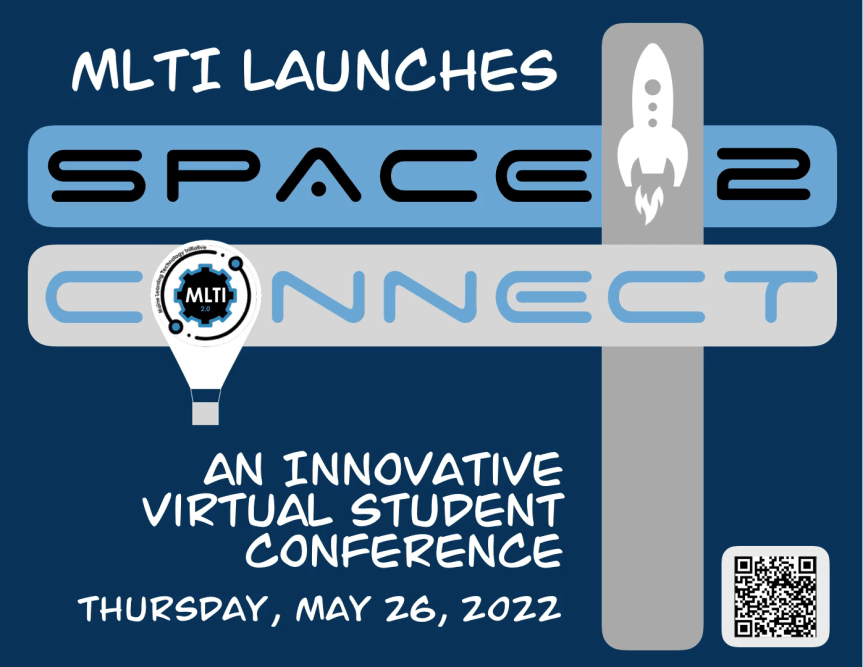
The 19th Annual MLTI Student Conference will be held virtually on Thursday, May 26, 2022, from 8:30am-2:00pm, and will be open to all MLTI 7th and 8th grade students. MLTI is excited to share the conference sessions for this exciting and innovative day!

Registration
Registration for the 2022 MLTI virtual student conference is now open until April 8, 2022. Please select a lead teacher from your MLTI school to fill out the online registration form. We will be asking for lead teacher contact information, school information, as well as a physical shipping address so we can deliver or ship conference materials directly to the attending school. We will also need the total number of students attending in each grade, and the totals for shirt sizes. We ask that schools complete the registration form by April 8, 2022. For questions regarding registration please reach out to Brandi Cota at Brandi.M.Cota@Maine.Gov.

Session Information Now Available
For a list of the sessions available to MLTI students, please visit our website! Once you have registered for the conference, we will send you a link to sign up for the sessions of your school’s choice the week of April 11th. If you have questions about sessions, please join us on Wednesday, April 6, at 3:30pm for a session Q&A. Sign up here!

Session Style
We have redesigned the conference to be classroom-based. Workshop leaders will teach your class new skills, provide time for students to practice these new skills, and then support them as they create something new with what they have learned. This new design will allow students to work together as they explore new resources and applications, create with new digital mediums, and collaborate to complete tasks. For more information on our new conference model please watch our video!

This virtual conference, as with past years, will be hosted on Zoom. The sessions will be 90 minutes, with the morning session running from 9:30am-11:00am, and the afternoon session running from 12:00pm-1:30pm. All necessary materials will be provided to schools before the conference so students will have them to create with during the conference.

Important Dates

  • March 10th Registration Opened
  • April 1st Sessions Announced
  • April 6th Session Q&A with MLTI
  • April 8th Registration Closes
  • April 11th Session Sign Up Opens-Form will be sent to registered schools
  • April 28th Session Sign Up Closes
  • May 12th Session Assignments Finalized

Further Information
For more information, please visit the MLTI Student Conference page or contact Brandi Cota at Brandi.M.Cota@Maine.Gov.
Considerations for Schools Supporting Observances During School Year- Ramadan Begins

Other than the Christian observance of Christmas, Maine school calendars do not currently include days off from school for religious holidays. As a result, those of other faiths must navigate their observances around the expectations of schools – including expectations regarding attendance and participation – which may conflict with the traditions of the observance. To assist schools in understanding the timing, traditions, and possible impacts of some religious holidays, the Maine Department of Education has shared a calendar and considerations for major religious observances that may occur during the school year.

Islam is the second most populous religion in the world, and Maine is home to many Muslim families. Maine Department of Education would like to provide some general information about Ramadan and Eid-al-Fitr to schools, so they can support their Muslim students and community members as they enjoy this very special time of year.

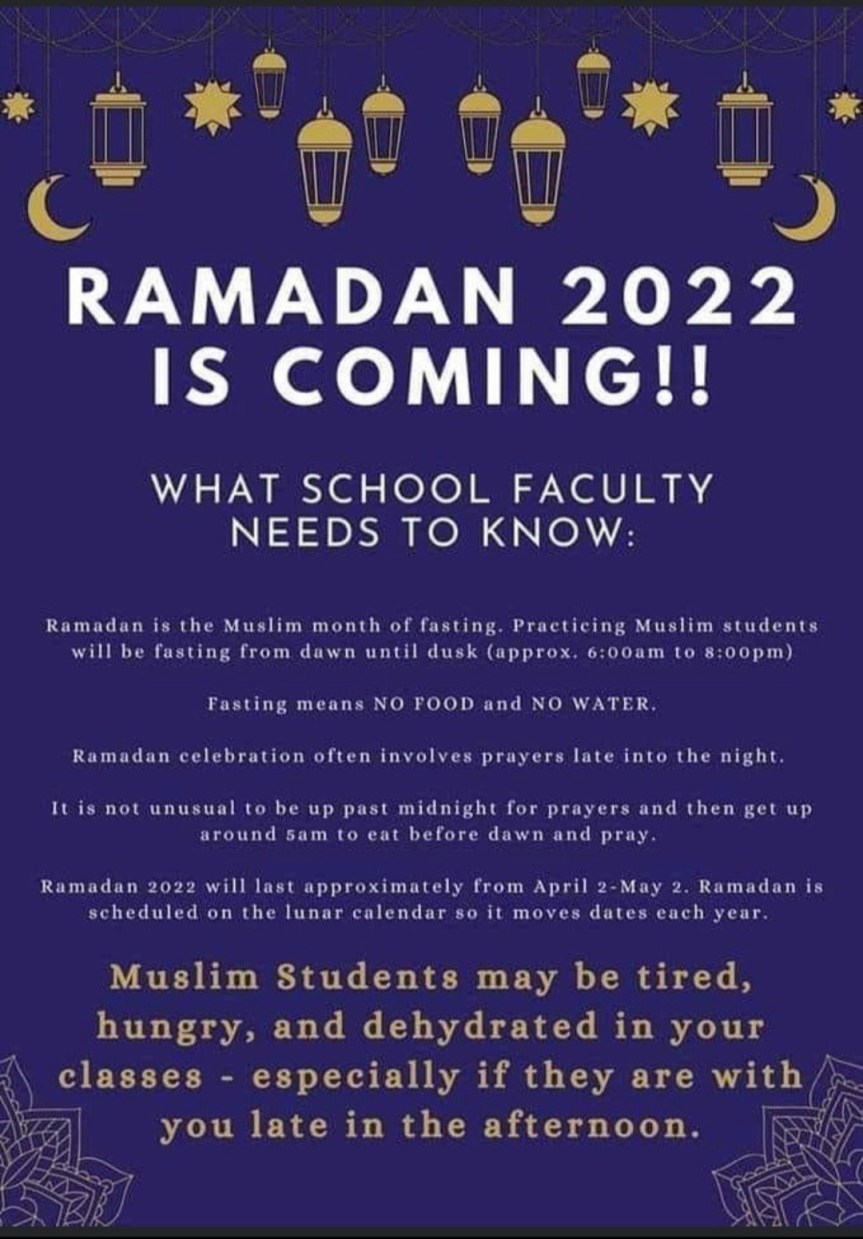
Ramadan is a month-long fast observed by Muslims around the world. Fasting during Ramadan is one of the five pillars of Islam. To wish someone a happy Ramadan, you can say “Ramadan Kareem” or “Ramadan Mubarak.”

This year, in the United States, Ramadan will start around April 1st. The official beginning and end of the month of Ramadan will not be announced until the sighting of the new moon. Since the Islamic lunar calendar year is about 11 days shorter than the Gregorian calendar, Ramadan happens about 11 days earlier each year.

During Ramadan, most Muslims fast (i.e., consume no food or water) from dawn to dusk. Many Muslims also pray more frequently, recite the Quran (Islamic book) and make special efforts to be kind, generous, and compassionate. This is a joyous time of year, and each Iftar (post-sunset meal to break the fast) is a celebrated opportunity to gather with friends and family. Muslims may also wake before dawn to eat Suhoor (a pre-dawn meal), which helps give them energy to endure the day’s fast. (Iftar and Suhoor timings can be found here.) For some Muslims, the typical patterns of sleep are shifted so that more waking hours occur during the night, which can make it difficult to wake up early and stay alert during the day.

After Ramadan, Eid-al-Fitr (the festival of breaking the fast) is a three-day celebration with feasts and gatherings of families. This is an extremely important and cheerful time of year for Muslims, and students will likely be absent for all or part of the three days. Children often receive a new outfit or a small amount of money as a gift from their family for the holiday. To wish someone a happy Eid, you can say, “Eid Saeed” or “Eid Mubarak.”

Here are a few tips for supporting students during Ramadan and Eid-al-Fitr.

Learn about Ramadan and Eid-al-Fitr.

There are many resources available online that can help you understand how and why Ramadan is observed. Keep in mind that practices may vary depending on culture, so your students and their families are the best sources of information about their Ramadan traditions. Here are a couple of articles that give a general overview.

Encourage cultural sensitivity for all school community members.

Fasting can have many physical and mental effects, such as fatigue, lack of concentration, and irritability. For your students, your understanding and support can help ensure that they continue to learn and make the most out of their time at school while fasting. Teachers, school nurses, sports coaches, bus drivers, cafeteria staff, and all other staff who interact with students will need to know how fasting can affect students.

Talking with staff and students about Ramadan and Eid-al-Fitr helps encourage an atmosphere of cultural awareness and sensitivity for the whole school community. Sensitivity towards fasting students includes avoiding consuming food and beverages in front of them whenever possible. Consider holding any celebrations that include food, such as awards banquets, after Iftar (breaking fast at sunset).

Ask students and their families how you can best support them.

Some schools may choose to offer a place for students to go during lunchtime, alternative options for physical education, or dedicated prayer spaces. Schools may also avoid scheduling assessments or other required activities during Eid-al-Fitr, when students are likely to be absent. The best way to ensure that your school is a supportive, culturally-aware learning environment is to involve students, families, and other community members in planning and policy creation. Check out these two articles for some practical ideas that may benefit fasting students.

Have a clear, well-communicated policy on tardies and absences.

Maine’s statute on excused absences is Title 20-A, Section §3272. It states that an absence is excused when it is for “observance of a recognized religious holiday when the observance is required during the regular school day and the absence has prior approval.” Fasting during Ramadan is a required religious observance, and the physical and mental demands of fasting may cause students’ tardies and absences to increase. Eid-al-Fitr celebrations are also religious observances. Districts will need to share clear expectations for attendance with students and families. It is highly recommended to develop these expectations in collaboration with your community members, recognizing that interpretation and translation may be necessary to ensure meaningful communication.

Reminder: Register NOW for Conducting K-12 Site Assessments with SITE ASSESS Train-the-Educator

Don’t miss your chance to register for next week’s training brought to you by the Maine School Safety Center and the Readiness and Emergency Management for Schools (REMS) Technical Assistance (TA) Center. Registration closes Friday, April 1st.

This dynamic and interactive 2.5-hour training is designed to assist school districts and schools with conducting site assessments and using SITE ASSESS, the REMS TA Center’s free and secure mobile app that allows personnel to walk around a building and grounds, and examine their safety, security, accessibility, and emergency preparedness.

TRAINING DETAILS

When: Tuesday, April 5, 2022
Time: 10:30 a.m. to 1:00 p.m. ET
Cost: NO CHARGE
Register here
Download the flier here

For more information, contact info@remstacenter.org.

Nominations are Being Accepted for the 2022 MAHPERD Teacher of the Year Awards

Nominations are being accepted for the 2022 Maine Association for Health, Physical Education, Recreation, and Dance (MAHPERD) Teacher of the Year awards.

MAHPERD Teacher of the Year Awards are presented to health education, physical education, and adapted physical education teachers who have demonstrated outstanding dedication to their students and profession. Eligibility requirements include prior and current membership in MAHPERD.

Maine educators in the following categories are eligible for consideration:

  • Elementary Physical Education Teacher
  • Middle Level Physical Education Teacher
  • Secondary Physical Education Teacher
  • Adapted Physical Education Teacher
  • Health Education Teacher (All levels)
  • Recreation Professional
  • Dance Professional

There are many deserving teachers throughout the State of Maine and MAHPERD would like to be able to recognize more of those individuals. Click here for more information regarding eligibility, nomination criteria and to access the nomination form. Nominations are due by April 15th.

For more information, contact MAHPERD Awards Chairperson Kayla McGee at mahperdawards@gmail.com before April 15th.

Maine DOE and Holocaust and Human Rights Center (HHRC) of Maine Announce New Project-Based Lessons Now Available to Maine Educators

The Maine Department of Education (DOE) and the Holocaust and Human Rights Center (HHRC) of Maine have partnered to support the many educators working to develop robust and relevant, project-based learning content for the MOOSE (Maine Online Opportunities for Sustained Education) platform. Educators have developed online, PreK-12 learning modules that examine the history of genocide and the Holocaust using an interdisciplinary, project-based approach. The modules are intended to be used by students and educators at every grade level, and includes age-appropriate material to help students learn about the events of the holocaust and associated themes and concepts.  

Teachers, leaders, and experts from all over Maine recently gathered at the Holocaust and Human Rights Center of Maine (HHRC) on the campus of University of Augusta, to recognize the six months of collaboration and support, insight, and hard work of all involved. 

MOOSE was initially designed in response to the pandemic as a way for learning to continue whether students were home, in their classrooms, or otherwise.  With support from hundreds of educators from every county in Maine, over 300 learning modules were created and published for free online use.  MOOSE has evolved to be a model for high quality, interdisciplinary teaching and learning, addressing important issues identified by state and education leaders.  

HHRC Educational Coordinator, Erica Nadelhaft, advised and supported the team with resources, and cultural and emotional support.   

Team Leader, Joanna Martel, praised Content Creators for their work, “Our team worked hard to convey a difficult topic to all students and the partnership with HHRC has been critical to making it all happen.  It is not only the amazing product they have produced but also the tools they have gained and will take back to use in their classrooms that’s exciting to see. The experience of this project has been something we won’t forget and the relationships built between HHRC, DOE, and educators all over the state will last a long time.”   

2022 Maine State Science Fair Brings Together Talented Young Researchers from Across Maine

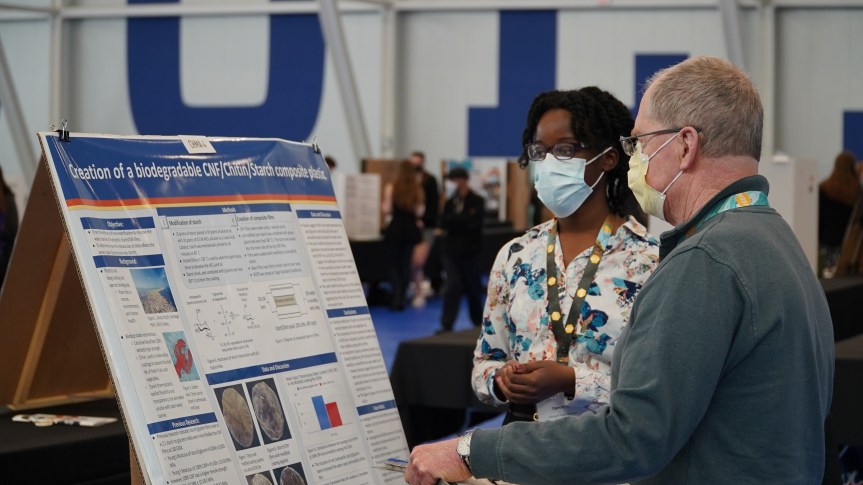
Pictured (L to R): Ogechi Obi, a student from Bangor High School with James Crowley, a judge from the Maine Department of Environmental Protection.

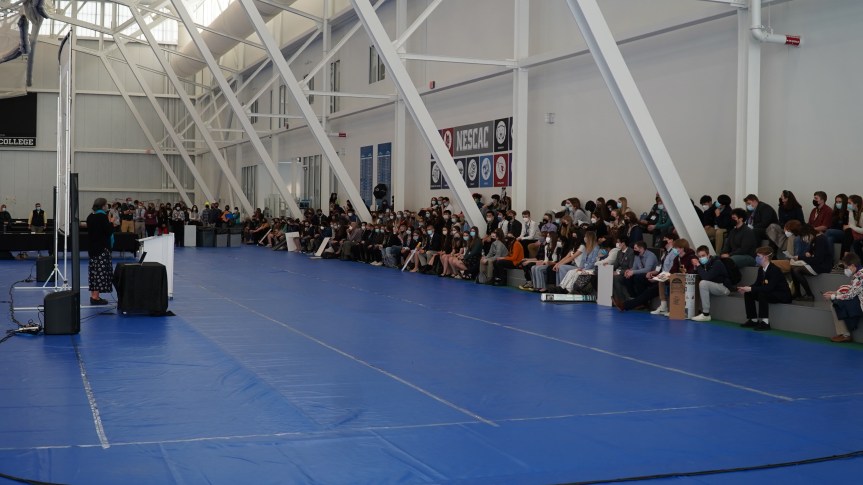
Students were thrilled to be back together in person to share their science and engineering projects at the 2022 Maine State Science Fair, held on Saturday, March 26, at Colby College.

This year’s Grand Award winners, who will represent Maine at the Regeneron International Science & Engineering Fair are:

  • First Place: Cuthbert Steadman of Bangor High School. Cuthbert’s engineering project used computer programming to create an inexpensive and non-invasive blood glucose monitoring and automatic insulin injection system.
  • Second Place: Emma Markowitz, a homeschooled student from Boothbay. Emma experimented with a non-invasive approach to treating White Line Disease in horses using poly-wrap and manuka honey.
  • Third Place: William Xu of Bangor High School. William developed a computer program that uses medical imaging to better diagnose Alzheimer’s disease.

The full list of awards, including over $875,000 in college scholarships and $1,800 in prizes from local and national organizations, is available on the Maine State Science Fair website.

The event convened 144 students from 22 high schools and two home schools. Another dozen students participated virtually.

“After two years of virtual events, we’re glad we can give students a chance to meet each other and share their ideas and passion for STEM,” said Stefany Burrell of Maine Mathematics and Science Alliance. Laura Muller, her counterpart at The Jackson Laboratory, commended the students for their resilience, creativity, and perseverance as the event drew to a close. The two organizations were the presenting sponsors of the Fair.

For more information about the Maine State Science Fair visit the website.

Honoring and Celebrating All Languages Spoken By Maine Students With the Shift to Multilingual Learners Terminology

Maine is home to students and families who speak a multitude of different languages in their homes and communities. Recognizing and celebrating the linguistic and cultural assets they bring starts with using asset-based language. That’s why the Maine Department of Education (DOE) is transitioning to the term “multilingual learners” (MLs) to describe bilingual and multilingual students who are in the process of learning English. Formerly referred to as “English learners,” MLs enrich their classrooms and communities in invaluable ways. This shift in terminology reflects the principle that all languages a student speaks are important and honored, as they strive towards acquiring English as an additional language – not as a replacement for their primary/home language(s).

Resources from the Maine DOE will begin to reflect this shift right away, and schools are encouraged to embrace this shift as well. Note that the U.S. Department of Education continues to refer to students as English learners, and this may still appear in resources related to federal programs. Programs that teach English to MLs are referred to as English for Speakers of Other Languages (ESOL) programs, and teachers are ESOL teachers or teachers of MLs.

If you have any questions, contact Jane Armstrong, State ESOL Specialist, at jane.armstrong@maine.gov.

REMINDER: Public Pre-K Technical Assistance Sessions Available April – July, Register Now

As a reminder, members of the Early Learning Team will be providing an opportunity for new and expanding Pre-K programs to come together to learn and discuss the components of high-quality programming.

These sessions will be offered virtually on the 2nd and 4th Monday of each month, April through July 2022, from 3:30-4:30pm. You may register once and have access to all sessions. Each session will be recorded and links to the recordings will be shared.

Once your registration is confirmed, you will receive an email with a link to a document that highlights resources and links related to each session topic. This should be used as a guide during the sessions.

Please feel free to share the registration link with others in your school system who may be interested.

The sessions are scheduled as follows:

  • April 11, 2022: Pre-K Application in Accordance with Ch. 124 and the Pre-K Guidebook Review & Reflect
  • April 25, 2022: Community Needs/Recruitment/Enrollment/Transitions
  • May 9, 2022: Partnering with Community Providers exploring MOUs & Child Care licensing
  • May 23, 2022: CDS Relationships/Coordination/Screening
  • June 13, 2022: Curriculum and Assessment Choices
  • June 27, 2022: High-Quality Classroom Environments & Materials
  • July 11, 2022: Early Childhood Development Teacher Training and MELDS
  • July 25, 2022: Family Engagement Strategies

For questions and clarifications please contact the Early Childhood Specialist, nicole.madore@maine.gov

Launch of Online Training from the Children’s Safety Partnership

With Child Abuse Prevention Month coming up in April, the Maine Department of Education (DOE) is helping to spread the word about a new way to access the Children’s Safety Partnership (CSP) training, “Understanding and Responding to Child Sexual Abuse”.

The pandemic has changed everyone’s ability to gather and train together in-person. Recognizing that all school personnel are required to take the one-hour training, “Understanding and Responding to Child Sexual Abuse” every four years, the Children’s Safety Partnership, a program of the Maine Coalition Against Sexual Assault, has developed a completely online version of “Understanding and Responding to Child Sexual Abuse”.

The preference for this training is still that it be in-person, if possible.  However, the hope is that this online course version will provide opportunities for school personnel who may not otherwise have access to the training to be able to complete it and to be in compliance.

The training and all supplemental materials are available on the Children’s Safety Partnership website for all educators who have previously taken the training of trainers with the CSP.  Access is intended to be a support for those responsible for delivering and/or ensuring the training is completed.  Those who have not completed a training of trainers but would like to access the materials can reach out to their local sexual assault support center prevention educators to learn more. This course was designed using the Teachable platform.  It provides a road map of the content, while also offering the option to start and stop whenever is convenient for the participant.

If training facilitators have questions when delivering or monitoring the training, they should contact their local sexual assault support center prevention educators!

Register Now for April 5th Math4ME Interest Session

The Maine Department of Education (DOE) Office of Special Services, in collaboration with the Maine Math and Science Alliance (MMSA), is pleased to announce a new Math4ME cohort for the 2022-2023 school year.

Math4ME is designed to increase access to mathematics for all learners through teacher professional development. This year, participants will register as a team – an administrator, general educator, special educator, and an education technician, for hands on, in-person learning and remote, synchronous, interactive sessions.  For a glimpse into this math learning opportunity, please view the Math4ME informational video found here:

To learn even more about the program, please attend the Math4ME information session on April 5th from 3:30- 4:15 pm.

Please register in advance for this meeting and to receive the Zoom link.