Maine DOE Update – June 6, 2025

From the Maine Department of Education


News & Updates

Second Annual ‘I Belong’ Youth Summit Empowers Maine Students with Disabilities to Dream Big

The Maine Department of Education (DOE) Office of Special Services and Inclusive Education held its second annual “I Belong” Youth Summit at Central Maine Community College on Thursday, May 29. This event brought together students from across the state with individualized education plans (IEPs) for a day dedicated to empowerment, connection, and celebration of student voice. Student participants ranged in age from 10 to 22 years old. |  More

Your Voice Matters: Help to Name Maine’s New School Attendance Awareness Campaign!

As the Maine Department of Education (DOE) makes plans for Attendance Awareness Month in September, we are preparing to shine a spotlight on attendance and engagement in Maine schools with an attendance campaign name and slogan contest. |  More


Maine Schools Sharing Success Stories

Bowdoinham Community School Founds Its First ‘Play Club’

Jonathan Haidt’s book “The Anxious Generation” planted a seed that took hold with Bowdoinham second-grade teacher, Kaleigh Frye. While much of the national conversation surrounding Haidt’s book has focused on phone-free schools, a second concept – “play-full schools” – piqued the interest of Bowdoinham Community School staff during professional conversations in August. Soon after, Frye approached Principal Chris Lajoie with a proposal: “I want to start a Play Club.” |  More

Empowering Students: Workforce Development and the Dignity of Risk

At the core of teaching is a central question: How can we ensure that every student gets the best education possible? This was the theme of the Maine Department of Education’s Inclusive Education Conference, focused on supporting students with disabilities throughout their pre-K-12 schooling and into meaningful adult lives. One panel was on the topic of “Dignity of Risk for Students with Disabilities.” | More

Submit good news to the Maine Department of Education here.


Professional Learning/Training Opportunities

View the Maine Department of Education’s Events Calendar here.


Latest DOE Career/Project Opportunities:

Find education-related jobs in Maine.

Second Annual ‘I Belong’ Youth Summit Empowers Maine Students with Disabilities to Dream Big

(Students from the Winslow High School Cheerleading Team pose with Maine Secretary of State Shenna Bellows.)

The Maine Department of Education (DOE) Office of Special Services and Inclusive Education held its second annual “I Belong” Youth Summit at Central Maine Community College on Thursday, May 29. This event brought together students from across the state with individualized education plans (IEPs) for a day dedicated to empowerment, connection, and celebration of student voice. Student participants ranged in age from 10 to 22 years old.

The summit is an initiative that happens through the Transition Maine program, which was developed by the Office of Special Services and Inclusive Education to provide accessible and inclusive transition services for students moving from high school into adulthood. The Executive Student Transition Committee, a team of students who assist with the Transition Maine program, plays a large role in the organization of this event, designed to amplify the voices of youth with varying abilities.“To see our students meaningfully engage and included in hands-on activities to help them imagine their future makes me and our team very proud,” Executive Student Transition Committee Co-Chair Connor Archer said, reflecting on the success of the summit. “As someone who received special education services right here in Maine, I know how unique and powerful this experience is.”

Secretary of State Shenna Bellows kicked off the summit by speaking with students about Maine’s new accessible voting machines, known as the ExpressVote.


The system allows voters to mark their ballots using a touchscreen or keypad, and it includes audio instructions for those who are visually impaired. It then prints a paper ballot that can be scanned and counted. Bellows emphasized the importance of civic participation and ensuring that all Mainers, including those with disabilities, have full access to the process.

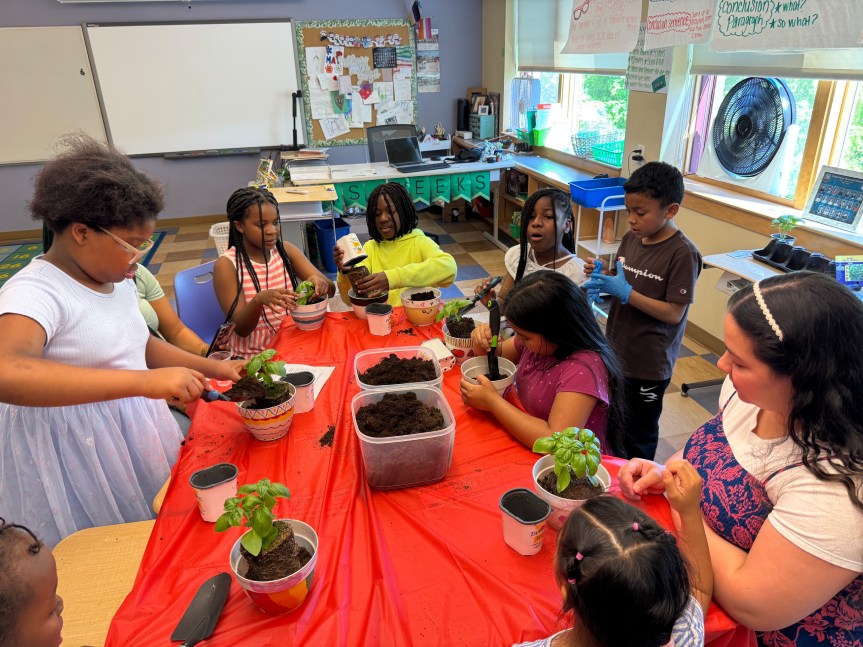
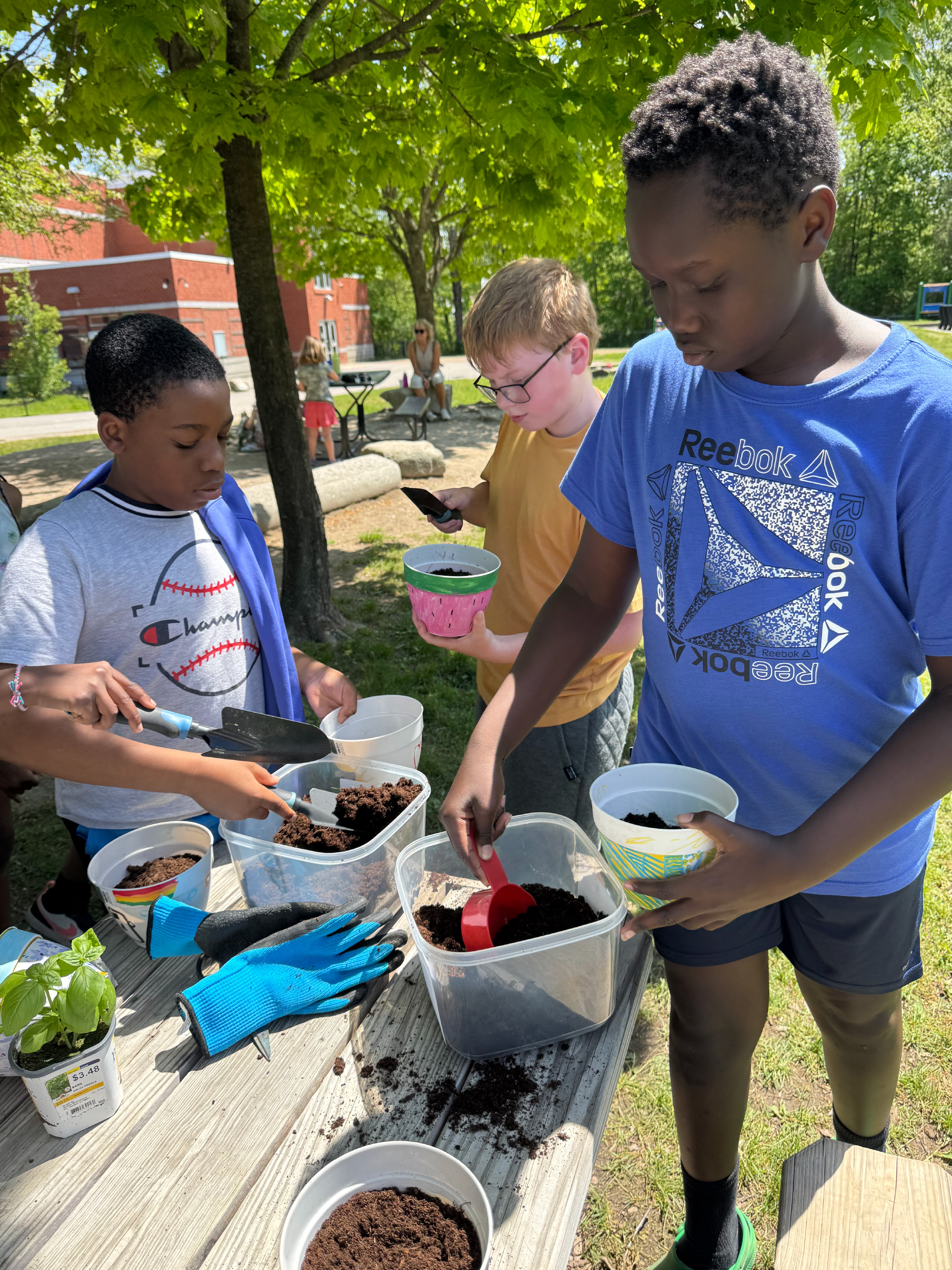
The daylong event allowed students to discover post-secondary opportunities through engaging, hands-on activities. Career paths in trades, culinary arts, agriculture, health care, media, and more were highlighted throughout the day. Students practiced knife skills with chefs, pulled lobsters from traps, and planted vegetables. They participated in Central Maine Power’s “Safety City” demonstration, regarding safety around power lines, and joined the Maine DOE Rethinking Responsive Education Ventures (RREV) team, along with the Student Leadership Ambassadors of Maine (SLAM) from Nokomis High School, for mock media interviews, designed for those interested in journalism and broadcasting.

L.L. Bean introduced the students to the world of retail through an interactive clothing activity that focused on merchandising and apparel knowledge. The iconic “Bootmobile” was also on display, drawing students in and sparking conversations about careers in retail and outdoor recreation.


“I want to become an EMT. If that doesn’t work out, I want to work in a mortuary,”  Abagail Giles, a student from Stearns High School, shared in an interview with NEWS CENTER Maine.

Educators and business partners at the summit emphasized the importance of creating inclusive pathways to employment.

“There is a ton of value, skill, brainpower, and I think it’s essential not to exclude a segment of the population,” Kim Cotta, Talent Development Manager at Darling’s Auto Group, said.

Titus O’Rourke, the Transition Specialist with the Maine DOE, emphasized the goal of the event in an interview with NEWS CENTER Maine: “[These students] belong in every single career pathway, and it’s important for students to understand what is available to them.”

By connecting students with real-world experiences and professional mentors, the “I Belong” Youth Summit helps to ensure that all Maine students with IEPs have the tools and confidence they need to shape their futures.

The third annual “I Belong” Youth Summit is set to take place in the Bangor area next spring. Due to the strong student participation from across the state for this event, Transition Maine and the Executive Student Transition Committee have plans to expand the “I Belong” Youth Summit.

For more information about the Maine DOE Transition Maine program, click here. Educators interested in connecting with someone about the Transition Maine program may contact her Titus O’Rourke at titus.orourke@maine.gov.

Your Voice Matters: Help to Name Maine’s New School Attendance Awareness Campaign!

As the Maine Department of Education (DOE) makes plans for Attendance Awareness Month in September, we are preparing to shine a spotlight on attendance and engagement in Maine schools with an attendance campaign name and slogan contest.

The Attendance Awareness Campaign will highlight what is working to bolster attendance and engagement in Maine schools; the ways in which educators and families are supporting the entire learning community; and how we can learn from and help one another in this work, ultimately leading to increased attendance and engagement in Maine schools.

You may submit up to three catchy naming ideas/phrases that capture the spirit of the importance of attendance and engagement in Maine schools. The Maine DOE will review all submissions, and then superintendents will vote on a winner this summer. The chosen name/slogan will become the heart of the Attendance Awareness Campaign, helping to guide the Maine DOE’s efforts in boosting attendance and engagement throughout the state. The creator of the winning submission will also earn statewide recognition!

Please submit your ideas using this form. Submissions are due by Tuesday, June 17, 2025, at 5 p.m. Let your voice be heard, and help us to craft an Attendance Awareness Campaign name and slogan that resonate across Maine!

Stay Tuned

This fall, the Maine DOE plans to continue this initiative with a logo design contest! Once the Attendance Awareness Campaign name/slogan are selected, a new phase of this effort will launch in September, as schools across Maine are invited to host their own logo design contests. Each school’s winning design may then be submitted to the Maine DOE for the opportunity to become the face of the campaign!

Be part of the movement. Inspire increased attendance in Maine schools. Make it count!

The Maine Engagement and Attendance Center (MEAC) is the sponsor of the Attendance Awareness Campaign contest. Learn more about MEAC here. With further questions, please contact Julie Smyth, Director of the Maine DOE Office of School and Student Supports, at julie.a.smyth@maine.gov.

Bowdoinham Community School Founds Its First ‘Play Club’

Second graders at Bowdoinham Community School experiment with old truck tires during Play Club earlier this spring. Kids find creative ways to play with standard, natural, and unusual playground items during this unstructured time.

Jonathan Haidt’s book “The Anxious Generation” planted a seed that took hold with Bowdoinham second-grade teacher, Kaleigh Frye. While much of the national conversation surrounding Haidt’s book has focused on phone-free schools, a second concept – “play-full schools” – piqued the interest of Bowdoinham Community School staff during professional conversations in August. Soon after, Frye approached Principal Chris Lajoie with a proposal: “I want to start a Play Club.”

Play Clubs promote a simple concept similar to neighborhoods of the past: They allow space and time for students of mixed ages to free play. Kids can play how they wish, are expected to organize and referee their own games, and find solutions to problems by themselves. Parents who sign their students up must acknowledge that not all kids may be happy all the time at Play Club, and supervising adults will intervene only in the case of an emergency or another big problem.

Utilizing a free implementation framework for schools from Let Grow, an organization dedicated to growing kids’ independence, the fall session of Bowdoinham Play Club started on Mondays after school, rain or shine. Fifty students spanning grades K-5 Participated. Students were allowed to use a wide swath of school property, including playground structures, natural play spaces in the woods, sports fields, and shady sitting spots.  

Early on, it took some trial and error for kids to navigate playing with much older or younger students—who, many times, were not their usual friends. 

“It didn’t come organically at first,” Frye recalled. “Kids innately want to involve an adult as soon as something goes wrong, so it has taken time and effort to learn how to handle these situations on their own.”

A Bowdoinham parent commends both the multi-age and extended-time aspects of Play Club – one full hour – compared to shorter and more grade-specific recess.

“I get the impression that the longer format on the playground feels more relaxing because they can really engage in whatever they are doing, uninterrupted by regular tasks,” the parent said.

After a winter reset, and as soon as the days became long enough once again, Frye started up a spring session of Play Club. Many students returned to the program, while welcoming a handful of new participants. The rules remained the same: 1. Don’t hurt anyone intentionally, and 2. Stay within the designated boundaries. Other than that, the supervising adults’ only role is just to say, “Go play!”

The impacts of Play Club have filtered into the school day. Teachers have reported hanging back and allowing kids to sort out recess disagreements, when in the past they may have stepped in more quickly. 

“We’ve watched as kids encounter trouble and then work with each other to find a fair and just solution,” Frye said. 

In many instances, the more time a teacher gave students to work out an issue, the more likely they were to navigate the challenge and resume play. Office referrals for recess conflict have dropped.

“Something changes for kids when they know the adults trust them to handle these things on their own,” Lajoie added. 

A parent of a third grader remarked that friendship issues for her son have greatly improved this year because “they are owning the resolution on their own.”

While some of these outcomes may have been predictable, one other result was not expected: Bowdoinham’s rate of chronic absenteeism has been cut nearly in half this year. Surely not all the credit can go to Play Club, but in the words of one young student whose attendance has been spotty, “Dude, I would never miss a Play Club day!”

This story was submitted by Bowdoinham Community School. To submit a good news story to the Maine DOE, please fill out the good news submission form.

Empowering Students: Workforce Development and the Dignity of Risk

Pictured (left to right): John Post, Kameron King, Danica Wooster, Kay Fearon, and Arnold Bulley. 

At the core of teaching is a central question: How can we ensure that every student gets the best education possible? This was the theme of the Maine Department of Education’s Inclusive Education Conference, focused on supporting students with disabilities throughout their pre-K-12 schooling and into meaningful adult lives. 

Held at the Augusta Civic Center, the conference provided an opportunity for attendees to sit in on a variety of panels and workshops, centered around some key questions: How can we rethink classroom spaces to make them more accessible to students who are receiving special education services? How can we rework individualized education plans (IEPs) to ensure inclusion across all settings? How can we ensure that students with disabilities have the same opportunities in school as other students?  

One such panel was on the topic of “Dignity of Risk for Students with Disabilities.” The panelists included a variety of people from different backgrounds, including educators, employers, employment specialists, and a young employee with lived experience, each offering valuable perspectives on how risk impacts the development and success of students with disabilities.

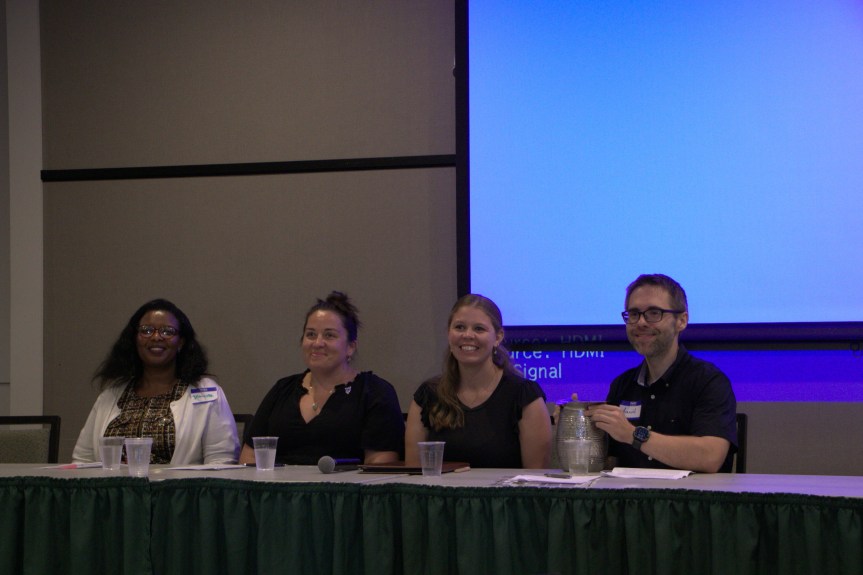
Liam Danaher, ELO Coordinator at Noble High School discusses the dignity of risk and supporting students in their journey with career exploration
Liam Danaher, ELO Coordinator at Noble High School, discusses the dignity of risk and supporting students in their journey with career exploration.

Janet May, Coordinator of Transition and Adults at the University of Maine Center for Community Inclusion and Disability Studies, opened the discussion asking panelists, “What is dignity of risk?” Each panelist responded with varying perspectives on the discussion; however, a common thread emerged: Students should be allowed to take risks, make mistakes, and fail, because it is often in that moment of failure that people truly grow. Panelist John Post, a vocational rehabilitation counselor said, “It is okay to have a negative impact from a risk. What’s important is to learn how to come back from it.”

Each panelist shared their own experiences, encouraging students to embrace manageable risks. Kamron King, who works in an apprenticeship program for high-skilled labor jobs, shared that starting out in the program was tough, but being allowed to fail helped him to grow. Danica Wooster, a Student Support Specialist at the Mid-Coast School of Technology, is a woman working in a male-dominated field. She emphasized the importance of pushing yourself and learning from personal challenges; Arnold Bulley, a Human Resources and Safety Manager at Shiretown Solutions in Houlton, noted that he always sets goals for students to help them grow, letting them take risks. Liam Danaher, Extended Learning Opportunities Coordinator at Noble High School, recalled his six-year-old son learning how to mountain bike with the mantra, “No risk, no reward.”

The panel went on to address many other questions about the balance between growth and support. In the end, it was a productive conversation about how to tackle these delicate and necessary challenges. 

Another panel question involved striking the right balance between providing necessary support, while still allowing for the dignity of risk and personal growth. As discussed by Wooster and Danaher, this balance is rooted in the belief that meaningful learning and growth happen through experience, especially through mistakes. The support should be individualized and dynamic, adapting to each student’s needs. King’s experience further emphasized this. He talked about how his vocational rehabilitation counselor supported him in his journey to becoming a welder at a shipyard, which, with many ups and downs, demonstrates how support helps individuals to flourish. 

Bulley added, “To me, a balanced support means pulling back on those parents and job coaches and employment specialists in order to let a person learn and grow.”

Ultimately, balancing support with risk is about building a toolkit that, as Kay Fearon, Diversified Occupations Instructor at Portland Arts and Technology High School described, helps students to adapt and find their own ways of achieving success, even in the face of limitations and challenges. 

Conference panelists emphasized that it’s not a one-size-fits-all approach; it’s about guiding students to recognize their strengths, confront their fears, and know that setbacks are part of the path to confidence, independence, and personal fulfillment.

For both employers and individuals alike, inclusive workplaces are essential. When people with disabilities and other diverse backgrounds are fully included, organizations across industries unlock greater potential—for their teams, individual employees, and the broader workforce.

This article was written by Vagni Das, a rising senior at Yarmouth High School. As part of her extended learning experience, she is working as an intern at the Maine DOE.

PRIORITY NOTICE: Teacher Shortage Areas Identified in Maine for the 2025-2026 School Year 

The U.S. Department of Education (USED) annually designates teacher shortage areas for the purposes of deferment of loan repayments or reductions of teaching obligation. The Maine Department of Education (DOE) recently requested input regarding designated teacher shortage areas for federal reporting and would like to thank all those who submitted information during the comment period. The comments related to teacher shortage enabled the Maine DOE to add additional teaching endorsements to the USED proposal.  

The following are pre-K-12 teacher shortage areas for the 2025-2026 school year in Maine: 

  • General Elementary   
  • Computer Technology 
  • Early Elementary 
  • English for Speakers of Other Languages  
  • English/Language Arts (middle and secondary levels)   
  • Health
  • Mathematics (middle and secondary levels)  
  • Theater
  • Science-Physical (secondary level)  
  • Science-Life (secondary level)  
  • Science (middle level) 
  • World Languages 
  • Visual Arts  
  • Teacher of Students with Disabilities 

The benefits to student financial aid recipients, such as loan cancellations, are indicated in the following regulatory provisions: 

  • 34 CFR 682.210(b)(5)(ii), (b)(7), (q), and (s) enable a borrower who had no outstanding Federal Family Education Loan (FFEL) Program loan on July 1, 1987, but who had an outstanding FFEL Program loan on July 1, 1993, to qualify for deferment of loan repayment under the Stafford Loan Program any time within the life of the borrower’s loan(s) for up to three years of service as a full-time teacher in a private elementary or secondary school in a teacher shortage area designated by the department, and as certified by the chief administrative officer of the particular school in which the borrower is teaching; 
  • 34 CFR 674.53(c) enables Federal Perkins Loan borrowers who are full-time teachers of mathematics, science, foreign languages, bilingual education, or any other field of expertise where the state educational agency determined there is a shortage of qualified teachers to qualify for cancellation of up to 100 percent of the outstanding balance on the borrower’s Federal Perkins loans; and 
  • 34 CFR 686.12(d) enables grant recipients to fulfill their teaching obligation under the Teacher Education Assistance for College and Higher Education (TEACH) Grant Program (regarding the requirement to serve at least four academic years, within eight years of graduation) by teaching in a “high-need field,” which includes academic disciplines/subject areas identified as teacher shortage areas at the time the grant recipient begins teaching in that field. 

Stafford Loan and Supplemental Loans for Students (SLS) borrowers who have questions concerning their loans, including the teacher shortage area deferment, may contact the Federal Student Aid Hotline at 1-800-4FED-AID. Federal Perkins Loan borrowers should contact the school where they received the loan.  

Please contact Erin Reinhard at Cert.DOE@maine.gov with any questions or concerns.  

Maine DOE Update – May 30, 2025

From the Maine Department of Education


News & Updates

Language, Culture, and Connection: Maine DOE Launches Global Partners Network Webpage

The Maine Department of Education (DOE) is proud to announce the launch of its new Global Partners Network webpage, a central hub highlighting Maine’s six active international agreements with China, France, Germany, Portugal, Spain, and Taiwan. This resource marks an important step in ongoing efforts to connect Maine educators and students to global learning opportunities that strengthen multilingualism, cultural understanding, and future readiness. |  More

Power Up Your Summer Learning Programs! May Flyer for Maine Surplus Property

Is your school in need of laptops, desktop computers, multi-device charging stations, monitors, or standard and multifunction printers/copiers/scanners? What about unused ink toner cartridges (HP and other brands), projectors with carrying cases (Epson, InFocus brands), white boards, desks, folding tables, chairs, or other furniture? If so, Maine Surplus Property has these and other items available! |  More


Maine Schools Sharing Success Stories

Submit good news to the Maine Department of Education here.


Professional Learning/Training Opportunities

Upcoming Opportunities to Strengthen Family Engagement Practices; Informational Session on June 3

The Maine Department of Education (DOE) Office of School and Student Supports is pleased to announce two upcoming opportunities for schools, school administrative units, and/or individual educators to strengthen their family engagement practices. |  More

Webinar: Nature as Canvas – Ephemeral Art and Outdoor Learning

Join Joshua Chard, Maine Department of Education (DOE) Arts Integration Teacher Leader Fellow, for an engaging 45-minute webinar on how nature-based and ephemeral art can ignite creativity, deepen content learning, and strengthen students’ connection to place. |  More

Deepen Your MTSS Expertise This Summer with New Asynchronous Mini-Course Series

Are you ready to grow your Multi-Tiered System of Supports (MTSS) knowledge and practice? This summer, the Maine Department of Education (DOE) Office of Teaching and Learning is excited to offer a three-part, fully asynchronous MTSS Mini-Course Series. Each 28-day course builds on the last—complete Course 1 to unlock Course 2, and finish Course 2 to gain access to Course 3. |  More

View the Maine Department of Education’s Events Calendar here.


Latest DOE Career/Project Opportunities:

Find education-related jobs in Maine.

Webinar: Nature as Canvas – Ephemeral Art and Outdoor Learning

Join Joshua Chard, Maine Department of Education (DOE) Arts Integration Teacher Leader Fellow, for an engaging 45-minute webinar on how nature-based and ephemeral art can ignite creativity, deepen content learning, and strengthen students’ connection to place.

Chard will be joined by special guest Becky Hallowell, 2025 Maine Teacher of the Year, who brings a deep commitment to outdoor, place-based education. Together, they’ll share real classroom examples, practical strategies, and easy-to-implement ideas for using natural materials to support cross-curricular learning—from science and math to writing and social-emotional learning.

This session is ideal for educators seeking to bring learning outdoors and create meaningful connections between art, the environment, and student voice.

Date: June 5, 2025
Time: 3:15-4 p.m.

No preregistration is required. Join the webinar here.

For further questions, please reach out to Maine DOE Arts Integration Teacher Leader Fellow Joshua Chard at joshua.chard@maine.gov.

Power Up Your Summer Learning Programs! May Flyer for Maine Surplus Property

Is your school in need of laptops, desktop computers, multi-device charging stations, monitors, or standard and multifunction printers/copiers/scanners? What about unused ink toner cartridges (HP and other brands), projectors with carrying cases (Epson, InFocus brands), white boards, desks, folding tables, chairs, or other furniture?

If so, Maine Surplus Property has these and other items available! Open this PDF to view the May Maine Surplus Flyer: Power Up Your Summer Learning Programs.

Approved donees may purchase items from Maine Surplus Property at 85 Leighton Road in Augusta between 8 a.m. and 3:30 p.m. Monday through Friday.

Are you not an approved donee yet? The general public may purchase items during the Maine Surplus Property public sale on the second Friday of each month.

For more information, please visit Maine Surplus Property or check out this Maine DOE Newsroom article about the Maine Surplus Property Donee Program. You can also sign up here to receive automatic updates!

Language, Culture, and Connection: Maine DOE Launches Global Partners Network Webpage

The Maine Department of Education (DOE) is proud to announce the launch of its new Global Partners Network webpage, a central hub highlighting Maine’s six active international agreements with China, France, Germany, Portugal, Spain, and Taiwan. This resource marks an important step in ongoing efforts to connect Maine educators and students to global learning opportunities that strengthen multilingualism, cultural understanding, and future readiness.

This launch follows the successful completion of the Maine DOE’s Multilingual/Multicultural Connections Webinar Series, a five-part virtual learning experience that brought together educators, school leaders, and community partners from across the state. This series underscored how language and culture enrich educational experiences and showcased how global partnerships can play a vital role in building inclusive, globally-engaged classrooms.

While the current webpage focuses on Maine’s formal partnerships with six international partners, it also serves as the foundation for a broader resource center. As the Maine DOE builds out this evolving resource, additional tools, professional learning opportunities, exchange program information, and language pathway guidance will be added in the coming months.

“Our goal is to make global engagement more visible and accessible to all Maine schools,” Ayesha Hall, Maine DOE Director of Strategic Partnerships, said. “This launch celebrates what we’ve already accomplished through international collaboration and sets the stage for deeper connections and expanded support for language and culture in education.”

What You’ll Find on the Webpage:

  • Overviews of international agreements with China, France, Germany, Portugal, Spain, and Taiwan. A description of how these partnerships support Maine schools through cultural and linguistic exchange
  • Updates on future resources and programs under development

This initiative reflects the Maine DOE’s commitment to advancing its Strategic Plan priorities—especially Priority 2: Workforce Development and Priority 3: Strengthening Educational Excellence and Equity—by ensuring all Maine learners have access to the benefits of multilingualism and cross-cultural exchange.

Visit the Global Partners Network webpage here. With questions, please contact Ayesha Hall at Ayesha.Hall@maine.gov.