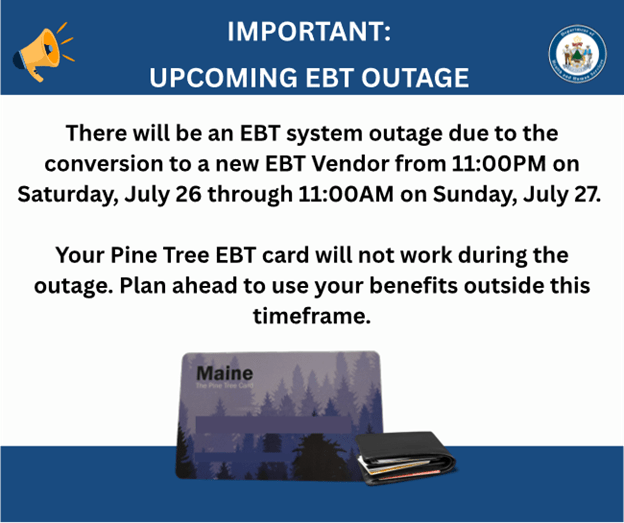
On July 27, the Maine Department of Health and Human Services (DHHS) Office for Family Independence will transition to Fidelity Information Services (FIS) for EBT Card Services. To make this transition, the EBT system will be out of service from 11 p.m. on Saturday, July 26, through 11 a.m. on Sunday, July 27. | More
The quiet trails of Viles Arboretum in Augusta came alive with conversation and creativity on June 9, 2025, as more than 100 students and families from Maine Connections Academy gathered for the school’s annual Spring Academic Summit. | More
The quiet trails of Viles Arboretum in Augusta came alive with conversation and creativity on June 9, 2025, as more than 100 students and families from Maine Connections Academy gathered for the school’s annual Spring Academic Summit. | More
Registration is now open for the 2025 Maine Department of Education (DOE) Annual Summit, which will be held on August 5 and 6 at Thomas College. The two-day event, which costs $250 per person, includes breakfast, lunch, and access to nearly 100 sessions from 7:30 a.m. to 4 p.m. daily. The Maine DOE is pleased to announce that registration fees will be waived for identified schools for up to $2,500 (the equivalent of 10 staff members) per school. Identified schools are those that have been identified as part of Maine’s Model of School Supports (MMSS). | More
On July 27, the Maine Department of Health and Human Services (DHHS) Office for Family Independence will transition to Fidelity Information Services (FIS) for EBT Card Services.
To make this transition, the EBT system will be out of service from 11 p.m. on Saturday, July 26, through 11 a.m. on Sunday, July 27. During this timeframe, purchases will not be possible.
Please consider sharing the following resources to help spread the word to Maine families:
The Maine Department of Education (DOE) is sharing this message in partnership with the Maine DHHS Office of Family Independence. With questions, please contact the Maine DHHS Office of Family Independence at 1-855-797-4357.
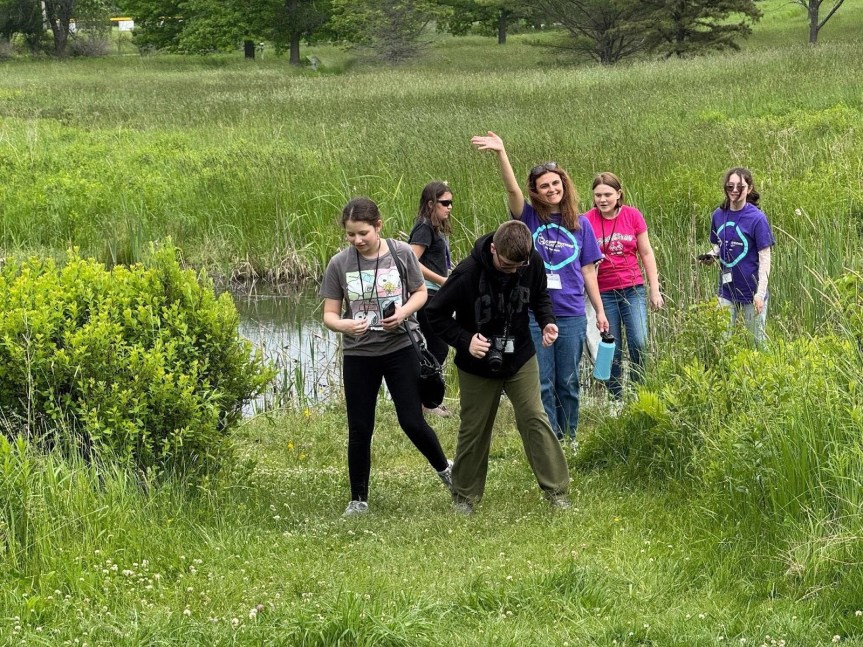
The quiet trails of Viles Arboretum in Augusta came alive with conversation and creativity on June 9, 2025, as more than 100 students and families from Maine Connections Academy gathered for the school’s annual Spring Academic Summit. Designed to blend online learning with real-world connection, the day-long event brought students out from behind their screens and into nature for a hands-on learning experience that celebrated both academics and community.
Maine Connections Academy is a tuition-free, online public school for students in grades 7-12 across Maine. It offers a personalized, flexible learning path for students of all backgrounds—whether they require an alternative to traditional school or simply thrive in a self-paced environment. The school emphasizes not only academic achievement but also the development of life skills and social-emotional growth. In-person events like the Spring Academic Summit play a critical role in helping students to stay engaged and connected.
“These in-person events are absolutely critical to our students’ success,” Lanie Roy, Maine Connections Academy health and physical education teacher, said. “While our online platform allows students to learn from anywhere in Maine, there’s something irreplaceable about students working together on projects, sharing ideas face-to-face, and building the social connections that are so important during high school years.”
Throughout the day, students rotated through ten activity stations that touched on science, art, and outdoor exploration. Some dove into DNA extraction experiments using berries, while others hit the trails for plant foraging lessons and picked up new techniques in nature photography. Artistic students enjoyed polymer clay crafting and watercolor painting, while others jammed in music workshops, challenged friends in Quiz Bowl competitions, and joined film club conversations. The day also included board games, outdoor recreation, and plenty of opportunities to socialize.
A barbecue lunch wrapped up the event, offering a relaxed setting for families, students, and staff to connect and reflect on the day’s experiences. For a school that serves students across all 16 counties in Maine, the Spring Academic Summit was a powerful reminder of the strong community that can be built, even in a virtual environment.
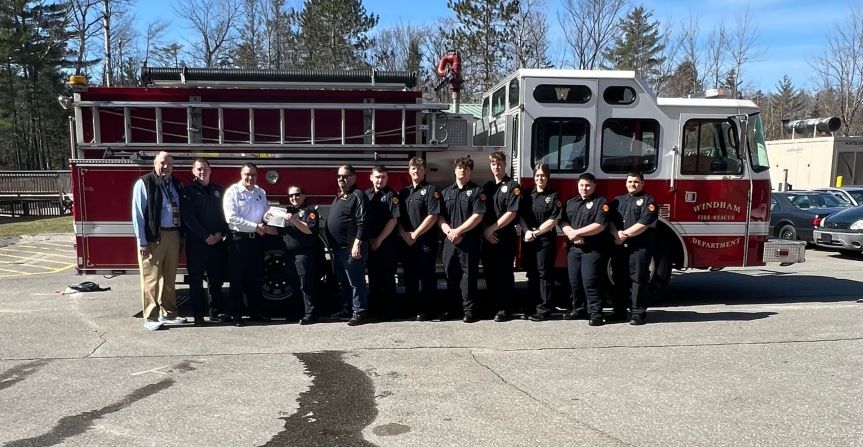
On Friday, April 18, 2025, excitement filled the air at the Foster Career and Technical Education (CTE) Center in Farmington, as a bright red fire truck pulled into the parking lot—not in response to an emergency but as a heartfelt gift. The Windham Fire Department donated this 2004 E-ONE fire truck just as it was being retired from active service, giving it a meaningful new role in training future firefighters.
When Windham Fire Department Chief Brent Libby learned that the Foster CTE Center needed a newer vehicle for hands-on training, he didn’t hesitate to help. Once the necessary approvals were in place, the donation was finalized, and the truck made its way to its new home. Chief Libby and Windham Fire Department firefighter Steve Bishop presented the truck to the school.
The students, led by firefighting instructor Ellie Adams, were ready and waiting. They had cleared and cleaned the vehicle bay, proudly wore their uniforms, and even prepared a celebratory cake to welcome the newest and biggest addition to their training space.
The joyful occasion brought together students, school leaders, and members of the firefighting community. Among the attendees were RSU 9 Superintendent Christian Elkington, School Board Member Deb Smith, Interim Foster CTE Director Galen Dalrymple, Mt. Blue High School Principal Joel Smith, and representatives from the Farmington Fire Department, including Chief T.D. Hardy, Deputy Chief Tim Hardy, and firefighters Job Alexander, Stanley Wilcox, and Jackson Hardy.
With this generous donation, students can now train with real-world equipment that reflects the tools and technology used in the field today. The Foster CTE Center’s firefighting program prepares students for meaningful careers in public safety—whether they become firefighters, EMTs, or continue their education in fire science or emergency services.
Thanks to the thoughtfulness, kindness, and community spirit of the Windham Fire Department and the Town of Windham, this fire truck will continue its service in a new and powerful way, helping future first responders to gear up for success with confidence, pride, and purpose.
The Maine Department of Education (DOE) Data Team would like to remind school administrative units (SAUs) of the following reports and their upcoming due dates: Truancy and Daily Attendance Certifications are due on July 15; all staff positions should be reviewed as soon as possible in NEO Staff following the rollover to the 2025-2026 school year on July 1; and the Graduation Certification Report is due on August 30. | More
The Maine School Superintendents Association (MSSA) recently recognized five outstanding educational leaders during the Maine Department of Education’s annual Commissioner’s Conference, held June 23 and 24 in Bar Harbor. | More
Fresh off of an outstanding season, the students of FRC Team 6329 were eager to give back to the community that had supported them. They saw an opportunity to share their passion for STEM (Science, Technology, Engineering, and Mathematics) and robotics with younger students and seized it. | More
Students at Cushing Community School ended their 2024-2025 school year not just with completed assignments and cleaned-out desks but with a meaningful act of kindness, bringing together learning and community service in a powerful way. | More
A once-plain hallway at Waterboro Elementary School has been transformed into a vibrant mural, thanks to the creativity and teamwork of LearningWorks students. What began as a request from school administration to “add some color” quickly evolved into a full-scale art project that reflects the spirit of the entire school community. | More
Educators across Maine are invited to join Narrative 4’s National Schools Network (N4NSN), a transformative professional learning opportunity designed to foster empathy, connection, and student engagement through the power of storytelling. | More
Registration is now open for the 2025 Maine Department of Education (DOE) Annual Summit, which will be held on August 5 and 6 at Thomas College. The two-day event, which costs $250 per person, includes breakfast, lunch, and access to nearly 100 sessions from 7:30 a.m. to 4 p.m. daily. The Maine DOE is pleased to announce that registration fees will be waived for identified schools for up to $2,500 (the equivalent of 10 staff members) per school. Identified schools are those that have been identified as part of Maine’s Model of School Supports (MMSS). | More
Educators across Maine are invited to join Narrative 4’s National Schools Network (N4NSN), a transformative professional learning opportunity designed to foster empathy, connection, and student engagement through the power of storytelling.
This free program empowers K–12 educators with the training, tools, and resources needed to create compassionate classroom communities where every student feels seen, heard, and understood.
By joining N4NSN, educators will:
Become Narrative 4 Certified Story Exchange Facilitators.
Gain access to easy-to-use curricular resources.
Receive professional development and individualized support.
Join a nationwide community of practice and peer collaboration.
Access ongoing networking opportunities.
Program Overview
Who should apply: individual educators or small teams (up to 10 people) from any U.S. K–12 school, district, or homeschooling coalition
Time commitment: 12–16 hours spread over six months
Application deadline: August 8, 2025
Why It Matters
“The N4NS had a profound impact on my students, and the experience expanded my teaching style through the use of their curricular resources,” Leslie S. Leff, School Adjustment Counselor at New Hingham Regional Elementary School in Massachusetts, said.
The Narrative 4 model helps educators to unlock student engagement and create more inclusive learning environments by cultivating a culture of connection and mutual respect.
Don’t miss this opportunity to deepen your practice and build a stronger school community. Visit this link to learn more and apply.
About Narrative 4
Narrative 4 is a global nonprofit dedicated to equipping young people to harness the power of storytelling to drive positive change. Through its programs, students and educators alike develop skills in empathy, deep listening, imagination, and social impact.
In May, the Bucksport High School Robotics Team—or FIRST Robotics Competition (FRC) Team 6329—and their incredible robot, Tide, once again proved they’re among the best in the world.
The Bucksport High School Robotics Team had a phenomenal season, racking up an impressive 55-11 record. The team clinched victories at both the Pine Tree and Southern Maine events, earned a runner-up title at the prestigious New England Championships, and finished eighth in the highly competitive Curie Division at the World Championships—solidifying a place among the global elite.
Fresh off of an outstanding season, the students of FRC Team 6329 were eager to give back to the community that had supported them. They saw an opportunity to share their passion for STEM (Science, Technology, Engineering, and Mathematics) and robotics with younger students and seized it.
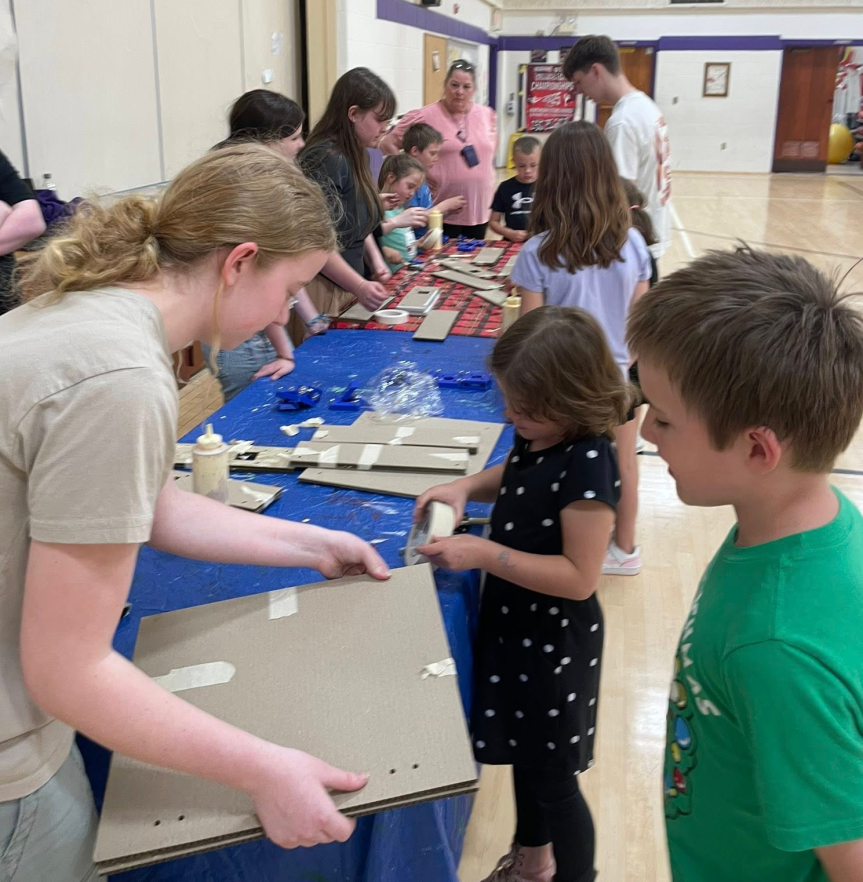
This spring, the team launched a new after-school program at the Downeast Family YMCA, bringing together innovation, creativity, and community engagement. Designed for elementary-aged students, this program introduced engineering and robotics fundamentals to kids by having them build functional robots entirely out of cardboard.
These weren’t just any cardboard creations, though. Thanks to a new laser cutter purchased through a Maine Department of Education (DOE) Maine Learning Technology Initiative (MLTI) “Teach with Tech” grant, the team was able to design and cut precise parts for robots. Bucksport students Madi Robinson and Izzy McSharry, with support from their teachers, designed the robots in their high school engineering classes and fabricated all of the components used by these younger students.
“Cardboard might sound low-tech, but it’s actually a fantastic material for rapid prototyping,” a team member said. “It’s safe, inexpensive, and with the laser cutter, we can create detailed and functional components.”
The laser cutter, acquired earlier in the 2024-2025 school year through the MLTI grant, has expanded the Bucksport High School Robotics Team’s capabilities—not only for its competitive work but also for its outreach. This YMCA after-school program grew from a desire to spark early interest in STEM and give back to the local community. Supported by their robotics coaches, students developed hands-on activities that taught basic engineering principles, teamwork, and creative problem-solving.
“Our students really took the lead,” FRC Team 6329 coach John Boynton said. “They weren’t just mentoring; they were designing, teaching, troubleshooting, and encouraging kids to believe they could be engineers, too.”
Sophomore FRC Team 6329 member Lily Frost designed this pilot program, and the team hopes it is just the beginning. This summer, the team is running a one-day-per-week program for more than 50 kids through the YMCA day camps in Bucksport. Future plans may also include modules on 3D printing, Computer-Aided Design (CAD), and laser cutter training.
This young, passionate team from Bucksport High School is proving that small-town schools can lead big ideas—and that the future of engineering is already in capable hands.
The Maine Department of Education (DOE) Data Team would like to remind school administrative units (SAUs) of the following reports and their upcoming due dates: Truancy and Daily Attendance Certifications are due on July 15; all staff positions should be reviewed as soon as possible in NEO Staff following the rollover to the 2025-2026 school year on July 1; and the Graduation Certification Report is due on August 30.
Please find detailed information and resources for each report below.
Truancy and Daily Attendance Certifications
The final certifications of Truancy and Daily Attendance for the 2024-2025 school year are due on July 15. Superintendents must certify these reports once data specialists and SAU data teams have reviewed and updated them. Data on the Daily Attendance Certification report are used to calculate Chronic Absenteeism for public reporting and accountability measures.
NEO Staff was rolled to the 2025-2026 school year on July 1. During this rollover, all staff were updated to Pending status. All staff must be updated to reflect their current position. Please review all staff positions in NEO, add new staff if necessary, and update salary, contact, and position information to reflect each staff member’s position for this school year.
New superintendents should be updated in NEO Staff immediately to ensure that they can perform state-level reporting, complete report certifications, and receive critical and time-sensitive communications from the Maine DOE.
Resources:
NEO Staff Data Entry Webinar on August 26 at noon – Register here.
Graduation Certification Report
This report allows SAUs to validate graduation counts for the school year. Students still working toward finishing their graduation requirements have until August 15 to complete them for this reporting cycle. Students who finish their requirements over the summer can be exited from State Synergy on the date of the graduation ceremony. The graduation date must be prior to June 30.
Open Date: July 1 Due Date: August 30 Resources:
Graduation Reporting Webinar on August 5 at noon – Register here.
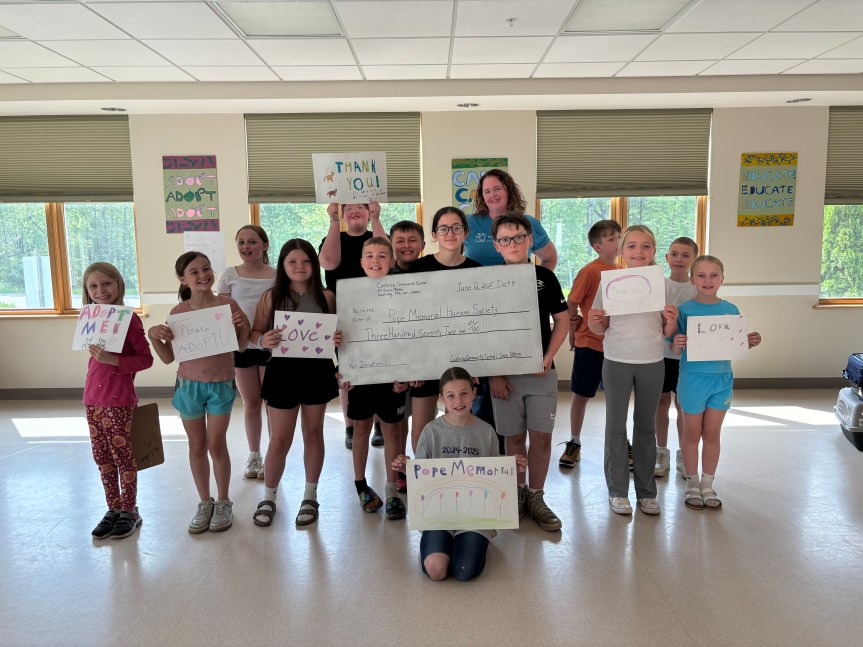
Students at Cushing Community School ended their 2024-2025 school year not just with completed assignments and cleaned-out desks but with a meaningful act of kindness, bringing together learning and community service in a powerful way.
On June 12, 2025, a handful of students (the “Sea Store Team”), along with advisor Ms. Jennifer York, delivered a donation of $374 to the Pope Memorial Humane Society in Thomaston. That generous gift was made even more impactful through the Humane Society’s Sherman Medical Fund matching program, bringing the total value to $748. These funds will directly support medical care for animals in need, making a lasting difference in the lives of local pets awaiting adoption.
This donation was the result of a year-long effort by the school’s Sea Store Team, a dedicated group of fourteen students who operated a small but vibrant store at the school each Friday morning during arrival time. The Sea Store offered essential school supplies, such as pencils, pens, notebooks, stickers, rulers, glue sticks, and more. It quickly became a popular stop for student shoppers and was a highlight of the weekly routine during the school year.
Running the Sea Store gave students real responsibilities. They took on roles as cashiers and customer support helpers, learning to handle money, give change, assist customers, and do mental math—all in a supportive, real-world setting. The experience gave both team members and shoppers the chance to strengthen practical skills in a fun, meaningful way.
The lessons learned from the Sea Store extended far beyond the cash register, too. Students on the Sea Store Team learned what it takes to run a small business, from choosing which items to sell and setting prices, to promoting the store, to working together to keep the store running smoothly. This project offered valuable experience in teamwork, communication, and problem-solving—and all for a great cause.
The Sea Store Team chose to donate the store’s profits to Pope Memorial Humane Society, transforming their business into a school-wide community service project. When it came time to deliver the donation, the students were treated to a behind-the-scenes tour of the shelter and even got to spend some time with puppies and kittens. This up-close opportunity with the animals they were helping made the experience feel even more rewarding.
The Sea Store has been more than just a school fundraiser; it has been a project rooted in learning, leadership, and compassion. Through their efforts, students gained real-world skills, contributed to a cause they care about, and experienced the joy of giving back.
As the school year came to a close, the Sea Store Team walked away with business experience and a sense of pride, purpose, and a reminder that even small actions can create big, positive change.
Pictured: Craig Larrabee, President, Jobs for Maine Graduates (JMG), speaking to the audience after receiving the 2025 Distinguished Service to Education Award.
The Maine School Superintendents Association (MSSA) recently recognized five outstanding educational leaders during the Maine Department of Education’s annual Commissioner’s Conference, held June 23 and 24 in Bar Harbor.
Presented annually, the Outstanding Leadership Awards and the Distinguished Service to Education Award celebrate superintendents and educational leaders who demonstrate exceptional dedication, innovation, and leadership in supporting Maine’s students and schools.
“These awards highlight the truly transformative work of educational leaders across Maine,” MSSA Executive Director Eileen King said. “Their leadership is directly leading to better outcomes for students—safer schools, improved academics, and stronger pathways to meaningful careers. These honorees represent just a few of the many ways our superintendents, staff, and communities are working together to strengthen public education.”
2025 Outstanding Leadership Award Recipients
Heather Manchester, Superintendent, MSAD 17 Nominated by Western Maine Superintendents Manchester has emerged as a powerful advocate on legislative issues and a champion of outdoor learning. Through partnerships with local nonprofits such as Healthy Oxford Hills and the Western Foothills Land Trust, she has expanded meaningful outdoor learning opportunities across her district. Her transparent, compassionate, and community-centered leadership style has earned her deep trust and respect.
Left to right: Eileen King, MSSA Executive Director; Heather Manchester, Superintendent of MSAD 17; and Rhonda Sperrey, Superintendent of RSU 64 and MSSA President Elect.
Mike Felton, Superintendent, St. George Municipal School District Nominated by Mid-Coast Region Superintendents Felton has played a transformative role in revitalizing Career and Technical Education (CTE) in his district, raising more than $4 million to build a pre-K–12 CTE program after a 14-year regional gap. By working closely with business and community partners, he has reestablished CTE as a cornerstone of student opportunity. Later this year, Felton will transition from superintendent to serve as executive director of the St. George Community Development Corporation.
Left to right: Rhonda Sperrey, Superintendent of RSU 64 and MSSA President Elect, Mike Felton, Superintendent of St. George Municipal School District; and Eileen King, MSSA Executive Director.
Jeffrey Porter, Superintendent, MSAD 51 Nominated by Cumberland County Superintendents Porter was honored for his steadfast commitment to protecting the rights and well-being of all students. Known for his calm, courageous, and professional leadership, he also serves as chair of MSSA’s Ethics Committee, offering thoughtful guidance to peers navigating complex challenges. His empathy and integrity are widely recognized across the education community.
Left to right: Eileen King, MSSA Executive Director; Jeffrey Porter, Superintendent of MSAD 51; and Rhonda Sperrey, Superintendent of RSU 64 and MSSA President Elect.
Jonathan Moody, Superintendent, MSAD 54 Nominated by Kennebec Valley Superintendents Moody has been a driving force for both local and state-level educational improvement. As MSSA’s liaison to the State Board of Education, he has advocated for policy changes around student transfers and teacher certification. Within his district, Moody has led significant initiatives, including expanding the Somerset Career and Technical Center and developing a new elementary school with integrated early childhood programming for children as young as six weeks.
2025 Distinguished Service to Education Award
Craig Larrabee, President, Jobs for Maine Graduates (JMG) Under Larrabee’s leadership, JMG has grown significantly, helping to boost graduation rates, build clear career pathways, and embed leadership and community service into students’ daily experiences. His work has made a measurable difference in the lives of thousands of Maine students.
The Maine School Management Association (MSMA) provided the information for this article. Read their press release here. For further information about the awards program, please contact MSMA at msma@msmaweb.com.






 Maine DOE Newsroom
