Maine DOE Update – June 12, 2020


From the Maine Department of Education


Reporting Items

| Visit the DC&R Reporting Calendar |


News & Updates

MEDIA RELEASE: Draft Framework for Return to Classroom Instruction Released

The Maine Department of Education released a draft framework to assist schools in planning for return to school scenarios in the fall. The framework was developed with input from multiple stakeholder groups, including the Department of Education’s Student Cabinet, community health experts, and educators representing the many roles in schools. | More

Child Nutrition Programs Continue to Feed Children Beyond School Year with Summer Food Service Program

With the assistance of the U.S. Department of Agriculture, Maine public schools have long offered a nutritious breakfast and lunch meal program to thousands of children in Maine during the school year. This year, many flexibilities were put into place to ensure children still had access to meals while learning remotely from home. We applaud everyone who worked hard to provide food to children during a challenging school year. With summer right around the corner, that important service must continue. The Summer Food Service Program, a U.S. Department of Agriculture program, operates at hundreds of sites across Maine to ensure children get the nutrition they need. | More

Department of Education: Our Commitment and Shared Resources to Combat Racism

During the recent weeks we have seen the very best and the very worst in humanity, and this is a time of deep divides, fear, and anger. The murder of George Floyd is only the most recent example in a long and tragic pattern. There are glaring injustices faced by members of our communities, rooted in a long history of systemic racism and violence. We at the Department of Education (DOE) share in the outrage and frustration, and stand with those who are peacefully protesting and demanding a change. We believe in the basic human dignities that should be afforded to all people in our country. We stand with and for our many colleagues, students, and their families who identify as Black, Indigenous, and People of Color (BIPOC) around the state, and will do all that we can to fight racism and inequities, and to ensure they are safe and welcomed in the State of Maine. We affirm with you that Black Lives Matter. | More

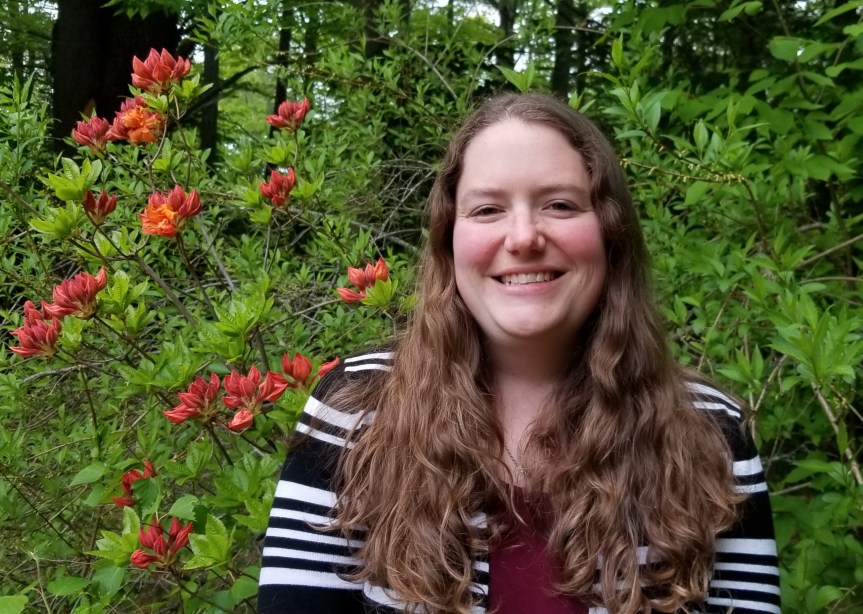
Get to Know the DOE Team: Meet Amelia Lyons

Maine DOE Team member Amelia Lyons is being highlighted this week as part of the Get to Know the Maine DOE Team campaign. Learn a little more about Amelia | More


Maine Schools Sharing Success Stories

| Submit your Maine School Success Story |


Professional Development & Training Opportunities

DOE Virtual Professional Learning Available Through Summer

The Maine Department of Education continues update a robust schedule of virtual professional learning, office hours and meetings through the summer months to support school and district staff with their professional learning needs as they prepare for the possible scenarios we will face in the 2020-2021 school year. | See the Virtual Meeting Schedule or try browsing in our new Calendar.

| Visit the Professional Development Calendar |


Latest DOE Career/Project Opportunities

View current Maine Department of Education employment opportunities here


MEDIA RELEASE: Draft Framework for Return to Classroom Instruction Released

Today Maine Department of Education released a draft framework to assist schools in planning for return to school scenarios in the fall. The framework was developed with input from multiple stakeholder groups, including the Department of Education’s Student Cabinet, community health experts, and educators representing the many roles in schools.

“Although we have worked on this for over two months, it will remain in ‘draft’ form due to the unpredictable and constantly evolving nature of the COVID-19 situation” said Commissioner of Education Pender Makin on Thursday. “We will be responsive to changing conditions and recommendations from medical science, and our team will consider received feedback to make improvements.”

Decisions regarding when it is advisable for schools to return to classroom-based instruction will be made by Maine DOE, in partnership with Maine Emergency Management Association (MEMA) and Maine Center for Disease Control and Prevention(CDC).

Decisions around specific models, schedules, and configurations for returning to the classroom setting, given the health and safety guidelines around social distancing, maximum group sizes, and hygiene, will be made by local school administrative units. The framework includes minimum expectations for remote learning programs and remote instructional days to assist in this development process.

Commissioner Makin added, “We continue to be humbled by the resilience and innovation shown by educators, students and families across Maine during this emergency period. We remain committed to providing support for the ongoing efforts to ensure an equitable and safe education for all Maine students.”

The draft framework can be viewed on the Department of Education’s website, here. Additionally, a responsive survey is being finalized, through which the public will be able to provide feedback.

###

Get to Know the DOE Team: Meet Amelia Lyons

Maine DOE Team member Amelia Lyons is being highlighted this week as part of the Get to Know the Maine DOE Team campaign. Learn a little more about Amelia in the brief question and answer below.

What are your roles with DOE?

I currently wear two hats at the DOE: Migrant Education and Homeless Education. I work with the children of migrant agricultural workers, who move so their family members can work in agriculture or fishing, and we support them in their education. In Maine, the common industries we see eligible migrant students in are blueberries, broccoli, seafood processing, tipping for wreathmaking, and elver fishing. Many people confuse the word “migrant” with “immigrant” but for the purposes of our program, “migrant” just means “moving.” Any child in Maine may qualify for this supplemental support if they have moved across school district lines and have someone in the household who’s worked in agriculture or fishing. If you think you know of a family who may qualify, please reach out.

I also recently started as the McKinney-Vento Homeless Education consultant. This includes supporting districts in their work with students who lack a fixed, regular, and adequate night time residence, which can include students who are living “doubled up” with another family. Each district has a McKinney-Vento Liaison who is tasked with identifying and serving students who qualify. I’m always happy to talk to folks about this population as well.

What do you like best about your job?

My favorite part of my job is when we can work collaboratively to solve some problems! I like when we put our heads together with families, school staff, and community partners, and find out how to best support students in their academic journey, in a way that is culturally responsive and strengths based. An important part of my role is acknowledging the many external factors and systemic barriers that significantly impact students’ lives. This position has allowed me to work with local districts to build relationships and resources to support students’ rights.

How or why did you decide on this career?

I believe in the power of education and have seen the amazing things a single dedicated teacher can do for a child. Migrant students and students experiencing homelessness have significant funds of knowledge and have rights to the same opportunities as other students. I chose this career because I am able to advocate both for and with these populations in this role. It’s motivating for me to be learning about and working on more equitable and inclusive policies so that each student can be valued for the unique strengths that they bring. I am continually learning!

What do you like to do outside of work for fun?

Trying to keep up with my one year old is a lot of fun! I also enjoy doing anything outside this time of year, traveling, and learning about different cultures and languages.

Child Nutrition Programs Continue to Feed Children Beyond School Year with Summer Food Service Program

AUGUSTA — With the assistance of the U.S. Department of Agriculture, Maine public schools have long offered a nutritious breakfast and lunch meal program to thousands of children in Maine during the school year. This year, many flexibilities were put into place to ensure children still had access to meals while learning remotely from home. We applaud everyone who worked hard to provide food to children during a challenging school year. With summer right around the corner, that important service must continue. The Summer Food Service Program, a U.S. Department of Agriculture program, operates at hundreds of sites across Maine to ensure children get the nutrition they need.

“During this unprecedented time, Maine’s National School Lunch Programs have truly demonstrated their importance in providing a lifeline to our students for whom schools are a much needed and consistent source for food.” said Maine Department of Education Commissioner Pender Makin. “The Summer Food Service Program will continue to provide this invaluable resource to Maine students, and we are committed to assisting schools and communities as they address the needs of the whole child.”

The Summer Food Service Program may be offered statewide in areas or at sites where more than 50 percent of the children are eligible for free or reduced meal benefits under the National School Lunch Program or where census track data supports the need. Eligible sponsoring organizations include schools, nonprofit residential summer camps, government agencies, and tax-exempt organizations including faith-based organizations.

In Summer 2019, 122 sponsors participated in the program, serving meals at 467 sites throughout the state. Sponsors operate open sites in all 16 counties in Maine; anyone 18 and under may come to eat at no cost. Many sponsors will be utilizing USDA flexibilities which allow meals to be consumed off site to promote physical distancing, and are offering innovative delivery and service models to meet the demand safely. To find nearby Summer Meal sites, please visit USDA’s Summer Meal Site Finder website at: https://www.fns.usda.gov/meals4kids, text “Summer Meals” to 97779 or call Maine 211.

Information is available late-June.

For more information about the Maine DOE’s Summer Food Service Program, contact adriane.ackroyd@maine.gov, call 624-6726 or visit https://www.maine.gov/doe/schools/nutrition/programs/sfsp.

###

In accordance with Federal civil rights law and U.S. Department of Agriculture (USDA) civil rights regulations and policies, the USDA, its Agencies, offices, and employees, and institutions participating in or administering USDA programs are prohibited from discriminating based on race, color, national origin, sex, disability, age, or reprisal or retaliation for prior civil rights activity in any program or activity conducted or funded by USDA.
Persons with disabilities who require alternative means of communication for program information (e.g. Braille, large print, audiotape, American Sign Language, etc.), should contact the Agency (State or local) where they applied for benefits.  Individuals who are deaf, hard of hearing or have speech disabilities may contact USDA through the Federal Relay Service at (800) 877-8339.  Additionally, program information may be made available in languages other than English.
To file a program complaint of discrimination, complete the USDA Program Discrimination Complaint Form, (AD-3027) found online at: http://www.ascr.usda.gov/complaint_filing_cust.html, and at any USDA office, or write a letter addressed to USDA and provide in the letter all of the information requested in the form. To request a copy of the complaint form, call (866) 632-9992. Submit your completed form or letter to USDA by:
(1)     mail: U.S. Department of Agriculture
Office of the Assistant Secretary for Civil Rights
1400 Independence Avenue, SW
Washington, D.C. 20250-9410;
(2)      fax: (202) 690-7442; or
(3)      email: program.intake@usda.gov.
This institution is an equal opportunity provider.
The Maine Human Rights Act prohibits discrimination because of race, color, sex, sexual orientation, age, physical or mental disability, genetic information, religion, ancestry or national origin.
Complaints of discrimination must be filed at the office of the Maine Human Rights Commission, 51 State House Station, Augusta, Maine 04333-0051. If you wish to file a discrimination complaint electronically, visit the Human Rights Commission website at https://www.maine.gov/mhrc/file/instructions and complete an intake questionnaire. Maine is an equal opportunity provider and employer.

Department of Education: Our Commitment and Shared Resources to Combat Racism

During the recent weeks we have seen the very best and the very worst in humanity, and this is a time of deep divides, fear, and anger. The murder of George Floyd is only the most recent example in a long and tragic pattern. There are glaring injustices faced by members of our communities, rooted in a long history of systemic racism and violence.  We at the Department of Education (DOE) share in the outrage and frustration, and stand with those who are peacefully protesting and demanding a change.  We believe in the basic human dignities that should be afforded to all people in our country. We stand with and for our many colleagues, students, and their families who identify as Black, Indigenous, and People of Color (BIPOC) around the state, and will do all that we can to fight racism and inequities, and to ensure they are safe and welcomed in the State of Maine. We affirm with you that Black Lives Matter.

We want to share with all families in our state, particularly families of color, that we acknowledge your pain. We are grieving with you. We are working, individually and collectively, to dismantle the influence of white privilege in our schools, our organization, our communities, and our state. We will continue to learn and to analyze these issues through both an individual and systemic lens and work to break down barriers for every student in Maine. This will be a continuous commitment, and we are dedicated to persisting with this work within our own organizational culture.

We also recognize that our children are trying to make sense of what they are hearing and seeing. They are looking to the adults to determine meaning and to guarantee safety.  It can be difficult for us to provide them answers that are developmentally appropriate, comforting, and honest.  Through empathy and understanding, and with commitment and hard work, we hope that one day we can assure all children, no matter their skin color, that they are safe, they are valued, and their lives matter.

Recognizing the need for additional support to the field, the Department had previously redesigned and created positions tasked with understanding and addressing inequity in our schools, as well as an inter-office Diversity, Equity, and Inclusion Team. Additionally, the Maine Department of Education has committed to:

  • Investing in an equity audit of the Department’s policies, including hiring practices
  • Investing and dedicating time for comprehensive and ongoing racial equity training for all DOE staff
  • Providing resources and encouraging Black History and Ethnic Studies in PK-12 curricula and decolonizing current curricula
  • Investigating and reducing the barriers to certification for internationally-trained and prospective teachers to increase the diversity of Maine’s education workforce
  • Supporting and encouraging the work of restorative and transformative justice practices in our schools
  • Honoring and celebrating all the languages, cultures, histories, and identities of our colleagues, students and their families
  • Further supporting school counselors, social workers, and mental health providers in our schools
  • Providing a Social and Emotional Learning curriculum, developed in Maine, to be offered to all schools in the State

We understand that many may be at a loss for words during a time like this, and that we are unsure how to support our students in talking about their questions and fears regarding racial violence and racism.  To that end, we have compiled a few resources and recommendations for educators and those wanting to learn more about their own implicit biases, the long and current history of racism in this country, and what we can do about it.

In Solidarity,
Maine Department of Education

Resources
For those who want to do something right now: starting with your own self-education on your own implicit biases and the history of racism in this country is a good place to start. Consider reviewing these resources and engaging in conversations with loved ones about the issues you’re reading about. Please be cautious about asking your friends who are people of color (POC)  to educate you on these traumatic topics. There are a lot of materials already developed for you to learn from. It is not the responsibility of POC to teach white people about racism.

For educators:

Self-Care:
It is essential that we take care of ourselves and each other during this difficult time. Below are some resources for educators and students to support their own emotional well-being.

Activities and Books:

  • Harvard Implicit Bias tests
  • Inequality in America explained: A short video history
  • So You Want to Talk about Race, Ijeoma Oluo
  • Why Are All the Black Kids Sitting Together in the Cafeteria, Beverly Daniel Tatum
  • How to be Anti-Racist, Ibram X. Kendi
  • Waking Up White, Debby Irving
  • White Fragility, Robin DiAngelo
  • Me and White Supremacy, Layla F. Saad
  • Between the World and Me, Ta-Nehisi Coates
  • Other People’s Children, Lisa Delpit

Books for children/the classroom:

  • The Hair Love, Matthew A. Cherry
  • A Computer Called Catherine, Suzanne Slade
  • Let’s Talk About Race, Julius Lester
  • Whose Toes Are Those?, Jabari Asim
  • Lovely, Jess Hong

Note: Many of these titles are currently on back order. Consider purchasing the audio book, watching online interviews with the authors, following them on social media, or listening to podcasts from the authors in the meantime.

Considerations to assess equity practices for school administrative units (SAUs) and schools

  • Who are the people reflected in the books students read and the lessons that are taught? If there are People of Color (POC), are they only represented through a negative lens or a traumatic event (slavery, genocide, villains etc.)? Are there examples of People of Color who are main characters or heroes?
  • Is diversity reflected in the school staff? Do students know teachers of color, principals of color, superintendents of color? What are the retention rates for staff of color? How and where are open positions advertised?
  • Are policies and/or procedures truly inclusive for diverse families (race, religion, sexual orientation, gender identity, socioeconomic status, multilingual, undocumented, different abilities, etc.)?
  • How do diverse families have a voice in policies and/or procedures? How do we know they feel safe to share their voice? What are plans to engage families?
  • How has the SAU trained and supported educators to navigate issues around race and equity in the classroom?
  • How are students’ cultures, heritages, foundations of knowledge, and languages promoted and celebrated as resources in school?
  • How do you determine students’ perceptions about their school culture? How often?
  • What is the police presence in school and how do they collaborate with school social workers and counselors? Is feedback from families about this presence and relationship with their children assessed and collected?
  • What implicit bias training is school staff receiving, particularly in regard to equity in grading and discipline?
  • How are students’ cultures and religions accommodated in the development of the school calendar and event planning?


Maine DOE Update – June 5, 2020


From the Maine Department of Education


Reporting Items

| Visit the DC&R Reporting Calendar |


News & Updates

Governor’s Executive Order #56, School Budget Process

On June 3, 2020 Governor Janet Mills issued Executive Order #56, An Order to Further Facilitate the State of Primary and Local Elections Within Public Health Restrictions Due to COVID-19.  | More

Twenty-four School Administrative Units Awarded McKinney-Vento Mini Grants

The Maine Department of Education is happy to announce that the McKinney-Vento Subgrants: COVID-19 Emergency Mini Grants have been selected. Twenty-four districts applied for the funds and all twenty-four requests are conditionally awarded. | More

Maine Department of Education’s Guidance for Pre-Kindergarten/Kindergarten Child Find Screening

Maine Department of Education Rule Chapter 101 includes federally mandated Child Find requirements, including timely screening procedures for incoming Pre-K and Kindergarten students.  While some Maine schools engage in screening for Child Find in late August or early September, many typically screen in the spring of the year.  With the current precautions in place to address the transmission of COVID-19, schools that typically screen in the spring have likely postponed in-person screening. | More

Free Resources to Help Keep Children Safe From Cyber-Crimes

Homeland Security Investigations (HSI) is the investigative arm of the Department of Homeland Security. Among their investigative priorities are cyber-crimes which includes child sexual exploitation. In partnership with the National Center for Missing and Exploited Children (NCMEC) and the Internet Crimes Against Children (ICAC) Task Force, HSI has developed its Project iGuardian. | More

REMINDER: Register for the 5th Annual Read to Ride Summer Reading Challenge

A unique world of remote learning and creative teaching has been the norm in recent weeks, but summer vacation is right around the corner. Summer vacation will be a welcome change of pace for families and teachers, yet the importance of summer reading will be as critical as ever. Educators and families have worked tirelessly to engage and challenge students. Making reading a part of the student experience this summer will be invaluable to a successful return to classrooms in the fall. | More

Get to Know the DOE Team: Meet Stephanie Stambach

Maine DOE Team member Stephanie Stambach is being highlighted this week as part of the Get to Know the Maine DOE Team Campaign. Learn a little more about Stephanie in this brief question and answer. | More


Maine Schools Sharing Success Stories

| Submit your Maine School Success Story |


Professional Development & Training Opportunities

PRIORITY NOTICE: DOE Virtual Professional Learning Now Available Through Mid-June!

The Maine Department of Education has posted an updated and robust schedule of virtual professional learning, office hours and meetings through mid-June to support school and district staff with their professional learning needs as they conclude emergency teaching plans and prepare for the possible scenarios we will face in the 2020-2021 school year. | Virtual Meeting Schedule

| Visit the Professional Development Calendar |


Latest DOE Career/Project Opportunities

View current Maine Department of Education employment opportunities here


Governor’s Executive Order #56, School Budget Process

On June 3, 2020 Governor Janet Mills issued Executive Order #56, An Order to Further Facilitate the State of Primary and Local Elections Within Public Health Restrictions Due to COVID-19.  Included in this order are measures to assist communities in their local school budget processes. Maine School Management Association (MSMA) has developed further guidance and clarification on this Executive Order for School Administrative Units. Guidance for agendas and warrants can be found here, and guidance based on school configuration can be found here. The Executive Order can be read in its entirety, here.

Twenty-four School Administrative Units Awarded McKinney-Vento Mini Grants

The Maine Department of Education is happy to announce that the McKinney-Vento Subgrants: COVID-19 Emergency Mini Grants have been selected. Twenty-four districts applied for the funds and all twenty-four requests are conditionally awarded. Thank you to each of these districts for their thoughtful dedication to identifying and serving students experiencing homelessness in their communities.

The Department is hereby announcing its conditional contract awards to the following bidders:

  • AOS 94
  • Bangor School Department
  • Biddeford School Department
  • Brewer School Department
  • Ellsworth School Department
  • Five Towns Community School District
  • Lewiston Public Schools
  • MSAD 28
  • MSAD 44
  • MSAD 51
  • MSAD 60
  • MSAD 75
  • Portland Public Schools
  • RSU 1
  • RSU 12
  • RSU 16
  • RSU 23
  • RSU 40
  • RSU 56
  • RSU 57
  • RSU 63
  • RSU 74
  • Sanford School Department
  • Westbrook School Department

The Department will be contacting the aforementioned bidders soon to negotiate a contract.  As provided in the RFA, the Notice of Conditional Contract Award is subject to execution of a written contract and, as a result, this Notice does NOT constitute the formation of a contract between the Department and the apparent successful vendor. The vendor shall not acquire any legal or equitable rights relative to the contract services until a contract containing terms and conditions acceptable to the Department is executed. The Department further reserves the right to cancel this Notice of Conditional Contract Award at any time prior to the execution of a written contract.

If you have questions about the McKinney-Vento Act or students experiencing homelessness, please contact Amelia Lyons, Migrant and Homeless Education Consultant, at amelia.lyons@maine.gov or 207-557-1787.

Maine Department of Education’s Guidance for Pre-Kindergarten/Kindergarten Child Find Screening

Maine Department of Education Rule Chapter 101 includes federally mandated Child Find requirements, including timely screening procedures for incoming Pre-K and Kindergarten students.  While some Maine schools engage in screening for Child Find in late August or early September, many typically screen in the spring of the year.  With the current precautions in place to address the transmission of COVID-19, schools that typically screen in the spring have likely postponed in-person screening.  In addition to the supports that you would typically provide to families based on their needs (eg. language, culture, transportation), the following screening guidance is provided for school administrative units (SAUs) and their Collaborative Planning Teams  to inform local procedures.

Prior to In-person Screening
Maine schools are encouraged to use the time prior to scheduling in-person screening to build relationships with guardians of incoming students through an over-abundance of communication.
The use of online registration for Pre-K and K students would enable schools to identify the students who will be enrolling in programs in the fall of 2020.  As children are registering, schools could send welcome letters that include guardian surveys to begin the screening process.  Guardian surveys can be obtained or developed by:

  • Accessing one that is already part of the school’s Pre-K/K screening tool (e.g. DIAL, ASQ, Brigance, etc.).
  • Purchasing from available guardian screening tools (see Screening Compendium for examples).
  • Designing one using available tools, such as the CDC’s Milestones.

Guardian surveys could be mailed or could utilize technology-based applications.  Phone calls to guardians are recommended to answer questions guardians may have, to provide reminders about returning the surveys, and to obtain information about student behavior(s) that would be helpful in planning for any additional supports necessary to assist the child during screening or in-person instruction. Schools may also consider hosting virtual open-houses/meetings to help guardians learn about the school, the staff the guardian survey, and the screening process. As necessary, provide translation and interpreter services throughout the entire screening process.
Once surveys are collected, schools could use available information to prioritize screenings so that students with greater risk can be scheduled for in-person screening first. The following guidelines should be considered:

  • If students were served in a public PreK and guardians /teachers had no concerns, screening does not need to be repeated for Kindergarten entry.
  • If students were served by Head Start, schools should connect with the sending Head Start program to gather information from their screenings.  It is likely those students will not need to be re-screened.
  • If students already have IEPs, screening is not needed. Transition planning should be occurring, and students will most likely be re-evaluated in the fall and/or can complete other screening requirements (e.g. health screens) later.
  • Schools may consider seeking guardian releases for screening information that has been conducted by health care providers and/or other private services.
  • Of the remaining students who need to be screened, use the information from the guardian survey to prioritize students, scheduling students at greater risk first.

To assist in providing a smooth, safe and effective in-person screening process, provide guardians with an explanation of how the screening process will work prior to arriving, utilizing short videos which introduce the process, people, and materials.  This will help them know what to expect and will assist them in explaining the experience to their children.  Also, provide guardians with any additional forms that could be completed ahead of time to reduce the time onsite during screening.

In-Person Screening
When developing a plan for in-person screening, please consider the following guidance for developing a safe screening environment.

  • Implement components of the Emergency Operations Plan and CDC guidance that address the safety needs and tasks of students, guardians, staff, and volunteers, including the use of Personal Protective Equipment (PPE) or cloth face coverings/masks as ableSee Executive Order #49. Students may remove face coverings during the screening as appropriate to the task, but screeners should keep a safe distance between themselves and the student and keep their face covering on as much possible.
  • Work with and include your school nurse and school health advisor in the design of your screening process. Consider, if feasible, seeking support from community medical providers.
  • Organize screenings to minimize exposures by having one screener completing all aspects of the screening with one student, rather than rotating children through stations with a different screener at each station.  If you want to accommodate more than one student at a time, have multiple screeners spread out, each in their own station, but do not have children rotating between stations.  Screening stations should be big enough to allow for the spacing needed to complete the screening while maintaining appropriate distance between stations.  Consider, in good weather, setting up screening stations outdoors.
  • Limit screening to one guardian (when possible) per child with no other family members (such as siblings).
  • Stagger the arrival times so that there is time between guardians and students entering the school and moving to their assigned screening locations. Make sure the entrance point for screening is clearly identified.
  • Upon arrival, complete a symptoms checklist to ensure that the child and guardian are healthy.
  • Have hand sanitizer available at entry points.  The screener, student and guardian should use prior to beginning each session.
  • Guardians should remain outside of the screening area.  If children are uncomfortable about or unwilling to be separated from their guardian for the screening, it may be necessary to wait to complete the screening until after the school year begins and children have grown more comfortable.
  • Have supplies available to disinfect screening stations between appointments. Have custodial staff available to disinfect common areas when guardians and students may be traveling to reach screening stations. Follow appropriate guidelines for disinfecting facilities.
  • Clearly mark the traffic flow for entering and exiting screening stations and for leaving the school.  Consider having a  minimal number of additional staff on hand to help with traffic flow, as necessary.
  • Screening of medically fragile students may need to be postponed until conditions improve, and should be done in consultation with their health care provider.
  • If your school collaborates with a Head Start or CDS program, consider enlisting assistance from their trained screening staff.

Other considerations:

  • Some schools incorporate additional components in screening beyond what is required for Child Find.  Consider reducing screening to only what is essential.
  • If screening during the summer proves to be too challenging, consider using the first couple days of the school year as a time to complete this process.
  • ESSR funds through the CARES Act may be used to pay for additional expenses incurred by schools to complete screening (e.g. technology-based surveys, staff time in the summer to complete screening, etc.).

If you have additional questions, please reach out to Nicole Madore, Early Childhood Specialist, Nicole.madore@maine.gov or Emily Poland, School Nurse Consultant and Coordinated School Health Team Leader, Emily.Poland@maine.gov.

Get to Know the DOE Team: Meet Stephanie Stambach

Maine DOE Team member Stephanie Stambach is being highlighted this week as part of the Get to Know the Maine DOE Team Campaign. Learn a little more about Stephanie in this brief question and answer.

What are your roles with DOE?

As part of the Child Nutrition team, I conduct Administrative Reviews of School Nutrition Programs across the state, and also provide training and technical assistance to schools. I oversee the USDA Fresh Fruit and Vegetable Program (FFVP), which is a program that provides fresh produce to elementary and middle schools at no cost. I am involved with awarding schools, assisting with program operations, and providing support as needed. I am also involved in Farm to School work where I coordinate and promote the annual Farm to School Cook-off with my team, and help to coordinate other projects that promote local foods in schools with our Farm and Sea to School Coordinator.

What do you like best about your job?

I really enjoy working with our school nutrition heroes to troubleshoot and find solutions to problems and challenges. I like to take something that seems difficult and break it down so that it is less daunting. Every day I am amazed by the dedication of our school nutrition professionals and their work in feeding the children of Maine! I also work with a great team in Child Nutrition so I am grateful for that.

How or why did you decide on this career?

This is actually a career I never thought existed. I started off as a dietetic intern with DOE in the fall of 2010 and a position opened up in the spring so I took it! At the time I didn’t realize that school nutrition would become a passion of mine and realize the positive impact that school meals have on children and their families. During the pandemic it has become even more apparent the impact that school nutrition programs have in their communities and the tireless work that school nutrition staff do every day.

What do you like to do outside of work for fun?

I enjoy hiking and camping with my family and some of my favorite places are Moosehead Lake and Acadia National Park. One of my other favorite activities is exploring the lighthouses of Maine. My 2.5 year old daughter also keeps me active on a daily basis!