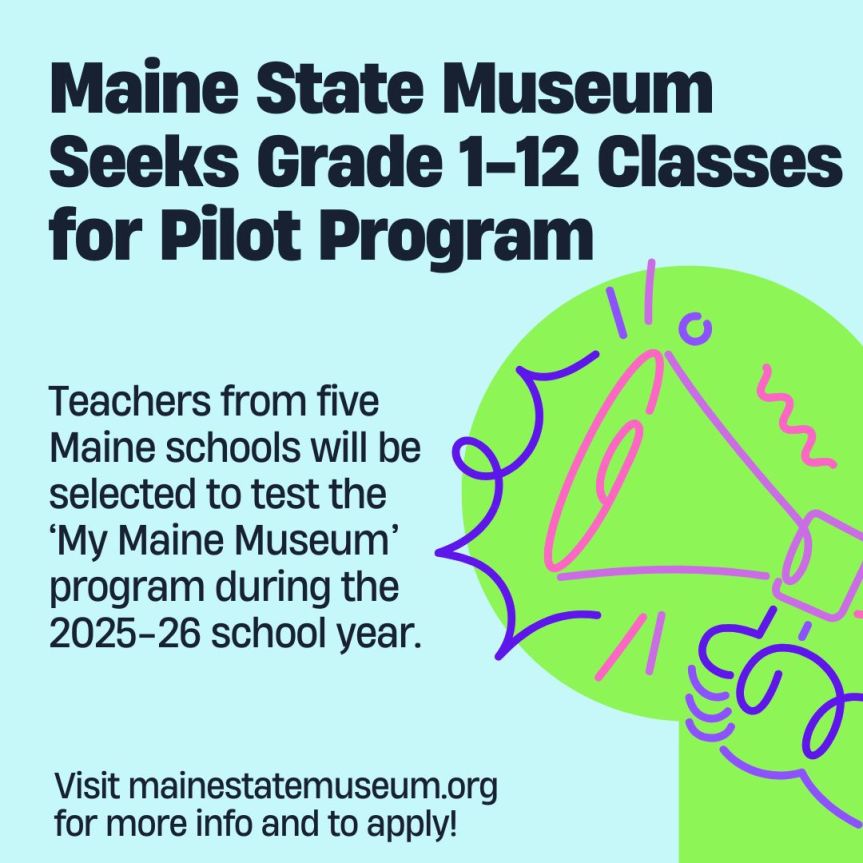
The Maine State Museum is now accepting applications from Maine teachers for a new program that will showcase students’ place-based work. Teachers from five Maine schools will be selected to test the “My Maine Museum” program with their students during the 2025-2026 school year. Student submissions will be seen by hundreds of school children who visit the museum throughout the year.
The deadline to apply for this opportunity is May 16, 2025.
Submission Details:
Open to kids from grades 1-12
Students from selected schools will choose a person, place, or thing from their own lives (such as a family member, beloved location, or a personal item) that could be shared and celebrated in a museum in a digital format.
Students will research their item and write a label that tells its story and why it matters to them. Of note: Maine State Museum curators and educators have the understanding that writing levels and research abilities will vary widely! Capturing students’ thoughts and perspectives in their own voices is of the utmost importance. The museum values students’ current abilities and will not be editing students’ words for content or grammatical accuracy.
Student digital image and digital text will be displayed on a monitor in the museum for at least a year and will be available online for an extended period. Of note: The Maine State Museum is not collecting physical objects – just images.
This program is designed to bring young voices and perspectives into the museum, while delivering a memorable educational experience to Maine students. Those who participate will practice doing the work of historians and curators by applying a historical lens to their own lives and families, considering how the present moment will become history. Help the Maine State Museum show children that this is their museum – and their lives are a part of Maine’s past and present!
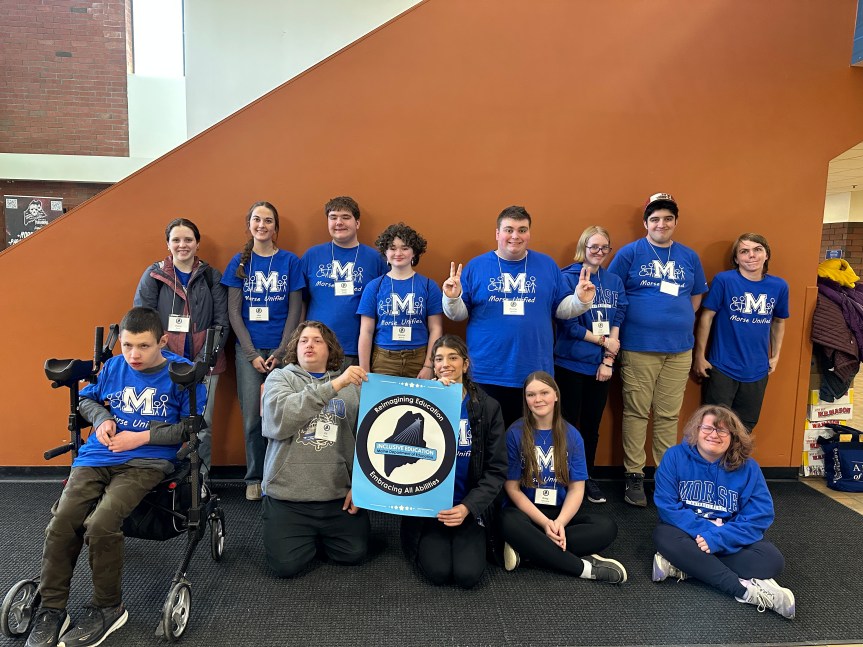
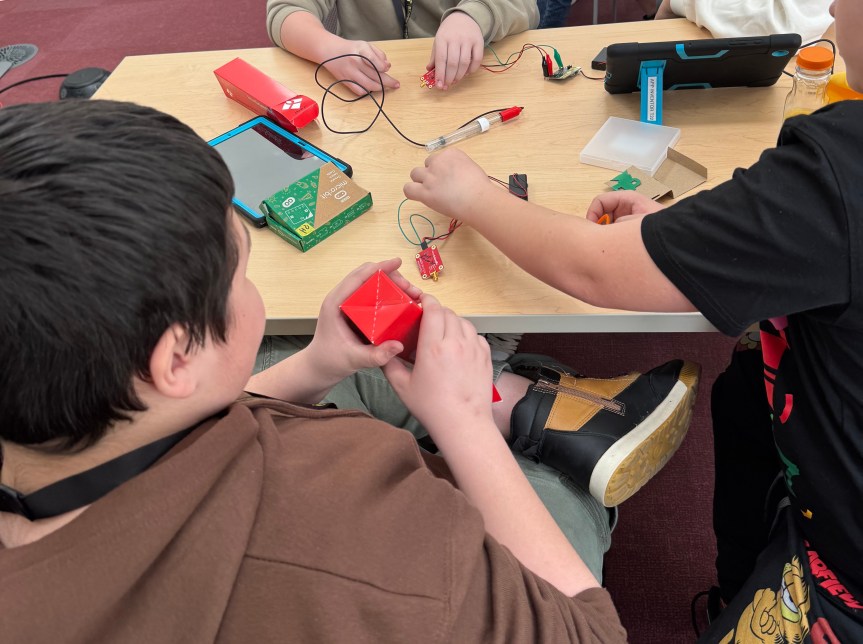
(Pictured: Students from Morse High School’s Unified Literacy Program.)
The Maine Department of Education (DOE) Office of Special Services and Inclusive Education successfully hosted the state’s first-ever Inclusive Education Conference on Thursday, April 10, 2025, at the Augusta Civic Center. The groundbreaking event, themed “Reimagining Education: Empowering All Learners, Embracing All Abilities,” brought together voices from across Maine to celebrate and advance inclusive practices in education.
Hundreds of participants—including students, families, educators, administrators, university faculty, and Maine DOE staff—came together for a day of learning, collaboration, and inspiration. Through powerful presentations, engaging panels, and personal storytelling, attendees shared their experiences and insights about inclusion in Maine schools and communities.
The conference focused on providing school communities with practical tools to support and empower every learner, with a special emphasis on students with disabilities. Attendees explored strategies to embrace diverse abilities, promote equity, and ensure that all students are equipped to thrive in inclusive and meaningful educational environments.
Concurrent sessions covered topics such as unified literacy, mental health, trauma, multitiered systems of support (MTSS), support for multilingual learners with disabilities, inclusive post-secondary education, inclusive early childhood education, and the importance of inclusion in state assessment, as well as engaging and supporting families through positive math experiences. Many sessions were led by representatives from the Maine DOE along with state partners from Disability Rights Maine, Special Olympics Maine, the Maine Department of Health and Human Services (DHHS), Best Buddies, Maine Parent Federation, University of Maine System, school administrative units (SAUs) with inclusive models, and students with lived experience.
The conference also featured several student and educator panels, including one about extended learning opportunities with representatives from the Association of People Supporting Employment First (APSE), the Noble High School ELO program, Mid-Coast School of Technology (MCST), and Portland Arts and Technology High School (PATHS). There was also an SAU) panel, featuring leaders from MSAD 11, RSU 52, and RSU 71. Morse High School students and their teachers lead a panel about unified literacy; Ames Elementary and Kingfield Elementary Schools hosted panels about their schools’ journeys to inclusion; and students from the Maine DOE Executive Student Transition Committee—a part of the department’s Transition Maine initiative—hosted a panel discussion about student advocacy.
A highlight of the event was a keynote address from Dr. Katie Novak, an internationally-renowned education consultant and advocate for Universal Design for Learning (UDL), who inspired the audience with her message on transforming systems to meet the needs of all learners.
Maine Education Commissioner Pender Makin also stopped by the event to provide a special lunchtime keynote address. She thanked educators for attending the conference and for their expertise and collaboration. She also addressed the importance of inclusion for all students by taking a moment to acknowledge the meaning of DEI—diversity, equity, and inclusion.
“Maine’s inaugural Inclusive Education Conference comes at an opportune moment to remind us all of the importance of diversity, equity, and inclusion in public education,” Commissioner Makin said. “Diversity makes all of us stronger by ensuring representation of background and perspective; equity allows everyone the opportunity to be the best that they can possibly be, no matter their circumstance; inclusion means that all voices deserve to have a seat at the table, and that no one is left behind or forgotten.”
The Maine DOE plans to host an Inclusive Education Conference annually, building on the success of this year’s conference. For more information and resources on inclusive education in Maine, please visit the Maine DOE website, or contact Maine DOE Special Projects and Educator Supports Coordinator Tracy Whitlock at Tracy.W.Whitlock@maine.gov.
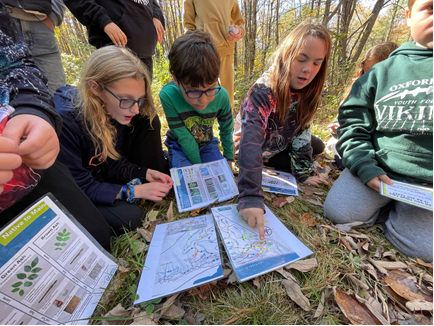
Pictured: Fifth-grade students from MSAD 17 observed ash trees as part of their STEM lessons at Roberts Farm Experiential Learning.
The Maine Department of Education (DOE), in partnership with the Maine Environmental Education Association, has published the state’s first Maine Climate Literacy Plan (MCLP) with support from the Governor’s Office of Policy Innovation and the Future.
This plan will serve as an addendum to the Maine Environmental Literacy Plan (MELP), which was first created in 2010 and revised in 2022. The MCLP provides seven recommendations for parties throughout the state, including the Maine DOE, community partner organizations, school administrative units (SAUs), and other leaders, to help support climate literacy in Maine schools and among Maine youth.
The Maine DOE established a taskforce to develop the MCLP in the Spring of 2024. This taskforce consisted of 30 key partners from a wide range of roles and locations throughout the state, including interdisciplinary educators, school administrators, community organization leaders, and youth. The taskforce held six meetings total to construct the recommendations provided in the MCLP.
The MCLP is one of the first of its kind in the nation. It is designed to chart a supportive plan for climate literacy throughout Maine schools. As the State of Maine continues to see climate change that affects the state’s workforce, infrastructure, natural environment, and future generations, it is imperative that schools feel they have the tools to support students’ understanding of these challenges, develop an appreciation for the environment, and provide the skills necessary to meet the future head-on.
The MCLP is the result of the 2020 Maine Won’t Wait recommendation by the Maine Climate Council. As an addendum to the MELP, the MCLP builds on the long-term vision, and success thus far, of prioritizing environmental education throughout the state, while setting more specific and shorter-term goals for climate education as a subset of environmental education.
The MCLP is structured into two strategic goals; 1. Increase Capacity Building for Advancing Climate Literacy in Maine Schools, 2. Develop a Holistic Maine Green Schools Program. Each strategy has a subset of recommendations and corresponding action steps needed to accomplish them listed. These recommendations are non-binding suggestions for carrying out this work throughout the state. The MCLP serves as a four-year framework that will be revised and updated, as needed, and then fully updated with a taskforce after four years. The Maine DOE plans to issue semiannual updates on the progress of recommendations.
Updates on Climate Education throughout Maine
For the 2024-2025 school year, 10 climate education programs are underway in dozens of schools throughout the state. The Maine Climate Literacy Plan aims to support programs such as these in years to come. Here is a highlight from two of them.
MSAD 17 (Oxford Hills)
In the Fall of 2024, eleven fifth-grade classes from MSAD 17 learned about the ecology and cultural significance of ash trees during their STEM lessons at Roberts Farm Experiential Learning.
Students contributed 22 observations to Gulf of Maine Research Institute’s community science project, Protecting Ash for the Future. The ash trees that students observed at Roberts Farm showed a few signs of stress, but students did not find any clear evidence of the emerald ash borer.
MSAD 17 plans to continue to monitor these trees with fifth-grade classes in the future!
RSU 34 (Old Town)
The Maine Center for Research in STEM Education (RiSE Center) at the University of Maine, along with RSU 34, is working with more than 85 teachers from around the state to develop lessons on climate science through a grant from the Maine DOE. This unique approach asks teachers to use Western science findings to inform their lesson plans and incorporate Indigenous philosophies and knowledge.
These teachers are learning from university faculty about the different ways in which climate is impacting our state, while also working with Wabanaki Youth in Science (WaYS), Wabanaki REACH, and/or completing the University of Maine Dawnland micro-credential to gain valuable insight into the culture of the Wabanaki and the knowledge that they have held for more than 10,000 years.
This multi-faceted approach brings teachers together to participate in professional learning online, curriculum development, in-person events, field trips, and book studies featuring books by Indigenous authors. Participants will come together this spring to present their work and share what they have learned and how they use it in their classrooms.
Eighty-five teachers from across the state are taking part in a program to develop climate science lessons using Western science findings and Indigenous knowledge.
For questions about the Maine Climate Literacy Plan or climate education in Maine, please reach out to Teddy Lyman, Maine DOE Climate Education Specialist, at Theodore.Lyman@maine.gov.
For more information about Maine DOE climate education work, and for additional resources, please use this link.
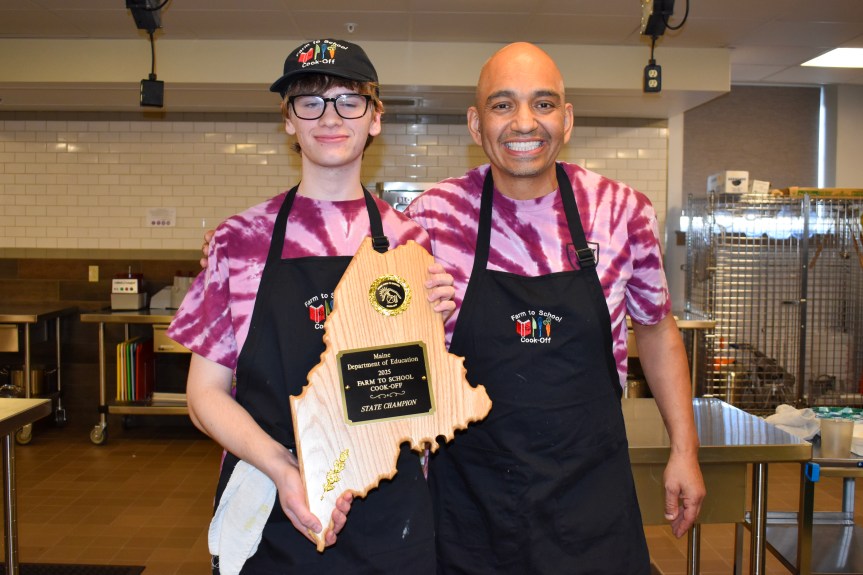
Pictured: The Flavor Knights (Noble High School student Andre Roy, left; MSAD 60 School Nutrition Director David Vargas, right) were crowned the 2025 Farm to School Cook-Off champion.
The Maine Department of Education (DOE) Child Nutrition team is celebrating its 2025 Farm to School Cook-Off champion after a final round of competition on Thursday, April 17. For 10 years, this initiative has promoted the use of local foods in school meals, as school nutrition teams from across the state use locally-sourced ingredients to prepare a breakfast and a lunch, which a panel of judges then scores.
After multiple regional competitions in March, the Leavitt Lunch Crew from MSAD 52 (Turner) and The Flavor Knights from MSAD 60 (North Berwick) competed in the cook-off finals on Thursday in Augusta. David Vargas, MSAD 60 School Nutrition Director, and Andre Roy, Noble High School student, of The Flavor Knights took home a winning plaque and cookbook after preparing a pancake bake for breakfast and monkfish tacos for lunch.
“The Maine DOE Child Nutrition team looks forward to the Farm to School Cook-Off every year and the creativity that it inspires for school meals,” Stephanie Stambach, Maine DOE Child Nutrition Supervisor, said. “This is a wonderful platform to boost our state’s school nutrition professionals, as well as our local farmers and producers.”
Local challenge ingredients that competing teams were expected to incorporate this year included eggs from Maine Family Farms and monkfish from the Maine Coast Fishermen’s Association. The meals presented to judges were rated based on presentation, taste, and feasibility of use of recipes in a school kitchen.
Monkfish from the Maine Coast Fishermen’s Association was one of the local challenge ingredients to be incorporated.
Governor Janet Mills, Maine DOE Commissioner Pender Makin, and Maine Department of Agriculture, Conservation, and Forestry Commissioner Amanda Beal attended the cook-off finals on Thursday, recognizing the essential work of school nutrition teams in providing more than 168,000 students statewide with nutritious meals.
“The importance of the role of child nutrition professionals in our state, delivering healthy and delicious food to students multiple times per day, cannot be overstated,” Commissioner Makin said. “We know that the meeting of basic needs, such as hunger, is essential to allowing students to grow and thrive in educational settings. That work would not be possible without the dedication and care of child nutrition staff statewide.”
The Maine Department of Education’s (DOE) 2025 Farm to School Cook-Off took place on April 17, 2025, between school nutrition teams from MSAD 52 and MSAD 60. Maine DOE Commissioner Pender Makin and Governor Janet Mills posed with contestants.
All recipes presented throughout the cook-off will be shared at an upcoming date in a Maine Farm to School cookbook for other school nutrition teams to reference. You can find past version on theMaine DOE Local Foods in Local Schools webpage.
Congratulations to MSAD 60, MSAD 52, and third cook-off finalist MSAD 27 (Fort Kent), who unfortunately could not compete.
The Maine Schools Application in NEO will open on May 1. Maine Schools is the process by which the Maine Department of Education (DOE) collects information about Maine school administrative units (SAUs) for the upcoming school year. | More
The Maine Department of Education (DOE) Data Team is hosting the following webinars: Maine Schools Report Webinar, ESEA Demographics Report Webinar, End of Year Daily Attendance & Truancy Reporting Webinar, End of Year Behavior and Bullying Data Certification Reports Webinar, End of Year Synergy Enrollment Exits and Perkins 3S1 CTE-Poste Secondary Reporting Webinar, and Special Education Exit Report Webinar. | More
In a powerful display of statewide collaboration, representatives from the University of Maine (UMaine) and the Maine Department of Education (DOE) joined forces in March to present at the 2025 National Council for Exceptional Children (CEC) Conference. | More
Nominations are now open for the 2025 Maine Association for Health, Physical Education, Recreation, and Dance (MAHPERD) Teacher of the Year awards. Nominations are due April 30, 2025. | More
The Finance Authority of Maine (FAME) is thrilled to introduce a forgivable loan program to support future educators, childcare providers, and speech pathologists in Maine. High school seniors and college students must apply by Thursday, May 1, 2025, to take advantage of this opportunity! | More
During the week of March 24, 2025, 32 middle school students and 12 staff members from Maine Indian Education’s three schools—Indian Island School, Indian Township School, and Sipayik Elementary School—traveled to the Massachusetts Institute of Technology (MIT) as part of the Beaver Works Summer Institute, a STEM program at MIT. | More
The East Grand School’s Extended Learning Opportunities (ELO) program is cultivating diverse business partnerships, enhancing students’ career development, and community engagement in the Danforth area. | More
On January 17, 2025, Maine Connections Academy, a tuition-free, grades 7-12 online public charter school, brought students together for an in-person Academic Summit at several locations across the state. | More
The Maine Department of Education (DOE) Office of Teaching and Learning is proud to announce a new three-part professional learning series designed for educators working with multilingual learners (MLs) who are enrolling in a Maine high school for the first time. | More
During the week of March 24, 2025, 32 middle school students and 12 staff members from Maine Indian Education’s three schools—Indian Island School, Indian Township School, and Sipayik Elementary School—traveled to the Massachusetts Institute of Technology (MIT) as part of the Beaver Works Summer Institute, a STEM program at MIT. This trip represented part of an ongoing effort to engage Indigenous youth in STEM programming to increase their exposure to and interest in potential STEM career opportunities.
These students and educators participated in two and a half days of programming that included workshops, demonstrations, an opportunity expo, and more. Workshops included focuses on wearable technology, self-driving cars, and climate change and water quality. Students also participated in tours and demonstrations at unique MIT spaces like the Hobby Shop, the Edgerton Center’s Milk Drop Shop, D-Lab, Breakerspace, and the Center for Bits and Atoms.
The students’ days at MIT were full and engaging. They walked for miles, traversing MIT’s campus, and ate supper in one of the student cafeterias. They were also treated to an evening improvisation session with Nova Comedy Collective. The students and staff members have said they are incredibly grateful for their experience at MIT and will treasure their memories for years to come.
Joel Grimm, manager of Beaver Worksat MIT Lincoln Laboratory, and Nancy Dalrymple, Native American Student Association advisor, began engaging with Maine Indian Education last November to discuss the possibilities of a student trip from the Penobscot Nation’s Indian Island and the Passamaquoddy Tribe’s two reservations in Downeast Maine. Soon after those conversations began, scientists, engineers, and other academics from across New England signed on to support this first-time program, sponsored by MIT Beaver Works.
Beaver Works received generous grant support from Jameel World Education Lab (J-WEL) to engage Indigenous youth in STEM programming. The National Science Foundation reported in 2019 that 0.6% of Indigenous peoples received a bachelor’s degree in STEM disciplines.
Maine Indian Education’s leadership expressed an overwhelming sense of gratitude for Beaver Works with the following statement:
“Joel and Nancy have advocated for and supported programming for our students for a number of years, with much of it occurring locally until this year. These opportunities for engagement are an invaluable gift that has planted more seeds for future experiences than we can imagine.”
This story was submitted by Maine Indian Education. To submit a good news story to the Maine DOE, please fill out the good news submission form.
The Finance Authority of Maine (FAME) is thrilled to introduce a forgivable loan program to support future educators, childcare providers, and speech pathologists in Maine. High school seniors and college students must apply by Thursday, May 1, 2025, to take advantage of this opportunity!
Undergraduate students can receive loans of $5,000, while graduate students can obtain $4,000. The loan is renewable for up to eight semesters for undergraduates and four semesters for graduate students.
One year of loan forgiveness is available for each year of service as a full-time teacher, speech pathologist, or childcare provider in an eligible Maine school or facility. Teachers in underserved subject areas can have two years’ worth of loans forgiven for each year of service. Partial loan forgiveness is also available under certain conditions.
Borrowers must be Maine residents and either graduating high school seniors, undergraduates, or graduate students accepted into postsecondary degree programs. They must be pursuing initial certification or qualifications in education, speech pathology, or childcare. They must secure a position after graduation that matches their certification or qualification.
Those who do not work in eligible Maine schools or facilities must repay the loan with interest, beginning six months after graduation at a fixed rate of 5.0%.
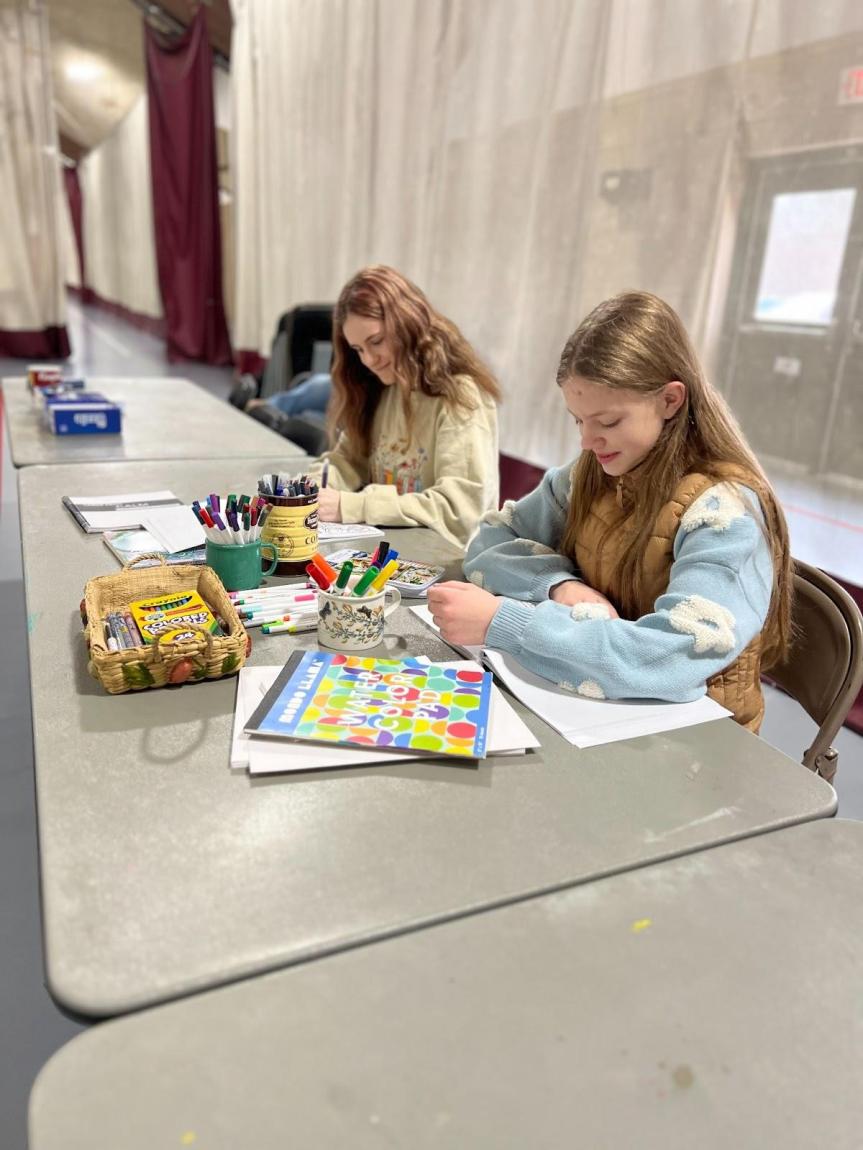
(Pictured: Maine Connections Academy students at the University of Maine at Farmington drawing)
On January 17, 2025, Maine Connections Academy, a tuition-free, grades 7-12 online public charter school, brought students together for an in-person Academic Summit at several locations across the state. This summit provided students with valuable opportunities to engage in hands-on learning, interact with teachers, and connect with peers beyond the virtual classroom.
The Academic Summit featured a variety of immersive experiences at institutions across Maine, including the University of Maine at Farmington, the University of Maine at Orono, the Maine Maritime Museum, and the Portland Museum of Art.
Event highlights included:
University of Maine at Farmington – Students visited the Field House, where they participated in basketball, swimming, or teacher-led activities, such as board games and crafts. Maine Connections Academy students also had a campus tour that introduced them to university life.
University of Maine at Orono – Students experienced Cosmic Mashups, a planetarium show exploring black holes and star collisions, followed by a guided campus tour.
Maine Maritime Museum – A hands-on program, How to Build a Wooden Vessel, immersed students in Maine’s rich shipbuilding history through interactive exhibits and demonstrations.
Portland Museum of Art – Students engaged in Learning to Look with Visual Thinking Strategies, which was a guided tour designed to encourage deeper analysis and appreciation of visual art.
Maine Connections Academy’s Academic Summit underscores the importance of face-to-face interactions in an online learning environment, helping students to form lasting connections with their peers and educators and explore future academic and career pathways.
For more information about this event or Maine Connections Academy, click here.
This story was submitted by Maine Connections Academy. To submit a good news story to the Maine DOE, please fill out the good news submission form.
The Maine Department of Education (DOE) Office of Teaching and Learning is proud to announce a new three-part professional learning series designed for educators working with multilingual learners (MLs) who are enrolling in a Maine high school for the first time.
This interactive series will support high school-based teams in building inclusive, responsive systems that address the unique needs of multilingual students. Focus areas include English language development (ELD) instruction, content-area learning with integrated language supports, opportunities to showcase multilingual abilities, and advisory structures that emphasize high support and meaningful family engagement.
What to Expect: Throughout the series, participants will engage in collaborative discussions, explore real-life scenarios, and analyze models that support successful transitions for multilingual students entering high school. Guest speakers will offer expert insights and lived experiences to deepen collective understanding.
Session Overview
Session 1 (May 1, 2025): Introduction and overview of state and federal guidelines related to high school enrollment for multilingual learners
Session 2 (June 3, 2025): Goal setting for students who are new to English, including opportunities to pursue the Seal of Biliteracy
Session 3 (June 17, 2025): Strengthening student and family engagement with a focus on college and career readiness pathways
Who Should Attend: This series is ideal for high school-level educators and staff, including:
English for Speakers of Other Languages (ESOL) teachers
School counselors
Social workers
Content-area teachers
Administrators and school leaders
Program Details
Format: Virtual and interactive; each session will run from 3–4:30 p.m.
Opportunities for pre- and post-webinar learning
Nine contact hours for entire series participation
Registration Information: Participants are encouraged to register as a team, ideally including an ESOL teacher, school counselor, and administrator. Register here to participate in all three sessions.
Meet the Facilitator: This series will be facilitated by Jen Lunt, a 2024–2025 Teacher Leader Fellow with the Maine DOE. Lunt is a seasoned educator and passionate advocate for MLs, with a focus on supporting smooth transitions and fostering inclusive, student-centered environments. Lunt has also developed an asynchronous resource, Orientation Checklist for New Multilingual Students. Check out the video and one-pager.
If you’re unable to attend this live professional learning series but would like to continue building your skills, Maine educators have access to asynchronous learning through the WIDA Consortium, of which Maine is a member. All Maine pre-service and in-service educators can access these resources by creating a WIDA Secure Portal account. To get started, visit Maine’s WIDA state page. To obtain a new login, contact help@wida.us or call (866) 276-7735. Once you have a WIDA Secure Portal account, you will be able to access a variety of self-paced professional learning modules.
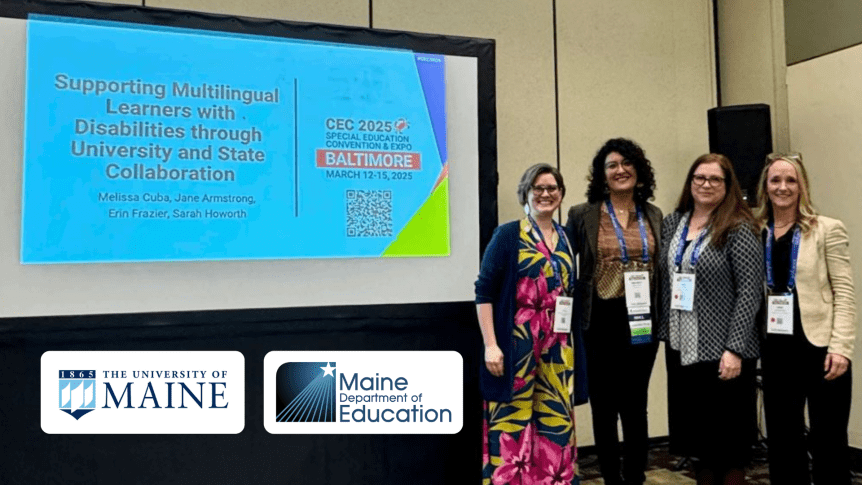
Pictured: From left to right: Associate Professor of Special Education Dr. Sarah Howorth, Assistant Professor of Special EducationDr. Melissa Cuba, Director of Maine DOE Office of Special Services and Inclusive Education Erin Frazier, and Maine DOE State ESOL SpecialistJane Armstrong presenting at the National Council for Exceptional Children (CEC) Conference in Baltimore, Maryland.
In a powerful display of statewide collaboration, representatives from the University of Maine (UMaine) and the Maine Department of Education (DOE) joined forces in March to present at the 2025 National Council for Exceptional Children (CEC) Conference. The session, Supporting Multilingual Learners with Disabilities through University and State Collaboration,spotlighted Maine’s groundbreaking efforts to support multilingual learners (MLs) with disabilities, showcasing the newly-updated Identifying and Serving Students Who Are Multilingual Learners with Disabilities: Policy and Resource Guide, alongside innovative university programming that prepares educators to support MLs with disabilities.
The presentation was led by Dr. Melissa Cuba, UMaine Assistant Professor of Special Education, and supported by Dr. Sarah Howorth, UMaine Associate Professor of Special Education, in partnership with Maine DOE Director of the Office of Special Services and Inclusive Education Erin Frazier and the English for Speakers of Other Languages State Specialist, Jane Armstrong.
Together, the group highlighted the unique context of the state, tracing the evolution of collaborative efforts, and showcased key contributions to address the dual needs of language acquisition and disability support, including UMaine’s Graduate Certificate in Multilingual Special Education, Maine Access to Inclusive Education Resources (MAIER), and the comprehensive policy and resource guide for educators on identifying and serving MLs with disabilities.
UMaine’s Multilingual Special Education program is uniquely designed to prepare educators to effectively support MLs with disabilities through a blend of linguistic, cultural, and special education expertise. What sets this 15-credit online graduate program apart is its interdisciplinary curriculum, which includes courses that target language development, such as:
ERL 531: Linguistic Diversity, Multilingualism, and the Classroom
ELL 570: Methods of TESOL (Teaching English to Speakers of Other Languages)
ELL: 572: Second Language Acquisition
It also offers specialized training through:
SED 502: Strategies for Culturally and Linguistically Diverse Students with Disabilities
SED 545: Intervention for Reading Difficulties
If working with children birth to five, SED 545 is combined with SED 529: Developmentally Appropriate Reading Instruction for Diverse Young Learners. Together, these courses provide a rich foundation in language development, culturally-responsive pedagogy, and targeted academic interventions, empowering educators to create inclusive and effective learning environments for diverse student populations.
The collaboration with the presentation and the co-construction of this iterative guidebook reflects Maine’s growing commitment to inclusive and equitable education, with a focus on multilingualism, disability inclusion, and culturally-responsive practices. The collaboration also underscores the valuable role of higher education institutions like UMaine in supporting these efforts, through research, educator preparation, and training informed by real classroom experiences.
The Maine guidebook serves as a vital resource for school administrative units (SAUs), offering practical tools, guidance, and examples to ensure that linguistic diversity and disability are not barriers to learning but rather opportunities to build inclusive, responsive educational environments.
“This work is a reflection of Maine’s commitment to inclusive education that sees and supports the whole child,” Frazier said. “By bridging the expertise of higher education and state systems, we are empowering educators to confidently identify, support, and celebrate multilingual students with disabilities.”
This work aligns with and strengthens Multi-Tiered Systems of Support by ensuring that academic, behavioral, and social-emotional supports are responsive to the diverse identities and experiences of all students.
As part of the Maine DOE’s commitment to inclusive and equitable education, Teacher Leader Fellow Melissa Frans, has played a vital role in co-facilitating a dynamic six-part professional learning series, designed to support educators working with MLs with disabilities. Through her leadership, Frans has further illuminated the critical intersection between language acquisition and disability services, emphasizing the importance of collaborative practices with linguistically-responsive IEP development. You can see the recordings of this webinar series on the Maine DOE Multilingual Learners with Disabilities webpage.
As Maine experiences growing linguistic and cultural diversity in its schools, this guidebook, along with the collaboration behind it, provides a model of proactive, inclusive, and research-informed practices that other states may consider replicating. Additionally, the Maine DOE Event Calendar has an array of opportunities available to support educators in fostering inclusive and effective learning environments.
For further information or questions about multilingual programming, please contact Maine DOE State ESOL Specialist Jane Armstrong at Jane.Armstrong@maine.gov. For further information or questions about the guidebook, please contact the Maine DOE Office of Special Services and Inclusive Education Director Erin Frazier at Erin.Frazier@maine.gov.










 Maine DOE Newsroom