Athens Community School Dives into Computer Science Through Hands-on Learning

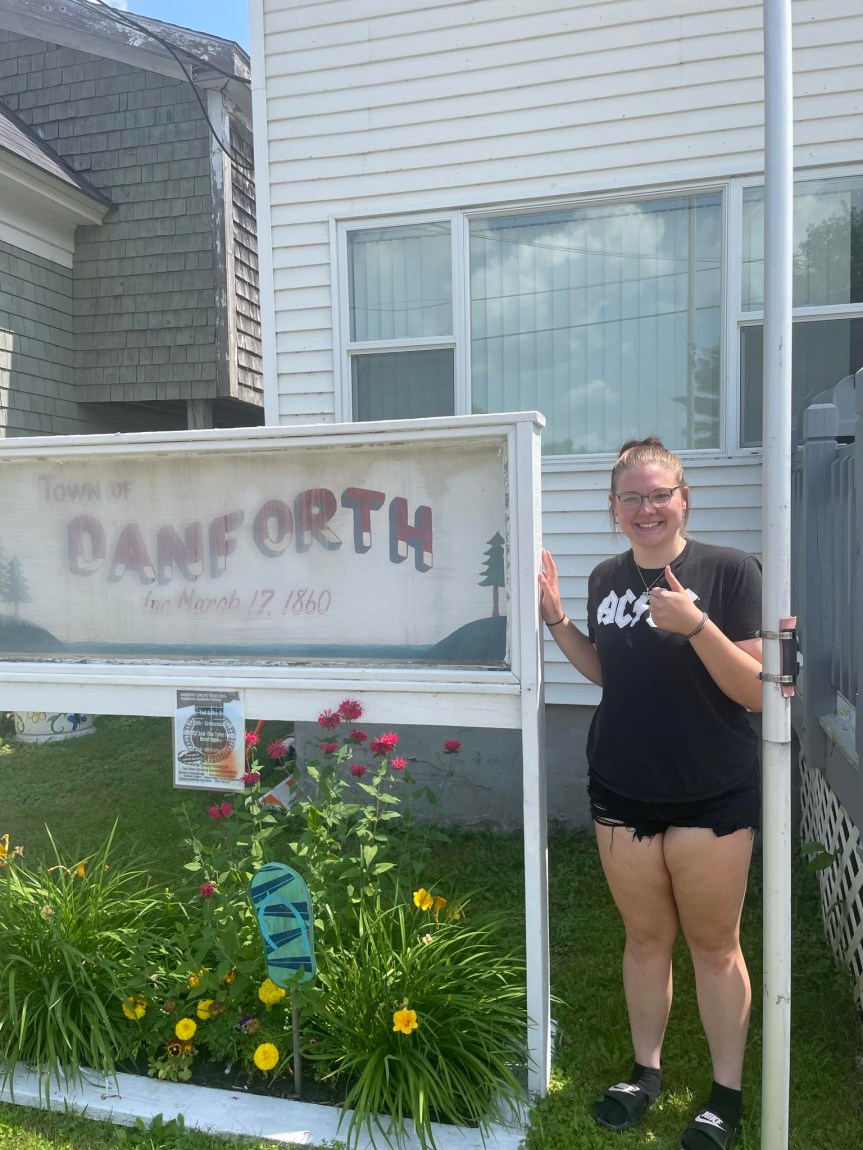
Thanks to the Maine Department of Education’s (DOE) “Teach with Tech” grant, junior high students at Athens Community School are diving into computer science with hands-on lessons that incorporate Sphero BOLT robots.

Last year, Mrs. Luce, the Library/Media Specialist at Athens Community School, applied for this grant with a vision of sparking student interest in robotics and opening students’ eyes to the vast possibilities within the field of computer science. In the fall, the school received a set of 15 of these robots, which are now being used to launch exciting new computer science units for students in grades 5-8.

Athens eighth graders were the first to experience the magic of Sphero, starting with a fun and challenging activity: driving their robots through a maze using on-screen steering. From there, they advanced to the next level, learning to code their robots to navigate the maze independently. Students gained hands-on experience with block-based programming, mastering essential concepts such as parameters, conditionals, and loops. Through trial and error, as well as creative problem-solving and critical thinking, they wrote and tested their own code to overcome obstacles and guide their robots to success.

The excitement for robotics has proven to be contagious. As younger Athens students in the fifth, sixth, and seventh grade watched their older peers navigate these mazes, they couldn’t wait to get their own hands on the robots. This interactive nature of the robotics experience ignites curiosity and a passion for learning, leaving all students eager to try out programming for themselves. What has made this project at Athens Community School truly special is the collaborative learning environment it fosters. Students have had opportunities to share insights and learn from on another’s successes and failures, building community through teamwork.

Thanks to the comprehensive set of resources that Sphero provides—which includes a curriculum for multiple grade levels—Athens Community School is set to offer a rich, ongoing STEM education to students for years to come. Integrating robotics into the classroom not only helps students develop valuable coding skills; it also encourages them to think critically, collaborate with peers, and explore the limitless possibilities of the digital world.

This story was provided by Athens Community School. To submit good news to the Maine DOE, please fill out the Good News Submission form.

‘Learning from Maine’ Video Series Seeking Story Ideas from Maine Schools

The Maine Loves Public Schools campaign, a collaborative effort by the Maine Education Leaders Professional Learning Collaborative (MELPLC), has launched a new public education video storytelling series. Organizers are currently seeking story ideas from Maine schools around the theme: What extraordinary learning is happening in your school in 2025?  

The “Learning from Maine” video series will feature Maine classrooms, from Kittery to Madawaska, and from kindergarten to adult education, to capture the most inspiring stories of growth, resilience, and triumph. These uplifting features will be transformed into a series of short videos – with the goal of sharing the amazing happenings in public education, attracting more Mainers who are young and diverse to the teaching profession, and catalyzing school improvement. 

Each 5- to 10-minute episode will be accompanied by social media posts that help to promote these stories. Episodes will also be emailed to thousands of Maine educators and administrators and broadcasted on Maine Public Television. Stories not chosen for the “Learning from Maine” video series may still be featured as part of the broader “Maine Loves Public Schools” campaign.

You may submit story ideas and find the criteria for story selection using this submission form.

To learn more about the Maine Loves Public Schools campaign, visit the website or reach out directly here.

Registration Open for McKinney-Vento Spring 2025 Regional Meetings

In April, the Maine Department of Education (DOE) is hosting McKinney-Vento Spring 2025 Regional Meetings to provide updates on federal, state, and local policies and discuss resources available to students and families experiencing homelessness or housing instability.

During these meetings, participants will learn about strategies for increasing local capacity to support McKinney-Vento-eligible students. Participants will have an opportunity to brainstorm solution-oriented approaches for affected youth in their schools and communities—and to network with colleagues from other schools and organizations.

The scheduled meetings are as follows:

  • Penobscot and Piscataquis Counties 
    Wings for Children and Families, 900 Hammond St. #915, Bangor 
    Thursday, April 3
    8:05-10:30 a.m. 
  • Washington and Hancock Counties 
    Maine DHHS Regional Office, 38 Prescott Dr., Machias 
    Thursday, April 3
    1-3:30 p.m.
  • Aroostook County 
    Maine Department of Labor, 66 Spruce St., Presque Isle
    Friday, April 4
    9-11:30 a.m.
  • Mid-Coast, Kennebec, and Somerset Counties 
    Burton M. Cross Office Building Room 103 A and B, 111 Sewall St., Augusta
    Tuesday, April 8
    9-11:30 a.m.  
  • Androscoggin, Franklin, and Oxford Counties  
    Edward Little High School, 77 Harris Street, Auburn 
    Tuesday, April 15
    9-11:30 a.m. 
  • York and Cumberland Counties
    People’s Choice Credit Union, 23 Industrial Park Rd., Saco 
    Tuesday, April 15
    9:30 -noon

Registration for the McKinney-Vento Spring 2025 Regional Meetings is required. Participation is free. This event is appropriate for school staff or community-based organizations that support families and students experiencing housing instability. It is intended to be a space for connection and collaboration.

You may find out more and register here.

If you have questions, please contact Susan Lieberman, consulting McKinney-Vento Liaison Support Specialist, at susan.lieberman88@gmail.com or Signe Lynch, Maine DOE McKinney-Vento Homeless Education Specialist, at signe.lynch@maine.gov.

Download a flyer here (PDF).

Pine Tree Programming Empowers Maine Schools with Fun and Engaging Computer Science Education

Pine Tree Programming, a new initiative from the Maine Department of Education’s Office of Teaching and Learning, is expanding access to computer science education across the state. In just six weeks, this dynamic program has introduced more than 500 students—many from schools with limited or no prior computer science opportunities—to the world of coding. Partnering with 44 schools across 13 Maine counties, Pine Tree Programming is empowering a new generation of coders, creators, and problem-solvers.

Designed to make computer science fun, accessible, and engaging, Pine Tree Programming is proving that anyone can learn to code. In today’s digital world, computational thinking is more than just a technical skill; it’s a pathway to innovation, creativity, and future success. By introducing students and teachers to coding in an exciting and approachable way, this program is helping to close the digital divide and equip Maine’s youth with critical 21st-century skills.

So far, the response from the classroom has been overwhelmingly positive! Teachers are reporting a surge in student enthusiasm for technology and problem-solving, as students dive into coding, build projects, and explore the endless possibilities of computer science.

Building on this success, Pine Tree Programming is now looking ahead to expand its reach and bring even more Maine schools into the world of computer science.

Are you interested in to bringing Pine Tree Programming to your school? If so, please contact Allison Braley, Maine DOE Computer Science Specialist, at allison.braley@maine.gov for more information.

Webinar: Bringing Music into Your Classroom (No Musical Training Required!)

Are you looking to incorporate music into your teaching but don’t have a musical background? This engaging webinar is designed for educators of all subjects who want to harness the power of music to enhance student engagement, creativity, and learning.

Join Maine Department of Education (DOE) Arts Integration Teacher Leader Fellow Joshua Chard, alongside distinguished music educators Zach Arenz (2025 New York State Teacher of the Year), Kaitlin Young (2018 Maine Teacher of the Year), and Louise Smith (2024 Mississippi Teacher of the Year), as they share practical, accessible strategies for integrating music into everyday instruction.

Panelists will explore simple ways to incorporate music into lessons, whether for transitions, student expression, or deeper content connections—and discuss the benefits of music for student wellbeing and classroom culture. The conversation will include real-world examples, interactive ideas, and solutions for overcoming common challenges that non-musicians may face.

Attendees will have the chance to ask questions, gain confidence, and walk away with actionable ideas to make music a meaningful part of their teaching practice.

This webinar is on Monday, March 24, 2025, from 5-5:45 p.m. via Zoom. Anyone interested in attending can join the webinar here. (No pre-registration is required.)

For further information and questions, please contact Maine DOE Arts Integration Teacher Leader Fellow Joshua Chard at joshua.chard@maine.gov.

Reports Opening April 1: Enrollment and Quarter 3 Attendance, Truancy, Bullying, and Behavior

April 1 enrollment reporting will become available on Tuesday, April 1, 2025. The due date for certifying this report will be Tuesday, April 15, 2025.

A comparison of April enrollments to October enrollments is used for policy and decision-making. Therefore, it is important for school administrative units (SAUs) to complete this review and certification in the reported timeframe.

Please note that this report provides up-to-date address information for the SUN Bucks Summer EBT program. Students’ address information should be updated to reflect valid mailing addresses.

Collection of Title I allocation data for private schools with eligible students will be provided for the 2025-2026 fiscal year, based on the 2024-2025 April 1 enrollment collection. Private schools with Title I eligible students should enter enrollment data of eligible students into State Synergy.

Reporting Resources:

Quarter 3 Reporting will become available on Tuesday, April 1, 2025. The due date for validating these reports will be Tuesday, April 15, 2025.

While collection of Attendance, Truancy, Behavior, and Bullying are ongoing reports for the school year, this validation provides an opportunity to update data to this point in the year. Updating data to this point will allow for more efficient certification at the end of the school year.

Reporting Resources:

For questions about April 1 enrollment and/or Quarter 3 reporting, please contact MEDMS.Support@maine.gov or call 207-624-6896.

Maine DOE Update – March 14, 2025

From the Maine Department of Education


News & Updates

Annual Education Gala Celebrates Maine State and County Teachers of the Year

On the evening of March 8, leaders in Maine’s educational community gathered at the Hilton Garden Inn in Bangor to celebrate the hard work and dedication of exceptional educators from across the state. The 11th annual Education Gala brought together Maine’s 2024 County Teachers of the Year, their family, friends, and colleagues, school and district administrators, community and state leaders, and corporate sponsors to recognize the outstanding contributions of these educators to the state of Maine and their exceptional achievements within education. |  More

Maine Educators Gather in Portland for Solutionary Literacy Workshop

On March 4, 2025, educators from across Maine gathered in Portland for the Solutionary Literacy Workshop, a full-day professional learning experience co-facilitated by authors Cris Tovani and Julie Meltzer. The workshop focused on equipping teachers with effective strategies to support student engagement, critical thinking, and literacy development through inquiry-based learning. |  More

FedPoint Accepting Applications from High School Seniors for Nursing Scholarships

FedPoint, a federal benefits administrator and marketplace operator, is accepting applications for its annual nursing scholarships program. Four $5,000 scholarships will be announced in May during National Nurses Week, which occurs from May 6-12. Applications must be submitted by Sunday, March 16, 2025. |  More

Applications Open for Scholarship America Veteran Scholarship for Educators

Applications are open for the Scholarship America Veteran Scholarship for Educators. The program offers financial assistance to veterans pursuing degrees in education, school-based counseling, school-based social work, or school psychology, supporting their journey toward meaningful careers within the K-12 school system. The deadline to apply is March 27, 2025. |  More


Maine Schools Sharing Success Stories

Lincoln Elementary Special Education Classroom Leads the Way in 3D Printing

At Lincoln Elementary School in Augusta, special education teacher Mark Dennett has been pioneering the use of 3D printing in his classroom, working with a select group of sixth graders to design and create practical tools that enhance learning. |  More

Augusta and Caribou Principals Recognized with Top Maine Principals’ Association Awards in 2025

The Maine Principals’ Association (MPA) has named Sylvio J. Gilbert Elementary School Principal Christina Boursaw as Maine’s 2025 NAESP National Distinguished Principal and Caribou High School Principal Jamie Selfridge as Maine’s 2025 NASSP Principal of the Year. |  More

The Success of Together for ME at the Brunswick School Department

In the fall of 2019, the Brunswick School Department enthusiastically launched its initial public pre-K classroom. That first year of pre-K for ME set the stage in Brunswick for years to come. As the pre-K program expanded from that one classroom, tucked into a cute mobile unit in the school’s front yard, to four pre-K classrooms and then two more community partner classrooms, the school department continued to use the pre-K for ME program.  |  More

Submit good news to the Maine Department of Education here.


Professional Learning/Training Opportunities

Maine Department of Education Expands Kindergarten Entry Inventory Project

During the 2024-2025 school year, more than 30 Maine kindergarten teachers participated in the first phase of the Kindergarten Entry Inventory (KEI) project, funded through Maine’s Preschool Development Grant and designed to help teachers gather valuable insights into children’s development across multiple domains. Since then, these teachers have tested various KEI instruments in their classrooms, using information collected to better support individual learning needs. |  More

Making Math Meaningful for All: Applications Open for Math4ME Project

Math4ME is a free, three-year, whole-school project, designed to support all educators (i.e., classroom teachers, special educators, ed techs, and interventionists) to strengthen math proficiency for all learners with a specific focus on increased math proficiency for students with math individualized education plan (IEP) goals. |  More

Summer Training Pre-Registration Open for the For ME Instructional Programming

Pre-registration is open for the For ME Instructional Programming summer trainings. Schools interested in registering educators should have a principal or instructional leader complete the form to indicate interest in summer trainings by May 16, 2025. |  More

Free Emergent Literacy Facilitator Training for Early Childhood Educators

The Maine Department of Education (DOE) is offering a free professional learning opportunity for educators interested in becoming trained facilitators of professional learning communities (PLC), focused on emergent literacy for children ages 3-6. |  More

Registration Open for 2025 Maine Council for English Language Arts Conference

The Maine Council for English Language Arts (MCELA) is hosting its annual MCELA Conference on Friday, March 21, 2025, at the Holiday Inn by the Bay in Portland from 8 a.m. to 4 pm. Registration is open now, and spots are filling fast! |  More

View the Maine Department of Education’s Events Calendar here.


Latest DOE Career/Project Opportunities:

Find education-related jobs in Maine.

Lincoln Elementary Special Education Classroom Leads the Way in 3D Printing

This winter, the Augusta School Department introduced 3D printing at the elementary level, thanks to a Teach with Tech grant through the Maine Department of Education (DOE).

The grant enabled the district to purchase four Bambu Lab A1 3D printers, each housed on a portable cart, designed to be moved seamlessly between classrooms. This mobility ensures that any teacher can integrate 3D printing into their curriculum, adapting it to their students’ needs and passions.

At Lincoln Elementary School in Augusta, special education teacher Mark Dennett has been pioneering the use of 3D printing in his classroom, working with a select group of sixth graders to design and create practical tools that enhance learning.

After completing some basic tutorials in Tinkercad, the students quickly advanced to personal projects aimed at addressing specific academic challenges. One of their first projects was designing and producing line readers (simple but effective tools that assist with reading by helping students focus on one line of text at a time). Through multiple iterations, the students fine-tuned the spacing of the line readers to ensure maximum effectiveness.

Building on that, the students then turned their attention to finger spacers, which support handwriting development. Finger spacers help students to maintain consistent spacing between words and letters. Like the line readers, the spacers underwent several design modifications before reaching their final version.

“Staff are super receptive to the line readers and finger spacers,” Dennett said. “The students took the initiative to write a letter and create order forms, so teachers could request the tools for their classrooms. They have organized and implemented the entire process from importing designs, arranging the models, slicing files, changing filament, and printing – all independently.”

Dennett’s classroom serves as an example of how 3D printing can be used not only as a STEM tool but also as a means of fostering problem-solving skills, creativity, and independence across all grade levels. By designing and producing functional learning aids, students are not just engaging with cutting-edge technology; they are actively improving their school community.

The success of this project highlights the potential for 3D printing to be used as a transformative tool in special education classrooms and beyond.

This story was provided by the Augusta School Department. To submit good news to the Maine DOE, fill out the “good news” submission form.

Applications Open for Scholarship America Veteran Scholarship for Educators

Applications are open for the Scholarship America Veteran Scholarship for Educators. The program offers financial assistance to veterans pursuing degrees in education, school-based counseling, school-based social work, or school psychology, supporting their journey toward meaningful careers within the K-12 school system. The deadline to apply is March 27, 2025.

Scholarship awards include a $5,000 award for vocational-technical or two-year institutions and a $10,000 award for four-year colleges or universities.

Sponsors determine eligibility for individual programs at their sole discretion, and eligible applications are reviewed by Scholarship America’s evaluation team.

Please visit the Scholarship America website to learn more about the eligibility requirements, award packages, and how to apply.

For further information or questions, please reach out to veteranscholarship@scholarshipamerica.org.

Maine Educators Gather in Portland for Solutionary Literacy Workshop

On March 4, 2025, educators from across Maine gathered in Portland for the Solutionary Literacy Workshop, a full-day professional learning experience co-facilitated by authors Cris Tovani and Julie Meltzer. The workshop focused on equipping teachers with effective strategies to support student engagement, critical thinking, and literacy development through inquiry-based learning.

The day began with an overview of the workshop’s objectives, emphasizing the importance of fostering curiosity and engagement by encouraging students to explore meaningful issues. Educators examined how to build background knowledge using diverse texts and model strategies that support students in researching, reading, writing, discussing, and presenting their ideas.

In the first session, participants explored ways to spark curiosity and establish a “need to know” mindset in students. Educators learned high-impact practices to help students recognize the relevance of the topics they explore, ensuring deeper engagement with their learning.

The second session focused on modeling proficient reading strategies aligned with high-impact Science of Reading (SOR) practices. Teachers explored techniques to support students in reading and interpreting various types of texts – factual, argumentative, or narrative – enhancing their ability to engage with complex materials.

“This literacy learning workshop provided an opportunity to network with others and discuss engaging literacy practices to help close the reading achievement gap,” Nicole Smith, a fifth-grade educator from Madison, shared about the event.

After lunch, the workshop shifted to strategies for facilitating meaningful, text-based discussions. Educators learned how to guide students using texts as evidence to support their thinking and engage in structured, purposeful conversations.

The use of innovative literacy-based knowledge placements allows students to engage in productive conversation at their readiness level,” Renee Lloyd, a sixth-grade English Language Arts teacher, reflected. “I appreciate that this workshop provided me with useful literacy strategies I can use the next day.”

In the afternoon, educators explored vocabulary strategies designed to support students in making sense of discipline-specific texts. The session highlighted the role of vocabulary in comprehension, particularly when engaging with subject-specific material that may be unfamiliar to students.

The final session of the day encouraged educators to reflect on their students’ literacy needs and develop plans for integrating the strategies learned throughout the day. Participants assessed their available resources and discussed how to apply these new approaches to better support their students.

The workshop concluded with reflection on key takeaways and next steps for continued professional growth. Educators left with practical strategies for creating more engaging, inquiry-driven literacy experiences in their classrooms.

If you are interested in participating in similar professional learning opportunities, spaces are available in the Maine Solutionaries Project numeracy cohort, starting March 27. To learn more or to join, visit this link or contact Kathy Bertini, Maine Department of Education (DOE) Interdisciplinary Instruction Coordinator, at Kathy.Bertini@maine.gov.