Governor Mills has proclaimed September 16 – 20 as Adult Education and Family Literacy Week! Last year, Maine’s Adult Education programs helped over 12,900 students train for a career, earn their high school credentials, prepare for college, and learn English. Located statewide, over 65 adult education programs are part of the public education system and assist adult learners with their next educational and career steps.
Read more about the impact of Maine’s adult education programs:
Workforce
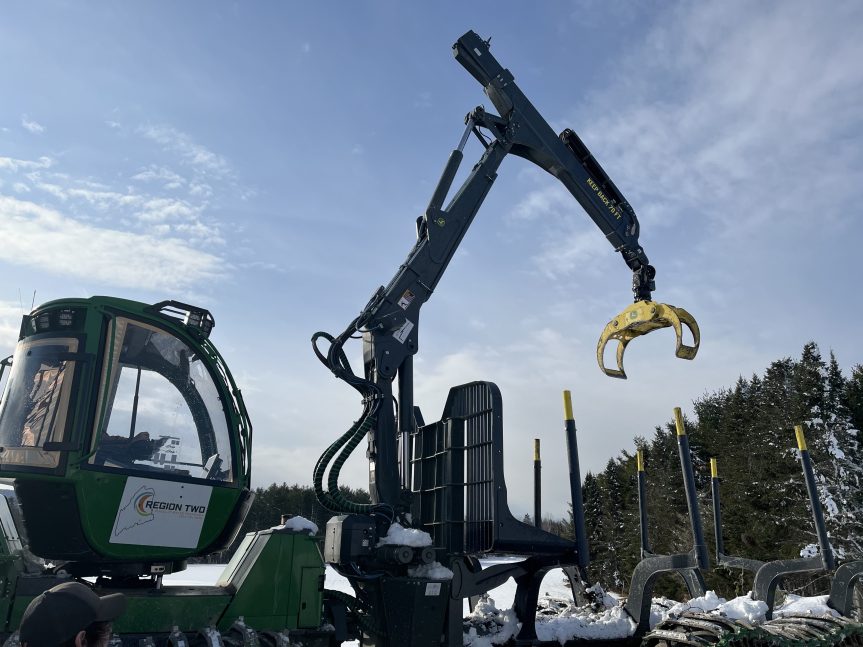
Maine Adult Education is helping fill the gaps in the workforce with collaborative and creative efforts with community partners and employers. From renewable energy and healthcare to commercial driving, adult education programs offer affordable workforce training that lead to certifications and credentials. Last year, Maine’s adult education programs awarded 2,600 certifications in high-demand industries. Read about Portland Adult Education’s Renewable Energy Program
English Language Acquisition
Maine’s adult education programs worked with over 6,000 multilingual learners last year, helping them strengthen their English skills, assisting them with training for jobs and college, and helping them prepare for US citizenship. Check out South Portland Adult Education’s Customer Service English Class
Did you know over 1,700 adults accessed Maine’s adult education programs to advance their career and college ready skills through the Maine College and Career Access program? Adult education can help adults get ready for college and career through advising, career exploration, college navigation, academic and digital skill building, and more. Learn about Lewiston’s Maine College Career Access Program.
The Interdisciplinary Instruction team from the Maine Department of Education’s Office of Teaching and Learning is excited to bring educator and author Cris Tovani to Maine on October 7th for an all-day workshop that explores ways to engage, excite, and “hook” reluctant learners in building their literacy skills and mastery.
Through the lens of student dispositions, Tovani has discovered ways around the various “masks” some students wear and created opportunities for those students to engage with their own learning in vibrant and authentic ways.
At the conclusion of this workshop, participants will be able to:
describe what full engagement looks like and discuss the importance of engagement in literacy competence,
provide reasons for students to read, write, and discuss,
model for students how to monitor and repair meaning when reading complex text, and
state how these discrete tasks, methods, and skills build literacy proficiency.
The workshop will run from 9:00 AM to 4:00 PM at Camp Chamberlain in Augusta, Maine, and is free to all Maine educators. Limited in-person spots are available and will be filled as people sign up. Participants can also participate virtually through Zoom, and the workshop will be recorded and shared with educators. Contact hours are available to participants.
This workshop is one of four (4) presented by the Interdisciplinary Team on the topic of Integrating Literacy through Applied Learning. All events are available in person and virtually.
November 8, 2024, 9 AM – 3 PM: “Integrating Literacy through Mapmaking” with David Sobel at The Steele House, 639 Main St., Rockland. Use this registration link to spend the day learning with David Sobel.
December 12, 2024, 8:00 AM—12:00 PM: “Integrating Literacy through Background Knowledge” with Josie Cameron. Wells Conference Center, 169 Hilltop Road, Orono Use this registration link to spend the day learning with Josie Cameron
January 15, 2025, 8 am – 12 noon: “Integrating Literacy through Applied Science with Katie Coppens at the Curtis Memorial Library, 23 Pleasant St., Brunswick. Use this registration link to spend the day learning with Katie Coppens
(An example of the Welcoming Libraries: Pine Collection, which will be accessed by every public school in Maine.)
This first-in-the-nation initiative exploring themes of immigration, diversity, belonging, and acceptance was kicked off today at the Westbrook Performing Arts Center.
Westbrook, ME – In collaboration with the award-winning Maine nonprofit I’m Your Neighbor Books, the Maine Department of Education (DOE) held The Pine Project’s Welcoming Libraries Celebration, marking the start of this first-in-the-nation initiative. Welcoming Libraries are collections of picture books exploring themes of immigration, diversity, and belonging, curated to foster inclusive communities.
“We know the power of a story. We know the power of books to help transport readers and help them identify with others, feel more connected, feel included in their communities, and feel a sense of belonging. Each story in the Welcoming Libraries: Pine Collections reflects that power of being included,” said Maine DOE Associate Commissioner for Public Education Megan Welter. “We know that through this initiative, readers will get to immerse themselves in wonderful stories and, at the same time, provide educators with the tools to create an even more welcoming and inclusive environment for all students.”
The Pine Project, initiated by the Maine DOE, has evolved from a small-scale initiative to a statewide program. Initially, the project comprised 16 libraries that went to as many Maine Schools. Now, through a collaboration with I’m Your Neighbor Books, the Maine DOE has expanded the project to include all public schools in the state and incorporate professional development. This expansion extends the project’s benefits to students and educators throughout Maine, providing every Maine school administrative unit with a Welcoming Library: Pine Collection.
Every collection includes 30 books and a Maine-made bookshelf. Each book includes discussion questions developed by Maine educators and community leaders to facilitate conversations in the classroom.
Some of the educators who worked on the Pine Project. (Courtesy of I’m Your Neighbor Books.)
“I didn’t realize how complex the subject of immigration was because I am an immigrant myself. It was my lived experience. But now, seeing students enjoying reading these books and hearing the conversations they inspire, I understand,” said Ina Demers, an educator involved with the project, who has already had a chance to read some of the curated books to her students.
“It’s super inspiring and exciting and energizing and really gives a sense of hopefulness about growing our capacity for truth-telling and welcoming and creating a sense of deep, deep, deep belonging,” said Francie Latour, author of Auntie Luce’s Talking Paintings, one of the books included in Welcoming Libraries: Pine Collection. “We know that belonging is really tied to our ability to learn. It is hard to learn and thrive in school if we don’t feel safe, and belonging gives us that feeling of safety.”
The Pine Project’s Welcoming Libraries Celebration featured a full cast reading of “I’m an American” by Darshana Khiani, performed by fifth graders from Westbrook Middle School. One parent who came to watch her son read shared that the Pine Project made her feel like she and her family truly belonged in Maine.
“I love seeing everyone here. It’s nice,” the parent commented. “After coming here from the Congo seven years ago, it is finally feeling like home.”
The Pine Project has been entirely Maine-based. The collections have been curated by I’m Your Neighbor Books, a Maine nonprofit, containing books by Peaks Island author Anne Sibley O’Brien and audiobook-enhanced titles provided by Portland’s AudioFile Magazine. The libraries sit on a bookshelf designed by Biddeford’s Nomak Design, manufactured by Lisbon Falls’ Orion Woodworking, and topped with signage from South Portland’s Banacom Sign. Martin’s Point Health Care Volunteers packed each set of books and bookshelves with custom packaging designed by Biddeford’s Volk Packaging.
“To have the opportunity to do something with such a strong public mission statement was like a dream come true for us,” said Katie Clark of Nomak Design.
“Maine is a special place for craftsmen and artisans, so it feels good to give my time to make quality products that are a part of Maine’s culture,” said Ryan Cathcart of Orion Woodshop.
The Pine Project also includes free professional learning, designed by the Maine DOE and I’m Your Neighbor Books, to aid educators in utilizing the libraries in their schools.
Westbrook Fifth Graders Perform a Full Cast Reading of “I’m An American.”
“The professional learning is a self-guided training to use the featured picture books to teach self-awareness, self-management, social awareness, relationship skills, and responsible decision-making,” said project lead Melanie Junkins, Maine DOE
Multilingual and Bilingual Education Specialist. “This is not a curriculum. Instead, this is an application of the Collaborative for Academic Social and Emotional Learning (CASEL) framework.”
“This project aligns with the CASEL framework in lots of ways. First of all, it is specifically intended to encourage welcoming communities and to help students have a greater sense of belonging,” explained CASEL Director of Policy Andrew Tucker. “In general, the CASEL framework is about belonging. It’s about creating these communities where students can acquire important lifelong competencies like self-awareness and self-management. [The Pine Project] allows for social awareness in a huge way because it helps students understand the life experiences of other people. It helps them to talk amongst themselves and build the relationship skills they need to understand somebody else’s perspective.”
Do you want to explore and implement innovative instructional materials this fall? Are you interested in expanding your impact outside your classroom/school? Would you like support in incorporating Wabanaki Studies into your curriculum? The Maine Department of Education (DOE) is currently seeking educators to pilot MOOSE Modules and Educator Resources and would love to have your class participate! | More
The U.S. Department of Agriculture (USDA) recently awarded a total of $7.4 million in School Food System Innovation Grants to seven organizations in Maine through its partner Full Plates Full Potential. The grant funding is part of USDA’s $100 million Healthy Meals Incentives Initiative, which empowers schools to continue serving delicious, healthy meals through regional school food systems. | More
Please join Mariette Aborn, Special Projects Manager for the Maine Department of Health and Human Services (DHHS), as she and her colleagues from Maine Child Welfare Action Network (MCWAN) welcome you to provide input on the next version – Version 2.0 – of the Maine Child Safety and Well-Being Plan. Join them for a virtual community engagement session on Tuesday, September 17th. | More
The Maine FFA state officer team traveled to Washington, DC, for the 2024 State Officer Summit this summer. The Summit is a five-day training event during which hundreds of students representing all 50 states, the US Virgin Islands, and Puerto Rico engage in conversations about leadership, agriculture, and advocacy. This experience prepares the state officer team and the Maine FFA Association for a successful year. | More
The Maine Department of Education (DOE) Interdisciplinary Instruction Team in the Office of Teaching and Learning is pleased to announce a series of four (4) upcoming workshops on Integrating Literacy through Applied Learning. Registration is free of charge to all Maine educators. Contact hours are available, and all workshops are offered both in person (space is limited) and virtually. | More
The Maine Department of Education Office of Teaching and Learning, Early Learning Team, along with our partners at Maine’s Office of Child and Family Services and Maine Resilience Building Network (MRBN), are hosting several professional learning opportunities for childcare and public-school educators working with children this fall and winter. These opportunities are funded through Maine’s Preschool Development Renewal Grant. | More
With the ever-growing understanding of and commitment to serving the whole child and family, the need for relationship building among early care and education providers within communities is even more important. When early care and education providers, such as child care, Head Start, schools, YMCAs, and libraries, get to know the work each does to support children and families during the early years, partnerships can emerge to achieve shared, positive outcomes. | More
The Maine Department of Education (DOE) is thrilled to announce an innovative training program that will empower school principals to champion equity-based Multi-Tiered Systems of Support (MTSS) for comprehensive student success. | More
The Maine Department of Education (DOE) Office of Teaching and Learning, Multi-tiered Systems of Support (MTSS) team is pleased to offer office hours focused on Maine’s MTSS Framework beginning Friday, October 4th at 10am, and occurring every first Friday of the month thereafter. | More
The Maine Department of Education (Maine DOE) is seeking an energetic, motivated, and experienced individual to serve in the role of the Celebrating Rural Maine Administrative Assistant Position. The selected candidate will provide initiative, guidance, and leadership in handling the necessary responsibilities as outlined to support the Library of Congress-funded project, and other duties as deemed necessary. | More
The Maine Department of Education (DOE) Interdisciplinary Instruction Team in the Office of Teaching and Learning is pleased to announce a series of four (4) upcoming workshops on Integrating Literacy through Applied Learning. Registration is free of charge to all Maine educators. Contact hours are available, and all workshops are offered both in person (space is limited) and virtually. Participants will receive additional guidance through monthly Professional Learning Communities (PLCs) hosted by the Maine Department of Education to support the application of new learning in the classroom. All workshops and follow-up sessions will be recorded and posted for future viewing. Interested participants may register using the links in the descriptions.
These workshops provide teachers with both a theoretical understanding of emerging research on Whole Child and literacy instruction and practical strategies to apply in their classrooms. By recognizing literacy as a cross-disciplinary skill, the sessions help educators integrate foundational literacy elements (phonics, phonemic awareness, fluency, vocabulary, and comprehension) into their teaching. This holistic approach aims to enhance students’ literacy skills and boost their confidence in learning across all subjects.
October 7, 2024: “Integrating Literacy through the Dispositions” with Cris Tovani
Monday, 9 am – 4 pm, Camp Chamberlain, 23 Blue Star Ave., Augusta
Use this registration link to spend the day learning with Cris Tovani.
“Even the best reading strategy in the world won’t work if the students are disengaged.” Join educator and author Cris Tovani (Why Do I Have to Read This?) for an all-day workshop to explore ways to engage and excite reluctant readers and learners. Participants in this workshop will gain both insight and practical tools to describe what full engagement looks like, plan so that students are engaged in the work, provide reasons for students to read, write, and discuss, and model how to monitor and repair meaning when reading complex text to promote literacy.
November 8, 2024: “Integrating Literacy through Mapmaking” with David Sobel
Friday, 9 am – 3 pm, The Steele House, 639 Main St., Rockland
Use this registration link to spend the day learning with David Sobel.
“In the beginning, children’s maps represent their experiences of beauty, secrecy, adventure, and comfort. With these effective endeavors as a foundation, I then gradually start to focus on scale, location, direction, and geographic relationships.” Analogous to the foundational skills of reading and writing, mapmaking is a deeply human way for a child to order and make meaning from their world and strengthen literacy. Join acclaimed educator and author David Sobel (Mapmaking with Children) for this hands-on workshop exploring maps and cognitive processes.
December 12, 2024: “Integrating Literacy through Background Knowledge” with Josie Cameron
Thursday, 8 am – 12 noon, Wells Conference Center, 169 Hilltop Road, Orono, ME 04469
Use this registration link to spend the day learning with Josie Cameron.
“Students often tell me they have NO IDEA what to write about! When we dig into place-based writing, they’re surprised to find story ideas hidden right in front of their eyes!” Background knowledge, the information and wisdom acquired through our own lived experiences, has in the past been overlooked. However, as research reveals more about the ways in which students learn, it is gaining recognition as a fundamental element in students’ comprehension and ability to make meaning from text – foundational skills to literacy. Join Josie Cameron, Maine author and educator (Not All Heroes, Maybe a Mermaid) as we explore the importance of background knowledge, and how to harness it for learning!
January 15, 2025: “Integrating Literacy through Applied Science with Katie Coppens
Wednesday, 8 am – 12 noon, Curtis Memorial Library, 23 Pleasant St., Brunswick
Use this registration link to spend the day learning with Katie Coppens.
“Integrating science and literacy engages students while enhancing their scientific knowledge and improving their writing skills! Not only that, but it’s fun and a great way to see students’ interests through built in voice and choice!” Learn strategies on integrating science and literacy from Maine teacher and author Katie Coppens (The Acadia Files, What do Black Holes Eat for Dinner?, Geometry is Easy as Pie). Focus will be on strategies to integrate fiction and nonfiction reading and writing in science, thereby gaining proficiency in literacy, with an emphasis on differentiation. Models and rubrics will be provided. Everyone will leave with ideas for implementation in their own classroom.
The Maine Department of Education Office of Teaching and Learning, Early Learning Team, along with our partners at Maine’s Office of Child and Family Services and Maine Resilience Building Network (MRBN), are hosting several professional learning opportunities for childcare and public-school educators working with children this fall and winter. These opportunities are funded through Maine’s Preschool Development Renewal Grant.
Supporting Children, Families, and Communities to Thrive: Promoting Positive Childhood Experiences and Resilience – a series of free virtual (via ZOOM) professional development sessions for PK-3 public-school educators to learn about how childhood experiences impact children’s development, including strategies for supporting positive experiences, in addition to tools for educators in addressing self-resilience.
Empowering Early Childhood Educators to Foster Resilience and Positive Childhood Experiences: A Train the Trainer Opportunity—this program is designed to equip early childhood educators with the tools, knowledge, and confidence to promote Positive Childhood Experiences (PCEs) and resilience in your early care and education environment by facilitating workshops on these topics.
Find more information on each opportunity below.
Supporting Children, Families, and Communities to Thrive: Promoting Positive Childhood Experiences and Resilience
The Maine Resilience Building Network will be hosting a series of free virtual (via ZOOM) professional development sessions in partnership with Maine DOE and Maine’s Office of Child and Family Services throughout the fall and winter. These sessions will focus on:
how adverse and positive childhood experiences impact children’s development,
ideas for how to support a stronger focus on positive experiences and for building resilience for young children, and
strategies for how educators can address compassion fatigue and build their own resilience.
The Impact of Experience: How Adverse Childhood Experiences and Positive Childhood Experiences Impact Healthy Child Development (Part I) https://maineresilience.org/event-5813524
The Impact of Experience: How Adverse Childhood Experiences and Positive Childhood Experiences Impact Healthy Child Development (Part I) https://maineresilience.org/event-5813531
The Impact of Experience: How Adverse Childhood Experiences and Positive Childhood Experiences Impact Healthy Child Development (Part I) https://maineresilience.org/event-5813542
The Impact of Experience: How Adverse Childhood Experiences and Positive Childhood Experiences Impact Healthy Child Development (Part I) https://maineresilience.org/event-5813557
Additional questions can be directed to the Maine Department of Education’s Early Childhood Specialist, nicole.madore@maine.gov.
Empowering Early Childhood Educators to Foster Resilience and Positive Childhood Experiences: A Train the Trainer Opportunity
The train-the-trainer program is designed to equip early childhood educators with the tools, knowledge, and confidence to promote Positive Childhood Experiences (PCEs) and resilience in your early care and education environment. This comprehensive program will empower you to lead training sessions within your own community, ensuring that more children and families across Maine benefit from these vital strategies.
Target Audience
This program is ideal for:
Early childhood educators
Pre-K providers
Public school professionals (serving children ages Pre-K to Grade 3)
Any stakeholders involved in supporting children ages 0-8 across Maine
Prerequisite
Participants should have experience in facilitating professional development sessions and a strong commitment to promoting PCEs and resilience.
Program Objectives
Understand the impact of Adverse Childhood Experiences (ACEs) and PCEs on healthy child development.
Learn evidence-based strategies to foster resilience in children, families, and communities.
Master the art of delivering effective training sessions to diverse audiences, including educators, caregivers, and community stakeholders.
Facilitate engaging discussions and activities that promote PCEs.
Provide ongoing support and resources to educators and caregivers in your community.
Program Content
Participants will:
Build an understanding of the impact of experience by:
Exploring the effects of ACEs on early brain development and lifelong well-being.
Discovering the latest research on PCEs and their role in fostering positive mental health in adulthood.
Strengthen the ability to foster Positive Childhood Experiences by:
Learning practical strategies to promote PCEs through the Positive Resilience Development framework.
Engaging in cognitive reframing techniques focused on protective factors and strengths.
Applying the Positive Resilience Development framework to real-life scenarios through group activities and case studies.
Achieve certification as a PCE and resilience trainer:
This certification will document your expertise and readiness to deliver impactful training sessions.
Program Duration
4 weeks with one virtual session per week (each session is approximately 2 hours).
Timeline and Session Topics
10/23 Week 1: Introduction and Overview
10/30 Week 2: Understanding the Impact of Experience (Part I)
With the ever-growing understanding of and commitment to serving the whole child and family, the need for relationship building among early care and education providers within communities is even more important. When early care and education providers, such as child care, Head Start, schools, YMCAs, and libraries, get to know the work each does to support children and families during the early years, partnerships can emerge to achieve shared, positive outcomes.
These partnerships can vary in their design and in their intended purposes, depending on the context and needs of the community. Examples of early care and education community partnerships include providing public pre-k, supporting the transition of special education responsibilities for 3–5-year-olds to the public schools, strengthening kindergarten transitions and registration, and offering shared professional development among educators. But how do you start building relationships among community partners? Who do you contact? What are possible partnership opportunities in your community? The Maine Department of Education’s Pathways to Partnership series is designed to help communities answer these questions and build relationships among early care and education providers to benefit young children and their families.
Recognizing that every community’s needs are different, and each early care and education provider brings a variety of important perspectives to the work, the Early learning team is seeking communities open to exploring the benefits of relationship building and community partnerships. Community teams will need to have at least one leadership representative from a school administrative unit (SAU) or school (e.g., principal, assistant principal, superintendent, curriculum coordinator, etc.) as well as at least one licensed community-based provider (e.g., family childcare, center-based care, Head Start, YMCA, etc.) willing to attend a 4-part series to learn about the various partnerships that occur in Maine. Although only these two members are required, teams are strongly encouraged to have broader representation from their early care and education community.
The series will include facilitated and focused planning time for team members. Upon completion of the series, a mini-grant opportunity will be available for communities to secure additional facilitated support to continue the work started during the series. Each 90-minute session in the series will be held over zoom on the following dates. The exact time will be determined after registration information has been reviewed.:
Do you want to explore and implement innovative instructional materials this fall? Are you interested in expanding your impact outside your classroom/school? Would you like support in incorporating Wabanaki Studies into your curriculum? The Maine Department of Education (DOE) is currently seeking educators to pilot MOOSE Modules and Educator Resources and would love to have your class participate!
Maine’s Online Open-Source Education (MOOSE) platform provides free, interdisciplinary, project-based learning materials created by Maine teachers for Maine PreK-12 students. Feedback on the modules themselves and their usability is vitally important as we constantly improve existing modules and apply the feedback to new creations. In addition to the modules themselves, extensive Wabanaki Studies Educator Resources have been developed and are ready to be piloted for feedback. Educators may apply to pilot any combination of modules and/or educator guides in their classroom.
We are looking for Maine educators interested in using these materials in their classroom with five (5) or more students and providing feedback about the experience. You get to decide the module(s)/guide(s) you want to pilot based on what works best for you and your students. You can choose from over 350 modules, including modules in dedicated learning progressions, such as Wabanaki Studies, and 18 Wabanaki Studies educator guides. Stipends will be provided for up to two modules and/or guides ($500 each) that you have piloted and provided feedback on. All required elements must be completed by January 19, 2025.
If you are interested in applying but still have questions, representatives from Maine DOE will be holding a Q&A session via Zoom on Wednesday, September 18th from 3:30 – 4:30 pm. Registration for the Q&A session can be found here. The session will be recorded and sent to anyone who registers, even if they aren’t able to make it in person. Questions can be submitted ahead of time to be answered in the session. For more information or to submit questions, please contact MOOSE Project Manager Jennifer Page (jennifer.page@maine.gov) and/or Wabanaki Studies Specialist, Brianne Lolar (brianne.lolar@maine.gov).
If you are ready to apply applications can be found here. Applications for the fall session are due by Sunday, September 22nd, 2024.
The Maine FFA state officer team traveled to Washington, DC, for the 2024 State Officer Summit this summer. The Summit is a five-day training event during which hundreds of students representing all 50 states, the US Virgin Islands, and Puerto Rico engage in conversations about leadership, agriculture, and advocacy. This experience prepares the state officer team and the Maine FFA Association for a successful year.
While in Washington, D.C., students strengthened their understanding of federal policies related to agriculture, connected with agricultural leaders, and served as delegates for upcoming FFA Committee work. After building their knowledge, the officers met with Senator King and staff from Congresswoman Pingree and Representative Golden’s offices.
Outside of training, students learned more about American history and took advantage of all that the nation’s capital has to offer. Julia Pierce, a 2024-2025 State Officer, shared, “State Officer Summit was a great experience. It provided many opportunities for the officers to work on advocacy in the FFA. Some of the activities we got to take part in included a night tour of all of the Monuments, visiting the Holocaust Museum, and one of our favorites- touring Arlington National Cemetery.”
As the team reflected on their experience, many reiterated the importance of connection to their peers. Julia added, “We had the privilege to talk to officers from all over the US and see how different FFA can be in other places. We were able to make lots of new friendships and learn new skills that we hope to use in the future.”
During the State Summit, two of Maine’s officers were assigned Committee roles as part of the delegate body at this year’s National Convention. One of Maine’s delegates, Lane Carmichael described his experience: “State Summit was an opportunity to expand our horizons as state officers. We were able to step up and realize that although Maine may be smaller than others in membership, we can still have the same impact on National FFA.”
The Maine FFA was able to send all six current state officers to Washington, DC, this year thanks to the generous support of local sponsors, Maine Agriculture In the Classroom, and the National FFA Organization.
The Maine FFA is a student-led organization focused on premier leadership, personal growth, and career success. State Officers represent the Maine FFA throughout the 2024-2025 school year and work closely with local FFA chapters. For more information about the Maine FFA Association, please visit https://www.maine.gov/doe/learning/ffa or contact Emily Doughty, State FFA Liaison, at emily.doughty@maine.gov.
The Maine Department of Education (DOE) is thrilled to announce an innovative training program that will empower school principals to champion equity-based Multi-Tiered Systems of Support (MTSS) for comprehensive student success.
Implementation of a Multi-Tiered System of Support is a requirement in Maine schools. The purpose of this learning cohort is to provide training and support to Maine school principals and related personnel with the design and implementation of MTSS frameworks that provide them with the knowledge and tools necessary for addressing the diverse needs of students and to promote school and student success effectively. By adopting a schoolwide MTSS, schools can foster a culture of academic, behavior, social/mental health, and attendance support, early intervention, and data-driven decision-making, ultimately leading to improved growth and achievement rates and better outcomes for all students.
Participants in this cohort will:
Build capacity to design and effectively lead schoolwide MTSS across grades PK-12
Develop knowledge and skills to make MTSS a part of the school culture to ensure valuable work in high-leverage student supports that can be blended and braided into a cohesive system that leads to longterm positive impact,
Convene relevant stakeholders into MTSS leadership teams that are prepared to utilize research-based strategies for identifying areas of concern/need, assessing identified problems, selecting solutions, creating targeted plans, and monitoring outcomes that cross all school domains (reading, mathematics, behavior, social and emotional/mental health, and attendance)
Explore and learn how to use a variety of MTSS implementation tools and resources that are used to assess and build readiness for MTSS implementation, assist principals in aligning initiatives and layering support for maximum impact and long-term sustainability, and facilitate the identification of existing or future barriers that may have a negative impact on the implementation of MTSS and provide action steps for removing barriers to aid in successful MTSS implementation.
The MTSS cohort will take place through a hybrid of synchronous and asynchronous learning sessions from October 2024 through December 2024, utilizing both live in-person and virtual sessions, including onsite school visits, small group in-person team-based workshop events at a centralized location, and a 2-day whole group in-person convening at a location to be determined.
Please attend the online information session for more detailed information regarding the timeline, commitment requirements, and in-person meeting location(s).
Monday, September 16th from 3:30-4:30 pm – Register here.
The program is open to PK-12 principals and any of their designated MTSS Team members. Applications for participation will open after September 9th and will be reviewed on a rolling basis through September 26th until all slots are filled. All schools will be notified of their application status no later than September 27th, with virtual learning sessions to begin the week of October 7th.
For further questions, you can reach out to Andrea Logan, MTSS Specialist, via email (andrea.logan@maine.gov) or by phone (207-592-2011) Monday through Friday from 8:00 AM through 4:30 PM.