The Maine State Board of Education is very pleased to welcome its newest student member. Cedar Worster from Harrison is entering her junior year at Oxford Hills Comprehensive High School in South Paris. Cedar is involved in a number of school and community activities including Student Council, the Interact Club, high school athletics, performing with school bands and those focusing on civil rights and diversity, equity and inclusion.
Each year the State Board of Education seeks applications from interested public school sophomores to serve two-year terms during their junior and senior years as non-voting members. The two students, one from each congressional district, are appointed by the Governor and confirmed by the legislature. They join nine adult SBE members who truly value what their younger colleagues bring to the table through awareness of what is going on in their schools and other networking activities. In addition, the student members are, with the assistance of the Maine Department of Education, Facilitators and Co-Chairs of the DOE’s Student Cabinet which brings together students from across the state to share topics which are important to them and their fellow students.
Also serving as a student SBE member during the upcoming year is Deering High School Senior Phat Thai.
(Students use colored cards to tell robotic cars where to go.)
At Windsor Elementary and Middle School, students are passionate about innovation, and their librarian, Kristel Anuszewski, uses the mobile computer science labs funded by the Maine Department of Education (DOE) to support that passion. Anuszewski, Kennebec County’s 2024 Teacher of the Year, is the Librarian and STEM Educator for Windsor’s Learning Commons. On a Friday in late May, the Maine DOE visited as she taught coding skills to a first-grade class using indi cars from the Maine DOE’s Mobile Computer Science Lab program.
In 2022, the Maine DOE offered a grant for educators to apply for one of three mobile labs. Anuszewski chose the robotics and programming lab, with the other options being augmented and virtual reality and coding and hardware.
“We wanted to create a space where kids can be creative, they can be innovative, they can explore, and they can engineer,” said Anuszewski. The cart came with three learning tools for students: Sphero Indi Cars, Sphero BOLTs, and Merge Cubes.
Anuszewski used the Mobile Computer Science Labs to transform the library into a vibrant hub for innovation.
“I feel like it went from gray to this burst of color,” said Windsor Principal Heather Wilson. “She pulls out of the students different things that they’re interested in and shows them how technology can enhance that.”
At Windsor, the Learning Commons is designed to blend technology and traditional library lessons seamlessly. Anuszewski was brought on in 2019 to build out and run the program.
“We had this vision of it being called the Learning Commons and not the library because we wanted it to be more than books,” Wilson said. “We wanted it to be about technology, STEM, innovation, and fun. Before Kristal and the [Mobile Computer Science Labs], we viewed technology as one kind of tool, but it wasn’t interactive with the kids. Now, it’s a vibrant, interactive space that sparks creativity and engagement.”
Now, Learning Commons is bursting with color and sound. The moment students walk through the door, they are filled with curiosity. When Anuszewski tells her first-grade class about the day’s assignment, using the Lab’s indi cars for a lesson about Summer, the room fills with cheers.
“Kristel is an astoundingly intuitive teacher when it comes to building instruction around the STEM,” says Anuszewski’s teaching assistant, Ed Frankonis. “Students have developed immense teambuilding skills with each other thanks to the challenges presented by the coding-teaching technology tools.”
Students enthusiastically engage with Anuszewski’s indi Car assignment.
The indi cars Anuszewski used for the day’s lesson provide a hands-on coding experience using a built-in color sensor and interactive color-coded tiles. For more advanced learning, students can progress to simplified block coding options. In Anuszewski’s first-grade class, they stick to the color sensors.
“Students start out really young, with the directional coding, like the indi cars, and essentially, it’s, here’s where you’re starting, here’s where you’re ending, and what directions do you have to give your robot to be able to get them to where they need to be. So, it’s all about processing and logic,” explains Anuszewski. “Having [the Mobile Computer Science Labs] creates more opportunities. I never had anything that was color coded before, and for the kids who are still learning their lefts and rights, the colors help them flush out those concepts, all the while they are doing directional coding.”
For Pre-K through fifth grade, Anuszewski meets with each class twice a week, once for a traditional library lesson and then again for a STEM lesson. She ties these lessons together with a theme. Her Friday first graders have been learning about seasons, specifically summer. Earlier in the week, they read the book “Stuck” by Oliver Jeffers, a story about a boy whose kite is stuck in a tree and his attempts to knock it loose by throwing more objects up into the tree until it is full of stuck objects. For their following technology lesson, they are strategizing how to move their indi cars down a track to a summer object, like the ones from “Stuck.” To do so, they will have to use indi’s colored cards to tell the robot where to go.
The students pair off, each assigned to a specific section of the library where Anuszewski has laid masking tape tracks for them to lead their cars down. Frankonis goes to each group and lays out their special summer object at the end of the masking tape track.
“It’s hard, but it’s really fun,” said Nevada, one of Anuszewski’s first graders.
“You have to figure out what color to use,” explained another student named Landon. “Sometimes I get it wrong. I try again, though.”
Anuszewski teaches Windsor students up to eighth grade. Older students have more autonomy when it comes to the Learning Commons.
“So my middle school curriculum is very different from a traditional curriculum. I have what is called choice boards, so at the beginning of every month, I present between 12 and 14 choices for students in the areas of reading, technology, coding, engineering, and maker space,” explains Anuszewski. “So, within those headings are four different choices, at least, for students to be able to choose from. They pick the one area that they want to study for the month. There are clickable links that will take students to different places online, whether it’s instruction or the actual site, and they explore the subject independently and kind of prep themselves to be able to be successful with their choice.”
Every year, Anuszewski selects a team of middle school students to attend the Maine DOE’s Maine Learning Technology Initiative (MLTI) Student Conference at the University of Maine Orono (UMaine). She selects students who have shown an aptitude or particular interest in tech. This year, one of her Windsor Middle School students, Emry Michaels St. Ong, won a $1,000 scholarship for UMaine at the conference for a game design challenge.
“I got a scholarship to the University of Maine in Orono at the MLTI conference. I was playing an online game called Bloxels, and I won for creating a character based on one of my favorite teachers,” explained St. Ong.
For those unfamiliar, Bloxels is a game-building platform where players can create games their peers can play.
“At the conference, we would go to different blocks. In the Bloxel block, the presenter told us how to go in and make characters, then gave us time to play around with it,” continued St. Ong. “There was a competition for best character. I didn’t think I was going to win it at all. But Mr. Ed here in the library told us that you never know, just take your chance and you can get it. So, I submitted my character and won one of the scholarships.”
St. Ong stands in front of the Windsor’ Mobile Computer Science Labs.
Anuszewski mentions that game design is very popular for a lot of kids.
“They get to do it in the library during learning commons time,” she said. “But to be able to hear from another presenter, to be able to have that kind of college experience with someone who’s not your teacher is really, really cool for them.”
That being said, St. Ong credits Anuszewski with giving him the tools he needed to win: “She teaches you a lot of stuff that will not just help you in school but help you wherever you go. She has taught us to use our imaginations and to be creative.”
Regarding coding, St. Ong was able to learn more about himself as a learner by using the robots from the Mobile Computer Science Carts.
“I’ve learned I’m a visual learner, and I like to go off on my own to code,” St. Ong explained. His class uses the Sphero Bolt bots. Students like St. Ong will code the bot to move about a room independently. “I’ll code a [Sphero Bolt] a little bit, see where it ends up, and then I’ll use what I learned to change it. I love learning hands-on like that.”
Through programs like the Mobile Computer Science labs, educators like Anuszewski have the means to empower students to engage with technology from a young age, building skills that they will use for the rest of their lives.
“I don’t want kids to ever be afraid of technology. I feel like immersing them in the technology is one way to do that,” says Anuszewski. “If they want to seek a career, technology is going to be a part of that. I don’t ever want them to feel like they don’t understand tech or not pursue something they want because they’re too afraid of what they don’t know. I never want them to be scared to try something.”
The Mobile Computer Science Labs are a part of Maine Teaches CS and were purchased with Federal Emergency Relief Funding. Maine Teaches CS is a part of Maine’s Whole Student Pandemic Response. Discover more of the DOE’s innovative programming at Maine’s Whole Student Pandemic Response page on the Maine DOE website.
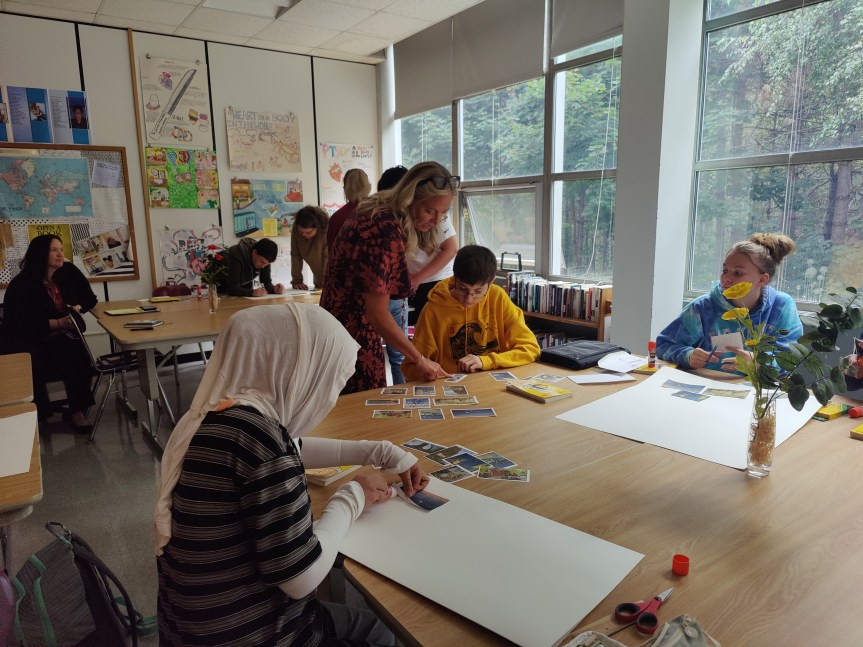
The Maine Department of Education (DOE) is excited to host community meetings across Maine to bring educators, parents, students, and business leaders together to discuss a shared vision for our schools. These in-person conversations will take place in August and September across the state.
We need your voice!
We’re interested in developing relevant ways to recognize and acknowledge what schools are doing to prepare students for success in their lives, a rapidly changing global economy, their careers, and as engaged and productive citizens of Maine. It’s time to measure what matters.
Join us at a community conversation near you to share your thoughts about what makes a great school in Maine, how we can best prepare all of our students to thrive, and how we measure the great things happening in Maine schools. Your thoughts and ideas will be used to develop a portrait of a great school in Maine based on what the people of Maine value for our schools.
The Maine Department of Education (DOE) would like to remind school administrative units (SAUs) of the following data reports and due dates that are coming up. | More
Maine educators and aspiring educators can now access Teach Maine Scholarships to complete coursework required for certification over the summer. The Maine Department of Education (DOE) has partnered with the University of Maine System to cover tuition costs for eligible educators who complete qualifying summer coursework through a University of Maine school. | More
Eight Maine teachers were announced today as the state semifinalists for the 2025 Maine Teacher of the Year. These inspiring educators, members of the 2024 County Teacher of the Year cohort, embody the dedication, innovation, and leadership synonymous with Maine’s exceptional classroom teachers. As ambassadors for their students, colleagues, and school communities, their selection acknowledges their excellence in teaching and celebrates the collective achievements and commitment of the entire teaching profession in Maine. | More
Students and families gathered at SeDoMoCha Elementary School (RSU 68) on Monday to kick off the 2024 Hot Lunch Summer Meal Program and the new SUN Bucks benefit. The event, supported by officials from the Maine Department of Education (DOE), Department of Health and Human Services (DHHS), United States Department of Agriculture (USDA), and RSU 68, showcased new options to help ensure children have access to nutritious meals throughout the summer months. | More
Under Maine Revised Statutes, Title 20-A, section 6402-A, each school board shall appoint one or more physicians or family or pediatric nurse practitioners. Some of Maine’s medical providers and school health staff have requested clarification from the Maine Department of Education (DOE) about the law and the role of the school health advisor, which is defined under this law. | More
Does your school unit sponsor outdoor learning opportunities in one of the following categories? Overnight trips away from potable water and/or Use of non-motorized watercraft on Maine’s waterways. Answering yes to either statement indicates that your school unit requires a school employee or approved volunteer to hold an Educational Trip Leader (ETL) permit to lead outdoor educational trips. | More
The Maine Department of Education’s (DOE) Interdisciplinary Instruction Team has created new resources for supporting PK-12 literacy instruction. The Integration of Literacy and Neuroscience suite of resources reflects current research-based practices through a combination of asynchronous professional learning modules, strategies, and additional resources to support student engagement and reading comprehension through the lens of neuroscience. | More
The 2024 Maine Department of Education (DOE) Annual Summit will be held August 6th – 8th at the Augusta Civic Center. This year’s event features an all-in-one events app where you can select a personalized schedule following event registration. Register for the Annual Summit Here | See the Agenda & Sessions
Does your school unit sponsor outdoor learning opportunities in one of the following categories?
Overnight trips away from potable water
Use of non-motorized watercraft on Maine’s waterways
Answering yes toeither statement indicates that your school unit requires a school employee or approved volunteer to hold an Educational Trip Leader (ETL) permit to lead outdoor educational trips. Per the Maine Department of Inland Fisheries and Wildlife, an educational institution conducting an outdoor educational trip that would normally require a registered Maine guide (trips overnight away from potable water and/or trips that occur on Maine’s waterways) shall provide for every 12 trip participants at least one educational trip leader who holds a valid educational trip leader permit and who is associated with the educational institution. If the person who is conducting the trip holds a valid Maine Guide’s license, then the educational trip leader permit is not required.
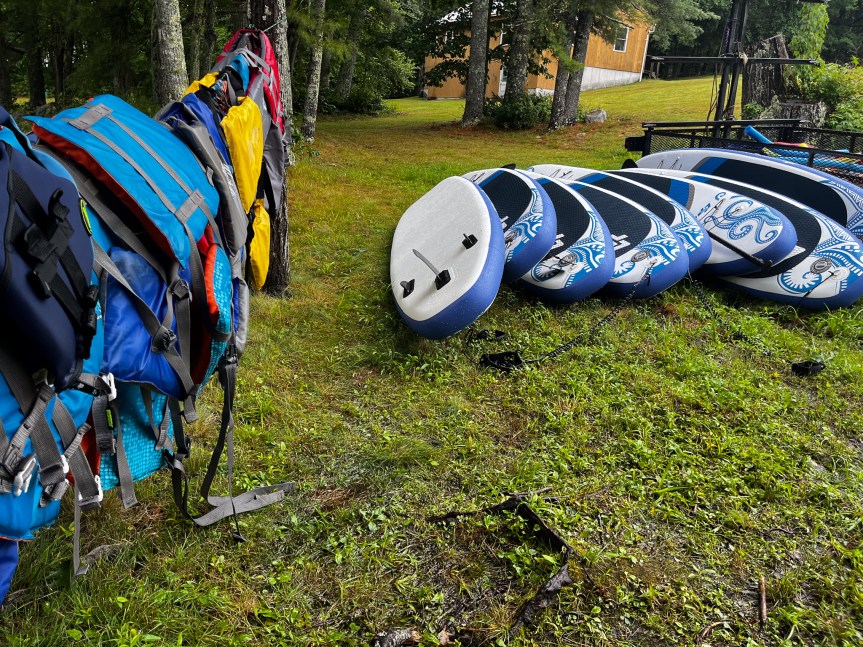
On August 6-8, during the 2024 Maine DOE Annual Summit, 18 educators in Maine have the opportunity to receive free Education Trip Leader (ETL) training. The course, Educational Trip Leader Permit and Wilderness First Aid (WFA), is being taught by Sarah Hubert, Registered Maine Guide, and Jeremy Hargreaves, owner of Northeast Whitewater.
The Maine Department of Education (DOE) is partnering with Teens to Trails, Northeast Whitewater, and Camp Mechuwana to provide this hands-on training and certification.
Registration for the course is a 3-day commitment, as participants will be immersed in integrating the curriculum and training over the three days. Participants will need to provide their own overnight camping and personal gear and can sleep in their own tent or in a lean-to on the shores of Camp Mechuwana on the nights of Tuesday, August 6th, and Wednesday, August 7th.
For questions regarding the Educational Trip Leader Permit/Wilderness First Aid course for the 2024 Educator Summit, contact Dr. Carolyn Gross (carolyn.gross@maine.gov /207-441-9043).
In 2021, Chapter 927: Guides, Youth Camp Trip Leaders and Education Trip Leaders guidance was established by the Maine Legislature and the Maine Department of Inland Fisheries and Wildlife. An Educational Trip Leader Permit is required for schools and postsecondary institutions in the state of Maine that sponsor trips on waterways and lack of potable water. Read more about this legislation at Chapter 927: Guides, Youth Camp Trip Leaders and Educational Trip Leaders.
Under Maine Revised Statutes, Title 20-A, section 6402-A, each school board shall appoint one or more physicians or family or pediatric nurse practitioners. Some of Maine’s medical providers and school health staff have requested clarification from the Maine Department of Education (DOE) about the law and the role of the school health advisor, which is defined under this law.
While each school administrative district is unique and will create a contract based on its needs, the Maine DOE Coordinated School Health team has collaborated with the Maine Chapter of the American Academy of Pediatrics (MAAP) School Health Committee and Maine Association of School Nurses (MASN) to create a new resource, Maine School Health Advisor Role Template. This document provides a framework and recommendations around Maine school health advisor roles and responsibilities. This template is intended to provide information about the Maine Law as it defines the roles and responsibilities of a school health advisor and offers guidance to the school administrator and school health advisor as they further define the role for their specific school district and student population.
Schools play a critical role in promoting the health and safety of young people and helping them establish lifelong healthy behaviors. A strong partnership with a school health advisor can help create a healthy school environment.
The Maine Department of Education’s (DOE) Interdisciplinary Instruction Team has created new resources for supporting PK-12 literacy instruction. The Integration of Literacy and Neuroscience suite of resources reflects current research-based practices through a combination of asynchronous professional learning modules, strategies, and additional resources to support student engagement and reading comprehension through the lens of neuroscience. These modules focus on multiple aspects of literacy, including:
Active self-regulation includes engagement and motivation, executive functioning skills, and strategy use in literacy, with the goal of developing engaged, motivated, independent readers.
Word Recognition includes literacy foundational skills such as phonological awareness, alphabetic principles, phonics, decoding, and sight words.
Language Comprehension focuses on Cultural and Other Content Knowledge, including work on the role of students’ prior and background knowledge in improving reading and Theory of Mind, which refers to a reader’s ability to empathize with characters or people in books.
Bridging processes are the tools that readers use to move between word recognition and language comprehension with increasing fluency. Bridging processes are how readers begin to weave together word recognition and language comprehension skills to become more fluent readers.
The first national Seal of Biliteracy Summit took place in Washington, DC, recently, and representatives from the Maine Department of Education (DOE) attended. The event brought together educators, policymakers, and language advocates to celebrate and promote multilingual education. It highlighted the achievements of students who earned the Seal of Biliteracy, an award recognizing proficiency in English and an additional language.
Left to Right: Ayesha Hall, Maine DOE Director of Strategic Partnerships, and Beth Lambert, Maine’s Chief Officer of Teaching and Learning.
Among the attendees were Beth Lambert, Maine’s Chief Officer of Teaching and Learning, and Ayesha Hall, Maine DOE Director of Strategic Partnerships. The Maine DOE plans to use this celebratory platform to continue promoting equitable access to global engagement opportunities for all Maine students. The Maine DOE’s Office of Innovation and Office of Teaching and Learning are working together to create a more inclusive experience for all students by presenting Maine’s multilingual learning and world languages programs as collaborative efforts at the state level.
The Seal of Biliteracy, endorsed by the Maine DOE and awarded to students in many Maine schools, acknowledges students who have demonstrated high proficiency levels in both English and another language through rigorous assessments. The Seal, which appears on students’ transcripts, enhances their post-secondary and career opportunities by showcasing their bilingual skills.
In Maine, the program includes various languages, such as Mandarin, Arabic, Chinese, French, Spanish, and Somali. The recent awarding process has been streamlined, allowing schools to confer the Seal of Biliteracy directly, making the recognition more accessible to students across the state.
The summit aimed to expand the Seal of Biliteracy’s reach and impact, encouraging more states and districts to adopt similar programs and highlighting the importance of multilingualism in an increasingly globalized world.
For more information about the Seal of Biliteracy in Maine, visit the Maine DOE website.
The Maine Department of Education (DOE) would like to remind school administrative units (SAUs) of the following data reports and due dates that are coming up.
Truancy and Daily Attendance Certifications
The final certifications for Truancy and Daily Attendance for the 2023-2024 school year are due on July 15th. Superintendents must certify these reports once data specialists and SAU data teams have reviewed and updated them.
NEO Staff was rolled to the 2024-2025 school year on July 1. All staff were updated to “pending” status during this rollover. All staff must be updated to reflect their current position. Please review all staff positions in NEO, add new staff if necessary, and update salary, contact, and position information to reflect each staff member’s position for this school year.
Resources:
NEO Staff Data Entry Webinar 9/3 at 12 pm Register Here
Graduation Report
This report allows SAUs to validate graduation counts for the school year. Students still working toward finishing their graduation requirements have until August 15th to complete them for this reporting cycle. Students who finish their requirements over the summer can be exited from State Synergy on the date of the graduation ceremony. The graduation date must be prior to 6/30.
Eight Teachers Will Continue Through the Teacher of the Year Process
Augusta, ME–Eight Maine teachers were announced today as the state semifinalists for the 2025 Maine Teacher of the Year. These inspiring educators, members of the 2024 County Teacher of the Year cohort, embody the dedication, innovation, and leadership synonymous with Maine’s exceptional classroom teachers. As ambassadors for their students, colleagues, and school communities, their selection acknowledges their excellence in teaching and celebrates the collective achievements and commitment of the entire teaching profession in Maine.
The semifinalists for the 2025 Maine Teacher of the Year are:
Kristel Anuszewski, Windsor Elementary School, 2024 Kennebec County Teacher of the Year
Shilo Burnham, East Belfast School, 2024 Waldo County Teacher of the Year
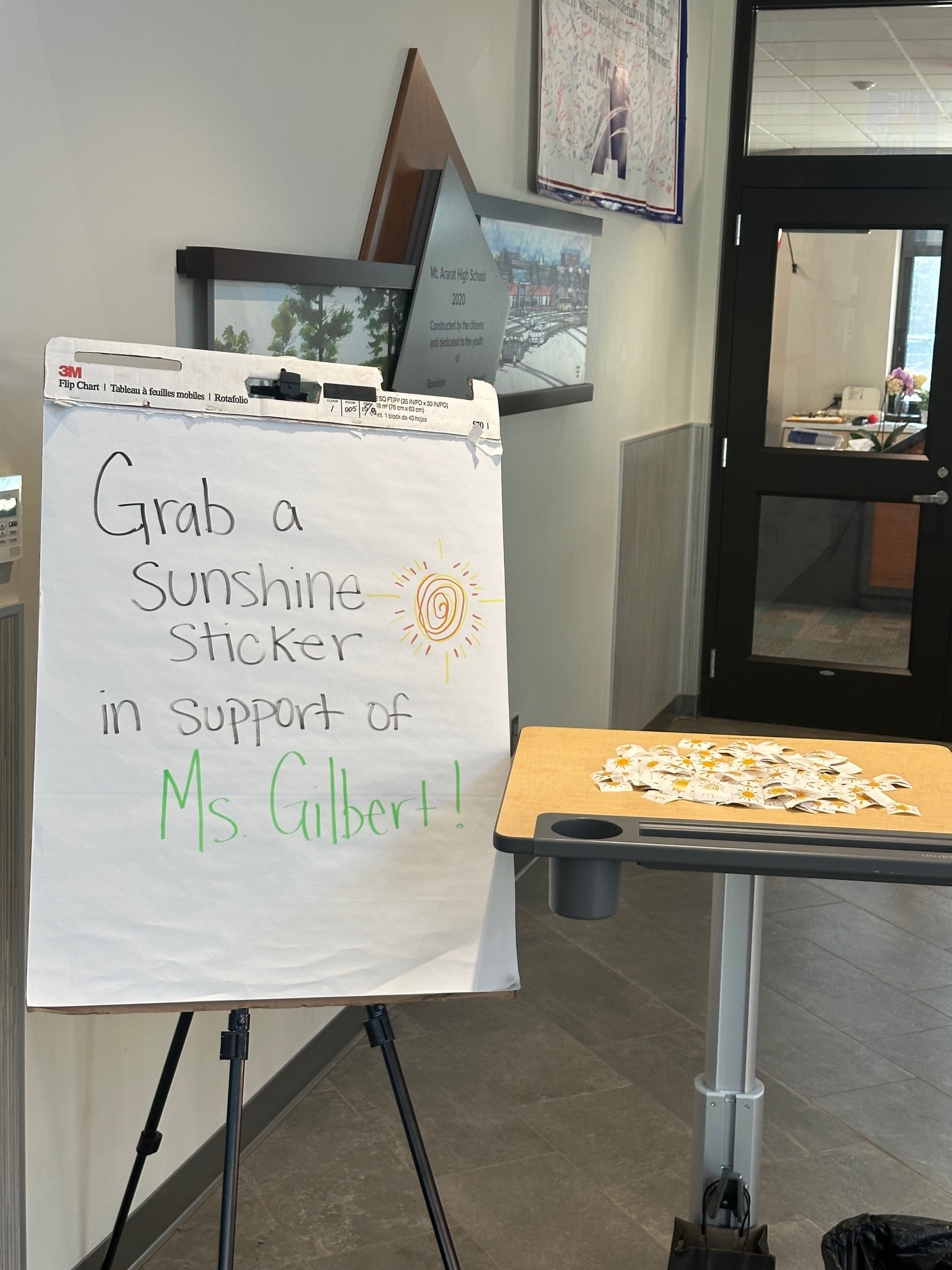
Ally Gilbert, Mt. Ararat High School, 2024 Sagadahoc County Teacher of the Year
Becky Hallowell, Wiscasset Elementary School, 2024 Lincoln County Teacher of the Year
Ryan Lowell, Ellsworth High School, 2024 Hancock County Teacher of the Year
Danielle Pelletier, CK Burns School, 2024 York County Teacher of the Year
Katie Strait, Baxter Academy for Technology and Science, 2024 Cumberland County Teacher of the Year
Emilie Throckmorton, Bangor High School, 2024 Penobscot County Teacher of the Year
“Congratulations to all the semifinalists on this well-deserved recognition,” said Maine Education Commissioner Pender Makin. “I’m so inspired by the extraordinary work you do each and every day on behalf of your students, schools, and communities. Thank you for stepping up to represent Maine teachers as County Teachers of the Year and now as Teacher of the Year Semifinalists.”
“We are thrilled to recognize these outstanding educators who exemplify the passion and dedication that define Maine’s teaching community,” said Educate Maine Executive Director Jason Judd. “Their commitment to student success and innovation in the classroom is truly commendable. We look forward to the next phases of the selection process and the announcement of the 2025 Maine Teacher of the Year.”
The selection process for the Maine Teacher of the Year Program is rigorous and reflective, designed by educators to offer candidates an opportunity to reflect on their instructional practice. Each educator was nominated in January by a member of their community for their commitment to their students and exemplary service in education. They first participated in the County Selection Process, where a distinguished panel of teachers, principals, and business community members selected them as a County Teacher of the Year from among hundreds of nominees. In May, they embarked on the state Teacher of the Year process, showcasing their instructional practices through a classroom video and written reflection.
In the next phase of the selection process, the semifinalists will deliver keynote speeches, submit professional portfolios, and participate in an expert panel discussion on educational equity, teacher leadership, and education policy. The state finalists will be announced in September, and the 2025 Maine Teacher of the Year will be revealed in October. The 2025 Maine Teacher of the Year will serve as an ambassador for the teaching profession and represent Maine in the National Teacher of the Year program.
The Maine Teacher of the Year program is administered by Educate Maine through a unique partnership with the Maine Department of Education with support from the Maine County and State Teacher of the Year Association (MCSTOYA) and the Maine State Board of Education. Funding for the program is generously provided by Bangor Savings Bank, Dead River, Geiger, Hannaford, Maine Lottery, the Silvernail Family, and Unum.
For more information about the Maine County Teacher of the Year Program and to see a list of County Teachers of the Year, and Maine Teachers of the Year, visit http://www.mainetoy.org.