The Maine State Board of Education is conducting conversations with the public about Rule Chapter 115: The Credentialing of Educational Personnel, from August through December. Resolve 2024, Chapter 137 directed the State Board of Education to amend Rule Chapter 115, with special attention to sections related to the State Board of Education’s report submitted to the Joint Standing Committee on Education and Cultural Affairs in 2023.
The State Board of Education intends to take the following steps with respect to review of these rules:
Begin speaking with experts in the field
Revise necessary sections of Chapter 115
Invite public feedback on the revisions
File updated rule
Engage with Legislative oversight of the rule
The State Board of Education will hold several regional meetings focused on ideas and goals related to certification regulations in a general sense. These meetings will also focus on specific sections of Chapter 115 and will provide invaluable feedback to the State Board. In addition, the State Board of Education’s Certification and Higher Education Committee will provide time within the established meeting schedule to receive public feedback on Rule Chapter 115.
Remaining dates for these meetings are as follows – for the Zoom link, please email Emily Cummins
October 16, 2024; 10:30 am – 12:00 pm
November 20, 2024: 10:30 am – 12:00 pm
December 18, 2024: 10:30 am – 12:00 pm
Taking into consideration the insights gained from all of these discussions, the State Board of Education will propose updates to Rule Chapter 115 and begin the Maine Administrative Procedures Act (A.P.A.) routine technical rule process pursuant to Title 5 MRS §8052 (public notice of filing, public hearing, open public comment period). Once the proposed rule has been filed, the public will be notified of the scheduled public hearing and comment period. This will be an opportunity to provide written and oral comments regarding the proposed rules. The State Board of Education will review all comments and respond accordingly. Updates to the rules will then be submitted for review as to form and legality and legislative oversight before final adoption.
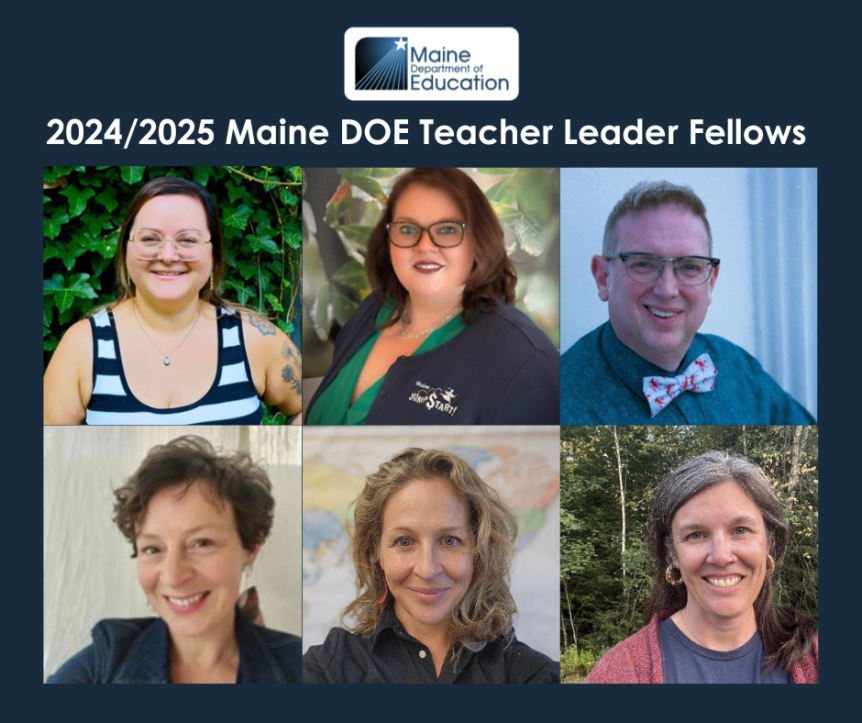
The Maine Department of Education (DOE) has welcomed its 2024/25 Teacher Leader Fellows. The new class of six extraordinary educators are from across the state and bring expertise in civics, personal finance, integrated arts, and multilingual learning, specifically with newcomers, as well as multilingual learners with disabilities. | More
The Maine Department of Education is seeking proposals for a statewide reading and mathematics assessment, per State of Maine procurement regulations as outlined in 5 M.R.S.A. § 1825 A-E and Ch. 110 & 120 in 18-554 of the Code of Maine Rules (CMR). | More
The Maine Department of Education (DOE) kicked off Maine’s Kindergarten Entry Inventory (KEI) pilot project this summer. The project is a manageable, strength-based, formative tool that aligns with the Pre-K Maine Early Learning Developmental Standards (P MELDS). It is designed to provide educators, families, and caregivers with insights about the whole child’s development to inform instructional planning and decision-making at the beginning of kindergarten. | More
During the Second Regular Session of the Maine Legislature, Maine’s Legislative Committee on Education and Cultural Affairs declined to authorize the proposed social studies content standards of the Maine Learning Results. The committee directed the Maine Department of Education (DOE) to reengage in the rulemaking process for the social studies standards. To this end, the Maine DOE reopened the 2024 Steering Committee and writing team conversations for the social studies standards. | More
Literacy has been at the forefront of discussions in education across our state. We are a state filled with creative, engaging, and highly skilled educators – many of whom are actively harnessing new knowledge from evidence-based research to reshape the way their classrooms work and how students interact with their learning. | More
A Day With Maine Teacher of the Year Finalist Emilie Throckmorton and Her Bangor High School Community Walking into Dr. Emilie Throckmorton’s classroom, one is immediately transported to another world. The tall, almost floor to ceiling window frames a small forest of trees, while the marked absence of fluorescent lighting creates a coffee shop ambiance in the room. | More
On the banks of the Sheepscot River sits the OWLS (Outdoor Wonderful Learning Space) community. This outdoor learning space at Wiscasset Elementary School was the brainchild of 4th grade teacher Becky Hallowell, and each year she and her students transform this space into a vibrant community to build, learn from, and explore through the seasons. | More
Adventurous, vibrant, caring, fierce, authentic, inclusive, and passionate. Those were some of the words Baxter Academy for Technology and Science teacher Katie Strait’s students and colleagues used to describe her. | More
Allyson Gilbert is the sun. That’s how several of Ms. Gilbert’s students and colleagues at Mt. Ararat High School described her. Yes, it’s because she dresses up in a big inflatable sun costume for one of her science lessons, bringing students outside and arranging them at different distances from her like the planets in the solar system. | More
When Common Threads of Maine, a nonprofit school specializing in Maine’s textile industry, made the difficult decision to close recently, owner Dory Waxman reached out to the Westbrook Adult Education program to see if they would be interested in taking over their sewing classes as part of their workforce training program. | More
As students returned to school this year, organizations large and small across Maine breathed a happy, yet tired, sigh of relief as they wrapped up their summer programs for the year, reflecting on the outcomes for students and staff. | More
On a rainy summer day in Washington, Maine, students filed into the cozy main building of Camp Medomak. Looking around at the room full of smiling faces and picnic tables covered in books, games, and crafts, you may assume you’re at classic summer camp. However, these students are here for RSU 40’s Summer School program. | More
The Maine Department of Education (DOE) is hosting a wide variety of office hours this school year to support school and district educators/staff with everything from technical assistance to professional learning, as well as opportunities to connect and share with colleagues across the state. | More
Registration is open for the Island Readers & Writers (IRW) for the Dear Teacher 2024 professional development conference, which will be held at the Cross Insurance Center in Bangor on October 10 and 11, 2024. | More
When Common Threads of Maine, a nonprofit school specializing in Maine’s textile industry, made the difficult decision to close recently, owner Dory Waxman reached out to the Westbrook Adult Education program to see if they would be interested in taking over their sewing classes as part of their workforce training program.
“We gave a very enthusiastic YES! to that question and they have since moved into Westbrook Regional Vocational Center (WRVC), which is where our adult education office is located,” explained Jen Mull-Brooks, Director of Westbrook Adult Education.
Common Threads of Maine sent several sewing machines of all kinds to support starting the sewing class and former owner Waxman continues to support the transition by mentoring Mull-Brooks through continuing relationships with existing financial support for the class.
In addition to this, Westbrook Adult Ed. received special permission to run the program during school hours to help break down childcare barriers since school-aged children will be in school. Students in the adult education sewing program will be learning alongside WRVC high school students after passing background checks to ensure it is an appropriate and safe fit.
Apphia Mpay
Waxman has introduced the Adult Ed team at Westbrook to Apphia Mpay who taught at Common Threads. Mpay is from the Democratic Republic of Congo and is a fashion designer, from a family of artists. Mpay talks about her love of training others and teaching them hand skills with kindness and patience in her biography on the Common Threads website.
“We have hired Apphia to continue teaching with us, as she comes with an incredible reputation for her teaching, stitching, and design skills. We’re so excited to have her as part of our team!” said Jen Mull-Brooks.
The Maine Department of Education (DOE) is hosting a wide variety of office hours this school year to support school and district educators/staff with everything from technical assistance to professional learning, as well as opportunities to connect and share with colleagues across the state.
Please find a selection of virtual office hours hosted by Maine DOE staff below:
Assessment Team Office Hours – Second Wednesday of the month, 12:00 – 1:00 pm
ESEA Federal Programs Fiscal Office Hours – Second Tuesday of the month, 9:00 – 10:00 am
Federal Relief Program Office Hours – First Thursday of the month, 9:00 – 10:00 am
Federal Fiscal Office Hours – Last Thursday of the month, 10:00 – 11:00 am
Federal Relief, No agenda Walk-In Fiscal Office Hour – Tuesdays, 9:00 am through October 1st
Home Instruction Office Hours – Wednesdays, 1:00 – 2:00 pm
Multi-tiered System of Supports Office Hours – First Friday of the month 10:00 am
Early Learning Office Hours – Second Thursday of the month, 3:30 – 4:30 pm
School Finance & Compliance Office Hours – Third Tuesday of the month, 10:00 am
Innovative Research and Design Office Hours – Third Wednesday of the month, 1:00 -2:00 pm (starting in October)
Engine – Collaborative Platform for Educators Office Hours – First Wednesday of the month, 1:00 – 2:00 pm (starting in November)
Making Connections – HE & PE Community of Practice – Monthly on varying dates, 3:15 – 4:15 pm
Wellness Community of Practice – Fourth Wednesday of the month, 3:15 – 4:15 pm
To find additional information and registration links for any of the opportunities above, search for them in the Maine DOE Events Calendar by date, event type, and/or host topic.
The Maine Department of Education (DOE) kicked off Maine’s Kindergarten Entry Inventory (KEI) pilot project this summer. The project is a manageable, strength-based, formative tool that aligns with the Pre-K Maine Early Learning Developmental Standards (P MELDS). It is designed to provide educators, families, and caregivers with insights about the whole child’s development to inform instructional planning and decision-making at the beginning of kindergarten.
Kindergarten teachers, administrators, and consultants from the Maine DOE, the Department of Health and Human Services Office of Child and Family Services, and the Governor’s Office of Innovation, Policy, and the Future gathered in Augusta during July and August for in-depth overviews of the 3-year project.
This fall, over 30 kindergarten teachers will participate in professional development training to pilot various tasks within their classrooms. Feedback from their experiences will be used to decide the project’s development. Data aggregated from the project will also help strengthen Maine’s early care and education system by identifying areas of steady growth and continuous improvement.
For questions or information, please reach out to Karen Mathieu, Maine DOE Kindergarten Entry Inventory Specialist, at karen.mathieu@maine.gov.
During the Second Regular Session of the Maine Legislature, Maine’s Legislative Committee on Education and Cultural Affairs declined to authorize the proposed social studies content standards of the Maine Learning Results. The committee directed the Maine Department of Education (DOE) to reengage in the rulemaking process for the social studies standards. To this end, the Maine DOE reopened the 2024 Steering Committee and writing team conversations for the social studies standards.
On May 3, the Maine DOE convened the 2024 Steering Committee to begin the revision process for Maine’s social studies standards. This committee was composed of various collaborators from the community with a diverse and relevant skill set, including classroom teachers, district administrators, university faculty, and representatives from the Wabanaki nations. Given that the Education and Cultural Affairs Committee did not provide substantive feedback on the 2023 revision when asking the Maine DOE to restart the social studies standards review process, the 2024 Steering Committee determined that, because they did not know what specific issues members of the Committee on Education and Cultural Affairs wanted to be amended, they decided to support resubmitting the proposed 2023 Social Studies revised standards in the 132nd legislative session.
The public will have the opportunity to provide public comment during the public comment period of October 1, 2024, through October 31, 2024, at 5 pm.
There will be an opportunity to deliver feedback in person or via Zoom for the revised rule on October 21, 2024 from 1 pm – 3 pm in room 103 A/B of the Cross Office Building located at 11 Sewall Street in Augusta, Maine. As space will be limited, participants are encouraged to attend virtually through Zoom, using this link: Zoom Link for Public Comment on Social Studies
Written comments may be submitted to the Maine DOE Legislative Team member Laura Cyr, State House Station #23, Augusta, Maine 04333; 207-446-8791 or laura.cyr@maine.gov until 5:00 pm on October 31, 2024.
Registration is open for the Island Readers & Writers (IRW) for the Dear Teacher 2024 professional development conference, which will be held at the Cross Insurance Center in Bangor on October 10 and 11, 2024.
This year’s keynote speaker is Anna Crowley Redding, a children’s book author and Emmy-award-winning journalist. The conference will span two full days and allow participants to register for intensive (three-hour) workshops. Workshop content focuses on three major themes: writing and narrative, arts and humanities, and rural, place-based education.
This conference is designed for educators, principals, support staff, and school librarians working with students in grades pre–K through 8 in rural Maine schools, tiny schools, geographically isolated schools, and schools with multigrade classrooms.
Last year’s debut Dear Teacher conference, held at the Collins Center for the Arts in Orono, ME, was hugely successful, with more than 100 attendees from Maine, New Hampshire, Vermont, New York, and New Brunswick.
“The Dear Teacher conference is an opportunity to uplift and celebrate educators and librarians in rural communities. We are delighted to bring them together to listen and learn.” —Jan Coates, Island Readers & Writers Executive Director
The Maine Department of Education is seeking proposals for a statewide reading and mathematics assessment, per State of Maine procurement regulations as outlined in 5 M.R.S.A. § 1825 A-E and Ch. 110 & 120 in 18-554 of the Code of Maine Rules (CMR).
Date
Task
September 24, 2024
RFP Released to the Public
October 3, 2024 – 11:59 pm ET
Deadline for Submission of Questions in Response to RFP
The Maine Department of Education’s mission of providing the best learning opportunities for all Maine students will be the driving force of this work. It is the intention of the RFP Committee to engage Maine educational leaders with backgrounds and interest in state assessment as thought partners on the committee to review proposals.
Information about how educators and educational leaders in Maine can apply for the RFP Committee will be forthcoming and shared statewide.
The Maine Department of Education (DOE) has welcomed its 2024/25 Teacher Leader Fellows. The new class of six extraordinary educators are from across the state and bring expertise in civics, personal finance, integrated arts, and multilingual learning, specifically with newcomers, as well as multilingual learners with disabilities.
Please help us welcome Breanna Bellefontaine-Krupski from Scarborough High School, Joshua Chard the 2024 Maine Teacher of the Year, Samantha Drost from Caribou High School, Rebecca Carey from RSU 3, Jenny Lunt from South Portland Middle School, and Melissa Frans from Portland Public Schools!
The civics, art, and/or personal finance Teacher Leader Fellows will provide educators across Maine with integrated resources and materials, host professional learning opportunities, and maintain webpages with rich and informative content. To receive weekly communications and monthly professional learning around civics, art, and/or personal finance, click here (Select a subscription to – “Integrate THIS – 2024/25 Teacher Leader Fellows Newsletter”)
Also, be on the lookout for curated resources and materials, integrated professional learning opportunities, and facilitated responsive communities of practice, all designed for educators working with elementary and secondary newcomers and multilingual learners with disabilities, PreK-12. Visit the Maine DOE Multilingual Learner website to learn more!
For more information about this or other innovative teaching and learning programs at the Maine Department of Education, contact, Beth Lambert, Chief Teaching and Learning Officer, at beth.lambert@maine.gov.
Meet the 2024/25 Teacher Leader Fellows
Breanna Bellefontaine-Krupski
Breanna Bellefontaine-Krupski
Maine DOE Civics Teacher Leader Fellow
Scarborough High School Civics teacher
“I am ecstatic to be in this new position at the Office of Teaching and Learning to share some of my favorite civic resources with fellow Maine government teachers, professional development opportunities, and potential community connections. Let’s support Maine teachers in ways to engage and integrate robust civic educational resources and opportunities into their classrooms,” said Breanna Bellefontaine-Krupski, Civics Teacher Leader Fellow.
Breanna Bellefontaine-Krupski, or Mrs.B-K as students call her, is the 24/25 Civics Teacher Leader at the Maine Department of Education’s Office of Teaching and Learning. Civic education is her passion, and she has had the privilege of doing it for the last 14 years! Breanna is a lifelong Mainer and lives in Southern Maine with her lovely family. She teaches at Scarborough High School and has worked at two rural schools in Maine. In recent years, she has served as part of a Maine Teacher Leader Cohort in 2019, earned National Board Certification in Social Studies, and worked with several civic organizations to expand her ability to deliver a positive educational experience to her students. Breanna is also a 2022-24 Constitutional Fellow with the National Constitution Center, a member of their Teacher Advisory Board, and an ambassador for Retro Report Education. Breanna is thrilled to be in this new position at the Office of Teaching and Learning to share her favorite civic resources with fellow Maine government teachers, professional development opportunities, and potential community connections. Let’s support Maine teachers in ways to engage and integrate robust civic educational resources and opportunities into their classrooms!
Questions or thoughts on Maine Civic’s resources? Email Breanna and get the conversation started! breanna.krupski@maine.gov
Joshua Chard
Joshua Chard Maine DOE Arts Integration Teacher Leader Fellow Teacher at East End Community School, Drama Director at Deering High School in Portland, 2024 Maine Teacher of the Year
“My approach to designing and implementing curriculum for young learners always starts through a culturally responsive lens. I believe in the power of joyful relationships, which are at the heart of everything I do in my classroom. Arts Integration encourages students to become more engaged and creative, making connections that stick with them,” said Joshua Chard, Maine DOE Arts Integration Teacher Leader Fellow.
Joshua Chard, the 2024 Maine Teacher of the Year, is a second—and third-grade looping teacher at East End Community School and the winter and spring drama director at Deering High School in Portland. He is excited to serve as the Teacher Leadership Fellow for Arts Integration through the Maine Department of Education. Chard is deeply inspired by the honor of lifting and celebrating his diverse learners.
Chard holds a Bachelor of Science degree in Elementary Education with a concentration in theater from the University of Southern Maine, a Master of Science degree in Education with a K-6 Literacy focus from the University of New England, and a certificate in K-6 Standards-Based Mathematics from the American College of Education. He is also certified as a K-12 teacher of English to speakers of other languages.
Chard is proud to teach at two of the most culturally diverse schools north of Boston. During his 33-year career, he has been an educational technician, has taught fourth and fifth grade, and has been a mathematics instructional coach. He has passionately dedicated his entire career to working in high-needs urban schools and is excited to have a platform to share the fantastic work there. Chard is genuinely enthusiastic about the possibilities of arts integration in our classrooms. Blending music, drama, dance and movement, and visual arts with core subjects brings learning to life in vibrant ways. According to Chard, “Arts Integration encourages students to become more engaged and creative, making connections that stick with them.”
Outside of school, Chard is an actor and director who participates in local theater. He also loves exploring Maine’s beaches and lighthouses with his husband and their grandsons.
Questions or thoughts on Maine Arts Integration resources? Email Joshua! Let’s get the conversation started! joshua.chard@maine.gov
Samantha Drost
Samantha Drost
Maine DOE Personal Finance Teacher Leader Fellow Caribou High School Consumer Economics Teacher
“ Join me this year in exploring free resources, free professional development, and fun lessons for all ages as we embark on this money adventure together! Let’s inspire the next generation of savvy savers,” says Samantha Drost, Personal Finance Teacher Leader Fellow.
Samantha Drost, is the new Personal Finance Teacher Leader Fellow for the Maine Department of Education’s Office of Teaching and Learning. She is excited to bring you a dynamic approach to financial education. As the 2019-20 Maine Jump$tart Teacher of the Year, she is passionate about making personal finance both engaging and accessible. Samantha loves creating a lively space in her classroom at Caribou High School, where students don’t just learn—they play through gamification! With the help of her favorite resource, Next Gen Personal Finance (NGPF), she has transformed traditional lessons into real-life experiences. Whether it’s budgeting, investing, or understanding credit, students get hands-on practice in a safe and fun environment, learning to make smart financial choices every day.
Samantha’s personal finance teaching journey began in 2018 at a Next Gen Personal Finance FinCamp and Jump$tart National Educator Training, where she found her “family” of personal finance teachers. She hopes to inspire you like those events inspired her by bringing hands-on, real-world practice to your classroom. al Finance resources? Email Samantha! Let’s get the conversation started! samantha.drost@maine.gov
Rebecca Carey
Rebecca Carey
Maine DOE Multilingual Learner (ML) Teacher Leader Fellow: Elementary Newcomer
ESOL Teacher/Coordinator, RSU 3
“I am enthusiastic about this opportunity to support educators throughout our state as a Maine DOE Teacher Leader Fellow in the ESOL and Multilingual Learning Office. I am honored to work with the other talented and deeply knowledgeable Teacher Leader Fellows as we collaborate to offer timely, meaningful, and supportive professional learning and resources. My passion lies in honoring student assets and meaningfully supporting the rights of students and their families. I truly look forward to this work together,” said Rebecca Cary, Multilingual Learner Teacher Leader Fellow.
Rebecca Carey has 25 years of experience working with multilingual learners in Maine. She has worked as a PreK-12 ESOL Teacher, ESOL Coordinator, Freelance ESOL Consultant, and as a Maine DOE ESOL Consultant. Currently, Rebecca serves as the Maine Virtual Teams Facilitator for the ExcEL Leadership Academy and as the ESOL Lead Teacher and ESOL Coordinator in RSU 3. She is excited to work collaboratively to support students and families and to build systems and structures that support family engagement, cultural attunement, equity, and student success. Rebecca is honored to be serving Maine educators and our multilingual students, as well as collaborating with amazing colleagues through the Teacher Leader Fellows role.
Questions or thoughts about supporting newcomers at the elementary level? Email Rebecca! Let’s get the conversation started! Rebecca.carey@maine.gov
Jenny Lunt
Jenny Lunt
Maine DOE Multilingual Learner (ML) Teacher Leader Fellow: Secondary Newcomer
ESOL Teacher, South Portland Middle School
“I’m so excited to be part of this new type of support for working with multilingual students and families. It is an honor to help respond to the shifts popping up in schools around the state. As an educator, my passion is finding new ways to be culturally and linguistically responsive and asset-focused. As a student advocate, I’ve been lucky to be part of the journeys of many students – from newly arrived students to multilingual students who are now serving on school boards in their communities. In this new TLF role, I’m excited to share my own learning that has come from years of facing challenges and collecting wisdom from colleagues, students, and families. I’m also thrilled to be able to do this work to serve folks in Maine – a place I adore and feel grateful to be,” said Jenny Lunt, Multilingual Learner Teacher Leader Fellow.
Jenny has been an ESOL teacher in the Portland area for more than 15 years and has taught 5th through 12th grades. She is currently working as a 7th and 8th grade ESOL teacher at South Portland Middle School. Jenny earned a Bachelor of Arts from Barnard College in Political Science and a Master’s Degree in Teaching from University of Southern Maine as a recipient of the Maine Education Association’s Scholarship Program for Teacher Preparation Programs. She is passionate about supporting an asset-based approach for all MLs and engagement with families.
Questions or thoughts about supporting newcomers at the secondary level? Email Jenny! Let’s get the conversation started! Jennifer.Lunt@maine.gov
Melissa Frans
Melissa Frans
Maine DOE Multilingual Learner (ML) Teacher Leader Fellow: Multilingual Learners with Disabilities
Special Education Multilingual Coordinator, Portland Public Schools
“I am excited to support educational professionals across Maine who are working with multilingual learners with disabilities. Navigating the intersection of multilingualism, multiculturalism, and disability can be complex and benefits from a team of people learning and working together. I look forward to collaborating and expanding our professional capacity through understanding the legal rights of our students and how to holistically support their instructional needs with a focus on a strengths-based approach,” said Melissa Frans, Multilingual Learner Teacher Leader Fellow.
Melissa Frans works in the Portland Public Schools as the Special Education Multilingual Coordinator. Her role focuses on implementing systems and structures to support dual-identified multilingual students with disabilities through guidance and collaboration with educators and families. She has her Certificate of Advanced Study in TESOL, Masters in Special Education and is certified to teach in those subject areas as well as general elementary education. She has worked in public education for two decades as an ESOL teacher and special education ed tech and has worked in Portland for eighteen of those years. She serves on the MEA Committee of Human and Civil Rights and Social Justice and is passionate about disability justice and equitable learning opportunities for multilingual and multicultural students. In her free time, she enjoys traveling and spending time outdoors with her family, working in her garden, and walking in the woods with her dog.
Questions or thoughts about supporting multilingual learners with disabilities? Email Melissa! Let’s get the conversation started! Melissa.Frans@maine.gov
As students returned to school this year, organizations large and small across Maine breathed a happy, yet tired, sigh of relief as they wrapped up their summer programs for the year, reflecting on the outcomes for students and staff.
Sixty-six non-profit organizations across the state that participated in Governor Mills’ “Maine Outdoor Learning Initiative,” a dedicated effort to increase student access to hands-on outdoor learning experiences and career exploration. In 2022, Governor Mills stated her intention to invest in outdoor education in Maine. Since then, the Maine Department of Education has provided grant funding through the American Rescue Plan Act for more than 4,000 Maine students to participate in a wide variety of outdoor learning experiences between May and September.
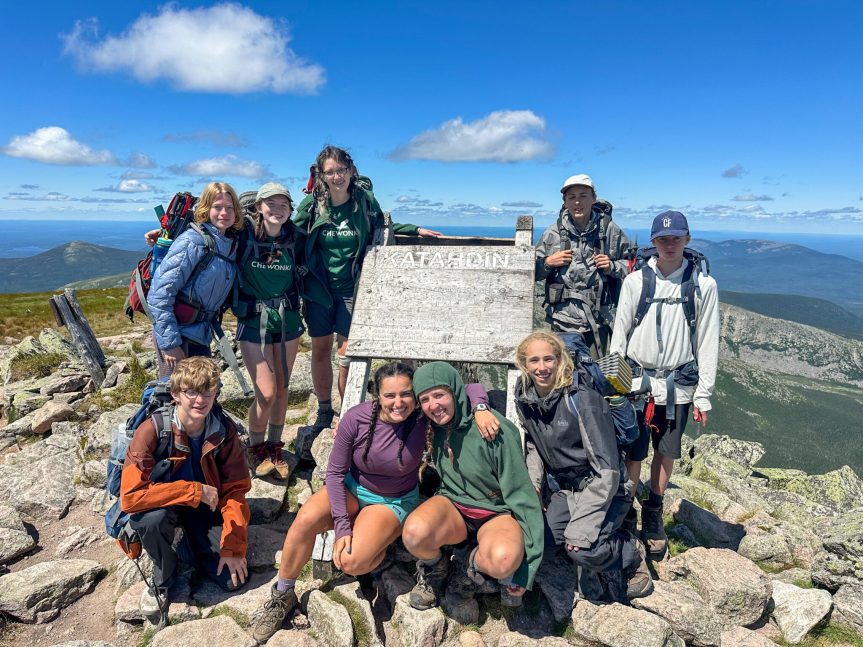
Chewonki, an environmental education organization based in Wiscasset, participated in the initiative and was home to 50 Maine students in grades 8-12, arriving from thirty-nine different Maine towns to embark on two-week camping trips by canoe, sea kayak, or on foot.
“It’s not like it looks on Instagram,” said Director of Outdoor Programs Jen Adams. “On a two-week backcountry experience, there’s always a transformative or ‘Ah-ha!’ moment as the participant goes from thinking this will be easy, and then it gets difficult, and then they learn how to dig deep into their physical and emotional reserves, and they come away with something really special – a belief they can work with a team and overcome challenges.”
“On the surface, our programming is straightforward,” says Adams. It spans 2-5 weeks of exploring Maine’s amazing trails and waterways, building outdoor living skills, and learning about nature and stewardship. “But it’s ultimately about community and learning what it means to forge those social skills to live with ten other people for twenty-four hours a day for two weeks, where you can’t just quit or walk away,” he adds.
According to Adams, a vital benefit of the experience is learning to communicate and work together with groups of strangers- a valuable life skill in education, the workforce, and beyond. “On these trips… of course, they have to get to certain places on a schedule, but that’s not really the point,” says Adams. “Students arrive from very different households and families, different incomes, different identities, and ideas, and we have to find ways to jam all of these people in a group and make it an inclusive and welcoming place to be.”
Adams describes the practice of building a group “community agreement” at the beginning, symbolized by a string of self-designed flags that the students carry with them and display at each campsite along their journey. “It’s facilitated by the trip leaders who brainstorm with the group, asking questions like, ‘What do we want to be part of our community?’ and ‘What don’t we want in our community?’ We then combine all the different ideas to find the best way to express them, whether through pictures or in writing.”
Alongside the skill development of learning to handle watercraft, navigate from maps, outdoor cooking, and camping, students gain instruction and often excitement around Leave-no-trace camping ethics, discovering just how many public camping and recreation spaces are available to them in Maine.
“A term we use a lot is “a sense of place,” meaning the way the student understands their relationship to the place they’re in, but also understanding all the complex interactions between natural systems, human systems, and the responsibility we have to steward both,” says Adams. “With students who don’t have a lot of outdoor experience, we have to start by getting them excited on the social-emotional level about being out in nature and feeling confident in their skills, then we can engage them at the educational level so they start to understand the ecosystems they’re traveling through, and that often leads to an enduring passion to protect and steward the natural world.”
Adams describes the delight the trip leaders feel as the teens start to take pride in leaving a campsite better than they found it, “…picking up little bits of carrot, or having intense discussions about how food scraps impact the wildlife. It can be difficult for people to get excited about conservation ‘in general’ but once you have a favorite river, or trail, or beach, or campsite, it becomes something you care about your whole life, and come to share the love of that place with others you may never meet.”
The Chewonki trip leaders have also commented on how excited they were to work with these local Maine students. “I’ve never had such an enthusiastic group of students paddle down the Allagash River,” said Chewonki Trip Leader Jed Breen. “Each and every one of them wanted to be here, and it showed.”
Chewonki staff have turned their sights toward the next season, looking for the next step to keep these students engaged with outdoor recreation and education. “We deeply appreciate Governor Mills and the Maine Department of Education for making this programming possible,” says Chewonki president Nancy Kennedy. “We’re encouraging all the students who came to a summer program through the Maine Outdoor Learning Initiative to keep going! There are excellent school-year organizations and clubs where students can take what they’ve learned this year and continue to build on it.”
“Once you realize all that Maine has to offer- for everyone- you’ll never want to turn back,” says Kennedy. “The outdoors is for everyone.”
The Maine Outdoor Learning Initiative was created with Federal Emergency Relief Funding and is a part of Maine’s Whole Student Pandemic Response. Please visit the Maine DOE Website to learn more about Whole Student Pandemic Response and the many other programs that make it up.












 Maine DOE Newsroom