Celebrating Community School Coordinators Week

The Maine Department of Education (DOE) is joining the Institute for Educational Leadership (IEL) Coalition for Community Schools to celebrate Community Schools Coordinator Appreciation Week from September 15 to 21, 2024.

Who are Community School Coordinators?

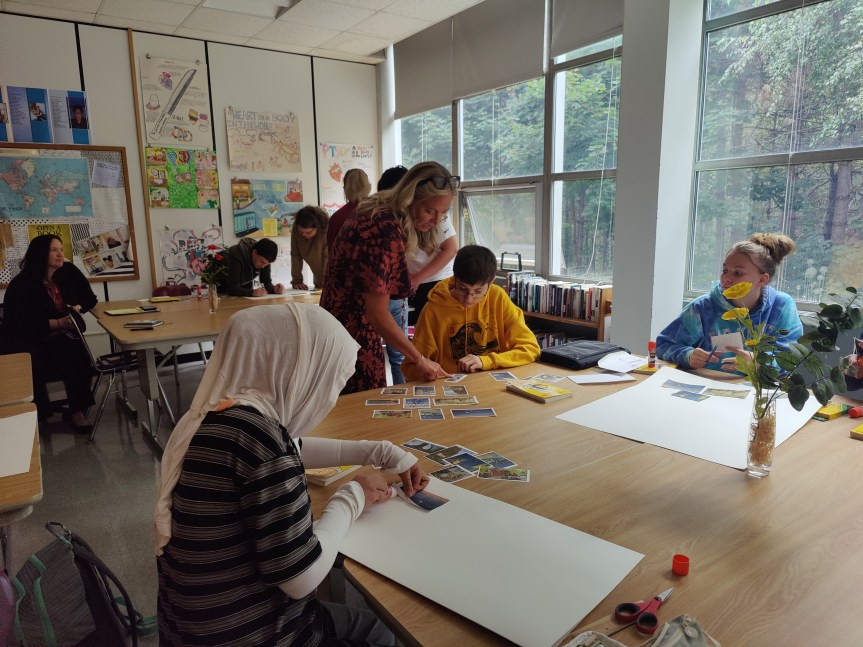
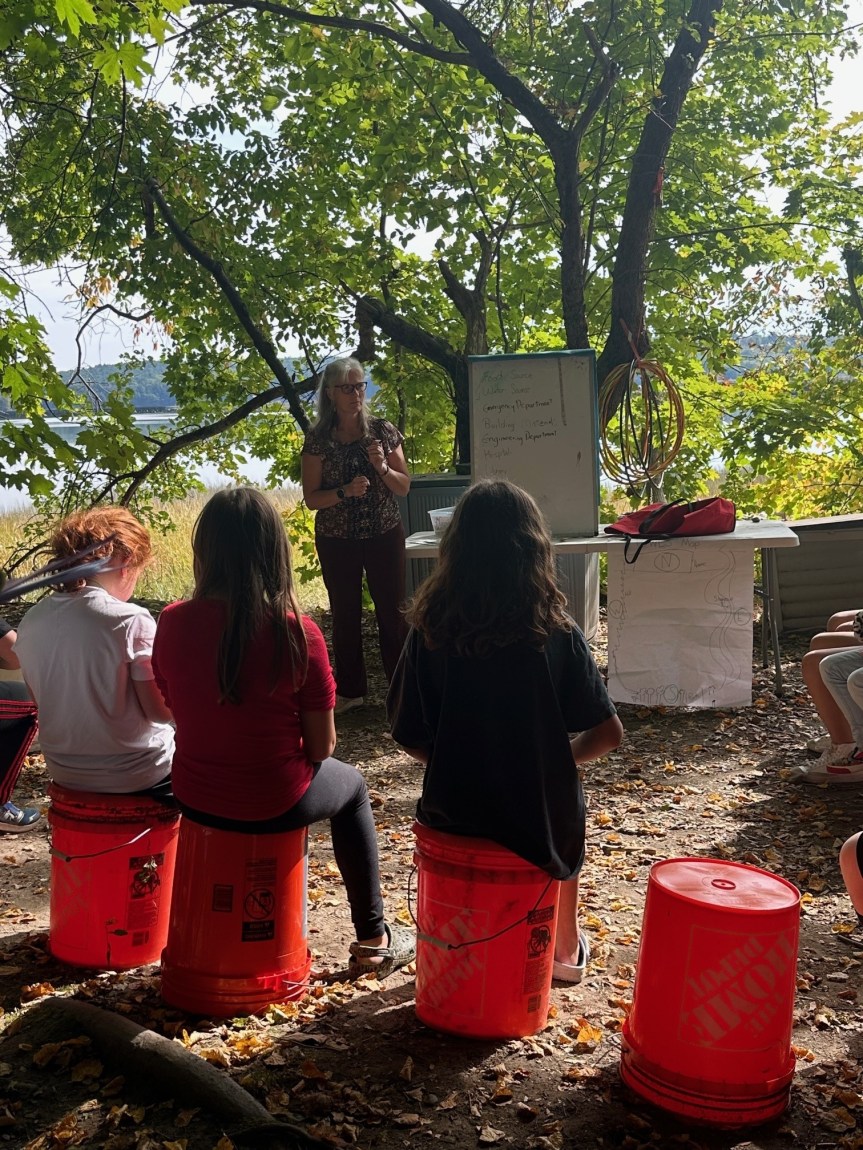
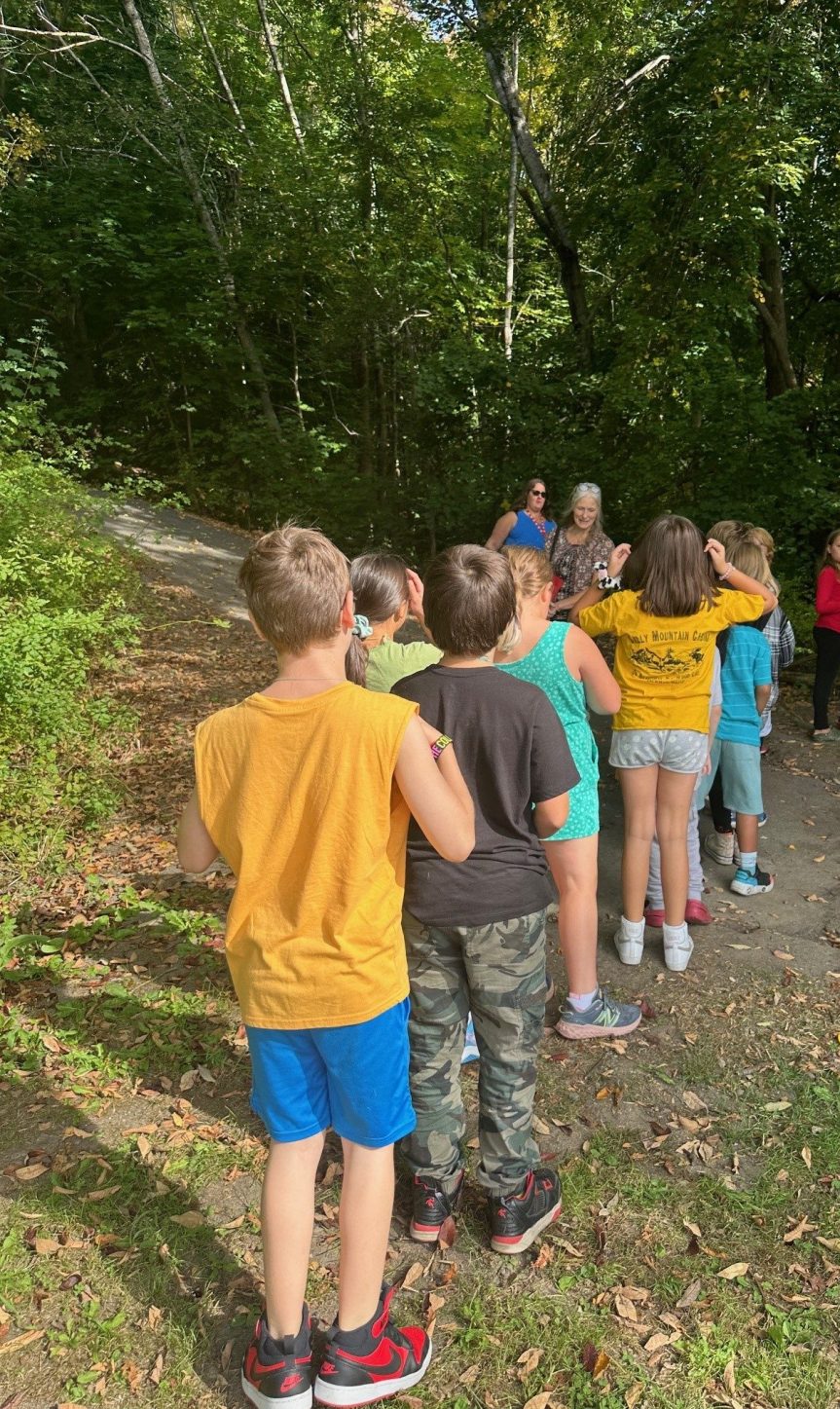
Community School Coordinators are the key to successful community schools. Coordinators create, strengthen, and maintain the bridge between the school and the community. Community School Coordinators facilitate and provide leadership for the collaborative process and development of a continuum of services for children, families and community members within a school neighborhood. A Coordinator is often the “liaison” and “connector” for many different areas.  Some of these include parent and family engagement, community engagement, youth development, health, mental health, after-school programming, early childhood, and aligning partnerships with academics.

“We are going beyond our four walls,” said Amanda Clark from Mt Blue School District. “Maine schools are providing a lot of these things and they are doing amazing work. I think, for us, the community school initiative and model gave us that extra layer of support to be able to provide the things we felt like we were missing.” Clark, alongside Cape Cod Hill Community School Principal Carol Kiesman and (former) School Nurse Justine Meader, worked together to tackle the role of Community School Coordinator in the first few years of implementing the Community School Model at Cape Cod Hill.

Why is it Important to Recognize Community School Coordinators?

The Community School movement has grown across the country to include more than 5,000 schools. Community School Coordinators work diligently to create and manage the partnerships that allow students to learn and thrive, and their work is the key to successful implementation of the Community School Strategy. Community School Coordinators create a strong, purposeful bridge between schools and communities and it’s their hard work and advocacy that push this movement forward. They deserve recognition and appreciation for all the work they do.

“When you are looking at student support, you are not just looking at what the supports are that the student needs right now; you have to look bigger, at what they might need outside the school, and what their families might need, and how that affects the whole school environment and the whole community outside,” said Jennifer Goodwin, Old Town Elementary School Coordinator. Goodwin has served as the Community School Coordinator since Old Town Elementary School set in motion its plan to become a community school in 2017.

What is Community School Coordinators Appreciation Week?

Community School Coordinators Appreciation Week encourages schools and community partners to honor and celebrate their Community School Coordinators. On Monday, September 16th, Community School Coordinators from schools across the state of Maine will be recognized for their work at the Hall of Flags in Augusta at 10:00am. We encourage those who interact with Community School Coordinators at their schools to let their Coordinators know their work is seen and appreciated and to lift up the role of Coordinators.

Maine Community Schools

In Maine, the Community School model was first recognized by Maine Legislative Action of the First Regular Session of the 127th Legislature (2015-2016) in the budget bill Public Law 2015, chapter 267. At that time, the Maine Department of Education (DOE) was authorized to fund a limited number of community schools established under 20-A MRSA Chapter 333. Currently, six schools in Maine receive funding from the Maine DOE to support their community school strategies: Cape Cod Hill Community School in New Sharon, Deer Isle-Stonington High School, Gerald E. Talbot School in Portland, Old Town Elementary School, Shead High School in Eastport and South Portland Middle School. In addition, several schools in Maine are implementing First 10 Schools and Community programs, which focus on early childhood family and community supports with the help of a Family Partnership Coordinator. In addition, the Maine Indian Education schools are implementing community school strategies through the Tribal Community In Schools program.

“When I see Talbot compared to other schools I have worked in, I feel like families see us as a resource, and they see us as a partner,” said Terry Young, Principal of Gerald E. Talbot School in Portland. Young works closely with Talbot’s Community School Coordinator.

Learn more about Maine’s Community Schools:

About the Coalition for Community Schools

The Coalition for Community Schools, an initiative of the Institute for Educational Leadership, is an alliance of national, state and local organizations in education K–12, youth development, community planning and development, higher education, family support, health and human services, government, and philanthropy as well as national, state, and local community school networks. The Coalition advocates for community schools as a strategy to leverage local resources and programs, and to change the look and feel of the traditional school structure to best meet the needs of children and families in the 21st century.

Free Training on How to Identify, Assess & Support Students Who Exhibit Challenging Behaviors

Effective behavioral threat assessment and management (BTAM) protocols in schools are an indispensable component of maintaining the safety and well-being of students, staff, and the entire school community. Threat assessment is not only about identifying potential threats but also about preventing violence and promoting a supportive environment where individuals feel safe to report concerns.

The Maine Department of Education (DOE) School Safety Center offers exclusive Comprehensive School Threat Assessment Guidelines (CSTAG) Training by Navigate360 in partnership with Dr. Dewey Cornell.

This training offers:

  • Improved Risk Identification: Empower team members with the knowledge and skills to identify and assess early warning signs and risk factors associated with threatening behavior, enabling timely intervention and prevention efforts.
  • Expanded Expertise: Build expertise within the team by providing specialized training on threat assessment principles, protocols, and nationally recognized practices, empowering members to effectively fulfill their responsibilities with fairness and fidelity.
  • Proactive Prevention and Intervention Strategies: Equip team members with proactive prevention and intervention strategies, enabling them to identify and address potential threats before they escalate into harm.

Effective CSTAG relies on well-trained multi-disciplinary teams and is compatible with Restorative Practices, positive behavior interventions and supports (PBIS), and multi-tiered system of supports (MTSS).  Administrators, social workers, nurses, teachers, special education teams, transportation & facilities professionals, as well as psychologists and behavioral specialists are encouraged to attend.

CSTAG Level 1 training is available at any time to be completed online, individually, in about 3 hours.  The 4-hour CSTAG Level 2 training is completed as a team and will be offered monthly via zoom or in-person.

A follow-up CSTAG Level 3 training is available for trained teams who would like a 2-3 hour refresher.

Shorter 60-90 minute modules are available for staff and law enforcement who will not serve on a BTA team but would benefit from understanding the process.

For questions about BTAM in schools, please contact Dr. Karen Barnes (karen.a.barnes@maine.gov).  To enroll a multi-disciplinary team for training, Superintendents or designated proxies can contact Rebekah Sousa (Rebekah.Sousa@maine.gov).

Maine Educators Named Lead Co-Regulators to Support Phase 2 with The Regulated Classroom™

The Maine Department of Education (DOE) and The Regulated Classroom (TRC) have named co-regulators to support educators across the state to support wellbeing and create safe and welcoming classrooms.

The first phase of the partnership included two-day training workshops specifically designed to enable educators to support staff in decreasing educator and student stress in the classroom through the application of the TRC™ framework. When phase 1 wraps up in September 2024, approximately 1,200 Maine educators will have attended Train-the-Trainer events hosted across the state.

Phase 2 introduces the sustainability of the TRC™ framework by providing additional training to a group of educators who completed Phase 1. These educators, the Lead Co-Regulators, will provide regional support to educators in implementing the TRC framework. The first TRC™ Lead Co-Regulators Workshop was held during the Maine DOE’s Annual Educator Summit.

The response to TRC™ training sessions from Maine educators was overwhelmingly positive, but many trainers found they needed more support. The success of the first phase of the partnership is evidenced in participants’ expressions of renewed faith that they can be successful in the classroom. The challenges educators face on a daily basis have been compounded in the wake of the pandemic. The right tools, resources, and supports have made a positive difference for educators.

The sustainability project establishes nine regional cohorts of educators who will, together, participate in a Community of Practice (CoP), providing in-person opportunities to share successes and brainstorm strategies to meet the challenges of practice. The intention of the CoP is to provide a continued framework of support for the new Lead Co-Regulators (LCR) working internally to support and train their colleagues throughout the schools of Maine in the TRC™ framework. Lead Co-Regulators were chosen through an application process occurring in late July. The intent was for each Superintendent Region to have two co-leaders from the region; however, due to the short turnaround of the application process and mandatory attendance at the August 8th training, some co-leads will be traveling to alternate regions, providing support for all nine regions.

Maine’s Lead Co-Regulators (LCR)

LCR Contact Information Superintendent Region School/District of LCR
Claire Nichols
cnichols@madawaskaschools.org
Aroostook Region Madawaska High School
Sierra Blake
sblake@rsu63.org
Penquis Region (Penobscot, Piscataquis, Somerset) RSU63/Eddington
Cecilia Dube
Cdube@sedomocha.org
Penquis Region (Penobscot, Piscataquis, Somerset) SeDoMoCha Elementary – Dover-Foxcroft
Kayla Newmeyer
kaygeorgiapeach@gmail.com
Traveling to Washington Region Lewiston Public Schools
Julie Carpenter
Carpenterjao@yahoo.com
Traveling to Washington Region Auburn School District
Dawn McLaughlin
dmclaughlin@msad41.us
Traveling to Hancock Region Milo/Brownville Elementary
Heather Wilson
hwilson@svrsu.org
Mid-Coast Region (Knox, Lincoln, Sagadahoc) RSU 12- Windsor Elementary School
Deb Taylor
dtaylor@svrsu.org
Mid-Coast Region (Knox, Lincoln, Sagadahoc) RSU 12- Alna, Chelsea, Palermo, Somerville, Westport Island, Whitefield, and Windsor
Amanda Clark
amanda.clark@mtbluersd.org
Western Maine Region (Androscoggin, Franklin, Oxford) RSU 9
Julie Schmidt
jschmidt@lewistonpublicschools.org
Western Maine Region (Androscoggin, Franklin, Oxford) Geiger Elementary/Lewiston Public Schools
Stacy Knappe
stacyreilly@mac.com
Cumberland Region Scarborough Public Schools
Jessica Hunt
jessica.hunt@lakeregionschools.org
Cumberland Region MSAD 61Stevens Brook Elm Schl, Lake Region Schl District,
Kristy McNaughton
Kmcnaughton@msad11.org
Kennebec Valley Region (Kennebec, Waldo) Gardiner Area High School
Shannon Murdoch
smurdoch@rsu18.org
Kennebec Valley Region (Kennebec, Waldo) Messalonskee Middle School
Samantha Grace
Samantha.grace@msad60.org
York Region Noble High School/MSAD60
 Anne-Marie Hamlin
annemariehamlin@rsu57.org
York Region Shapleigh Memorial School

All previously trained educators are invited to participate in three regional in-person CoPs. Lead Co-Regulators and the Maine DOE Events Calendar will notify them of those sessions.

Please complete this brief form to be included in the regional list serve: Complete THIS Interest Form!


Maine DOE AI Guidance – We need your input!

The Maine Department of Education (DOE) Learning Through Technology Team is seeking input from Maine educators, administrators, and all other support staff for the creation of Artificial Intelligence (AI) Guidance.

Our AI Guidance is designed to empower the confident integration of AI tools and foundational knowledge in Maine classrooms to prepare our students to thrive in an AI-influenced world. To do this with the most benefit for educators, we seek to gather your input. We envision a resource with interactive learning and multiple entry points.  Our guidance will not be mandated or a policy, but a guide to help empower educators in their schools.

We are excited to have you join us and discuss the needs in your classrooms, schools, and school administrative units. We will be doing collaborative Zoom calls throughout September.

Below are the dates and a link to register and receive the Zoom link:   

If you can’t join us on one of those dates, please consider giving us your input with this form.

These sessions will be held with Nicole Karod (The Emerging Technology Digital Specialist) and the Learning Through Technology Team.  If you have any questions feel free to reach out to Nicole at nicole.karod@maine.gov

Free Professional Learning: Integrating WIDA English Language Development (ELD) Standards Framework

The Maine Department of Education (DOE) is pleased to provide support to School Administrative Units (SAUs) in their continued implementation of Maine’s English Language Development Standards. We invite all districts to participate in the following trainings:

  • A free, self-paced, six-module course called The WIDA ELD Standards Framework: A Collaborative Approach is available to all Maine public school educators through the WIDA Secure Portal. If you do not have a WIDA Secure Portal account, contact WIDA Client Services to have one set up for you. (Note that you must have a Maine public school email address.)All twelve WIDA self-paced courses provide leaders and educators the opportunity to responsively designed and implement professional learning through active facilitation and collaboration cycles for language growth and development. This can happen during department/grade level meetings, allocated professional learning time, or extended learning structures such as Communities of Practice (CoPs) and Professional Learning Communities (PLCs).
  • The Maine DOE is also hosting a virtual workshop facilitated by WIDA: Planning with the WIDA ELD Standards Framework. The workshop will occur on October 2nd and October 9th from 3:30 – 5:00 pm. Participants must attend both sessions. This is an opportunity to leverage collaborative teams through participation. The workshops are free and limited to 40 participants. Registration closes September 25th. Register here.

Visit the Maine DOE website to access additional professional learning opportunities related to the WIDA ELD Standards and other topics specific to ESOL and bilingual/multilingual programs.

If you have any questions about the WIDA ELD Standards or the requirements for implementation, please get in touch with Jane Armstrong, Maine DOE English for Speakers of Other Languages (ESOL) State Specialist at Jane.Armstrong@maine.gov or Melanie Junkins, Maine DOE Bilingual and Multilingual Education Specialist at Melanie.Junkins@maine.gov

Inclusive Education Professional Growth Opportunities for Early Learning Educators

To support inclusion in Maine’s early childhood programs, the Maine Roads to Quality Professional Development Network (MRTQ PDN), in collaboration with the Maine Department of Education (DOE) and the Maine Department of Health and Human Services (DHHS) Office of Child and Family Services, is excited to share four professional growth opportunities. These opportunities, which are part of the statewide Inclusion Initiative for children birth to grade 3, and funded by the Maine’s Preschool Development Grant, are available at no cost to Maine’s early care and education professionals who work with children birth to grade 3.

Inclusion Book Club

This virtual book club is available at no cost to Maine early care and education professionals interested in creating more inclusive classrooms. Book club participants will read and reflect on Inclusion Includes Us: Building Bridges and Removing Barriers in Early Childhood Classrooms (Huber, 2023). 

If you’re interested in participating in the Inclusion Book Club, please complete this form. For more information, please contact Shilo Goodhue at shilo.goodhue@maine.edu.

Due to high demand, MRTQ PDN will be adding Inclusion Book Club offerings at different times in addition to the ones currently scheduled. If you’re interested in future offerings of the Inclusion Book Club, you can indicate your interest on page 2 of the form above.

Inclusive Education PreK to 12

Developed by the Center for Community Inclusion and Disability Studies (CCIDS) at the University of Maine, this 20-hour on-demand training provides the fundamentals for creating classrooms that are inclusive of all students. The on-demand format allows participants to proceed at their own pace and to engage in the training when their busy schedules allow. No-cost access to this training is limited to early care and education professionals who work with children from birth to 3rd grade.

To participate, please complete this form to receive a code for free registration.

Inclusion Micro-Credential

The Inclusion Micro-Credential, offered by the University of Maine System, includes the 20-hour on-demand Inclusive Education PreK to grade 12 training above and a one-day in-person session for an in-depth discussion on applying training content (dates to be determined). No-cost access to this training is limited to early care and education professionals who work with children ages birth to 3rd grade.

To participate, please complete this form to receive a code for free registration.

Maine Inclusion Credential

The Maine Inclusion Credential helps practitioners build the skills, knowledge, resources, and attitudes to offer care to ALL children in an inclusive environment. Accepted applicants will be part of a cohort of early care providers and public school staff that completes the training series as a group for the 2024-2025 academic year.

Join an information session on September 4 at 6:30 pm – Click this Zoom link or contact Shilo Goodhue at shilo.goodhue@maine.edu.

If you’re interested in participating in the Maine Inclusion Credential cohort, please complete this form.

Maine DOE Update – August 30, 2024

From the Maine Department of Education


Reporting Items

September Data Management and Reporting Webinars

The Maine Department of Education (DOE) Data Team has many data management and reporting webinars scheduled in preparation for fall data collection. |  More


News & Updates

2025 Maine Teacher of the Year State Finalists Announced

Four Maine teachers were announced today as the State Finalists for the 2025 Maine Teacher of the Year program. High school science teacher Allyson Gilbert from Sagadahoc County, fourth-grade teacher Becky Hallowell from Lincoln County, high school science teacher Katie Strait from Cumberland County, and high school English language arts teacher Emilie Throckmorton from Penobscot County were all selected to move forward in the Teacher of the Year process and were chosen from the 2024 Maine County Teachers of the Year. |  More

Maine DOE’s Annual Back to School Backpack of Resources

Happy back to school! The Maine Department of Education (DOE) has put together a virtual Back to School Backpack of resources and information to assist school and School Administrative Unit (SAU) leaders as a new school year begins. The Backpack contains resources related to school and student supports, health and safety, school nutrition, school administration and operations, teaching and learning supports, and strengthening the education workforce. |  More

Maine DOE Highlights Expanding Health Resource Access to Multilingual Families in Maine

In alignment with supporting a culture of innovation and continuous improvement, new tools have been created for school nurses. This newest project directly reflects the advocacy and care our Maine school nurses possess, further strengthening our public health infrastructure. |  More


Maine Schools Sharing Success Stories

RSU 87 Superintendent Describes How His District Trains and Prepares for Emergencies

Mark Turner is the superintendent of RSU 87, which serves the communities of Carmel and Levant, Maine. What he loves most about his job is the time he gets to spend in schools. As a busy district administrator, interacting with staff and students each day is so important because he gets to see the important work they do firsthand. | More

North Haven Students Explore ‘Green’ Businesses in Maine Thanks Maine DOE Career Exploration Grant

With support from the Maine Department of Education’s (DOE) Maine Out of School Time grant, upper elementary and middle school students from North Haven Community School, located on North Haven Island, visited and explored a variety of Maine businesses this summer. | More

Submit good news to the Maine Department of Education here.


Professional Learning/Training Opportunities

Maine Positive Behavior Interventions and Supports (PBIS) Conference Registration Now Open!

Join the Maine Department of Education (DOE) Office of Special Services and Inclusive Education for the 14th Annual Maine PBIS Conference at the Augusta Civic Center on Thursday, November 7, 2024 from 8:30 AM – 4:00 PM. The conference is a chance for Maine Positive Behavior Interventions and Supports (PBIS) leaders and implementers from across Maine and beyond to come together to celebrate, learn, and network together. | More

Maine Solutionaries Project Fall Cohorts

The Maine Department of Education (DOE) Interdisciplinary Instruction Team is partnering with the Institute for Human Education to continue the Maine Solutionaries Project through the fall to educators interested in supporting students in applying their learning. This exciting project will provide an opportunity for educators in Maine to take a custom version of the Solutionary Micro-credential Program and participate in state-wide educator cohorts that focus on individual topics of interest. Not only will educators be able to participate at no cost, but they will also be eligible to earn a $1400.00 stipend upon completion of the program. | More

Training Opportunity: Moving the Needle on Inclusivity in Teaching and Learning

The Maine Department of Education (Maine DOE) is hosting a training opportunity focused on learning around diversity, equity, inclusion, and justice (DEIJ), and the impact that increasing understanding of DEIJ can have on teaching practices, instructional strategies, classroom management in every discipline area, as well as school climate. | More

Fall and Winter Professional Learning: Question Formulation Technique

The Maine Department of Education (DOE)  Interdisciplinary Instruction Team is hosting two asynchronous professional learning courses called Question, Reflect, Repeat: Introduction to the Question Formulation Technique. | More

View the Maine Department of Education’s Events Calendar here.


Latest DOE Career/Project Opportunities:

View current Maine Department of Education employment opportunities here

September Data Management and Reporting Webinars

The Maine Department of Education (DOE) Data Team has many data management and reporting webinars scheduled in preparation for fall data collection. The Maine DOE Events Calendar lists all Data Team webinars for Synergy and NEO. Filter to the area of focus, “Data.” For questions regarding data reporting webinars, please contact Alexandra.Cookson@maine.gov .

NEO Staff Data Entry Webinar: 
September 3rd at 12pm – Register Here

Synergy Economic Status Upload & Alternate Economic Status Webinar: 
September 5th at 12pm – Register Here

2024-2025 Quarterly Reports Webinar: 
September 10th at 12pm – Register Here

Synergy Multilingual Learner Upload & Reporting Webinar: 
September 12th at 12pm – Register Here

NEO Dropout Report Webinar: 
September 17th at 12pm – Register Here

Synergy Special Education Upload Webinar: 
September 19th at 12pm – Register Here

October 1 Enrollment Report Webinar: 
September 24th at 12pm – Register Here

Training Opportunity: Moving the Needle on Inclusivity in Teaching and Learning

This event is open to all school personnel. 

The Maine Department of Education (Maine DOE) is hosting a training opportunity focused on learning around diversity, equity, inclusion, and justice (DEIJ), and the impact that increasing understanding of DEIJ can have on teaching practices, instructional strategies, classroom management in every discipline area, as well as school climate. 

Think about the following: 

  • Have you looked at your curriculum and teaching practices with a lens of inclusion? 
  • Are your materials representative of all students and their families? 
  • Are your practices and use of language inclusive of all students and families? 
  • Is there any evidence of diversity, inclusion, equity, and justice? 

If you answered not sure or no to any of the questions, this training is a great place to start. The 2-day interactive training will include an exploration of foundational concepts in DEIJ and what it looks like in curriculum, instructional strategies, classroom management practices, and school climate. Following the 2-day training, there will be virtual Community of Practice sessions offered during the school year to reflect on DEIJ implementation in the classroom and school community. Trainers and Maine DOE specialists will also be available for technical assistance during this time. 

Dr. Sarah Benes (she, her, hers) is the consultant for this initiative. Sarah is an assistant professor at Southern Connecticut State University in health education and physical education. In addition, she is the co-owner of Lighthouse Wellness & Health Education Consulting, and the current Past-President of SHAPE America. The training is being delivered and facilitated by health education and physical education teacher leaders and Maine DOE specialists. 

Event Details:  

  • Burton Cross Building, Augusta 
  • Wednesday, September 25th, and Thursday, September 26th  
  • 8:00 am – 3:00 pm each day 
  • The fee for this training is only $50 (the fee assists with the cost of food). The Maine DOE covers all other expenses. 

Register here.

Financial Assistance: There are five-$150 scholarships available to help with substitute pay, mileage, and lodging to support attendance.  The form to apply for a scholarship is here. 

Email susan.berry@maine.gov or carolyn.gross@maine.gov with questions and/or before registering if using a PO for payment. 

RSU 87 Superintendent Describes How His District Trains and Prepares for Emergencies

Mark Turner is the superintendent of RSU 87, which serves the communities of Carmel and Levant, Maine. What he loves most about his job is the time he gets to spend in schools. As a busy district administrator, interacting with staff and students each day is so important because he gets to see the important work they do firsthand.

Along with the many responsibilities that come with being superintendent, Turner shared that it was his concerns about emergency procedures and the district’s ability to deal with struggling students that led him to the Maine Department of Education’s (DOE) Maine School Safety Center.

Turner is one of many Maine school administrators who have taken the School Safety Specialist course offered by the Maine DOE’s Maine Schools Safety Center (MSSC). The 8-week course is provided asynchronously through Eastern Maine Community College (EMCC) and the Federal Emergency Management Agency (FEMA) and helps fulfill State statute Sec. 1. 20-A MRSA §1001, sub-§16, which states there must be a “designated employee having oversight regarding school safety.”

“We decided administratively to take part in the CSTAG training model, and I decided to take the School Safety Specialist training to better prepare to lead in an emergency,” said Turner. “The training certainly helped me to better see the big picture and update our safety protocols.”

CSTAG stands for Comprehensive School Threat Assessment Guidelines, and it is a comprehensive approach to early identification of students who may be on the pathway to violence by assessing problem behavior and offering interventions before the behavior escalates. CSTAG training is part of the Maine School Safety Center’s larger Maine Safe Schools Initiative.

As part of the CSTAG training, Turner learned about and introduced behavioral threat assessments to RSU 87 teachers and staff members.

“The behavior threat assessments we now use have truly helped us to respond to threats, support victims and aggressors, and create a safer school environment,” explained Turner.

Since Turner took the Safety Specialist training, RSU 87 has also updated its response protocol to the Standard Response Protocol (SRP) model and started a “see something/say something” campaign at its middle schools.

In keeping the RSU 87 school community up to date on these new protocols, the admin team was recently describing their process to a concerned parent when she remarked, “I’m so glad that you guys are so prepared to deal with these situations, I had no idea!”

Turner adds that they also plan to continue using the CSTAG model for behavior threat assessments going forward. He extends a big thank you to the Maine DOE’s Maine School Safety Center for being remarkably supportive throughout these trainings.

The School Safety Specialist course is a program of the Maine DOE’s Maine School Safety Center and is available at no cost to Maine schools. Cohorts start at the beginning of every month and complete in 8 weeks. All work is done asynchronously through Eastern Maine Community College (EMCC) and the Federal Emergency Management Agency (FEMA) and takes approximately 20-25 hours to complete. 

For more information, visit the Maine DOE website, fill out an interest form, or reach out to Maine DOE School Safety Training Coordinator Wendy Robichaud at Wendy.Robichaud@maine.gov.