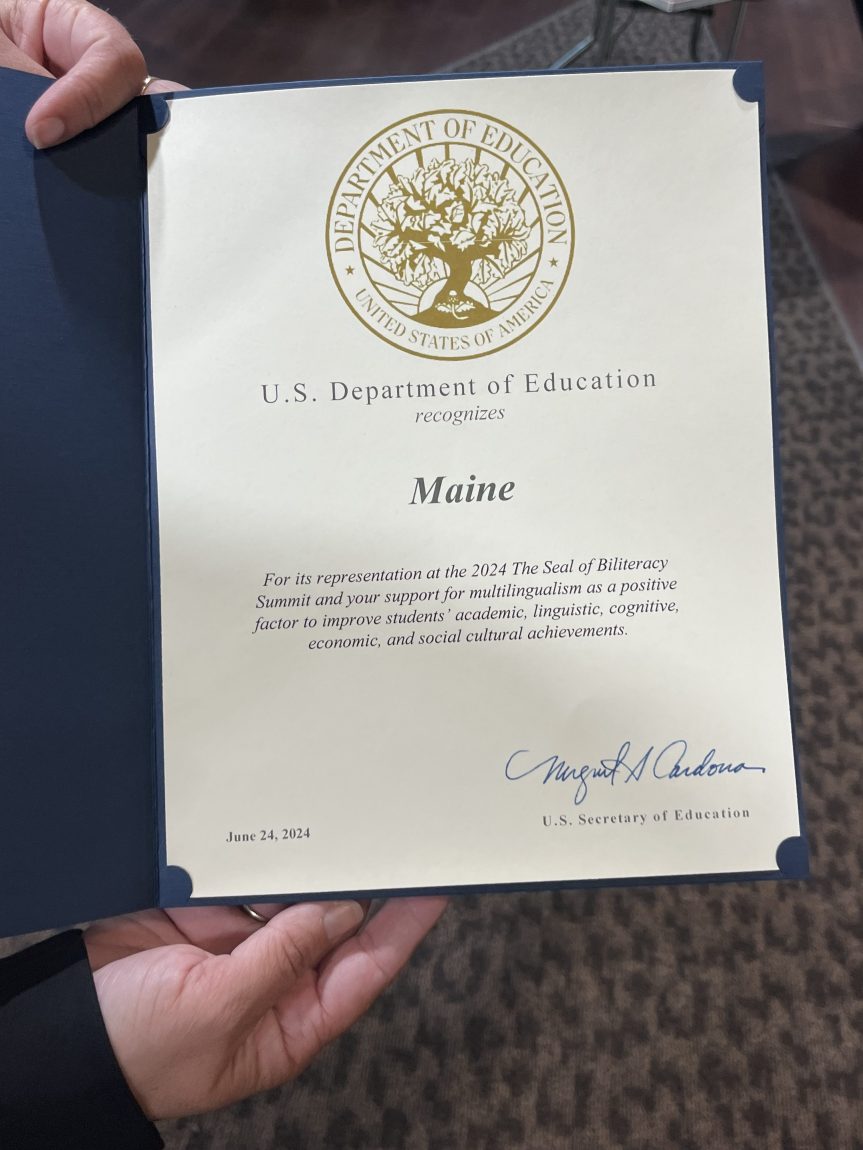
The first national Seal of Biliteracy Summit took place in Washington, DC, recently, and representatives from the Maine Department of Education (DOE) attended. The event brought together educators, policymakers, and language advocates to celebrate and promote multilingual education. It highlighted the achievements of students who earned the Seal of Biliteracy, an award recognizing proficiency in English and an additional language.
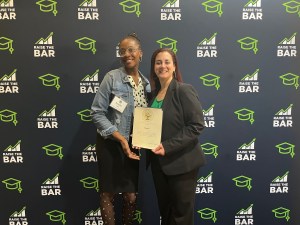
Left to Right: Ayesha Hall, Maine DOE Director of Strategic Partnerships, and Beth Lambert, Maine’s Chief Officer of Teaching and Learning.
Among the attendees were Beth Lambert, Maine’s Chief Officer of Teaching and Learning, and Ayesha Hall, Maine DOE Director of Strategic Partnerships. The Maine DOE plans to use this celebratory platform to continue promoting equitable access to global engagement opportunities for all Maine students. The Maine DOE’s Office of Innovation and Office of Teaching and Learning are working together to create a more inclusive experience for all students by presenting Maine’s multilingual learning and world languages programs as collaborative efforts at the state level.
The Seal of Biliteracy, endorsed by the Maine DOE and awarded to students in many Maine schools, acknowledges students who have demonstrated high proficiency levels in both English and another language through rigorous assessments. The Seal, which appears on students’ transcripts, enhances their post-secondary and career opportunities by showcasing their bilingual skills.
In Maine, the program includes various languages, such as Mandarin, Arabic, Chinese, French, Spanish, and Somali. The recent awarding process has been streamlined, allowing schools to confer the Seal of Biliteracy directly, making the recognition more accessible to students across the state.
The summit aimed to expand the Seal of Biliteracy’s reach and impact, encouraging more states and districts to adopt similar programs and highlighting the importance of multilingualism in an increasingly globalized world.
For more information about the Seal of Biliteracy in Maine, visit the Maine DOE website.
The Maine Department of Education (DOE) would like to remind school administrative units (SAUs) of the following data reports and due dates that are coming up.
Truancy and Daily Attendance Certifications
The final certifications for Truancy and Daily Attendance for the 2023-2024 school year are due on July 15th. Superintendents must certify these reports once data specialists and SAU data teams have reviewed and updated them.
NEO Staff was rolled to the 2024-2025 school year on July 1. All staff were updated to “pending” status during this rollover. All staff must be updated to reflect their current position. Please review all staff positions in NEO, add new staff if necessary, and update salary, contact, and position information to reflect each staff member’s position for this school year.
Resources:
NEO Staff Data Entry Webinar 9/3 at 12 pm Register Here
Graduation Report
This report allows SAUs to validate graduation counts for the school year. Students still working toward finishing their graduation requirements have until August 15th to complete them for this reporting cycle. Students who finish their requirements over the summer can be exited from State Synergy on the date of the graduation ceremony. The graduation date must be prior to 6/30.
Eight Teachers Will Continue Through the Teacher of the Year Process
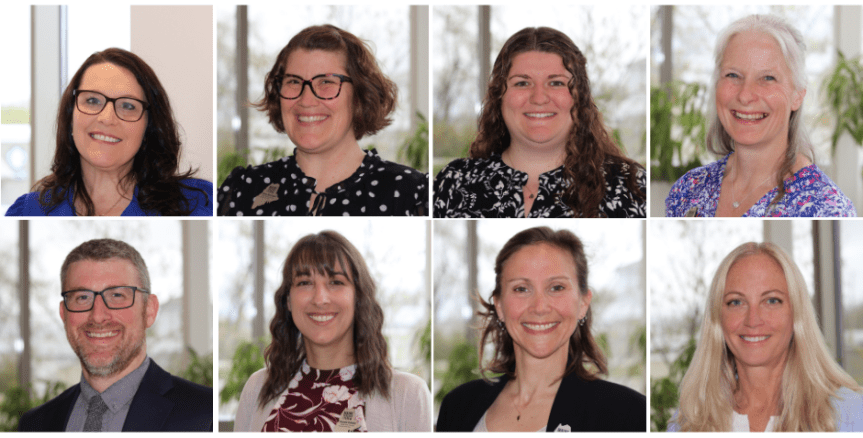
Augusta, ME–Eight Maine teachers were announced today as the state semifinalists for the 2025 Maine Teacher of the Year. These inspiring educators, members of the 2024 County Teacher of the Year cohort, embody the dedication, innovation, and leadership synonymous with Maine’s exceptional classroom teachers. As ambassadors for their students, colleagues, and school communities, their selection acknowledges their excellence in teaching and celebrates the collective achievements and commitment of the entire teaching profession in Maine.
The semifinalists for the 2025 Maine Teacher of the Year are:
Kristel Anuszewski, Windsor Elementary School, 2024 Kennebec County Teacher of the Year
Shilo Burnham, East Belfast School, 2024 Waldo County Teacher of the Year
Ally Gilbert, Mt. Ararat High School, 2024 Sagadahoc County Teacher of the Year
Becky Hallowell, Wiscasset Elementary School, 2024 Lincoln County Teacher of the Year
Ryan Lowell, Ellsworth High School, 2024 Hancock County Teacher of the Year
Danielle Pelletier, CK Burns School, 2024 York County Teacher of the Year
Katie Strait, Baxter Academy for Technology and Science, 2024 Cumberland County Teacher of the Year
Emilie Throckmorton, Bangor High School, 2024 Penobscot County Teacher of the Year
“Congratulations to all the semifinalists on this well-deserved recognition,” said Maine Education Commissioner Pender Makin. “I’m so inspired by the extraordinary work you do each and every day on behalf of your students, schools, and communities. Thank you for stepping up to represent Maine teachers as County Teachers of the Year and now as Teacher of the Year Semifinalists.”
“We are thrilled to recognize these outstanding educators who exemplify the passion and dedication that define Maine’s teaching community,” said Educate Maine Executive Director Jason Judd. “Their commitment to student success and innovation in the classroom is truly commendable. We look forward to the next phases of the selection process and the announcement of the 2025 Maine Teacher of the Year.”
The selection process for the Maine Teacher of the Year Program is rigorous and reflective, designed by educators to offer candidates an opportunity to reflect on their instructional practice. Each educator was nominated in January by a member of their community for their commitment to their students and exemplary service in education. They first participated in the County Selection Process, where a distinguished panel of teachers, principals, and business community members selected them as a County Teacher of the Year from among hundreds of nominees. In May, they embarked on the state Teacher of the Year process, showcasing their instructional practices through a classroom video and written reflection.
In the next phase of the selection process, the semifinalists will deliver keynote speeches, submit professional portfolios, and participate in an expert panel discussion on educational equity, teacher leadership, and education policy. The state finalists will be announced in September, and the 2025 Maine Teacher of the Year will be revealed in October. The 2025 Maine Teacher of the Year will serve as an ambassador for the teaching profession and represent Maine in the National Teacher of the Year program.
The Maine Teacher of the Year program is administered by Educate Maine through a unique partnership with the Maine Department of Education with support from the Maine County and State Teacher of the Year Association (MCSTOYA) and the Maine State Board of Education. Funding for the program is generously provided by Bangor Savings Bank, Dead River, Geiger, Hannaford, Maine Lottery, the Silvernail Family, and Unum.
For more information about the Maine County Teacher of the Year Program and to see a list of County Teachers of the Year, and Maine Teachers of the Year, visit http://www.mainetoy.org.
Students and families gathered at SeDoMoCha Elementary School (RSU 68) on Monday to kick off the 2024 Hot Lunch Summer Meal Program and the new SUN Bucks benefit. The event, supported by officials from the Maine Department of Education (DOE), Department of Health and Human Services (DHHS), United States Department of Agriculture (USDA), and RSU 68, showcased new options to help ensure children have access to nutritious meals throughout the summer months. | More
Helping students understand the complex and painful truths of the history of genocide and the Holocaust is not always easy. The Maine Department of Education (DOE) and its partners have many resources available to Maine educators to support them personally and professionally in this work. | More
This spring, the Maine Department of Education (DOE) awarded a $400,000 Strengthening Maine’s Workforce Grant to Ignite Presque Isle and SAD 1 Adult & Community Education’s workforce development partnership. | More
The Maine Department of Education (DOE) joins the Alternative Education Association of Maine in congratulating the 2024 Alternative Educators of the Year. The Alternative Education Association of Maine selects the recipients of the Maine Alternative Education Teachers of the Year for their hard work and determination as alternative education teachers in the State of Maine. | More
Biddeford High and Middle Schools had sweeping success in the recent Odyssey of the Mind State Championship, with six out of the nine teams placing in the State Championship, four teams placing in the top three of their respective divisions, and four teams moving on to the World Finals in Ames, Iowa. | More
Starting this July, the Maine Department of Education (DOE) Interdisciplinary Instruction Team will offer two asynchronous book studies. Both asynchronous book studies include a free copy of the book and discussions on integrating the concepts into instruction, reflection, and collaboration through the EnGiNE learning management system. | More
The Maine Department of Education’s (DOE) Office of Special Services & Inclusive Education will host the 14th Annual Maine PBIS Conference on Thursday, November 7, 2024, at the Augusta Civic Center from 8:30 AM to 4:00 PM. | More
Event and session registration are open for the 2024 Maine Department of Education (DOE) Annual Summit held August 6th – 8th at the Augusta Civic Center. Sessions take place from 7 am to 5 pm each day. Breakfast and lunch are included! This year’s event features an all-in-one events app where you can select a personalized schedule following event registration. Register for the Annual Summit Here | See the Agenda & Sessions
As part of The Maine Department of Education’s (DOE) work to elevate the expertise of Maine’s education field, we are looking to hire Maine educators as Fellows in the following areas: Civics, Financial Literacy, and Arts Integration. | More
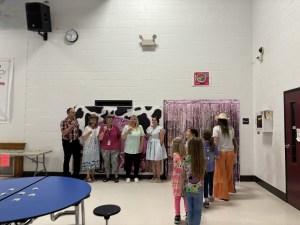
(A local farm brought calves and one got for students to put in honor of National Dairy Month.)
Dover-Foxcroft – Students and families gathered at SeDoMoCha Elementary School (RSU 68) on Monday to kick off the 2024 Hot Lunch Summer Meal Program and the new SUN Bucks benefit. The event, supported by officials from the Maine Department of Education (DOE), Department of Health and Human Services (DHHS), United States Department of Agriculture (USDA), and RSU 68, showcased new options to help ensure children have access to nutritious meals throughout the summer months.
SUN Bucks, announced last month by Maine DHHS’ Office for Family Independence, is an Electronic Benefits Transfer (EBT) program that provides families with a one-time benefit of $120 for each eligible school-aged child to supplement the summer grocery budget. Funds are sent directly to an EBT card for qualified families to purchase meals for students across the summer months.
“The USDA’s Summer Nutrition Programs are an extraordinary opportunity to close the summer hunger gap. We, at USDA, are thrilled to be able to offer Maine SUN Bucks a new opportunity to support students in the summer months,” said Sakeenah Shabazz, a national senior policy advisor for the USDA Food and Nutrition Service.
Many schools and summer camp groups gathered at SeDoMoCha on Monday for the celebration. The theme of the day was “Get Mooving,” a nod to National Dairy Month. At cow print-covered tables, students were fed nutritious meals with samples from Oakhurst Dairy and Pineland Farms and colored pictures of happy cows. After lunch, students got to pet local farm animals.
Representatives from the Maine DOE, and DHHS greeted students as they headed outside to play.
Parents also came out to celebrate the Hot Lunch Summer program and learn about the newest summer meal option. “Me and the kids have come up for the past few years for meals. They love to do it. They love the food. It is a great program, and we are grateful the school has it because we are a low-income family,” explained one SeDoMoCha parent. “SUN Bucks is awesome; I am already signed up. I just got a letter in the mail that said I automatically qualified, so I didn’t have to wait or really do anything.”
Families already participating in the Supplemental Nutrition Assistance Program (SNAP), Temporary Assistance for Needy Families (TANF), Food Distribution Program on Indian Reservations (FDPIR), experiencing homelessness, part of migrant families, or receiving MaineCare with a verified annual income under 185% of the federal poverty level will be automatically enrolled in SUN Bucks.
This new meal option comes in addition to congregate and non-congregate programs. Congregate meals, which are served at schools, have been available to families since the pandemic. Non-congregate meals, which are delivered, are also a recent expansion of Hot Lunch Summer.
“SUN Bucks is a wonderful addition to the Summer Meals Program we’ve been running for years and years. We have over 400 sites across the state of Maine where children can receive meals, either congregate or non-congregate. Hot Lunch Summer is keeping these kids healthy over the summer and keeping them learning,” said Maine Department of Education Child Nutrition Director Jane McLucas.
“The SUN Bucks program just goes in addition to what we’re doing. It’s just awesome. I bring smiles to kids’ faces, and I put food in their bellies,” said RSU 68 Food Service Director Heather Whitten.
SUN Bucks can be used anywhere that accepts SNAP benefits, including grocery stores, farmers’ markets, and convenience stores. It is especially beneficial for families living in rural Maine, who may have to travel further to reach a meal site.
“The SUN Bucks program is really exciting for so many of us,” said Michael Downs, Senior Program Manager of SNAP within the Office for Family Independence at the Maine DHHS. “Giving families an EBT benefit that they can spend at their local grocery store or farmers markets to make sure they have healthy foods in their homes for meals and snacks helps fill in some of the gaps that can arise during the summer months.”
Student’s filed into the kitchen for some Hot Lunch Summer meals.
Friday, June 28th, at the Kittery Community Center, there will be another Hot Lunch Summer kickoff, with more nutritious foods and summer activities. For more information on that event, please get in touch with Wendy Collins at wcollins@kitteryschools.com.
Starting this July, the Maine Department of Education (DOE) Interdisciplinary Instruction Team will offer two asynchronous book studies.
The first book is “Dispositions” by Arthur Costa and Bena Kallick. It discusses how educators can nurture and develop positive student dispositions. It emphasizes the importance of attitudes, habits of mind, and character traits that contribute to successful learning.
The second book is “Assessing Student Learning by Design” by Jay McTighe and Steve Ferrara. This book explores the methods for aligning assessment with learning and designing assessments that provide meaningful feedback to students. It covers key concepts such as formative and summative assessments, performance tasks, and using assessment data to inform instruction.
Both asynchronous book studies include a free copy of the book, which will be mailed to you, and discussions on integrating the concepts into instruction, reflection, and collaboration through the EnGiNE learning management system. You can sign up for one or both book studies, and since they are asynchronous, you can work on them at your own pace.
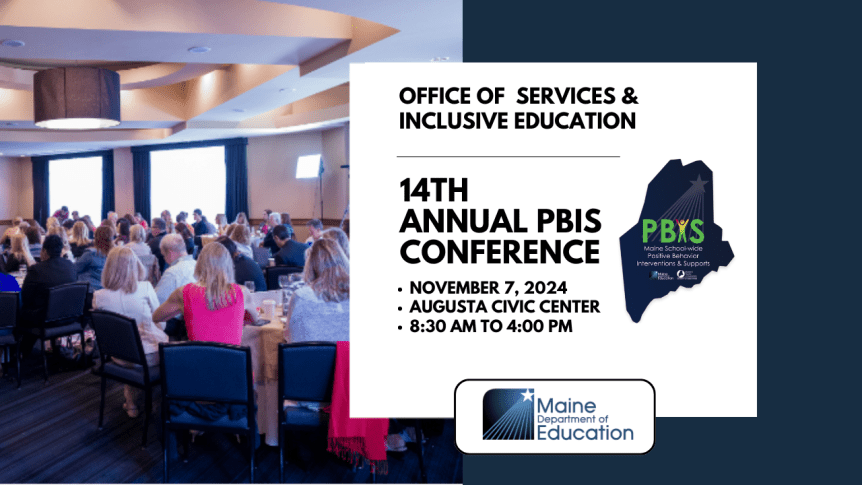
The Maine Department of Education’s (DOE) Office of Special Services & Inclusive Education will host the 14th Annual Maine PBIS Conference on Thursday, November 7, 2024, at the Augusta Civic Center from 8:30 AM to 4:00 PM.
Celebrate, learn, and network with Positive Behavioral Interventions and Supports (PBIS) leaders and implementers from across Maine and beyond! There will be inspiring keynote speakers and breakout sessions that are both interesting and practical for your classrooms, schools, and districts!
This spring, the Maine Department of Education (DOE) awarded a $400,000 Strengthening Maine’s Workforce Grant to Ignite Presque Isle and SAD 1 Adult & Community Education’s workforce development partnership.
The Maine DOE awarded a total of $4 million in Strengthening Maine’s Workforce Grants between 2022 and 2023. These initiatives are funded through Governor Mills’ Maine Jobs & Recovery Plan.
Ignite PI is an organization committed to innovation and excellence in the Presque Isle area. Through dedicated training and professional development programs, Ignite PI strives to enhance the standards of the hospitality industry and create meaningful career opportunities for individuals in the area. SAD 1 Adult & Community Education provides comprehensive educational programs, ranging from basic education to vocational training, designed for adult students. Together, the two organizations have created a workforce development partnership that provides free hospitality training for workers.
The Strengthening Maine’s Workforce Grant has been imperative to the program’s success. Since the organization’s start in 2022, it has provided more than 4,686 hours of training for Ignite PI employees and 240 hours for non-employees. 135 workers total (94 Ignite PI employees and 41 non-employees) have undergone comprehensive hospitality training. 19 distinct training programs were designed to elevate the skillset of hospitality workers for 15 different local businesses. Not only have job opportunities increased, but the standard of service at multiple establishments has improved due to this training.
“We are thrilled with the progress and positive outcomes of this partnership,” said LeRae Kinney, CEO of Ignite PI. “The training programs have not only improved the capabilities of our employees at Ignite PI but have also contributed significantly to the broader community. This grant has allowed us to offer high-quality education and training free of charge, which is a tremendous asset.”
This program has been incredibly beneficial for businesses in the Presque Isle region. The supervisor of Dean’s Motor Lodge (whose staff attended the B.A.S.I.C.S training) remarked that “the training that my staff received was incredible! By having the opportunity to have face to face conversations and bringing up case scenarios, they were able to better understand the laws.”
The supervisor of Parkhurst Siding Pub (whose staff attended both B.A.S.I.C.S training and ServSafe noted that “It’s certainly nice to be able to hold trainings and elevate our workforce’s knowledge and marketability. These are skills they will keep with them their whole lives. A lot of these are public safety issues at their core so the whole community benefits as well.”
The Strengthening Maine’s Workforce Grant was originally set to end in June 2024; however, it has now been extended to June 2025 due to its success. Ignite PI, SAD 1 Adult & Community Education, and the Maine Department of Education hope that this extension allows for continued support and expansion of hospitality training programs and access to all who want to enhance their skills. The prolonged grand and positive feedback from business owners highlights the region’s ongoing need for skilled hospitality workers.
“The collaboration between Ignite PI and SAD 1 Adult & Community Education demonstrates the power of community partnerships in addressing workforce development needs,” remarked Shara Page, director of SAD 1 Adult & Community Education. “We are excited to continue this journey and look forward to training even more individuals in the coming year.”
To learn more about Ignite PI, SAD 1 Adult & Community Education, and hospitality training programs, please get in touch with LeRae Kinney lkinney@ignitepi.com or Shara Page pages@sad1.org.
As part of The Maine Department of Education’s (DOE) work to elevate the expertise of Maine’s education field, we are looking to hire Maine educators as Fellows in the following areas: Civics, Financial Literacy, and Arts Integration. These educators will be provided a stipend through this program to:
Create and distribute regular communication to the field in their focus area;
Maintain webpage content on the Maine DOE website related to their focus area;
Provide a monthly, 1-hour long professional learning opportunity for Maine educators. The professional learning will be based on requested needs from the field and will be offered virtually, synchronously, and archived for asynchronous access on the Maine DOE YouTube channel;
Provide Maine educators technical assistance regarding classroom-specific best practices in their focus area and
Fellows will form a community of practice led by the Chief Teaching and Learning Officer and will meet monthly to share best practices and engage in a book study to help support their work.
The Fellows will be selected from Maine’s field of exceptional educators through a competitive process. Applicants must demonstrate that they have experience as classroom educators (all levels welcome to apply), have demonstrated innovative approaches in their classroom, have knowledge and experience in the focus area, and have been involved in learning communities throughout Maine.
Since the fellowship is in addition to their regular teaching job, fellows will work remotely and outside of their contracted school hours.
Fellows will begin work as soon as suitable candidates are found and continue through June 2025. Fellows will be expected to work up to 20 hours/month for a stipend of up to $2,000/month.
Helping students understand the complex and painful truths of the history of genocide and the Holocaust is not always easy. The Maine Department of Education (DOE) and its partners have many resources available to Maine educators to support them personally and professionally in this work.
Follow the links below to learn more and get access to high-quality resources on teaching the history of genocide and the Holocaust:
The MOOSE Project previously partnered with the Holocaust and Human Rights Center (HHRC) of Maine to develop learning modules for grades PreK-12. These modules help students transition from learning about empathy and care in early grades, into learning about the events contributing to and characterizing genocides (including The Holocaust), and finally into the moral and ethical discussions that help students process their thoughts and emotions and become active architects of a world where these atrocities no longer occur. Check out the multi-day workshops the HHRC has scheduled this summer that can earn educators up to 12 CEUs upon completion.
Maine Shared History is a collaboration between the Maine State Archives, Maine State Library, and Maine State Museum to help educators use local historical articles, documents, and other artifacts with their students. Primary source sets and teaching materials related to Genocide and The Holocaust are provided across grades 3-12 in sections related to Freedom & Captivity and Maine’s Bicentennial.
Remember that you can always contact the Maine DOE for resources and support on your professional learning journey! For more information or questions, contact Jennifer Page at jennifer.page@maine.gov.














 Maine DOE Newsroom