Media Release: Governor Mills Announces Major Expansion of Maine Outdoor Learning Initiative 

$6.6 million investment will provide 4,000 students with access to free afterschool and summer outdoor learning and career exploration programs 


Governor Janet Mills today announced a significant expansion of her Maine Outdoor Learning Initiative that will provide thousands of middle and high school students with access to free outdoor learning and career exploration programs this summer and fall. 


Launched by Governor Mills in 2022, the Maine Outdoor Learning Initiative is a statewide effort to connect Maine’s young people to the outdoors through engaging, hands-on learning opportunities. In its first two years, more than 2,500 students have participated in programs ranging from hiking and kayaking to farming and forestry. 


The $6.6 million expansion – utilizing federal funds – will now provide roughly 4,000 students across Maine with access to more than 100 afterschool and summer programs between now and the fall. The expansion triples the total amount of funding invested in the Initiative over last two years.  


“In just two years, the Maine Outdoor Learning Initiative has helped thousands of Maine students to experience different parts of our beautiful state, develop a lifelong love of nature, and learn knowledge and skills that will help them succeed academically. This expansion will allow even more students to benefit from this extraordinary program,” said Governor Janet Mills. “I thank the many partners across Maine for their hard work to make these experiential learning opportunities possible.” 


“The Maine Outdoor Learning Initiative offers hands-on, enriching, highly engaging opportunities that allow Maine students to explore and learn from the great outdoors,” said Maine Education Commissioner Pender Makin. “These opportunities connect students with Maine’s natural beauty, build leadership skills, allow them to work in groups, and support their wellbeing. We thank all of the schools and organizations that stepped up to grow this exciting initiative.” 


The Maine Outdoor Learning Initiative was developed by the Maine Department of Education (DOE) at the direction of Governor Mills, delivering on a promise made during her 2022 State of the State Address to provide children with more opportunities to learn about and explore Maine’s natural beauty and resources after two years of the pandemic. The program has prioritized participation by students from low-income families from regions of Maine where access does not typically exist for such programs. 


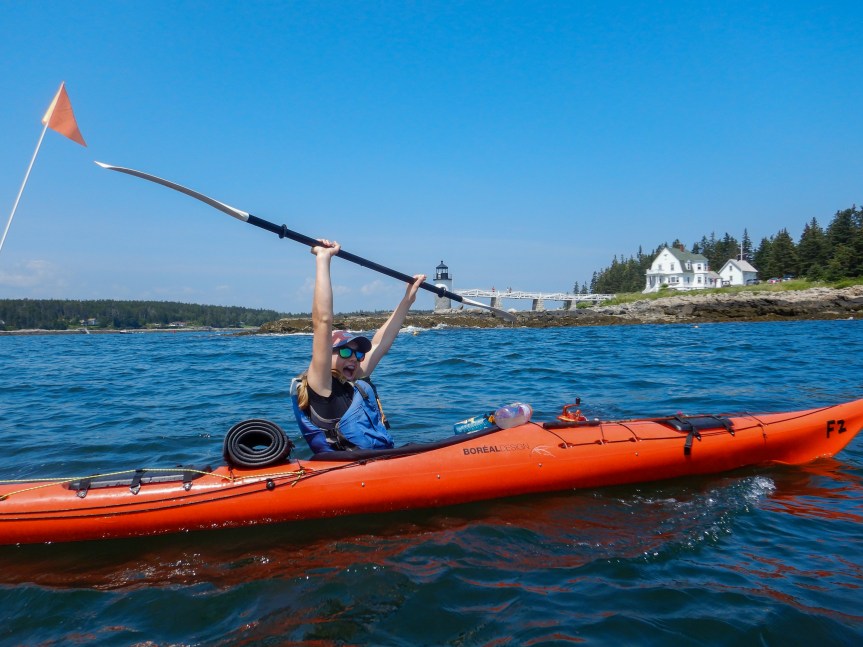
Students have explored clam flats, operated forestry machinery, camped on islands, built boats, kayaked along Maine’s coasts and in the state’s lakes and rivers, worked alongside maritime and forestry workers, learned about scallop farming, and developed outdoor leadership skills while hiking through the woods, and much more.  


Some of the 100 programs made available by the expansion include backpacking trips along the Appalachian Trail offered by the Chewonki Foundation, sailing opportunities with Sailing Ships Maine, and a science career exploration program offered by the Downeast Institute for Applied Marine Research and Education, among others. The Biddeford, Saco, and Dayton School Departments will offer kayaking, hiking, and ocean exploration opportunities for New Mainers and unhoused youth. Sixty-four schools and community organizations received Maine Outdoor Learning Initiative grants. 


“Chewonki is thrilled and honored to take part in the Maine Outdoor Learning Initiative. Maine is home to amazing landscapes and a rich outdoor heritage that presents a world of opportunity for our children. Yet far too many of those children lack access to meaningful outdoor education and outdoor recreation programs. This initiative opens the door to invaluable learning experiences for our youth. Together, we can foster the next generation of Maine students who will cherish the woods, waves, waters, and trails of our state, who can see themselves engaging meaningfully in our outdoor economy, building their families and careers here, and who will always feel proud to be part of such a wonderful place to live,” said Nancy Kennedy, Acting President of the Chewonki Foundation. 


“This grant will allow us to provide a team of students with an outdoor education experience intertwined with their classroom learning in English, science, and math. Our grant also includes an educator component, which gives our middle school teachers an opportunity this summer to spend time writing a unit for the 2024-2025 school year that integrates outdoor education experiences. I believe this opportunity will ultimately prove to be a benefit to all of our middle school students in Scarborough Public Schools,” said Katie Vetro, Director of Curriculum and Assessment of Scarborough Public Schools. 


“The Maine Outdoor Learning Initiative enables us to provide mentorship, hands-on learning, and outdoor adventure to youth who would not otherwise have access to these opportunities. Students are already looking forward to a summer of hiking, paddling, gardening, citizen science, service learning, and career exploration,” said David Wessels, Belfast High School Extended Learning Opportunities Coordinator.  


Maine DOE has launched a new Maine Outdoor Learning Initiative portal to help families easily access available programs and identify opportunities for their children to participate. All programs are at no cost to families, include free transportation, and are designed for students who face economic or other barriers to experiencing high-quality outdoor learning experiences.  


The Outdoor Learning Initiative is paid for through the Governor’s Emergency Education Relief (GEER) Program funds received from the US Department of Education. The Initiative is complimented by the Maine Career Exploration Program, a $25 million initiative of the Governor’s Maine Jobs & Recovery Program to connect teenagers and young adults to high-quality paid work experiences across the state. Since its launch in October 2022, the program has engaged more than 2,700 participants in paid work experiences. 

Maine DOE Seeking Participants for the Title I Committee of Practitioners

Title I of the Every Student Succeeds Act (ESSA) requires each state educational agency that receives Title I funds to create a State Committee of Practitioners to advise the State in its responsibilities under the Title I program. The purpose of this committee is to review any state rules and regulations relating to Title I and provide recommendations concerning processes and procedures related its implementation.

Committee members we are still looking to recruit:

  • Career and technical educators
  • School board members
  • Parents

The committee’s meetings will be conducted on an ‘as needed’ basis via Zoom (most likely three times per year). The term of membership commences July 1, 2024, and expires June 30, 2026. For those looking for more information on the Title I Committee of Practitioners, please see the FAQ.

Those interested in serving on Maine DOE’s Title I Committee of Practitioners Committee should fill out this form by Friday, June 7th, 2024. Questions can be sent to Rita Pello, at rita.pello@maine.gov.

#TeachWithTech Grant Makes 3D Printing Accessible and Ecological at MDIRSS/AOS #91

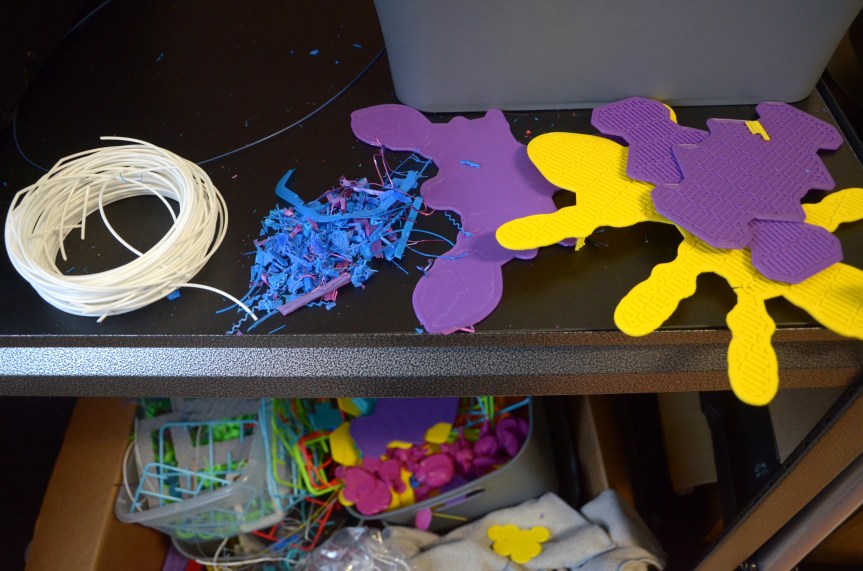
The Mount Desert Island Regional School System’s (MDIRSS/AOS #91) Filabot Full Recycling initiative is creating new opportunities and ways of engaging in innovative educational practices in environmentally and economically conscious ways that foster interdisciplinary collaboration, improve engagement, increase student motivation, promote the growth in critical thinking skills, and stimulate thinking about ecologically sustainable practices in a high-tech world.

Funded by a $35,322 #TeachwithTech grant from the Maine Department of Education (DOE), the initiative is part of a project led by MDIRSS/AOS #91 IT Lead Luis Jones-Rodriguez, working with MDIRSS K-8 Educational Technology Lead Cindy Lambert and Pemetic Elementary School IT Integrator Mike Brzezowski, to reignite the district’s use of 3D printers for curricular purposes in ways that are more economical, ecological, and innovative. The district is one of 33 schools or school districts that received this grant.

What could be more fun and engaging than learning some of the principles of the scientific method and physics by making and launching your own rocket? While many students have done some iteration of the bottle rocket task using a plastic soda bottle and some type of launcher, students at the Pemetic Elementary School can design and create their own rockets using the school’s 3D printers, marrying curriculum, practical application, and innovation.

“The 3D printed rockets are part of science class.  This year they will do data collection on a standard ‘control’ rocket and be introduced to a few physics’ principles.  Next year they learn more about the principles governing rockets and will create a modified design to compete in either an accuracy or a distance challenge,” said Brzezowski.

Projects like these can be exciting and interesting for teachers and students alike, but they also can be costly and wasteful. According to 3D4Create, a spool of filament will print 20-30 five- to six-inch tall models with 15-20% infill (“infill” refers to the internal structure of a printed item that gives it weight and strength). Each one kg spool can cost between $19-$32, which makes errors, a natural part of learning, and the inevitable production of waste byproducts costly. Jones-Rodriguez’s grant-funded project will allow the school district to make filament from discarded 3D printed projects otherwise destined for landfill, printing waste, and recyclable plastics that can be used in every school. The Teach with Tech grant has enabled Jones-Rodriguez to purchase the equipment needed to establish a complete recycling system that, besides producing savings in the schools’ budgets, will “also allow the kids to make mistakes” without having to worry about the cost of those errors and promote sustainable practices island-wide. The new equipment can produce recycled filament in any color and in 1.75mm and 2.85mm thicknesses.

The goal, said Jones-Rodriguez, “is that no school will buy filament whatsoever and to have a place where plastics can be recycled instead of put into a landfill.” The recycling and production process will serve all of the MDIRSS/AOS #91. Schools have recycling containers to collect commercial food-grade plastics like soda bottles and milk jugs, and Jones-Rodriguez aspires to collect materials community-wide one day. Once it is fully operational, he estimates that the district could save an estimated $1,250 a month or $15,000 a year on filament costs.

Sustainability concerns and frustration with limiting resources also were driving factors behind this project. There had been pushback and 3D printing had started to fall out of favor because “anything that is printed was not recyclable,” said Jones-Rodriguez. In 2015, there was at least one 3D printer in one of the ten schools in MDIRSS/AOS #91. By 2022-2023, the eight schools on Mount Desert Island had “maybe two each,” according to Jones-Rodriguez. Not only were four schools left out of luck, but the ones in place were old and took a long time to print. Their use had fallen because “the old ones would take a week or more” to print items for just one class because they “were prone to failure and very slow.” In the pre-COVID era, some of the district’s schools were using some printers, including MDI High School, whose Maker Space students produced “ear savers” for face masks during the COVID period. Today the district’s schools have been outfitted with new printers that can print up to a “full class’s worth” of projects in one day, he said.

While the complete recycling process is time-consuming, it will be worthwhile.  The home-grown filament project opens the door to a greater variety of items the students can create through the types of recycled plastics that are collected. “Different plastics have different uses,” he said. While filament made from food-safe plastics can be more durable, for instance, they have a low heat resistance, which can make them unsuitable for outdoor use. “Nylon from fishermen is what I’m really excited about because that’s the most durable.”  The plastic nylon used in nets and lines has higher heat resistance and is UV-resistant, making it ideal for filament that can be used for products like lampshades and outdoor furniture. “Everyone is excited that it’s making 3D printing eco-friendly,” Jones-Rodriguez said.

Ultimately the goal is to incorporate 3D printing projects across the curriculum and in different subject areas, Jones-Rodriguez said. At Pemetic Elementary School, that has already started under Brzezowski’s guidance. While the Pemetic science class is working with rockets, one of the school’s French classes is printing chocolate molds that will be used to create chocolate bars with custom wrappers. The wrappers will “have reference to French culture, history, and symbology” and once the students make and wrap the bars using the molds, they will hold a “French Chocolate Market” at Birch Bay Retirement Village, where students will be able to talk to the residents about their chocolates and French culture, and residents will be able to “purchase” the chocolates with tokens they have been given, said Brzezowski. From a French classroom to a Maker Space and then into the community, all wrapped up in a chocolate bar, what student could argue with that?

The Maine Department of Education’s TeachWithTech grant is part of the Maine Learning Technology Initiative (MLTI). The grant is awarded to MLTI schools through a formal grant process and provides supplemental technology and related professional learning to support innovative teaching and learning with technology. Learn more about the TeachWithTech Grant here.

This story was submitted by Mount Desert Island Regional School System (MDIRSS/AOS #91). To submit good news about your school to the Maine Department of Education, complete our Good News Submission form.

Virtual Reality Enhances Cultural Learning in Cony High School’s German Class

Deb Backman’s German 3 class at Cony High School in Augusta is leading the way in educational technology by integrating virtual reality (VR) into their curriculum, thanks to the Maine Department of Education’s (DOE) TeachWithTech grant.

To immerse students in German culture and language, Mrs. Backman conducted a virtual field trip using VR headsets to explore the columns of STOA 169 in Polling, Germany. This innovative approach exposed students to Germany’s rich artistic scene and provided a unique opportunity for linguistic practice and cultural exploration.

The student response to the VR experience was overwhelmingly positive. They observed the intricate designs of the columns and engaged in thoughtful discussions about their significance while honing their German language skills.

Following the virtual excursion, students participated in a hands-on activity during which they created their own interpretations of columns using paper towel rolls. This practical exercise reinforced their understanding of the architectural elements discussed during the VR journey and encouraged creative expression.

Mrs. Backman observed a notable increase in student engagement and comprehension following the VR field trip and subsequent activity. Students demonstrated a deeper appreciation for art and culture and an enhanced ability to articulate their observations and interpretations in German.

Integrating VR technology into the classroom exemplifies Cony High School’s commitment to providing innovative and immersive learning experiences that empower students to broaden their horizons, develop cultural competency, and strengthen their language proficiency in an engaging and impactful manner.

The Maine Department of Education’s TeachWithTech grant is part of the Maine Learning Technology Initiative (MLTI). The grant is awarded to MLTI schools through a formal grant process and provides supplemental technology and related professional learning to support innovative teaching and learning with technology. Learn more about the TeachWithTech Grant here.

This story was submitted by Cony High School, Augusta School Department. To submit good news about your school to the Maine Department of Education, complete our Good News Submission form.

Celebrating & Welcoming Our Military Families at School 

(Pictured: Kittery School Department Superintendent Eric Waddell with ninth-grade students Mary Auman and Aubrey Jackson) 

Since 1999, May has been recognized as Military Appreciation Month after former Senator John McCain proposed this during the legislative session. Former U.S. Secretary of Defense Caspar Weinberger first designated April as the “Month of the Military Child,” acknowledging the significant role military-connected students play in our communities. In 2011, the University of New Hampshire Cooperative Extension Military Youth and Family Program started the “Purple Up! for Military Kids” to encourage communities to support military children for their strength and sacrifice.  

Purple references the joint environment of the military, encompassing all service branches, Active Duty, Reserve, National Guard, and Veterans. Purple combines each branch’s colors into one: the Air Force, Navy, and Coast Guard all use shades of blue, the Army uses green, and the Marines use red. 

The Portsmouth Naval Shipyard is located less than a mile from Traip Academy, which is part of the Kittery School Department. Kittery’s school communities are made up of about one-third of military families. To honor these families during this time of year, Shipyard School Liaison Officer Kirsten Ferullo and staff planted purple tulip bulbs last fall that will bloom soon. 

“Being a military child is not always easy, but when you get a nice community you can thrive in, it lightens the load a bit,” said Mary Auman, a first-year student at Kittery School Department’s Traip Academy.    

Another Traip Academy student, Aubrey Jackson, added, “It’s so important to get to know your new community before you move.” 

Kittery School Department supports and empowers military-connected students and families. This spring, we celebrate their resilience, strength, and unique contributions to Maine’s education system.  

“We have created a district video for those families who are moving into the area,” said Kittery Superintendent Eric Waddell. “Our goal is to ensure that every military family feels supported and welcomed as they become part of our Kittery family.”  

Visit the U.S. Department of Defense website for more information and resources on the Month of the Military Child. You can also find more information about Military Appreciation Month here. 

Due Dates & Resources for Quarter End-of-Year Reports

Four end-of-year reports require certification in June and July. These reports aggregate data from the entire school year’s reporting timeframe.

Behavior Certification Report:

Bullying Certification Report:

  • Due Date: 6/30
  • Resources: Reporting instructions for this report are included in the NEO Bullying Reporting System module.

Truancy Certification Report:

Daily Attendance Certification Report:

End-of-Year Exiting of Students from State Synergy

All student enrollments must be exited from State Synergy on or before June 30, 2024. This includes students who are attending year-round programs. Exiting students, either manually or via upload, with the most up-to-date code will help ensure that fall reports are accurate. This can specifically impact graduation and dropout reporting in the fall. Information about exit codes for specific situations can be found on the Synergy Instructions page under the Data Dictionaries for Student Exit. EOY Reporting webinar link.

Resources:

Special Education Exit Report

Students who have exited special education services during the reporting period (school year 2023-2024, July 1-June 30) must have special education exit dates and an exit reason added to their enrollments in Synergy State Edition. Student information must be entered or uploaded into the Synergy State Edition by the school the student attends. If a student will still receive special education services next year, their special education status in Synergy remains the same. SAUs are required to certify the exit data using the Special Education Exit Report found in NEO on the Student Data/Student Reports module.

  • Open Date: 6/1
  • Due Date: 7/30

Resources:

For questions about end-of-year reports, please contact MEDMS.Helpdesk@maine.gov or call 207-624-6896

Brewer School District’s Renita Ward-Downer Named 2024 Curriculum Leader of the Year

This exciting news was shared by the Maine Curriculum Leader’s Association (MCLA)

The Maine Curriculum Leaders Association (MCLA) is thrilled to announce Renita Ward-Downer as the 2024 Curriculum Leader of the Year! MCLA is a state-wide collaborative that focuses on high-quality learning and teaching for all Maine students. MCLA promotes equity and meaningful learning through research, information dissemination, advocacy, networking, and professional learning.

Renita displays all of these qualities and more! Renita has been the Director of Instruction for the Brewer School District for 9 years. In those 9 years, Renita has been an instrumental leader in initiating change that brings about innovative thinking for how to best meet the needs of learners. Renita has marshaled a hybrid school model called the Nu Program which has been so successful that a middle school version has also been created.

This innovative programming was created during COVID, but its goal of meeting students’ needs has been so successful the program lives on! Renita has also been a major player in creating a Forestry Outdoor Education learning opportunity that includes a Forestry Immersion Program in the North Maine Woods. Renita continues to share her experiences with other educators across the state and is an integral member of the Penobscot River Educational Partnership. Renita successfully leads this work while also wearing the hat of Technology Director! MCLA is pleased to honor and celebrate Renita Ward-Downer as the 2024 Curriculum Leader of the Year.

Maine DOE Update – May 17, 2024

From the Maine Department of Education


Reporting Items

| Visit the DC&R Reporting Calendar |


News & Updates

DOE’s What Holds Us Together Podcast Highlights Adult Education

Adult education programs offer opportunity, connection, and empowerment to students from all ages and backgrounds. Commissioner Makin recently met with students and instructors from Franklin County Adult Education. This month’s episode of the What Holds Us Together podcast highlights a panel discussion with students from that visit, ranging from those looking to adult education for high school completion programs to those learning the skills they need to open businesses or switch careers. They share life-changing experiences and showcase the ways that adult education is another powerful example of how public education holds us together. |  More

Applications Open for ‘First 10 Community Schools’ Pilot Project

The Maine Department of Education (DOE) is accepting applications from school administrative units (SAUs) and Education in the Unorganized Territory (EUT) to be part of a 3-year First 10 Community School pilot project funded through Maine’s Preschool Development Grant. Developed by Education Develop Center (EDC), First 10 Community Schools bring together school systems, early childhood programs, and community partners/agencies to improve care and education for young children and their families throughout the first 10 years of children’s lives. |  More

Home Instruction Portal Now Open for 2024-2025

The Home Instruction Portal is now open for filing the 2024-2025 Notice of Intent to Provide Home Instruction. Important information and a link to the portal are now available here. |  More

Maine DOE Health Education and Health Promotion Specialist Receives National Honor

Susan Berry, Health Education and Health Promotion Specialist for the Maine Department of Education (DOE), was recently honored at the All-Member (virtual) Annual Meeting of the Society of State Leaders of Health and Physical Education (the Society) on March 26, 2024, when she was presented the Simon McNeely Award. Individuals named for this award are those who embody the character and work ethic of Simon (Si) August McNeely, who served as the Society’s executive director, secretary and treasurer for 51 years (1947-1998). |  More


Maine Schools Sharing Success Stories

FFA Members Celebrate 94th Annual State Convention

On Thursday, May 9 and Friday, May 10, FFA chapters from around the state all came together for the 94th annual Maine FFA State Convention. Caribou, Presque Isle, Mars Hill, Easton, Ashland, Fryeburg Academy, and Bangor United Technologies Center were all in attendance. |  More

KVCC College and Career Success Coordinator Eases the Transition from Adult Education to College

What do you get when you combine adult education students, a tour of Kennebec Valley Community College (KVCC), and a variety of delicious pies? The answer is Brighter Futures! A successful, immersive event occurred earlier this spring when 18 students from four local adult education programs spent two hours on the KVCC campus. |  More

RSU 18 Assistant Superintendent Improves, Expands District Safety Procedures with Help from School Safety Specialist Course

Keith Morin loves watching students grow academically and socially; it’s one of the perks of his very busy job as RSU 18 Assistant Superintendent and Chief Academic Officer. He also loves watching the impact that RSU 18 staff make on students beyond academics, serving as mentors, role models, and sources of guidance and support. |  More

| Submit your Maine School Success Story |


Professional Development, Training, and Events

| Visit the Professional Development Calendar |


Latest DOE Career/Project Opportunities:

View current Maine Department of Education employment opportunities here

Applications Open for ‘First 10 Community Schools’ Pilot Project

The Maine Department of Education (DOE) is accepting applications from school administrative units (SAUs) and Education in the Unorganized Territory (EUT) to be part of a 3-year First 10 Community School pilot project funded through Maine’s Preschool Development Grant.  Developed by Education Develop Center (EDC), First 10 Community Schools bring together school systems, early childhood programs, and community partners/agencies to improve care and education for young children and their families throughout the first 10 years of children’s lives.  This model works to improve teaching and learning, deepen partnerships with families, and provide comprehensive services for children and families.

Through this opportunity, pilot sites will be supported in developing and implementing First 10 Community School models.  To learn more about the model and the pilot opportunity, interested applicants are encouraged to view this recorded First 10 Community School information session.

Additional information about First 10 Community Schools can be found on the Maine Department of Education’s First 10 webpage and on Education Development Center’s First 10 webpage.

Eligible schools that are interested in the First 10 Community School grant opportunity may access the application through the First 10 Community School Request for Applications (RFA).

A timeline for the RFA process is provided below.

  • May 17, 2024–-RFA released
  • May 23, 2024—RFA question submission deadline
  • June 6, 2024—RFA submission deadline

All questions about the First 10 Community School RFA should be submitted to the First 10 Community School Grant Coordinator identified on the Grant RFPs and RFAs webpage.

Additional questions regarding this announcement should be directed to:
Lee Anne Larsen, Maine Department of Education Director of Early Learning, leeann.larsen@maine.gov.

Applications Open for Public Pre-K Partnership Pilot Grant

Maine’s Preschool Development Renewal Grant is supporting the Maine Department of Education (DOE) to offer grant funding to school administrative units (SAUs) to increase the number of eligible 4-year-olds attending high-quality public Pre-Kindergarten (Pre-K) programming through partnerships with licensed community providers (center based and family child care) during the 24-25 school year.

In order to realize its goal of reaching universal access to public Pre-K, Maine will need to increase the number of partnerships with licensed community-based providers (e.g., center based and family child care) to ensure equitable access to high-quality early care and education, especially for our most vulnerable children.

Partnerships with licensed community-based providers support SAUs to achieve full day/full week programming for children and to meet the needs of working families while increasing their offering of Public Pre-K.

The Public Pre-K Partnership Pilot Grant RFA will provide funding to support new partnerships with either a licensed center based provider or a licensed family child care provider.

The timeline for the RFA process is as follows:

  • May 17, 2024-RFA Released
  • May 24, 2024—Question Submission Deadline
  • June 6, 2024- RFA Submission Deadline

All questions about the Pre-K Partnership Pilot Grant RFA should be submitted to the Pre-K Partnership Pilot Grant Coordinator identified on the Grant RFPs and RFAs webpage.

Any additional questions about this opportunity may be directed to Michelle Belanger, Pre-K Partnership Specialist, Michelle.Belanger@maine.gov.