Maine’s Preschool Development Renewal Grant is supporting the Maine Department of Education (DOE) to offer grant funding to school administrative units (SAUs) to increase the number of eligible 4-year-olds attending high-quality public Pre-Kindergarten (Pre-K) programming through partnerships with licensed community providers (center based and family child care) during the 24-25 school year.
In order to realize its goal of reaching universal access to public Pre-K, Maine will need to increase the number of partnerships with licensed community-based providers (e.g., center based and family child care) to ensure equitable access to high-quality early care and education, especially for our most vulnerable children.
Partnerships with licensed community-based providers support SAUs to achieve full day/full week programming for children and to meet the needs of working families while increasing their offering of Public Pre-K.
The Public Pre-K Partnership Pilot Grant RFA will provide funding to support new partnerships with either a licensed center based provider or a licensed family child care provider.
The timeline for the RFA process is as follows:
May 17, 2024-RFA Released
May 24, 2024—Question Submission Deadline
June 6, 2024- RFA Submission Deadline
All questions about the Pre-K Partnership Pilot Grant RFA should be submitted to the Pre-K Partnership Pilot Grant Coordinator identified on the Grant RFPs and RFAs webpage.
Any additional questions about this opportunity may be directed to Michelle Belanger, Pre-K Partnership Specialist, Michelle.Belanger@maine.gov.
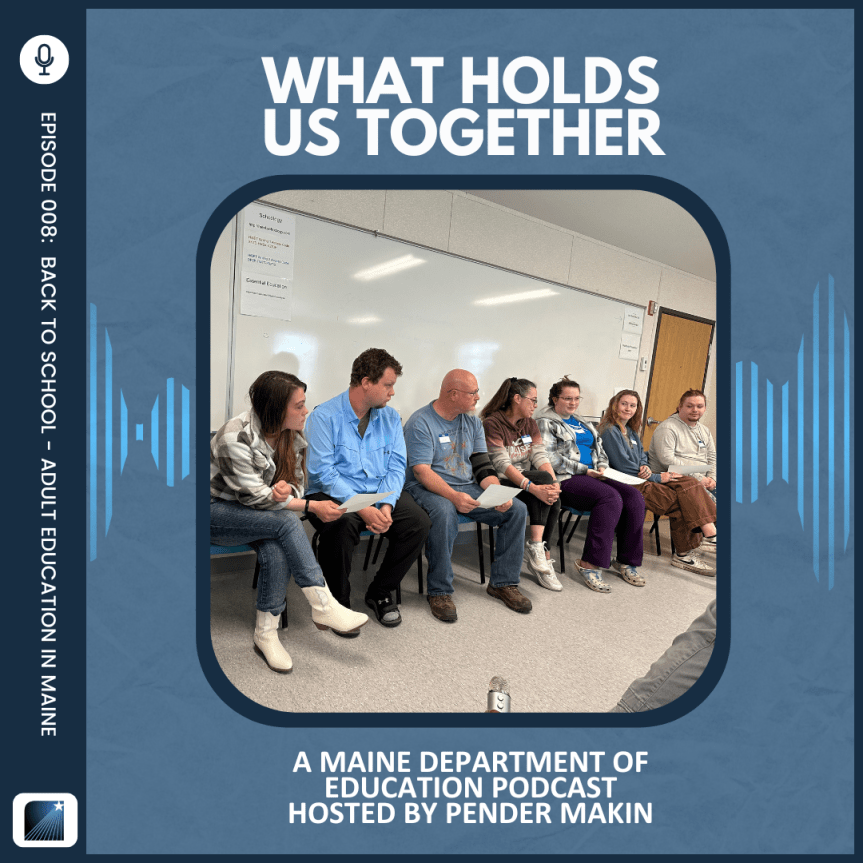
Adult education programs offer opportunity, connection, and empowerment to students from all ages and backgrounds. Commissioner Makin recently met with students and instructors from Franklin County Adult Education. This month’s episode of the What Holds Us Together podcast highlights a panel discussion with students from that visit, ranging from those looking to adult education for high school completion programs to those learning the skills they need to open businesses or switch careers. They share life-changing experiences and showcase the ways that adult education is another powerful example of how public education holds us together.
Please note that the audio is distorted in certain parts of the podcast due to the recording environment, but we wanted to bring you these stories directly from the adult education students.
Written By: Lane Carmichael, 2024-2025 Maine FFA Vice President
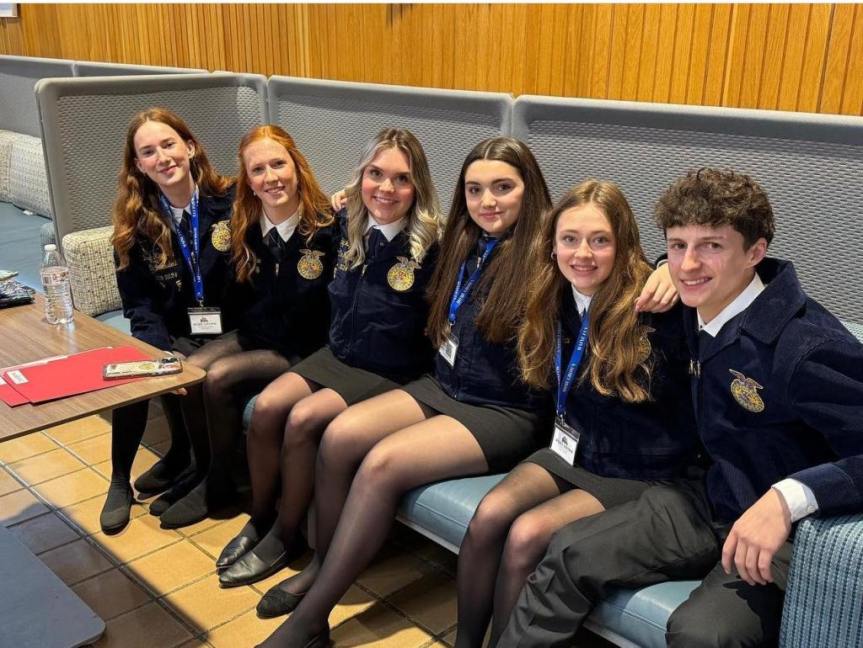
On Thursday, May 9 and Friday, May 10, FFA chapters from around the state all came together for the 94th annual Maine FFA State Convention. Caribou, Presque Isle, Mars Hill, Easton, Ashland, Fryeburg Academy, and Bangor United Technologies Center were all in attendance.
The Maine FFA Association (formerly known as “Future Farmers of America”) helps students develop their leadership, personal growth, and career success through agricultural education. Maine FFA has over 300 members, with chapters located throughout the state. The association is led by a team of student officers.
Each spring the Maine FFA Association hosts a convention and this year the organization celebrated its’ 94th annual event.
There were 216 FFA members and guests present at the convention. Volunteers from the industry, including the Cooperative Extension, higher education, the Maine Department of Education (DOE), and FFA alumni were on site to assist. Students were given the opportunity to compete in leadership and career development events, workshops, and service projects. These events help build the students not just as FFA members but as individuals. Students placing in events have the opportunity to represent Maine at the “Big E” and National FFA Convention. This year, over $5,000 in awards and scholarships were provided to members for their achievements.
“FFA gives us opportunities to learn and grow. We are able to find out what we want to do later in life,” said Abram Jackson of Presque Isle High School. Multiple members expressed their appreciation for FFA and how it has changed their lives.
“FFA has brought me out of my comfort zone and has given me a broader perspective not only on the state level but nationally,” said 2023-24 State FFA President, Brinleigh Kingsbury.
The FFA serves as a tool to all members enabling them to grow and expand their circle of influence.
At the end of the convention the 2024-25 State of Maine FFA officer team was announced. These students will lead the organization over the next year, attending representational events, traveling across the nation, meeting with industry leaders and facilitating workshops.
2024 Team
This year’s officers consist of:
President, Haley Mayne of Caribou FFA
Vice President, Lane Carmichael of Presque Isle FFA
Secretary, Hannah Shaw of Mars Hill FFA
Sentinel, Brinleigh Kingsbury of Mars Hill FFA
Reporter, Julia Pierce of Mars Hill FFA
And Treasurer, Mia Arcott of Presque Isle FFA
FFA is a student-led organization with more than 945,988 members in all 50 states, Puerto Rico, and the U.S. Virgin Islands. As part of the overall effort in Maine agriculture & natural resources education, students in grades 6-12 eligible for FFA membership are those enrolled in at least one course related to agriculture (including aquaculture, agriscience, biotechnology, forestry, horticulture, natural resource management and other biological and physical science courses that include applications to agriculture).
To join FFA, students must have a local chapter with an FFA advisor. Those wishing to start a new FFA chapter should contact Emily Doughty, Maine FFA State Liaison.
Susan Berry, Health Education and Health Promotion Specialist for the Maine Department of Education (DOE), was recently honored at the All-Member (virtual) Annual Meeting of the Society of State Leaders of Health and Physical Education (the Society) on March 26, 2024, when she was presented the Simon McNeely Award. Individuals named for this award are those who embody the character and work ethic of Simon (Si) August McNeely, who served as the Society’s executive director, secretary and treasurer for 51 years (1947-1998).
Berry is a long-time Maine DOE employee and has always desired to work in an environment that values people, health, and quality of life. She values serving people in a capacity that will have a positive and lasting impact on the health and well-being of the population, improving the quality of life. Some of the highlights in her long career:
collaborating with school health and physical education teachers to revise and then create supporting resources for the 2022 Maine Learning Results standards for health education and physical education
helping to develop resources and training for child sexual abuse, including the Children’s Safety Partnership website
participating in the development and passage of legislation to increase suicide awareness and prevention among all school personnel in Maine public schools
Leading the Maine Schoolsite Wellness committee in facilitating a dynamic yearly wellness summit
As a specialist in school health education curriculum development, instruction, and assessment, she has over 30 years’ experience in schoolsite health promotion and wellness program planning and implementation.
Susan was humbled and surprised to receive the award as she holds the recipients of this award in the highest regard. She will be presented the McNeely award at the American School Health Association Conference in Pittsburgh, PA, October 16-18, 2024. Colleagues at the Maine DOE are proud of Susan’s achievement and recognition.
“What I appreciate most about Susan is how she navigates change and offers her unending support as ‘supposedly’ new ideas surface when she has already drafted policy language or facilitated a workshop on such an idea,” said Maine DOE Director of Office of School and Student Supports Julie Smyth. “She is the first to lend a helping hand, to be a thought partner, or to share ideas. Susan’s connections to national and statewide resources also speak to her impact. I have come across many respected individuals in the field of education, but the respect accorded to Susan from teachers, administrators, community-based organizations, and leaders is pretty much unrivaled.”
From all of us at the Maine DOE Congratulations, Susan!
More about the Simon McNeely Award:
Si, a Louisiana native, graduated from Tulane University with a master’s in education. He served in the Navy during World War II. In 1947, at 33 years of age, he moved to the Washington DC area to work as an academic researcher for the Office of Education (predecessor of the U.S. Department of Education) where he contributed to research in recreation and physical education. He was the author of six books on physical education and fitness (e.g., Physical Education in the School Child’s Day, 1950). Si McNeely served as the federal-state relations director of the President’s Council on Physical Fitness and Sports from 1961 to 1970 and as a member of the U.S. and International Olympic Committees. He was a founder of the U.S. Olympic academies and was a U.S. representative to UNESCO.
This award is given by the Society to state leaders who demonstrate outstanding teaching and service in Health, Physical Education, Recreation or Dance (HPERD), demonstrate innovations HPERD through teaching and service, are a current member of SHAPE or a professional organization pertaining to the field; have presented or actively participated in local, county or regional workshops and conferences in the past three years, are actively involved in school and community affairs and problems related to HPERD, and have a minimum of 5 years professional experience in HPERD field.
What do you get when you combine adult education students, a tour of Kennebec Valley Community College (KVCC), and a variety of delicious pies? The answer is Brighter Futures!
A successful, immersive event occurred earlier this spring when 18 students from four local adult education programs spent two hours on the KVCC campus. In addition to touring the campus, students met the dean of students, key student success support staff, and a Maine Educational Opportunity Center advisor. After the tour, they enjoyed pie and ended the day with a fun activity led by a faculty member. The event was so successful that there are plans to offer it at least once a year.
Carolyn Haskell, the College and Career Success Coordinator (CCSC) at KVCC, a position funded through the Maine Jobs and Recovery Plan, played an integral part in planning the event and worked closely with Teresa Smith, KVCC Director of Enrollment, to make it a success. Area adult education directors and staff marketed the event and accompanied students to the campus.
Part of Haskell’s role is to be the on campus contact for adult education students interested in attending KVCC. Haskell is a resource for students navigating the college process and adult education. Being on campus gives her a unique perspective and informs how she advises students. She helps ease the transition from adult education to college and supports students along their college journey to help them succeed. She also connects current KVCC students to adult education for services to help them while they are in college.
Haskell has seen the power of getting adult learners to college campuses and believes that allowing them to see themselves as college students is monumental. She said, “Once they tour the campus, it is much easier for them to think of college as a goal to be accomplished rather than a dream.”
This story was submitted by Kennebec Valley Community College (KVCC). To submit good news about your school to the Maine Department of Education, complete our Good News Submission form.
Keith Morin loves watching students grow academically and socially; it’s one of the perks of his very busy job as RSU 18 Assistant Superintendent and Chief Academic Officer. He also loves watching the impact that RSU 18 staff make on students beyond academics, serving as mentors, role models, and sources of guidance and support.
That is why many people find the field of education as fulfilling as they do. And to nurture academic aspirations and cultivate a positive school community, everyone needs to feel safe.
As a school administrator serving the communities of Belgrade, China, Oakland, Rome, and Sidney, Morin knows how incredibly important it is to be knowledgeable and experienced in all aspects of education, especially in today’s fast-paced and ever-changing society. That includes school safety.
“My goals in participating in the school safety specialist program are simple; to enhance my skill set in providing guidance to a platform and culture where students and staff feel safe to attend school,” explains Morin.
Morin finished the Maine Department of Education (DOE) School Safety Specialist course in February of 2023 to help him better understand school safety and its complexities. Maine DOE’s Maine School Safety Center offers the 8-week course every month. It is provided asynchronously through Eastern Maine Community College (EMCC) and the Federal Emergency Management Agency (FEMA).
Since taking the course, RSU 18 has been hosting annual tabletop exercises for its staff, which include scenarios of real events, where they discuss their emergency plans and responses. They are also implementing student support resources such as the Second Step Program, a social emotional learning program, and Netsmartz, an online safety education program, delivered by RSU 18 district social workers and school resource officers.
RSU 18 is also implementing quarterly school safety committee meetings that include staff members from all departments and stakeholder groups, and they are hosting after-action meetings where RSU 18 staff can refine its safety practices.
Morin has also led RSU 18 efforts to expand partnerships with local law enforcement by hiring a third resource officer to build relationships with students and families. He also states that his district has hired a district safety officer to align safety practices before, during, and after school.
“In addition to making safety improvements identified throughout our consistent school safety review, we are now working on enhancing our already strengthened cybersecurity system,” added Morin. “We continue looking to build on our successes and improve areas to provide an academic environment that is safe and enjoyable.”
The School Safety Specialist course is a program of the Maine DOE’s Maine School Safety Center and is available at no cost to Maine schools. Cohorts start at the beginning of every month and complete in 8 weeks. All work is done asynchronously through Eastern Maine Community College (EMCC) and the Federal Emergency Management Agency (FEMA) and takes approximately 20-25 hours to complete.
For more information, visit theMaine DOE website, fill out aninterest form, or reach out to Maine DOE School Safety Training Coordinator Wendy Robichaud at Wendy.Robichaud@maine.gov.
The Home Instruction Portal is now open for filing the 2024-2025 Notice of Intent to Provide Home Instruction. Important information to note:
The Notice of Intent is due by September 1 for those continuing in home instruction, and also for those beginning home instruction for the first time at the start of the new school year.
For reporting purposes, regardless of variable student instruction schedules, the current school year ends on June 30, 2024, and the new one begins on July 1, 2024.
An annual assessment is required for students who ended the 2023-2024 school year as a home instruction student. Assessments must be provided by the parent/guardian (not by the person administering the assessment) with the annual Notice which is due by September 1st.
Parents or guardians submitting final home instruction assessments for students who will not be returning to home instruction (graduated, moved, or enrolling in school) do not need to file a Notice for the new school year. Parent/guardian must submit the assessments for the 2023-2024 school year to the local superintendent’s office. When submitting the home instruction assessment, parents/guardians should also include the date and reason for discontinuation. Parents/guardians are encouraged to contact the resident superintendent’s office to discuss home instruction questions. For general information about Home Instruction, including Frequently Asked Questions, please refer to the Maine DOE’s home instruction webpage at:https://www.maine.gov/doe/schools/schoolops/homeinstruction. General information may also be requested by emailing schoolquestions.doe@maine.gov
Members of the Maine Department of Education Office of School and Student Supports serve on St. Joseph College’s advisory board for the Well-Being for Educators Summer Institute and will be present at the Summit to offer information and professional learning.
_______________________________________________
The Wellbeing for Educators Summer Institute is designed to engage educators and school administrators in active learning about wellbeing and healthy living, including self-care and professional growth constructed around the multiple dimensions of well-being. The Institute will be held at the lakeside campus of St. Joseph College on Sebago Lake in Standish, Maine. Participants are invited to enjoy the many opportunities to engage with the outdoors on our lakefront and beach as well as walk our woodland trails on campus throughout the week’s scheduled activities!
The content of the workshops are relevant and customized for educators and administrators of all levels, from early elementary through college. If you are looking for ways to explore personal wellbeing and cultivate lessons and curriculum materials guided by trauma-informed research and healing-centered engagement, explore these themes during this Summer Institute. Or if you are a school leader looking for ways to support your school staff in promoting a culture of wellbeing, this week-long institute will actively explore what that can look like in one’s personal and professional life.
The scheduled program allows time for self-care, outdoor activities, and self-selected activities for physical movement, along with a series of focused 15-minute, 75-minute, and intensive 2-hour workshop presentations. Each day has a focused theme therefore participants can enjoy the full five-day experience or choose specific days.
Monday, July 15 – Personal Wellbeing and Self-Care Indoors and Outside (focused theme)
Tuesday, July 16 – Planning for Wellbeing: Curriculum and Leadership (focused theme)
Wednesday, July 17 – Wellbeing in the Classroom and School Culture (focused theme)
Thursday, July 18 – Pondering the Wellbeing of the Education Profession and Developing a Plan for Wellness (focused theme)
Friday, July 19 – Emerging Technologies and Imaginative Learning: Social Emotional Wellbeing as Learners and Educators (focused theme)
The following two Maine DOE Data Management Reports will open soon.
Maine School Approval:
Maine Schools is the process by which the Maine Department of Education (DOE) collects the organization’s information about Maine school administrative units (SAUs) and schools for the upcoming school year. Maine School Approval provides Maine DOE with the attestation from SAUs for meeting all Maine statutory requirements. This report offers an opportunity to update the SAU and school contact information to ensure that Maine DOE has the most current information. Student enrollments cannot be uploaded/entered into Synergy until Maine Schools is complete.
Open Date: 5/15,
Due Date: 7/30
Required to Report: All RSU’s CSDs, MSADs, Municipal school units, Maine Indian Education, charter schools, state-operated schools, and private schools. Updates in Synergy and NEO Staff will not be available without the completion of this report as this report informs the setup of schools in these systems for the coming school year.
The ESEA Demographics Report is an aggregation of students enrolled on 5/27 for participation in state assessments during the current assessment administration. This report includes student demographic categories for assessment and accountability purposes.
Open Date: 5/15
Due Date: 6/15
Required to Report: RSUs, CSDs, MSADs, municipal school units, Maine Indian Education, charter schools, state-operated schools, and private schools that accept publicly funded students.
Some of the most memorable experiences students have occur outside the classroom on field trips. This webinar hosted by Civics Teacher Leader Fellow Jessica Graham and Humanities Teacher Leader Fellows Dorie Tripp and Jim St. Pierre, will cover an array of beneficial field trips around Maine. This webinar will cover not only the field trips, but how to organize them and how to find grants that will pay for them. We hope you will attend and offer your own ideas for meaningful field trips.








 Maine DOE Newsroom