Windham High School Students Welcome Peers from Poland Regional High to Practice Civil Discourse

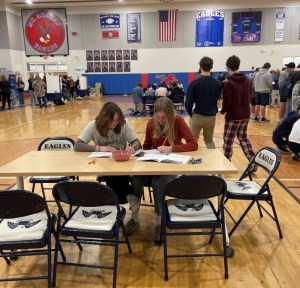
(Pictured: WHS freshman James Arthurs, left, and Poland Regional High senior Audrey Fryda engage in a courteous conversation regarding a current legislative issue.)

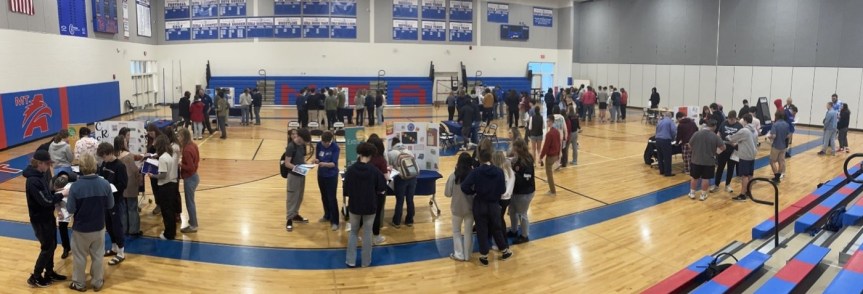
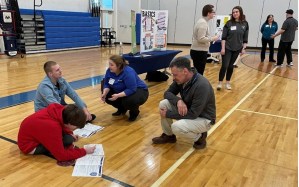
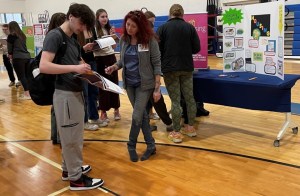
For the second consecutive year, a student group from Windham High School (WHS) volunteered to participate in the Can We? Project and hosted their peers from Poland Regional High School (PRHS) in mid-February to practice skills needed for civilized conversations.

The Can We? Project is an initiative intended for high school students to rejuvenate democracy by learning the abilities necessary to engage in respectful civil dialogue. This is Poland High’s first year participating in the Can We? Project. At last month’s gathering, students from both schools had the opportunity to discuss diverse perspectives and complex issues, doing so by showing a level of maturity and respect needed in difficult discussions.

“My experience with Can We? reinforced my admiration for this generation of students,” a PRHS social studies teacher and Can We? Project liaison Elaine Fryda said. “They are mature, earnest, and articulate. I was impressed by how seriously they discussed important current events.”

Jen Dumont, a WHS JMG specialist/teacher, and Can We? Project liaison agreed, saying that any time a space is provided for students to meet and communicate with peers, in a safe and solution-oriented way, it opens students’ perspectives and encourages empathy.

“Having the opportunity to host Poland Regional High School Can We? Project students gave our Can We? participants a chance to exhibit leadership skills and showcase some of the conversation tools they have developed during our past Can We? Project retreats,” Dumont said. “It is always edifying to realize that there are other students with similar stories and concerns from around our state.”

A few students from both schools shared their experiences from participating in the project.

Audrey Fryda, a PRHS senior, admitted that in an age of internet, it is easy to be swept into a biased and stereotypical way of thinking.

“I think it is easy to be sucked into an echo chamber of sorts, where you find things on the internet that align with what you believe to be true,” she said. “By engaging in conversations, we are having today with peers who think differently, we break those stereotypes and expand our empathy for others. By being able to do this, we are taught how to deal with important and controversial issues in an intelligent and respectful manner.”

WHS freshman James Arthurs said that if you take the moment to listen to one another, even if you don’t agree on a topic, you can come to an understanding or simply agree to disagree and remain civil.

“I enjoy participating in these conversations because it helps me learn different sides of a story – so I can understand where others are coming from,” Arthurs said. “It also helps me better understand my own perspective and has sometimes changed my viewpoint a bit. I also have understood my perspective more thoroughly where I am better able to support and advocate for it.”

PRHS senior Jonathan Crump said this was the first opportunity he had to talk about laws being passed and enjoyed hearing what everyone had to say. His involvement with the Can We? Project provided a deeper understanding of real conversations.

“Most of my experiences with Can We? were positive, but I want to point out that the project isn’t a ‘utopia of open mindedness’ if you will,” Crump said. “I still felt that I was being judged by people around me, just to a lesser extent. In all, it was fun to engage in dialogue with my peers and Can We? is definitely a step taken to bridge the gap between our country’s political divide.”

The Can We? Project was founded in 2018 by Third Thought Initiatives for Civic Engagement at Waynflete School. Originally a weekend retreat serving 35 students, the project now works throughout the school year with nearly 300 students in 14 public partner schools in Maine. Can We? is a collaborative effort between Waynflete, Maine Policy Institute, a non-profit that works to expand individual liberty and economic freedom in Maine, and Narrative 4, a national storytelling exchange program that teaches the skills of compassion through active listening with others.

Dumont explained that as adults, we have a certain responsibility to students to provide the space for active listening, and it is the reason why she is a teacher and a Can We? Project liaison.

“It’s important we provide the structure and safety to share students’ personal stories and have solution-oriented conversations that build bridges between people of various backgrounds and opinions,” she said. “I feel very honored to have been able to participate. I look forward to seeing the Can We? Project evolve and take on an incarnation here that can have further impact on our student population and staff.”

Elaine Fryda agrees with Dumont.

“Can We? provides students a unique opportunity to practice empathy, communication, and reflection,” she said. “Participation in the project fosters curiosity, courage, and caring. It goes without saying that we all could use more of these traits in our lives.”

This story was submitted by Windham High School. To submit a good news story to the Maine Department of Education use our Good News Submission form.

Maine DOE Update – March 15, 2024

From the Maine Department of Education


Reporting Items

Reports Open Soon: April 1 Enrollment & Quarter 3 Reporting

Attendance, Behavior, Bullying, and Truancy reports for Quarter 3 (January, February, and March) and the April 1 Enrollment Report open on April 1st. |  More

| Visit the DC&R Reporting Calendar |


News & Updates

Maine DOE Podcast Highlights Calais Schools Implementing BARR to Strengthen Relationships and Student Engagement

On the latest episode of the Maine Department of Education’s (DOE) “What Holds Us Together” podcast, Education Commissioner Pender Makin talked with Calais Elementary School Principal Sue Carter and Calais Superintendent Mary Anne Spearin about their experiences implementing the Building Assets Reducing Risks (BARR) model in their district. BARR combines relationship-building and the use of real-time data to strengthen student engagement, wellbeing, achievement, educator wellbeing, and connections across the school community. |  More

Extended Deadline: Paid Professional Learning Opportunity Provided by Maine DOE – Applications Close March 21, 2024

The Maine Department of Education is accepting applications from individuals interested in learning more about the competitive grant process. Selected applicants will be trained to serve as peer reviewers who assist the Department in reviewing, assessing, and scoring competitive grant proposals for the 21st Century Community Learning Centers (21st CCLC) Program. The 21st CCLC program is a federally funded education program that helps schools and communities develop before-school, after-school, and summer educational programs that support students and their families. |  More

Maine DOE Seeking Public Comment on Two Transportation Rules

The Maine Department of Education (DOE) is seeking public comment on the following two transportation rules Targeted Revisions to Rule Chapter 83: School Transportation Operations Program and Full Repeal of Chapter 84: School bus Refurbishment Program. |  More

Maine DOE Releases Professional Development Grant for 2024/2025 School Year to Promote Climate Education in Maine Schools

The Maine Department of Education (DOE) is excited to launch Phase 2 of the climate education professional development grant pilot program. The grant application is due on May 3rd, 2024. The program window runs from July 1st, 2024 until June 30th, 2025. There is $750,000.00 in funding available for local education providers to apply to partner with a community-based organization for climate-related, interdisciplinary professional development. This grant program was designed out of LD 1902 which passed in the spring of 2022. |  More

Information for Celebrating The Week of the Young Child April 6th – 12th

The Week of the Young Child is a national event promoting the importance of high-quality early learning sponsored by the National Association for the Education of Young Children (NAEYC). This year the Maine Department of Education and the Office of Child and Family Services are teaming up to support early childhood educators across the state to join the celebration and promote the vital work they do every day in their child care programs and Pre-K through 3rd grade elementary school classrooms. |  More

Celebrating National Preschool Teacher Appreciation Day on March 15, 2024

Preschool education is the essential foundation in a child’s developmental and educational journey. Neuroscience has demonstrated that the greatest period of brain development occurs in the preschool years, making high-quality experiences during this time pivotal for supporting life-long learning. The Maine Department of Education (DOE) is proud to celebrate National Preschool Teacher Appreciation Day on March 15, 2024, honoring Maine’s amazing public preschool programs and especially the backbone of these high-quality programs which are teachers themselves.|  More


Maine Schools Sharing Success Stories

Mt. Blue High School Eases the Ninth Grade Transition with BARR

For five years, Mt. Blue High School in Farmington has used the BARR (Building Assets Reducing Risks) model to ease ninth graders into high school. As a result, they have seen increased attendance, lower failure rates, and stronger bonds between educators and students and among educators. |  More

A Day on Fahi Pond Ice Fishing with Upper Kennebec Valley High School’s Wildlife Studies and Maine Woodsmen Classes

On February 9th, 2024 Mr. Atwood’s Wildlife Studies class and Mr. Davis’s Maine Woodsmen class ventured out to Fahi Pond in Embden, Maine for a day of ice fishing and outdoor skills practice. |  More

Katahdin Schools’ Nutrition Team Receives National Award for Innovation

Four school districts in Alaska, Iowa, Maine, and Ohio received awards for their trailblazing and innovative efforts to improve the nutritional quality of meals for their students. This announcement was made in front of nearly 850 school nutrition professionals at the School Nutrition Association Legislative Action Conference during National School Breakfast Week recently. |  More

Calais Elementary School Strengthens Relationships Through BARR

Nestled in the tight-knit community of Calais, Maine, is Calais Elementary, a pre-k through sixth-grade school full of enthusiastic students and dedicated teachers. Calais Elementary is one of more than 70 Maine schools using the Building Assets Reducing Risks (BARR) education model, and this week, Maine Education Commissioner Pender Makin visited to experience BARR in action. |  More

Belfast Alternative Ed Program Partners with Local Paper for Student Mentorship Experience

Belfast Community Outreach Program in Education is RSU 71’s alternative high school program, which was funded by a grant from the Office of Substance in 1990. |  More

| Submit your Maine School Success Story |


Professional Development, Training, and Events

| Visit the Professional Development Calendar |


Latest DOE Career/Project Opportunities:

View current Maine Department of Education employment opportunities here


Extended Deadline: Paid Professional Learning Opportunity Provided by Maine DOE – Applications Close March 21, 2024

The Maine Department of Education is accepting applications from individuals interested in learning more about the competitive grant process. Selected applicants will be trained to serve as peer reviewers who assist the Department in reviewing, assessing, and scoring competitive grant proposals for the 21st Century Community Learning Centers (21st  CCLC) Program. The 21st CCLC program is a federally funded education program that helps schools and communities develop before-school, after-school, and summer educational programs that support students and their families.

This year’s Request for Proposals (RFP) for the 21st CCLC program was released to the public on January 9, 2024, and is available online at: https://www.maine.gov/dafs/bbm/procurementservices/vendors/rfps. The Department anticipates receiving proposals from local education agencies, community-based organizations, and other eligible entities seeking awards under this RFP.

Qualifications:

Peer review applicants will be selected based on their experience in providing effective academic support, enrichment, youth development, and related support services for children and youth. The most qualified candidates will be individuals who have experience in the administration of high-quality youth development programs within schools and communities. Examples of the experienced individuals sought include, but are not limited to:

  • 21st CCLC program directors and site coordinators
  • Teachers and principals
  • College and university staff
  • Youth development workers
  • Community resource providers

Required Tasks:

Selected applicants must be able to participate in an online training and review grant proposals through a web-based system. Applicants will work individually to read each assigned proposal and create detailed, objective, constructive, and well-written comments on approximately 10 proposals based on the criteria established in the RFP. These comments will be submitted to the Department prior to participating in the scheduled consensus scoring sessions. It is anticipated that peer reviewers will have a three (3) week window in which to complete their individual review of assigned proposals.  Following the individual review of proposals, each successful applicant will be required to participate in a series of two (2) online/virtual consensus scoring sessions hosted by the Department. It is during these consensus scoring sessions that the peer review team will score each grant proposal.

Selected applicants must complete the following tasks during the following date(s):

Task Date(s) Time(s)
Participate in an online training webinar April 3, 2024 1:00 PM – 2:30 PM
Review grant applications through a web-based system and provide individual, written comments on each application (which must be submitted to the Department) April 12, 2024 – May 1, 2024 Any Time
Participate in online/virtual consensus scoring sessions with other members of the peer review team (applicants MUST be available on all four scoring days, but will only be selected to participate for two days) May 6, 2024 – May 7, 2024; or
May 8, 2024 – May 9, 2024
9:00 AM – 4:00 PM

Compensation for Services:

Selected reviewers who complete the required tasks will be provided an honorarium of $100 per assigned application.

Previous participants have also found that serving as a member of the peer review team is an excellent opportunity for professional development and growth. It is likely that, if selected, applicants will be exposed to new program models, strategies, and practices. These new concepts may provide ideas and support for ongoing work as well as future grant writing efforts. Most importantly, the time given to this effort will help ensure the funding of quality education programs for the children and families of Maine.

How to Apply:

Interested parties must contact Travis Doughty at travis.w.doughty@maine.gov to obtain a copy of the 2024 peer reviewer application and then return the completed application along with a current resume or CV.

Pursuant to Title IV, Part B of the Elementary and Secondary Education Act, as amended by the Every Student Succeeds Act of 2015, peer reviewers may not include any applicant, or representative of an applicant, who has or will submit a proposal in response to the current grant competition.

Deadline:

The Maine Department of Education will continue accepting peer reviewer applications through March 21, 2024, or until the needed positions are filled. Interested parties are encouraged to apply as soon as possible.

Contact:

For more information, contact Title IV State Coordinator, Travis Doughty at travis.w.doughty@maine.gov or 624-6709.

A Day on Fahi Pond Ice Fishing with Upper Kennebec Valley High School’s Wildlife Studies and Maine Woodsmen Classes

On February 9th, 2024 Mr. Atwood’s Wildlife Studies class and Mr. Davis’s Maine Woodsmen class ventured out to Fahi Pond in Embden, Maine for a day of ice fishing and outdoor skills practice.

Mr. Atwood’s class was tasked with the assignment of manually drilling half a dozen holes in the sixteen-inch ice to set traps for a chance to catch some local fish.  Everyone took turns dragging and/or carrying all the necessary equipment out onto the ice.  Hauled in by manufactured and makeshift sleds alike, a camp for the day was soon on its way.

While the Wildlife Studies students were learning how to bait their hooks and set traps from Mr. Atwood, the Maine Woodsmen class, with help from their teacher, Mr. Davis, were in full swing setting up their fifteen-foot, pop-up ice fishing shack and preparing their kitchen within.  The woodsmen students took turns cooking meals, cleaning, and serving everyone food and drinks. The morning started with a breakfast of chocolate chip pancakes, sausage, and locally harvested maple syrup with orange juice, milk, and hot chocolate.

When students weren’t busy tending to traps or providing creature comforts to their peers, everyone was able to relax and enjoy the calm sunny weather and one another’s company. Several students tried their hands at drilling holes for jigging both outside and inside the shack as well as making a comfortable campfire.  As everyone began to cool down, it was soon time for lunch, and once again, the woodmen students were busy in the kitchen. This time making a meal of grilled cheese sandwiches and tomato soup that really hit the spot.

Though only one flag flew and not a fish was caught, the day was a great success.

This story was submitted by MSAD 13. To submit a good news story to the Maine Department of Education, fill out this submission form.

Katahdin Schools’ Nutrition Team Receives National Award for Innovation

(Pictured: members of the nutrition team at RSU 89.)

Four school districts in Alaska, Iowa, Maine, and Ohio received awards for their trailblazing and innovative efforts to improve the nutritional quality of meals for their students. This announcement was made in front of nearly 850 school nutrition professionals at the School Nutrition Association Legislative Action Conference during National School Breakfast Week recently.

Regional School Unit 89, Maine’s own Katahdin Schools received the “Innovation in Preparation of School Meals” award for incorporating more scratch cooking into menu items, such as homemade sub rolls using their oatmeal bread recipe, homemade croutons, pickles, and roasted chickpeas.

RSU 89 has also partnered with a local farm, Keep Ridge Farm in Benedicta to source produce like squash, onion, eggs, carrots, and kale. They host monthly taste tests allowing the student body to determine what the next new menu item will be.

“At our annual Thanksgiving meal, we featured Keep Ridge Farm roasted squash, local farmer Steve Crouse’s potatoes that we boiled and mashed, and turkey from USDA Foods in our homemade gravy and homemade stuffing,” said Denise Tapley Proctor, food service director at RSU 89. “The meal was well received by the community, and the reactions of our kids make us love the change in direction our school is making to more scratch cooking.”

The three school districts that received awards are the first winners of the Healthy Meals Incentives Recognition Awards, jointly created by the U.S. Department of Agriculture and Action for Healthy Kids as part of USDA’s Healthy Meals Incentives Initiative, also known as HMI. These awards celebrate school districts that embrace opportunities to take their school meals to the next level. HMI is one of several ways that the Biden-Harris Administration is supporting schools to provide kids with nutritious meals that support their health and well-being.

Here are more pictures of the RSU 89 nutrition team preparing mashed potatoes from Keep Ridge Farm, homemade oatmeal rolls, USDA hamburger made into hamade gravy, USDA corn, and homemade apple strawberry crisp:

Reports Open Soon: April 1 Enrollment & Quarter 3 Reporting

Attendance, Behavior, Bullying, and Truancy reports for Quarter 3 (January, February, and March) and the April 1 Enrollment Report open on April 1st.

These reports are due on Monday, April 15th.

These reports need to be reviewed and submitted in NEO Student Data. In preparation for this reporting, please update student data in State Synergy for enrollment, attendance, truancy, and behavior. Update bullying incidents in NEO.

Reporting Resources:

For questions about quarterly reporting contact MEDMS.Helpdesk@maine.gov or call 207-624-6896

Maine DOE Podcast Highlights Calais Schools Implementing BARR to Strengthen Relationships and Student Engagement

Maine Has More Than 70 Schools Implementing the Building Assets Reducing Risks Model (BARR), With Additional Funding Available for More Schools to Implement the Program

On the latest episode of the Maine Department of Education’s (DOE) “What Holds Us Together” podcast, Education Commissioner Pender Makin talked with Calais Elementary School Principal Sue Carter and Calais Superintendent Mary Anne Spearin about their experiences implementing the Building Assets Reducing Risks (BARR) model in their district. BARR combines relationship-building and the use of real-time data to strengthen student engagement, wellbeing, achievement, educator wellbeing, and connections across the school community. Listen here.

Calais Elementary School began implementing BARR this school year in fifth and sixth grade through a statewide grant opportunity provided by the Maine DOE through federal funds. More than 70 schools across Maine are now BARR schools, with additional funding available for schools that want to implement BARR in the next school year.

Makin spent the day at Calais Elementary School to experience the successes the school is having with BARR firsthand and taped her podcast onsite with the school leaders. Read more about her visit here.

“I’m so grateful that you hosted us today from the Department. We brought a team and we got to visit all of the classrooms. We also got to sit in on some of the BARR activities, including what’s called U-Time. When I asked ‘What is U-Time?’ she said, ‘Well, it’s an activity that we do where we learn a little bit more about ourselves and about our classmates.’ And it was just so well said. And then we also got to sit in with a group of teachers having a conversation that’s called a small block conversation, where they were discussing students in this particular case, who are appearing to be thriving across the board who are high academic achievers, and they discussed each student in terms of possibilities, ways to be more challenged, and also any concerns that might otherwise have gone unnoticed,” said Makin during her podcast intro.

Makin asked Carter what she and educators are experiencing through their BARR implementation.

“We started BARR at the elementary school in September. We applied for the state-provided program and it has really grown and become part of our school, culture, and climate,” said Carter. “Recently, we looked at our attendance. We usually don’t look at attendance until it’s a problem, and [now we] identified some kids that have been out seven days, taking the opportunity to send a letter home to say, ‘Hey, your kids missed seven days. We don’t want them to be truant, how can we help to make sure that they get to school?’ The data is inputted every week. You talk about and see that data over time.”

Spearin implemented BARR while she was an administrator at the middle/high school and provided a longer-term view of the BARR experience.

“The Calais Middle/High School adopted the program in 2016. I’m a true believer in the program. We originally brought it on because the main focus was grades and the transition into ninth grade. For us, it really made a difference when we could see the number of failures in our coursework had changed significantly in the first year and then changed again the next year. And then as time went on, it went into more of the behavioral and checking in with the students and making sure they had trusted adults and really working on how they created a culture within the ninth-grade cohorts,” said Spearin.

While at the school, Commissioner Makin had the opportunity to participate in a sixth-grade U-Time activity called “What’s on your plate?” Every U-Time is different, and in Carly Davis’s sixth-grade class, it was all about self-discovery. Sixth graders and DOE team members were each given a paper plate, which they folded in half.  On one side were the participants’ responsibilities, and on the other were the things they did in their free time. After making the plates, Davis engaged the students through a series of discussion around having a balanced plate, which portions are taking up too much time, which portions they love, which portions they wish they had less of, and so forth. On the back of the plates, students wrote one thing they wished they could add or take away from their plate.

Students learn about one another through these activities, about themselves, and teachers about their students in a deeper way. Teachers also share these valuable insights at their block meetings so the entire teaching team has that information. Block meetings happen weekly, with teacher cohorts discussing not just academic-related data but every student’s strengths, passions, and personal goals. This opens a broader, more positive discussion around the whole student. The team works off a spreadsheet that builds a picture of each student by reviewing a variety of in-school factors, including progress in class, attendance, and behavior. The team also discusses factors outside the school, such as extracurricular interests, personal health, issues with other students, or troubles at home. All this data collection allows the team to flag challenges early and work together to solve problems. Importantly, teachers track not just problems but student strengths to identify achievable goals to get or keep students on track for success. For students coping with the toughest situations in and out of school, BARR’s model requires a weekly Community Connect meeting that involves more specialized staff, such as the school nurse and school psychologist along with school administration.

“The other piece that’s really important about BARR is we always talk about the kids who are struggling or you know, not doing so well. But today we actually talked about four kids who were doing very well,” said Carter. “So it identifies those kids and we talked about those kids as well, which I think you need to have a balance, and the program forces you to do that. [The teachers] are very, very committed to it.”

Makin asked Carter if she is seeing any changes in student outcomes or differences in school culture now that she is more than halfway through her first year of implementing BARR.

“I would say so. Last week, the kids had posters that they wrote on about what BARR has done for them. [And they wrote] it helped me be aware of myself, it helped me to be more friendly, it brought me joy, it taught me empathy. So absolutely, every person, adult and student, is able to vocalize what they are gaining from BARR without having to think about it,” said Carter. “There’s not any way that can’t carry over to outside of school as well because it’s in them. It’s a part of them, and they’ll take that with them and as they move on to middle school, which is very important. It will help them be successful there as well.”

Makin asked what Carter and Spearin would say to other school leaders considering BARR.

“From the superintendent role and perspective, I would say that I am 100 percent in support of BARR. I loved it as a building administrator and as a team member. I saw the changes that it made for our freshmen students coming in. It supports our students. It gives them additional resources because it forces you to bring in resources from your community,” said Spearin. “The other part is the fact that teachers are out there alone and this forces time together. It forces them to look at the kids as our kids, not my kids. It also forces them to really look at the positives. It forces them to look at the challenges and to come up with a community solution to what’s going on with those students in the positive times and in the challenging times. And so it really does give the teachers the ability to have a team to work from and it also allows them to sit and look at the positives that are coming from all the work that they’re doing. We do not have enough time built into the day to do that unless you have a program that really encourages that.”

Makin asked how activities like U-Time, the regular data collection that educators are engaged in, and the conversations in block times create better grades and fewer failures in ninth grade.

“We had kids who would be looking at not doing their homework. You had an entire team of teachers saying I know that the basketball season is coming up and this is really important to this kid. Who knows this kid well enough to be able to go have that conversation about what they need to get that work done so that their grades don’t drop below the athlete eligibility piece? Or I know this student and they’re really having some challenges at home. Who knows a student well enough and has a connection to be able to reach out [to them]? We even had liaisons with the community that came in and we could then open those conversations up with them as well,” said Spearin. “Instead of a student that went through eight different periods in a two-day time and nobody had the opportunity to reach out and say, we know there’s something going on, how do we support you? And it wasn’t doing the work for them. It was saying what do you need to be successful?”

Applications are now open to all willing and qualified public schools that would like to become a BARR school. Click here to apply. Applications are due by March 22, 2024, by 5 pm EST. The Maine DOE will cover all costs of implementing the program for schools new to BARR for the 2024-2025 school year.

The Maine DOE used American Rescue Plan funding to create a competitive BARR grant to help schools invest in the model.

Calais Elementary School Strengthens Relationships Through BARR

(A Calais Elementary Student celebrates what he’s learned through BARR)

Nestled in the tight-knit community of Calais, Maine, is Calais Elementary, a pre-k through sixth-grade school full of enthusiastic students and dedicated teachers. Calais Elementary is one of more than 70 Maine schools using the Building Assets Reducing Risks (BARR) education model, and this week, Maine Education Commissioner Pender Makin visited to experience BARR in action.

“We started BARR at the elementary school in September,” Principal Sue Carter said. “We applied for the state-provided program, and it has really grown and become part of our school, culture, and climate.”

The BARR framework combines relationship building (staff to staff, staff to student, and student to student) and real-time data to strengthen engagement and wellbeing for all students. By building solid relationships with students and fellow educators, teachers work together to support the whole student.

At Calais Elementary, they are implementing BARR with fifth and sixth-grade teams. Fifth and sixth grade teachers hold weekly block time to discuss student strengths and what they need to thrive. Teachers also engage students through weekly U-Time activities.

“U-Time is the classroom activity part of the BARR Structure where educators and students in their classrooms dedicate a little bit of time to building relationships, deepening their knowledge of themselves as learners, as individuals, and really helping to understand one another,” said Makin.

Commissioner Maiken and Chief Innovation Officer Page Nichols sit at a school table working on their BARR U-Time activity.
Commissioner Makin and Chief Innovation Officer Page Nichols working on their “What’s on your plate?” U-Time activity.

While at the school, Commissioner Makin had the opportunity to participate in a sixth-grade U-Time activity called “What’s on your plate?” Every U-Time is different, and in Carly Davis’s sixth-grade class, it was all about self-discovery. Sixth graders and DOE team members were each given a paper plate, which they folded in half.  On one side were the participants’ responsibilities, and on the other were the things they did in their free time. After making the plates, Davis engaged the students through a series of discussion around having a balanced plate, which portions are taking up too much time, which portions they love, which portions they wish they had less of, and so forth. On the back of the plates, students wrote one thing they wished they could add or take away from their plate.

Delilah, a sixth grader at Calais Elementary, described U-Time as a class where you learn “about your classmates, the people around you, your teachers, and you.”

Jackie, a fellow sixth grader, said that in U-Time, she has learned “to help people if they are going through a hard time, and that if you see someone crying, you should go over there to talk to them.”

“It really sparked a lot of conversation,” said Commissioner Makin. “I could see how it was creating relationships within the classroom, building trust and knowledge of themselves and others.”

Students learn about one another through these activities, about themselves, and teachers about their students in a deeper way. Teachers also share these valuable insights at their block meetings so the entire teaching team has that information.

For example, after the “What’s on Your Plate?” exercise, Davis brought a few of the sixth grader’s plates to a block meeting. “[Davis] talked about the two plates, what they said, and that was put down,” Principal Carter explained, “and we will come back around to that in our next block meeting.”

Block meetings happen weekly, with teacher cohorts discussing not just BARR-informed data but every student’s strengths, passions, and personal goals. This opens a broader,

Six educators sit in a classroom facing the front of the class. They are BARR teachers holding a Block Meeting.
Calais Elementary’ s BARR teacher cohort uses recess as an opportunity to hold Block Meetings.

more positive discussion around the whole student. The team works off a spreadsheet that builds a picture of each student by reviewing a variety of in-school factors, including progress in class, attendance, and behavior. The team also discusses factors outside the school, such as extracurricular interests, personal health, issues with other students, or troubles at home. All this data collection allows the team to flag challenges early and work together to solve problems. Importantly, teachers track not just problems but student strengths to identify achievable goals to get or keep students on track for success. For students coping with the toughest situations in and out of school, BARR’s model requires a weekly Community Connect meeting that involves more specialized staff, such as the school nurse and school psychologist along with school administration.

“BARR really does give the teachers the ability to have a team to work from,” said Superintendent Mary Anne Spearin. “It also allows them to sit and look at the positives that are coming from all the work that they’re doing.”

At this week’s block meeting, the team spent most of their time discussing highly successful students. These students can often receive less attention than students exhibiting behaviors or academic performance requiring intervention. Those students still get the support they need, but BARR focuses conversations on all students.

“To see that data over time is pretty amazing,” remarked Principal Carter. “No other programs that we had held us to that level of accountability.”

“BARR offers two things you don’t usually see in other programs and that is a curriculum that you could work from and the data to prove that the curriculum is working,” said Superintendent Spearin.

Calais Elementary is not the only Calais school utilizing BARR. In 2016, Spearin implemented BARR for ninth graders at Calais Middle/High School.

“It really made a difference. We could see the number of failures in our coursework had changed significantly in the first year and then changed again the next year,” recollects Spearin. “From the superintendent’s role and perspective, I would say that I am 100 percent in support of BARR. When I speak to people, I tell them they should consider the BARR method. It is just crucial to the things that are happening in our world right now. Everybody needs somebody.”

An educator from Calais Elementary school holding up a poster that says "my students have taught me joy"
One of Calais’s BARR teachers.

When Commissioner Makin asked Principal Carter if she would recommend BARR to other schools, she enthusiastically responded, “Absolutely!”

“Every person, adult and student, is able to vocalize what they are getting from BARR,” Principal Carter told Makin. “There’s no way that can’t carry over outside of school because it’s in them. It’s a part of them, and they’ll take that with them when they move on to middle school.”

Interested in joining Calais to become a BARR school? The DOE is offering additional funding for schools to become BARR schools. To learn more, please attend the DOE’s March 14th webinar.

 Click Here To Register for the Thursday, March 14th BARR Webinar at 3:00 PM ET.  

Applications are now open to all willing and qualified public schools that would like to become a BARR (Building Assets, Reducing Risks) school.  Click here to apply. Applications are due by March 22, 2024, by 5:00pm EST.

The Maine DOE will cover all costs of implementing the program for schools new to BARR for the 2024-2025 school year. (Note: if you are already a BARR school with an existing contract, your costs will be covered for the 2024-2025 school year as well, and you do not need to reapply.)

The Maine DOE used American Rescue Plan funding to create a competitive BARR grant to help schools invest in the model.

Information for Celebrating The Week of the Young Child April 6th – 12th

The Week of the Young Child is a national event promoting the importance of high-quality early learning sponsored by the National Association for the Education of Young Children (NAEYC).  This year the Maine Department of Education and the Office of Child and Family Services are teaming up to support early childhood educators across the state to join the celebration and promote the vital work they do every day in their child care programs and Pre-K through 3rd grade elementary school classrooms.

The event takes place during the Week of April 6th – 12th with a kickoff on Saturday and interdisciplinary daily themes for the following week.

We hope that you will join us in celebrating the Week of the Young Child! To help elevate the importance of high-quality early learning and care for the great community,  please share photos through this form to show how your early learning program/classroom celebrates the Week of the Young Child by utilizing high-quality practices and strategies to build positive relationships and a sense of community in your early care and education setting.

We can’t wait to see the positive impact Maine’s early educators are making with the children and families in your program or classroom! To celebrate your efforts, we will be running a raffle for each day of the week. Your name will be entered once for every submission you make on the link above and the winner each day will receive a package of SWAG with items provided from the Office of Child and Family Services, the Early Learning Team at the Department of education, Maine Roads to Quality and the Maine Association for the Education of Young Children!

Don’t forget to mark your calendar for Early Childhood Education (ECE) Day at the State House on Thursday, March 21, 2024.  This is an opportunity for early childhood educators, families, and ECE supporters to work together to elevate the need for high-quality early care and education opportunities and for the importance of a strong ECE workforce.  Join us to celebrate the successes and call attention to the ongoing needs.  For more information visit the events section of the MaineAEYC website.

If you have questions or would like more information on the Week of the Young Child, please reach out to one of the members of the Early Learning Team and/or a member of the Office of Child and Family Services listed below.

Early Childhood Specialist, Nicole.Madore@maine.gov

Family and Community Engagement Program Manager, Megan.Swanson@maine.gov

Maine DOE Seeking Public Comment on Two Transportation Rules

The Maine Department of Education (DOE) is seeking public comment on the following two transportation rules Targeted Revisions to Rule Chapter 83: School Transportation Operations Program and Full Repeal of Chapter 84: School bus Refurbishment Program. Find details on each rule below.

Targeted Revisions to Rule Chapter 83: School Transportation Operations Program

The purpose of Rule Chapter 83 is to determine who is eligible for access to the School Transportation Operations Program and provide a process for eligible schools to access the software subsidy. This rule has been revised to make clear the role of the Department of Education in providing the subsidy, the technical start-up process, and the distribution of state payment of approved subsidies. These changes are indicated in underlined text.

Full Repeal of Chapter 84: School Bus Refurbishment Program

Rule Chapter 84 established procedures for school administrative units (SAUs) to contract for school bus refurbishment services through the Maine School Bus Refurbishment Program.

The program provided subsidy to school administrative units (SAUs) in order to offset the partial cost of refurbishment for school buses used to transport students to and from home and school and school events. This program was operated the Maine State Military Authority which no longer refurbishes school buses. As a result, the Department of Education is proposing a full repeal of the rule.

Public Comment for both Rules:

The revised Rule Chapter 83 and proposed repeal of Rule Chapter 84 can be found here

These rules will be published and receive the same public comment dates since they deal with the topic of transportation. As required by law, a period of public comment opens for both of these rules on March 13, 2024, through April 15, 2024. Written comments may be submitted to DOE Rulemaking Liaison Laura Cyr, State House Station #23, Augusta, Maine 04333; 207-446-8791 or laura.cyr@maine.gov until 5:00 pm April 15, 2024. For documentation purposes, written comments are preferred.

Contact person for these filings (include name, mailing address, telephone, fax, TTY, email): Laura Cyr, laura.cyr@maine.gov, (207) 446-8791