Get to know Maine’s 2024 Teacher of the Year Joshua Chard, a second and third-grade looping teacher at East End Community School in Portland. Joshua sat down for this Q&A as he begins his year of service.
How long have you been a teacher and what do you teach?
I started working in Portland Public Schools in 1992 as an ed tech. I was hired to teach fifth grade in Portland in 1996 after I finished my degree in education, which I got by going to school part-time while working in a school all day.
I have taught upper elementary school, I’ve been an instructional coach, and this is my fourth year as a second and third-grade looping teacher at East End Community School. I also direct theater by and for young people.
What made you want to be a teacher?
I decided I was going to be an elementary school teacher when I was in fifth grade. I was one of those kids whose teachers winced in anticipation of my coming to their classroom and I knew it. It didn’t feel good to know that was how I was labeled.
I went into Mrs. Breau’s fifth grade class and she was pretty no-nonsense, but she was also the coolest person I had ever met. She made her own clothes, wore wacky jewelry, and played the guitar. She was also really demanding academically. She told me that what I was doing in school wasn’t good enough but that she believed in me. She cared about me and loved me for all of my quirkiness and uniqueness but she said she also expected me to do my work and to do it well. That was a major turnaround for me. It started with Mrs. Breau and then I met a whole host of other teachers along the way who lifted up this artsy kid who loved to sing and act and make music. They said, “There’s a place for you here, and we think that the person that you are is amazing and we want to help you become even better.” I knew that I wanted to be that kind of teacher.
You’re unique in that you’re an elementary school teacher, but you also lead high school drama. Can you talk a little bit about that journey?
I think that one of the things that makes me a good teacher is that I have really strong outside interests, and one of my side gigs is that I’m a freelance theater director. About four years ago, right in the middle of COVID, the opportunity came along to take over the drama program at Deering High School. It was a program that had once been glorious but it was definitely in a time of transition. Doing this in the middle of a pandemic was a challenge, but my background as an actor and a director and my education in theater compelled me to take on this program and see what I could make of it.
When I started, there were eight students involved in the drama program. I’m really excited to say that this year we’re going to one act competitions with more than 30 students and nearly 50 students will have been involved with our three productions this year.
One of the things that makes my drama program unique is that we’re less about the product at the end and more about the social aspect of celebrating and lifting up students who may not find that they fit in other places in high school. I’m really proud that the Deering Players has become a place where kids find safety and celebration and are able to walk in those auditorium doors at the end of the school day and be 100 percent their true and honest selves.
I describe my drama program as a place where we come together, we support each other, we love each other, we lift each other up, we build community, and in the end, we happen to also put on a really good play.
It seems to me that having a theater and acting background helps in your teaching role as well. Have you viewed that as an asset?
Absolutely. In fact, I joke that Mr. Chard is a character I play from 7:30 in the morning until 2:15 in the afternoon. I am definitely someone who brings a lot of enthusiasm to what I’m doing, I’m very playful, and we’re very imaginative in everything we’re doing in our classroom. That drama background and that improvisation background come in handy, especially since when you’re teaching second grade you never know what’s going to be thrown your way minute to minute or hour to hour. The skills that you build as an actor are kind of like jumping out of a plane without a parachute. Because all manner of things can happen while you’re in front of a class, I think this applies to the classroom too.
When you think about it, putting on a show is a form of play and playing is so important for our young students. We can’t forget the importance of letting them be imaginative and playful.
With decades of teaching experience under your belt, what do you love about it? What gets you going every day?
There are a lot of things that I love about it. It’s a child’s eyes lighting up the first time they decode words on their own and suddenly are able to read an entire page of a book without any help or support.
It’s the student who has sat quietly for months and months, who suddenly raises their hand and makes such an insightful observation about what you’re discussing that you nearly fall out of your chair.
It’s the fact that I get to come and be playful and joyful all day long with a bunch of small people who want nothing more than to be joyful and playful with me all day long.
I really get to make a difference. I get to teach children how to read. I get to teach children how to do math. I get to help students develop their writer’s voice. I get to teach children about their world. But most importantly, I get to help young people discover who they are and all that they can be.
I get to be like Mrs. Breau and say, “I love you just the way you are. Let’s find out who that is, and let’s celebrate that and make that your path moving forward.” How cool is that?
I’m sure getting to teach the same kids for two years really increases that ability to watch them grow and blossom.
Absolutely. I think that to me the most powerful thing I’ve ever done as a teacher is to join a looping team where I have a two-year cycle with students. My relationship with the students is obviously a critical component of that, but it’s also the ability and the opportunity to build relationships with parents and families that makes such a difference. You build a really trusting, caring, and enthusiastic relationship with families when you spend two years collaborating and working together lifting their children up and helping them be the most successful humans that they can be. The relationships that I build with my diverse families enriches my life and makes me a better human. I’m pretty lucky.
It is absolutely my plan to spend the rest of my career as a second and third-grade looping teacher. I cannot imagine anything else bringing me such fulfillment.
Every moment you get you take to celebrate the amazing things that are happening at your school. What makes your school special and why do you love it so much?
We are one of the most culturally diverse elementary schools north of Boston. More than 50 percent of our students are English language learners at all different levels, 76 percent of our students are BIPOC, and 85 percent of our students are identified as living below the poverty level, and I’m here to tell you that the most creative, passionate, devoted teachers that I have ever met are the teachers who work in schools like ours. Innovation thrives at East End Community School and that innovation is reflected in the enthusiasm of our happy, hardworking students.
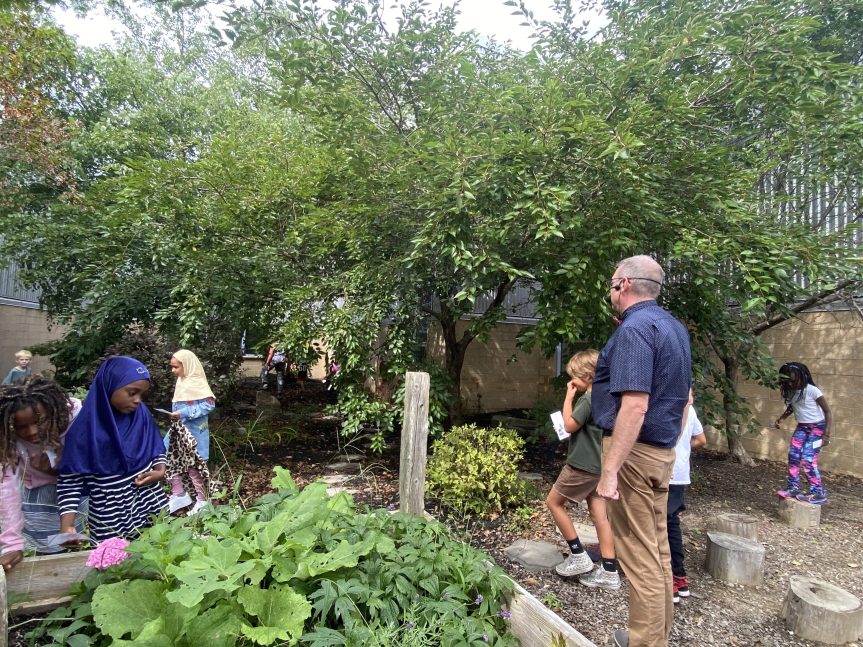
The Munjoy Hill neighborhood in Portland is a diverse and vibrant community and our school is an anchor in the community. I want to shout from the rooftops that we are East End Community School! Come see our garden, come to our monthly community dinners, come into our classrooms and volunteer, come talk to our amazing and insightful students. Want to feel optimistic about the future? Come spend a day volunteering in my school.
I have enthusiastically spent my entire career teaching in Portland. East End Community School embodies everything that is amazing about urban education.
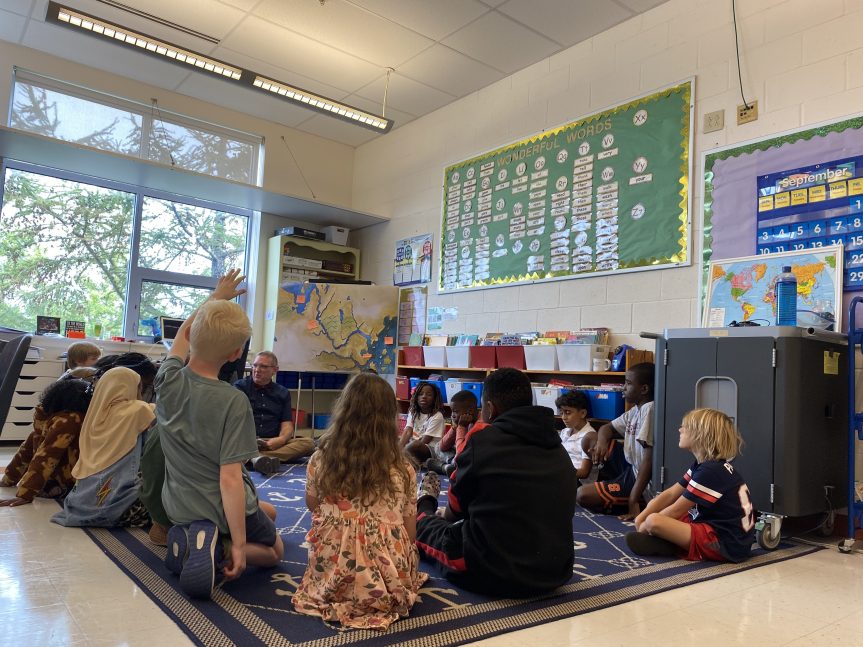
You’ve had quite a year as county teacher of the year and then being named Maine Teacher of the Year. Talk a little bit about what that experience has been for you and what you’ve learned over that journey.
I think that the first thing that I would say is that it’s surprising and unexpected. I’m a veteran teacher. I’ve been teaching for a long time and I have been doing my thing fairly anonymously.
Teachers work really hard, and we do extraordinary things with our students every day. That’s just our ordinary. Sometimes it goes unnoticed and unseen, and sometimes people misunderstand what actually happens in the complex ecosystem that is a classroom. From the moment I got an email informing me that I had been nominated by my administration for County Teacher of the Year, I suddenly felt noticed in a way that I hadn’t in a long time. That’s not to say I was burned out or unhappy; I was very content, but it was amazing to feel like I was really being seen and that someone was noticing and celebrating the effort that I was putting in every day with my students.
When I was named Cumberland County Teacher of the Year, and got to meet my cohort for the first time, it was really surprising to me how quickly we connected and how we came together as true and genuine friends. It’s a diverse cohort. I teach in an urban school, but that’s an outlier for the state of Maine. Most of the teachers in the state teach in more rural communities. On its face, it could seem like our schools were very different. But as we got together in a room and started talking, we discovered that we’re all facing the same challenges and we’re all experiencing the same joys in our professions. I never would have met any of these amazing people without this recognition and now they are my friends for life. Every teacher should have the opportunity to experience such joy.
Can you talk a little bit about what you plan to focus on as Maine’s 2024 Teacher of the Year?
I want to focus on celebrating everything that is amazing in our state’s schools. I want to be a voice for teachers across the state to share what is happening in their schools, what they are proud of, and what they want to celebrate. I am hoping to have the opportunity to visit schools across the state to meet with educators and hear about the amazing and innovative practices that are happening in classrooms all across the state.
At the same time, I want to recognize that we share some similar challenges, and I want to be an advocate for educational policy change in a way that benefits every learner in the state of Maine and creates equity for all of our learners across the state.
What is your message to somebody thinking about becoming a teacher?
Teachers make a difference in people’s lives in ways that they don’t even know are happening.
When it was announced that I was Maine teacher of the year I got a letter from someone who told me that she had been in the classroom where I had done my pre-service teaching when I was 18 years old, and that I had changed her life. I didn’t even know. That’s how profoundly we can affect our students.
In the 30-plus years that I’ve been working in education, I’ve worked with and taught more than 700 students. If I change the trajectory of one person’s life every year, that trajectory then impacts the trajectory of their children’s lives and their grandchildren’s lives, and it spreads exponentially. Who else gets to do that?
Plus, it’s really fun. I laugh all day long. My students are hilarious, insightful, brilliant, creative, and passionate. They’re an amazing group of humans to spend my time with and they make me a better person.
Anything else you want to share with the folks reading this?
I’m blessed that I get to be an artist and an educator in Maine, which I would argue is the most beautiful place in the world to live. I can’t imagine why every person wouldn’t want to move here tomorrow!





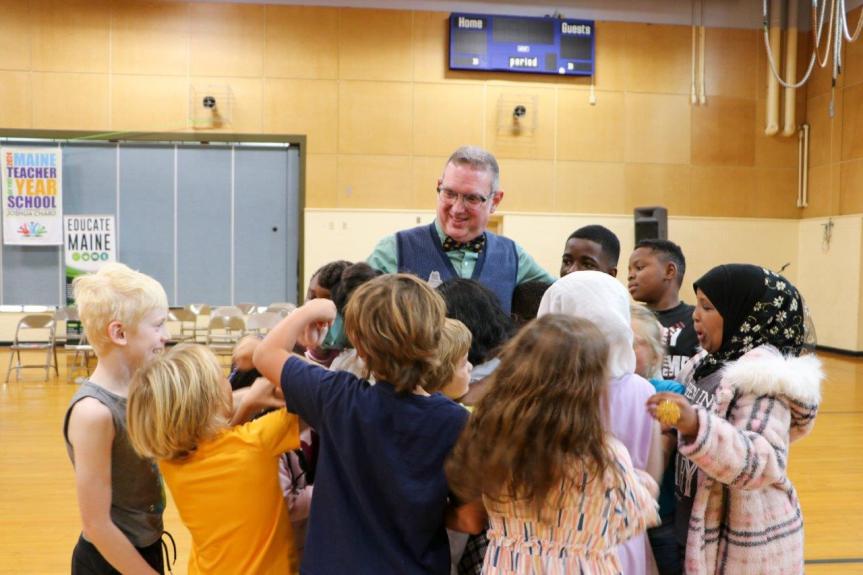

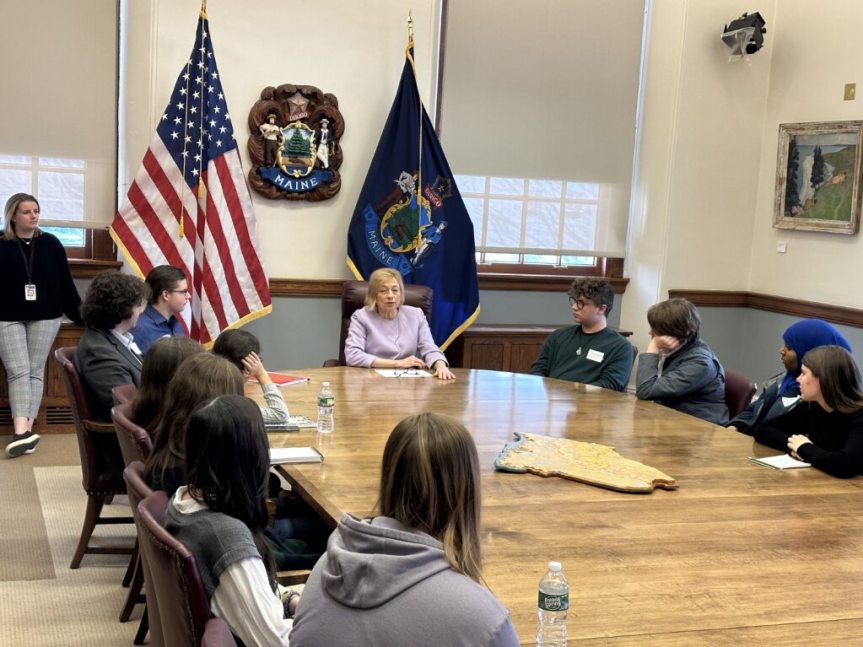
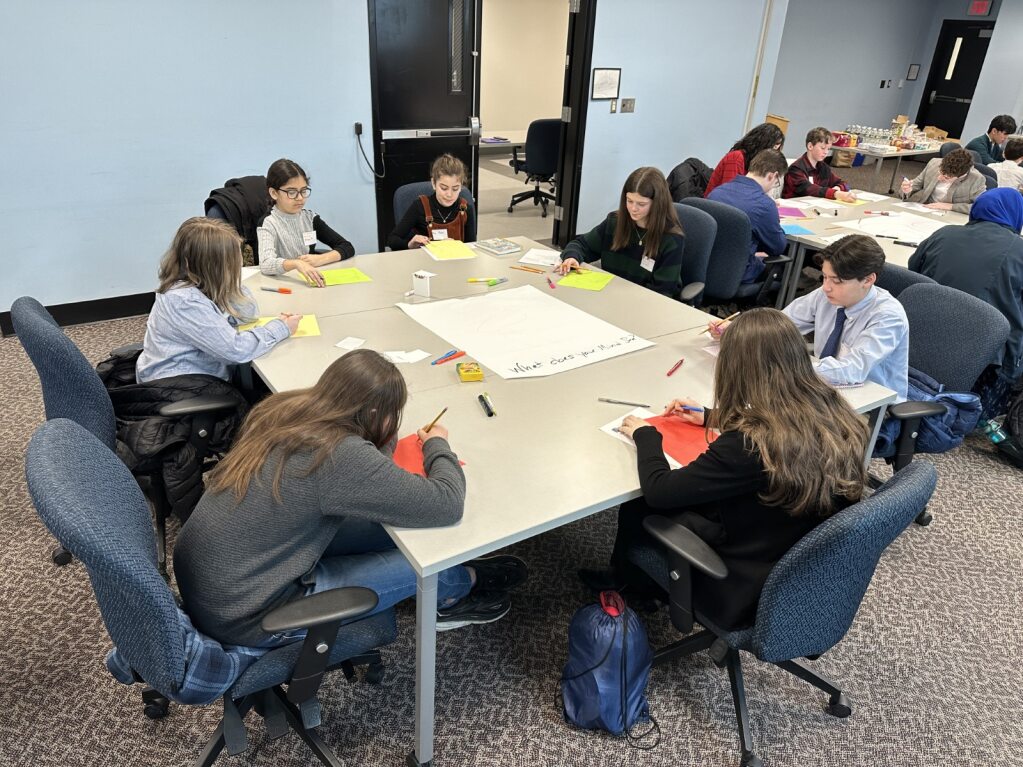 Throughout the day, students collaborated to outline their priorities for the upcoming 2023-2024 Cabinet session. Meilan Martine, a Cape Elizabeth High School student, advocated for increased diversity, emphasizing that “it’s important to show perspectives of different types of people to prepare students for the real world. “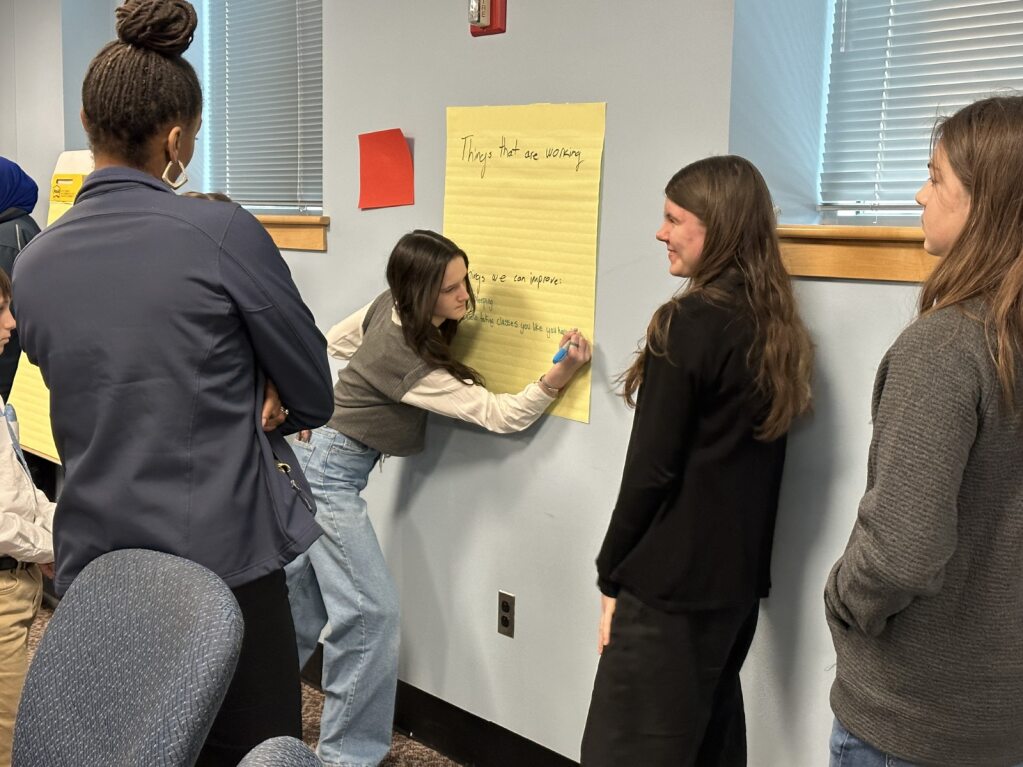
 Maine DOE Newsroom