Maine Adult Education Educator Julie Berube Honored with National Barbara Bush Fund for Family Literacy Grant

The Maine Department of Education (DOE) is proud to recognize Julie Berube, Coordinator of the First Teachers Family Literacy Program at Biddeford Adult Education, as a recipient of a $10,000 national grant from the newly established Barbara Bush Fund for Family Literacy, an initiative of the George and Barbara Bush Foundation.

Berube’s program was selected as one of only three grant recipients nationwide in the Fund’s inaugural year, alongside organizations in Washington, D.C., and Florida. Announced in November 2025, the Barbara Bush Fund for Family Literacy builds on First Lady Barbara Bush’s decades-long commitment to literacy by supporting proven, community-based family literacy programs and elevating effective practices across the country.

For Berube, the recognition was both unexpected and deeply meaningful.

“When I initially found out my program was selected for the $10,000 grant, I was shocked,” Berube shared. “Pam Cote, Senior Director for the Barbara Bush Fund for Family Literacy, called me one evening in October. I was working late and happened to be the one answering the phone. I truly thought she had been gathering information for a national directory.”

Berube noted that after nearly six months of conversations with the Foundation, she never imagined her program would be among the first funded.

“I am profoundly grateful and humbled to be among the first recipients recognized by the newly launched George and Barbara Bush Foundation. After 26 years coordinating the First Teachers Family Literacy Program, this recognition serves as a powerful affirmation of my enduring commitment to family literacy.”

Berube’s connection to Barbara Bush’s literacy legacy runs deep. Berube joined Biddeford Adult Education in 1999 as a Child Care Coordinator and was soon encouraged by then-Director Anita Kramer to step into the role of Family Literacy Coordinator.

“I was hesitant at first—it was a big endeavor,” Berube recalled. “But Anita believed in me, and that made all the difference.”

With Kramer’s support, Biddeford Adult Education applied for and received a Maine Family Literacy Initiative (MEFLI) grant—funded through the original Barbara Bush Foundation. The program was named First Teachers, reflecting Barbara Bush’s belief that parents are a child’s first and best teachers.

Biddeford became the only program in Maine at the time to receive two consecutive MEFLI grants, and Berube noted that Barbara Bush herself had a strong personal connection to the region, spending summers in nearby Kennebunkport.

When MEFLI funding ended, Berube was determined to keep the program alive.

“I ran a penny auction fundraiser for four years to keep First Teachers going,” she said. “I wrote letters to local businesses six months in advance, and we were fortunate to have interns from the University of New England. It took a lot of time and energy, but I wasn’t willing to let the program end.”

In 2009, family literacy funding was formalized and became a permanent part of the local school budget—a testament to the program’s impact, longevity, and strong outcomes.

“Receiving funding now from the George and Barbara Bush Foundation feels like a full-circle moment,” Berube shared. “I started this program with a Barbara Bush Foundation grant, and more than two decades later, I’ve received a grant from the newly launched Barbara Bush Fund for Family Literacy.”

The First Teachers Family Literacy Program empowers parents and caregivers to build their own literacy skills while learning alongside their children. By engaging families together, the program strengthens early literacy, builds confidence, and helps break cycles of low literacy across generations.

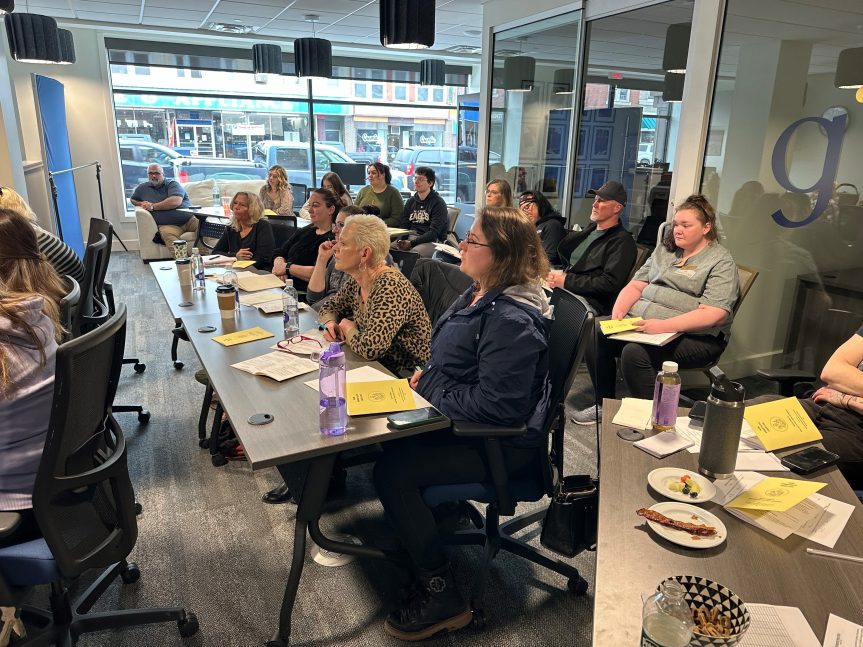
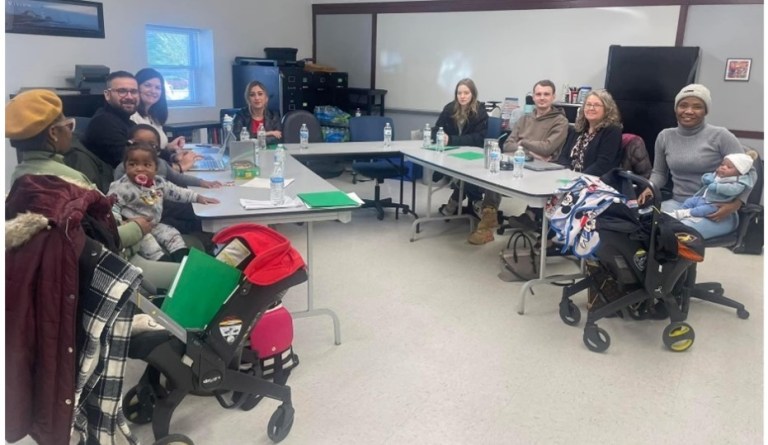
Families in Berube’s Creative Play Class are participating in an Intergenerational Literacy Activity (ILA).

David Durkee, Program Director at Biddeford Adult Education, emphasized the program’s importance within the broader adult education mission.

“Julie has strengthened our adult education program by engaging parents and children together, building foundational reading and language skills, and fostering lifelong learning,” Durkee said. “Her work benefits individual families and the broader community.”

Durkee described Biddeford Adult Education as a leader in accessible, high-quality adult education, offering flexible programming, workforce development, and strong community partnerships.

“Julie has expanded family literacy significantly through partnerships with organizations like Head Start and continually offers new learning opportunities for students and families,” Durkee added.

The new grant will allow Biddeford Adult Education to further its family literacy efforts.

“This funding will enable us to expand parent-child literacy events, increase early childhood reading activities, offer more parent education workshops, and strengthen partnerships,” Durkee said. “These funds will broaden the program’s reach and provide more families with the resources they need to build strong literacy foundations.”

The Barbara Bush Fund for Family Literacy aims not only to provide funding but also to serve as a national thought leader, amplifying effective programs that address one of the country’s most pressing educational challenges. By awarding this grant, the George and Barbara Bush Foundation is honoring Berube’s decades of dedication, while investing in a vision that spans generations.

The Maine DOE congratulates Julie Berube and Biddeford Adult Education on this well-deserved national recognition and applauds their leadership in adult education and family literacy in Maine.

This story was a collaboration between the Maine DOE and Biddeford Adult Education Program. To submit a good news story to the Maine DOE, please fill out the good news submission form.

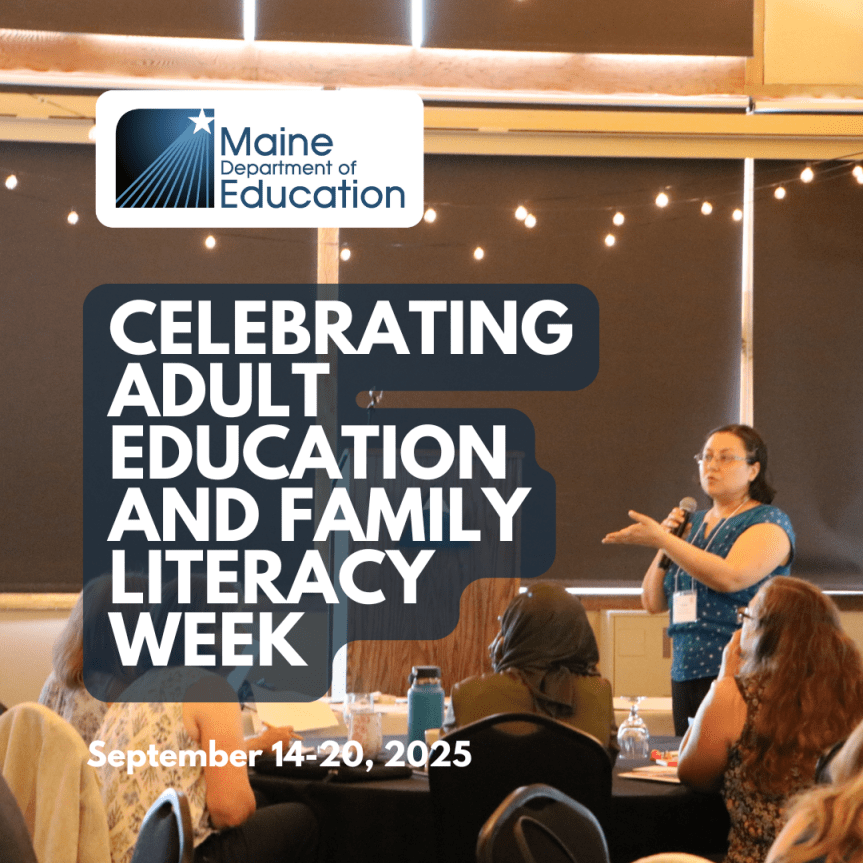
Celebrating Adult Education and Family Literacy Week from September 14-20, 2025

Governor Janet Mills has proclaimed September 14-20, 2025, as Adult Education and Family Literacy Week.

The proclamation states, in part: “Thousands of adults in Maine need assistance to qualify for better-paying and more fulfilling jobs, to achieve a post-secondary education, or to improve their English language skills.” It continues: “Success in these endeavors leads to these adults becoming more effective family members, citizens, and workers.”

You may read the Governor’s proclamation in full here.

Located statewide, more than 65 adult education programs are part of the public education system in Maine, assisting adult learners with their next educational and career steps. Last year, these programs helped 12,400 students to train for a career, earn their high school credentials, prepare for college, and learn English.

Below, please find additional information about the impact of Maine’s adult education programs.

Workforce

Maine Adult Education is helping to fill gaps in the workforce through collaborative and creative efforts with community partners and employers. From renewable energy and healthcare to commercial driving, adult education programs offer affordable workforce training that leads to certifications and credentials.

Last year, Maine’s adult education programs awarded 3,073 workforce certifications, credentials, and licenses in high-demand industries. Check out this example from Lincoln County’s CNA program.

Adult Basic Education

Maine’s adult education programs worked with more than 6,000 Adult Basic Education learners last year, helping them to strengthen their math, reading, digital, and English language skills—and ultimately preparing them for further job training and college.

HiSET – Maine’s High School Equivalency Test

Nearly 1,000 Maine adults earned their high school credentials through Maine Adult Education last year. Maine adults can earn their high school equivalency (HiSET®) or high school diploma for free through Maine Adult Education. Find a program near you to get started.

Read about the robust adult education programming happening in Presque Isle.

Maine College Career Access (MCCA)  

Adult education can help adults to get ready for college and career through advising, career exploration, college navigation, academic and digital skill building, and more. More than 1,500 adults have accessed Maine’s adult education programs to advance their career and college-ready skills through the Maine College and Career Access program.

Here is a feature about new partnerships and opportunities in Franklin County.

For more adult education resources, please visit the Maine Adult Education Association or the Maine Department of Education. You may also contact an Adult Education program near you.

Common Threads of Maine Partners with Westbrook Adult Ed Program to Expand Workforce Training

When Common Threads of Maine, a nonprofit school specializing in Maine’s textile industry, made the difficult decision to close recently, owner Dory Waxman reached out to the Westbrook Adult Education program to see if they would be interested in taking over their sewing classes as part of their workforce training program.

“We gave a very enthusiastic YES! to that question and they have since moved into Westbrook Regional Vocational Center (WRVC), which is where our adult education office is located,” explained Jen Mull-Brooks, Director of Westbrook Adult Education.

Common Threads of Maine sent several sewing machines of all kinds to support starting the sewing class and former owner Waxman continues to support the transition by mentoring Mull-Brooks through continuing relationships with existing financial support for the class.

In addition to this, Westbrook Adult Ed. received special permission to run the program during school hours to help break down childcare barriers since school-aged children will be in school. Students in the adult education sewing program will be learning alongside WRVC high school students after passing background checks to ensure it is an appropriate and safe fit.

Apphia Mpay
Apphia Mpay

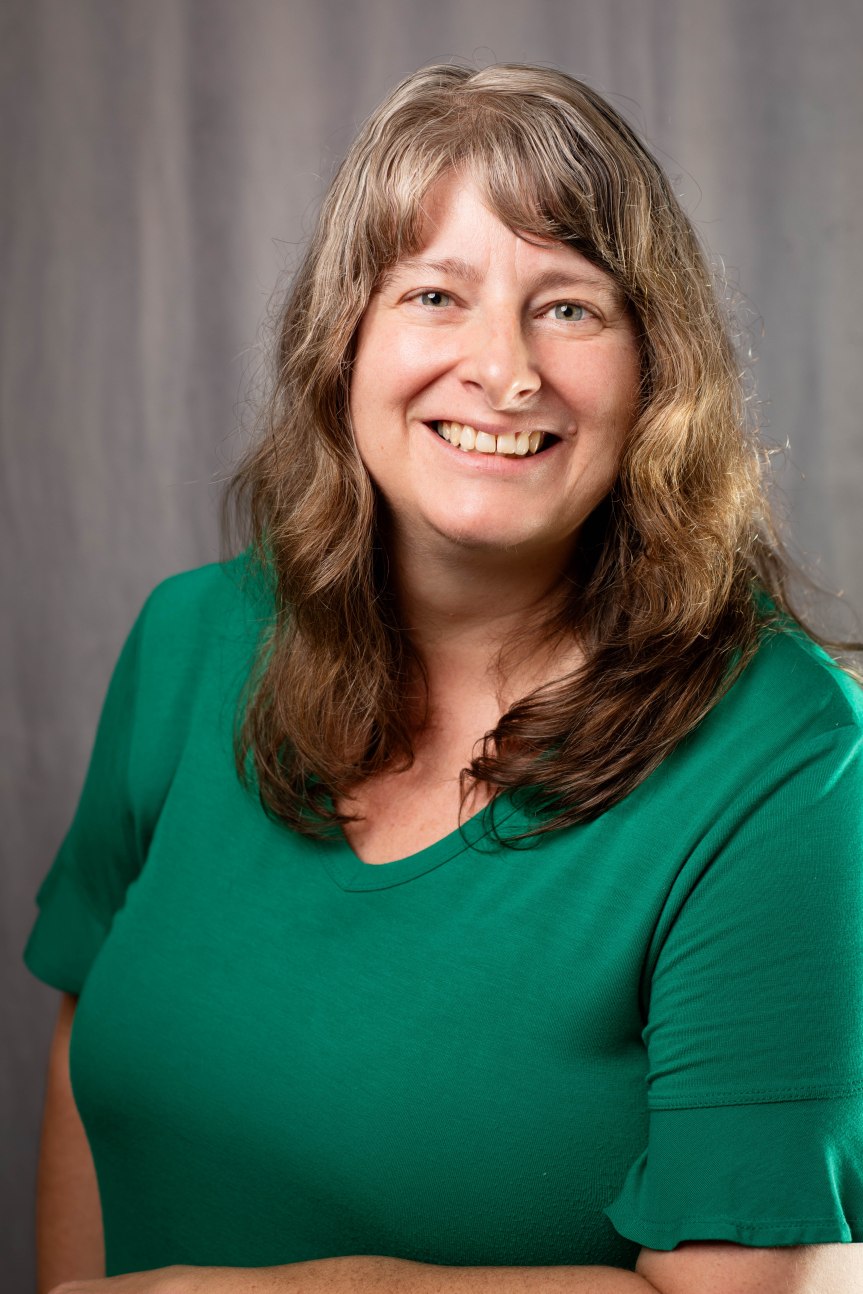
Waxman has introduced the Adult Ed team at Westbrook to Apphia Mpay who taught at Common Threads. Mpay is from the Democratic Republic of Congo and is a fashion designer, from a family of artists. Mpay talks about her love of training others and teaching them hand skills with kindness and patience in her biography on the Common Threads website.

“We have hired Apphia to continue teaching with us, as she comes with an incredible reputation for her teaching, stitching, and design skills. We’re so excited to have her as part of our team!” said Jen Mull-Brooks.

To learn more about the courses offered through Westbrook Adult Education, visit their website. Search the Maine Adult Education Class Search, or look for Adult education programs near you.

This story was submitted by Westbrook Adult Education Program. To share good news from your school, please fill out this form.

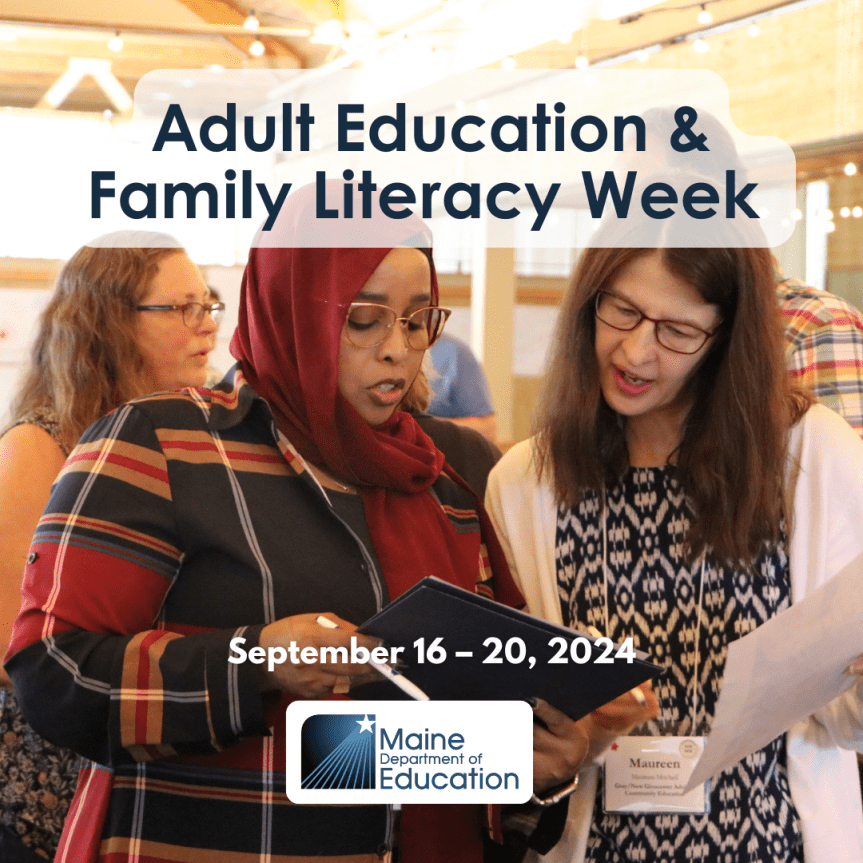
Celebrating Adult Education Family Literacy Week

Governor Mills has proclaimed September 16 – 20 as Adult Education and Family Literacy Week! Last year, Maine’s Adult Education programs helped over 12,900 students train for a career, earn their high school credentials, prepare for college, and learn English. Located statewide, over 65 adult education programs are part of the public education system and assist adult learners with their next educational and career steps.

Read more about the impact of Maine’s adult education programs:

Workforce

Maine Adult Education is helping fill the gaps in the workforce with collaborative and creative efforts with community partners and employers. From renewable energy and healthcare to commercial driving, adult education programs offer affordable workforce training that lead to certifications and credentials. Last year, Maine’s adult education programs awarded 2,600 certifications in high-demand industries. Read about Portland Adult Education’s Renewable Energy Program

English Language Acquisition

Maine’s adult education programs worked with over 6,000 multilingual learners last year, helping them strengthen their English skills, assisting them with training for jobs and college, and helping them prepare for US citizenship. Check out South Portland Adult Education’s Customer Service English Class

HiSET- Maine’s High School Equivalency Test

Did you know almost 1,000 Maine adults earned their high school credentials through Maine adult education last year? Maine adults can earn their high school equivalency (HiSET®) or high school diploma for free through adult education. Search the Maine Adult Education Class Search, or look for Adult education programs near you.

Maine College Career Access (MCCA)  

Did you know over 1,700 adults accessed Maine’s adult education programs to advance their career and college ready skills through the Maine College and Career Access program? Adult education can help adults get ready for college and career through advising, career exploration, college navigation, academic and digital skill building, and more. Learn about Lewiston’s Maine College Career Access Program.

To learn more about Adult Education programs in Maine, visit the Maine Department of Education website, or contact an Adult education program near you.

Third Annual Supporting Adult Multilingual Learners Institute Strengthens Adult Education Profession

This summer, the Maine Department of Education’s (DOE) Adult Education Team hosted its third annual Supporting Adult Multilingual Learners Institute at Sugarloaf Mountain. Adult Education teachers, curriculum designers, and administrators had the opportunity to learn from speakers, engage with different breakout sessions, and have meaningful discussions with their peers. Additionally, many fun activities, such as trail walks and yoga, were offered for participants to enjoy the nature of the Carrabassett Valley region.

Maine has become home to many refugees and asylum seekers. Over half of Maine’s Adult Education learners are multilingual and come from 115 different countries– five of the most enrolled are Somalia, Angola, D.R. Congo, Afghanistan, and Syria. The Supporting Adult Multilingual Learners Institute aims to prepare educators to best support those of other cultures and help them overcome teaching obstacles.

There were two group-wide workshops at the conference. In these workshops, talented speakers presented on themes regarding adult education, particularly as it relates to culture, and allowed for group-wide discussion. One workshop, Deepening Our Cultural Competence and Cultural Humility, was led by Suheir Alaskari (Associate Director of Student Employment Services at Colby College), and the other, Opportunities and Challenges of Cross-Cultural Communication with Adults, was led by Abbie Yamamoto (Director of Portland Adult Education).

The workshops aimed to educate professionals on issues that can present barriers for multilingual and multicultural learners. One important theme was the consciousness of social cues and language uses. Idioms and pop culture references are examples of high-context culture, as they feel natural to U.S.-born citizens, but can be highly confusing to outsiders. Not only is high-context culture confusing, but it also creates a barrier of exclusion. Conversely, low-context culture creates an inclusive space where people of varying backgrounds can learn from each other and bond. Another imperative theme was how taking the time to learn and understand the culture of adult students creates a more-relevant learning environment for them and validates their cultural identities.

A man and a woman sit at a table. The man is speaking, illustrating his point with a hand held in the air.
Educators had a chance to connect and share stories from the field.

Educators should also reflect on their own American culture and use it to find common ground with their students’ cultures to help connect further with them. Mike Emery (Director of Lake Region and Fryeburg Area Adult Education) remarks: “One of the things that has been really great in the past couple of years is we’ve shifted the focus from just being on instruction to a broader purpose. For someone who’s a director or doing other aspects of programming, it’s been really helpful to think about how to start new workforce partnerships in programs like that. There are some things around credentialing that are very different working with a foreign-born professional as someone born and raised in the US.” Focusing on consciousness and supporting students will not only enhance adult students’ learning but will also help them feel more accepted in America.

Some participants also led breakout sessions. There were four breakout sessions total and educators had six options to choose from per session. Some breakout topics included: Using EnGen for IET, Stuff I Wish My Teacher Knew, Using Data to Inform Multilingual Programming, The Immigrant Identity in the Classroom and Beyond, and Fostering Diversity in the Workforce: Building Partnerships and Pathways for Multilingual Learners, Paradigms of Belonging. Breakout sessions allowed for participants to focus on themes of interest and engage in more intimate discussions.

Educators appreciated having new frameworks to work within and gaining new skills in cultural competency. Many Adult Educators remark that their favorite part of their job is getting to see their students succeed: “It’s a bonus when you have students coming to you every day saying ‘Teacher, thank you so much. I learned so much today; this is incredible.’ They’re so appreciative, it’s amazing.” Remarks Melanie North (Teacher at Lewiston Adult Education and part of the Supporting Adult Multilingual Learners Institute planning committee). As influxes of migrants continue to increase, it is imperative that educators are equipped to best teach and support them.

Joy and enthusiasm were in the air at Sugarloaf, and educators hope to keep the annual institute running and improving for many more years to come. “I really have seen that this institute over the past three years has grown and continues to grow. You can feel it in the field. I’ve worked in multiple programs in Kennebec County and I feel that because of this institute and the push to have culturally relevant professional development we’re seeing culturally-relevant adult education programs.” stated Tekia Cox (Academic Program Coordinator at Mid-Maine Regional Adult Community Education).


Ignite PI and SAD 1 Adult & Community Education Partnership Provides Free Hospitality Training in Northern Maine

This spring, the Maine Department of Education (DOE) awarded a $400,000 Strengthening Maine’s Workforce Grant to Ignite Presque Isle and SAD 1 Adult & Community Education’s workforce development partnership.

The Maine DOE awarded a total of $4 million in Strengthening Maine’s Workforce Grants between 2022 and 2023. These initiatives are funded through Governor Mills’ Maine Jobs & Recovery Plan.

Ignite PI is an organization committed to innovation and excellence in the Presque Isle area. Through dedicated training and professional development programs, Ignite PI strives to enhance the standards of the hospitality industry and create meaningful career opportunities for individuals in the area. SAD 1 Adult & Community Education provides comprehensive educational programs, ranging from basic education to vocational training, designed for adult students. Together, the two organizations have created a workforce development partnership that provides free hospitality training for workers.

The Strengthening Maine’s Workforce Grant has been imperative to the program’s success. Since the organization’s start in 2022, it has provided more than 4,686 hours of training for Ignite PI employees and 240 hours for non-employees. 135 workers total (94 Ignite PI employees and 41 non-employees) have undergone comprehensive hospitality training. 19 distinct training programs were designed to elevate the skillset of hospitality workers for 15 different local businesses. Not only have job opportunities increased, but the standard of service at multiple establishments has improved due to this training.

“We are thrilled with the progress and positive outcomes of this partnership,” said LeRae Kinney, CEO of Ignite PI. “The training programs have not only improved the capabilities of our employees at Ignite PI but have also contributed significantly to the broader community. This grant has allowed us to offer high-quality education and training free of charge, which is a tremendous asset.”

This program has been incredibly beneficial for businesses in the Presque Isle region. The supervisor of Dean’s Motor Lodge (whose staff attended the B.A.S.I.C.S training) remarked that “the training that my staff received was incredible! By having the opportunity to have face to face conversations and bringing up case scenarios, they were able to better understand the laws.”

The supervisor of Parkhurst Siding Pub (whose staff attended both B.A.S.I.C.S training and ServSafe noted that “It’s certainly nice to be able to hold trainings and elevate our workforce’s knowledge and marketability. These are skills they will keep with them their whole lives. A lot of these are public safety issues at their core so the whole community benefits as well.”

The Strengthening Maine’s Workforce Grant was originally set to end in June 2024; however, it has now been extended to June 2025 due to its success. Ignite PI, SAD 1 Adult & Community Education, and the Maine Department of Education hope that this extension allows for continued support and expansion of hospitality training programs and access to all who want to enhance their skills. The prolonged grand and positive feedback from business owners highlights the region’s ongoing need for skilled hospitality workers.

“The collaboration between Ignite PI and SAD 1 Adult & Community Education demonstrates the power of community partnerships in addressing workforce development needs,” remarked Shara Page, director of SAD 1 Adult & Community Education. “We are excited to continue this journey and look forward to training even more individuals in the coming year.”

To learn more about Ignite PI, SAD 1 Adult & Community Education, and hospitality training programs, please get in touch with LeRae Kinney lkinney@ignitepi.com or Shara Page pages@sad1.org.

DOE’s What Holds Us Together Podcast Highlights Adult Education

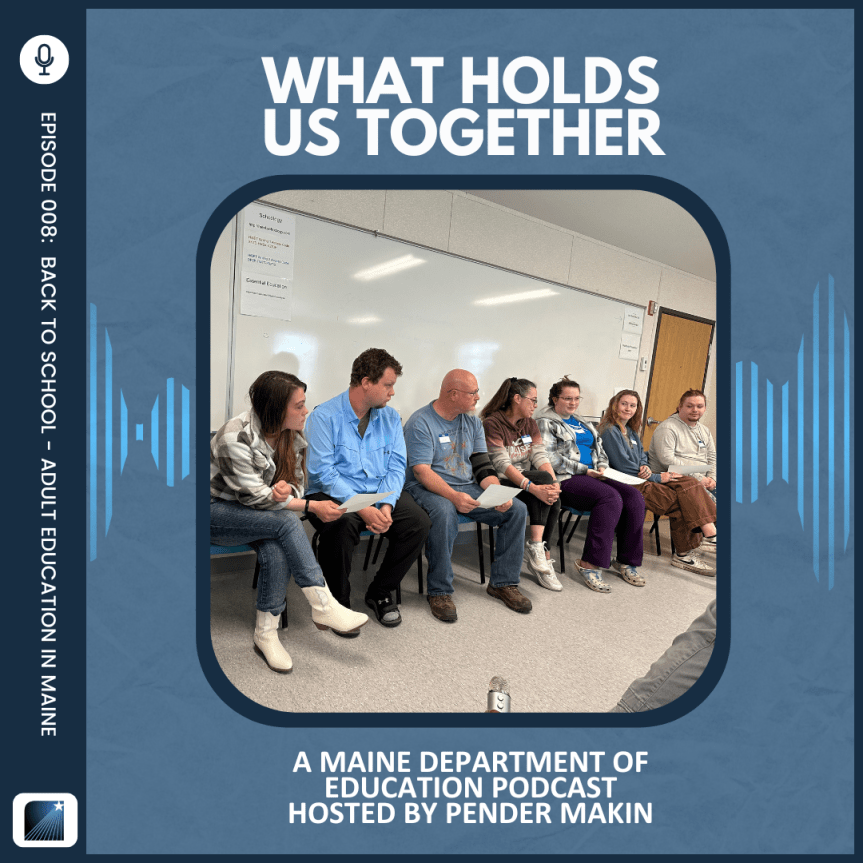
Adult education programs offer opportunity, connection, and empowerment to students from all ages and backgrounds. Commissioner Makin recently met with students and instructors from Franklin County Adult Education. This month’s episode of the What Holds Us Together podcast highlights a panel discussion with students from that visit, ranging from those looking to adult education for high school completion programs to those learning the skills they need to open businesses or switch careers. They share life-changing experiences and showcase the ways that adult education is another powerful example of how public education holds us together.

Please note that the audio is distorted in certain parts of the podcast due to the recording environment, but we wanted to bring you these stories directly from the adult education students.

Listen on Apple and Spotify.

KVCC College and Career Success Coordinator Eases the Transition from Adult Education to College

What do you get when you combine adult education students, a tour of Kennebec Valley Community College (KVCC), and a variety of delicious pies? The answer is Brighter Futures!

A successful, immersive event occurred earlier this spring when 18 students from four local adult education programs spent two hours on the KVCC campus. In addition to touring the campus, students met the dean of students, key student success support staff, and a Maine Educational Opportunity Center advisor. After the tour, they enjoyed pie and ended the day with a fun activity led by a faculty member. The event was so successful that there are plans to offer it at least once a year.

Carolyn Haskell, the College and Career Success Coordinator (CCSC) at KVCC, a position funded through the Maine Jobs and Recovery Plan, played an integral part in planning the event and worked closely with Teresa Smith, KVCC Director of Enrollment, to make it a success. Area adult education directors and staff marketed the event and accompanied students to the campus.

Part of Haskell’s role is to be the on campus contact for adult education students interested in attending KVCC. Haskell is a resource for students navigating the college process and adult education. Being on campus gives her a unique perspective and informs how she advises students. She helps ease the transition from adult education to college and supports students along their college journey to help them succeed. She also connects current KVCC students to adult education for services to help them while they are in college.

Haskell has seen the power of getting adult learners to college campuses and believes that allowing them to see themselves as college students is monumental. She said, “Once they tour the campus, it is much easier for them to think of college as a goal to be accomplished rather than a dream.”

This story was submitted by Kennebec Valley Community College (KVCC). To submit good news about your school to the Maine Department of Education, complete our Good News Submission form.

How Karen Morin is Helping Career Navigation in Kennebec County

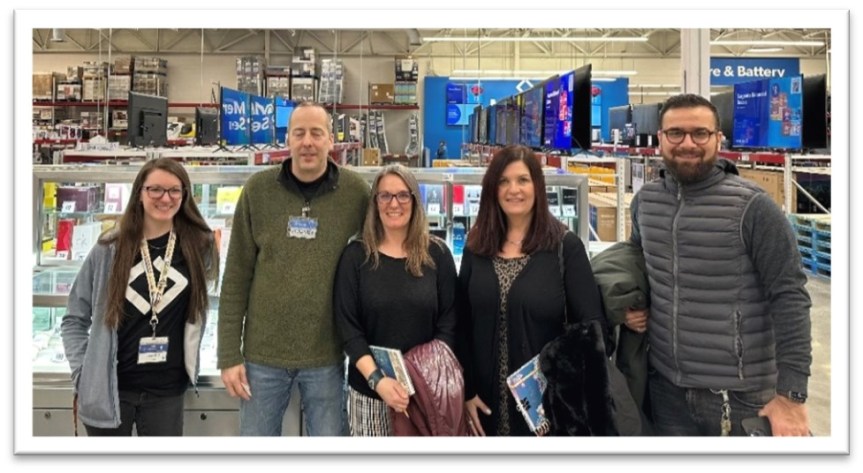
(Pictured: Karen and Adult Education colleagues work with Sam’s Club to develop a workforce program.)

Karen Morin, a long-time resident of Kennebec County, has worked in crisis services, corrections, and risk reduction for the military. For a little over a year now, she’s been a Career Advancement and Navigation Specialist employed by the Adult Ed hub in Kennebec County. She is one of four “Career Navigators” funded by the Maine Jobs Recovery Plan (MJRP).

MJRP has committed $6 million to Adult Education in Maine to address the workforce development needs of those disproportionately impacted by COVID-19. The Maine DOE Adult Education Team has been helping eligible adults and employment sectors recover from the pandemic’s stresses through various academic and job training supports, including Career Advancement Navigator Specialists.

In Karen’s first year as a Career Navigator, she has worked with more than 220 people in Kennebec County to help them move forward in their careers, whatever that may be. Her clients are getting employed, participating in workforce training, improving their resumes and interviewing skills, acquiring English language skills, transitioning fields, and more. She’s worked with local unemployed and underemployed people, new Mainers, people coming out of the criminal justice system, and unhoused individuals, among others. She also works with employers and supports them in their hiring needs.

In this photo, Morin and colleagues prepare learners for the process of applying and working at Maine General in their Strengthening Maine Workforce program that provides English classes onsite at Maine General as a part of the employee’s work day as well as opportunities for advancement.

“Take the time to listen to someone’s story—you can learn a lot about someone from a short conversation. Often, if you can’t make a connection with someone in the first ten minutes, you’ve lost them,” said Morin.

She also shared that “talking with people and businesses together reduces the hiring process time between the application and the hiring.”

She provides a direct connection to individuals looking for work and businesses looking for employees. Karen meets people where they are in their career journey through her low barrier and personalized services, including meeting up with them at a convenient location. Though she’s based in multiple local Adult Education programs (Mid Maine Adult Education, Augusta Adult Education, and Winthrop Adult Education), she meets people virtually, at various community agencies or businesses, at the shelter, or even for support at interviews.

She posts on the website What’s Up Waterville, walks into businesses to see what their hiring needs are, and follows job postings on the chamber’s website to make qualified candidates more aware of opportunities. COVID-19 exacerbated problems in Maine that have long existed: transportation barriers, childcare availability and affordability, and housing. Having community-embedded, low-barrier services is deeply necessary. Also of great importance is the collaboration of agencies. Karen collaborates with critical partner agencies and organizations such as CareerCenter, Jewish Community Alliance, Catholic Charities, Capitol Area New Mainers Project, and the local Chambers of Commerce.

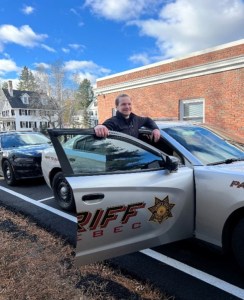
In this photo a new Mainer participates in a ride along and information interview with local law enforcement.

There are currently only three other Career Navigators in this role in Maine. Karen’s colleagues include Kate Points, who serves York County; Frank Spurr, in Androscoggin and Oxford Counties; and Cassie Robichaux, who serves multiple counties, including Sagadahoc, Lincoln, Knox, and Waldo Counties.

At a listening session for the sustainability of these positions, one community member said, “There should be a Career Navigator in each county in Maine.” Collectively they’ve connected with over 1101 people in their communities. However, funding is currently provided by the Maine Jobs Recovery Program, and the future of this program is uncertain.

Two Request for Proposals Now Open for Workforce Innovation and Opportunity Act (WIOA) Grant Funding

The Maine Department of Education (DOE) is pleased to announce the release of two requests for proposals (RFP) as required by the Workforce Innovation and Opportunity Act (WIOA), to award multi-year funding to eligible agencies for the provision of WIOA Title II Adult Education and Family Literacy Act (AEFLA) 231 services and the provision of WIOA Title II Adult Education and Family Literacy Act (AEFLA) Section 243, Integrated English Literacy and Civics Education/Integrated Education and Training (IELCE).

It is the purpose of Maine Adult Education under WIOA to provide adult education and literacy services that align with the goals in the State of Maine Unified Plan and encourage the growth of educational opportunities and, where applicable, to ensure career, citizenship, and college readiness for all Maine adults (Maine Education and School Statutes 20-A, 8601).

Signed into law in 2014, the Workforce Innovation and Opportunity Act (WIOA) requires the alignment of workforce, education, and economic development systems to support access to high-quality, comprehensive, and accessible workforce services for all individuals, including those with significant barriers to employment. Title II of WIOA retains and expands the purposes of the Adult Education and Family Literacy Act (AEFLA), which aims to help adults, including immigrants, acquire the skills and knowledge necessary to obtain employment, become full partners in the educational development of their children, improve economic opportunities for their family, and aid in the transition to postsecondary education and training.

The request for proposal (RFP), which includes information regarding eligibility, program requirements, and more, is available here.

Below is the anticipated timeline for the Department’s current AEFLA grant competitions:

Timeline AEFLA 231
(Link to RFP here: 202312252)
AEFLA 243 (IELCE)
(Link to RPF here: 202401001)
RFP Released to Public January 23, 2024 January 17,2024
Bidders Conference February 5, 2024 n/a
Deadline for Submission of Questions in Response to RFP February 9, 2024 January 25, 2024
Proposal Deadline March 7, 2024 February 29, 2024
Grant Award Notifications May 2024 May 2024
Grant Award Start Date July 2024 July 2024

Please be advised that the dates above are subject to change. Interested organizations must consult the RFP document for the most accurate dates and deadlines regarding this opportunity.

For more information on AEFLA 231 and 243 , contact State Adult Education Director Megan Dichter at megan.dichter@maine.gov.