Hands-on learning is making a comeback in the form of a dynamic exploratory program for students in grades 9 and 10 at Central High School in Corinth. This initiative, made possible through significant renovations at the school, brings back the shop class experience to help younger high schoolers explore this kind of learning.
United Technologies Center (UTC), a Career and Technical Education (CTE) school in the Bangor region, has funded a complete renovation of the Central High School’s shop space, featuring refinished floors, new lighting, and fresh paint. The updated facility is now fully equipped with modern tools and resources, including small engines, horticultural equipment, cabinetry, 3D printers, Glowforge 3D laser printers, and more.
“These upgrades aim to give students a taste of what their future experiences at UTC could entail, as they continue their educational journeys into their junior and senior years,” UTC Director Amanda Peterson said.
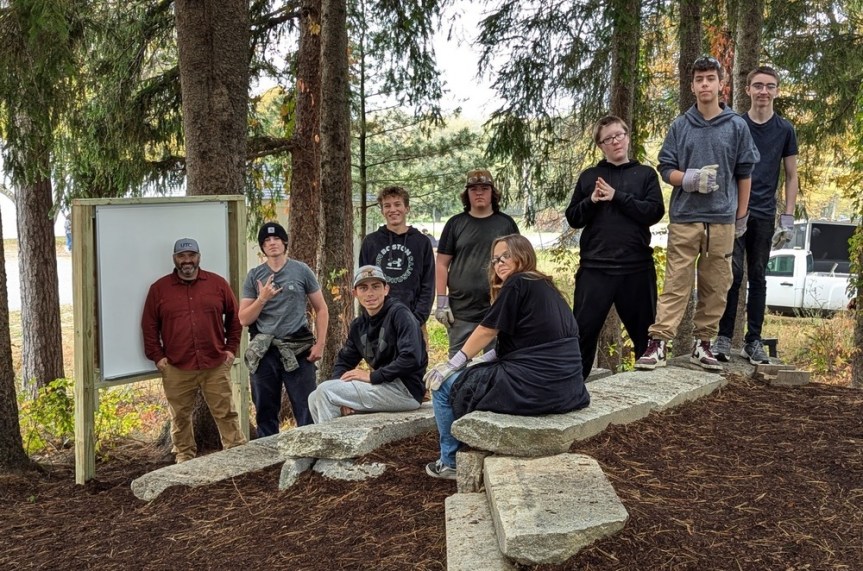
A new instructor, Mr. Doug Depew, is leading the program at Central High School. Under Depew’s guidance, students have already achieved impressive results, like transforming a nearby forest area into a new outdoor learning space with granite blocks that were left unused for years. Their efforts have resulted in a unique area for classes and hands-on activities.
The Central High School program has also provided opportunities for students to be involved in practical projects, like installing French drains to redirect rainwater away from the shop entrances. Students have also helped with trench excavation, installing grates and pipes to ensure proper drainage.
“It’s going incredibly well, and the work these students have completed thus far is exciting,” Peterson said.
This partnership has also rejuvenated the shop program at UTC, creating a wealth of new opportunities for students at both schools.
As the colder months approach, Mr. Depew has many more plans in store, with much of the activity shifting indoors.
“Congratulations to Mr. Depew and his hardworking students!” Peterson said. “Together, we look forward to seeing what comes next.”
Information for this story was provided by the United Technologies Center (UTC). To share good news from your school, please fill out the Maine DOE good news submission form.
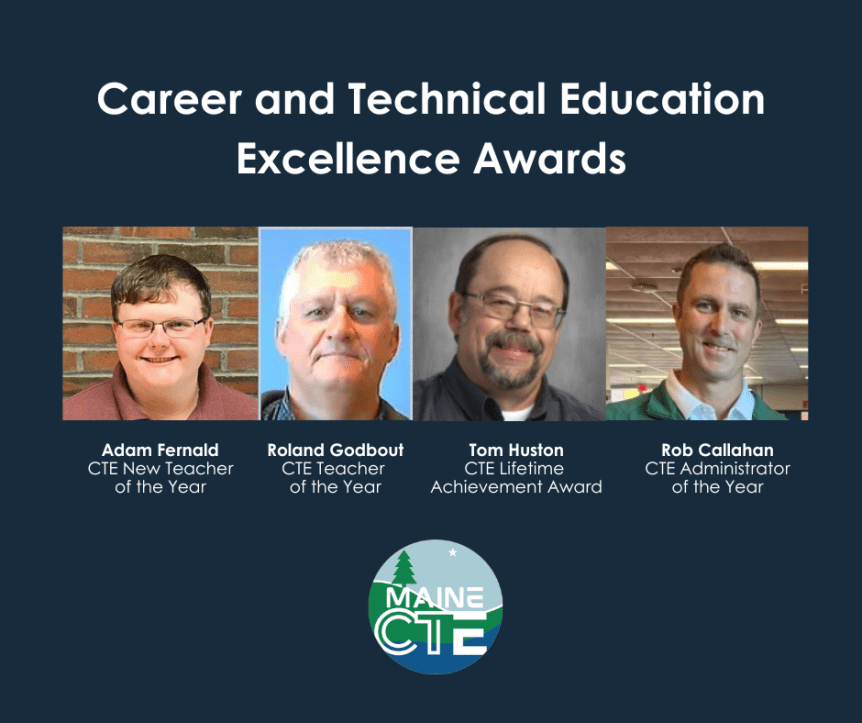
The CTE Excellence Awards recognize outstanding work and dedication in career and technical education in Maine. Awardees are selected for their exceptional contributions to the success of CTE through high-quality work, dedication to their students and their craft, and involvement within the CTE community.
CTE New Teacher of the Year
Adam Fernald
Waldo County Technical Center
Employability Skills Program and STRIVE Program Instructor
Adam Fernald’s commitment to fostering a dynamic and engaging learning environment has not gone unnoticed. Since joining Waldo County Technical Center, Fernald has demonstrated an unwavering passion for the program and a genuine care for student success. His ability to integrate real-world applications with academic concepts has enhanced students’ educational experiences and inspired them to pursue their goals confidently and enthusiastically.
The impact Fernald has made in such a short period of time is truly remarkable. His colleagues speak highly of his collaborative spirit, willingness to share best practices, and proactive professional development approach. Fernald’s impressive ability to adapt and thrive, continuously seeking new ways to improve and innovate, is a testament to his dedication and growth mindset.
“He was one of the best teachers I have ever had,” said one of Fernald’s students. “He is kind and respectful and would help anyone if needed. I will carry what I learned in this class for the rest of my schooling and adulthood. I feel he will help this class and many others.”
CTE Teacher of the Year
Roland Godbout
Oxford Hills Technical School (Region 11)
Law Enforcement Instructor
Roland Godbout joined Oxford Hills Technical School (OHTS) in November of 2021 to become a Law Enforcement instructor. As a retiree of the Lewiston Police Department, with nearly 30 years of service, Godbout stepped into a struggling program at OHTS, which had two instructors in fewer than two years. Further complicating Roland’s transition into teaching was the hybrid instruction model used at OHTS during the COVID-19 pandemic. Nevertheless, Godbout set to work, taking classes to earn his teaching certification. Before long, he had utilized the experienced staff at OHTS and his wealth of contacts in law enforcement to rebuild the program. During the 2022-2023 school year, students returned to full in-person instruction, and there was an uptick in student enrollment in the OHTS Law Enforcement program.
Moving into the next school year, student enrollment continued to expand, as students heard about the engaging activities available in the OHTS Law Enforcement classes. Students in the program were exposed to a multitude of experiences beyond the classroom, such as drills and practice scenarios with local police officers, visits to federal border patrol offices in Rangeley, opportunities to attend the Maine Police Academy graduation ceremonies, and interactive sessions with the law enforcement students and instructors at Central Maine Community College. Godbout also facilitated countless community service projects, ranging from traffic control to youth outreach.
CTE Lifetime Achievement Award
Tom Huston
Caribou Technology Center
Commercial Driver’s License (CDL) Instructor
As a state finalist for a past Career and Technical Education Teacher of the Year award, Tom Huston is among the best when it comes to excellence in CTE instruction. The Maine Department of Motor Vehicles has also commended his program for its exemplary standards, highlighting Huston’s effectiveness and dedication.
Few educators have made as profound an impact as Huston has over his 25 years in career and technical education. His career, marked by unparalleled dedication, innovation, and compassion, is a testament to the transformative power of teaching.
Tom’s CDL class has been a haven for students written off by traditional educational systems.
“Many of these students, facing expulsion or legal troubles, have found in [Tom Huston] a mentor who not only educates but also inspires,” said a spokesperson from Caribou Technology Center. “Through his guidance, students develop a thirst for knowledge and a renewed sense of purpose. Tom’s teaching goes beyond merely imparting technical skills; he equips his students with the confidence and motivation to succeed in life. His record speaks for itself—every student who has taken his course has successfully passed the State commercial driving test, a testament to his exceptional teaching abilities.”
CTE Administrator of the Year
Rob Callahan
Lewiston Regional Technology Center
CTE Director
Rob Callahan’s staff at Lewiston Regional Technical Center nominated him for the CTE Administrator of the Year Award—and did so with much excitement. They believe Rob is deserving of this recognition and were eager to help provide information and personal stories for the nomination. Thatquick response is a testament to Callahan’s leadership abilities and, more importantly, his leadership style, which is a direct result of the quality person that he is.
According to a former assistant director of the school, Callahan has a style of “servant leadership”, which means that as a leader, he always pitches in when something needs to be done; no job or person is beneath him; and he leads with compassion, character, and competence.
Callahan’s dedication to excellence, his ability to inspire and motivate students and staff, and his relentless pursuit of innovation have set a high standard for CTE leadership. His contributions have elevated his institution and had a profound impact on the broader educational community in Maine.
Rob Callahan has served as CTE Director at Lewiston Regional Technical Center for 17 years, during which he has significantly transformed the school’s CTE programs. His forward-thinking approach and dedication to student success have resulted in remarkable achievements.
Callahan is a passionate advocate for CTE at both the state and national levels. He has actively participated in policy discussions, contributed to educational forums, and shared best practices with fellow educators. His leadership has influenced positive changes in CTE policies and funding, benefiting students and educators across the state.
On Wednesday, Sept. 11, 2024, students in the Caribou Technology Center’s Criminal Justice program collaborated with the Caribou Fire Department to hold a 9/11 Memorial Stair Climb at the Caribou Community School.
The event began with an opening ceremony held outside by a tapestry of ladder trucks, American flags, and antique fire trucks. Among the crowd of community members and school district staff were first responders in full dress uniform, federal agents wearing ballistic vests, and students dressed in turnout gear. Special guests included Caribou Community School teacher Rodney Deschaine, who conducted the opening blessing; Civil Air Patrol for the Presentation of Colors, AJ Mierzwa, who sang the national anthem; Chief Brian Lajoie of the Caribou Fire Department, who made opening remarks; Boy Scout Troop 184, who did the flag-folding presentation; and community member Tammy Soucy, who played taps.
After the ceremony, the crowd moved inside the school, where the sound of recorded air traffic control transmissions played in the hallways, decorated with pictures from that horrifying day. The main staircase, covered in glowing lights, represented the climb that 9/11 first responders had to make to get to the top of the World Trade Center towers. On Wednesday, each Caribou participant clung to tags with the names of fallen heroes, as they began their trek up and down the staircase for the equivalent of 110 flights.
“Emotions were bittersweet, as we witnessed children, first responders, students, teachers, parents, and community members pay their tribute by climbing this staircase,” said Caribou Technology Center’s Criminal Justice program instructor Amanda Baker.
Criminal Justice students knew climbers would need help counting, so they created a system. At the base of the stairs was a table with a pool of rocks. Every time a climber completed five flights of stairs, they would take a rock. Once they earned 11 rocks, they knew their climb was complete.
Those who attended the ceremony recognized this event would not have been possible without the many hours of work the Caribou Technology Center’s Criminal Justice students dedicated to this class project.
“As their teacher, I’m so incredibly proud of their focus on details and the pride they demonstrated in the end product,” said Baker. “They were professional as individuals and worked together as a team to make sure everything went as planned. I look forward to watching them thrive this school year.”
Caribou Technology Center provided information for this story. Complete the Maine DOE Good News submission form to submit good news from your school.
St. George Municipal School Unit (MSU) Superintendent, Mike Felton, applied for a production grant through an organization called CareerViewXR last year. After an application and interview process, the PK-8 school was selected as one of three winning schools from across the United States. The prizes awarded to the school included one 12-month subscription to the CareerViewXR platform, two HTC VIVE virtual reality headsets, and two field trips produced in their region.
CareerViewXR works with students, educators, businesses, and state agencies to develop immersive virtual reality experiences that allow students to explore careers across sectors – especially in the trades and technical fields. Using footage of real professionals doing real work in real world work environments, they create interactive, web-based field trips that can be accessed by any device as well as virtual reality videos for VR headsets.
The two companies that will be featured in the virtual field trips in Maine are Steel-Pro, in Rockland and Cushman Lobster Corporation in Port Clyde. Through the grant prize, St. George MSU students will also have access to virtual field trips in other locations across the United States.
Felton shared that he felt fortunate for the opportunity to be working with CareerViewXR and that he is looking forward to “working together to find new ways to innovate, engage students, and support our local businesses.”
The collaboration aligns with St. George MSU’s Career & Technical Education (CTE)/ Makerspace Project – a partnership with MidCoast School of Technology to develop a PreK-12 CTE Program and construct a CTE/Makerspace Building next to St. George School. The new building will have a shop space for carpentry, metalworking, and boatbuilding as well as a Makerspace with 3D printers, laser cutters, CNC routers, robotics, and sewing machines. The goal for the project is to provide a model for transforming education by ensuring all students, PreK-12, have access to hands-on and minds-on, technical learning connected to career and community.
Through Steel-Pro, students will be immersed in the manufacturing of stainless-steel tanks, biopharmaceutical equipment, vacuum chambers and other custom designed equipment. “Steel-Pro being 100% Employee Owned, we’re all about our employees and that includes our future employees,” stated Steve Ladd, Steel-Pro President and CEO. “Collaborating with St George MSU, giving kids exposure to hands-on technical career opportunities has been an awesome experience. We are thankful to St George for letting us take part in their CTE journey.”
Aboard the Fishing Vessel RYLEEFINN with Michael Cushman and Cassie Clough, students be able to experience what it’s like rising before dawn to spend the day hauling lobster traps in Penobscot Bay. “We are very happy to be helping with this project,” shared Cassie Clough.
“Our hope in being involved from the fishing side is to show that even with all of the challenges this industry is facing (over regulations, offshore wind, etc.), it can still be a career worth pursuing. Our coastal communities in Maine rely heavily on what lobstering brings economically to the area and it is still a very important part of Maine’s identity.”
St. George Students
Dakota Student VR Headset
The CareerViewXR Production grant will allow St George MSU to enhance students’ learning experiences and career exploration opportunities.
“Through the use of VR immersive experiences, CareerViewXR will provide a new, innovative way to engage students in learning connected to career and community,” explained Superintendent Felton. “Working alongside local tradespeople and businesses, while utilizing cutting edge technologies, we’ll move toward our goals of re-engaging students in learning, helping them understand career opportunities in their community, and, ultimately, strengthening our local economy.”
This story was submitted by St. George Municipal School Unit. To share good news from your school, please fill out this form.
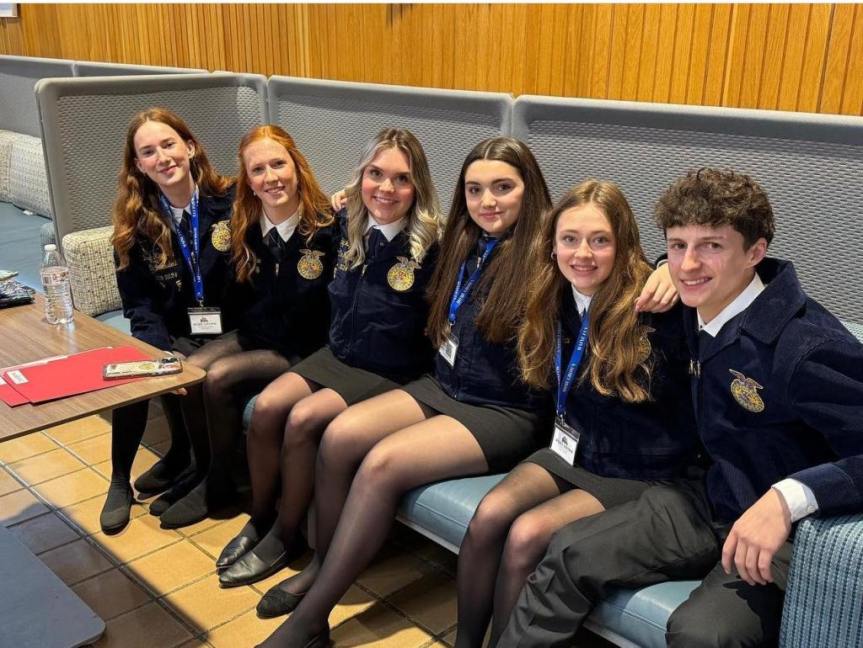
The Maine FFA state officer team traveled to Washington, DC, for the 2024 State Officer Summit this summer. The Summit is a five-day training event during which hundreds of students representing all 50 states, the US Virgin Islands, and Puerto Rico engage in conversations about leadership, agriculture, and advocacy. This experience prepares the state officer team and the Maine FFA Association for a successful year.
While in Washington, D.C., students strengthened their understanding of federal policies related to agriculture, connected with agricultural leaders, and served as delegates for upcoming FFA Committee work. After building their knowledge, the officers met with Senator King and staff from Congresswoman Pingree and Representative Golden’s offices.
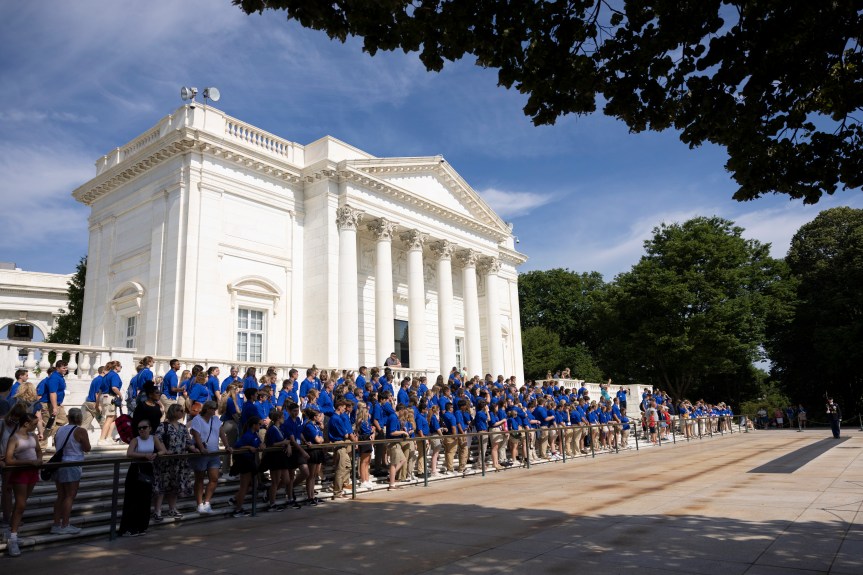
Outside of training, students learned more about American history and took advantage of all that the nation’s capital has to offer. Julia Pierce, a 2024-2025 State Officer, shared, “State Officer Summit was a great experience. It provided many opportunities for the officers to work on advocacy in the FFA. Some of the activities we got to take part in included a night tour of all of the Monuments, visiting the Holocaust Museum, and one of our favorites- touring Arlington National Cemetery.”
As the team reflected on their experience, many reiterated the importance of connection to their peers. Julia added, “We had the privilege to talk to officers from all over the US and see how different FFA can be in other places. We were able to make lots of new friendships and learn new skills that we hope to use in the future.”
During the State Summit, two of Maine’s officers were assigned Committee roles as part of the delegate body at this year’s National Convention. One of Maine’s delegates, Lane Carmichael described his experience: “State Summit was an opportunity to expand our horizons as state officers. We were able to step up and realize that although Maine may be smaller than others in membership, we can still have the same impact on National FFA.”
The Maine FFA was able to send all six current state officers to Washington, DC, this year thanks to the generous support of local sponsors, Maine Agriculture In the Classroom, and the National FFA Organization.
The Maine FFA is a student-led organization focused on premier leadership, personal growth, and career success. State Officers represent the Maine FFA throughout the 2024-2025 school year and work closely with local FFA chapters. For more information about the Maine FFA Association, please visit https://www.maine.gov/doe/learning/ffa or contact Emily Doughty, State FFA Liaison, at emily.doughty@maine.gov.
Written By: Lane Carmichael, 2024-2025 Maine FFA Vice President
On Thursday, May 9 and Friday, May 10, FFA chapters from around the state all came together for the 94th annual Maine FFA State Convention. Caribou, Presque Isle, Mars Hill, Easton, Ashland, Fryeburg Academy, and Bangor United Technologies Center were all in attendance.
The Maine FFA Association (formerly known as “Future Farmers of America”) helps students develop their leadership, personal growth, and career success through agricultural education. Maine FFA has over 300 members, with chapters located throughout the state. The association is led by a team of student officers.
Each spring the Maine FFA Association hosts a convention and this year the organization celebrated its’ 94th annual event.
There were 216 FFA members and guests present at the convention. Volunteers from the industry, including the Cooperative Extension, higher education, the Maine Department of Education (DOE), and FFA alumni were on site to assist. Students were given the opportunity to compete in leadership and career development events, workshops, and service projects. These events help build the students not just as FFA members but as individuals. Students placing in events have the opportunity to represent Maine at the “Big E” and National FFA Convention. This year, over $5,000 in awards and scholarships were provided to members for their achievements.
“FFA gives us opportunities to learn and grow. We are able to find out what we want to do later in life,” said Abram Jackson of Presque Isle High School. Multiple members expressed their appreciation for FFA and how it has changed their lives.
“FFA has brought me out of my comfort zone and has given me a broader perspective not only on the state level but nationally,” said 2023-24 State FFA President, Brinleigh Kingsbury.
The FFA serves as a tool to all members enabling them to grow and expand their circle of influence.
At the end of the convention the 2024-25 State of Maine FFA officer team was announced. These students will lead the organization over the next year, attending representational events, traveling across the nation, meeting with industry leaders and facilitating workshops.
2024 Team
This year’s officers consist of:
President, Haley Mayne of Caribou FFA
Vice President, Lane Carmichael of Presque Isle FFA
Secretary, Hannah Shaw of Mars Hill FFA
Sentinel, Brinleigh Kingsbury of Mars Hill FFA
Reporter, Julia Pierce of Mars Hill FFA
And Treasurer, Mia Arcott of Presque Isle FFA
FFA is a student-led organization with more than 945,988 members in all 50 states, Puerto Rico, and the U.S. Virgin Islands. As part of the overall effort in Maine agriculture & natural resources education, students in grades 6-12 eligible for FFA membership are those enrolled in at least one course related to agriculture (including aquaculture, agriscience, biotechnology, forestry, horticulture, natural resource management and other biological and physical science courses that include applications to agriculture).
To join FFA, students must have a local chapter with an FFA advisor. Those wishing to start a new FFA chapter should contact Emily Doughty, Maine FFA State Liaison.
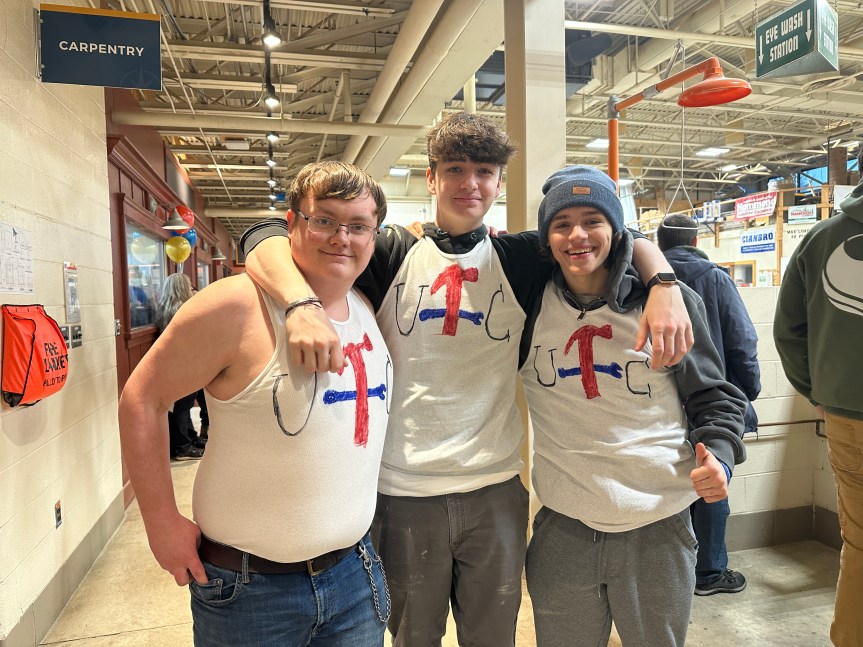
(Pictured: United Technology Center students [L to R] Dominic, John, and Joe attend SkillsUSA with homemade t-shirts rooting for their friend, Zach who is competing in the construction competition this year.)
UTC student Dominic shows off the back of a t-shirt he made to root for his friend competing in SkillsUSA this year.
The hallways of United Technologies Center (UTC) were packed with students dressed in different uniforms adorned with the SkillsUSA emblem on March 15 as they came together from across Maine to test their talents at Maine’s annual SkillsUSA event.
Competitions started on March 14th, the day before, and were happening in locations all over Bangor, as they do each year in the spring.
“I’m so nervous,” one student said to another as they climbed the steps to the second floor in search of their instructor and to find the site where their competition would soon start. Students come from Career and Technical Education (CTE) schools all over Maine, some even come the day before due to the distance they have to travel to participate. Many have been preparing for months and even years to take part in the event.
“You’ve got this!” an instructor said to another nervous student as they rushed by to get to another competition.
“I love it!” said Laura Manzo an instructor from Northern Penobscot Tech Region III in Lincoln. Manzo was sitting on a high stool in front of students working in teams of two in the TV/Video Production competition, something she had coordinated for the second year in a row this year. She said being the coordinator of a competition entails locating all of the judges, creating the prompt for the students to use for the event, and being there to run the competition. This year the prompt was to create a promotional video on Solar Eclipse Safety.
Northern Penobscot Tech Region III Instructor Laura Manzo sitting on a stool helping students who are competing in the TV/Video Production competition.
During the competition, Manzo was on hand answering questions and directing students as the 11 teams worked with cameras and other video equipment, in addition to computers with editing software, on planning, filming, narrating, editing, and putting together a video for the judges to view later that day. Their competition started at 6:45 am that morning and would last until 11:30 am. Manzo, in her 5th year of teaching at Northern Penobscot Tech, was excited about the lineup of judges this year but also nervous for the students who would need to film in the rain, an unexpected challenge the day brought.
“We will see what they come up with,” she said hopefully as she flashed a smile and continued answering questions from students and checking her clipboard.
Down the hall students, instructors, judges, and family members lined the halls looking through big picture windows as competitions started for everything from cake decorating to cosmetology, auto collision repair, and more.
To one end of a UTC hallway sat Rylee, a student at Hancock County Technical Center (HCTC), and Ally a student at Somerset County Technical Center (SCTC) waiting outside a competition room for their turn at the Basic Health Care Skills competition.
Rylee said she likes coming to SkillsUSA because it’s something different. “It’s definitely out of my comfort zone,” she said. She was smiling as she recalled how she was talked into coming last year and again this year.
For Ally, coming to Skills is about, “showing off my talent, showing off my skills, and making friends.” The two sat close together among other students clutching their posters and presentation materials, waiting to do a presentation in front of judges where they would also need to do an interview and showcase basic healthcare skills. They had no idea who among them would get called to go in next.
(L to R) Ally from Somerset County Technical Center and Rylee from Hancock County Technical Center.Lydia from Sanford Regional Technical Center shows off her Courtesy Corp Vest.
In addition to students in the traditional competition rooms were students wearing reflective vests that said “Courtesy Corp.” Lydia from Sanford Regional Technical Center, who was wearing one of these vests, explained that she was currently competing and had been since SkillsUSA started the day before. Courtesy Corp is a community service competition where students are tasked with helping patrons who come to watch the event. They are available throughout the event to help direct people and answer questions. Their competition ends after they help get audience members seated at the main ceremony which was set for later that night at the Cross Insurance Arena in Bangor.
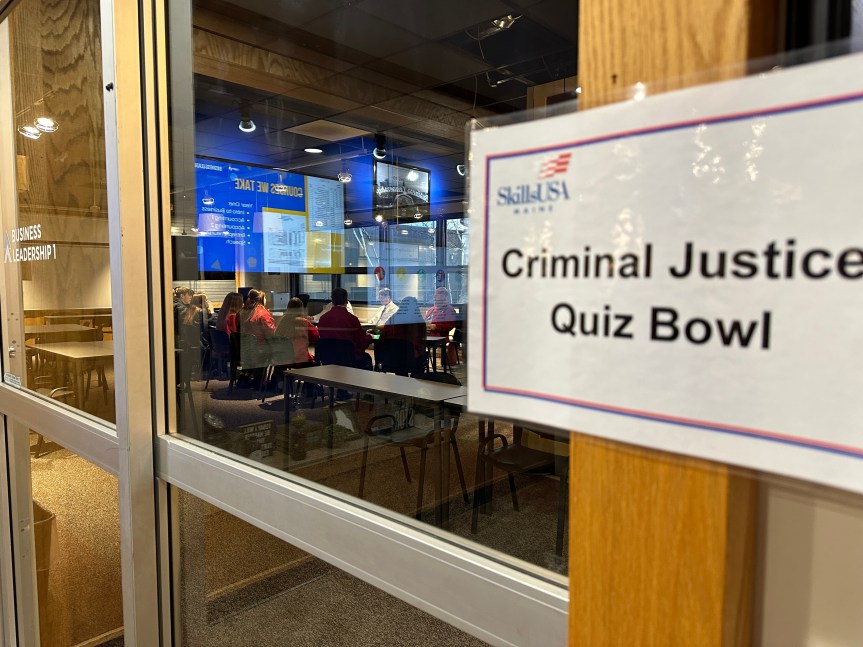
At the top of the stairs was HCTC Law Enforcement student Mercedes with her team of 6 students (5 competitors and one alternative). They and the other teams were all wearing red coats and waiting outside of a conference room for their turn at the criminal justice quiz bowl. This was Mercedes’s team’s second year competing in this competition, and her team won gold last year.
“We studied, so it’s just a matter of rising to the challenge,” she said. Before Mercedes and her team got called into the competition room she shared that after she graduates, she plans to go to Thomas College and pursue their 4-year Criminal Justice Program with a concentration in Law Enforcement and hopes to one day work for the Maine State Police.
Students compete in the Criminal Justice Quiz Bowl competition.
While UTC continued to bustle well past noon, other locations in the area were also hosting students at various competitions across the two-day event, like Fire Fighting, Diesel Equipment Technology, Entrepreneurship, Medical Math, and Early Childhood Education (and more) taking place at Eastern Maine Community College right next door. There were also many competitions at Cross Insurance Area where eventually everyone would end up later that evening.
Student Pin Design
Students’ T-Shirt Designs
Student Welding Sculpture
Starting the day before were a few special competitions for middle school students which also took place at Cross. Traditionally CTE programs, courses, and pathways are more widely available for high school-aged students and most of the students competing each year are in high school and college, but a growing number of middle schools are starting to offer career and technical education options as well.
Lamoine Consolidated School brought 50 students to compete at SkillsUSA this year, which is a record high for them. There were also students from Hancock Grammar School and Caribou Community School.
Middle school students had the opportunity to compete in State T-Shirt, State Pin Design, Team Engineering Challenge, Job Skill Demonstration, Woodworking Display, Community Service, Job Interview, Promotional Bulletin Board, Co2 Dragster, and 3D Printing.
A picture of the Middle School level Team Engineering Challenge in action
Middle School students from Lamoine Consolidated School take a group picture before they leave for SkillsUSA (image courtesy of Amanda Frost, LCS teacher and parent)
Lamoine Consolidated School teacher and 2023 Hancock County Teacher of the Year Miranda Engstrom, who helped coordinate one of the competitions this year, says that all the middle school students talked about having a great time and are already looking forward to next year’s competition.
“They all overcame challenges and feel more confident in themselves and their abilities to solve problems and explain solutions,” she said. As a fierce advocate for expanding career and technical education opportunities for middle school students, Engstrom adds that any other middle schools that want to be involved in SkillsUSA can reach out to their local technical school director, or reach out directly to Maine’s SkillsUSA Chapter.
When the competitions were completed and done, the students, instructors, administrators, parents, family members, and friends gathered at the Cross Insurance Area for the awards ceremony. Once the very large crowds of audience members were seated, Lydia and the rest of the Courtesy Corp competitors finally finished their competition as well, resting their green vests to also get seated for the ceremony. The ceremony entails top competitors being called up on stage and given gold, silver, and bronze metals, Olympic style standing on cascading platforms, and celebrated but one and all.
Middle School students accepting medals at SkillsUSA
The crowd at Cross Insurance Arena
Lamoine Consolidated School ended up with seven middle school students qualifying for the National Leadership and SkillsUSA Conference in the following competitions: Team Engineering Challenge, Promotional Bulletin Board, and State Pin Design. (Congratulations to Ian Frost, Jordan Chan, Benjamin Baldridge, Elza Cahn, Piper Smith, Kaia Tulloss, and Natalia Briggs!)
Mercedes and her team from the Hancock County Technical Center rose to the challenge as well by earning themselves a gold medal again this year in the Criminal Justice Bowl. As did Rylee from Hancock County Technical Center who ended up winning the silver medal in the Basic Health Care Skills competition. You can see a full listing of all the medal winners announced by SkillsUSA Maine here.
Congratulations to all of the winners, the many student competitors, as well as all of the people behind the scenes who work very hard to make this amazing event happen every year and who help prepare the students to compete.
Top winners of Maine’s SkillsUSA event will go on to compete at the national level in the SkillsUSA Conference in Atlanta, Georgia in June.
To enhanced Maine’s high-quality Career and Technical Education (CTE) programs, the Maine Department of Education (DOE) is seeking your input.
As required under the Strengthening Career and Technical Education for the 21st Century Act (“Perkins V”), the Maine DOE is completing a non-substantive revision of our four-year Perkins state plan. Among minor updates, this revision to the state plan will also include adjusted values of Maine’s state-determined performance levels (“SDPLs” or “performance levels”) for the 2024-2025 school year through the 2027-2028 school year. These proposed adjusted values will more accurately represent available student data and will reflect more achievable thresholds at the state level.
Maine’s proposed SDPLs for the upcoming four years are now available for public comment for the next sixty (60) days, with public comment closing on May 13, 2024. Feedback should be provided through the available survey, found here. More information on the state plan and on Maine’s existing secondary and postsecondary SDPLs can be found on the Accountability page of the Maine DOE’s CTE website. Please note: the Perkins indicators (1S1, 2S1, etc) may not be changed: Maine is federally required to report on these performance indicators.
Comments will be reviewed and included in the final version of Maine’s 2024 Perkins State Plan (Revision). For additional information, please contact Dwight A. Littlefield (dwight.a.littlefield@maine.gov) .
As a reminder, Regional School Calendars are due by June 1, 2024 for school administrative units (SAU) and private schools, approved for tuition purposes, in coordination with their local secondary career and technical education (CTE) school. This requirement is part of Public Law 2011, Chapter 686 to promote collaboration among local school administrative units that may benefit from inter-administrative unit collaboration beyond CTE.
For school year 2024-25, both regional school calendars and individual calendars for each school administrative unit must be submitted by the director of the local CTE Center/Region to the Maine Department of Education (DOE) no later than June 1, 2024, for a decision on approval by July 12, 2024.
Given the coordination required to fulfill this law, the Maine DOE recommends that SAUs initiate discussions as soon as possible, including representatives from all affected secondary schools and their associated career and technical education center or region.
Please visit the Maine DOE Website for more information, including guidance, instructions, templates, a waiver process, and a link to the complete law.
The Maine Department of Education, in collaboration with Career and Technical Education (CTE) schools throughout Maine, is celebrating CTE month this February by highlighting some of the amazing women who have found their path in life through career and technical education. We hope their stories inspire you the way they have inspired us. (Here are the other stories featured in February: Danica Wooster, Madison Jackson, Amanda Baker.)
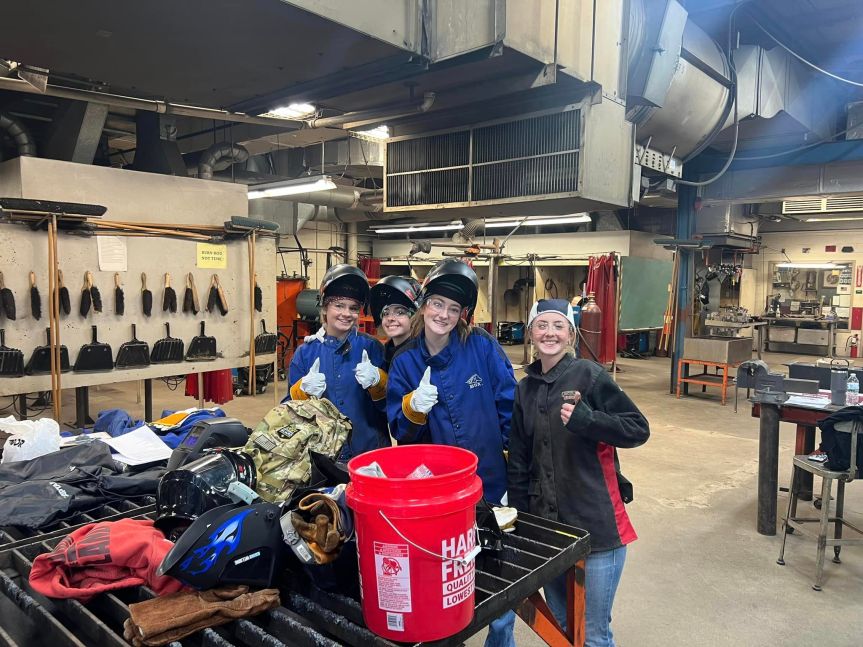
Emma Koch is currently in her senior year at Mountain Valley High School in Rumford, Maine, and in her second year at Region 9 School of Applied Technology where she participates in the metal trades program. The two-year program combines the hands-on use of machine tools and equipment with different types of welding and fabrication of metals through lab exercises and a variety of projects.
“Originally I wanted to do lathe work and carving but they only had building construction which wasn’t what I was looking for,” explained Koch. Instead, she took a chance with metal trades to try their lathes and precision machining.
“Going into it, I was hoping to become proficient in machining but soon realized that was not for me, so I shifted to the other end of the shop where the welders were,” said Koch.
After a short time in the booth, she realized she had a natural knack and love for stick arc welding, and that love soon spread to TIG (Tungsten Inert Gas) welding.
“It’s been fun to watch Emma become a welder,” said Region 9 Metal Trades Instructor Curtiss Hallock. “It didn’t take long for her to discover that machining was not for her – she was pretty clear about that by lunchtime of her first day of machining. It really validated her innate talent as a welder.”
As the only female in her class, Koch explains that the trades have always been largely dominated by men, making them quite an intimidating environment for women to try and be a part of. Looking past all that, Koch explains that she was actually excited to get into welding because her Pepere was a welder, and both her brothers-in-law knew the craft as well. “I was excited to be able to show them up,” she added.
Koch continues to develop her craft and aspires to continue being a high achiever in her program. “Last year, I passed my flat stick welding test, and I am hoping to pass my vertical test this winter,” she said. Passing this test will give her American Welding Society (AWS) certification.
“She raises the bar for everybody in the shop,” added Hallock. “But many of her natural strengths are the ones that can be hard to learn: focus, determination, and drive. She’s really good at blocking out distractions. She stays with a project until it’s done. She’ll be an outstanding welder if she chooses to pursue that path, but if not those skills will make her successful no matter what she chooses to do.”
As for the future, Koch has yet to figure out exactly what she wants to do but she has a plan to get the process started. “I know I want to go to college,” she said. “I’ll be starting at Central Maine Community College in Auburn next year to play soccer and iron out my future plans.” Koch says she is planning on participating in the upcoming statewide Skills USA competition happening next month in Bangor. This is the first time Region 9 has participated since COVID.
“We are very proud of Emma for being open to trying new experiences which has helped her discover a passion for welding,” said Region 9 Director Brenda Gammon.
When asked what advice she had for current and future CTE students, especially young women, Koch said, “The most important thing is to hold your ground and be open to their advice and help, but don’t let them believe that ‘girly’ stereotype we are given; we are strong, we are powerful, and we can do the trades just as good as anyone.”



 Adam Fernald
 Roland Godbout
 Tom Huston
 Rob Callahan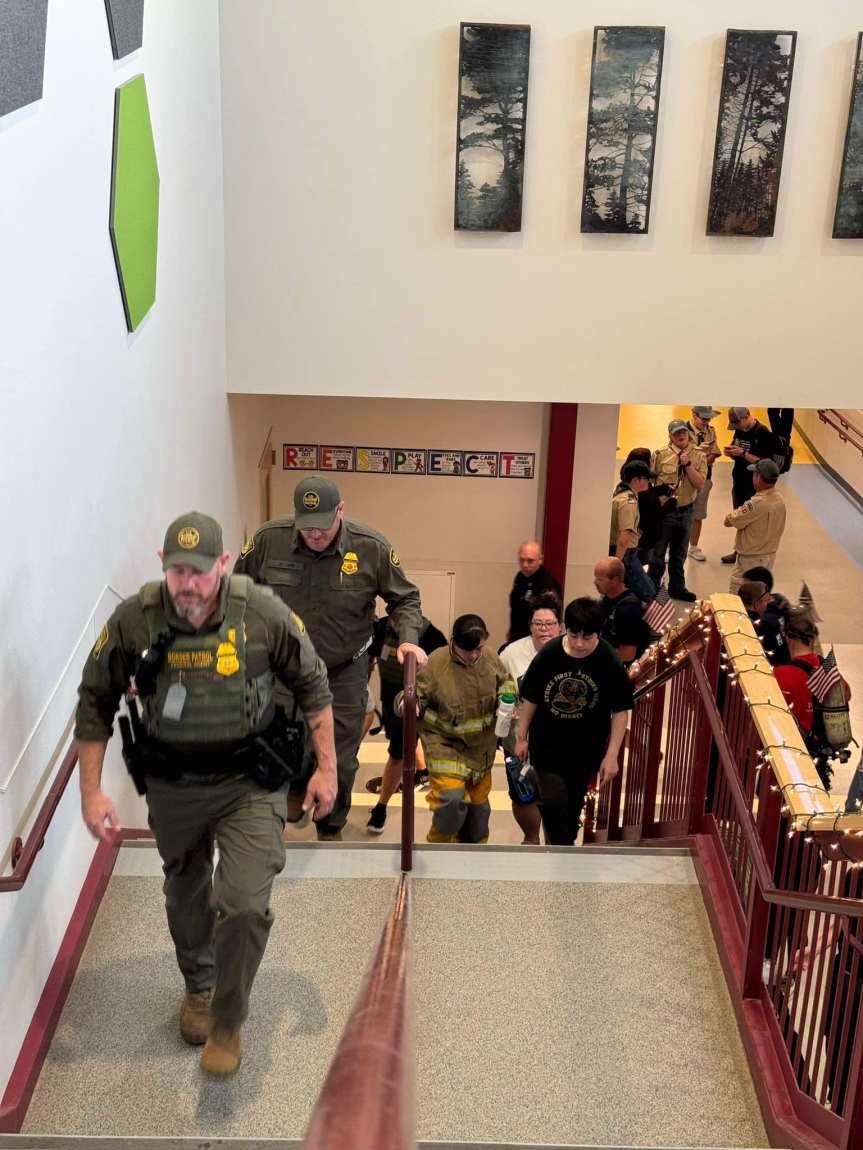


 St. George Municipal School Unit (MSU)









 Maine DOE Newsroom