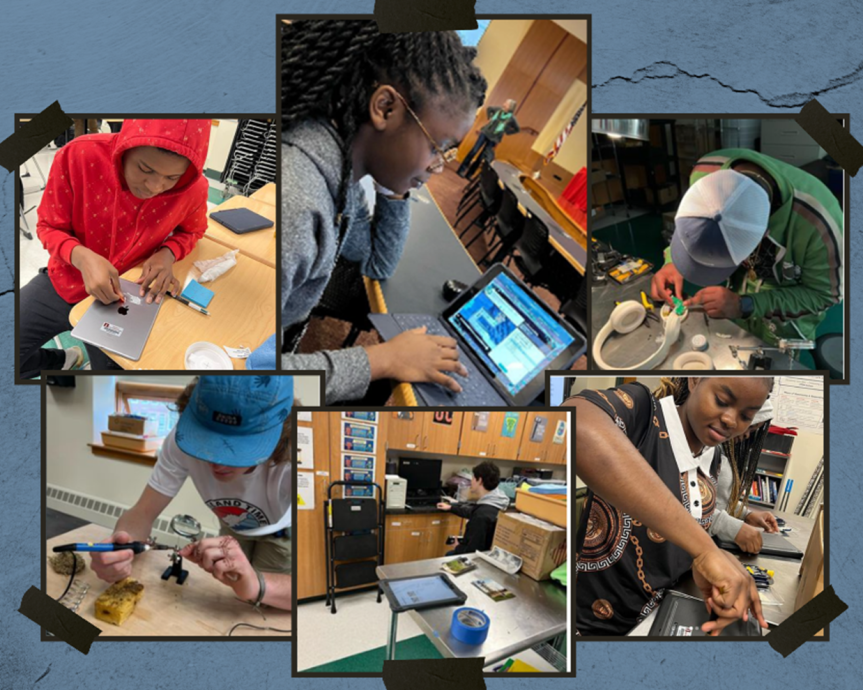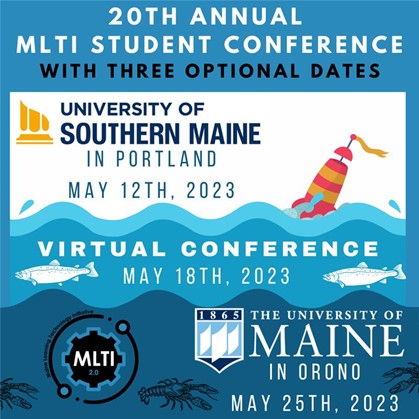
Save the Date for the 20TH Annual MLTI Student Conference!

The Maine Learning Technology Initiative (MLTI) is excited to announce the dates and locations for the 20th annual MLTI Student Conference!

In our continued effort to engage all MLTI students in our annual conference, we’re offering three different options for participation this year. We’re partnering with the University of Maine System, to host two in-person MLTI Student Conferences!

University of Southern Maine’s Portland Campus
Friday, May 12th

University of Maine in Orono
Thursday, May 25th

Virtual MLTI Student Conference
Thursday, May 18th

The virtual conference will provide opportunities for students who may not be able to attend the in-person events. Last year’s classroom-based virtual conference was the largest attended in MLTI history with 55 schools, 5,672 students, and 696 educators participating!

We hope all MLTI schools can join us in their choice of engagement for the 20th annual MLTI Virtual Student Conference!

Please save the date for the 20th MLTI Student Conference and check our website for more announcements coming soon, including a call for proposals, t-shirt design contest, guest announcements, presenters, and session information.

We look forward to seeing all of you at one of our conference locations and sharing an exciting and innovative day with you and MLTI students!

For more information, reach out to the Maine DOE MLTI team.

Expansion and Revisions to Computer Science Integration (CSI) Initiative

In an effort to be responsive to the feedback we’re receiving about the Computer Science Integration (CSI) Initiative, the Maine Department of Education has redesigned the CSI Initiative to better meet the needs of Maine’s education field. Please find the new design and expectations below. We hope that this will help to alleviate concerns that folks had in participation. 

In this new design, we’ve shortened the duration of our first cohort to January 2023-September 2023 and we’re offering two tiers of engagement:

  • CSI Educators can engage in Tier 1 only or;
  • CSI Educators can engage in Tier 1 and Tier 2 (CSI Educators who engage in Tier 2 must engage in Tier 1) 

Tier 1

In Tier 1, educators will engage in CSI PD and work to create “Artifacts” (model lessons, support resources, coaching models, etc.) for their school and to share statewide. Educators will be provided a stipend of $1,500 to engage in computer science integration PD and work with educators within their school to contribute to a repository of computer science integration artifacts that will be available to educators statewide. 

Tier 1 will engage educators in Maine DOE provided CSI PD; work will be virtual/remote and meetings will occur outside of school time; Tier 1 PD will consist of virtual meetings and asynchronous activities and discussions. 

By September, Tier 1 CSI educators will feel confident in their understanding of computer science integration and will have successfully worked with other educators in their school to integrate computer science into existing lessons and class time. CSI educators will contribute to a repository of computer science integration artifacts that will be available to educators statewide. 

Tier 2

In Tier 2, CSI educators will engage in the Maine DOE’s CSI Summer Institute and CS Showcase. Educators will be provided a stipend of $1,000 and travel expenses, to attend the CSI Summer Institute and present at the Computer Science Showcase. These are in-person events that will take place during the summer of 2023, dates and locations TBD. 

Tier 2 will consist of a multi-day summer institute and the CS Showcase. Educators will engage in a multi-day institute where they network, collaborate, and work together to grow computer science across the state and in their own schools. These educators will also take part in the CS Showcase, showing off some of the awesome work they’ve done throughout the past few months of CSI. 

Expansion of the CSI Initiative

Additionally, we’re excited to announce that we’re able to expand this opportunity beyond one educator per school! This will allow schools who have more than one educator interested in this initiative to take part! 

To nominate an educator to be a part of this exciting opportunity, please complete this brief form. 

If you have already completed a nomination, there is no need to resubmit. We will be contacting all nominees that have already been submitted to provide next steps before the end of the day on Friday, January 6th. 

If you have questions or would like more information, please reach out to Maine DOE’s Computer Science Specialist, Emma-Marie Banks, at emma-marie.banks@maine.gov 

Maine FIRST Lego League Championship Brings Together Twenty-Four Robotics Teams at Spruce Mountain High School 

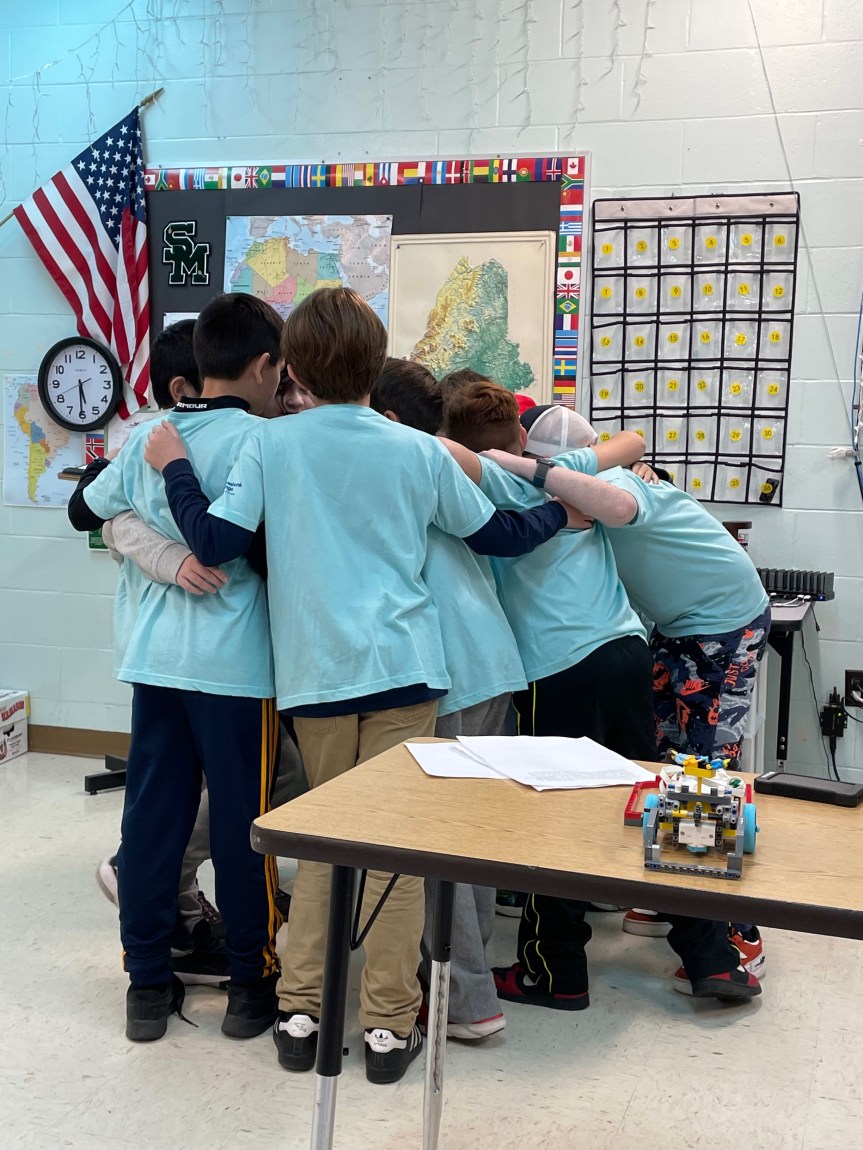
(Pictured: The RoboSharks in a team huddle before presenting to judges.)

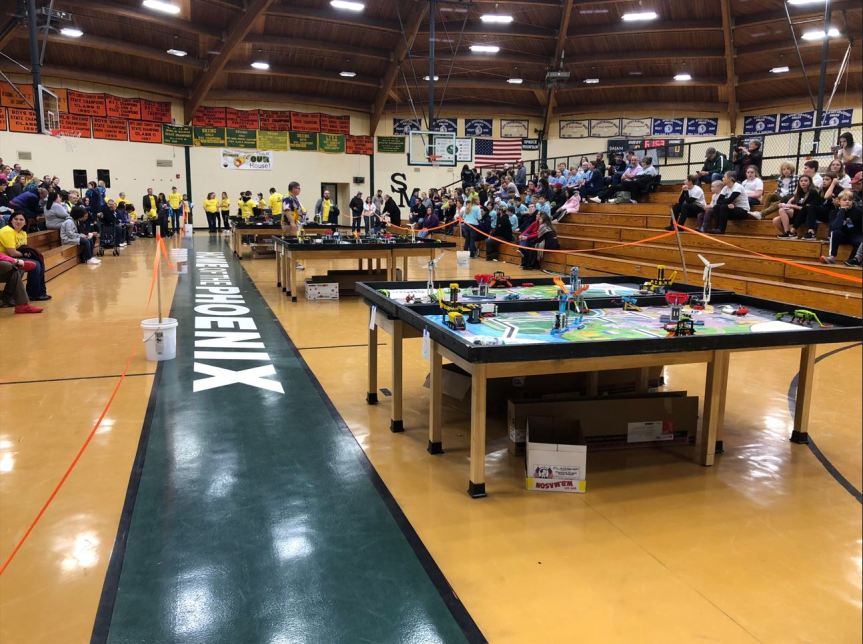
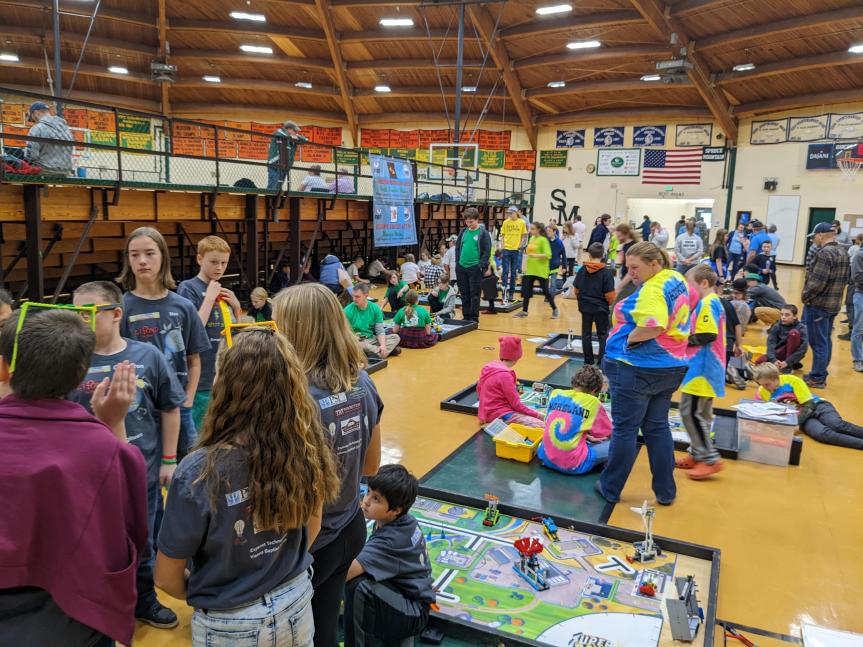
The 23rd annual Maine FIRST Lego League Championship on December 3rd was another success with two dozen teams from around the state coming to Spruce Mountain High School. Hosted by the Blue Crew out Farmington, all 24 teams shared their innovation projects with judges in the morning and competed in the robot performance in the afternoon. Teams came from Brewer, Caribou, Jay, Oakland, Old Town, Vinalhaven, Winslow and other towns mentioned below to present their innovative projects to judges and test out their robot designs on the field.  

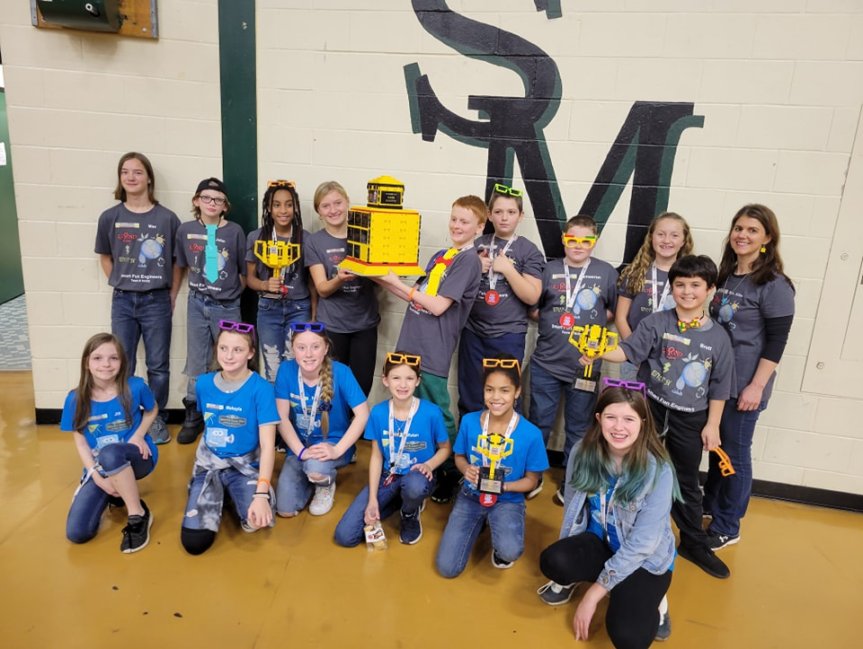
The Champion’s Award went to the Smart Fun Engineers (Team 16492,), who, for the fifth consecutive year won the Robot Game Award with their robot’s high score of 270 points. They will now have an opportunity to represent Maine at the international FLL event in Texas in 2023. Their win included defeating the Gardiner Iron Tiger Cubs (Team 48102) in the “Just for Fun” playoff finals.  

The fifth consecutive Champion’s Award for the Smart Fun Engineers was a thrill for these eighth graders who have been classmates and teammates for several years.

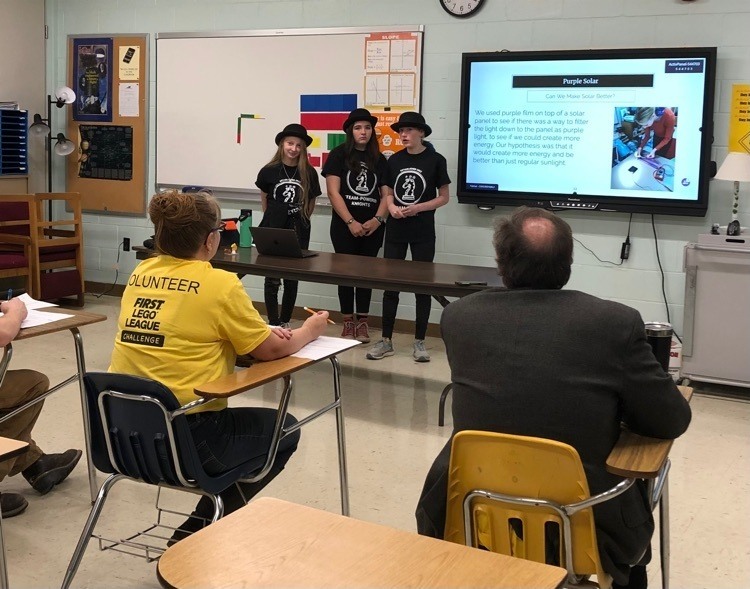
The Champion’s Finalist Award went to STEAM Powered Knights (Team 34104) from the St. George School. The team, led by coach Amy Palmer, is comprised of all new-to-the-game eighth graders. They performed strongly in the three judged areas – Core Values, Robot Design and Innovation Project. 

Members of the STEAM Powered Knights present their innovation project that focused on transforming PFAS contaminated areas into solar farms.

The Core Values Award went to the team from the Leeds Central School (Team 52374), who exemplified inclusion and teamwork in their performances and projects. The Core Values Finalist Award went to the Smart Fun Scientists (Team 57933). 

The Innovation Project Award went to the Legendary LEGO Coop Kids (Team 51454) from the Berwick area, who despite being a young team had another strong performance this year.  The Innovation Project Finalist Award went to the RoboSharks (Team 14407) from the Shapleigh School in Kittery, who made an impressive debut at the event in a team of all fifth graders. 

The Robot Design Award went to the Electronic Mustangs from the CK Burns School in Saco and the Robot Design Finalist Award went to the Renewable NRG Bars from Orono Middle School. 

The Outstanding Volunteer Award went to Dr. Laura Guerney from UMaine, whose involvement in the FIRST Lego League events and mentoring of judges has been invaluable over the years.  The Coach/Mentor Award went to Chris Herrick, whose positive and focused leadership has been key to the success of the young Legendary LEGO Coop Team in the past few years. 

23rd annual Maine FIRST Lego League Championship

To learn more about opportunities for Robotics in Maine schools, check out Robotics Institute of Maine (RIM). For information about computer science in Maine schools, please check out the Maine Department of Education’s Computer Science page. If you have a robotics success story at your school, email jonathan.m.graham@maine.gov. 

Computer Science Mobile Lab – Training Webinars and Support Resources

Join us during Computer Science Education (CS Ed) Week for FREE virtual training for the mobile computer science labs! We’re excited to announce that we’ll be hosting webinars throughout next week to help folks get started with their lab equipment. These will be vendor-provided trainings and will cover the basics of unboxing, configuring, and getting started. Webinars will be live and recorded. Recordings will be posted to the website once they become available.

Additionally, we’ve put together a webpage to provide immediate resources and support for each mobile lab option. These resources offer some quick access information to help get going with the equipment

To check out these resources, learn more about the webinars, and to register, click here. You’ll see the mobile lab options and can find quick start resources as well as the registration links for the webinars.

If you have questions or would like additional information, please reach out to Maine DOE’s Computer Science Specialist, Emma-Marie Banks at emma-marie.banks@maine.gov

WEBINARS: Using Computer Science MOOSE Modules #CSEdWeek #MaineTeachesCS

Are you wondering how to integrate computer science into your classroom? Join Maine teachers and the DOE Interdisciplinary Instruction & MOOSE Teams to learn about using the Computer Science MOOSE modules.  The MOOSE modules are interdisciplinary, project-based modules designed by Maine teachers that introduce students to computational thinking, programming, and data science.

Elementary Webinar

Middle/High School Webinar:

For more information contact Jaime Beal Maine DOE Interdisciplinary Instruction Specialist at jaime.beal@maine.gov.

Sparking Creativity: International Dot Day and Augmented Reality

When Terri Dawson, Technology Integrator at Gorham Middle School, heard Peter H. Reynolds read from his children’s book, The Dot, at an International Society for Technology in Education conference, she knew she had to bring the book back to her school. Reynolds’ book tells the story of a young student, Vashti, who feels like she can’t draw. Her teacher encourages her to simply “make a mark and see where it goes,” and by doing so, sparks Vashti’s creativity, inspiring the little girl and her classmates to have creative confidence.

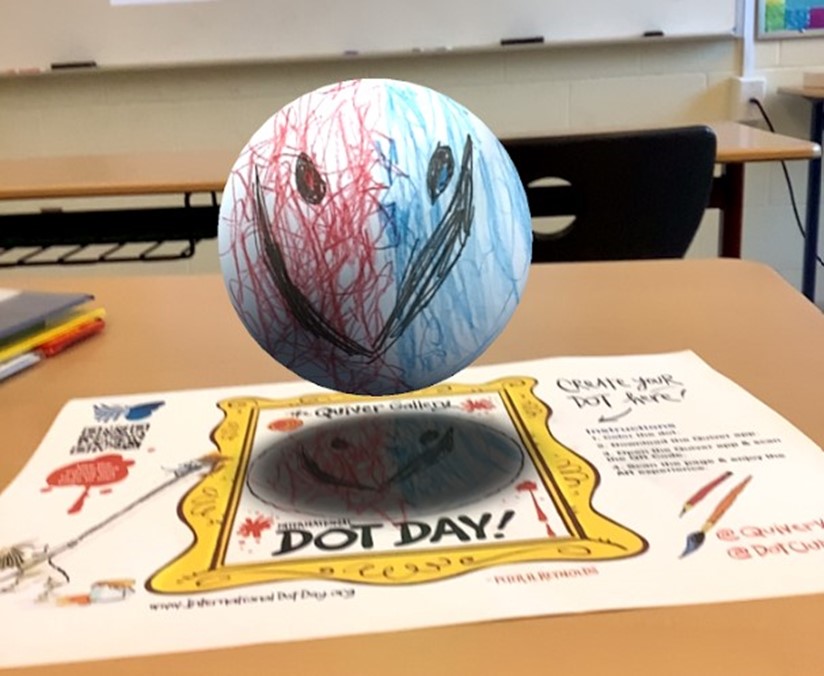
So, when Dawson discovered a collaboration between QuiverVision, an augmented reality (AR) coloring app for iPads, and International Dot Day, she knew she had found an innovative way to connect sixth, seventh, and eighth-grade students to this beloved children’s book via technology. The students began by listening to Peter H. Reynolds read from his book on YouTube. That’s when they began their own creative process.

Dawson provided students with a paper template from QuiverVision that included space for the students to design their own dots and a QR code, that, when scanned by their iPads, displayed their dots in augmented reality. This allowed them to experience their drawings in a totally different way. Dawson noted that “when the students saw their dots come to life, their engagement and motivation to do another dot was amazing…it gave them another level of learning. They started to think about what else they could create.”

Dawson’s students were so engaged and inspired, they asked for the opportunity to take their iPads home and continue with their own designs using AR.

“Augmented reality and virtual reality seem to be a natural progression in education,” said Dawson, “there are so many different things that allow students to view their world differently. That’s what I want to expose them to. I want them to have these skills so that when they go out into the workforce they say, ‘I remember using AR! Did you know you could do this with a QR code?’”

October is Cybersecurity Awareness Month!

Cyber Awareness Month is a global effort to help everyone stay safe and protected when using technology whenever and however they connect.


The theme for the month is, “It’s easy to stay safe online.”

The Maine DOE has teamed with MaineIT, the Cybersecurity and Infrastructure Security Agency (CISA), and the National Cybersecurity Alliance (NCSA).

We are proud to support this online safety and education initiative this October.  


This month is all about taking action! We are promoting key behaviors to encourage everyone in education to take control of their online lives.


There are all kinds of ways to stay safe and secure online and even just practicing and understanding these cybersecurity basics can make a huge difference.

Each week, we will be sending out some important information to help keep your data and teams safe: 


1.      Week 1: Anatomy of a Data Breach 

2.      Week 2: Multi-Factor Authentication and Password Managers 

3.      Week 3: Updating Your Software 

4.      Week 4: Recognizing and Reporting Phishing 


The DOE will release information regarding the above items throughout the month.  Please consider taking an active part in your local school system.


·         NCSA’s Cybersecurity Awareness Month Website: https://staysafeonline.org/cybersecurity-awareness-month/ 

·         CISA’s Cybersecurity Awareness Month Website: https://www.cisa.gov/cybersecurity-awareness-month 

Media Release: Governor Mills Announces New Initiative to Bring Mobile Computer Science Labs to All Maine Schools

Governor Janet Mills today announced the launch of a new Maine Department of Education (DOE) initiative that will provide every Maine public school with a free mobile computer science lab. The effort, funded through the Governor’s Emergency Education Relief Fund, will enable all Maine students to access high-quality learning experiences that provide real-word training in robotics, programming, augmented and virtual reality, coding, and hardware.

In July, Governor Mills joined governors from across the country in signing a bipartisan national compact on computer science education. As part of the agreement unveiled at the National Governors Association’s Summer Meeting in Portland, all 50 governors pledged to work to expand K-12 computer science education options in their states. The DOE has a comprehensive computer science education plan guided by seven key principles.

“Our economy increasingly depends on workers with training in computer science. This initiative will ensure that students across our state are prepared to succeed in the jobs of the future,” said Governor Janet Mills. “My administration will continue to make sure that all Maine students have a chance to acquire digital literacy skills.”

“Maine is leading the nation by providing equipment to our schools statewide to ensure that every student has a meaningful computer science education with real-world applications,” said Pender Makin, Commissioner of the Maine Department of Education. “These mobile computer science labs will provide every student in Maine, across all grade levels and subject areas, with learning experiences that prepare them for future success.”

“This opportunity from the Mills administration and the Maine Department of Education is a game-changer for the students of Maine. For the first time, all Maine kids will have equal access to a high-quality computer science curriculum and tools in their schools. I am incredibly happy to see that equity is the centerpiece of this new initiative and cannot wait to see what happens next,” said Computer Science Teachers Association (CSTA) Maine Chapter President and 8th Grade Computer Science Teacher Sean Wasson.

Schools will be able to order one of three mobile lab options: Robotics and Programming, Augmented and Virtual Reality, and Coding and Hardware. Each lab contains computer science equipment valued at $5,000 and is designed to be integrated into any content area and skill level. Additionally, the initiative will make available professional learning opportunities for educators tailored to each computer science topic area.

The Maine Department of Education is reaching out to Maine superintendents with detailed information about how to secure mobile labs for schools in their district. More information about each program area can be found on the Maine Department of Education website.

Computer Science Teachers Association Names RSU 25 Educator with 2022 Teaching Excellence New England Award

The Maine chapter of the Computer Science Teachers Association (CSTA) announced Allison Braley as the winner of the 2022 CSTA Teaching Excellence New England Award for her outstanding contribution to computer science education. The Computer Science Teaching Excellence Awards are designed to recognize outstanding teaching by K–12 computer science teachers. Winners excel in inspiring students to explore the computer science field, engaging students in learning rigorous standards-aligned computer science content, and broadening the participation of underrepresented students in computing.

Allison is a computer science teacher at Bucksport Middle School and the District Technology Coach for RSU 25. She has been instrumental in developing engaging programming to teach her students computer science concepts, like programming languages and computational thinking. Last year, she was awarded a grant to expand the computer science program at the high school level.

In addition to teaching, Allison serves as the secretary of the Maine chapter of CSTA. She also collaborated with other Maine teachers to create computer science modules for the MOOSE project, and is a regular contributor to other statewide K-12 computer science initiatives.

Allison’s colleagues describe her as follows:

“Allison is always positive. She advocates for kids. Allison wants her students to have every opportunity that they deserve regarding their education. The Maine Computer Science Teachers Association is incredibly fortunate to having such an amazing teacher as one of our members.”

“Allison is enthusiastic about teaching computer science to her students. She is always seeking out new learning opportunities to bring back to her students and fellow teachers. As a fellow educator, Allison has inspired me to learn more about computer science.”

Congratulations Allison Braley for all your work in computer science education!

Computer Science Professional Development Grant Application

Are you interested in computer science professional development opportunities for your school? Maine’s 130th legislature, through a bill sponsored by Senator Pouliot, created a pilot grant program to provide funding for high-quality, teacher-developed or teacher-led professional development for PK-12 computer science pedagogy and content. 

Priority will be given to applicants that: 

  • do not currently offer computer science learning opportunities; 
  • serve socioeconomically disadvantaged school districts; 
  • prioritize student populations traditionally underrepresented in computer science; 
  • demonstrate a commitment to pursuing high-quality educator professional development that emphasizes integration of computer science into other course work and curricula or establishes or expands access to courses that offer college credit and other certificates of value, or both; and 
  • collaborate or partner with other entities, including but not limited to other local education agencies, the business community, nonprofit organizations and private entities. 

The application window opens Thursday September 1, 2022. Applications will be reviewed in the order in which they are received.  

There is no limit to the grant amount awarded per applicant; however, funds will be dispersed equitably across all applications based on county and throughout PK-12. 

Have questions? Want to learn more? Interested in applying? Check out our website to learn more and submit an application. 

Need assistance applying? Contact the Computer Science Specialist, Emma-Marie Banks, emma-marie.banks@maine.gov