Mandatory Annual Notice of Integrated Pest Management Requirements

Encounters with rodents, hornets, bats, poisonous plants and other pests can threaten the health and safety of students, staff and visitors on school properties. However, pesticides can also pose a risk, and the use of these chemicals in Maine is strictly regulated.  All public and private schools serving any grades pre-k through 12 are required, under state law, to adopt and implement an integrated pest management (IPM) policy to reduce potential risks of exposure to pests and pesticides.

Specific requirements include:

Appointment of IPM Coordinator.  Appoint a staff member to serve as and annually report their name and contact information (e-mail address and phone number) by September 1st via the Department of Education NEO system. If unable to use NEO, report via email to pesticides@maine.gov or by calling 207-287-2731. This information is required to provide necessary educational information and training and ensure compliance with regulations.

Training. The IPM Coordinator must complete two trainings: 1) Initial Training Module must be completed within one month of appointment (available online at www.maine.gov/schoolipm  click on ‘Trainings and Events’) and 2) Comprehensive IPM Training Training must be completed within one year of appointment (free workshop offered in numerous locations throughout the year. See schedule at www.maine.gov/schoolipm). In addition, the IPM Coordinator must earn 1-hr of Continuing Education credit per year.

Notification, Signage and Authorization. A notice describing your school’s IPM program must be included in the school policy manual or student and staff handbooks.  Specific information is required.  A sample notice is available at www.maine.gov/schoolipm.  This information must be kept up to date, but an annual notice to parents and staff is no longer required. A notice about the schools’ IPM Policy must be published in your policy manuals, such as the student and staff handbooks. Before any pesticide application on school properties (including non-school properties used primarily for official school functions) the IPM Coordinator must authorize it. Parents and staff must be notified five days in advance and signs must be posted two days in advance. Some types of applications are exempted. More information and sample notices are available at maine.gov/schoolipm or by contacting the Maine Board of Pesticides Control at pesticides@maine.gov or 207-287-2731.

Licensing. A commercial Pesticide Applicators License is required for all pesticide applications except for the control of stinging insects and for routine use of disinfectants.

Record-Keeping.  A Pest Management Activity Log must be kept current and on file for at least two years. Specific records about IPM steps taken and pesticide use must be kept.  Sample logbook pages are available at maine.gov/schoolipm.

The School IPM Program, Maine Department of Agriculture, Conservation and Forestry, is available to help with pest problem-solving advice, training resources and more (www.maine.gov/schoolipm, e-mail: kathy.murray@maine.gov, phone: 207-287-7616).  For more information contact the Maine Board of Pesticides Control (pesticides@maine.gov or 207-287-2731) or Pat Hinckley at the Department of Education (pat.hinckley@maine.gov, 207-624-6886).


School Renovation Funding Available

The Maine Department of Education is accepting applications to receive funding for school renovation projects through the School Revolving Renovation Fund (SRRF). The application deadline is September 30.

The Department will be able to approve approximately $25 million in SRRF loans. A portion of each loan will be considered a grant, and will be forgiven. The remaining portion will be paid back over either five or ten years with no interest. The maximum loan amount is limited to $1 million per school building, per priority, in any five-year period.

Applications for Priority One and Priority Two projects will be accepted.  Priority One projects include indoor air quality improvement, structural roof repair, hazardous material abatement or removal, ADA compliance upgrades, and other health, safety and compliance renovations.  Priority Two SRRF projects include school building structures, windows and doors, and water and septic systems.  Eligible Priority One projects will receive funding preference over Priority Two projects.

The SRRF application and additional information are available on the Maine DOE’s SRRF website. For more information or technical assistance, please contact Ann Pinnette at 624-6885 or email ann.pinnette@maine.gov.


Free School Safety Presentation

I Love You Guys Foundation School Safety Presentation Coming to Maine

What:                 Standard Response Protocols and Standard Reunification Method for schools and districts, and an After Action Review of the Marjory Stoneman Douglas High School Shooting.

When:                 31 July 2019- William Cohen Middle School, Bangor.  8:00-12:00

2 August 2019- Windham High School, Windham.  8:00-12:00

Audience:          Maine school superintendents, principals and staff; local first responders; county emergency management agency staff.

Presenter:          Scott Parker, Scott Parker, “I Love You Guys” Certified Trainer for the Standard Response Protocols and Standard Reunification Method; National school safety subject matter expert; supported the development of the Maine Model plan in 2007; certified SRP and SRM Train the Trainer in 2013; has worked with over 20 school districts and academies in Maine; currently working with 8 school districts in Maine.

Cost:                    Free, supported by National School Safety Organization, “I Love You Guys Foundation”

Registration:     Advance registration will be required. Contact: ScottParker.preparedness@gmail.com

Technical Assistance:  A new Update Standard Response Protocol and Standard Reunification Method will be available for attendees after this training.

Save the date!


Registration now open for the 2019 state Custodial and Maintenance Conference

Registration is now open for the 51th Custodial and Maintenance Conference for Maine school custodians and facilities directors.

Location:  Waterville Senior High School, Waterville, Maine

Dates:  Wednesday, June 26, 2019 – Thursday June 27, 2019

2019 Highlights:

  • The Wednesday keynote is motivational speaker Andrew Raycroft, former National Hockey League Goalie and Assistant College Coach
  • The Thursday motivational speaker will be Roseann Sdoia, Boston Marathon Bombing Survivor
  • Discussions and meeting topics include: school indoor air quality, oil storage tanks and spills, hands on strategies for fields and landscaping, school security and safety, inspections and preventative maintenance for roofs, all-hazards emergency preparedness, floor covering systems, facilities manager certification roundtable, and much more.
  • This year’s conference will include Maine School Integrated Pest Management certification sessions where conference attendees can complete required IPM training delivered by Dr. Kathy Murray from Maine Department of Agriculture, Conservation and Forestry
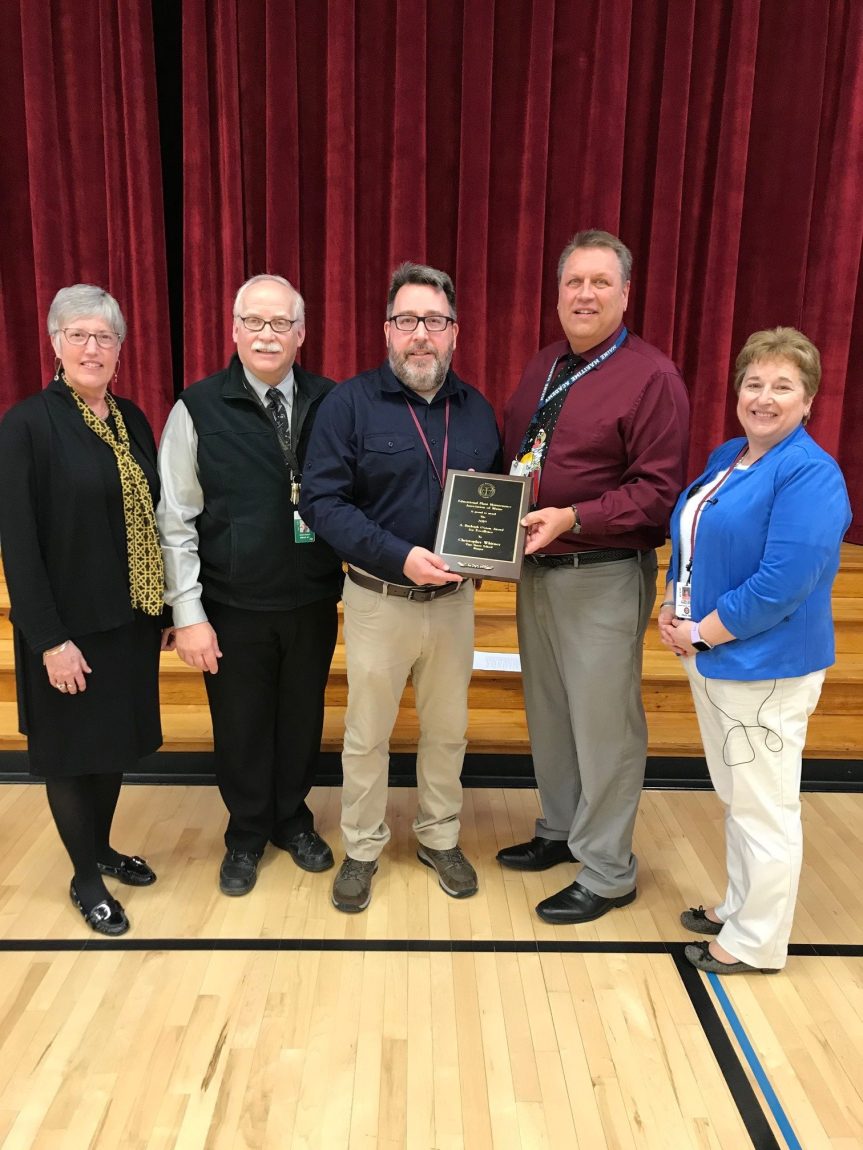
  • The Annual A. Burleigh Oxton Award for Excellence that recognizes the vital role of custodians in facilities and education

Review Draft Agenda

To register and find additional resources including pricing, lodging options, further details about registration, including guest registration, by contacting Jim Reny of Educational Plant Maintenance Association (EPMA) by phone 861-2351 or email jreny8@roadrunner.com .


Educational Plant Maintenance Association of Maine’s A. Burleigh Oxton Award for Excellence

The Educational Plant Maintenance Association (EPMA) of Maine is pleased to announce that they are seeking nominations for the A. Burleigh Oxton Award for Excellence.Nominations will be accepteduntil June 14, 2019.

We are looking for a custodial/maintenance employee who is recognized for exemplary job performance; is passionate about maintaining and operating your school building to ensure clean, safe and healthy learning and working environments; and serves as a role model for students.  Your nominee will obviously be a dedicated employee who is known for going the extra mile to help students, staff and visitors to the facility.

Nominations will be accepted from school administration, school staff, parents, or school groups.  There is no limit on how many nominations can be submitted.

All nominees and the potential recipients of the A. Burleigh Oxton Award for Excellence for 2019 will be notified by June 14th of their status.  The selected nominee (award winner) and the three finalists will be invited to attend the 51st Annual Custodial and Maintenance Conference as our special guest.  Our conference will be held on June 26 – 27, 2019 at Waterville High School in Waterville, Maine.

The 2019 recipient and all the finalists will be recognized at an awards ceremony during our closing luncheon on Thursday, June 27th.

The A. Burleigh Oxton Award for Excellence recipient will receive a plaque and a $300.00 college scholarship that will be awarded in their name to a deserving graduate in their district.

All Candidates must work in a custodial or maintenance position.

Nominations Must Include The Following.

  • Name and address of candidate
  • SAU name and address
  • Supervisor’s name and address
  • Name and contact information of person nominating
  • Explanation of why this candidate was chosen and what outstanding performance(s) led to the nomination.
  • Any community contribution or activities this person is involved in
  • Three references: name, address and phone number

Send nominations to: Mr. Andrew R Madura, Director of Facilities
 SAD #61-Lake Region Schools
 900 Portland Road
 Bridgton, ME 04009
Email nominations accepted at: andy.madura@lakeregionschools.org

Update on Maine Department of Education’s MLTI Plan- Post June 2020

The Maine Department of Education, through the Maine Learning Technology Initiative (MLTI), has been providing 7th and 8th grade students and teachers access to, and support for, educational technology since 2002. While the goal has remained constant – provide State support for access to technology-enhanced education experiences for all students – the program has changed in many ways, and will continue to grow and evolve in the future. The Department remains committed to this goal.

As many school administrative units (SAUs) are aware, the final contracts for the MLTI program are set to expire on June 30, 2020. Included in the Department’s biennium budget package, which is currently being considered by the Legislature’s Appropriations and Financial Affairs Committee, are funds to support a “bridge year” for the 2020-2021 school year.

The Department is actively working with current vendors to secure agreements for this “bridge year,” which will enable SAUs to maintain existing levels of technology support. The details of these agreements are still being developed, so the following information is very preliminary:

  • SAUs in cohort 4 (lease begun in 2016) for 7th & 8th grade and staff devices will keep their current devices for SY 2020-2021. They will continue to receive the software, wireless networks, technical support, and professional development they have been receiving. After SY 2020-2021, these SAUs will have the option to buy out their devices at the 2015 rates, $28/ iPad and $48/ laptop.
  • SAUs who are currently leasing additional devices (elementary or high school student and staff devices) from the Department will continue to lease those devices from the Department at a reduced cost of $73/ iPad; $118/ laptop. They will continue to receive the software, wireless networks, technical support, and professional development they have been receiving. After SY 2020-2021, these SAUs will have the option to buy out their devices at the 2015 rates, $28/ iPad and $48/ laptop.
  • SAUs who are currently receiving MLTI grants from the Department that are set to expire in June of 2020 will be granted an additional year of the same grant award as the previous 4 years.

The Department would use the additional time afforded by the “bridge year” to meet with stakeholders throughout the state, collecting feedback on what has worked well in the past, as well as innovative ideas about the future of MLTI. Discussions would include topics such as portable computer devices, device management and deployment, software, wireless networking, technical support, and professional development, as well as financial models to support these efforts. The Department would also convene a workgroup to synthesize this information and help to create a plan for the State.

Below is the estimated timeline for MLTI through 2021.

  • May 2019 – August 2020: The Department holds meetings with stakeholders regarding the future of MLTI (post SY 2020-2021) and convenes a workgroup to develop a State plan
  • July 2020 – June 30, 2021: Bridge Year
  • October 2020: The Department announces plan for MLTI post SY 2020-2021 (including the release of any necessary RFPs)
  • July 2021: SAUs have the option to buy out devices; launch of the future MLTI

For more information about the Maine Learning Technology Initiative, contact Beth Lambert, beth.lambert@maine.gov, 207-624-6642.

Tips for Supporting Muslim Students During Ramadan and Eid-al-Fitr

Maine is home to many Muslim families, and the Maine Department of Education would like to provide some general information about Ramadan and Eid-al-Fitr to schools, so they can support their schools’ Muslim community members as they enjoy this very special time of year.

Ramadan is a month-long fast observed by Muslims around the world. Fasting during Ramadan is one of the five pillars of Islam. To wish someone a happy Ramadan, you can say “Ramadan Kareem” or “Ramadan Mubarak.”

This year, in the United States Ramadan will start around May 5th and end around June 4th. The official beginning and end of the month of Ramadan will not be announced until the sighting of the new moon. Since the Islamic lunar calendar year is about 11 days shorter than the Gregorian calendar, Ramadan happens about 11 days earlier each year.

During Ramadan, most Muslims fast (i.e., consume no food or water) from dawn to dusk. Many Muslims also pray more frequently and make special efforts to be kind, generous, and compassionate. This is a joyous time of year, and each Iftar (post-sunset meal to break the fast) is a celebrated opportunity to gather with friends and family. Muslims may also wake before dawn to eat Suhoor (a pre-dawn meal), which helps give them energy to endure the day’s fast. (Iftar and Suhoor timings can be found here.) For some Muslims, the typical patterns of sleep are shifted so that more waking hours occur during the night, which can make it difficult to wake up early and stay alert during the day.

Typically, very young children do not fast or may fast only part of the day. Some Muslims may not fast when they are travelling, ill, pregnant, breastfeeding, or menstruating. In these cases, fasting days can be made up for at a later time. Elderly and chronically ill people who are not well enough to fast may give charitably instead.

After Ramadan, Eid-al-Fitr (the festival of breaking the fast) is a three-day celebration with feasts and gatherings of families. This is an extremely important and cheerful time of year for Muslims, and students will likely be absent for all or part of the three days. Children often receive a new outfit or a small amount of money as a gift from their family for the holiday. To wish someone a happy Eid, you can say, “Eid Saeed” or “Eid Mubarak.”

Here are a few tips for supporting students during Ramadan and Eid-al-Fitr.

  1. Learn about Ramadan and Eid-al-Fitr.

There are many resources available online that can help you understand how and why Ramadan is observed. Keep in mind that practices may vary depending on culture, so your students and their families are the best sources of information about their Ramadan traditions. Here are a couple of articles that give a general overview.

https://www.nbcnews.com/news/religion/what-ramadan-six-things-know-about-muslim-holy-month-n586426

https://www.history.com/topics/holidays/ramadan

https://www.britannica.com/topic/Eid-al-Fitr

  1. Encourage cultural sensitivity for all school community members.

Fasting can have many physical and mental effects, such as fatigue, lack of concentration, and irritability. For your students, your understanding and support can help ensure that they continue to learn and make the most out of their time at school while fasting. Teachers, school nurses, sports coaches, bus drivers, cafeteria staff, and all other staff who interact with students will need to know how fasting can affect students.

Talking with staff and students about Ramadan and Eid-al-Fitr helps encourage an atmosphere of cultural awareness and sensitivity for the whole school community. Sensitivity towards fasting students includes avoiding consuming food and beverages in front of them whenever possible. Consider holding any celebrations that include food, such as awards banquets, after Iftar (sunset).

  1. Ask students and their families how you can best support them.

Some schools may choose to offer a place for students to go during lunchtime, alternative options for physical education, or dedicated prayer spaces. Schools may also avoid scheduling assessments or other required activities during Eid-al-Fitr, when students are likely to be absent. The best way to ensure that your school is a supportive, culturally-aware learning environment is to involve students, families, and other community members in planning and policy creation. Check out these two articles for some practical ideas that may benefit fasting students.

https://www.pbs.org/newshour/education/column-teachers-can-support-students-ramadan

http://www.isre.org.au/wp-content/uploads/2014/07/Schools-Guide-to-Ramadan-2.pdf

  1. Have a clear, well-communicated policy on tardies and absences.

Maine’s statute on excused absences is Title 20-A, Section §3272. It states that an absence is excused when it is for “observance of a recognized religious holiday when the observance is required during the regular school day and the absence has prior approval.” Fasting during Ramadan is a required religious observance, and the physical and mental demands of fasting may cause students’ tardies and absences to increase. Eid-al-Fitr celebrations are also religious observances. Districts will need to share clear expectations for attendance with students and families. It is highly recommended to develop these expectations in collaboration with your community members, recognizing that interpretation and translation may be necessary to ensure meaningful communication.

 

Monthly School Safety and Security Bulletin- April 2019

Throughout the 2018- 2019 school year, the Maine Department of Education, State Fire Marshal’s Office, Department of Health and Human Services, Maine State Police, Maine Sheriffs Association, Maine Chiefs of Police Association, and the Maine Emergency Management Agency will provide tips and resource information to Maine schools to help provide some guidance for identifying signs and preventing school violence.

School Safety and Security Bulletin  – March 2019

Further questions and inquiries can be send to Pat Hinckley, Maine DOE Transportation and Facilities Administrator at207-624-6886 or pat.hinckley@maine.gov. 

Important federal grants for local communities on school safety and security just opened, apply soon!

The Department of Education is committed to providing timely information and support to school communities, including federal grant opportunities, in the ongoing efforts to ensure safe schools in the State of Maine. Please see below for new grant information; further questions about the grants and requirements should be directed to the grant providers.

Community Policing Development (CPD) Program

The 2019 Community Policing Development Program is a competitive grant program designed to advance the practice of community policing by providing guidance on promising practices through the development and testing of innovative strategies; building knowledge about effective practices and outcomes; and supporting new, creative approaches to preventing crime and promoting safe communities. The CPD solicitation is open to all public governmental agencies, for-profit and nonprofit organizations, institutions of higher education, community groups, and faith-based organizations.

Applications are due by May 28, 2019 at 7:59 PM EDT.

Please click here for more information on the 2019 Community Policing Development Program.

Law Enforcement Mental Health and Wellness Act (LEMHWA) Program

The 2019 Law Enforcement Mental Health and Wellness Act Program is a competitive grant program that provides funding to improve the delivery of and access to mental health and wellness services for law enforcement through training and technical assistance, demonstration projects, and implementation of promising practices related to peer mentoring programs that are national in scope. The LEMHWA solicitation is open to all public governmental agencies, for-profit and nonprofit organizations, institutions of higher education, community groups, and faith-based organizations.  This grant may be of interest to school districts with a dedicated police force.

Applications are due by May 28, 2019 at 7:59 PM EDT.

Please click here for more information on the 2019 Law Enforcement Mental Health and Wellness Act Program.

School Violence Prevention Program (SVPP)

The 2019 School Violence Prevention Program (SVPP) is a competitive grant program that provides funding directly to states, units of local government, Indian tribes, and public agencies (including school districts and local law enforcement agencies) to be used to improve security at schools and on school grounds. Awards may include funding for coordination with local law enforcement; training for local law enforcement officers to prevent school violence against others and self; placement and use of metal detectors, locks, lighting, and other deterrent measures; acquisition and installation of technology for expedited notification of local law enforcement during an emergency; and/or any other measure that may provide a significant improvement in security.  Special eligibility notice for school districts:  Applications for SVPP must be submitted by a state, tribe, or local unit of ‘general government (city, county, township, etc.), or public agencies (school districts, police departments, sheriff’s departments).

Applications are due by May 31, 2019 at 7:59 PM EDT.

Please click here for more information on the 2019 School Violence Prevention Program.

Administrative Letter: Clarification Concerning Local School Bus Purchase and Bid

Administrative Letter: #24
Policy Code: EEAEB
To: Public School Administrators, Business Managers, Transportation Directors, and School Bus Vendors
Date: 26 March 2019
Subject: Clarification Concerning Local and State School Bus Bid and Purchase

To assist and support school districts in their diligent work to purchase school buses, the Maine Department of Education is providing clarification concerning the process for districts to bid and purchase school buses.

The information in this letter has been reviewed and confirmed by our legal team in the Office of the Attorney General.

For a school bus purchase to be eligible for State subsidy, per 20-A M.R.S. § 5401(15) and § 5402, the school administrative unit (SAU) must:

(1) purchase the bus from the bidder selected through the State of Maine Division of Procurement school bus bid Request for Quotations (RFQ) for bus Type and capacity or
(2) upon request, provide to the Department documentation that demonstrates the purchase was the result of a competitive bidding process conducted by the SAU following, 20-A M.R.S § 5402 bid procedures.

For school buses purchased by a SAU when the SAU is not seeking subsidy, the SAU must still engage in competitive bidding, as outlined above.

Vendors are welcome to register with, and submit school bus bids through, the Maine Division of Procurement’s Request for Quotations (RFQ). During an open bid, vendors may not contact the Maine Department of Education. Questions that vendors receive about Maine Department of Education transportation programs, policies, and procedures from SAUs or citizens are to be redirected to the state agency with subject authority, e.g., Maine Division of Procurement or Maine Department of Education.

SAU use of the Maine Department of Education’s School Bus Bid and Purchase System (SBBPS) is voluntary.  SAUs are encouraged to contact Pat Hinckley at 207-624-6886 or pat.hinckley@maine.gov with any questions about the SBBPS, transportation programs, or policy questions.