March 13-March 19, 2022 is Child & Adult Care Food Program Week!

The Department of Education is excited to share that Maine Governor Janet T. Mills has issued a proclamation that March 13 to March 19, 2022 is Child & Adult Care Food Program Week!

The Child and Adult Care Food Program (CACFP) is a federally funded program that provides reimbursement for healthy meals and snacks served to eligible children and adults. The CACFP supports Child Care Centers, Family Daycare Homes, At Risk Afterschool Programs, Adult Day Centers, and Emergency Shelters. Here are some great stories about what is happening.

Sheila Nevells, Food Service Coordinator from Deer Isle Stonington Elementary School serves a supper meal at their At-Risk Afterschool Program. “Children are offered a good meal before heading home in the late afternoon. They are not left at home waiting for a parent to get home from work. Their minds are engaged in activities involving learning, fun and exercise…”

In 2021, despite the worldwide pandemic, CACFP operators in Maine served over 5,142,071 meals and snacks to those in their care.

Amanda Pulos, Director of Bethel Kids Care in Westbrook shared, “The Child and Adult Care Food Program has allowed my center to be able to feed and provide nutritious foods to all my children that might not have the opportunity to do so at their homes. I provide care for mostly low-income families so some of these kids only get nutritious meals at daycare. And that is possible because of the CACFP.”

Cristen Sawyer, the Food Program Coordinator from Kennebec Valley YMCA Childcare shared, “We will be celebrating all week with teachers utilizing the activity sheets and coloring pages provided on the National CACFP Week website, reading books about healthy eating, and, on St. Patrick’s Day, we will build and present a large fruit rainbow from which each child will choose their favorite fruits for a custom-made kebab at snack time.”

The Maine Department of Education Child Nutrition team would like to thank all the sponsors, centers, and providers for the amazing work you do every day for Maine’s children and older adults!

For more information on CACFP or to become a CACFP Institution please visit: https://www.maine.gov/doe/schools/nutrition/programs/cacfplanding.

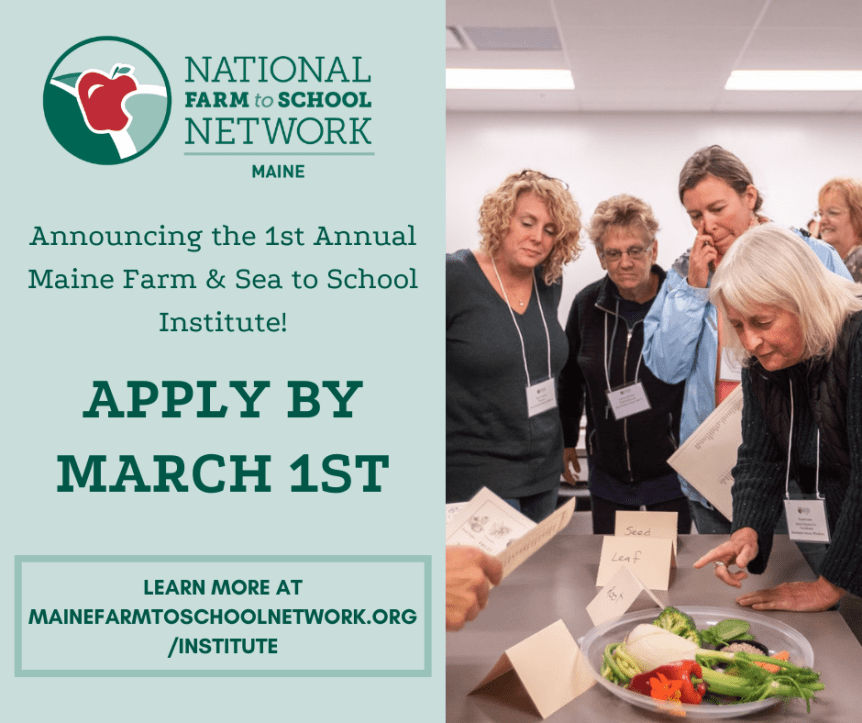
Maine Farm and Sea to School Institute 2022 – 2023

The Maine Farm and Sea to School Institute is a unique opportunity to impact your entire community! The Maine Farm and Sea to School Institute is a year-long professional opportunity for Maine schools/districts to develop a Farm and Sea to School (FSTS) program.

The Institute begins with a virtual orientation and pairing with an FSTS Coach, followed by an August 2022 Academy Program where teams learn about the 3 Cs of a FSTS program (cafeteria, classroom, community); discover the opportunities and resources in Maine; develop a vision for their FSTS program; create an action plan to implement that vision; and network with other FSTS champions!

For more information including a timeline and commitment, FAQ, contact information, and how to register visit https://www.mainefarmtoschoolnetwork.org/new-page-4.

Teacher’s Creative Lessons on Food Insecurity Lead to Agriculture Award

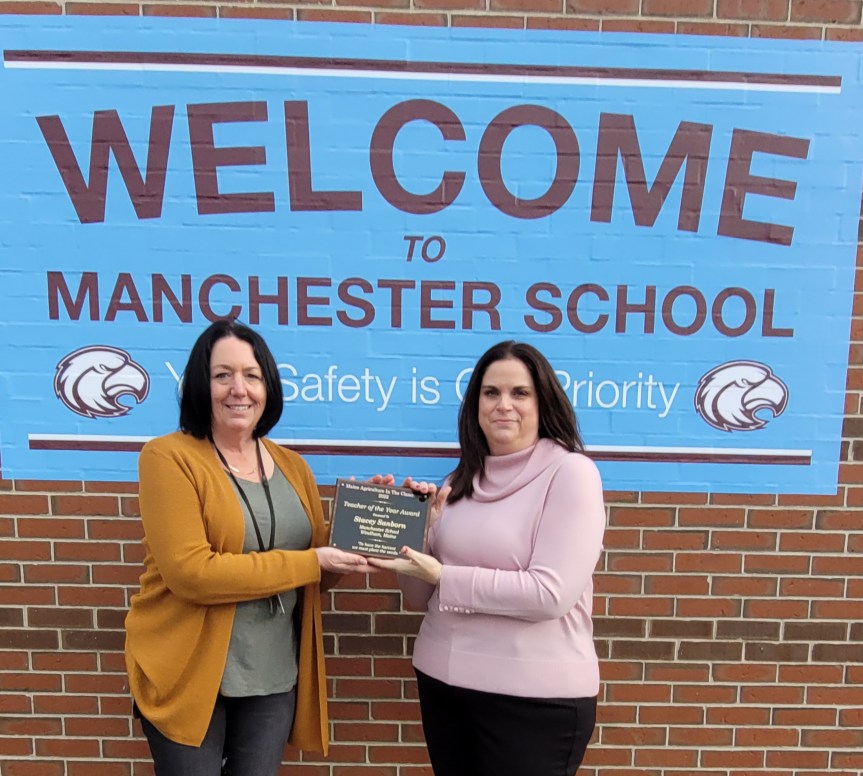
Image: Manchester School Principal Danielle Donnini (left) and Fourth Grade Teacher/Awardee, Stacey Sanborn (right).

Stacey Sanborn, a fourth-grade teacher at Manchester School in Windham, has had a lifelong passion for gardening, especially as it alleviates food insecurity. She’s passed that love on to her students. It is for her innovative and creative approach that Sanborn has been awarded the Maine Agriculture In The Classroom Teacher of the Year (MAITC) Award for 2022.

The MAITC organization singled out Sanborn as a teacher who incorporates agricultural education in the classroom while at the same time, aligning it with core curriculum standards in science, math, social studies, and art. But perhaps just as importantly, Sanborn also introduces the importance of food insecurity and how it affects others’ lives.

Sanborn said incorporating gardening as part of the curriculum is important because Maine is a farming and aquaculture state, and students get to experience how much we are all a part of something bigger and how life is interrelated.

“Teaching students about agriculture helps them to develop the understanding of where our food comes from,” she said. “Students can see the importance of protecting a long Maine tradition of farming. It gets them out of the classroom and into the outdoors where the students are motivated learners with plenty of opportunity for fun and hands-on experiences.”

Her students are involved in all parts of the gardening process – from seed to harvest – and as they do so, they learn the traditional “reading, writing, and arithmetic.” Ways in which the conventional curriculum is a part of the gardening program include activities such as composting and soil experiments, pollination, keeping detailed records, data collection, and analysis to name just a few. Sanborn also points out that the social studies curriculum plays a strong role in Manchester School’s agriculture program.

“Gardening offers the guiding principles of being part of a community and being an active problem solver,” she said. “Doing something for others – even if it is something small – can have a big impact.”

Some of what the students grow, they get to sample, making some of their favorite recipes such as carrot muffins and “Amazing Carrot Soup.” What they can’t use in the cafeteria, they give to the RSU 14 nutrition program and the Windham Food Pantry. But the social responsibility the students learn in Sanborn’s class doesn’t end there.

“A former student-gardener who lived with food insecurity started their own garden at home and were so successful they were able to share produce with other families in need,” Sanborn said.

The Manchester School teacher says she feels very honored to be a part of this program and is grateful for the recognition from MAITC, however, she believes this is not her award alone.

“I must recognize a former colleague, Master Gardener, and a great mentor, Pam Lenz,” Sanborn said. “She has put so much effort into this program and is a major part of its success. Pam has helped me to achieve everything I’ve done, and it is a true partnership. She was instrumental in keeping the program going during the early days of the pandemic when schools were not meeting in person. She continued by starting seedlings, planting them in the garden, and creating gardening videos that were used as part of the remote learning experience. Pam is just as an important part of this award and I couldn’t have done it without her.”

Maine DOE Child Nutrition’s First VISTA Member Paves the Way for Future Work

Caroline Bennett, a Volunteer In Service to America (VISTA) member of AmeriCorps joined the Maine Department of Education (DOE) Child Nutrition team in January 2021 to build capacity and resources related to alleviating food insecurity among Maine students, with a focus on school meal programs.

As Caroline’s one-year stay with the Maine DOE comes to a conclusion this month, we are celebrating the impact she has made as one of the first VISTA members to join our team. She is the first of a cohort that is focused on ending hunger in Maine by 2030.

Caroline’s projects supported the overall goal of improving access to healthy food, through the federal school meals programs. Her projects focused on three main areas:

  1. Determining barriers and best practices of increasing student participation in federal school meal programs by surveying both food service directors and parents. As a result of her work, a toolkit of information, tips, and social media templates has been created for school nutrition programs across the State to use. The toolkit can be found on the Maine DOE Student Eligibility & Applications webpage under the “Free and Reduced Applications” tab, then Resource Materials.
  2. Developing a foundation of resources to move towards all meals at no charge for Maine students. As a result of LD 1679, “An Act to Address Student Hunger through Expanding Access to Free School Meals,” she assisted with the cost analysis of the bill and collaborating with other partners such as Full Plates Full Potential.
  3. Creating a positive media campaign for completing the student meal benefit application. A toolkit was created to educate families on the importance of completing the confidential meal benefit application, including translated materials to help reach all Maine communities. Find the toolkit here.

Other focus areas included promoting the meal benefit application for families who are eligible for pandemic EBT benefits, and building resources for cultural diversity in school menus that can be used by school nutrition professionals. As a result of her work, 218 school districts that participate in the school meals programs have access to these resources, and 91,413 new pandemic EBT issuances were made.

Caroline’s work laid a great foundation for the Department’s future work to continue providing meals at no charge for public schools in School Year 2023. School districts are urged to educate families on the importance of completing the confidential meal benefit application as it informs key funding for schools, as well as connects families to important resources and benefits.

This important work will continue in future years as Child Nutrition looks to host another VISTA member in SY 2023.

Caroline’s future plans include attending the University of New England Master of Science in Applied Nutrition. We wish her the best in her future endeavors!

For further information contact the Maine DOE Child Nutrition Team.

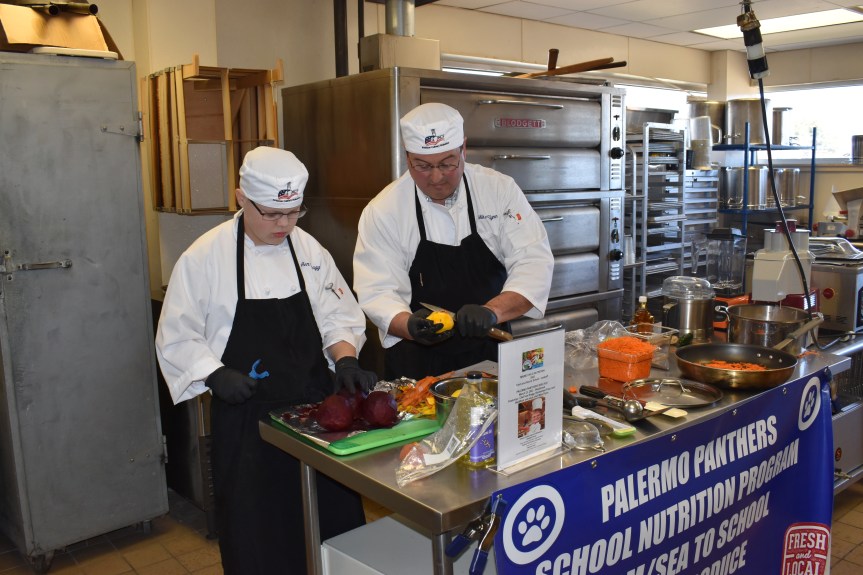
Maine School Nutrition Teams Invited to Register for Farm to School Cook-off by Jan 14

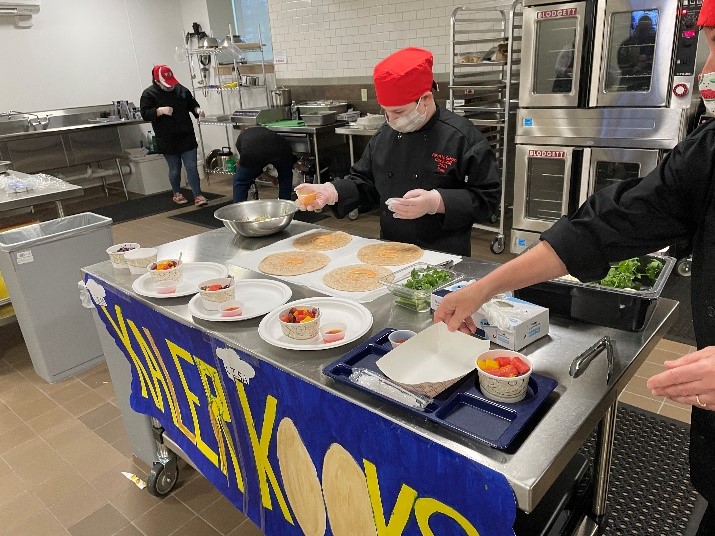
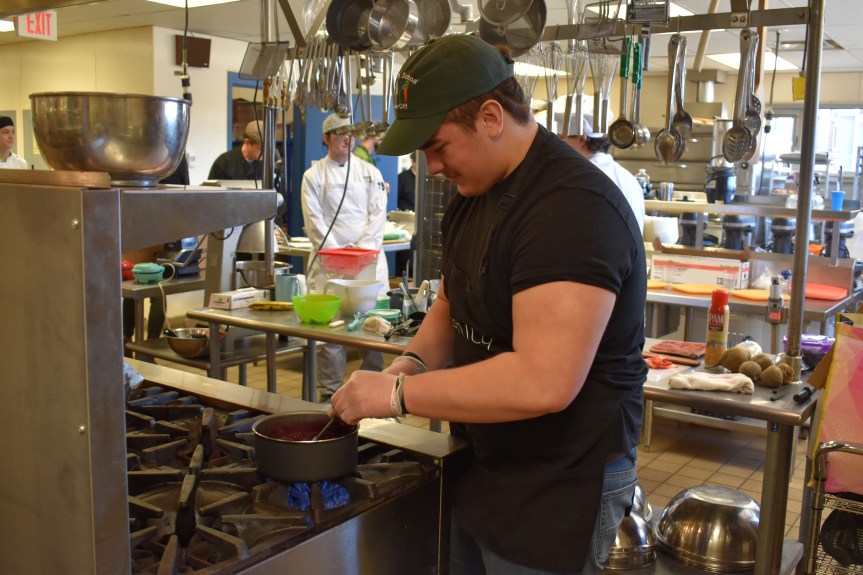
Photo Caption: Student Sam Messana from the Kaler Kooks, South Portland team.

Registration is open for the annual Maine Department of Education (DOE), Child Nutrition Farm to School Cook-off!

Held in the Spring of 2022, the cook-off is a statewide culinary competition for teams of school nutrition professionals and students to promote local foods in school meals. This voluntary competition is made available to all school districts in Maine.

The cook-off involves three regional competitions that take place in locations across the state (including Career and Technical Education [CTE] culinary arts centers), and a finals competition in the Maine DOE Child Nutrition Culinary Classroom located in its Augusta offices. All necessary precautions will be taken due to COVID-19, including face coverings and social distancing of teams.

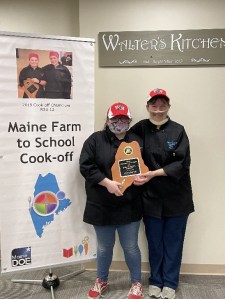
2021 Cook-off Champions- Whitefield Wildcats Kiara Luce & Vicki Dill

Each team will prepare a breakfast and lunch meal within a specific time frame using at least three ingredients that are grown, raised, caught, or manufactured in the State of Maine and meet National School Lunch Program (NSLP) meal requirements, as well as one US Department of Agriculture (USDA) food. Local buckwheat flour and local beets will be used as “challenge” ingredients in the competition this year. All recipes will later be shared in a Maine farm to school cookbook to be used in future school meals programs.

TIMELINE AT A GLANCE

  • January 14, 2022 – Team Registration Due (click here for registration link)
  • February 18, 2022 – Recipes Due to Child Nutrition State Office
  • March 23, 29 & 31, 2022- Regional Competitions take place!
    • March 23: Westbrook Regional Vocational Center
    • March 29: Lake Region Vocational Center
    • March 31: Augusta (location to be announced in early March)
  • April 8, 2022 – Finalists Announced
  • April 26, 2022 – Cook-Off Finals at the Child Nutrition DOE Culinary Classroom!

New to the Farm-to-School Cook-off in 2022 is a sample student reflection option to support students making connections that may inform their individual career development.

Interested school districts can find more information and the link to register on the Maine Child Nutrition website. The registration deadline is January 14, 2022. For more information on Maine’s Farm and Sea to School program, visit https://www.maine.gov/doe/farmtoschool.

For questions about the Maine Learning Results Life and Career Ready standards or Extended Learning Opportunities, contact Maine DOE Life and Career Ready Education Specialist, Diana Doiron, at diana.doiron@maine.gov or Rick Wilson, Maine DOE Extended Learning Specialist,  at rick.wilson@maine.gov.

For questions about the Farm-to-School Cook-off Competition, contact Maine DOE Child Nutrition Consultant, Stephanie Stambach at stephanie.stambach@maine.gov.

Greater Sebago Education Alliance Features New Video to Promote Jobs in School Nutrition

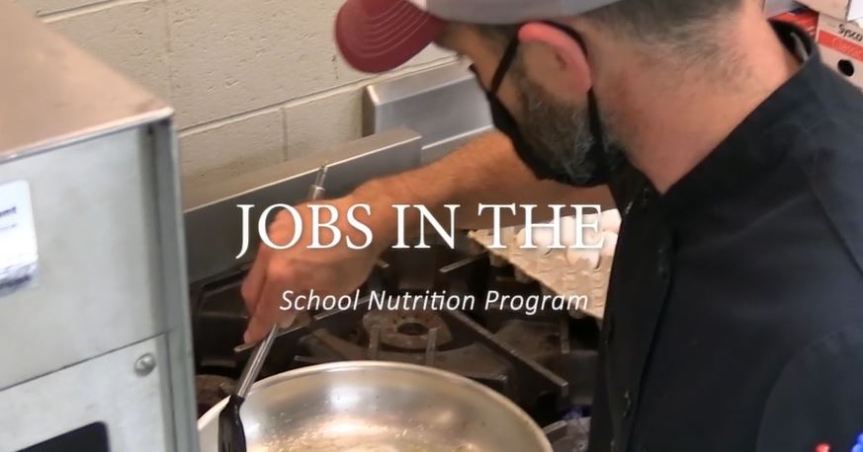
To showcase the benefits and joys of working on their school nutrition team, the Greater Sebago Education Alliance has created a video that features staff on the job, talking about why they enjoy working in school nutrition and why it’s a job that works for them.

Check out the video below, and if you or someone you know is looking for a change of pace in employment, try contacting your local school nutrition program to find out more information!

Jobs in the School Nutrition Program from Gorham Community Access Media on Vimeo.

VIDEO: Recognition of National School Lunch Week

In recognition of National School Lunch Week last week, US Department of Agriculture Secretary Tom Vilsack and US Department of Education Secretary Miguel Cardona extend their thanks to school nutrition professionals for their commitment to ensuring children are well-nourished and ready to succeed in school.

Share your thanks with school nutrition professionals at your school with free Stronger with School Meals digital thank you cards.

PRIORITY NOTICE: Toolkit of Resources Available to Promote the Meal Benefit Application

As schools across Maine prepare for the 2021/2022 school year with many changes, including the implementation of free school meals and the challenges of COVID-19, we are aware of the increasing difficulty you face with asking families to fill out the Meal Benefit Application.

Families, schools, communities, and our state can greatly benefit from the data that is gathered from the application, which includes key funding for school resources and additional resources for families in need.

The Maine Department of Education (DOE) has created a Meal Benefit Application Toolkit for schools/districts to help inform and promote the application within your school community:

Meal Benefit Application Toolkit for Schools

We hope that having these resources laid out in this toolkit can ease some of the burden to create your own promotional and informational materials. Here are some of the resources you will find in the toolkit:

  • Social Media Graphics – short informational graphics that can be shared on your district/school social media platforms.
  • Translated Informational Materials – a one-page info sheet that can be printed and distributed to families (translated versions available), info for teachers and school staff, and a letter to families expressing the importance of the Meal Benefit Application.
  • Meal Benefit Application Form Options – links to the original printable application, an online option, and an alternative sample form that can be used to help inform state subsidy calculations.

We recognize and appreciate all your hard work as you prepare for the start of the school year. Please contact Maine DOE for questions and/or additional resources:

  • If there is a specific additional resource you’d like to see in this toolkit, please contact Caroline Bennett (caroline.bennett@maine.gov) and Rachel Paling (rachel.paling@maine.gov).
  • For questions regarding application collection and SSO (Seamless Summer Option), please contact David Hartley (david.hartley@maine.gov).
  • To add your district to the web-based application via Nutrilink (we HIGHLY recommend this to increase accessibility of application), please contact Sarah Platt (sarah.d.platt@maine.gov).

MEDIA RELEASE: Call to Action for Maine Parents: Complete the Meal Benefit Application at School This Year – Even if School Meals are Free

Maine needs all parents and caregivers to take action this school year––by taking the time to complete the confidential Meal Benefit Application through your local school, even if school meals are already free for all students. Families, schools, communities, and our state can greatly benefit from the data that is gathered from the application, and this application is important for a number of reasons.

Since the start of the COVID-19 pandemic in March 2020, when school meals became complementary, there has been a significant drop in Meal Benefit Application returns––meaning less families are filling out the application.

The family income data provided by the application informs key funding for school resources. This includes school meal reimbursements, funding for Title I programs, funding and resources for after school programs, funding provided to schools from the Maine State Legislature for essential programs and services at school, funding for special education, teacher loan forgiveness, and much, much more!

Federal and state government use the aggregate data from the application to distribute education funding to schools across the county and state of Maine. In other words, if there is no data to inform the needs of the community, it could result in less education funding for your local district and for Maine.

By completing the Meal Benefit Application, you are directly investing in your child’s education and the children and families in your community.

Specific programs that are funded by the data collected from Meal Benefit Application:

How can I complete the Meal Benefit Application?  The application is available through your local school administrative unit (SAU) school nutrition program and it is completely confidential. Most SAUs have the application available to be completed online. Follow this link to access your SAU’s online application (if your school district is not listed, please contact them directly). A printed version of the application is also required to be available––it will often be part of beginning of year paperwork that comes home with your child.

This past school year has certainly had its challenges due to the Covid-19 pandemic. We are thrilled that, despite these challenges, all Maine children have had the opportunity to access free healthy school meals on a daily basis. We would like to extend our gratitude to Maine parents and caregivers who have participated in their SAUs’ meal programs. We know that with the continued support of Maine’s incredible families, we can ensure the best for our children.

Maine DOE Child Nutrition Launches CNPWeb for School Year 2022

The Maine Department of Education (DOE) Child Nutrition is excited to announce that we are moving over to a new program, CNPWeb, which will replace NEO for all School Nutrition functions.

CNPWeb will streamline the claiming, ordering, annual application and review process for all of our child nutrition programs. The system will go live in July 2021 at which time each district will need to submit their annual Sponsor Application and Site Information Sheets for approval.

Superintendents will have permissions to approve the monthly claim for reimbursement. However, if you wish to delegate another person as the Approving Officer, the Superintendent must email Pamela.Partridge@maine.gov to make this request.

For technical assistance and questions please contact Pam Partridge at Pamela.Partridge@maine.gov or (207) 624-6843 the Child Nutrition Team at child.nutrition@maine.gov, or (207) 624-6842.