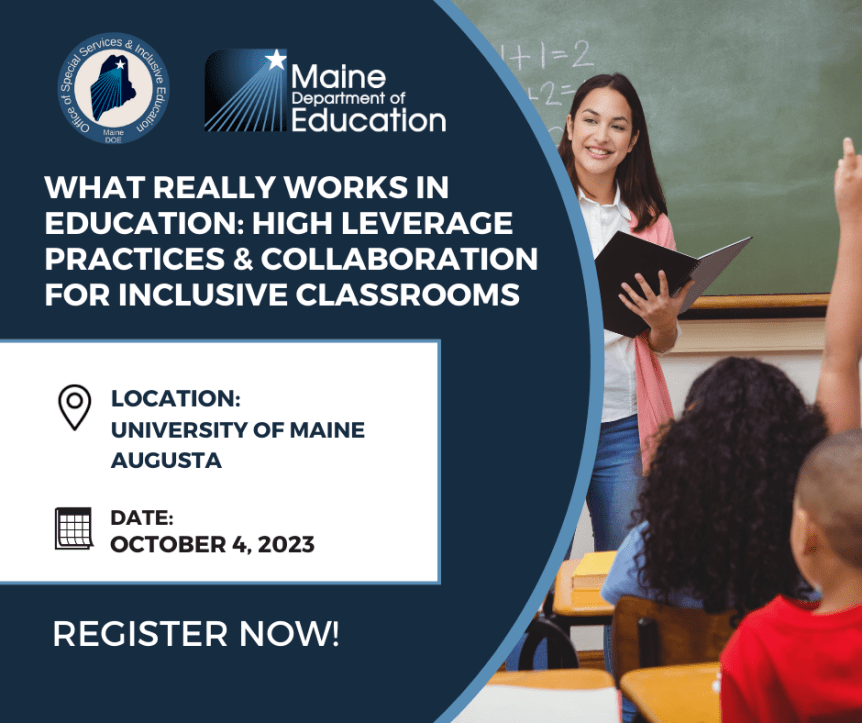
What Really Works in Education 2023 Conference: High Leverage Practices & Collaboration for Inclusive Classrooms

Are you looking for strategies, tips, and practical techniques around high-leverage instructional practices and collaboration that work with diverse learners to create Inclusive Classrooms?  This conference is for you and your team!

For the first time ever, the popular What Really Works in Education conference is coming to Maine!  This year’s conference, hosted by the Maine Department of Education’s Office of Special Services and Inclusive Education, will engage learners around high-leverage practices by local, national, and international experts.

Participants will leave with tips, tricks, strategies, and tools to add to their educational toolkit from each session in the conference.

The one-day event will feature strategies on Collaboration and Inclusion for administrators, general and special education teachers, preservice educators, educational technicians, and related service personnel including strands on Collaboration and Behavior and Collaboration and Academics.

  • Date:  Wednesday, October 4, 2023
  • Location: University of Maine Augusta
  • Cost: $50 per participant which includes breakfast, lunch, and a copy of the 2023 book of Connecting High Leverage Practices to Student Success: Collaboration in Inclusive Classrooms (Jenkins & Murawski).
  • Register for the conference here.
  • For more information visit the Inclusion Conference website.

Keynote Speakers 

Dr. Wendy W. Murawski

Wendy W. Murawski, PhD, is the Executive Director and Eisner Endowed Chair for the Center for Teaching and Learning at California State University, Northridge (CSUN), where she is also a professor in the Department of Special Education and the Director of SIMPACT Immersive Learning. Dr. Murawski is the national Past President of the Teacher Education Division (TED) of CEC and award-winning researcher, author, and educator, including Teacher Educator of the Year for the state of California. Dr. Murawski holds an EdS, MEd, and MBA and  is an internationally known speaker and frequently requested keynote speaker, presenting in Europe, Asia, Africa, and North America. She has published extensively around inclusive education, co-teaching, collaboration, and Universal Design for Learning, including 18 books and numerous chapters, blogs, and peer-reviewed articles. Prior to higher education, she was a general and special education teacher in Virginia and in California. Currently, Dr. Murawski is the CEO of 2 TEACHâ (www.2TeachLLC.com), an educational consulting company dedicated to promoting inclusive education, and 2 TEACHâ Global, championing inclusive education around the world.

Dr. Melissa C. Jenkins

Melissa C. Jenkins, PhD, is an assistant professor of Special Education at the University of Mary Washington in Fredericksburg, VA and co-author of Connecting High-Leverage Practices to Student Success: Collaboration in Inclusive Classrooms. She brings over 18 years of public school experience to her role as a teacher educator, having worked in Virginia public schools as a special education teacher, instructional coach, and central office administrator. Dr. Jenkins is dedicated to helping educators bring high-quality, inclusive practices to schools. She is also a consultant with 2 TEACHâ Global educational consulting. She loves speaking and writing about collaborative practices, early mathematics intervention, and positive behavioral support. When not working, Melissa enjoys practicing yoga to find literal and figurative balance in life.

Why Inclusion?

The federal Individuals with Disabilities Act (IDEA) requires that each public agency (SAU) must ensure that to the maximum extent appropriate, children with disabilities, including children in public or private institutions or other care facilities, are educated with children who are nondisabled; and special classes, separate schooling, or other removal of children with disabilities from the regular educational environment occurs only if the nature or severity of the disability is such that education in regular classes with the use of supplementary aids and services cannot be achieved satisfactorily. §300.114

Over 20 years of research studies have consistently demonstrated that the inclusion of students with disabilities in general education classrooms results in favorable academic, social, and economic outcomes. This includes positive benefits for typical peers in classrooms who benefit from involvement and relationships with students who have disabilities in inclusive settings.

Effectively including students with disabilities in the general education classroom requires teachers and school administrators to further develop an understanding of the individual strengths and needs of the whole student.

For more information about Inclusion in Maine or the What Really Works in Education conference, contact Tracy Whitlock at tracy.w.whitlock@maine.gov.

Orono Middle School Students Embrace their Culture with Classmates and Community

(Pictured: Students and their families pose for a photo at the culture festival)

Highlighting the diversity of students is crucial to fostering a sense of belonging, both in schools and in the wider community. To accomplish this, and to enjoy delicious foods from across the world while doing it, students at Orono Middle School  held a cultural festival to celebrate their different backgrounds. The event was organized by middle school teacher, Jessica Archer, who recently was recognized as Penobscot County’s 2023 Teacher of the Year for her innovative teaching.

The origins of the cultural festival began with Archer’s desire to deepen her understanding of the culture and experiences of her students, especially those from outside of the country. Recognizing the need for a greater understanding of her students’ diverse backgrounds, she interviewed many of them, asking each student questions about their culture and background. At the end of each interview, she asked, “What do you want people to understand about your culture?” That question elicited several responses from students who felt that their classmates did not understand them because they did not know more about their culture. Archer then asked the students if they would like to participate in an event celebrating their unique cultures which, in her words, led many of her students’ faces to “light up” with joy.

Inspired by her students’ answers during their conversation, Archer decided to write a story about each student’s background from their point of view. After sharing the drafts with her students and their families to ensure accuracy, Archer published the stories, along with pictures, to display on a school bulletin board. The board displayed a map of the world, with strings connecting each of her students to their country of origin. Archer also recognized a greater need to spread awareness around her students’ cultural backgrounds beyond her classroom and with the rest of the school’s student body. After speaking with two of her students who celebrated Ramadan and wished their peers better understood the holiday and their culture, Archer helped them to create an informational bulletin board and place it in the school’s foyer.

The after-school culture festival Archer organized was a success and attended by nearly 40 participants who learned from the eight families from different parts of the world. Students and their families from or with ties to Ukraine, France, Jordan, South Africa, Guatemala, Israel, Turkey, and Myanmar gathered to celebrate their culture, experiences, and of course, delicious food.

Students’ dishes included Middle Eastern Za’atar bread and traditional Ukrainian Potato Varenyky, a dish like dumplings. But the event also represented much more than just a culinary adventure. In addition to food, families also shared visual and audio representations of their culture. Students and families who participated felt the event was valuable in helping foster a better understanding of different cultures represented within the school and community. Alex, one of the parents who participated in the event wrote that the culture festival “offers a unique opportunity to discover the variety and richness of the Orono immigrant families’ cultural and gastronomical backgrounds.” Khawla, another parent, wrote, “the cultural festival at schools is an excellent way to build a strong foundation for diversity in the community by bringing people together from different cultures, religions, regions, and backgrounds to get to know each other, share ideas, food, and mind in a spirit of peace, unity, and togetherness.”

The event taught valuable lessons to students and families alike on the diversity of their community. Sophia, one of  Archer’s students who participated in the event said, “people make assumptions about people from other countries. It is important that we learn about each other and ask questions before making assumptions and judgments.” Archer hopes to expand the event to include families other schools throughout RSU #26 next year to continue sharing and celebrating the diverse backgrounds of her students.

This story was drafted by Maine DOE Intern Ryan Hafener in collaboration with Jessica Archer as part of the Maine Schools Sharing Success Campaign. To submit a story or an idea, email Rachel Paling, Maine DOE Communications and Outreach Coordinator at rachel.paling@maine.gov.

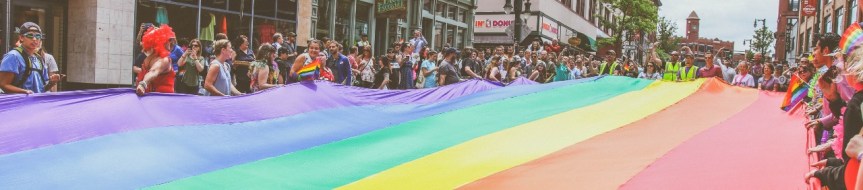
Celebrating Pride Month. Resources to Support LGBTQ+ Students and Build a Welcoming School Climate

June is LGBTQ Pride Month and the Maine Department of Education (DOE) has a robust collection of resources devoted to supporting LGBTQ+ students in Maine and fostering a positive school climate.

The resources were put together through a collaborative partnership between Maine DOE, OUT Maine, and GLAD (GLBTQ Legal Advocates and Defenders) in an effort to provide meaningful resources and information to schools to give them the tools to support not only their LGBTQ+ students but families and school staff as well. The Maine DOE is committed to ensuring Maine schools are safe and welcoming environments for all students.

The website includes data about Maine’s LGBTQ+ youth, the Maine Integrated Youth Health Survey (MIYHS) data, teaching resources, and other vital tools for Maine schools to ensure equity for LGBTQ+ identifying students and meaningfully celebrate Pride Month. There are also additional resources specifically for students and parents.

The website of resources can be accessed here: LGBTQ+ Resources

2023 Summer Symposium on Inclusive Practices for Students with Autism and Developmental Disabilities

Join the Council for Exceptional Children’s (CEC) Division of Autism and Developmental Disabilities (DADD) groups face-to-face at UMaine Orono or join via Zoom on July 21st from 9:00 am – 3:00 pm for a full day of inclusion-building topics in education centered around two strands of learning- 1) access to the curriculum and 2) quality of life. There are multiple ways of joining and learning. Get more information and register HERE now!

Contact hours are available. For more information please reach out to Anica Miller Rushing anica.miller.rushing@maine.edu.

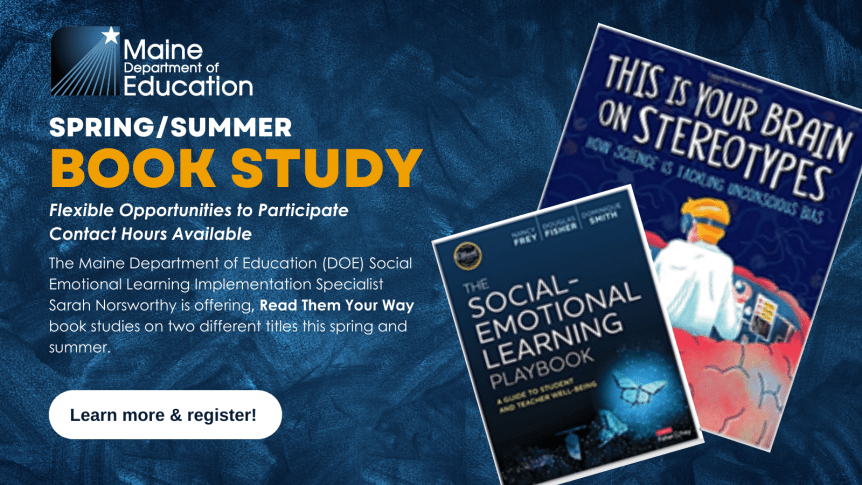
Spring/Summer Book Study Opportunities: ‘Social Emotional Playbook,’ and ‘This Is Your Brain On Stereotypes’

The Maine Department of Education (DOE) Social Emotional Learning Implementation Specialist, Sarah Norsworthy is offering, Read Them Your Way book studies on two different titles this spring and summer.

  • The Social Emotional Playbook, written by Douglas Fisher, Nancy Frey and Dominque Smith is described by publisher Corwin as an “interactive playbook (which) provides the language, moves and evidence-based advice you need to nurture social and emotional learning in yourself, your students and your school.”  The book is divided into six modules.  This text is designed for educators.
  • This Is Your Brain On Stereotypes written by Tanya Lloyd Kyi and illustrated by Drew Shannon is described by publisher Kids Can Press as being, “an essential overview of the science behind stereotypes, from why our brains form them to how recognizing them can help us be less biased…This timely and hopeful book addresses the issues of discrimination, racism, sexism, ableism, and homophobia and offers concrete suggestions on how to make change.  It uses scientific inquiry and loads of relatable and interesting examples to explore these uncomfortable topics in age-appropriate ways.  Chapters, sidebars, and colorful illustrations break the text into manageable chunks.  Besides the many ways this book could be used to inspire frank and in-depth discussions on the importance of addressing stereotypes and bias, it also links to many science and social studies curriculum topics.  Backmatter includes an extensive list of sources, suggestions for further reading and an index.”  This text is designed for educators and is recommended for students 11 and up.

Read Them Your Way

  1. Choose to organize a professional community read. Maine DOE facilitation of a live, interactive, inquiry based discussion is available. Discussions of The Social Emotional Learning Playbook would be facilitated over six weeks, one week per module. Discussions of This Is Your Brain On Stereotypes would be facilitated over one session.
  2. Read individually, at your own pace, and post your thinking on a shared jamboard with other education professionals across Maine. Comment on the thoughts of others w/ MDOE moderation.
  3. Read on your own and join in a live discussion.
    • One session LIVE, interactive, inquiry based discussions of The Social Emotional Learning Playbook will be hosted by the MDOE at 4pm on 6/1, 6/29, 7/20 & 8/17. Register here. Breakout groups will be by module, as engagement allows.
    • One session LIVE, interactive, inquiry based discussions of This Is Your Brain On Stereotypes will occur at 4pm on 5/31, 6/28, 7/19 and 8/16. Register here. Breakout groups will be used depending on engagement.

Contact hours are available for all opportunities.

Questions?  Please contact Sarah Norsworthy, SEL Implementation Specialist at sarah.norsworthy@maine.gov

New Series: Co-Teaching for Inclusion in Maine

Maine Access to Inclusive Education Resources (MAIER), a collaborative between the Maine Department of Education (DOE) Office of Special Services and Inclusive Education and the University of Maine, has a variety of professional learning opportunities for the field and is pleased to announce a new series of co-teaching supports for inclusive classrooms and schools.

Co-teaching is being implemented in schools across the nation to address the needs of all students in classrooms with the goal of creating more inclusive environments.   Co-teaching involves having a general education teacher and special service provider (e.g., special education teacher, Title I teacher, ELL specialist, speech/language pathologist) collaboratively planning, teaching, and assessing to ensure success of all students.

Dr. Wendy Murawski, national expert and author on co-teaching and CEO of 2Teach, has created Co-Teaching Modules for Maine.  These modules, titled Co-Teaching 101, provide professional learning for Maine educators addressing co-teaching, planning, and assessing learning options for your classrooms and school.   These asynchronous modules may be found at https://umaine.edu/maier/co-planning-101/.

Additionally, MAIER is providing a Co-Teaching Community of Practice facilitated and supported by MAIER’s Research Associate, Dr. Anica Miller Rushing, and 2Teach’s Dr. Melissa Jenkins.  The purpose of this CoP is to increase both general and special educators’ ability to use co-teaching to improve inclusion practices. The CoP starts meeting in May and you may register at https://docs.google.com/forms/d/e/1FAIpQLSc4HBkVmuPIiJ3eaqoT0kj11ZcfaMJop9DfrvWpeG6OdYKzoA/viewform.

Contact hours are available.  To learn more about this programming, please contact Anica Miller Rushing at anica.miller.rushing@maine.edu.

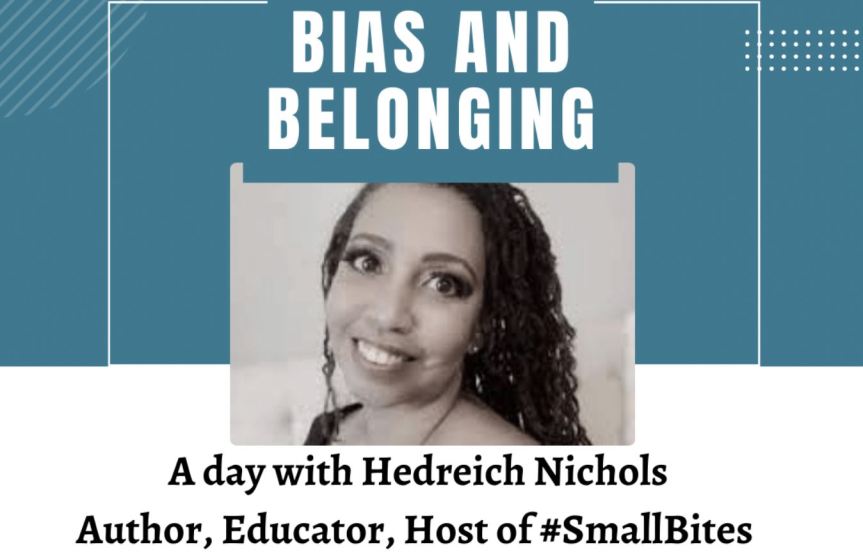
Reminder – Interactive Workshop of Bias and Belonging on 3/2/23 in Brewer

The Maine Department of Education (DOE), Office of Student Supports will be hosting author Hedreich Nichols on March 2, 2023, in Brewer.  Nichols is an author and educational consultant helping teachers and districts amplify the voices of all students. With her Solution Tree title, Finding Your Blind Spots: 8 Guiding Principles to Overcome Implicit Bias in Teaching, Hedreich combines her experience as a “One Black Friend” and educator with academic research and pedagogical strategies to ensure that educators have the skills and knowledge they need to create more equitable classrooms and campuses.

Hedreich will be hosting a conference on behalf of the Maine DOE titled Bias and Belonging.  This will be an interactive workshop.  Check-in on March 2nd is from 8:15-8:30, and we will depart at 3:30 pm.  There will be time for Q and A with Nichols and collaboration with participants. We invite you to our day with the author, Bias and Belonging.

Participation in the March 2nd event will include light refreshments and lunch provided at no additional cost.  Those attending on behalf of school administrative units (SAUs) are eligible for a $125 reimbursement (payable to the SAU) for employee time/travel.8 CEUs will be awarded for participation on March 2nd.

For more information about this event, contact Melanie Junkins at melanie.junkins@maine.gov

Culturally Diverse Culinary Resources

The Maine Child Nutrition office has created a new webpage dedicated to culturally diverse culinary videos, recipes and resources that are available for Child Nutrition Programs, including the National School Breakfast and Lunch Program, the Child and Adult Care Food Program, and the Summer Food Service Program. Currently, there are Halal and Wabanaki/indigenous foods recipes and resources available, with plans for more culturally diverse resources being added in the future! The goal of these resources is to educate and provide tools for child nutrition programs in meeting the diverse needs of their student populations.

For more information and to view these resources, visit the Culturally Diverse Culinary Resources page.

An Interactive Workshop of Bias and Belonging with Author Hedreich Nichols on 3/2/23 in Brewer

The Maine Department of Education (DOE), Office of Student Supports will be hosting author Hedreich Nichols on March 2, 2023, in Brewer.  Nichols is an author and educational consultant helping teachers and districts amplify the voices of all students. With her Solution Tree title, Finding Your Blind Spots: 8 Guiding Principles to Overcome Implicit Bias in Teaching, Hedreich combines her experience as a “One Black Friend” and educator with academic research and pedagogical strategies to ensure that educators have the skills and knowledge they need to create more equitable classrooms and campuses.

Hedreich will be hosting a conference on behalf of the Maine DOE titled Bias and Belonging.  This will be an interactive workshop.  Check-in on March 2nd is from 8:15-8:30, and we will depart at 3:30 pm.  There will be time for Q and A with Nichols and collaboration with participants. We invite you to our day with the author, Bias and Belonging.

Participation in the March 2nd event will include light refreshments and lunch provided at no additional cost.  Those attending on behalf of school administrative units (SAUs) are eligible for a $125 reimbursement (payable to the SAU) for employee time/travel.8 CEUs will be awarded for participation on March 2nd.

For more information about this event, contact Melanie Junkins at melanie.junkins@maine.gov

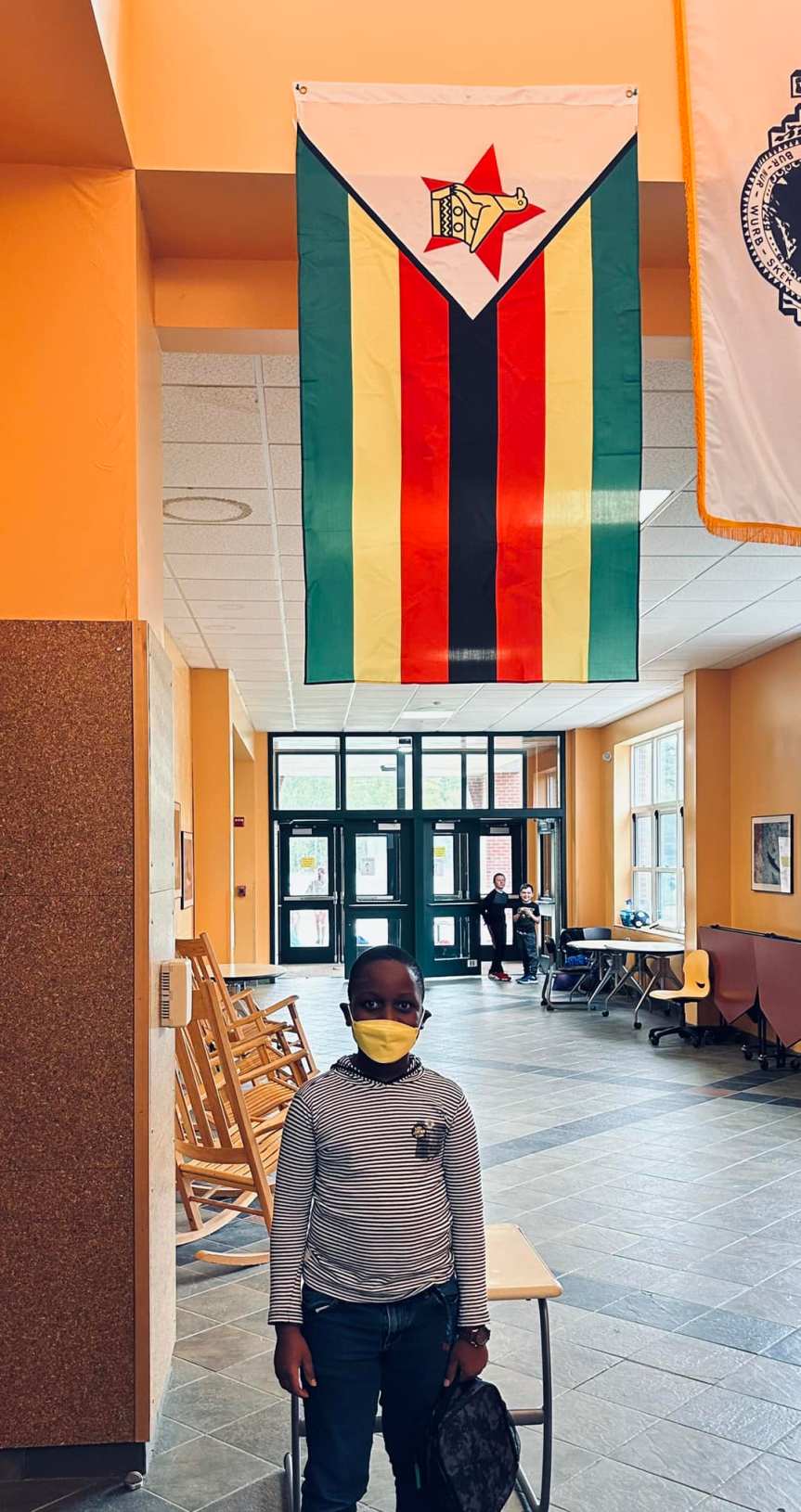
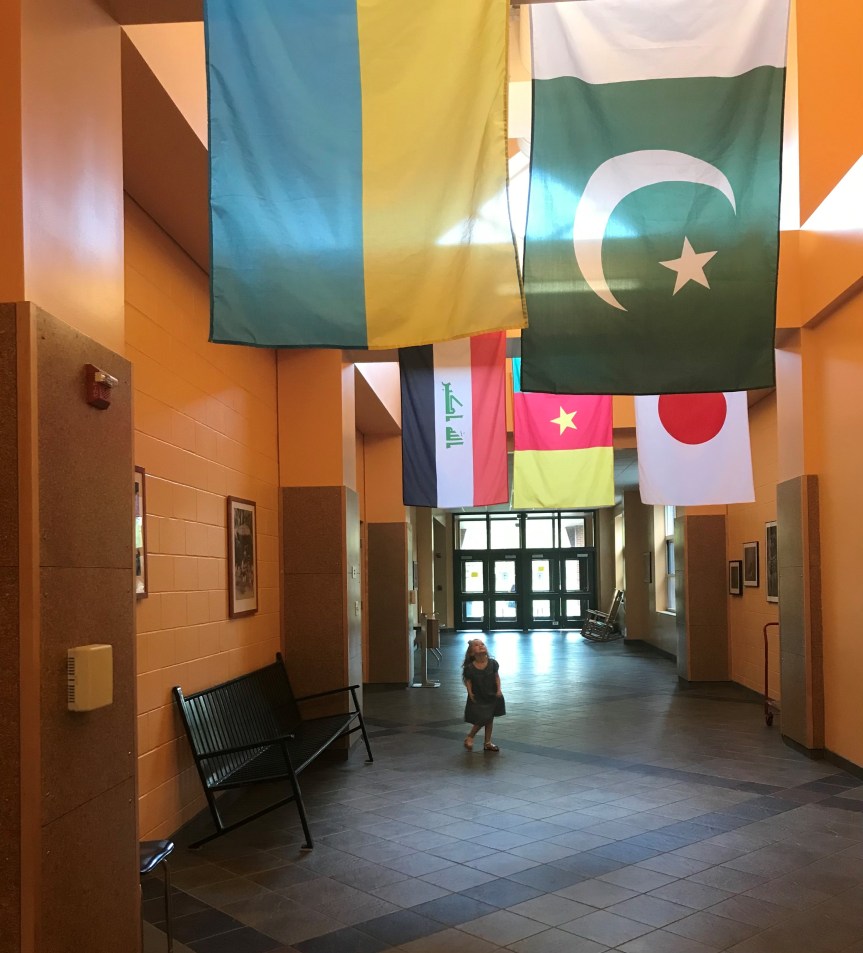
Old Town Elementary Hallway of Flags Celebrates Diverse School Community

A few years ago Old Town Elementary School (OTES) reflected on their school’s role in expanding the experiences and perspectives of the students and staff in the school. They realized they had an obligation to make the community aware of the diverse cultures and countries entering through their doors each day and to create a welcoming environment for all people at OTES. With the University of Maine as the school’s neighbor, they often receive students from the University because parents are finishing their degrees or are professors.

OTES decided to put a flag up for every country represented at the school to welcome families and teach their students about the various cultures represented at the school with each of these new community members. As a result, OTES families coming to the school building feel immediately welcomed by the gesture of seeing their native country flying in the hallways of the school.

“Students and staff are so excited about another country joining this hall of flags and getting to know about the country,” said OTES Principal Jeanna Tuell. “We have found more opportunities to make connections with other countries and to celebrate our diversity.”