Summer Institute for Elementary Teachers: Identity and Multilingualism through Picture Books

The National Endowment for the Humanities (NEH) is sponsoring a two-week summer institute designed for K-3 elementary teachers, “Identity and Multilingualism through Picture Books.” The institute will focus on pedagogical approaches to language learning through an equity lens.

All details about the application process, logistics, and program facilitators can be found on this site: https://earlyidentityandlanguage.org

For additional questions, contact co-directors Krista Aronson (karonson@bates.edu) and Margaret Boyle (mboyle2@bowdoin.edu).

American Translators Association Announces the 2021 Winner of the School Outreach Program Award

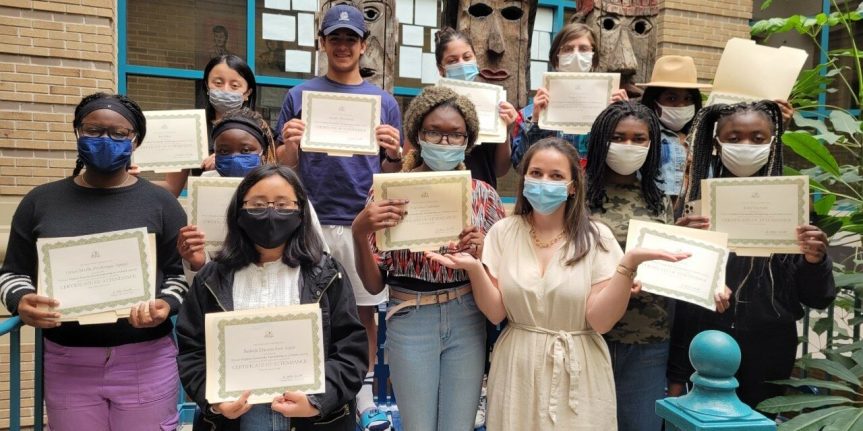
The American Translators Association (ATA) announced that Majlinda Mulla-Everett – an Albanian, Bosnian, Croatian, Macedonian and Serbian interpreter based in Portland, Maine – has been chosen as the winner of ATA’s School Outreach Program Award.

“We are delighted to present this award to Ms. Mulla-Everett for her weeklong presentation series at Portland High School in June 2021,” said Ted Wozniak, President of the American Translators Association. “Now in its seventeenth year, ATA’s School Outreach Program raises awareness of the role that translators and interpreters play in business, education, government, healthcare, technology and society at large. In today’s global economy, companies and other institutions are realizing the importance of using skilled professional translators or interpreters to communicate their message effectively and successfully to international audiences, avoiding potentially costly and embarrassing mistakes.”

ATA launched the School Outreach Program in 2004 to educate students about translation and interpreting and to interest them in these rewarding career fields. Through the program, professional linguists speak to students of all ages, highlighting the career benefits of studying another language and the increasing potential for exciting work with foreign language skills. Using a variety of model presentations and activities available on ATA’s website, presenters outline the requirements for becoming a professional translator or interpreter, emphasizing that these careers demand far more than simply being bilingual.

“The School Outreach program focuses on educating the public about exciting career paths in translation and interpreting and their wide range of applications around the world,” said Meghan Konkol, coordinator of the School Outreach Program.

In order to receive this award, participants must belong to ATA or an ATA-affiliated organization and must present to a school of their choice. Entrants must also submit photos or screenshots of themselves presenting to the students.

A legal and medical interpreter with over 10 years of experience, Ms. Mulla-Everett was honored to be asked to offer a weeklong class titled “Explore Community Interpreting as a Career” to students at Portland High School in Portland, Maine. Tackling the class as she would an interpreting assignment, Ms. Mulla-Everett engaged the students by giving them information, tips and encouragement using roleplay and memory games.

Seeing the students participating enthusiastically in the exercises and answering quiz questions correctly made her realize how important they viewed the language professions. Ms. Mulla-Everett also invited guest speakers to present their own experiences as in-person and remote interpreters. The bilingual students came out of the class understanding the value of knowing another language and the potential to help their community and make a living while doing so.

As winner of the award, Ms. Mulla-Everett received free registration to ATA’s 62nd Annual Conference, taking place October 27 through 30 in Minneapolis, Minnesota. She will be presented with the award at an awards ceremony before more than a thousand of her colleagues in the translation industry.

To learn more about the American Translators Association and the School Outreach Program, visit http://www.atanet.org or call 703-683-6100.

Educational Resources to Help Honor National Hispanic Heritage Month

Today marks the first day of National Hispanic Heritage Month which is celebrated each year from September 15 to October 15 across the nation. The month is a time to honor Hispanic heritage by celebrating the histories, cultures, languages, and the remarkable contributions of Hispanic people to the fabric of the United States, whose ancestors came from Spain, Mexico, the Caribbean, and Central and South America. It is also a time to revisit ways to integrate diverse cultural material into education lessons all year long.

Here are some educational resources that can be used by schools to honor, recognize, and teach students about Hispanic heritage:

For further resources and information about integrating diverse backgrounds, cultures, and experiences into classroom lessons, please visit the Maine Department of Education’s Diversity, Equity, and Inclusion webpage.


June Wabanaki Conference Pays Tribute to 20th Anniversary of LD 291

The Maine Department of Education (DOE) hosted close to 100 educators on Saturday, June 12th for a morning-long virtual recognition event that paid tribute to the 20th anniversary of the signing of LD 291, a requirement for the teaching of Wabanaki history and culture in Maine classrooms.

“While we understand that there is still a lot of work to be done, it was important to recognize that 20 years ago this important legislation was signed,” said Joe Schmidt, Maine DOE Coordinator of Secondary Learning and Social Studies Specialist. Schmidt helped plan the June conference. “We carefully planned this event to both look to the past, recognizing how we got here, and to the present and future by providing meaningful resources to support relevant, robust, and inclusive education for our students here in Maine.”

The conference opened with a video message from Governor Janet T. Mills, remarks from Maine Commissioner of Education Pender Makin, and a keynote by LD 291 legislative sponsor, Honorable Donna Loring and featured three strands of virtual, synchronous professional learning opportunities:

Opening Remarks: Video Message from Governor Mills
View Message 
Commissioner Makin & Honorable Donna Loring
View Recording
 

Strand 1 – Wabanaki People and Culture:

Intro to MicMac Language
Presenter: John Dennis
View Recording
Maine Indian Policy History, Racism, and the Future of Wabanaki Tribal Sovereignty
Presenter: Darren Ranco
View Recording
Wabanaki Diplomacy and LD 291: Storying Protocols as Political Will
Presenter: Nolan Altvater
View Recording
Strand 2 – Classroom Resources: Wabanaki Stories in Your Secondary Classroom
Presenter: Margo Lukens & Ashton Carmichael
View Recording
Wabanaki Studies in the Elementary classroom
Presenter: Brianne & Kaya Lolar
View Recording
Resources to extend knowledge of Wabanaki Culture and History
Presenter: Melanie Brown
View Recording
Strand 3 – Decolonization: Towards Decolonizing Education: Settler Colonialism and Empire Building in the Classroom
Presenter: Starr Kelly
View Recording
Equity, Decolonization, Anti-Racism and Wabanaki Studies: Portland Public Schools’ Journey to Fulfill the 2001 Wabanaki Studies Law
Presenter: Fiona Hopper
View Recording
Decolonial Mirrors & Shifting the Gaze to Anti-Racist Education
Presenter: Rebecca Sockbeson
View Recording

Further resources from each of the presentations are available on the 2021 Wabanaki Conference webpage. The webpage also features a video message from Senator Angus King recognizing the importance the 20th anniversary of L.D. 291 and the integration of Wabanaki history and culture in Maine education.

The Maine DOE has also recently collaborated with UMaine and other state organizations on a grant to support enhanced access, utilization of Wabanaki resources and provided interactive workshops hosted by Wabanaki REACH, in addition to many other professional learning opportunities offered by Department specialists and partners throughout the past several years to assist and support schools across Maine in understanding L.D. 291 and integrating Wabanaki culture and history into education programming.

Further Wabanaki education resources and contacts can be found on the Maine Department of Education Maine Native Studies Resources webpage

We look forward to working with schools, tribes, and education partners throughout Maine to expand these important efforts. For more information or to make a connection with the Maine DOE, reach out to Joe Schmidt at Joe.Schmidt@maine.gov.

MEDIA RELEASE: National Funding to Support Enhanced Access, Utilization of Wabanaki Resources

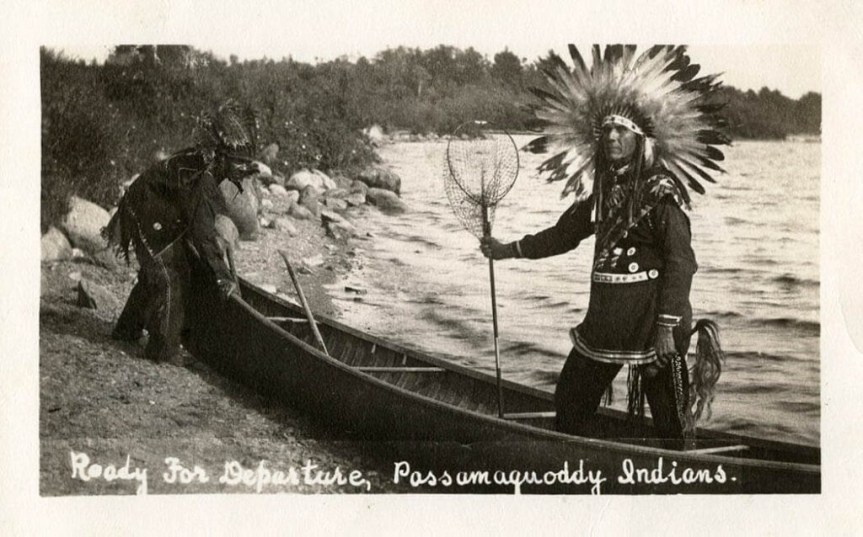
Image: Courtesy of the Hudson Museum HM7182.133

Collaborators on the project include partners from Raymond H. Fogler Library, the College of Education and Human Development and Native American Programs at UMaine, members of the Wabanaki Confederacy and the Wabanaki Studies Working Group, the Maine Department of Education, the Abbe Museum in Bar Harbor, Amherst College and the University of Massachusetts Amherst.

The National Endowment for the Humanities has awarded a grant of more than $59,000 to the University of Maine’s McGillicuddy Humanities Center to support development of a centralized digital portal that will improve access to Wabanaki historical and cultural resources and archival collections currently distributed across UMaine and, in the future, to incorporate collections curated by several external institutions.

“Teaching about the people whose land we inhabit today is crucial work and I am excited to be able to represent the Maine Department of Education (DOE) in support of this grant,” said Maine DOE Coordinator of Secondary Education and Social Studies Specialist Joe Schmidt. “During my time at the Department I have strived to make sure that we remove barriers for educators when it comes to teaching about Maine Native Americans and from the start of her time at the Department, Commissioner Makin has made this one of her top priorities as well. By working to develop a centralized portal of historic artifacts, educators will be better equipped to develop and deliver inclusive and accurate curriculum related to Wabanaki history and culture. Through this grant, we will take another step in making sure that all of our students can see themselves as important contributors to the past and present of all that Maine has to offer.”

UMaine professor of English Margo Lukens, a faculty adviser to the McGillicuddy Humanities Center, will lead the interdisciplinary Wabanaki Resources Portal project, which seeks to enhance utilization of existing resources to promote the study of Wabanaki history and culture at the elementary, high school and post-secondary levels in Maine and to facilitate interdisciplinary academic and arts scholarship.

UMaine’s archival holdings related to Wabanaki history and culture are extensive, and include the collection of Fannie Hardy Eckstorm, an early twentieth-century independent scholar of Wabanaki history and culture; the Molly Spotted Elk Collection, which provides a Penobscot view of the United States and Europe; the Linda Gilbert Collection of Penobscot Indian Music featuring original audio recordings about traditional song and dance; and the Maine Indian Collection, one of the largest institutional collections of Wabanaki baskets and basketmaking materials and tools, which is curated by the Hudson Museum. The museum also maintains a collection of significant primary resources, particularly images portraying traditional Wabanaki activities such as basketmaking and harvesting.

Other Wabanaki artifacts stewarded by UMaine include photographs of Passamaquoddy and Penobscot people including prominent tribal members Andrew Sockalexis and Lucy Nicolar Poolaw, who was also known as Princess Watawahso, characteristic objects from the 1880s through today, and the Senator William S. Cohen Papers related to the Maine Indian Land Claims Settlement Act of 1980. Fogler Library also maintains copies of recordings of Wabanaki speech and story now in the Library of Congress collection.

Much of the Wabanaki history and cultural material now housed in University of Maine collections is the intellectual and physical property of the Wabanaki tribes. A 2018 memorandum of understanding between UMaine and the Penobscot Nation delineates a process of artifact co-curation that includes tribal members to ensure culturally responsive care and use of archival material held by a nontribal organization. Maine’s Native American communities will be included in decision and policymaking related to the collections, including controlling access to culturally sensitive materials. UMaine is working to develop a similar memorandum of understanding with the Passamaquoddy Tribe.

Currently, access to UMaine’s resources is limited by siloed storage across multiple, unconnected locations and formats. Developing a centralized portal where digital copies of historic artifacts can be archived as searchable files will enhance interest in Wabanaki history and cultures while serving a diverse stakeholder base with interests in American history, literature, linguistics, law, art and natural sciences, as well as the study of colonization and decolonization in American society.

The Wabanaki Resource Portal project will center the ideas and perspectives of Wabanaki people in providing access to significant historical materials meant to educate the public, facilitate scholarship, preserve Wabanaki traditions and art, and support development of inclusive and accurate K–12 curricula that enhance the teaching of Wabanaki history and culture in Maine schools.

Collaborators on the portal project include partners from Raymond H. Fogler Library, the College of Education and Human Development and Native American Programs at UMaine, members of the Wabanaki Confederacy and the Wabanaki Studies Working Group, the Maine Department of Education, the Abbe Museum in Bar Harbor, Amherst College and the University of Massachusetts Amherst.

Lukens has co-authored “‘Still They Remember Me’: Penobscot Transformer Tales, Volume 1” with Penobscot language master Carol Dana and University of Southern Maine linguistics faculty Conor Quinn. The book recounts traditional tales of Gluskabe, the tribe’s culture hero, as told by Penobscot Newell Lyon to anthropologist Frank Speck. Speck published the stories in 1918 in an academic report titled “Penobscot Transformer Tales.” The 2021 bilingual edition of Transformer Tales, which was designed for language learning, presents the stories in contemporary Penobscot orthography with updated English translations and features artwork created by tribal members. The book will be available from the University of Massachusetts Press in June 2021.

For more information about this project contact Joan Perkins, joan.perkins@maine.edu

Wabanaki Seminar June 12, 2021 9am-12:15pm

The Maine Department of Education is delighted to invite educators statewide to our June 12 recognition of the 20th Anniversary of the signing of LD 291 which requires the teaching of Wabanaki History and Culture in Maine classrooms.

Please join us and a variety of educational leaders from 9-12:30 on Saturday, June 12. We will begin the morning with greetings from Governor Mills, Commissioner Makin and a keynote by legislation sponsor, Hon. Donna Loring.

Register here

For more information about the Wabinaki Seminar contact Joe Schmidt at joe.schmidt@maine.gov

Build Community Through Writing – Summer Institute for Educators

The following opportunity is being hosted by The Telling Room as a resource for information and opportunities; is not an endorsement of any product or program.

Summer Institute for Educators 2021 seeks to build community through writing.

This year’s institute will take place from 6/28/21 – 6/30/2021. We will be running the Institute virtually over ZOOM.

Join us for three days to learn The Telling Room’s proven method for improving literacy skills while building confidence and a sense of community. We offer tools and techniques to teachers, artists, and nonprofit leaders in a professional development setting.

We gear our forum to educators who work with students 6-18, and seek deliverables that can be taken back to any community or student population.

Cost: $250 for full registration

What is included with registration:

  • Three days (10-3) of intensive workshops led by Telling Room staff & teaching artists. There will be a mix of presentations, small group work, and breaks throughout the day.

  • Opportunities to network with like-minded educators

  • Classroom-ready writing and publishing curricula

For more information and to register visit: https://www.tellingroom.org/program-reservations/summer-institute-for-educators-2021

York Middle School French Teacher a Regional Finalist for National NECTFL Teacher of the Year Award

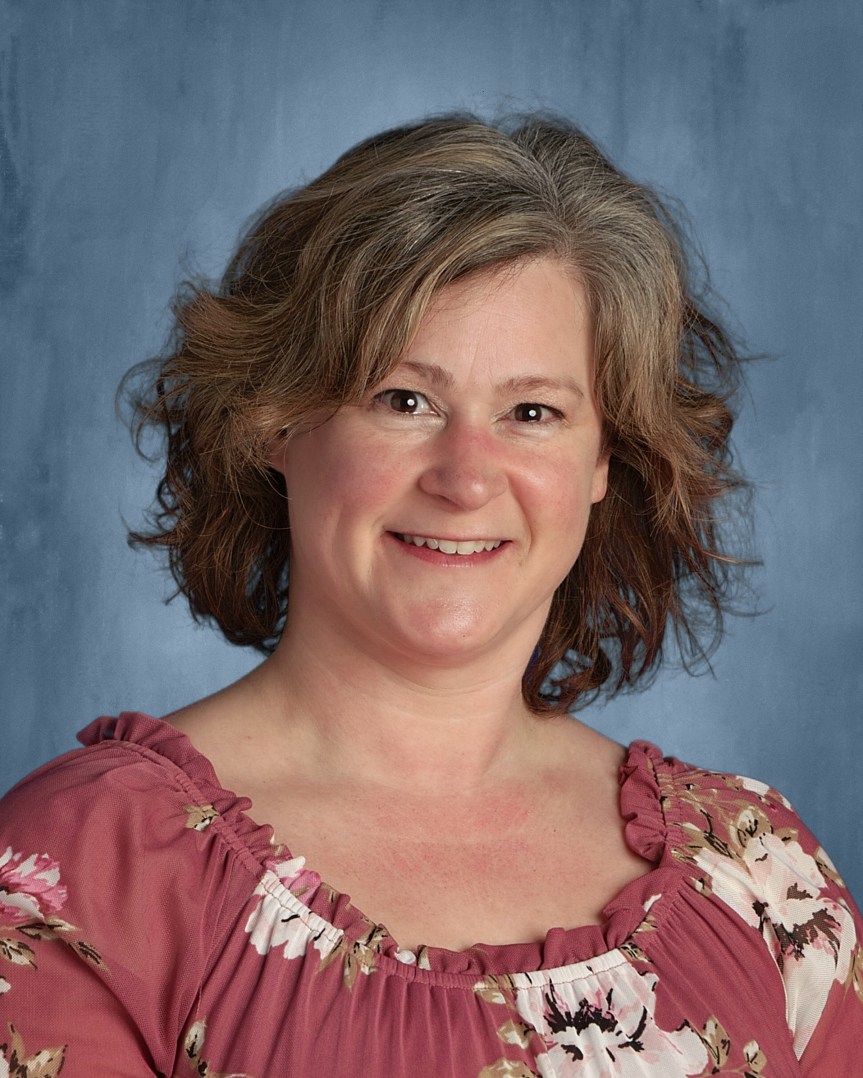
Northeast Conference on the Teaching of Foreign Languages (NECTFL) recently announced the finalists for its 2021 Teacher of the Year competition. Among the 8 finalists is Stephanie Carbonneau, York Middle School French teacher and the Foreign Language Association of Maine (FLAME) 2020 World Language Teacher of the Year.

Stephanie Carbonneau has been teaching at York Middle School since 2004. She started teaching in 1997 and taught for 7 years in Massachusetts before returning home to Maine to continue her teaching career closer to where she grew up. She is known for her “Glow and Grow” approach to language learning in a mostly deskless environment that focuses on interactive communicative lessons, using authentic resources. Stephanie is co-creator of a Manie Musicale, now serving 2,000 schools both in the states and internationally. She has also been a regular guest on the podcast “Inspired Proficiency” and believes collegiality makes teachers strong and students stronger. The highlight of her year is the annual student trip to Québec City and witnessing her students take language risks.  Carbonneau’s students regularly medal at the state and national level on the Grand Concours, the National French Exam administered by the American Association of French Teachers.

Her passion for becoming a French teacher came from her Québecois family roots. Her mother spoke French through her childhood and when her grandmother passed away, so did the family’s desire to continue speaking French at home. Yet looking back, the aspiring ballerina knew that French was a part of her and her family’s identity that she didn’t want to let die.

My freshman year of college I had a French professor who was really hard and  he told me during office hours that I would never get above a C in his class because my French was weak and I should probably not sign up for any more courses. That made me mad! I set out to prove him wrong. Because I struggled as a language learner, I knew I could be a sympathetic teacher. I never ever wanted any student to feel badly about learning a language.  I also fell in love with the language, the culture, the people as well as the identity I have as a French speaker. I believe those qualities surpass being an expert at the language itself. 

In my class students begin to realize that language learning helps individuals recognize the value of each person in such a diverse world and asks them to contribute to a better one. Speaking another language makes us better humans. It provides an opportunity to “glow” and “grow.” Much like the feedback I provide my students, language learning provides us a purpose beyond ourselves and highlights the similarities, differences and injustices that exist in the world.  It truly is important to me that these young Mainers can speak French better and can use it for a good purpose such as welcoming new French speaking Mainers and the thousands of French Canadian tourists that visit our state. THIS is the true value of learning a language to me: Finding our voice for social justice, through language and creating a welcoming community. There is a whole world that exists outside our small Maine town and the country we live in.  I want my students to be able to say “I am a Mainer, an American, but I am also part of the world-wide Francophone community. I am a French speaker.” 

The NECTFL regional finalists were recognized on April 26, 2021 at the annual awards ceremony. The event highlighted the exemplary practice of all regional winners as innovative practitioners whose work has inspired students and communities.

The NECTFL region encompasses 13 states from Maine to Virginia and Washington, D.C.. Each state language organization goes through a rigorous selection process to choose its best representative of excellence in world language teaching. Dr. Ashley Warren was selected as the NECTFL 2021 Teacher of the Year and will go on to represent the organization at the national language teacher of the year competition at the ACTFL Convention in November.

I am proud to have represented my state language association that far! The whole process was very introspective, reflective, and humbling. I grew so much as an educator and met a wonderful cohort of other language colleagues from the region I can now call friends. Most importantly, my students will reap the benefits of my reflections.

For more information about NECTFL, please visit their website: www.nectfl.org.


PRIORITY NOTICE: Interactive Workshop by Wabanaki REACH – Moving Forward: Opening a Path to Truth, Healing and Change

Maine-Wabanaki REACH is a cross cultural organization working in support of decolonization and Wabanaki self-determination. REACH focuses on truth, healing, and change. Our work with Wabanaki people is flexible, responding to activities in the communities themselves. It includes wellness and history learning, healing circles, support for growing food and medicines, and emergency financial support. This work takes place in Wabanaki communities, Maine communities, and in the Maine State Correction System. Our work with non-Native people around Maine and beyond includes learning about the history and ongoing relationships of Native and non-Native people, understanding colonization, and the work of decolonization.

Interacting with Wabanaki-Maine History

This program is an interactive experience in which we engage in a story of particular events in the history of 400-years of colonization of Wabanaki people by Europeans in this territory now called the State of Maine. This highly engaging experience requires our full participation in order to genuinely increase our understanding of colonization and what it means for current descendants and future generations; to reflect on what story we are writing for our grandchildren.

This workshop is sponsored by the Maine DOE’s Diversity, Equity and Inclusion Team.

The two-hour interactive workshop will be offered on three different occasions. To maximize the impact of the experience, a cap of 50 participants per workshop will be applied.  This means space is limited. We will be accepting registrations on a first come-first served basis. A certification of completion will be provided to attendees that can be used toward Maine educator endorsements.

  • Monday, May 17, 2021 from 7:00pm-9:00pm
  • Monday, May 24, 2021 from 7:00pm-9:00pm
  • Monday, June 7, 2021 from 7:00pm-9:00pm

To register for this workshop, use the following link: https://forms.office.com/Pages/ResponsePage.aspx?id=q6g_QX0gYkubzeoajy-GTlcU2QBaiG9CuTPNt6EYjMFUMkVGSk40UElXUDgzWVJETFYwUkxNVVNTSy4u

For more information contact Danielle Despins; a volunteer member of Maine DOE’s internal Diversity, Equity and Inclusion (DEI) sub-committee at danielle.r.despins@maine.gov.

The Portland Public Schools Is Grand Prize Winner for Equity Work

Portland Public Schools has been recognized for its commitment to equity as a Grand Prize winner in the National School Boards Association (NSBA) 2021 Magna Awards program. This is the first time in that program’s 27-year history that a Maine school district has been recognized with a Magna Award for its equity work.

The annual Magna Awards honor school districts across the country for programs that advance equity and break down barriers for underserved students. PPS, Maine’s largest and most diverse school district, won for one of our signature programs: Make It Happen! – a college readiness program that helps multilingual students build competitive academic profiles for college admission and financial aid.

An independent panel of school board members, administrators, and other educators selected the 15 winners – three Grand Prize winners and 12 first place winners. PPS is the Grand Prize winner in the category of districts with enrollment between 5,000 and 20,000 students. The other two Grand Prize winners were Massachusetts’s Mashpee Public Schools, which won in the under-5,000-enrollment category, and Michigan’s Detroit Public Schools, which was the winner for districts with more than 20,000 students.  This is the fourth year that the Magna Awards program has recognized school districts and their leaders for their efforts to bring educational equity to their students. It is believed that PPS is the first Maine school district ever to win a Magna Award.

“We are thrilled and honored to be chosen as a Grand Prize winner for our work to achieve equity for all our students, which is the central goal of our Portland Promise, the district’s strategic plan,” said PPS Superintendent Xavier Botana. “This recognition shines a national spotlight on the need to remove barriers to equity at a particularly important time, when the COVID-19 pandemic has increased the longstanding disparities that exist between different groups of students in our schools. Programs like Make It Happen! are vital to helping address these disparities, but there is much more we need to do. That is why my proposed FY22 school budget targets resources to the students to whom we owe the largest educational debt: those who are learning English, have disabilities or are alienated in our schools.”

Make It Happen!, founded 14 years ago, is a program of the district’s Multilingual & Multicultural Center. It’s a college-readiness and academic success program for language minority students in grades 9 through 12, and is designed to help students raise and realize their academic aspirations. The program provides students with personalized and structured academic support to ensure their success in school and help prepare them for college. Many graduates of the program are the first in their families to attend an institute of higher education.

Steve Bailey, Executive Director of the Maine School Management Association, said that Make It Happen! “is designed to meet students where they are and assist them in achieving their goal through personalized support.” Make It Happen! site coordinators and volunteer academic coaches, recruited from the community, help students take challenging classes, develop strong college applications, and engage in civic and leadership activities.

Diora Ndagano, a senior at Deering High School, said, “I joined Make It Happen! right after I arrived at Deering. I was an immigrant and I didn’t know anything about the education system in America, but with the help of the Make It Happen! program, I was able to adapt to school and apply to college. That’s how amazing that program was to me.”

In addition to bringing national attention to the district’s ongoing equity work, the Grand Prize includes a $5,000 grant that the district will use as a foundational investment to establish a college scholarship fund for students who participate in the Make It Happen! Program. The district plans to leverage this money to grow the fund. More details around the “Make it Happen Scholarship Fund” will be announced later this spring.

“2020 was a year like no other,” said NSBA Executive Director and CEO Anna Maria Chávez. “The 2021 Magna Award-winning districts represent the enormous efforts of school leaders during the pandemic to continue removing barriers to achievement for their underserved and vulnerable students.”

“The Portland Public Schools is very grateful to have our equity work recognized nationally,” said Portland Board of Public Education Chair Emily Figdor. “Achieving equity,  the centerpiece of our Portland Promise goals, is essential for us to fully realize our other strategic plan goals – achievement, whole student and people.”

The 27th annual Magna Awards program is sponsored by the National School Boards Association’s flagship magazine, American School Board Journal (ASBJ). PPS’ Grand Prize win is highlighted in the April issue of ASBJ. Read about the award-winning Make It Happen! program and the two other Grand Prize-winning districts at nsba.org/ASBJ/2021/april/grand-prize-magna-awards programs.

Information for this article was provided by Portland Public Schools as part of the Maine Schools Sharing Success Campaign. The Maine Schools Sharing Success Campaign is an avenue for Maine schools to celebrate successes and share innovative ideas, practices, and models that can be adapted and easily implemented by other Maine schools. Stories are not an endorsement of specific materials, services, or practices and are not intended to promote learning programs that are of cost to students, families, or schools. To submit a story or an idea, email it to Rachel at rachel.paling@maine.gov. 

PRIORITY NOTICE (Reminder): Moving Toward Understanding: Fostering an Intercultural Learning Environment

A workshop series by Maine Intercultural Communication Consultants (MICC).

“MICC is a women-owned business based in Portland, Maine, with years of experience helping schools, organizations, and individuals develop interculturally and navigate differences effectively. Passionate and engaging facilitators, we ground our interactive and experiential trainings in best practices of adult learning, and build on the strengths you already have. We have lived across the globe, and our work reflects that dexterity, curiosity, and humility.”

Module 1: DEMYSTIFYING ISLAM: CULTURE, COMMUNITY, AND FAITH

Thursday, March 18, 7:00-8:30 PM
Thursday, March 25, 7:00-8:00PM

Presented from both the perspective of a Muslim immigrant in Maine and a non-Muslim Mainer who lived in a Muslim majority country, this training seeks to dispel myths and misunderstandings by asking the questions: What is Islam and what is it NOT?

This training will:

  • Provide a brief history and context of the religion
  • Include discussion of Islam’s similarities to Christianity and Judaism
  • Define important terms
  • Give participants insight to more effectively reach, serve, educate, and connect with Muslim people

Presented by Reza Jalali and Liz Greason

Module 2: MICROAGGRESSIONS: THEIR IMPACT ON STUDENT LEARNING

Thursday, April 1, 7:00-8:30 PM
Thursday, April 8, 7:00-8:00 PM

As educators, what don’t we know we don’t know? Exploring this question can be a gateway into understanding and interrupting microaggressions.

This training will:

  • Define microaggression
  • Differentiate between different types of microaggressions
  • Identify the impact microaggressions have on marginalized student groups
  • Discuss what we, as educators, can do to minimize the impact of microaggressions in the classroom and schools settings

Presented by Deb Breiting and Liz Greason

Register here: https://mainestate.zoom.us/meeting/register/tZ0qceusrTwrGdC9jU12AsxF9NXts3SoWEt9

About the Presenters:

Liz Greason
Liz Greason

Deb Breiting is co-founder of Maine Intercultural Communication Consultants and hails from Vancouver, Canada. Born in Montreal to immigrant parents from Germany and Japan, Deb grew up in a multilingual and multicultural home and is a first generation university graduate. She has a degree in Linguistics and German from the University of British Columbia (UBC) and is a graduate of the UBC Certificate Program in Intercultural Studies. With a professional focus on teaching English as a Second Language, Deb most recently taught at Portland Adult Education for the New Mainers Resource Center and coordinated projects designed to further support the integration of immigrants with professional backgrounds into Maine’s workforce. In addition, Deb has lived in Toronto, Munich, and Tokyo where she has worked for schools and non-profit organizations. Deb is an IDI Qualified Administrator and is currently enrolled in the Master’s program of Adult and Higher Education at University of Southern Maine.

Liz Greason
Liz Greason

A Mainer by birth, Liz Greason is co-founder of Maine Intercultural Communication Consultants. She lived in the Middle East for many years, where she taught students from around the world at the American University in Dubai, with a focus on effective cross-cultural communication. Since returning to the United States, Liz has applied her knowledge of the Middle East and Islam, intercultural competency, and intercultural communication to help Mainers effectively recruit and retain a diverse workforce and serve diverse populations equitably. Liz has also served on the faculty of the University of Southern Maine (USM) and Portland Adult Education. Growing up in Bridgton, Liz graduated from, and later taught at, Lake Region High School.

Liz holds degrees in Women and Gender Studies, with focus areas of intersectional feminism, from Mount Holyoke College and Reed College. She is a Qualified Administrator of the Intercultural Development Inventory.

Reza Jalali
Reza Jalali

Reza Jalali is a noted writer, educator, immigrant advocate and former refugee from Iran. He was recently appointed Executive Director of the Greater Portland Immigrant WELCOME Center, a non-profit organization that serves as a hub for organizations and individuals to collaborate in helping Maine’s thriving immigrant community reach its civic, economic, and social potential. Additionally a prolific author of the immigrant experience, Reza’s forthcoming book Dear Maine: The Trials and Triumphs of Maine’s 21st Century Immigrants will be available in August 2021. Jalali’s other books include New Mainers, Moon Watchers, Homesick Mosque and Other Stories, and The Poets and the Assassin. His children’s book, Moon Watchers, has received the Stepping Stone Multicultural Award. His five-act play, The Poets and the Assassin, which is about women in Iran and Islam, has been staged to rave reviews across New England. Jalali’s storytelling was also featured on National Public Radio’s popular program, The Moth Radio Hour.

Additional information:

This workshop series will require participants to maintain a reflection journal. Participants should come motivated to create change and should be prepared to participate in group discussions based on readings and resources shared prior to the session.

Engaging in this cohort provides an opportunity for participants to earn credit hours. To receive credit, participants must attend all four sessions.

For more information contact Danielle Despins; a volunteer member of Maine DOE’s internal Diversity, Equity and Inclusion (DEI) sub-committee at (207) 592 -1448.