PRIORITY NOTICE: Moving Toward Understanding: Fostering an Intercultural Learning Environment

A workshop series by Maine Intercultural Communication Consultants (MICC).

“MICC is a women-owned business based in Portland, Maine, with years of experience helping schools, organizations, and individuals develop interculturally and navigate differences effectively. Passionate and engaging facilitators, we ground our interactive and experiential trainings in best practices of adult learning, and build on the strengths you already have. We have lived across the globe, and our work reflects that dexterity, curiosity, and humility.”

Module 1: DEMYSTIFYING ISLAM: CULTURE, COMMUNITY, AND FAITH

Thursday, March 18, 7:00-8:30 PM
Thursday, March 25, 7:00-8:00PM

Presented from both the perspective of a Muslim immigrant in Maine and a non-Muslim Mainer who lived in a Muslim majority country, this training seeks to dispel myths and misunderstandings by asking the questions: What is Islam and what is it NOT?

This training will:

  • Provide a brief history and context of the religion
  • Include discussion of Islam’s similarities to Christianity and Judaism
  • Define important terms
  • Give participants insight to more effectively reach, serve, educate, and connect with Muslim people

Presented by Reza Jalali and Liz Greason

Module 2: MICROAGGRESSIONS: THEIR IMPACT ON STUDENT LEARNING

Thursday, April 1, 7:00-8:30 PM
Thursday, April 8, 7:00-8:00 PM

As educators, what don’t we know we don’t know? Exploring this question can be a gateway into understanding and interrupting microaggressions.

This training will:

  • Define microaggression
  • Differentiate between different types of microaggressions
  • Identify the impact microaggressions have on marginalized student groups
  • Discuss what we, as educators, can do to minimize the impact of microaggressions in the classroom and schools settings

Presented by Deb Breiting and Liz Greason

Register here: https://mainestate.zoom.us/meeting/register/tZ0qceusrTwrGdC9jU12AsxF9NXts3SoWEt9

About the Presenters:
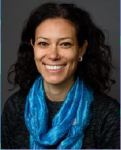
Liz Greason
Liz Greason

Deb Breiting is co-founder of Maine Intercultural Communication Consultants and hails from Vancouver, Canada. Born in Montreal to immigrant parents from Germany and Japan, Deb grew up in a multilingual and multicultural home and is a first generation university graduate. She has a degree in Linguistics and German from the University of British Columbia (UBC) and is a graduate of the UBC Certificate Program in Intercultural Studies. With a professional focus on teaching English as a Second Language, Deb most recently taught at Portland Adult Education for the New Mainers Resource Center and coordinated projects designed to further support the integration of immigrants with professional backgrounds into Maine’s workforce. In addition, Deb has lived in Toronto, Munich, and Tokyo where she has worked for schools and non-profit organizations. Deb is an IDI Qualified Administrator and is currently enrolled in the Master’s program of Adult and Higher Education at University of Southern Maine.

Liz Greason
Liz Greason

A Mainer by birth, Liz Greason is co-founder of Maine Intercultural Communication Consultants. She lived in the Middle East for many years, where she taught students from around the world at the American University in Dubai, with a focus on effective cross-cultural communication. Since returning to the United States, Liz has applied her knowledge of the Middle East and Islam, intercultural competency, and intercultural communication to help Mainers effectively recruit and retain a diverse workforce and serve diverse populations equitably. Liz has also served on the faculty of the University of Southern Maine (USM) and Portland Adult Education. Growing up in Bridgton, Liz graduated from, and later taught at, Lake Region High School.

Liz holds degrees in Women and Gender Studies, with focus areas of intersectional feminism, from Mount Holyoke College and Reed College. She is a Qualified Administrator of the Intercultural Development Inventory.
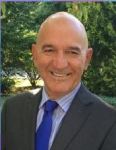
Reza Jalali
Reza Jalali

Reza Jalali is a noted writer, educator, immigrant advocate and former refugee from Iran. He was recently appointed Executive Director of the Greater Portland Immigrant WELCOME Center, a non-profit organization that serves as a hub for organizations and individuals to collaborate in helping Maine’s thriving immigrant community reach its civic, economic, and social potential. Additionally a prolific author of the immigrant experience, Reza’s forthcoming book Dear Maine: The Trials and Triumphs of Maine’s 21st Century Immigrants will be available in August 2021. Jalali’s other books include New Mainers, Moon Watchers, Homesick Mosque and Other Stories, and The Poets and the Assassin. His children’s book, Moon Watchers, has received the Stepping Stone Multicultural Award. His five-act play, The Poets and the Assassin, which is about women in Iran and Islam, has been staged to rave reviews across New England. Jalali’s storytelling was also featured on National Public Radio’s popular program, The Moth Radio Hour.

Additional information:

This workshop series will require participants to maintain a reflection journal. Participants should come motivated to create change and should be prepared to participate in group discussions based on readings and resources shared prior to the session.

Engaging in this cohort provides an opportunity for participants to earn credit hours. To receive credit, participants must attend all four sessions.

For more information contact Danielle Despins; a volunteer member of Maine DOE’s internal Diversity, Equity and Inclusion (DEI) sub-committee at (207) 592 -1448.
Opportunity for Partnerships with French Schools – Deadline 3/31/21

The Maine Department of Education is excited to announce an opportunity for middle and high school teachers to participate in cross-cultural partnerships with schools in France. This opportunity has been made possible through a Memorandum of Understanding (MOU) with the Académie de Nantes, the governmental body overseeing education in the Pays de la Loire region of France.

The MOU aims to strengthen connections between Maine and France and improve the teaching of English and French, allowing educators and students to benefit from increased understanding and cooperation between the two cultures. Teachers from all content areas, not only French teachers, are welcome to apply. Schools will be partnered based on shared objectives and interests.

Schools that engage in partnerships will participate in joint learning projects with their French-school colleagues. A group of students within one class, a whole class, or multiple classes of students may be involved. Projects can focus on virtually any topic related to the curricula of the two schools (for example: school life and daily routines, natural environment, celebrations, cooking and culinary traditions, sustainable development policies, etc.). Students will demonstrate their learning through artifacts such as letters, emails, drawing, blog posts, video/audio recordings, essays, articles, or other creative means.

Applications are due by 3/31/21. Click here to apply. Partnerships will be confirmed by 5/31/21 so that initial contact can be made and schools may begin planning their projects for the fall. Note that participating in a partnership is a commitment, and our partner schools in France are eager to be matched with Maine schools that are willing and able to actively engage in collaborative teaching and learning. Partnerships may last indefinitely, with the willingness of both schools.

If you have any questions, please contact April Perkins, World Languages & ESOL/Bilingual Programs Specialist, at april.perkins@maine.gov.


PRIORITY NOTICE: New Dates Available for Free Anti-Bias Professional Learning Series for Educators

The Maine Department of Education is sponsoring a workshop by Amber Coleman-Mortley, Moving Beyond the Movement: Fostering Authentic Transformation for Sustainable Outcomes.  This Learning Series was originally scheduled for earlier this month but it has been rescheduled and the registration has opened back up for additional attendees! Please see the updated dates below.

Updated Learning Series Dates & Syllabus:

  • Wednesday, February 17, 7:00-9:00pm
    Module 1 – Now is the Time: Using the past to inform the present: How do we apply anti-racism, anti-bias, and equity to civics and history classrooms?
  • Wednesday, February 24, 7:00-8:30pm
    Module 2-Be bold. Be brave. Be inclusive: Engaging your stakeholders: How do we facilitate community engagement around anti-bias work?
  • Wednesday, March 3, 7:00-9:00pm
    Module 3- Culturally relevant pedagogy for all: How can we leverage culturally relevant pedagogy to support all learners in our school community?
  • Wednesday, March 10, 7:00-8:30pm
    Module 4- Practical applications and continued strategies for continued allyship: What small, and large, changes are required to ensure that our practices and policies are investments, not investigations?

Amber Coleman-Mortley brings a diverse voice into civic education, manages a large network of education influencers, and has built a successful youth fellowship of students fighting for equity in civic education. Amber’s advocacy and expertise have been featured in the New York Times on several occasions.

Register here: https://mainestate.zoom.us/meeting/register/tZUkdOihrzIoHtEhnto0lYp7KcxZ3tbYW9SQ 

Learn more about Amber

Amber Coleman-Mortley is a talented creator and builder of digital and grassroots networks where she focuses on cultivating an engaged community of active participants through multimedia video and virtual spaces. In her current role as Director of Social Engagement, she brings diverse voices into civic education, manages a large network of education influencers, and has built a successful youth fellowship of students fighting for equity in civic education.

Amber’s equity and civic work is centered around building strong teams for improved community outcomes, which is inspired by her years as a three-sport varsity athlete at Oberlin College where she earned North Coast Athletic Conference (NCAC) all-conference honors for 8 out of the 11 seasons she competed. She also has a Division 3 , NCAA appearance in the 4×100 m. She currently serves as an alumni advisor to Oberlin College’s, Black Student-Athlete Guild.

Amber taught for nine years as a P.E/Health teacher and head varsity volley ball and head varsity track coach. She has experience building curriculum and leadership programs for student-athletes and team captains. Amber presented on Anti-Racist Coaching and Sports and Social Justice at the U.S. Soccer

Foundation’s Virtual National Training. At the center of her work are equity, critical thinking, and civic problem-solving. She has experience collaborating virtually with parents and educators around equity, anti-racism, and culturally relevant pedagogy, which includes work with the DuPage (Illinois) Regional Office Of Education.

Amber is a highly regarded social media influencer whose work brought her to the White House to meet former first lady Michelle Obama to discuss influencer campaigns that focus on family health and wellness. She is a parenting expert and author of Mom Of All Capes where she covers parenting strategies in civic education, education technology, parent-teacher partnerships, and social-emotional development. The podcast she co-created with her children, Lets K12 Better, discusses how to improve K12 education and family life through partnerships and communication.

Amber’s advocacy and expertise have been featured in the New York Times on several occasions which includes viral videos, a full-page spread in print media, and several online articles. Her insights have been cited in publications from the LA Times to the Smithsonian Magazine, The Washington Post to LAist. Coleman-Mortley has shared insights for parents through her work for Edutopia, civic education and parenting for TODAY Parenting, and even shared tips for weary travelers through Southwest Airlines. Amber’s voice has been amplified on countless podcasts including Edit Your Life about how to talk to children about race, EduTable about education a inequity, NPR affiliate KPC Conprocessing the state of the world with children. She’s presented live with New York Times Parenting and Sree Sreenivansan’s daily global show on talking to kids about race.

Additional information:

This workshop series will require participants to maintain a reflection journal. Participants should come motivated to create change and should be prepared to participate in group discussions based on readings and resources shared prior to the session.

Engaging in this cohort provides an opportunity for participants to earn credit hours. To receive credit, participants must attend all four sessions.

For more information contact Danielle Despins; a volunteer member of Maine DOE’s internal Diversity, Equity and Inclusion (DEI) sub-committee at (207) 592-1448.

Register here: https://mainestate.zoom.us/meeting/register/tZUkdOihrzIoHtEhnto0lYp7KcxZ3tbYW9SQ 

PRIORITY NOTICE: Moving Beyond the Movement Workshop: Fostering Authentic Transformation for Sustainable Outcomes

The Maine Department of Education is sponsoring a workshop by Amber Coleman-Mortley, Moving Beyond the Movement: Fostering Authentic Transformation for Sustainable Outcomes.  Amber Coleman-Mortley brings a diverse voice into civic education, manages a large network of education influencers, and has built a successful youth fellowship of students fighting for equity in civic education. Amber’s advocacy and expertise have been featured in the New York Times on several occasions.

Syllabus:

Module 1 – Now is the Time: Using the past to inform the present
How do we apply anti-racism, anti-bias, and equity to civics and history classrooms?

Module 2 – Be bold. Be brave. Be inclusive: Engaging your stakeholders
How do we facilitate community engagement around anti-bias work?

Module 3 – Culturally relevant pedagogy for all
How can we leverage culturally relevant pedagogy to support all learners in our school community?

Module 4 – Practical applications and continued strategies for continued allyship
What small, and large, changes are required to ensure that our practices and policies are investments, not investigations?

Every Wednesday in February

February 3, 2021; 7:00-9:00 PM
February 10, 2021; 7:00-8:30 PM
February 17, 2021; 7:00-9:00 PM
February 24,  2021; 7:00-8:30 PM

Register here: https://mainestate.zoom.us/meeting/register/tZUkdOihrzIoHtEhnto0lYp7KcxZ3tbYW9SQ 

Download the flyer.

Learn more about Amber

Amber Coleman-Mortley

Amber Coleman-Mortley is a talented creator and builder of digital and grassroots networks where she focuses on cultivating an engaged community of active participants through multimedia video and virtual spaces. In her current role as Director of Social Engagement, she brings diverse voices into civic education, manages a large network of education influencers, and has built a successful youth fellowship of students fighting for equity in civic education.

Amber’s equity and civic work is centered around building strong teams for improved community outcomes, which is inspired by her years as a three-sport varsity athlete at Oberlin College where she earned North Coast Athletic Conference (NCAC) all-conference honors for 8 out of the 11 seasons she competed. She also has a Division 3 , NCAA appearance in the 4×100 m. She currently serves as an alumni advisor to Oberlin College’s, Black Student-Athlete Guild.

Amber taught for nine years as a P.E/Health teacher and head varsity volley ball and head varsity track coach. She has experience building curriculum and leadership programs for student-athletes and team captains. Amber presented on Anti-Racist Coaching and Sports and Social Justice at the U.S. Soccer

Foundation’s Virtual National Training. At the center of her work are equity, critical thinking, and civic problem-solving. She has experience collaborating virtually with parents and educators around equity, anti-racism, and culturally relevant pedagogy, which includes work with the DuPage (Illinois) Regional Office Of Education.

Amber is a highly regarded social media influencer whose work brought her to the White House to meet former first lady Michelle Obama to discuss influencer campaigns that focus on family health and wellness. She is a parenting expert and author of Mom Of All Capes where she covers parenting strategies in civic education, education technology, parent-teacher partnerships, and social-emotional development. The podcast she co-created with her children, Lets K12 Better, discusses how to improve K12 education and family life through partnerships and communication.

Amber’s advocacy and expertise have been featured in the New York Times on several occasions which includes viral videos, a full-page spread in print media, and several online articles. Her insights have been cited in publications from the LA Times to the Smithsonian Magazine, The Washington Post to LAist. Coleman-Mortley has shared insights for parents through her work for Edutopia, civic education and parenting for TODAY Parenting, and even shared tips for weary travelers through Southwest Airlines. Amber’s voice has been amplified on countless podcasts including Edit Your Life about how to talk to children about race, EduTable about education a inequity, NPR affiliate KPC Conprocessing the state of the world with children. She’s presented live with New York Times Parenting and Sree Sreenivansan’s daily global show on talking to kids about race.

Additional information:

This workshop series will require participants to maintain a reflection journal. Participants should come motivated to create change and should be prepared to participate in group discussions based on readings and resources shared prior to the session.

Engaging in this cohort provides an opportunity for participants to earn credit hours. To receive credit, participants must attend all four sessions.

For more information contact Danielle Despins; a volunteer member of Maine DOE’s internal Diversity, Equity and Inclusion (DEI) sub-committee at (207) 592-1448.

Antiracist Education for all of Maine – A Series of Free Workshops and Crucial Conversations for Maine Educators

This series has reached its capacity – registration is no longer open. 

The Maine State Teacher of the Year Association (MSTOYA) is thrilled to offer an important, timely and free professional development series: Antiracist Education for all of Maine This series kicks off with a keynote by Cornelius Minor, an author, teacher, instructional coach, and self-proclaimed “book tiger.”  There are also many other powerful speakers and “collegial conversations,” which are designed to be equity focused discussions with educators across Maine to help Maine educators build capacity as equity leaders in Maine schools and communities.

Speaker: No More Excuses: Why It Has to Be Us And Why It Has To Be Now

Cornelius Minor
February 9th, 7:00-8:00 pm

Collegial Conversations: Navigating The Challenges of Antiracist Work In Maine Schools

February 25th, 7:00-8:00 pm

Speaker: Voices From Our Classrooms

Holocaust and Human Rights Center of Maine
March 2nd, 7:00-8:00 pm

Collegial Conversations: Rehearsing Important Conversations About Racism Through Scenarios

March 18th, , 7:00-8:00 pm

Speaker: Literature as a Lens: Using Texts As A Tool to Broaden Perspectives

Monica Washington, Nesrene Griffin, Iris Eichenlaub
March 23rd, 7:00-8:00 pm

Speaker: Decolonizing The Curriculum

Fiona Hopper, Starr Kelly, Joe Schmidt
April 6th, 7:00-8:00 pm

Speaker: What Comes Next?

Cornelius Minor
April 14th, 7:00-8:00 pm

Collegial Conversations: Equity Leadership From The Classroom

April 15th, 7:00-8:00 pm

All events are free to Maine teachers. Contact hours will be awarded for each session upon completion of an exit ticket. Space is limited, and will be offered to educators across the state, so sign up early!

Events made possible with major funding from Unum. Additional support from Lee Auto, Educate Maine, and The Maine Teachers of the Year Association.

Register here. All sessions are full!

Do the best that you can until you know better. Then when you know better, do better. – Maya Angelou

For questions or more information, email Talya Edlund at talya.edlund@gmail.com

Joint Statement of Commitment and Support for Diversity, Equity and Inclusion in Maine Schools

The Maine Department of Education, Maine School Boards Association, Maine School Superintendents Association, Maine Administrators of Services for Children with Disabilities, Maine Education Association, Maine Principals Association, and Maine Curriculum Leaders Association enthusiastically affirm the right of every student to an equitable education.  We proudly and steadfastly support the educators and districts in Maine who are taking on the work of understanding and dismantling racism and inequity in our schools and communities. We urge all Maine schools and educators to accept their role and responsibilities in examining and addressing the inequities that have long existed in our society and institutions.

We define educational equity as providing each student a legitimate opportunity to learn, grow, and thrive in school and beyond.

Equity depends on a deliberate and systematic abolition of the inequities that have been sewn into the fabric of American society. These persistent inequities have long disadvantaged students on the basis of race, sex, gender, gender expression, language, physical and intellectual ability, socioeconomic status, sexual orientation, indigenous origin, religion, and all aspects of human identity that have been subjugated within our society. We recognize that education is one of many systems that have had a role in perpetuating racial inequities, and that through close examination of our system, we can and must strive to attain diversity, equity, and inclusion of all voices and experiences. We believe this work is central to living up to our promises of providing an outstanding education for every Maine learner and continuing to be a public education system of excellence.

We recognize and commit to our role and duty as Maine public education leaders to actively partner with all schools in constructing a new educational paradigm, founded on the certainty that every student can and will be successful when:

  • School is a welcoming, safe place for all school community members to bring their whole identities with them
  •  Social emotional and behavioral supports are understood as critical prerequisites to academic learning
  • Students’ primary and home languages are recognized as assets, cultivated, and leveraged
  • Every educator in every role shares the responsibility for ensuring equity for every student and participates in equity education, both in teacher and administrator preparation programs and ongoing throughout their careers
  •  Families are meaningfully engaged as partners in their children’s education and welcomed into our schools
  • All academic and non-academic programming is culturally responsive and co-constructed with community members

Examining racism and inequity is difficult work. As each student of Maine is a future citizen of our global society, we believe this is work that needs to be engaged in respectfully and civilly by all the schools and communities in our state.  Understanding and addressing racism and inequity will take many different forms, all of which are valid and needed. Already many educators, school districts, and organizations are exploring this work in some of the following ways:

  • Defining with school and community members what makes a safe and welcoming place for all and committing to the vision
  • Reviewing your SAU’s Controversial Issues policy and best practices for engaging in discussions responsively and responsibly.
  • Engaging community members in discussions and actions to ensure that schools are a safe and welcoming place for all students
  • Engaging in equity audits to examine a variety of practices and programs
  • Expecting all school personnel to engage in professional learning about anti-racism and culturally responsive practices
  • Reviewing and revising curricula and materials to ensure they are well-rounded, decolonized, and representing all experiences
  • Adopting anti-racism instructional practices, programs, and policies
  • Establishing Diversity Equity and Inclusion (DEI) committees of stakeholders
  • Establishing expectations that every student will achieve and is challenged with rigorous curricula
  • Creating, supporting or amplifying student Civil Rights Teams within each school

We believe in the power and responsibilities that are bestowed on our educational institutions to provide a safe and equitable place in which all students can thrive, and where students are encouraged to examine their world, their beliefs and their role in society through multiple perspectives. We believe all students, all families, and all human beings deserve to be celebrated, included, and heard, and we are committed to supporting our schools and educators in taking on the challenge of examining and changing our practices.

We stand united in our commitment to this work and our support of the educators who are courageously stepping up and stepping into the learning, growing and changing that is needed. Our organizations will continue to provide resources, support and technical assistance as we all expand our own knowledge and capacity to engage in this critically important work on behalf of our students and our collective future.

Resources for Celebrating Indigenous People in Schools

In recognition of Indigenous People and the upcoming Indigenous Peoples’ Day holiday, the Maine Department of Education (DOE) is sharing resources and information that educators and schools can use to integrate Native American history and culture into classrooms and school activities to celebrate Indigenous Peoples’ Day and to teach and honor our native culture year round.

Indigenous Peoples’ Day is celebrated across the United States on the second Monday in October, this year the holiday will be celebrated on October 12th.

The Maine DOE has continued to expand a collection of Maine Native American Resources that are available on its website including robust historical and cultural information that honor Native Americans, as well as resources that will help guide discussions about Indigenous Peoples and Native American Culture, including how to celebrate Indigenous Peoples’ Day in and outside of the classroom.

Resources for Celebrating Indigenous Peoples’ Day in Schools

In recognition of Indigenous Peoples’ Day, Maine Department of Education would like to share resources and information that educators and schools can use to teach about Native American history and culture, as part of their classroom and school activities that commemorate this important holiday.

Indigenous Peoples’ Day is celebrated across the United States on the second Monday in October, this year the holiday will be celebrated on October 14th.

The Maine DOE has expanded its Maine Native American Resources webpage section to include robust historical and cultural information that honors Maine Native Americans, as well as resources that will help guide discussions about Indigenous Peoples’ Day, both in and outside of the classroom.

February is African American History Month

The Library of Congress, National Archives and Records Administration, National Endowment for the Humanities, National Gallery of Art, National Park Service, Smithsonian Institution and United States Holocaust Memorial Museum join in paying tribute to the generations of African Americans who struggled with adversity to achieve full citizenship in American society as part of African American History Month.

African American History month is a wonderful celebration of the contributions that African Americans have made to American history and culture. Below are some resources to help educators integrate African American history into the curriculum not only in the month of February but on a regular basis. Check out thoughts by UNC School of Education and Teaching Tolerance.

Other resources related to African American History Month:

For more information contact Joe Schmidt, Social Studies Specialist, Maine Department of Education at (207) 624-6828 or joe.schmidt@maine.gov.


Winter holidays in the classroom

The following information has been put together with the support of the Council of State Social Studies Specialists (CS4) to help educators who are planning to include seasonal holiday activities in their classrooms and at their schools.

Before planning, think about the following questions compiled from teachhub.com, educateiowa.gov, the First Amendment Center, and Teaching Tolerance:

  • Is this activity designed in any way to promote or inhibit religion?
  • How does this activity serve the academic goals of the course, or the educational mission of the school?
  • Will any student or parent be made to feel like an outsider, not a full member of your classroom community, by this activity?
  • If in December, are there plans to teach about religious holidays at other times of the year or do we only teach about holidays in December?
  • Are your planned activities centered around only one winter holiday?
  • Are you prepared to teach about the religious meaning and significance of this holiday in a way that enriches all of your students’ understanding about history and culture?
  • Is the activity you planned show tolerance for all religions or is it focusing on one main religion?
  • Is a celebration a Christmas party or a winter party? The latter is okay.
  • Are you displaying holiday decorations with a religious theme?

Additional resources for teaching about holidays:

For more information contact Joe Schmidt, Maine DOE Social Studies Specialist at (207) 624-6828 or joe.schmidt@maine.gov