Virtual Text Study: Spotlight on Young Children – Challenging Behaviors

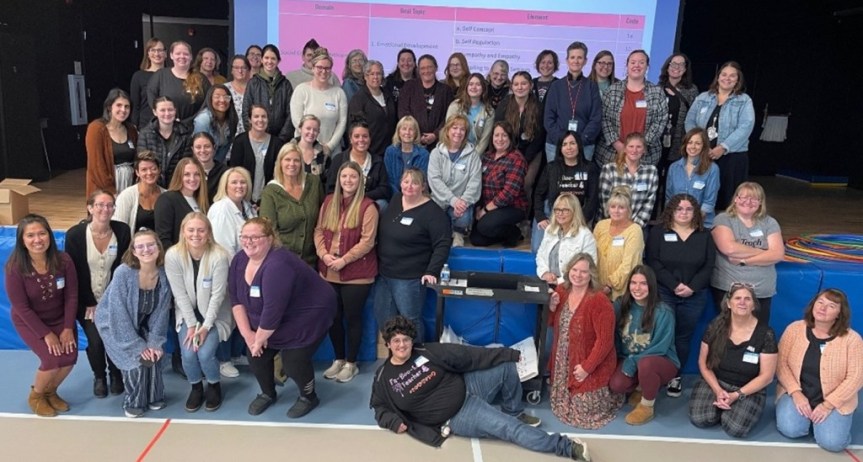
Join specialists from the Maine Department of Education (DOE) Office of Teaching and Learning’s Early Learning Team for a free, web-based professional development opportunity designed for early childhood educators working with children in pre-K through grade 2.

This series will utilize the 2024 National Association for the Education of Young Children (NAEYC) publication Spotlight on Young Children: Challenging Behavior, edited by Charis L. Wahman and Janice K. Lee. (“Children engage in challenging behavior for many different reasons: preventing and responding to that behavior begins with understanding why it occurs” [Wahman, C. & Lee, J. 2024].) Participants will read the chapters independently between sessions.

The book includes curated articles from NAEYC’s Young Children and Teaching Young Children magazines, offering insights and strategies from a variety of early childhood education professionals. The text is organized around the Pyramid Model, with strategies grouped into three levels: preventative, targeted, and intensive and individualized. Throughout the book, there is an emphasis on creating relationally-safe and culturally-responsive environments. Reflective questions and self-care practices are woven into the content, making it an ideal resource for both new and veteran early childhood educators.

The text study will begin on Wednesday, January 22, 2025, from 3:30-4:30 p.m. and will continue the following Wednesdays:

  • January 29
  • February 5
  • February 12
  • February 26
  • March 5

Registration is open through December 10, 2024, with space limited to 25 participants on a first-come, first-served basis. Those who register will receive a free copy of the book and earn up to 12 contact hours upon completion of the text study.

We encourage early registration to secure a spot! You may register here.

For more information, please reach out to Maine DOE Pre-K Consultant Sue Gallant at sue.gallant@maine.gov.


St. Croix Regional Technical Center Celebrates Instructor Lauren Remington as a 2024 Marcia Lovell Awardee

The St. Croix Regional Technical Center in Calais is celebrating instructor Lauren Remington as a 2024 Marcia Lovell awardee.

Administered by Maine Roads to Quality, the Marcia Lovell Award honors eight outstanding early childhood practitioners from across Maine every year. Awardees embody innovation in early care and education through the significant contributions they make to the children, families, and communities that they serve.

Remington is a St. Croix Regional Technical Center instructor for the Early Childhood Occupations program. Over the past nine years, she has worked to rebuild this once-dormant program into a thriving Career and Technical Education (CTE) opportunity for high school students interested in working in early childhood care settings. Remington carefully trains students by giving them real-life learning experiences and responsibilities through the many connections she has garnered in the Washington County region.

“Lauren is a wonderful teacher and mentor to her students. She gets to know each of her students individually to provide them with the best educational experiences,” said St. Croix Regional Technical Center Director Stanley Sluzenski. “Lauren is also a great team member here at St. Croix Tech, always willing to share her expertise with the rest of the staff.”

You can learn more about Lauren Remington through this Q&A segment by Maine Roads to Quality, published in the August issue of the SHORTcuts newsletter.

What words of wisdom or advice would you give someone starting out in the field?

Some words of wisdom I would give someone starting out in the field is to learn with the children. Being curious and modeling statements such as “I wonder” or “What if “ shows the children you don’t know everything, and you are there to learn with them. The other most important things are to be positive, love what you do, know you are not alone, and take care of yourself.

Is there a favorite quote about children or education?

Maria Montessori once said, “The goal of early childhood education should be to activate the child’s own natural desire to learn.”

What made you choose a career in Early Childhood Education (ECE)?

Ever since I was a young girl, I had a dream of becoming a teacher. You could find me helping out in the church nursery, participating in the babysitting club, or helping out in the local community for families in the summer. I was always being told, ”You are such a natural with kids” and I loved that I felt confident in my work when it came to providing for children and their families.

When I was in college, I was also asked the question of what made me choose a career in ECE and found my reason had changed. As I grew in the field and gained more experience, I found that it wasn’t just about feeling confident in my work but because I loved to watch children learn and thrive. It’s incredibly rewarding to see a little one build a tower with blocks, complete their first puzzle, learn to draw, or laugh with joy as I read a story. As an ECE instructor, I have a front-row seat to all those “I can do it!” moments.

When thinking about this question as the years go on, I find myself often reflecting on this question. I find there isn’t just one answer for me, and there isn’t just one time in my life I can say I chose the career in ECE because it’s a career I continue to choose every morning I wake up. I realize that as the years change, so does my answer, and that’s because it’s a career that is ever-changing, but the one thing that will never change is my love for working with young children.

What are you most proud of in your career?

When reflecting on my career, I can say without hesitation I am most proud of my students. When I started at St. Croix Regional Technical Center nine years ago, the program had been closed for two years, and I was able to start with a blank canvas. In those nine years, a lot has changed, but those changes have come from the motivation my students have given me. No matter if they are current students or former students, they have shown up time after time eager to learn and make a difference in our community. I have added behavior health professional [credentials] into our coursework. I have worked on creating three concurrent agreements with Washington County Community College, and I have also added in two concurrent agreements with the University of Maine in Farmington. We have hosted multiple teddy bear clinics; we have volunteered in the Witches of Eastport Festival; and we have volunteered in the Hokey Pokey Fair. The students accepted and excelled in these changes with a smile on their face every time. Without my students and their readiness to enter the workforce and wanting to always be one step ahead, none of these changes would have been possible.

What are your goals?

My goal is to create an environment where both children and my high school students feel safe and thrive. I want them to look forward to coming to school, explore their interests, and succeed. I currently serve on a Maine CTE grant advisory board, where we aim to bridge Maine Roads to Quality credentials and CTE Early Childhood programs, ensuring our students have the best opportunities for success upon leaving the classroom and entering the workforce, so they are able to provide the best care for the young children in the community.

The Marcia Lovell awardees represent Maine’s eight Department of Health and Human Services (DHHS) districts. The full list of 2024 Marcia Lovell awardees is as follows:

  • District 1: Melisa Elson, Family Child Care
  • District 2: Leslie Hayes, Town of Bridgton
  • District 3: Katie Connors, Western Maine Center for Children
  • District 4: Eva Lowerre, Waterman Community Laugh and Learn Preschool
  • District 5: Jennifer Stevens, Happy Days Childcare and Learning Center
  • District 6: Justin Ouellette, Watch Me Shine Inc.
  • District 7: Lauren Remington, St. Croix Regional Technical Center CTE
  • District 8: Angeleia Kummer, Little Learners Child Care Preschool

To learn more about the Marcia Lovell Award, contact Maine Roads to Quality.

Information for this article was provided by St. Croix Regional Technical Center. To submit good news about your school to the Maine DOE, fill out our good news submission form.


Reminder: Deadlines Approaching for Early Learning Mini-Grant and Other Professional Learning Opportunities

The Maine Department of Education (DOE) Early Learning Team is sending a reminder of the following opportunities with deadlines approaching soon:

Kindergarten Transition Mini-Grant Opportunity: This technical assistance program focuses on bringing students, families, schools, and communities together through high-quality transition to kindergarten plans. See the original newsroom article for more information about this mini-grant opportunity and/or watch the recorded information session. Register for the opportunity here.

Maine DOE Early Learning Team office hours are offered on the first Thursday of every month. Find more information about the schedule and the link to join office hours here.

For more information or questions regarding any of these opportunities, you may email Marcy Whitcomb, Maine DOE Public Pre-K Consultant, at marcy.r.whitcomb@maine.gov.

FY26 Funding Estimates for Opening or Expanding Public Pre-K Programs – Survey Due by Friday, Nov. 8

If your school administrative unit (SAU) is opening or expanding a pre-K program in the 2025-2026 school year, you are eligible to receive funding on your FY26 ED279 for children you enroll in these new or expanded pre-K programs in 2025. This means you will receive the funding for enrollment in the same year that you enroll the pre-K children, without a year delay.

If you are planning to start and/or expand public pre-K in the 2025-2026 school year and would like to receive an FY26 estimate pre-K allocation, please notify the Maine Department of Education (DOE) by completing the FY26 Estimate Pre-K Count Data Collection Form before Friday, November 8, 2024. There are three questions to be answered on the survey:

  1. What is your SAU? (Choose your SAU from a drop-down list.)
  2. Do you have an existing pre-K program (FY25)? (Yes or No.)
  3. What is your SAU’s Pre-K Estimated Increase Count (new slots available in new or expanding programs)?

SAUs completing this form must also complete the Pre-K Program Application with the Office of Teaching and Learning’s Early Learning Team by April 30, 2025 and obtain program approval.

The FY26 Estimate Pre-K Count Data Collection Form is meant to capture the FY26 estimate for new and expanding pre-K program enrollment. The estimated student count data, in addition to the current (FY25) enrollment in an existing pre-K program, will be used to provide funding for the FY26 ED279. An SAU’s pre-K total enrollment number, as reported and verified on October 1, 2025, should match the combined existing and estimated increase total that was used to calculate funds in the ED279. After October 1, 2025, an adjustment, based on actual enrollment reported in NEO on October 1, 2025, will be made to the pre-K allocation assigned on the FY26 ED279. Please note that this may increase or decrease funding.

For more information about establishing or expanding a pre-K program, please check out the webpage on the topic, or contact Early Childhood Specialist Nicole Madore at nicole.madore@maine.gov.

For questions specific to FY26 ED279 estimates, please contact Donna Tiner at donna.tiner@maine.gov.

Maine DOE Early Learning Team Support and Professional Development Offerings

The Maine Department of Education’s Early Learning Team, in the Office of Teaching and Learning, supports educators (teachers, administrators, and community providers) across the birth through early elementary years, with technical assistance, online tools, and professional learning opportunities.

During the 2024-25 school year, in addition to ongoing technical assistance, the team will be offering online professional development opportunities, a monthly newsletter, and monthly office hours. See below for details:

Challenging Behavior and Early Childhood Environments Learning Modules: Utilizing the IRIS Center Early Childhood Environments and Early Childhood Behavior Management Modules, the Early Learning Team is offering the field a learning opportunity through the Maine Department of Education’s EnGine platform.  This 6-week module will take a deeper dive into Early Childhood Environments and Early Childhood Behavior Management: Developing and Teaching Rules offered by the IRIS Center.  The sessions will meet in person on 10/29/2024 and again for the final session on 12/10/2024 at 3:30-4:30pm via zoom.  There will be weekly asynchronous learning activities in-between the week 1 and week 6 in-person sessions. A limited number of participants will be allowed in each session with hopes of offering the learning opportunity again in Winter 2024. – Register for this opportunity here.

Monthly Virtual Newsletters:  Delivered to your inbox each month, the World of Early Learning newsletter will spotlight topics in early childhood education to support your work through a birth to third grade focus. The newsletter highlights communities, schools, and partnerships, and shares an ongoing list of upcoming events and professional development opportunities across our state.  Subscribe to the World of Early Learning Newsletter and/or update your Maine DOE subscriptions here.

Early Learning Team Office Hours:  Online office hours will be held on the second Thursday of each month.  Each monthly topic will correspond to the prior month’s newsletter (see schedule below). Attendees are also encouraged to bring questions and needs for discussion and guidance.  Save this zoom link – it will be used each month (Meeting ID: 851 6655 0471).

Office Hour Date

3:30-4:30pm

Topics for Focus Newsletter
10/10/24 Classroom Environment September
11/14/2024 Challenging behaviors October
12/12/2024 Inclusion in Early Learning November
01/09/2025 Kindergarten Entry Inventory December
02/13/25 Maine Instructional Programs/Purposeful play January
03/13/25 Data and Assessment February
04/10/25 Supporting Allied Arts March
05/08/25 Transitions through grades April
06/12/2025 First 10/community schools May

We are looking forward to supporting the field with these offerings and other future professional development opportunities.

For more information and questions, please reach out to Nicole Madore, Early Childhood Specialist, at nicole.madore@maine.gov or Marcy Whitcomb, Public Pre-K Consultant at marcy.r.whitcomb@maine.gov

Maine Kicks Off Kindergarten Entry Inventory Project

The Maine Department of Education (DOE) kicked off Maine’s Kindergarten Entry Inventory (KEI) pilot project this summer. The project is a manageable, strength-based, formative tool that aligns with the Pre-K Maine Early Learning Developmental Standards (P MELDS). It is designed to provide educators, families, and caregivers with insights about the whole child’s development to inform instructional planning and decision-making at the beginning of kindergarten.

Kindergarten teachers, administrators, and consultants from the Maine DOE, the Department of Health and Human Services Office of Child and Family Services, and the Governor’s Office of Innovation, Policy, and the Future gathered in Augusta during July and August for in-depth overviews of the 3-year project.

This fall, over 30 kindergarten teachers will participate in professional development training to pilot various tasks within their classrooms. Feedback from their experiences will be used to decide the project’s development. Data aggregated from the project will also help strengthen Maine’s early care and education system by identifying areas of steady growth and continuous improvement.

For questions or information, please reach out to Karen Mathieu, Maine DOE Kindergarten Entry Inventory Specialist, at karen.mathieu@maine.gov.


Transition to Kindergarten Planning and Mini-Grant Opportunity

Transitioning into kindergarten is a very exciting but often overwhelming time for young learners and their families.  Building strong transition plans that include community partnerships enables schools and educators to be ready to meet children and families where they are in many aspects of this transition period.  The opportunity described below will focus on working with school administrative units (SAUs) and community partners to build kindergarten transition teams and plans. Participants will engage in a technical assistance program that guides the strengthening of community partnerships, equitable practices for families, and a universal understanding of what it means to be ready for children and families to succeed in kindergarten. The goal of implementing kindergarten transition plans is to increase family engagement, encourage school attendance, and build strong partnerships to support kindergarten transitions for children, families, and school communities.

The Early Learning Team in the Office of Teaching and Learning at the Maine Department of Education (DOE), together with the Office of Child and Family Services at the Maine Department of Health and Human Services, is pleased to extend this mini-grant opportunity to build high-quality transition to kindergarten teams and plans. This project will require SAUs to partner with their community early care and education providers.  We encourage all providers who may be interested to reach to their local school administrative units to express interest in being part of their SAU’s (or school’s) transition team.  This opportunity is funded by Maine’s Preschool Development Grant (PDG).

Participants will attend monthly technical assistance meetings and take advantage of focused individual sessions as needed. Participants will work to form a transition team for their SAU and will build out a year-long transition plan to support children and families before, during, and after the transition to kindergarten.  Once the transition plans are finalized in February 2025, participants will be eligible for mini-grants to support the implementation of the plans leading up to and continuing into the 2025-2026 school year.  To complete the series, there will also be follow-up technical assistance (TA) sessions, one in September 2025 and one in October 2025.

We invite all interested representatives from SAUs and community early care and education providers to join us for an informational and Q&A session to learn more about this opportunity on Wednesday, September 25, 2024, from 4:30-5:00 p.m., using the following session link:

Join Zoom Meeting here
Meeting ID: 830 9860 1555

Participants interested in the opportunity will complete a registration form.  The registration form requires identification of preliminary team members (at a minimum, representation of one SAU or school leader, one school educator/staff member, and one community early childhood provider) and assurances for building community partnerships and engaging in the technical assistance meetings. If you need assistance in locating early care and education providers in your area, visit www.childcarechoices.me.  The registration form should be completed by a representative of the SAU. The form will be open through October 25, 2024.

Initial TA meetings will be held on October 29, 2024, from 4:00-5:00 p.m., November 19, 2024, from 3:30 – 4:30 p.m., and December 17, 2024, from 3:30 -4:30 p.m. We will work together to schedule the remainder of the meetings at a mutually agreed-upon time and date.

Please reach out to Marcy Whitcomb, Public Pre-K Consultant with the Early Learning Team at the Maine DOE, at marcy.r.whitcomb@maine.gov , with any questions and for more information.

Selection of Fall & Winter Professional Learning Opportunities for Early Learning & Childcare Educators

The Maine Department of Education Office of Teaching and Learning, Early Learning Team, along with our partners at Maine’s Office of Child and Family Services and Maine Resilience Building Network (MRBN), are hosting several professional learning opportunities for childcare and public-school educators working with children this fall and winter. These opportunities are funded through Maine’s Preschool Development Renewal Grant.

  1. Supporting Children, Families, and Communities to Thrive: Promoting Positive Childhood Experiences and Resilience – a series of free virtual (via ZOOM) professional development sessions for PK-3 public-school educators to learn about how childhood experiences impact children’s development, including strategies for supporting positive experiences, in addition to tools for educators in addressing self-resilience.
  2. Empowering Early Childhood Educators to Foster Resilience and Positive Childhood Experiences: A Train the Trainer Opportunity—this program is designed to equip early childhood educators with the tools, knowledge, and confidence to promote Positive Childhood Experiences (PCEs) and resilience in your early care and education environment by facilitating workshops on these topics.

Find more information on each opportunity below.

Supporting Children, Families, and Communities to Thrive: Promoting Positive Childhood Experiences and Resilience

The Maine Resilience Building Network will be hosting a series of free virtual (via ZOOM) professional development sessions in partnership with Maine DOE and Maine’s Office of Child and Family Services throughout the fall and winter. These sessions will focus on:

  • how adverse and positive childhood experiences impact children’s development,
  • ideas for how to support a stronger focus on positive experiences and for building resilience for young children, and
  • strategies for how educators can address compassion fatigue and build their own resilience.

Descriptions of all 3 available offerings can be found here. Two contact hours are available for each session. Registration is required and links to each session are provided within the table below. There is no cost to attend sessions.

Date/Time Program and Registration Link
Monday, September 9, 9-11 am The Impact of Experience: How Adverse Childhood Experiences and Positive Childhood Experiences Impact Healthy Child Development (Part I) https://maineresilience.org/event-5813524
Monday, September 16, 9-11 am A Framework for Implementing Positive Childhood Experiences to Support Healthy Child Development (Part II)  https://maineresilience.org/event-5813527
Monday, September 23, 9-11 am Addressing Compassion Fatigue and Resilience Strategies in Educators and Caregivers  https://maineresilience.org/event-5813530
Tuesday, October 15, 6-8 pm The Impact of Experience: How Adverse Childhood Experiences and Positive Childhood Experiences Impact Healthy Child Development (Part I)  https://maineresilience.org/event-5813531
Tuesday, October 22, 6-8 pm A Framework for Implementing Positive Childhood Experiences to Support Healthy Child Development (Part II)   https://maineresilience.org/event-5813534
Tuesday, October 29, 6-8 pm Addressing Compassion Fatigue and Resilience Strategies in Educators and Caregivers https://maineresilience.org/event-5813538
Wednesday, November 6, 3-5 pm


The Impact of Experience: How Adverse Childhood Experiences and Positive Childhood Experiences Impact Healthy Child Development (Part I)  https://maineresilience.org/event-5813542
Wednesday, November 13, 3-5 pm A Framework for Implementing Positive Childhood Experiences to Support Healthy Child Development (Part II)  https://maineresilience.org/event-5813544
Wednesday, November 20, 3-5 pm Addressing Compassion Fatigue and Resilience Strategies in Educators and Caregivers  https://maineresilience.org/event-5813556
Thursday, January 9, 3-5 pm The Impact of Experience: How Adverse Childhood Experiences and Positive Childhood Experiences Impact Healthy Child Development (Part I) https://maineresilience.org/event-5813557
Thursday, January 16, 3-5 pm A Framework for Implementing Positive Childhood Experiences to Support Healthy Child Development (Part II) https://maineresilience.org/event-5813559
Thursday, January 23, 3-5 pm Addressing Compassion Fatigue and Resilience Strategies in Educators and Caregivers https://maineresilience.org/event-5813561

Additional questions can be directed to the Maine Department of Education’s Early Childhood Specialist, nicole.madore@maine.gov.

Empowering Early Childhood Educators to Foster Resilience and Positive Childhood Experiences:  A Train the Trainer Opportunity

The train-the-trainer program is designed to equip early childhood educators with the tools, knowledge, and confidence to promote Positive Childhood Experiences (PCEs) and resilience in your early care and education environment. This comprehensive program will empower you to lead training sessions within your own community, ensuring that more children and families across Maine benefit from these vital strategies.

Target Audience

This program is ideal for:

  • Early childhood educators
  • Pre-K providers
  • Public school professionals (serving children ages Pre-K to Grade 3)
  • Any stakeholders involved in supporting children ages 0-8 across Maine

Prerequisite

Participants should have experience in facilitating professional development sessions and a strong commitment to promoting PCEs and resilience.

Program Objectives

  • Understand the impact of Adverse Childhood Experiences (ACEs) and PCEs on healthy child development.
  • Learn evidence-based strategies to foster resilience in children, families, and communities.
  • Master the art of delivering effective training sessions to diverse audiences, including educators, caregivers, and community stakeholders.
  • Facilitate engaging discussions and activities that promote PCEs.
  • Provide ongoing support and resources to educators and caregivers in your community.

Program Content

Participants will:

  1. Build an understanding of the impact of experience by:
    • Exploring the effects of ACEs on early brain development and lifelong well-being.
    • Discovering the latest research on PCEs and their role in fostering positive mental health in adulthood.
  2. Strengthen the ability to foster Positive Childhood Experiences by:
    • Learning practical strategies to promote PCEs through the Positive Resilience Development framework.
    • Engaging in cognitive reframing techniques focused on protective factors and strengths.
    • Applying the Positive Resilience Development framework to real-life scenarios through group activities and case studies.
  3. Achieve certification as a PCE and resilience trainer:
    • This certification will document your expertise and readiness to deliver impactful training sessions.

Program Duration

  • 4 weeks with one virtual session per week (each session is approximately 2 hours).

Timeline and Session Topics

  • 10/23 Week 1: Introduction and Overview
  • 10/30 Week 2: Understanding the Impact of Experience (Part I)
  • 11/6 Week 3: Implementing Positive Childhood Experiences (Part II)
  • 11/13 Week 4: Application and Practice Session / Wrap-up and Certification

Total Contact Hours – 12 (8 hours for TTT Program + 4 hours prerequisite training)

Register today to transform your training approach and help children, families, and communities thrive across Maine.

For questions, please email MRBN’s Executive Director, Delvina Miremadi-Baldino at delvina@maineresilience.org

Cultivating Collaborative Relationships: Technical Assistance and Mini-Grant Opportunity for Early Care and Education Communities – Info Session 9/19

With the ever-growing understanding of and commitment to serving the whole child and family, the need for relationship building among early care and education providers within communities is even more important.  When early care and education providers, such as child care, Head Start, schools, YMCAs, and libraries, get to know the work each does to support children and families during the early years, partnerships can emerge to achieve shared, positive outcomes.

These partnerships can vary in their design and in their intended purposes, depending on the context and needs of the community. Examples of early care and education community partnerships include providing public pre-k, supporting the transition of special education responsibilities for 3–5-year-olds to the public schools, strengthening kindergarten transitions and registration, and offering shared professional development among educators.  But how do you start building relationships among community partners?  Who do you contact?  What are possible partnership opportunities in your community? The Maine Department of Education’s Pathways to Partnership series is designed to help communities answer these questions and build relationships among early care and education providers to benefit young children and their families.

Recognizing that every community’s needs are different, and each early care and education provider brings a variety of important perspectives to the work, the Early learning team is seeking communities open to exploring the benefits of relationship building and community partnerships.  Community teams will need to have at least one leadership representative from a school administrative unit (SAU) or school (e.g., principal, assistant principal, superintendent, curriculum coordinator, etc.) as well as at least one licensed community-based provider (e.g., family childcare, center-based care, Head Start, YMCA, etc.) willing to attend a 4-part series to learn about the various partnerships that occur in Maine. Although only these two members are required, teams are strongly encouraged to have broader representation from their early care and education community.

The series will include facilitated and focused planning time for team members. Upon completion of the series, a mini-grant opportunity will be available for communities to secure additional facilitated support to continue the work started during the series.  Each 90-minute session in the series will be held over zoom on the following dates. The exact time will be determined after registration information has been reviewed.:

  • Thursday, October 17th
  • Thursday, November 7th
  • Thursday, December 5th
  • Thursday, January 16th

To register for the series, follow this link to the application.

For further questions, please reach out to Michelle Belanger, Pre-K partnership Specialist at Michelle.belanger@maine.gov


Inclusive Education Professional Growth Opportunities for Early Learning Educators

To support inclusion in Maine’s early childhood programs, the Maine Roads to Quality Professional Development Network (MRTQ PDN), in collaboration with the Maine Department of Education (DOE) and the Maine Department of Health and Human Services (DHHS) Office of Child and Family Services, is excited to share four professional growth opportunities. These opportunities, which are part of the statewide Inclusion Initiative for children birth to grade 3, and funded by the Maine’s Preschool Development Grant, are available at no cost to Maine’s early care and education professionals who work with children birth to grade 3.

Inclusion Book Club

This virtual book club is available at no cost to Maine early care and education professionals interested in creating more inclusive classrooms. Book club participants will read and reflect on Inclusion Includes Us: Building Bridges and Removing Barriers in Early Childhood Classrooms (Huber, 2023). 

If you’re interested in participating in the Inclusion Book Club, please complete this form. For more information, please contact Shilo Goodhue at shilo.goodhue@maine.edu.

Due to high demand, MRTQ PDN will be adding Inclusion Book Club offerings at different times in addition to the ones currently scheduled. If you’re interested in future offerings of the Inclusion Book Club, you can indicate your interest on page 2 of the form above.

Inclusive Education PreK to 12

Developed by the Center for Community Inclusion and Disability Studies (CCIDS) at the University of Maine, this 20-hour on-demand training provides the fundamentals for creating classrooms that are inclusive of all students. The on-demand format allows participants to proceed at their own pace and to engage in the training when their busy schedules allow. No-cost access to this training is limited to early care and education professionals who work with children from birth to 3rd grade.

To participate, please complete this form to receive a code for free registration.

Inclusion Micro-Credential

The Inclusion Micro-Credential, offered by the University of Maine System, includes the 20-hour on-demand Inclusive Education PreK to grade 12 training above and a one-day in-person session for an in-depth discussion on applying training content (dates to be determined). No-cost access to this training is limited to early care and education professionals who work with children ages birth to 3rd grade.

To participate, please complete this form to receive a code for free registration.

Maine Inclusion Credential

The Maine Inclusion Credential helps practitioners build the skills, knowledge, resources, and attitudes to offer care to ALL children in an inclusive environment. Accepted applicants will be part of a cohort of early care providers and public school staff that completes the training series as a group for the 2024-2025 academic year.

Join an information session on September 4 at 6:30 pm – Click this Zoom link or contact Shilo Goodhue at shilo.goodhue@maine.edu.

If you’re interested in participating in the Maine Inclusion Credential cohort, please complete this form.