RSU 14 Students Create, Explore, and Learn at Maine Outdoor Learning Pavilion

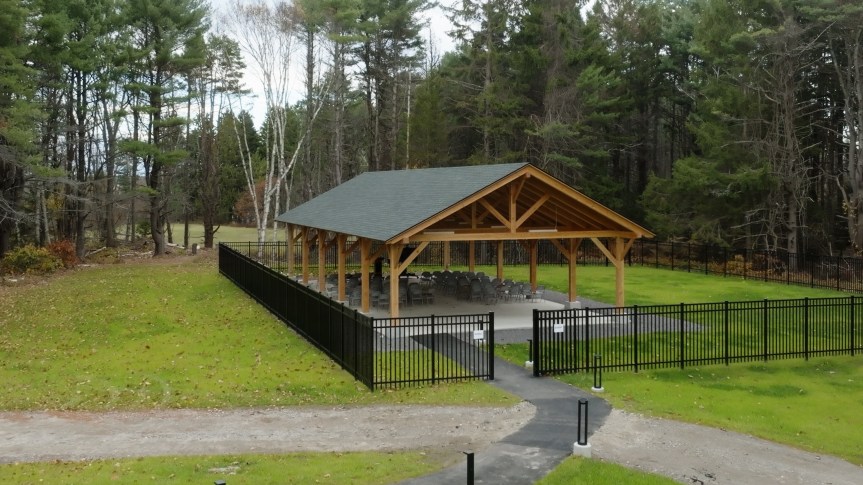
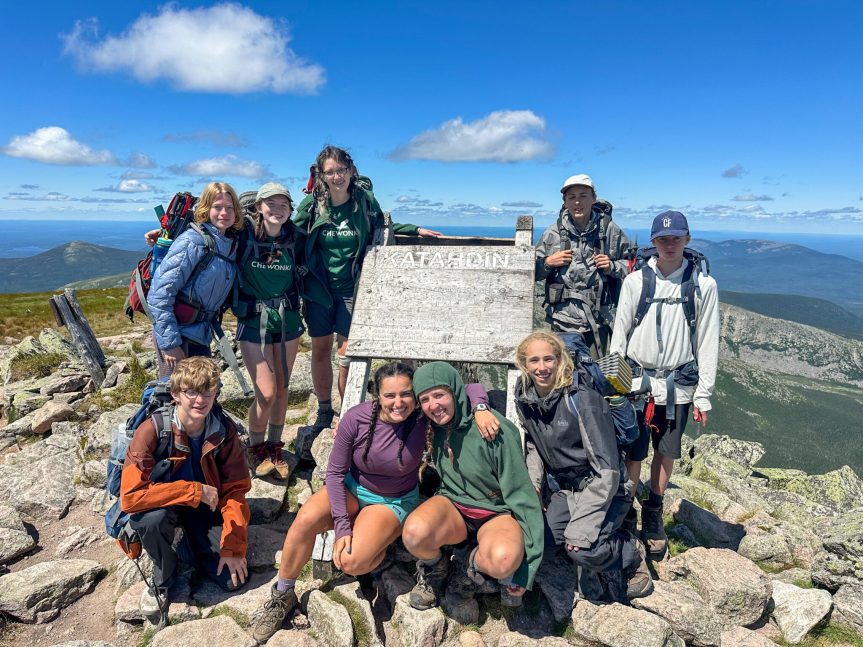
Throughout the 2024-2025 school year, students from the Katahdin Program at RSU 14 (Windham Raymond School District) accessed the Maine Department of Education’s (DOE) Outdoor Learning Pavilion on Mackworth Island numerous times. While at the pavilion, these students worked on three different projects: building planter boxes for their hoop house at the Windham Community Garden; building picnic tables for several community partners; and building a 16-foot rowing dory in partnership with Sailing Ships Maine, to be used by students in the Katahdin Program.

“This space provided by the Maine Outdoor Learning Initiative has been a great asset to students in the Katahdin Program,” Katahdin Head of School Rich Meserve said. “We used the indoor space on cold winter days and the outdoor pavilion when the spring weather arrived.”

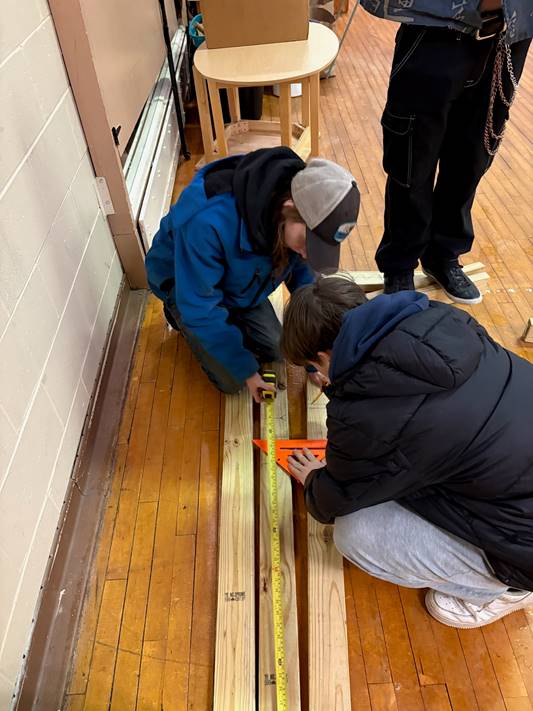
Katahdin Program students building planter boxes

The Katahdin Program provides alternative education programming for students in
grades 9-12 who are enrolled in the RSU 14 school district. Community-based learning is a key
element of the Katahdin experience.

The Katahdin Program’s outdoor projects at the Maine Outdoor Learning Pavilion exemplify how students can practice civic engagement as part of their regular curriculum and also gain practical, real-world skills for life after high school.

“The Katahdin Program utilizes the outdoors as much as possible to tie in the
experiential and adventure-based programming that we provide to our students, while also connecting these projects to our classroom curriculum,” Katahdin special education teacher Paul Field said.

Dominic Siragusa, a junior at Windham High School who is enrolled in the Katahdin Program, noted, “The experience at the pavilion on Mackworth Island was great because doing hands-on projects really works for me.”

Katahdin Program students sanding the rowing dory

Throughout the winter, Katahdin Program students used the Maine Outdoor Learning Initiative’s indoor space on Mackworth Island several days a week to begin the construction of their 16-foot rowing dory. This spring, they completed the sanding and finishing work of the dory outside under the pavilion.

“The process of building the dory was great for our students, and the space worked perfectly. Our students are excited to row in Casco Bay in a boat they built themselves from start to finish,” Field said.

In mid-June,  staff and students from the Katahdin Program launched the dory. They will be able to use and maintain the boat for many years to come.

“It was really great for our students to be able to work on this project from the early planning stages all the way through to launching it,” Field expressed.

For more information about the RSU 14 Katahdin Program, please contact Rich Meserve at rmeserve@rsu14.org.

The Mackworth Island Outdoor Learning Pavilion is part of the Maine DOE’s Maine Outdoor Learning Initiative. The Initiative is delivered on a promise made by Governor Janet Mills during her 2022 State of the State address to provide children with more opportunities to learn about and explore Maine’s natural beauty and resources. 

For more information about the Maine Outdoor Learning Initiative, please contact Jonathan Ross at Jonathan.j.ross@maine.gov.

Maine DOE Seeking Educators to Develop the Next Round of MOOSE Modules

The Maine Department of Education (DOE) is seeking educators to develop interdisciplinary MOOSE modules that align with, and provide real-world context for, Maine Learning Results standards and existing Maine DOE resources.

The Maine Online Open-Source Education (MOOSE) platform, which is managed by the Maine DOE Office of Teaching and Learning, provides free, interdisciplinary, project-based learning materials created by Maine teachers for Maine pre-K through grade 12 students. The MOOSE Team is constantly expanding its content to meet educator needs and provide resources that highlight ongoing and emerging initiatives of the Maine DOE.

The Maine DOE is currently looking for Maine educators to bring a variety of perspectives and skills to the development of MOOSE modules. Modules in this round will emphasize the real-world application of math concepts within a highly-interdisciplinary context. Educators from all disciplines are encouraged to apply, as a mix of expertise is critical to creating rich, meaningful learning experiences that integrate multiple subject areas.

Applicants must be available for weekly meetings on Monday and Wednesday evenings from 4-5 p.m. beginning in March and must be able to dedicate three to six hours outside of that time per week to creating materials. Interdisciplinary cohorts will be formed for educators who want to work in an elementary, middle, or high school context. Within cohorts, teams of three to four people will create individual modules over the course of 16 weeks (with an end date of June 15) under the guidance of the Maine DOE MOOSE specialists.

The MOOSE Team will hold a recorded information session on Monday, February 3 at 4 p.m. That recording will be directly mailed to all registrants and will be posted on the Maine DOE website. Registration for the Zoom meeting can be found here.

Please apply for this opportunity here. Applications are due by Sunday, February 16. Applicants will be notified of their acceptance to the program by Friday, February 21, and will attend their first meeting on Monday, March 3. Compensation for a fully-developed, approved, and published module by June 15 is $3,000, with no partial or late payments available.

For further questions, please reach out to Maine DOE MOOSE Project Manager Jennifer Page at jennifer.page@maine.gov.

Educators Invited to Register for Continuation of Maine Solutionaries Project

The Maine Department of Education’s (DOE) Interdisciplinary Instruction team works with educators throughout the state to deliver high-quality professional development that is both relevant and useful. In a continuation of the Interdisciplinary Instruction team’s partnership with the Institute for Humane Education, the Maine Solutionaries Project will extend through the winter for educators interested in supporting their students in applying their learning.

This innovative project offers Maine educators a unique opportunity to participate in a customized version of the Institute for Humane Education’s Solutionary Micro-credential Program. Educators who register for the Maine Solutionaries Project join statewide educator cohorts focused on specific topics of interest. Participation is free, and participating educators are eligible to receive a $1,000 stipend and 30 contact hours upon completion of the program.

The winter cohorts will combine traditional Solutionary programming with a fresh emphasis on cross-curricula literacy integration, featuring targeted strategies and insights from literacy specialists.

  • Cohorts A through D will focus on the traditional Solutionary framework and highlight:
    • Climate Change (Cohort A)
    • Human Rights and Equity (Cohort B)
    • Water Quality (Cohort C)
    • Food Waste (Cohort D)
  • Cohorts E and F will blend the traditional Solutionary program with literacy integration throughout all content areas and will include literacy experts Cris Tovani and Kellie Smith.
    • Cohort E: available to any educator who teaches grades 4 through 8
    • Cohort F: available to any educator who teaches grades 9 and higher

For kickoff information, including Zoom session dates and times, and to register, please visit the Maine Solutionaries Project website. There, you can also learn more about this collaboration. Spots are limited and filling quickly, so don’t delay!

The Interdisciplinary Instruction team is part of the Maine DOE Office of Teaching and Learning. For more information about this project, please contact Interdisciplinary Instruction team members Kathy Bertini at kathy.bertini@maine.gov or Erik Wade at erik.wade@maine.gov.

Maine DOE Seeking Educators to Pilot MOOSE Modules and Wabanaki Studies Educator Guides

The Maine Department of Education (DOE) is currently looking for educators to pilot MOOSE Modules and Wabanaki Studies Educator Guides in their classrooms this spring.

Maine’s Online Open-Source Education (MOOSE) platform provides free, interdisciplinary, project-based learning materials created by Maine teachers for Maine pre-K through grade 12 students. Feedback on the modules themselves and their usability is essential, as the Maine DOE is constantly working to improve existing modules and apply lessons learned to new creations.

In addition to these modules, the Maine DOE has developed extensive Wabanaki Studies Educator Guides, which are also ready to be piloted for feedback. Educators may apply to pilot any combination of modules and/or educator guides in their classroom.

The Maine DOE is looking for Maine educators with classroom sizes of five (5) or more students who are interested in using these materials and providing feedback about their experience. Educators must choose the module(s)/guide(s) they would like to pilot and justify their decision in their application. Stipends will be provided for feedback on up to two modules and/or guides ($500 per module/guide) that have been piloted, with additional funds provided for de-identified student work and/or reflections ($50 each per module/guide). All required elements must be completed by June 22, 2025.

If you are interested in applying but still have questions, please contact Maine DOE MOOSE Project Manager Jennifer Page (jennifer.page@maine.gov) and/or Maine DOE Wabanaki Studies Specialist Brianne Lolar (brianne.lolar@maine.gov).

Applications can be found here. Those for the spring session are due by Sunday, January 12, 2025. Applicants will be notified of their acceptance for the program by Friday, January 17, and modules/guides may be piloted any time after Monday, January 27.

Region Two School of Applied Technology Modernizes Forestry Training with New Equipment

On Monday, December 2, the Houlton community celebrated Region Two School of Applied Technology’s acquisition of a new $480,000 John Deere forwarder, purchased through a Maine Department of Education (DOE) grant, made possible by Governor Janet Mills’ Maine Jobs and Recovery Plan.

“Governor Mills’ commitment to equipping our technical schools with industry-standard tools gives students hands-on experience that launches careers and builds Maine’s future workforce,” Maine DOE Commissioner Pender Makin said. “Our forestry sector remains a cornerstone of Maine’s economy, and these investments ensure our students are ready to lead this critical industry forward.”

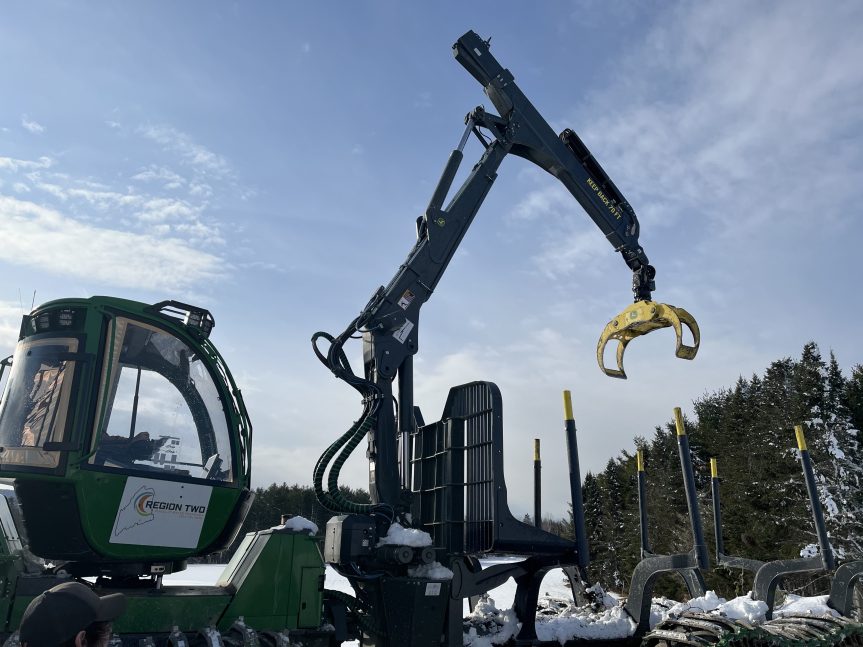
The school’s new John Deere forwarder is a logging industry standard that future foresters must learn to master. This purchase replaces equipment at the school that was 25 years old. The new forwarder uses a rotating cabin and grapple arm to collect and transport logs from cutting sites to roadside landing areas.

Additionally, Region Two School of Applied Technology also received two forestry simulators alongside this forwarder, providing students with comprehensive training opportunities. It allows them to develop expertise with essential equipment in a controlled learning environment before operating the actual machinery.

This upgrade comes as part of a larger by the Maine DOE, designated specifically for upgrading infrastructure and equipment across Maine’s 27 Career and Technical Education schools. The goal is to modernize technical education facilities statewide.

“It was a great day for Career and Technical Education in the state, as it celebrated the commitment that Governor Mills has continuously shown toward growing these opportunities for the students of Maine,” Maine DOE Career and Technical Education Director Dwight Littlefield said. “Many logging companies have the exact same piece of equipment, which will definitely give the students of Region Two a leg up, if they choose to continue down this path.”

The impact of this investment is already evident in Region Two School of Applied Technology’s enrollment numbers, with the forestry program seeing student participation double from 14 students in 2020 to 28 students in the current academic year. This growth contributes to record-breaking statewide CTE enrollment this school year, with 10,405 students total.

This CTE expansion grant was a part of Maine’s Whole Student Pandemic Response. You can learn more about the Maine DOE’s efforts to bolster the state’s workforce and how the department allocated pandemic-era federal funding to do so here.


$7 Million Expansion of Biddeford CTE Center Boosts Career Pathways for Students

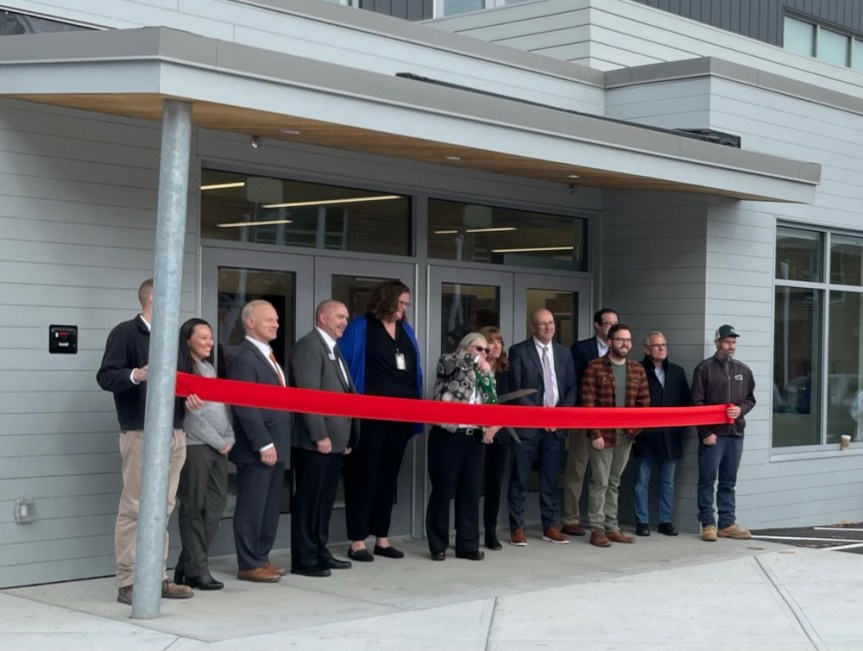
Students from Biddeford and surrounding communities are gaining new opportunities to build in-demand career skills, thanks to a $7 million expansion of the Biddeford Regional Center of Technology (BRCOT).

This expansion was part of Governor Janet Mills’ Maine Jobs and Recovery Plan, which designated $20 million of Covid-era funding to the Maine Department of Education (DOE) to support the 27 Career and Technical Education (CTE) schools in the state—specifically by upgrading infrastructure and equipment.

This project added 17,500 square feet of new space to the high school-adjacent facility. Great Falls Construction completed the work at BRCOT using a mobile studio design.

“This expansion is a major win for Biddeford and surrounding communities,” Ryan Fecteau, former and newly re-elected Speaker of the Maine House of Representatives, said when speaking to

“It isn’t just about bricks and mortar. It’s about creating new pathways to success for students,” Biddeford Schools Superintendent Jeremy Ray told

The new BRCOT wing houses three brand-new CTE programs: culinary arts, hospitality/travel/tourism, and athletic training/sports medicine — the latter being the first of its kind in Maine. This expansion has also allowed the center to grow its existing programs, too, like emergency medical technician training, plumbing, and heating.

“This new wing isn’t just about creating space; it’s about creating opportunity,” Biddeford Regional Center of Technology Director Paulette Bonneau said. “It’s about giving students the tools, resources, and experiences they need to build their futures.”

BRCOT now offers 20 CTE programs and serves around 500 students in grades 9-12 from eight communities. These additional programs will provide students with industry-recognized certifications, college credits, and hands-on training to prepare them for careers and/or further education.

The culinary arts program, for example, allows students to earn their ServSafe certification; the athletic training program offers training in CPR and first aid; and the hospitality/travel/tourism program provides a pathway to Maine’s vital tourism industry.

“We’re not just preparing kids for jobs; we’re preparing kids for careers,” Ray said.

“It’s more than just a building for Biddeford,” Biddeford Mayor Marty Grohman said.

During the center’s grand opening ceremony, guests were treated to an impressive brunch spread prepared by culinary arts students under the guidance of Chef Steve Ogden. Senior Emma Alward, a hospitality student, served appetizers.

“I think it’s fun,” Alward said of the program when speaking with Saco Bay News.

Eleventh-grader Sophia Auger, who is enrolled in the culinary arts program, said she never expected to have this opportunity.

“It’s an honor to be able to be a part of the first group to get to do this,” Auger said.

Auger’s classmate, Maya Cochrane agreed, noting that the program is a great fit for students interested in cooking and working in a kitchen.

“When students have interest, we don’t want them to wait,” Ray said. “We want to make sure that they’re ready to capitalize on that, so they can dig right in.”

Bonneau noted that the programs at BRCOT also offer dual enrollment, allowing students to earn college credits while still in high school.

“This grand opening is a monumental milestone for our school and our community,” Bonneau said. “The programs housed here will spark innovation, drive economic growth, and give our students a pathway to success.”

This project was a part of Maine’s Whole Student Pandemic Response, made possible through the American Rescue Plan. To learn more about Maine’s CTE schools or how the Maine Department of Education used federal emergency funding to support Maine schools, please visit the Maine DOE website.


Save the Dates for 2025 The Regulated Classroom Train-the-Trainer Sessions

The Maine Department of Education (DOE) is continuing its collaboration with Emily Read Daniels, M.Ed., MBA, NCC, SEP™, owner and founder of The Regulated Classroom™ (TRC™), to provide a third phase of train-the-trainer professional learning experiences at no cost to Maine educators.

In the fall of 2023, the Maine DOE launched the first phase of these trainings to respond to requests from educators for classroom resources to support building positive classroom culture and addressing dysregulated student behavior. All 600 spaces for the first phase of TRC trainings were booked within weeks. In the spring of 2024, a second phase of TRC trainings for 600 more educators from across the state was announced, and, like the first round, those sessions also filled up quickly. With a considerable number of emails coming from educators seeking opportunities for professional development—and a waitlist of more than 100 participants—this project has been expanded to create more training opportunities for another 600 educators, starting in March of 2025.

Through a somatosensory and Polyvagal-informed approach to cultivating conditions for “felt safety” in the classroom, TRC equips educators with a framework that consists of four core practices, two essential educator capacities, and sensory tools, establishing a safe and connected classroom environment. TRC offers highly-effective tools and practices to incorporate into routines, along with self-awareness and self-care resources that enable educators to recognize and bring regulation to the classroom, supporting engagement, connection, and learning.

To develop leadership capacity and promote project sustainability, the Maine DOE Office of School and Student Supports secured funding from Title II and hired Lead Co-Regulators from each of Maine’s nine Superintendent Regions. These Lead Co-Regulators are facilitating a series of three events this school year, specifically designed to support the implementation and sustainability efforts of educators trained in the framework of TRC. These in-person opportunities will allow participants to share successes and brainstorm strategies to meet any challenges, developing a vibrant community with a strong sense of mattering and belonging for educators. Click here to be included.

Here is what some participants have said about The Regulated Classroom:

  • “[We’re] feeling much more connected as a school community. Students feel safe within their settings when TRC is implemented.”
  • “[The implementation of TRC] is creating more interactive experiences between teachers and students.”
  • “[TRC is] 100% positive [and brings about a] culture of positive change, [plus] lower discipline referrals.”
  • “[TRC is] supportive of our shift toward embracing an integrated trauma-responsive approach. Kids and staff enjoy the practices.”

With more than 94% of Maine educators rating their experience with TRC as “Very Good” or “Excellent”—and many remarking that this is the best training they have ever attended—the Maine DOE is delighted to announce this new series of additional trainings, with an intent to open registrations in early January and then again in mid-July. Proposed dates and times are as follows:

The Regulated Classroom registrations (open week of January 6, 2025):

Locale Previous Trainings Info Dates Max. # of Trainees
1.       Kittery

(York County)

Participants thus far from York County: 126 3/11, 3/12 50
2.       South Paris

(Oxford County)

Participants thus far from Oxford County: 64 3/27, 3/28 50
3.       Scarborough

(Cumberland County)

Participants thus far from Cumberland County: 141 4/10, 4/11 50
4.       Auburn

(Androscoggin County)

Participants thus far from Androscoggin County: 64 5/8, 5/9 50
5.       Damariscotta/ Jefferson

(Lincoln County)

Participants thus far from Lincoln County: 25 5/21, 5/22 50
6.       Skowhegan

(Somerset County)

Participants thus far from Somerset County: 51 6/3, 6/4 50


The Regulated Classroom registrations (open week of July 7, 2025):

7.       South Portland

(Cumberland County)

Participants thus far from Cumberland County: 141 9/9, 9/10 60
8.       Northern Maine locale

(Aroostook County)

Participants thus far from Aroostook County: 30 9/25, 9/26 40
9.       Belfast

(Waldo County)

Participants thus far from Waldo County: 41 10/1, 10/2 50
10.   Ellsworth/Bar Harbor

(Hancock County)

Participants thus far from Hancock County: 36 10/23, 10/24 50
11.   Orono

(Penobscot County)

Participants thus far from Penobscot County: 58 11/4, 11/5 50
12.   Portland

(Cumberland County)

Participants thus far from Cumberland County: 141


11/18, 11/19 50


To learn more about TRC, click here. If you have additional questions regarding the third phase of TRC trainings, please contact the Maine DOE. Administrators are encouraged to reach out to Kellie Bailey, Maine DOE Social Emotional Learning Specialist, at kellie.bailey@maine.gov. School personnel are encouraged to reach out to Sarah Nelson, Maine DOE Student Engagement Specialist, at sarah.nelson@maine.gov.

This opportunity for Maine educators is made possible through Elementary and Secondary School Emergency Relief funding.

MEDIA RELEASE: The Maine Department of Education Opens New Outdoor Learning Pavilion on Mackworth Island

The Maine Outdoor Learning Pavilion is the latest effort by the Maine Department of Education to support outdoor education in Maine.

FALMOUTH, Maine — On Wednesday, Nov. 6, the Maine Department of Education (DOE) unveiled the Maine Outdoor Learning Pavilion on Mackworth Island, marking another milestone in the push to combat pandemic-related learning loss through outdoor education.

The pavilion is the latest addition to the Maine DOE’s Maine Outdoor Learning Initiative, which has connected more than 14,000 students to high-quality outdoor learning programs since 2021. This past summer, thousands of Maine students participated in more than 100 outdoor programs, from backpacking the Appalachian Trail to learning to sail to exploring nature-based careers.

“Outdoor learning is central to student engagement, health, and wellbeing” said Maine DOE Commissioner Pender Makin. “Since the summer of 2021, we’ve invested more than $11 million in the Maine Outdoor Learning Initiative to provide students with highly-engaging outdoor and environmental learning opportunities.”

“Before last year, I thought that learning was meant for classrooms,” George, an eighth-grade student from Scarborough Middle School, said. “I realized how being outside can teach us so much, from hands-on learning to real-life scenarios. The outdoors was a great environment to learn. It provided plenty of fresh air, along with a break from sitting still. When we were outside, I felt happier and had more energy. When we came back inside, I was relaxed, focused, and ready to learn.”

The new facility unveiled on Wednesday, nestled in the woods at the center of Mackworth Island, features a pavilion and an adjacent lawn, designed to make outdoor education more accessible for Maine schools.

“The Maine Outdoor Learning Pavilion is a place where schools can bring students to make learning come alive,” Jonathan Ross, superintendent of the Acton School Department and Maine DOE Outdoor Learning Initiative Coordinator, said. “Maine schools can bring a class here, teach a lesson under the pavilion or inside where we will have desks and bathrooms, and then take that lesson onto the trails around the island.”

At Wednesday’s event, students and educators from Scarborough, South Portland, Biddeford, Wiscasset, and Acton schools shared their experiences with the Maine Outdoor Learning Program.

Photos of students are courtesy of the South Portland School Department.

Sarah, an eighth-grade student from Wiscasset Middle School, emphasized the program’s impact on her education.

“The biggest lessons that I learned last year were that learning is all around us, and the things that you can learn outdoors are so worthwhile,” she said. “Even if you think that you don’t need a break from your school day, going outside and giving your brain breaks is always helpful.”

Tabatha Frawkins, a science teacher at Biddeford Alternative Pathways Center, shared powerful feedback from parents about the program’s effectiveness. She said one parent told her, “The wilderness program gave me back my son and all his glory and gave my son back the confidence and the desire to attend school. He went on to attend leadership classes for his senior year and is on track to graduate.”

Wednesday’s event concluded with a nature-based scavenger hunt across the island, which Ross and the Maine DOE coordinated.

The Maine Outdoor Learning Pavilion was created using federal emergency relief funding as part of Maine’s Whole Student Pandemic Response and represents the Maine DOE’s broader commitment to outdoor education. For more information, please visit the Maine DOE Newsroom.

To reserve the pavilion, schools may reach out to Jonathan Ross at jonathan.j.ross@maine.gov.

Chewonki Campers Learn to Love and Protect Nature Through the Maine Outdoor Learning Program

As students returned to school this year, organizations large and small across Maine breathed a happy, yet tired, sigh of relief as they wrapped up their summer programs for the year, reflecting on the outcomes for students and staff.

Sixty-six non-profit organizations across the state that participated in Governor Mills’ “Maine Outdoor Learning Initiative,” a dedicated effort to increase student access to hands-on outdoor learning experiences and career exploration. In 2022, Governor Mills stated her intention to invest in outdoor education in Maine. Since then, the Maine Department of Education has provided grant funding through the American Rescue Plan Act for more than 4,000 Maine students to participate in a wide variety of outdoor learning experiences between May and September.

Chewonki, an environmental education organization based in Wiscasset, participated in the initiative and was home to 50 Maine students in grades 8-12, arriving from thirty-nine different Maine towns to embark on two-week camping trips by canoe, sea kayak, or on foot.

“It’s not like it looks on Instagram,” said Director of Outdoor Programs Jen Adams. “On a two-week backcountry experience, there’s always a transformative or ‘Ah-ha!’ moment as the participant goes from thinking this will be easy, and then it gets difficult, and then they learn how to dig deep into their physical and emotional reserves, and they come away with something really special – a belief they can work with a team and overcome challenges.”

“On the surface, our programming is straightforward,” says Adams. It spans 2-5 weeks of exploring Maine’s amazing trails and waterways, building outdoor living skills, and learning about nature and stewardship. “But it’s ultimately about community and learning what it means to forge those social skills to live with ten other people for twenty-four hours a day for two weeks, where you can’t just quit or walk away,” he adds.

According to Adams, a vital benefit of the experience is learning to communicate and work together with groups of strangers- a valuable life skill in education, the workforce, and beyond. “On these trips… of course, they have to get to certain places on a schedule, but that’s not really the point,” says Adams. “Students arrive from very different households and families, different incomes, different identities, and ideas, and we have to find ways to jam all of these people in a group and make it an inclusive and welcoming place to be.”

Adams describes the practice of building a group “community agreement” at the beginning, symbolized by a string of self-designed flags that the students carry with them and display at each campsite along their journey. “It’s facilitated by the trip leaders who brainstorm with the group, asking questions like, ‘What do we want to be part of our community?’ and ‘What don’t we want in our community?’ We then combine all the different ideas to find the best way to express them, whether through pictures or in writing.”

Alongside the skill development of learning to handle watercraft, navigate from maps, outdoor cooking, and camping, students gain instruction and often excitement around Leave-no-trace camping ethics, discovering just how many public camping and recreation spaces are available to them in Maine.

“A term we use a lot is “a sense of place,” meaning the way the student understands their relationship to the place they’re in, but also understanding all the complex interactions between natural systems, human systems, and the responsibility we have to steward both,” says Adams. “With students who don’t have a lot of outdoor experience, we have to start by getting them excited on the social-emotional level about being out in nature and feeling confident in their skills, then we can engage them at the educational level so they start to understand the ecosystems they’re traveling through, and that often leads to an enduring passion to protect and steward the natural world.”

Adams describes the delight the trip leaders feel as the teens start to take pride in leaving a campsite better than they found it, “…picking up little bits of carrot, or having intense discussions about how food scraps impact the wildlife. It can be difficult for people to get excited about conservation ‘in general’ but once you have a favorite river, or trail, or beach, or campsite, it becomes something you care about your whole life, and come to share the love of that place with others you may never meet.”

The Chewonki trip leaders have also commented on how excited they were to work with these local Maine students. “I’ve never had such an enthusiastic group of students paddle down the Allagash River,” said Chewonki Trip Leader Jed Breen. “Each and every one of them wanted to be here, and it showed.”

Chewonki staff have turned their sights toward the next season, looking for the next step to keep these students engaged with outdoor recreation and education. “We deeply appreciate Governor Mills and the Maine Department of Education for making this programming possible,” says Chewonki president Nancy Kennedy. “We’re encouraging all the students who came to a summer program through the Maine Outdoor Learning Initiative to keep going! There are excellent school-year organizations and clubs where students can take what they’ve learned this year and continue to build on it.”

“Once you realize all that Maine has to offer- for everyone- you’ll never want to turn back,” says Kennedy. “The outdoors is for everyone.”

The Maine Outdoor Learning Initiative was created with Federal Emergency Relief Funding and is a part of Maine’s Whole Student Pandemic Response. Please visit the Maine DOE Website to learn more about Whole Student Pandemic Response and the many other programs that make it up.


Beloved Summer School Program Helps Midcoast Students Grow and Thrive

On a rainy summer day in Washington, Maine, students filed into the cozy main building of Camp Medomak. Looking around at the room full of smiling faces and picnic tables covered in books, games, and crafts, you may assume you’re at classic summer camp. However, these students are here for RSU 40’s Summer School program.

The RSU 40 Summer School program, now in its third successful year, was one of over sixty Summer Learning and Enrichment programs that ran from June to August of 2024. Using Federal Emergency Relief Funding, the Maine Department of Education funded Summer Learning and Enrichment programs to address k-12 students’ academic, social, emotional, and mental health needs over the summer break.

“A lot of kids in very rural locations, sometimes with grinding poverty, face a lot of barriers, chief among them the trauma of isolation,” explained RSU 40 Assistant Superintendent Tom Gray. “Here, they are having rich experience. Safe experiences. They have access to things they’ve never done before. They can be themselves. They can let their guard down when they learn. They can be successful. We know, both intuitively and from all of the research, that when kids experience success, it sets them up to have more success. So that is really the aim here. And that’s what we’re seeing.”

“If I wasn’t here, I would probably just be watching TV at home,” explained a returning student named Abby. “I like coming here instead, seeing my friends and teachers from school.”

Like many programs in Maine’s Whole Student Pandemic Response, the RSU 40 Summer School program prioritizes underserved students and students most impacted by the COVID-19 pandemic. It was created by RSU 40 to aid students’ post-pandemic recovery by offering extra math and literacy instruction, tutoring, and outdoor learning.

“Students have a rotation of five activities, so while we do have writing and math every day, they choose what the other three-fifths of their days look like,” explained Co-Director and Medomak Middle School Art Educator Sherry Casas. “They know, if they’re writing postcards home from camp, that’s writing; if they’re playing Yahtzee and Farkle, that’s math; and when they’re building structures with spaghetti and marshmallows, that is STEM. While they’re doing these things and having fun, they also are empowered knowing they have activities available to them that they’ve said, ‘that is what I’m interested in.’”

Students’ interests spanned from paddle boarding to quilting this year. They could choose from traditional summer camp activities, like swimming and crafting, or take a chance at something new, such as acting or gardening.

“Many of these kids do not have access to things like paddle boarding or pedal boats or even swimming and fishing. We offer so many high-interest activities because they are unavailable to our students at any other time in their life,” said DeAnn Vigue, whom the campers lovingly call Yaya.

“I love camp because it’s in Maine,” said Daniel, a returning student. “I play tennis, swim, and went on a canoe for the first time.”

“It’s quite fun here,” said Amy, a student in her third year of the program. “And it’s preparing me for middle school.”

Amy is one of many upcoming seventh graders at the camp. For herself and many of her classmates entering Medomak Middle School in the fall, RSU 40’s Summer School program is an opportunity to bond with new classmates.

“When we started, this whole thing was only for fourth, fifth, and sixth graders, and I came up with the idea of having the outgoing sixth graders come back as seventh graders. So, they could build that relationship before they start at [Medomak],” explained Vigue. “We just found out one of our groups will be in the same school wing when they hit the middle school, which we didn’t know when we put them together.”

The true testament to how beloved RSU’s summer program has become is the educators and students who come back year after year.

“This could not have happened if the educators here weren’t passionate about this program,” commented Superintendent Gray. “It has given educators the opportunity to be alive and impassioned. And that’s really, really valuable.”

Hannah Fecteau was a previous camper who got involved in the program and now comes back as a volunteer. “I enjoy making connections with the kids, and since I’m also younger, I just kind of easily connect with them. And I enjoy helping them out,” she shared.

Quinn Overlock, an RSU 40 graduate and Biochemistry major at Colby College, is in her third year in the program. She shared that she keeps returning to work at the RSU Summer School program because “seeing the growth of some of the kids is so rewarding. We’ve had many of these kids for all three years, and seeing where they were socially and academically and then seeing where they are now, you can see that growth.”

The American Rescue Plan Act funded all Summer Learning and Enrichment programs as a part of Maine’s Whole Student Pandemic Response. You can visit the DOE website here for more information on the Summer Learning and Enrichment Grant and Maine’s Whole Student Pandemic Response.