Region Two School of Applied Technology Modernizes Forestry Training with New Equipment

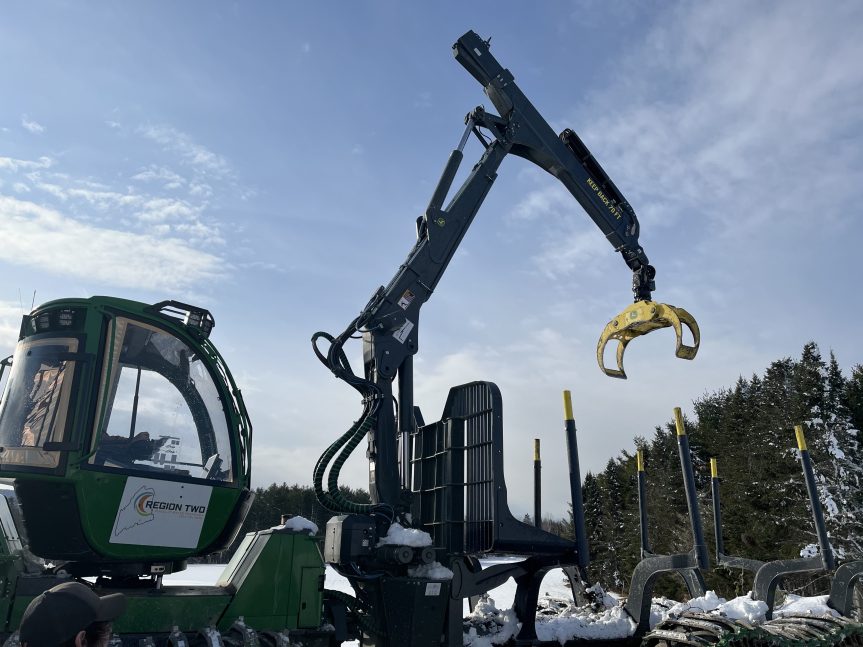
On Monday, December 2, the Houlton community celebrated Region Two School of Applied Technology’s acquisition of a new $480,000 John Deere forwarder, purchased through a Maine Department of Education (DOE) grant, made possible by Governor Janet Mills’ Maine Jobs and Recovery Plan.

“Governor Mills’ commitment to equipping our technical schools with industry-standard tools gives students hands-on experience that launches careers and builds Maine’s future workforce,” Maine DOE Commissioner Pender Makin said. “Our forestry sector remains a cornerstone of Maine’s economy, and these investments ensure our students are ready to lead this critical industry forward.”

The school’s new John Deere forwarder is a logging industry standard that future foresters must learn to master. This purchase replaces equipment at the school that was 25 years old. The new forwarder uses a rotating cabin and grapple arm to collect and transport logs from cutting sites to roadside landing areas.

Additionally, Region Two School of Applied Technology also received two forestry simulators alongside this forwarder, providing students with comprehensive training opportunities. It allows them to develop expertise with essential equipment in a controlled learning environment before operating the actual machinery.

This upgrade comes as part of a larger by the Maine DOE, designated specifically for upgrading infrastructure and equipment across Maine’s 27 Career and Technical Education schools. The goal is to modernize technical education facilities statewide.

“It was a great day for Career and Technical Education in the state, as it celebrated the commitment that Governor Mills has continuously shown toward growing these opportunities for the students of Maine,” Maine DOE Career and Technical Education Director Dwight Littlefield said. “Many logging companies have the exact same piece of equipment, which will definitely give the students of Region Two a leg up, if they choose to continue down this path.”

The impact of this investment is already evident in Region Two School of Applied Technology’s enrollment numbers, with the forestry program seeing student participation double from 14 students in 2020 to 28 students in the current academic year. This growth contributes to record-breaking statewide CTE enrollment this school year, with 10,405 students total.

This CTE expansion grant was a part of Maine’s Whole Student Pandemic Response. You can learn more about the Maine DOE’s efforts to bolster the state’s workforce and how the department allocated pandemic-era federal funding to do so here.



$7 Million Expansion of Biddeford CTE Center Boosts Career Pathways for Students

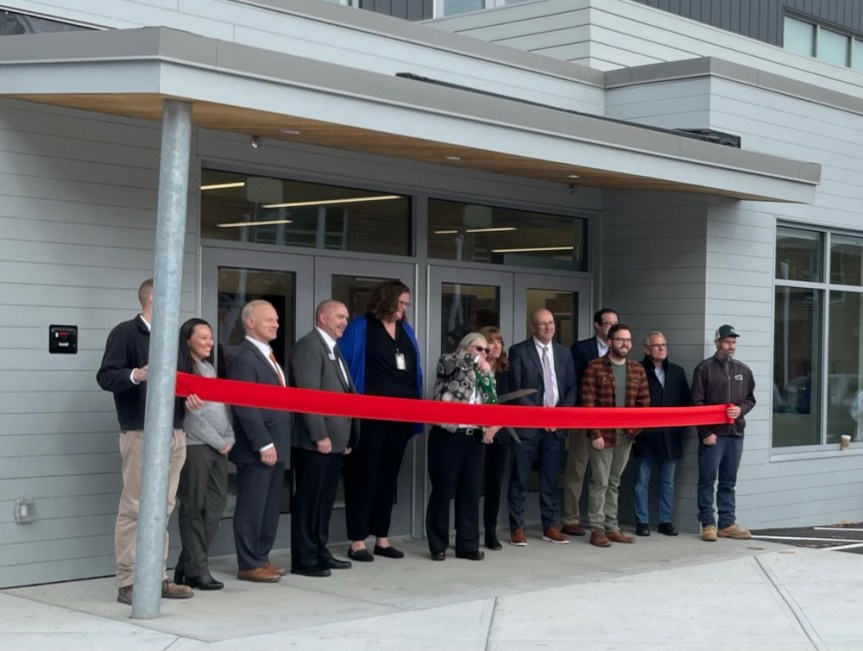
Students from Biddeford and surrounding communities are gaining new opportunities to build in-demand career skills, thanks to a $7 million expansion of the Biddeford Regional Center of Technology (BRCOT).

This expansion was part of Governor Janet Mills’ Maine Jobs and Recovery Plan, which designated $20 million of Covid-era funding to the Maine Department of Education (DOE) to support the 27 Career and Technical Education (CTE) schools in the state—specifically by upgrading infrastructure and equipment.

This project added 17,500 square feet of new space to the high school-adjacent facility. Great Falls Construction completed the work at BRCOT using a mobile studio design.

“This expansion is a major win for Biddeford and surrounding communities,” Ryan Fecteau, former and newly re-elected Speaker of the Maine House of Representatives, said when speaking to

“It isn’t just about bricks and mortar. It’s about creating new pathways to success for students,” Biddeford Schools Superintendent Jeremy Ray told

The new BRCOT wing houses three brand-new CTE programs: culinary arts, hospitality/travel/tourism, and athletic training/sports medicine — the latter being the first of its kind in Maine. This expansion has also allowed the center to grow its existing programs, too, like emergency medical technician training, plumbing, and heating.

“This new wing isn’t just about creating space; it’s about creating opportunity,” Biddeford Regional Center of Technology Director Paulette Bonneau said. “It’s about giving students the tools, resources, and experiences they need to build their futures.”

BRCOT now offers 20 CTE programs and serves around 500 students in grades 9-12 from eight communities. These additional programs will provide students with industry-recognized certifications, college credits, and hands-on training to prepare them for careers and/or further education.

The culinary arts program, for example, allows students to earn their ServSafe certification; the athletic training program offers training in CPR and first aid; and the hospitality/travel/tourism program provides a pathway to Maine’s vital tourism industry.

“We’re not just preparing kids for jobs; we’re preparing kids for careers,” Ray said.

“It’s more than just a building for Biddeford,” Biddeford Mayor Marty Grohman said.

During the center’s grand opening ceremony, guests were treated to an impressive brunch spread prepared by culinary arts students under the guidance of Chef Steve Ogden. Senior Emma Alward, a hospitality student, served appetizers.

“I think it’s fun,” Alward said of the program when speaking with Saco Bay News.

Eleventh-grader Sophia Auger, who is enrolled in the culinary arts program, said she never expected to have this opportunity.

“It’s an honor to be able to be a part of the first group to get to do this,” Auger said.

Auger’s classmate, Maya Cochrane agreed, noting that the program is a great fit for students interested in cooking and working in a kitchen.

“When students have interest, we don’t want them to wait,” Ray said. “We want to make sure that they’re ready to capitalize on that, so they can dig right in.”

Bonneau noted that the programs at BRCOT also offer dual enrollment, allowing students to earn college credits while still in high school.

“This grand opening is a monumental milestone for our school and our community,” Bonneau said. “The programs housed here will spark innovation, drive economic growth, and give our students a pathway to success.”

This project was a part of Maine’s Whole Student Pandemic Response, made possible through the American Rescue Plan. To learn more about Maine’s CTE schools or how the Maine Department of Education used federal emergency funding to support Maine schools, please visit the Maine DOE website.


Third Annual Supporting Adult Multilingual Learners Institute Strengthens Adult Education Profession

This summer, the Maine Department of Education’s (DOE) Adult Education Team hosted its third annual Supporting Adult Multilingual Learners Institute at Sugarloaf Mountain. Adult Education teachers, curriculum designers, and administrators had the opportunity to learn from speakers, engage with different breakout sessions, and have meaningful discussions with their peers. Additionally, many fun activities, such as trail walks and yoga, were offered for participants to enjoy the nature of the Carrabassett Valley region.

Maine has become home to many refugees and asylum seekers. Over half of Maine’s Adult Education learners are multilingual and come from 115 different countries– five of the most enrolled are Somalia, Angola, D.R. Congo, Afghanistan, and Syria. The Supporting Adult Multilingual Learners Institute aims to prepare educators to best support those of other cultures and help them overcome teaching obstacles.

There were two group-wide workshops at the conference. In these workshops, talented speakers presented on themes regarding adult education, particularly as it relates to culture, and allowed for group-wide discussion. One workshop, Deepening Our Cultural Competence and Cultural Humility, was led by Suheir Alaskari (Associate Director of Student Employment Services at Colby College), and the other, Opportunities and Challenges of Cross-Cultural Communication with Adults, was led by Abbie Yamamoto (Director of Portland Adult Education).

The workshops aimed to educate professionals on issues that can present barriers for multilingual and multicultural learners. One important theme was the consciousness of social cues and language uses. Idioms and pop culture references are examples of high-context culture, as they feel natural to U.S.-born citizens, but can be highly confusing to outsiders. Not only is high-context culture confusing, but it also creates a barrier of exclusion. Conversely, low-context culture creates an inclusive space where people of varying backgrounds can learn from each other and bond. Another imperative theme was how taking the time to learn and understand the culture of adult students creates a more-relevant learning environment for them and validates their cultural identities.

A man and a woman sit at a table. The man is speaking, illustrating his point with a hand held in the air.
Educators had a chance to connect and share stories from the field.

Educators should also reflect on their own American culture and use it to find common ground with their students’ cultures to help connect further with them. Mike Emery (Director of Lake Region and Fryeburg Area Adult Education) remarks: “One of the things that has been really great in the past couple of years is we’ve shifted the focus from just being on instruction to a broader purpose. For someone who’s a director or doing other aspects of programming, it’s been really helpful to think about how to start new workforce partnerships in programs like that. There are some things around credentialing that are very different working with a foreign-born professional as someone born and raised in the US.” Focusing on consciousness and supporting students will not only enhance adult students’ learning but will also help them feel more accepted in America.

Some participants also led breakout sessions. There were four breakout sessions total and educators had six options to choose from per session. Some breakout topics included: Using EnGen for IET, Stuff I Wish My Teacher Knew, Using Data to Inform Multilingual Programming, The Immigrant Identity in the Classroom and Beyond, and Fostering Diversity in the Workforce: Building Partnerships and Pathways for Multilingual Learners, Paradigms of Belonging. Breakout sessions allowed for participants to focus on themes of interest and engage in more intimate discussions.

Educators appreciated having new frameworks to work within and gaining new skills in cultural competency. Many Adult Educators remark that their favorite part of their job is getting to see their students succeed: “It’s a bonus when you have students coming to you every day saying ‘Teacher, thank you so much. I learned so much today; this is incredible.’ They’re so appreciative, it’s amazing.” Remarks Melanie North (Teacher at Lewiston Adult Education and part of the Supporting Adult Multilingual Learners Institute planning committee). As influxes of migrants continue to increase, it is imperative that educators are equipped to best teach and support them.

Joy and enthusiasm were in the air at Sugarloaf, and educators hope to keep the annual institute running and improving for many more years to come. “I really have seen that this institute over the past three years has grown and continues to grow. You can feel it in the field. I’ve worked in multiple programs in Kennebec County and I feel that because of this institute and the push to have culturally relevant professional development we’re seeing culturally-relevant adult education programs.” stated Tekia Cox (Academic Program Coordinator at Mid-Maine Regional Adult Community Education).


Maine Employer Summit Engages Youth to Tackle Workforce Challenges

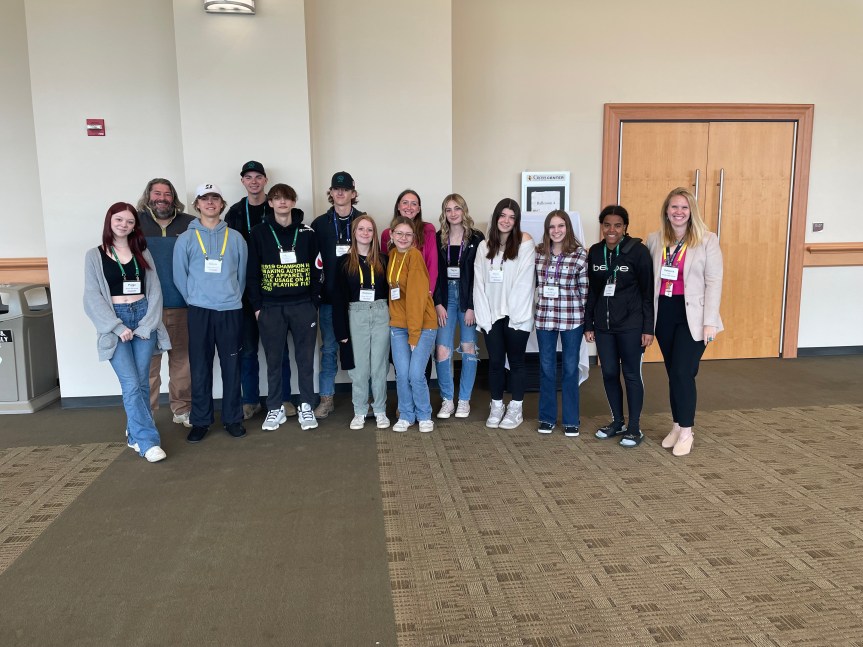
(Pictured: ELO Coordinator Kevin Napilillo and JMG Teacher and Career Counselor Becky Kash brought several Brewer High School students to the Summit. Three of the ELO students were featured as guest speakers on panels; two in construction ELOs and one in a teaching ELO.)

More than 500 employers and young people recently gathered at Bangor’s Cross Insurance Arena for the Maine Employer Summit. Hosted by the Maine Department of Labor and the Maine Department of Economic Development, the event provided a vital platform for employers seeking resources and solutions to pressing workforce challenges. Participants also had the opportunity to connect with young professionals, government agencies, State of Maine resources, and fellow business leaders to explore workforce opportunities.

During the event, there were several opportunities in which participants could engage in discussions on breaking down barriers to attracting, hiring, and retaining employees from diverse communities, sharing best practices, and fostering innovative solutions to create a more inclusive and sustainable workforce.

The Maine Department of Education (DOE) organized a panel on engaging local youth through work-based learning. This panel highlighted multiple forms of work-based learning, including extended learning opportunities, pre-apprenticeship to apprenticeship, and adult education, which includes integrated education and training. As an interactive component of the panel, JMG partnered with Maine DOE to facilitate a conversation with employers on implementing work-based learning into their place of business.

The event featured an Innovation Hall with companies offering job opportunities, virtual reality or live demonstrations, mock interviews, and resume help staffed by Adult Education Career Navigator Kate Points and College and Career Success Coordinator Audrey Kimball, among others with career expertise.

Breakout sessions also delved into strategies for creating more inclusive and sustainable workplaces. These discussions highlighted the importance of understanding and addressing the unique challenges faced by different demographic groups, including New Mainers, young and aging populations, people of color, individuals with disabilities, those seeking re-entry into the workforce and the LGBTQ+ community.

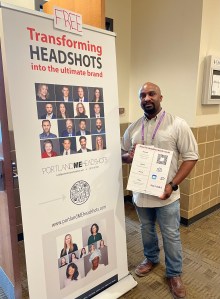
No cost headshots were offered to attendees during the sessions and the Innovative Hall.
No-cost headshots were offered to attendees during the sessions and at the Innovative Hall.

Several presentations and workshops showcased the latest innovations in workforce development. The emphasis was on practical solutions employers could implement to improve workforce dynamics.

Through the many interactive sessions, attendees shared their experiences, challenges, and successes, helping to identify effective practices that could be adopted by other organizations facing similar challenges.

The Maine Employer Summit emphasized the critical role that collaboration and innovation play in addressing workforce challenges. The event not only provided valuable resources and insights but also inspired attendees to think creatively about how to build a more inclusive and resilient workforce. The success of the 2024 Maine Employer Summit sets a positive precedent for future gatherings, ensuring that Maine remains at the forefront of innovative workforce solutions.

KVCC College and Career Success Coordinator Eases the Transition from Adult Education to College

What do you get when you combine adult education students, a tour of Kennebec Valley Community College (KVCC), and a variety of delicious pies? The answer is Brighter Futures!

A successful, immersive event occurred earlier this spring when 18 students from four local adult education programs spent two hours on the KVCC campus. In addition to touring the campus, students met the dean of students, key student success support staff, and a Maine Educational Opportunity Center advisor. After the tour, they enjoyed pie and ended the day with a fun activity led by a faculty member. The event was so successful that there are plans to offer it at least once a year.

Carolyn Haskell, the College and Career Success Coordinator (CCSC) at KVCC, a position funded through the Maine Jobs and Recovery Plan, played an integral part in planning the event and worked closely with Teresa Smith, KVCC Director of Enrollment, to make it a success. Area adult education directors and staff marketed the event and accompanied students to the campus.

Part of Haskell’s role is to be the on campus contact for adult education students interested in attending KVCC. Haskell is a resource for students navigating the college process and adult education. Being on campus gives her a unique perspective and informs how she advises students. She helps ease the transition from adult education to college and supports students along their college journey to help them succeed. She also connects current KVCC students to adult education for services to help them while they are in college.

Haskell has seen the power of getting adult learners to college campuses and believes that allowing them to see themselves as college students is monumental. She said, “Once they tour the campus, it is much easier for them to think of college as a goal to be accomplished rather than a dream.”

This story was submitted by Kennebec Valley Community College (KVCC). To submit good news about your school to the Maine Department of Education, complete our Good News Submission form.

Mt. Ararat ELO Coordinator Partners with Local Credit Unions to Empower Tomorrow’s Financially Savvy Generation

During financial literacy month in April, Doug Ware, the Extended Learning Opportunities (ELO) Coordinator at Mount Ararat High School, hosted a Financial Fitness Fair for the junior class.

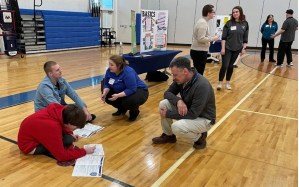
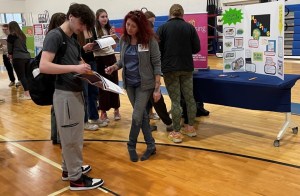
Doug Ware, ELO Coordinator at Mt. Ararat engages with a student working on their financial fitness packet. Around them credit union representatives talk with students about financial literacy.

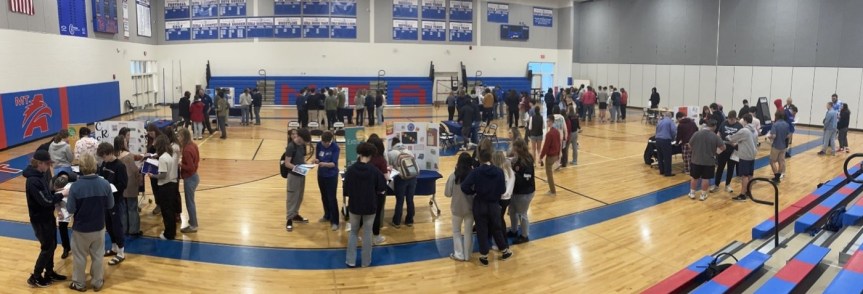
The school gymnasium buzzed with energy as students navigated through booths and interactive activities. Each station provided a hands-on learning experience related to finances. Students experienced a simulation of their future monthly budget based on their career of interest and gained valuable insight into possible financial challenges they may face in adulthood. The goal for the students was to pay for all of their monthly expenses but without paying more than they earn each month.

“Students have really enjoyed the Financial Fitness Fair events,” said Ware. “They report to have learned much about building credit, managing budgets, prioritizing expenses, and planning for the long term.  We are working to ensure that all Mt. Ararat high school students graduate with at least basic financial literacy.”

“This is one of the most enjoyable aspects of working for a credit union,” said Jennifer Anderson, Senior Vice-President of Retail Services at Five County Credit Union and President of the Jeannette G Morin Credit Union Chapter. “I love the fact that multiple credit unions from around the state work together regularly to volunteer at our local high schools and talk to students about budgeting while also sharing our industry knowledge and advice with them. Even though we are each other’s business competition, we believe so strongly in the philosophy of people helping people and financial well-being for all that we bind together as Maine’s credit union industry to bring these events to our communities.”

Credit union volunteers discuss housing options with students based on their income.

Incorporating financial literacy into secondary education is crucial in equipping youth with the skills and knowledge needed to navigate the complex world of personal finance. This is an opportunity to instill confidence and empower students to take control of their financial futures.

Credit union volunteers host Financial Fitness Fairs at no cost to schools. Jake Holmes, Director of Outreach and Financial Education at the Maine Credit Union League, shared how, collectively, credit union volunteers have hosted Financial Fitness Fairs for nearly 73,000 Maine students since the program’s inception in 2004. Credit unions that serve the same geographic regions work together to host these money management events.

One of the most popular stations was the “Life Happens” booth, where students could spin a wheel, and the arrow would land on an unexpected life event, ranging from dental work to a car accident. This exercise highlighted the importance of living within one’s means and prioritizing financial goals.

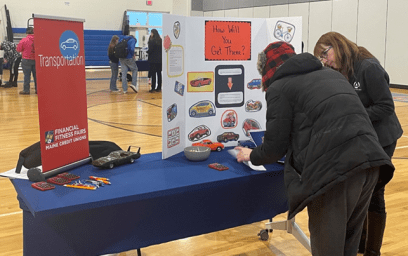
Credit Union Volunteers help students assess the transportation options based on their budgets.

By participating in these fairs, students gain a deeper understanding of the importance of financial responsibility and the long-term implications of their financial decisions. They learn to make informed choices about future savings, avoid debt pitfalls, and plan for major life expenses like college or homeownership.

Financial fitness fairs empower high schoolers to build a solid foundation for their financial well-being and can help set them on a path toward a more secure future.

ELO Coordinators like Doug Ware provide broad connections to the community and hands-on learning experiences for their schools. This event is one example of the immersive educational events that ELO Coordinators across the state help to provide.

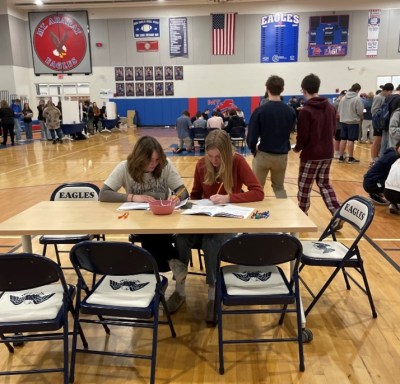
Students take a break from the interactive booths to assess their budgets.

“I have worked to support credit-bearing ELO experiences such as internships, independent studies, and work-based studies,” explained Ware. “I have also made an effort to connect students to unique learning opportunities that enhance the great work that is already happening in our classrooms. Many such opportunities arise from relationships that we have developed with members of our business and non-profit communities. The Financial Fitness Fair is one such example. We feel very fortunate to have incredible partners like Jennifer Andersen, Jake Holmes, and their team of generous volunteers from Maine Credit Unions. Their engagement with students has such an important impact. I also credit the Mt. Ararat staff and administrative team. Our school community places value on these enriching experiences, and many are willing to pitch in when needed to make things happen!”

This month, at Nokomis High School, ELO Coordinator Kristine Eisenhour has arranged a Financial Fitness Fair for their students and others are in the planning stages. Mount Ararat High School and Nokomis High School were both awardees of Maine Job and Recovery Plan grants totaling more than $5.6 million, supporting 26 programs across Maine covering 13 counties. In a world where financial literacy is more important than ever, ELO Coordinators and their communities are helping to pave the way for a brighter tomorrow.

Learn more about Financial Fitness Fairs.

Learn more about the Maine Jobs Recovery Plan.

Learn more about ELOs in Maine or reach out to Lana Sawyer at lana.sawyer@maine.gov.


Application Deadline Extended to May 15 for the ‘Maine Out-of-School-Time’ Career Exploration Grants

Apply Now! Schools, community-based organizations, and childcare providers can apply for the 2024 Maine Out-of-School Time Career Exploration grants through the Maine Department of Education (DOE). These grants support meaningful career exploration opportunities for students in grades 4 – 6 that connect students with Maine businesses and career opportunities, which may include experiential learning trips, guest speakers, job shadows, and more! Underlying these experiences is critical to helping students build and strengthen relationships with caring adults and peers in their schools, childcare centers, and communities.

Funded through Governor Mills’ Maine Jobs and Recovery Plan, the 2022 Statewide Expansion of Extended Learning Programming has engaged hundreds of secondary students throughout the state in real-world career exploration experiences. The Maine DOE is excited to build on these successes to reach younger students in this expanded career exploration program. The 2024 Maine Out-of-School Career Exploration Request for Applications (RFA, also known as grants) is available here: Grant RFPs and RFAs | Division of Procurement Services (maine.gov). See RFA 202404087

Schools, nonprofit organizations, licensed or licensed-exempt child care providers, municipal parks and recreation departments that are current members of the Maine Recreation and Park Association, and public libraries may apply.  Please see the RFA for explicit information and definitions on eligibility and allowable uses of funding.

Grant awards will range in size, with $300,000 available. The 2024 Maine Out-of-School Time Career Exploration grant requires a marketing and outreach plan for reaching students from disadvantaged backgrounds as well as an emphasis on Maine DOE’s Whole Student Framework.

This funding can potentially facilitate career exploration for students in grades 4 – 6 before, during, or after school, on weekends, and/or during the summer. Applications will also be considered for schools and organizations that wish to use the funding to enhance or expand existing out-of-school programming. Grants are expected to be awarded at the beginning of June. All programming must be completed by September 1, 2024.

The Maine Out-of-School-Time grant opportunity is available through the Maine Jobs and Recovery Plan, funded in its entirety by the American Rescue Plan Elementary and Secondary School Emergency Relief (ARP ESSER) fund.


New Extended Learning Opportunities (ELO) Program at Buckfield Jr/Sr High School Expanding Thanks to School and Community Partners

Gretchen Kimball has been working on getting a new ELO program up and running at Buckfield Jr/Sr High School this school year. Serving the communities of Hartford, Sumner, and Buckfield, Kimball has her plate full working with all interested students to coordinate extended learning experiences that enrich their learning.

“I sincerely enjoy when students drop by to tell me their first meeting with their community mentor (game warden, child psychologist, athletic trainer, etc.) went well and they’re excited to get on with the learning,” said Kimball.

Some of the latest successes she is celebrating are helping several special needs students begin their internships at a local convenience store, in addition to coordinating three honors students internships with the school’s athletic trainer.  She has also been working with the Buckfield Jr/Sr High School Alternative Education program where students are working with a race car fabricator, a dentist, and a Maine game warden. Most recently, Kimball has helped a few more students begin an EMS internship with the local Rescue/Fire Station.

“It’s just a smattering of what’s happening but the kids are engaged in their learning, and it gives me hope for future success,” said Kimball.

In addition to the internship opportunities, Kimball says she has a lot of students taking advantage of JMG’s Maine Career Badge this trimester. “I have career presentations lined up every other Friday through March at the middle school level, and we’re exploring the opportunity for a mini-career fair put on by high school students for an audience of middle school students,” she explained.

Looking even further ahead, in conjunction with the Guidance Department, Kimball is working with Central Maine Community College (CMCC) Department Chair of Public Service & Social Sciences Matt Tifft. She’s exploring ways in which she can build ELOs around their sociology, psychology, and conservation law classes at CMCC.

“There’s student interest, but there are no social sciences offered at our school,” explains Kimball. “I’m hoping this will fill a niche!”

Kimball would like to thank the following people and organizations for contributing to the success of students and the Buckfield Jr/Sr High School ELO Program: Korah Soll- Rural Aspirations, Sandra Fickett- Tilton’s Market, Tom McKenney- Maine State Game Warden, Dr. Convey- Oxford Hills Dental, TJ Brackett- Brackett Racecar Fabrication, and JMG (Jobs for Maine Grads).

Extended Learning Opportunities (ELOs) are hands-on, credit-bearing courses outside of the traditional classroom with an emphasis on community-based career exploration. These opportunities are personalized for students and help them explore options for their professional lives. They help students engage in learning through instruction, assignments, and experiential learning. The Maine Department of Education (DOE), along with state-wide partner Jobs for Maine Graduates (JMG), have made a concerted effort to provide working models, support, and funding opportunities for Maine schools to set up ELO programs within their school communities. To learn more about Maine’s initiatives with extended learning opportunities, visit: https://www.maine.gov/doe/index.php/learning/elo or reach out to Maine DOE ELO Coordinator Rick Wilson at rick.wilson@maine.gov.