Maine Department of Education Sends Thousands of Free Books to be Accessed by Every Public School in the State

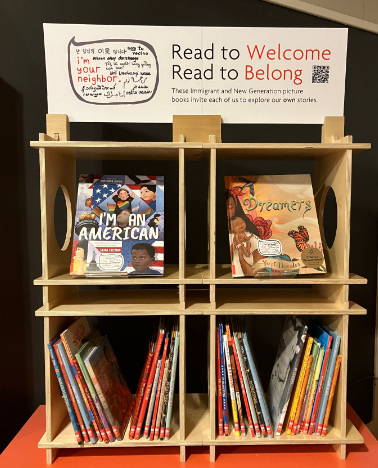
(An example of the Welcoming Libraries: Pine Collection, which will be accessed by every public school in Maine.)

This first-in-the-nation initiative exploring themes of immigration, diversity, belonging, and acceptance was kicked off today at the Westbrook Performing Arts Center.

Westbrook, ME – In collaboration with the award-winning Maine nonprofit I’m Your Neighbor Books, the Maine Department of Education (DOE) held The Pine Project’s Welcoming Libraries Celebration, marking the start of this first-in-the-nation initiative. Welcoming Libraries are collections of picture books exploring themes of immigration, diversity, and belonging, curated to foster inclusive communities.

“We know the power of a story. We know the power of books to help transport readers and help them identify with others, feel more connected, feel included in their communities, and feel a sense of belonging. Each story in the Welcoming Libraries: Pine Collections reflects that power of being included,” said Maine DOE Associate Commissioner for Public Education Megan Welter. “We know that through this initiative, readers will get to immerse themselves in wonderful stories and, at the same time, provide educators with the tools to create an even more welcoming and inclusive environment for all students.”

The Pine Project, initiated by the Maine DOE, has evolved from a small-scale initiative to a statewide program. Initially, the project comprised 16 libraries that went to as many Maine Schools. Now, through a collaboration with I’m Your Neighbor Books, the Maine DOE has expanded the project to include all public schools in the state and incorporate professional development. This expansion extends the project’s benefits to students and educators throughout Maine, providing every Maine school administrative unit with a Welcoming Library: Pine Collection.

Every collection includes 30 books and a Maine-made bookshelf. Each book includes discussion questions developed by Maine educators and community leaders to facilitate conversations in the classroom.

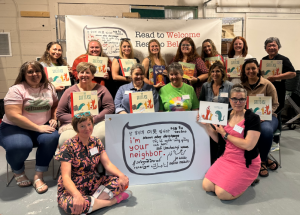
Some of the educators who worked on the Pine Project. (Courtesy of I’m Your Neighbor Books.)

“I didn’t realize how complex the subject of immigration was because I am an immigrant myself. It was my lived experience. But now, seeing students enjoying reading these books and hearing the conversations they inspire, I understand,” said Ina Demers, an educator involved with the project, who has already had a chance to read some of the curated books to her students.

“It’s super inspiring and exciting and energizing and really gives a sense of hopefulness about growing our capacity for truth-telling and welcoming and creating a sense of deep, deep, deep belonging,” said Francie Latour, author of Auntie Luce’s Talking Paintings, one of the books included in Welcoming Libraries: Pine Collection. “We know that belonging is really tied to our ability to learn. It is hard to learn and thrive in school if we don’t feel safe, and belonging gives us that feeling of safety.”

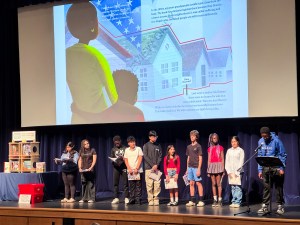
The Pine Project’s Welcoming Libraries Celebration featured a full cast reading of “I’m an American” by Darshana Khiani, performed by fifth graders from Westbrook Middle School. One parent who came to watch her son read shared that the Pine Project made her feel like she and her family truly belonged in Maine.

“I love seeing everyone here. It’s nice,” the parent commented. “After coming here from the Congo seven years ago, it is finally feeling like home.”

The Pine Project has been entirely Maine-based. The collections have been curated by I’m Your Neighbor Books, a Maine nonprofit, containing books by Peaks Island author Anne Sibley O’Brien and audiobook-enhanced titles provided by Portland’s AudioFile Magazine. The libraries sit on a bookshelf designed by Biddeford’s Nomak Design, manufactured by Lisbon Falls’ Orion Woodworking, and topped with signage from South Portland’s Banacom Sign. Martin’s Point Health Care Volunteers packed each set of books and bookshelves with custom packaging designed by Biddeford’s Volk Packaging.

“To have the opportunity to do something with such a strong public mission statement was like a dream come true for us,” said Katie Clark of Nomak Design.

“Maine is a special place for craftsmen and artisans, so it feels good to give my time to make quality products that are a part of Maine’s culture,” said Ryan Cathcart of Orion Woodshop.

The Pine Project also includes free professional learning, designed by the Maine DOE and I’m Your Neighbor Books, to aid educators in utilizing the libraries in their schools.

Students line a stage with books in their hands. On the screen is an illustration of a son hugging his mother around the waist, looking out at houses. To the far left of the state is a book shelf filled with books.
Westbrook Fifth Graders Perform a Full Cast Reading of “I’m An American.”

“The professional learning is a self-guided training to use the featured picture books to teach self-awareness, self-management, social awareness, relationship skills, and responsible decision-making,” said project lead Melanie Junkins, Maine DOE

Multilingual and Bilingual Education Specialist. “This is not a curriculum. Instead, this is an application of the Collaborative for Academic Social and Emotional Learning (CASEL) framework.”

“This project aligns with the CASEL framework in lots of ways. First of all, it is specifically intended to encourage welcoming communities and to help students have a greater sense of belonging,” explained CASEL Director of Policy Andrew Tucker. “In general, the CASEL framework is about belonging. It’s about creating these communities where students can acquire important lifelong competencies like self-awareness and self-management. [The Pine Project] allows for social awareness in a huge way because it helps students understand the life experiences of other people. It helps them to talk amongst themselves and build the relationship skills they need to understand somebody else’s perspective.”

The Pine Project’s Professional Learning will be available on September 30th on the Maine DOE website. The Pine Project was funded through Federal Emergency Relief and is a part of Maine’s Whole Student Pandemic Response. You can learn more about Maine’s use of Federal Emergency Funding on the Maine DOE website.
Over 100 Maine Students and Teacher Spend a Weekend Camping with Teens to Trails

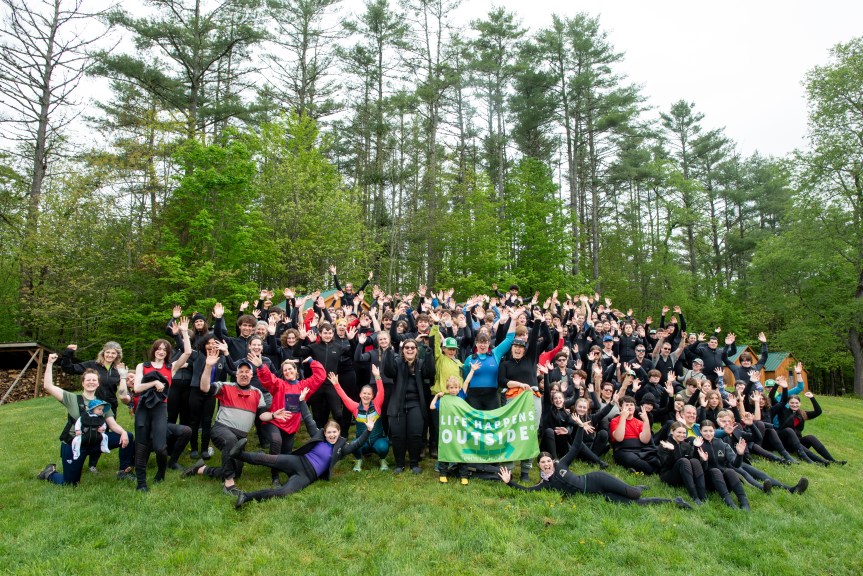
This past spring, 100+ students and teachers joined Teens to Trails for their annual Adventure Bound weekend, a free camping and white-water rafting experience at Adventure Bound, a youth and family group whitewater rafting and outdoor recreation center in Caratunk, Maine on the Kennebec River. Participants could enjoy this trip at no cost because of the Maine Department of Education (DOE), Maine Outdoor Learning Initiative, a program designed to engage more Maine students with outdoor learning and make outdoor experiences more accessible. This initiative was inspired by a promise in Governor Mills’ 2022 State of the State Address to provide students with more opportunities like the Whitewater Kayaking Camp, where kids can go outside and engage with Maine’s natural beauty.

On Friday night, the first night of the trip, participants from different schools had the chance to get to know each other through campfires, dinner, and fun icebreakers. Sam Andrews, Teens to Trails’ Program Manager, led a group conga line as well as a favorite camp game called Bob the Weasel. In this game, one person stands alone. The rest form a circle and pass a banana around while singing, “Bob the Weasel, keep it going, keep it going.” It is up to the person inside the circle to guess who has the banana, and the game almost always results in good-natured laughter.

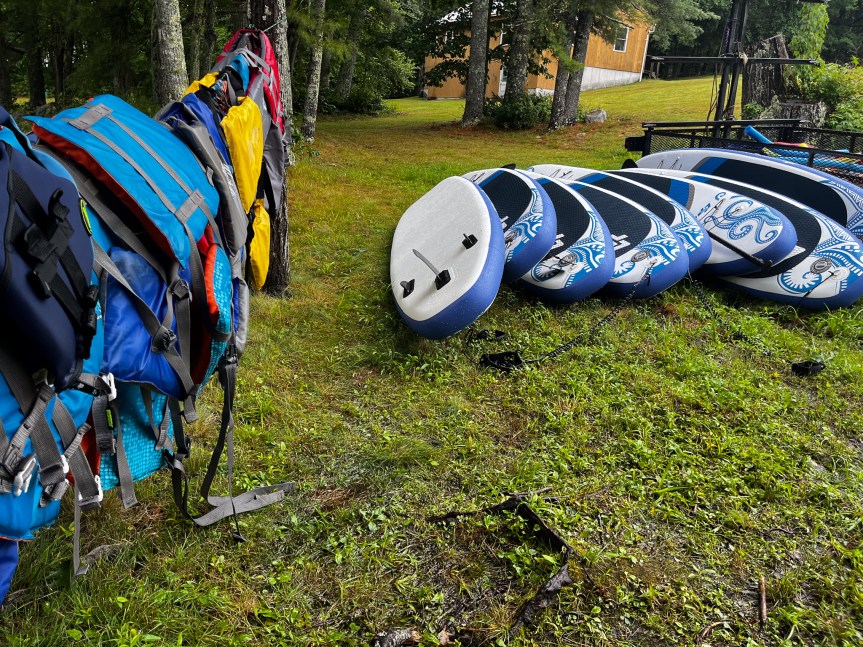
The next day, the students enjoyed a full day of activities, including volleyball, paddle boarding, canoeing, climbing, swinging on the ropes course, hiking to Moxie Falls, and whitewater rafting. The wide variety of offerings allowed students to choose activities in their comfort zone; however, many felt encouraged to try new things and learn from their experiences. Since whitewater rafting was new to many, the students learned basic paddling skills from Adventure Bound staff. After learning the basics, students took on the challenge of paddling in white water with the help of skilled guides.

“I was incredibly nervous, but I’m glad I did it,” said a 12th-grade student from Belfast High School.

While students were out enjoying activities, teachers had the opportunity to network with other colleagues who are outdoor club leaders. Many reported it was amazing for them to see their students challenge themselves, bond with others, and enjoy nature.

On the final night, Teens to Trails’ Youth Advisory Council members led the annual s’mores contest, which included some creative confections from the students. Some combinations included a toasted banana, chocolate, marshmallow, and caramel s’more, as well as a raspberry, chocolate-covered pretzel, and marshmallow s’more. One student even created an Oreo-wheeled s’mores truck.

The joy and energy of spending a weekend outdoors and unplugged are experiences many will remember fondly. Students and teachers reported feeling connected, inspired, and excited to return to Adventure Bound with their Outdoor Clubs for many years to come.

Twelve school communities were able to attend, including Mt. Abram High School, Dirigo High School, Maine Academy of Natural Sciences, Houlton High School, Ecology Learning Center, Westbrook High School, Edward Little High School, Wiscasset Middle High School, Mountain Valley High School, Marshwood High School, Belfast Area High School, and John Bapst High School.

Thanks to the Maine DOE Maine Outdoor Learning Initiative, Teens to Trails, and Adventure Bound, the positive feelings, memorable adventures, and skills learned throughout the weekend will last a lifetime.

“One of my students wants to become a rafting guide now,”  added Brian Davis, a Science Teacher at Westbrook High School

Registration links for future trips will be included in Teens to Trails’ school newsletters and on their Facebook, Instagram, and website.

The Maine Outdoor Learning Initiative was created with Federal Emergency Relief Funding and is a part of Maine’s Whole Student Pandemic Response. Please visit the Maine DOE Website to learn more about Whole Student Pandemic Response and the many other programs that make it up.
Maine’s Outdoor learning Initiative Inspires a Newfound Love of Nature for 90 Lisbon Students

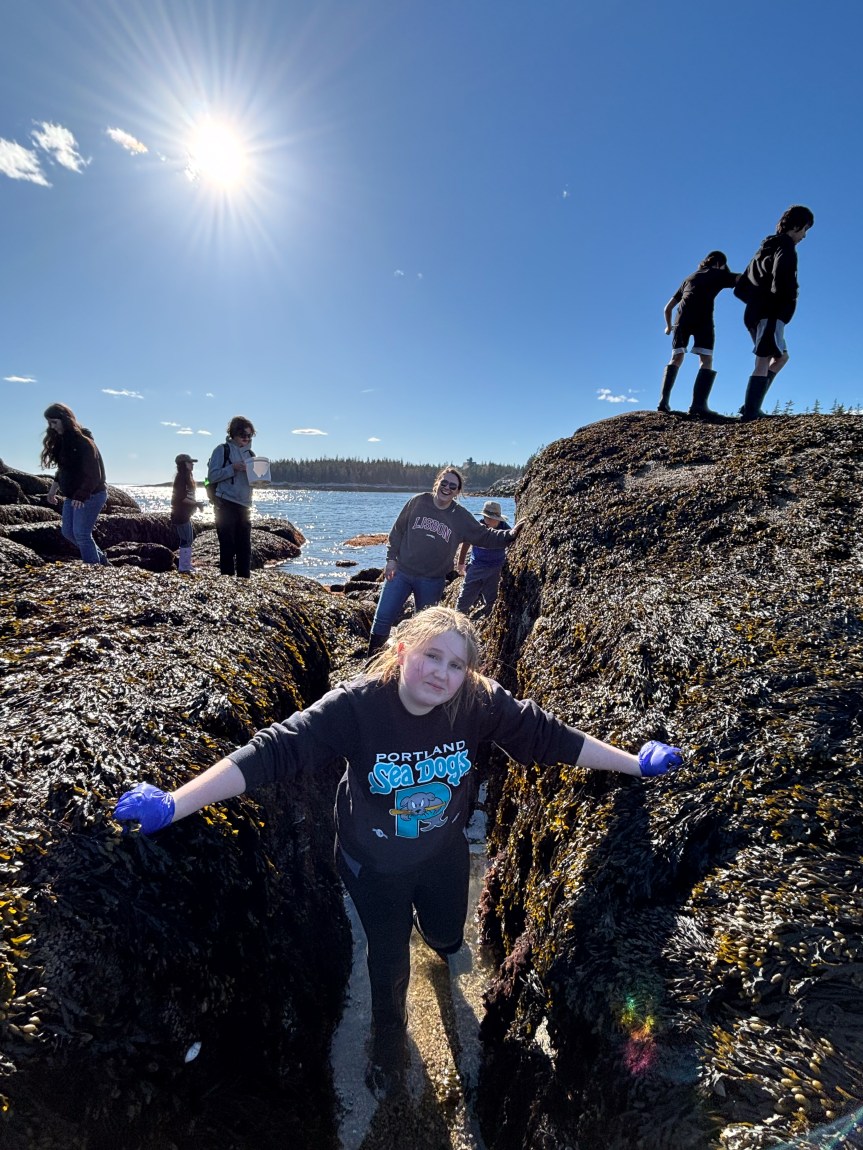
Ninety 7th-grade Lisbon Middle School students recently took a trip to Hurricane Island. This trip was free for all students, thanks to the Maine Outdoor Learning Initiative, a Maine Department of Education (DOE) grant that provides funding for middle and high school students in Maine to have outdoor learning opportunities in areas such as marine biology, ecology, and exploration. The initiative also allows Maine students to explore outdoor career fields with trained professionals.

On the trip, students explored tidal pool ecosystems, dissected scallops, and completed a raft-building challenge. Additionally, almost half of the students opted to take a 5 a.m. sunrise hike on the island. Students wanted to make the most of every moment on the trip.

“I loved seeing my students actively exploring the natural world around them,” said Deb Antl, the coordinating teacher. “Their genuine excitement and curiosity about the ocean, its plants, and animals was amazing. Not once did they ask for a phone or complain about not having access to technology. They were fully enveloped by the nature around them.”

Many discussions were had on the trip about the importance of preserving the environment and the role that each individual plays in sustaining the ecosystem, including learning about sustainable methods of ocean farming and why responsible aquaculture is growing as an industry. The 7th graders are now inspired to help their school community learn to responsibly compost next year. Additionally, students are now eager to learn more about other forms of aquaculture and meet other farmers—some even are inspired to pursue a career in aquaculture/farming.

From their first time on a boat, an island, seeing the stars, and spending the night in a cabin, Lisbon students were overjoyed with the beauty and exploration opportunities on Hurricane Island. The students were truly grateful for the experience and expressed that gratitude by writing thank-you letters to the Hurricane Island staff.

The Maine DOE’s Maine Outdoor Learning Initiative allowed students, some of whom would otherwise not have been able, to explore and connect with the resources available in their own state.

The Maine Outdoor Learning Initiative was created with Federal Emergency Relief Funding and is a part of Maine’s Whole Student Pandemic Response. Please visit the Maine DOE Website to learn more about Whole Student Pandemic Response and the many other programs that make it up.
Maine Outdoor Learning Initiative Helps Students Learn to White Water Kayak

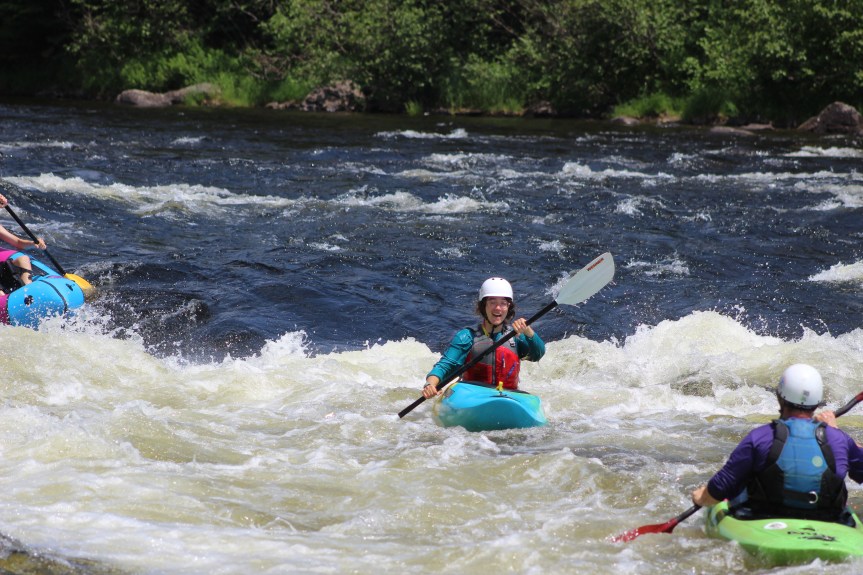
Six students, ranging from grades 8th to 12th, participated in an Introduction to Whitewater Kayaking Camp offered by the Main Street Skowhegan Organization. Thanks to the Maine Outdoor Learning Initiative, these students could participate in the experience at no cost to them.

The Maine Outdoor Learning Initiative is a program created by the Maine Department of Education (DOE) to engage Maine students with outdoor learning and make outdoor experiences more accessible. This initiative was inspired by a promise made in Governor Mills’ 2022 State of the State Address to provide students with more opportunities like the Whitewater Kayaking Camp, where kids can go outside and engage with Maine’s natural beauty.

Of the students attending the Whitewater Kayaking Camp, half had participated last year, and half were entirely new to whitewater paddling. The camp was led by expert Ben Koehler, who serves as the program coordinator and has ten years of river guiding and kayak instruction experience. Wasting no time, the students took straight to the water, spending most of their trip in the river. A typical day of camp consisted of driving to the Kennebec River, putting on gear, getting into boats, and riding the currents as they developed their new skills. They would run ‘good rapids’ for practice only, then hike back upriver to repeat them.

On the first day, all students were in duckies, which are inflatable sit-on-top kayaks with good stability and maneuverability. On the second day, after repeating the skills learned the prior day in duckies, students graduated to whitewater kayaks, in which the kayaker sits inside the boat with a skirt (material that covers the inside of the boat).

“One student was apprehensive to get into a kayak, so the staff helped her by letting her use a funded pack raft, which is an inflated boat that one sits in without a skirt. The funded pack raft was a good bridge between a duckie and a kayak. Practicing on the inflatable raft helped build the student’s confidence in paddling and being on the water. Another student in the camp mastered the ability to roll a kayak in whitewater, which is a big step towards becoming an expert at whitewater kayaking,” said Koehler.

At the end of the week, all six students could successfully kayak the lower-class III section of the Kennebec River, which is remarkable considering that three of them were brand new to the activity.

Main Street Skowhegan, an organization dedicated to revitalizing historic Skowhegan, hosted the camp. The organization has an impressive collection of outdoor gear that Somerset County residents can rent at no cost. Their partnership with the Maine Outdoor Learning Initiative allowed them to expand their gear and provide cost-free programs, like their white water rafting camp. Main Street Skowhegan will continue to offer white water camps and clinics throughout the summer. More information can be found on their website. 

Register for Main Street Skowhegan’s White Water Camps

The Maine Outdoor Learning Initiative was created with Federal Emergency Relief Funding and is a part of Maine’s Whole Student Pandemic Response. Please visit the Maine DOE Website to learn more about Whole Student Pandemic Response and the many other programs that make it up.
Carrabec Students Trek the Northern Forest Canoe Trail Thanks to Maine Outdoor Learning Initiative

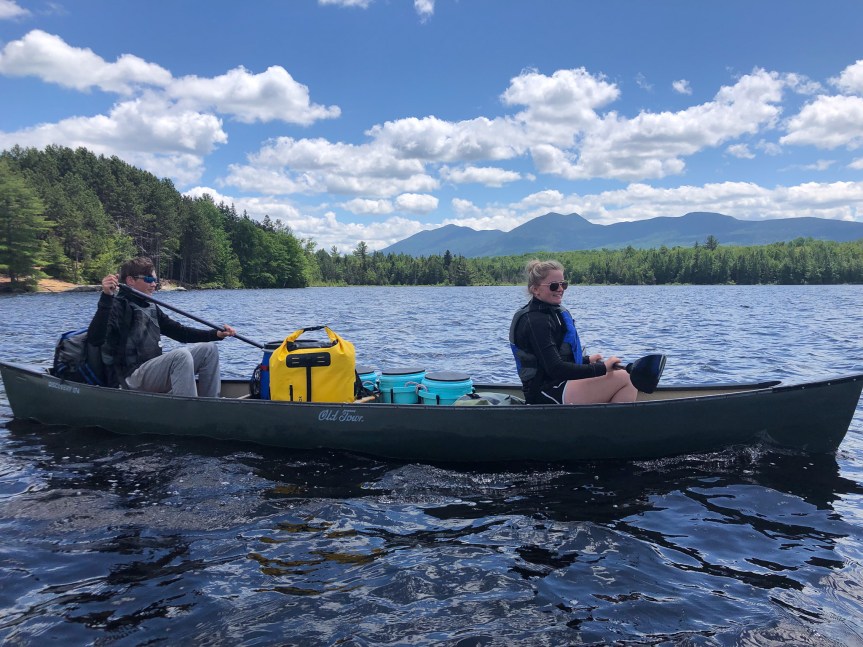
In June, Seven Carrabec High School students joined a Teens to Trails intern and registered Maine Guide Tammy Long on a 30-mile canoe trip along the Northern Forest Canoe Trail on Flagstaff Lake. On this three-day trip, participants navigated the waters via canoe, camped on remote islands, and prepared food over a campfire. Thanks to the Maine Outdoor Learning Initiative, the trip and necessary gear were free for all participants.

The Maine Outdoor Learning Initiative is a program created by the Maine Department of Education (DOE) to engage Maine students with outdoor learning and make outdoor experiences more accessible. The Initiative was inspired by a promise made in Governor Mills’ 2022 State of the State Address to provide students with more opportunities like Carrabec’s canoe trip. The students on the trip were from Long’s Outdoor Leadership Class, taught at Carrabec High School.Long is a registered Maine guide and is extremely enthusiastic about sharing her expertise with students. She is also thankful that she has the skills and knowledge to help them stay safe on trips in remote areas. While Long noted that some of the students had prior canoe experience or had been on a trip with her before, none of them had ever embarked on a three-day, 30-mile paddling trip.

Before embarking on the trip, students were taught extended canoeing skills in an Outdoor Leadership class with Guide Tammy Long. Even for those who did have prior canoeing experience, this trip was challenging.

However, the students accepted the challenge and grew more confident in their canoeing abilities while enjoying the beauty of Flagstaff Lake.

“The highlight for me was when the students stopped holding their phones over their heads ‘looking’ for service and simply relented to the fact that they were unconnected,” remarked Long. “After three days, they couldn’t stop talking about how good it felt.”

Long said she also hopes students will continue to cherish outdoor experiences in our unique state and that they spend more time away from screens.

The Maine Outdoor Learning Initiative was created with Federal Emergency Relief Funding and is a part of Maine’s Whole Student Pandemic Response. Please visit the Maine DOE Website to learn more about Whole Student Pandemic Response and the many other programs that make it up.

“I hope to continue being able to take students on extensive canoe trips like this one, and I am very thankful for the grant money provided by the Maine Outdoor Learning Initiative, said Long.

Third Annual Supporting Adult Multilingual Learners Institute Strengthens Adult Education Profession

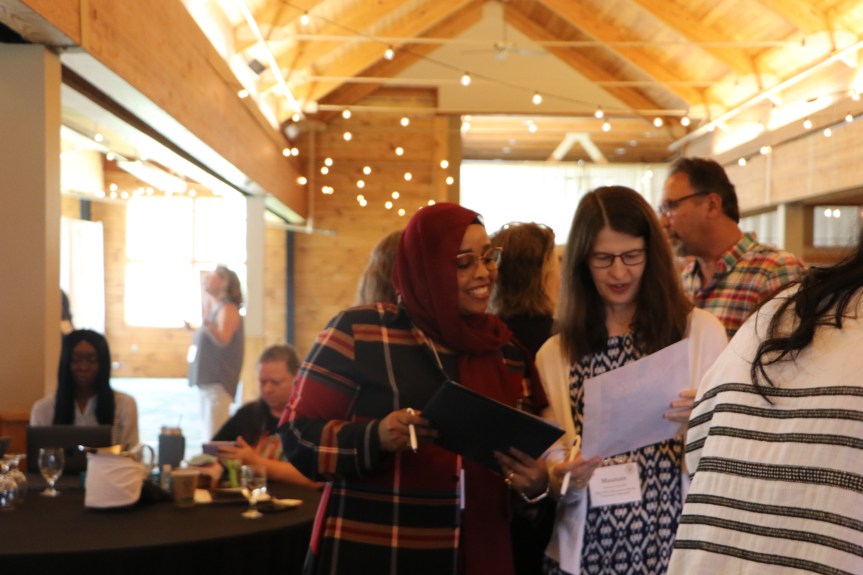
This summer, the Maine Department of Education’s (DOE) Adult Education Team hosted its third annual Supporting Adult Multilingual Learners Institute at Sugarloaf Mountain. Adult Education teachers, curriculum designers, and administrators had the opportunity to learn from speakers, engage with different breakout sessions, and have meaningful discussions with their peers. Additionally, many fun activities, such as trail walks and yoga, were offered for participants to enjoy the nature of the Carrabassett Valley region.

Maine has become home to many refugees and asylum seekers. Over half of Maine’s Adult Education learners are multilingual and come from 115 different countries– five of the most enrolled are Somalia, Angola, D.R. Congo, Afghanistan, and Syria. The Supporting Adult Multilingual Learners Institute aims to prepare educators to best support those of other cultures and help them overcome teaching obstacles.

There were two group-wide workshops at the conference. In these workshops, talented speakers presented on themes regarding adult education, particularly as it relates to culture, and allowed for group-wide discussion. One workshop, Deepening Our Cultural Competence and Cultural Humility, was led by Suheir Alaskari (Associate Director of Student Employment Services at Colby College), and the other, Opportunities and Challenges of Cross-Cultural Communication with Adults, was led by Abbie Yamamoto (Director of Portland Adult Education).

The workshops aimed to educate professionals on issues that can present barriers for multilingual and multicultural learners. One important theme was the consciousness of social cues and language uses. Idioms and pop culture references are examples of high-context culture, as they feel natural to U.S.-born citizens, but can be highly confusing to outsiders. Not only is high-context culture confusing, but it also creates a barrier of exclusion. Conversely, low-context culture creates an inclusive space where people of varying backgrounds can learn from each other and bond. Another imperative theme was how taking the time to learn and understand the culture of adult students creates a more-relevant learning environment for them and validates their cultural identities.

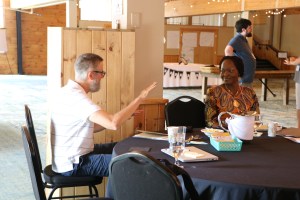
A man and a woman sit at a table. The man is speaking, illustrating his point with a hand held in the air.
Educators had a chance to connect and share stories from the field.

Educators should also reflect on their own American culture and use it to find common ground with their students’ cultures to help connect further with them. Mike Emery (Director of Lake Region and Fryeburg Area Adult Education) remarks: “One of the things that has been really great in the past couple of years is we’ve shifted the focus from just being on instruction to a broader purpose. For someone who’s a director or doing other aspects of programming, it’s been really helpful to think about how to start new workforce partnerships in programs like that. There are some things around credentialing that are very different working with a foreign-born professional as someone born and raised in the US.” Focusing on consciousness and supporting students will not only enhance adult students’ learning but will also help them feel more accepted in America.

Some participants also led breakout sessions. There were four breakout sessions total and educators had six options to choose from per session. Some breakout topics included: Using EnGen for IET, Stuff I Wish My Teacher Knew, Using Data to Inform Multilingual Programming, The Immigrant Identity in the Classroom and Beyond, and Fostering Diversity in the Workforce: Building Partnerships and Pathways for Multilingual Learners, Paradigms of Belonging. Breakout sessions allowed for participants to focus on themes of interest and engage in more intimate discussions.

Educators appreciated having new frameworks to work within and gaining new skills in cultural competency. Many Adult Educators remark that their favorite part of their job is getting to see their students succeed: “It’s a bonus when you have students coming to you every day saying ‘Teacher, thank you so much. I learned so much today; this is incredible.’ They’re so appreciative, it’s amazing.” Remarks Melanie North (Teacher at Lewiston Adult Education and part of the Supporting Adult Multilingual Learners Institute planning committee). As influxes of migrants continue to increase, it is imperative that educators are equipped to best teach and support them.

Joy and enthusiasm were in the air at Sugarloaf, and educators hope to keep the annual institute running and improving for many more years to come. “I really have seen that this institute over the past three years has grown and continues to grow. You can feel it in the field. I’ve worked in multiple programs in Kennebec County and I feel that because of this institute and the push to have culturally relevant professional development we’re seeing culturally-relevant adult education programs.” stated Tekia Cox (Academic Program Coordinator at Mid-Maine Regional Adult Community Education).


Lincoln Academy Students are Building a Greenhouse to Support Their Free Summer Program

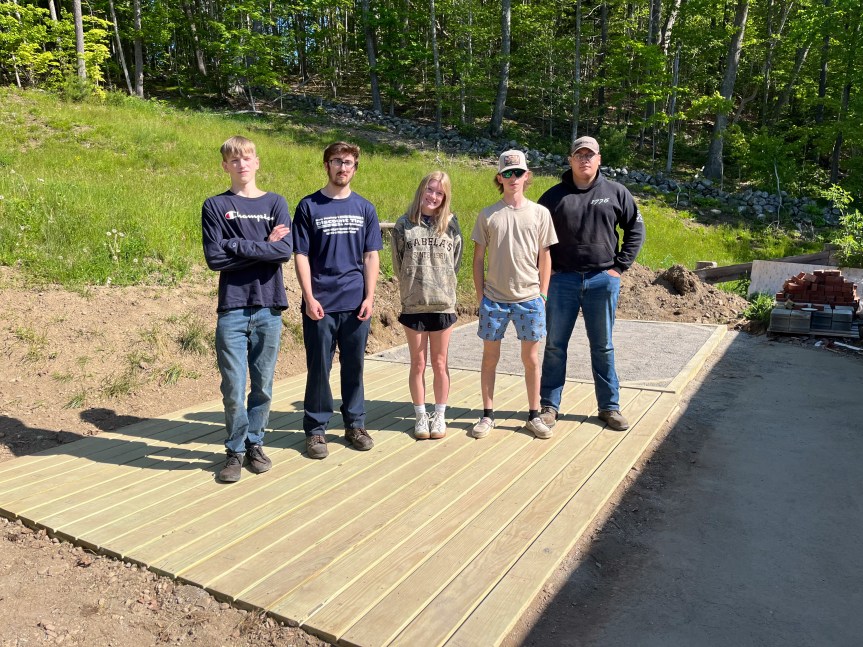
(The Lincoln Academy edLab students who built the greenhouse deck and foundation to support their outdoor learning space.)

The greenhouse will be a part of Lincoln Academy’s Maine Outdoor Learning Initiative program, LA Launch.

Lincoln Academy’s edLab students have been building a greenhouse to support the school’s new LA Launch Program. This free summer program, funded by the Maine Department of Education’s (DOE) Maine Outdoor Learning Initiative, will support rising 9th graders preparing to enter high school.

The Maine Outdoor Learning Initiative is a statewide effort to increase access to engaging, hands-on outdoor experiences and career exploration for middle and high school students throughout the state. The initiative, created by the Maine Department of Education, was born from a promise made during Governor Mills’ 2022 State of the State Address to provide children with more opportunities to get outside and engage with Maine’s natural beauty following the pandemic.

Students in edLab, Lincoln’s alternative education program, took the lead on the construction project with the help of edLab Director Jody Matta and their teachers. As part of the project, edLab teachers and students researched the town of Newcastle zoning process and received guidance from Town Planner Michael Martone. Students prepared and applied for the building permit. With assistance from the facilities department at Lincoln Academy, edLab students wrestled with the many rocks at the site and dug the foundation area. Along with the base for the Maine Garden Products greenhouse, they also built a deck to be used as an outdoor education space.

“It was a great opportunity for us to learn about the process involved in constructing a new building,” said edLab student Ariel Cowan. “It is information that we will be able to use in the future.”

“Our students worked hard on the greenhouse project, and I am proud of their work,” said Matta. “We look forward to utilizing the greenhouse as a learning space in the future.”

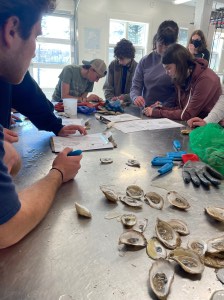
High school students sit at a metal table covered in oyster shells, paper, clipboards, pens and plastic gloves. Some students are inspecting the oysters while others write on their clipboards.
As part of the LA Launch program, students will learn about oyster aquaculture at the University of Maine’s Darling Marine Center.

The LA Launch program is designed to support students as they transition to high school and help them connect with Lincoln Academy while they learn more about their community and the importance of connection in a marine ecosystem.

“The greenhouse is a great resource that will allow LA Launch participants to explore and experiment, which will supplement our field trips to meet with community members and learn more about fishing, aquaculture, boatbuilding, and outdoor recreation,” said Lincoln Academy’s Director of Applied Learning Maya Crosby.

Crosby worked with Heather D’Ippolito, Lincoln Academy’s Director of Community Engagement and Development, to build the LA Launch program and apply for the Maine Outdoor Learning Initiative funding. Lincoln Academy was one of more than 60 organizations that received funding through the Maine DOE grant, thanks to an expansion of the program announced by the governor.

The Maine Outdoor Learning Initiative grant covers participants’ transportation and the school is providing lunch. Families interested in enrolling their rising ninth graders in LA Launch should reach out to the program director, Andrew Jonash, at jonash@lincolnacademy.org or visit the Summer at Lincoln Academy page.

Sign Up for the Free Summer Launch Program Here

Maine Garden Products will deliver the greenhouse in mid-July and place it on the prepared base. The project will be completed by the end of July, before the LA Launch program starts in August.

If you live outside the Lincoln Academy district or want an alternative summer program, check out the Maine Outdoor Learning Initiative’s search program table. Over a hundred free summer programs are happening all over the state!

The Maine Outdoor Learning Initiative was created with Federal Emergency Relief Funding and is a part of Maine’s Whole Student Pandemic Response. Please visit the Maine DOE Website to learn more about Whole Student Pandemic Response and the many other programs that make it up.

MEDIA RELEASE: Department of Education Supports Learning and Enrichment Over the Summer

The Maine Department of Education has awarded $2,788,372 in Summer Learning and Enrichment Grant funding to 61 Maine schools. Summer programs differ from school to school, sometimes taking the form of community partnerships, field trips, career exploration, and innovative curricula that prepare students for the school year ahead while addressing pandemic-related learning loss.

“This investment in summer learning across 61 Maine schools demonstrates the Department’s commitment to year-round, holistic education,” said Maine Department of Education Commissioner Pender Makin. “From prioritizing outdoor education in Stacyville to pre-apprenticeships in Skowhegan, we’re seeing innovative approaches that address students’ academic, social, and emotional needs. We’re ensuring every Maine student has the opportunity to thrive, both in summer and throughout the school year.”

Summer Learning and Enrichment programs address k-12 students’ academic, social, emotional, and mental health needs, prioritizing underserved students and students most impacted by the COVID-19 pandemic. They continue to aid students’ post-pandemic recovery by offering extra math and literacy instruction, tutoring, and outdoor learning.

“We’re excited to get this work underway this summer and demonstrate how much kids can grow their skills when engagement is at the core of instructional design,” said Nikki Remsen, the Elementary Summer Academy Lead for South Portland Public Schools. Remsen is leading a Summer Learning and Enrichment-funded program for South Portland students in grades K-5. “Rising 1st -5th graders will be diving into interdisciplinary units founded in engineering with support from the Boston Museum of Science and their Engineering is Elementary (EiE) units,” explained Remsen. The EiE programs started in the summer and will then roll into the fall, ensuring more students can access the museum’s lessons.

In Skowhegan, at Somerset Career & Technical Center (SCTC), over fifty students have enrolled in Summer Learning and Enrichment programs like Career and College Prep, Financial Literacy, Writing Workshop, and the inaugural session of their Pre-Apprenticeship program with Sappi Global’s Somerset Mill. Sappi, Maine DOL, Maine DOE, and SCTC worked together to create a unique pre-apprenticeship opportunity for their newest graduates focused on the electrical and instrumentation fields. Participants gained insights into mill operations, acquired essential safety skills, and heard of the benefits to Sappi employees. As the week concluded, students were interviewed for the chance to participate in Sappi’s Electrical and Instrumentation apprenticeship program.

“The initiative underscores SCTC’s commitment to equipping students with practical skills and real-world experiences that pave the way for successful futures in their chosen fields,” said David Dorr, the Director of Somerset Career and Technical Center.

At Katahdin Elementary School, students spend the summer outside, learning through community partnerships. Guest speakers from Chewonki and the Maine Department of Agriculture, Conservation, and Forestry came in with hands-on lessons about Maine vertebrates, flora, and fauna. Students also went on field trips to Katahdin Children and Families Foundation (KCFF) and a local strawberry farm, Golden Ridge Farms.

You can find a complete list of awardees below.

The Summer Learning and Enrichment grant is funded by the American Rescue Plan and is part of Maine’s Whole Student Pandemic Response. Please visit Maine’s Whole Student Pandemic Response page to learn more about the American Rescue Plan and how Maine used Federal Emergency Relief Funding to support Education.

Organization Name County
Acton Public Schools York
Andover Public Schools Oxford
Appleton Public Schools Knox
Bangor Public Schools Penobscot
Bar Harbor Public Schools Hancock
Biddeford Public Schools York
Brewer Public Schools Penobscot
Bristol Public Schools Lincoln
Brooklin Public Schools Hancock
Deer Isle-Stonington CSD Hancock
East Range CSD Washington
Easton Public Schools Aroostook
Ellsworth Public Schools Hancock
Great Salt Bay CSD Lincoln
Jefferson Public Schools Lincoln
Kittery Public Schools York
Lisbon Public Schools Androscoggin
Madawaska Public Schools Aroostook
Maine Arts Academy Kennebec
Maine Connections Academy Cumberland
Mount Desert Public Schools Hancock
Nobleboro Public Schools Lincoln
Portland Public Schools Cumberland
RSU 09 Franklin
RSU 10 Oxford
RSU 11/MSAD 11 Kennebec
RSU 12 Lincoln
RSU 13 Knox
RSU 15/MSAD 15 Cumberland
RSU 16 Androscoggin
RSU 17/MSAD 17 Oxford
RSU 20 Waldo
RSU 21 York
RSU 24 Hancock
RSU 34 Penobscot
RSU 35/MSAD 35 York
RSU 38 Kennebec
RSU 40/MSAD 40 Knox
RSU 54/MSAD 54 Somerset
RSU 56 Oxford
RSU 57/MSAD 57 York
RSU 63/MSAD 63 Penobscot
RSU 72/MSAD 72 Oxford
RSU 75/MSAD 75 Sagadahoc
RSU 78 Franklin
RSU 80/MSAD 04 Piscataquis
RSU 82/MSAD 12 Somerset
RSU 84/MSAD 14 Washington
RSU 86/MSAD 20 Aroostook
RSU 88/MSAD 24 Aroostook
RSU 89 Penobscot
Saco Public Schools York
Scarborough Public Schools Cumberland
South Bristol Public Schools Lincoln
South Portland Public Schools Cumberland
Southwest Harbor Public Schools Hancock
Tremont Public Schools Hancock
Trenton Public Schools Hancock
Veazie Public Schools Penobscot
West Bath Public Schools Sagadahoc
Winthrop Public Schools Kennebec
Yarmouth Schools Cumberland


Windsor Students Thrive Through Technology

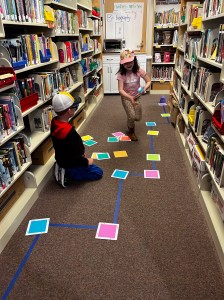
(Students use colored cards to tell robotic cars where to go.)

At Windsor Elementary and Middle School, students are passionate about innovation, and their librarian, Kristel Anuszewski, uses the mobile computer science labs funded by the Maine Department of Education (DOE) to support that passion. Anuszewski, Kennebec County’s 2024 Teacher of the Year, is the Librarian and STEM Educator for Windsor’s Learning Commons. On a Friday in late May, the Maine DOE visited as she taught coding skills to a first-grade class using indi cars from the Maine DOE’s Mobile Computer Science Lab program.

In 2022, the Maine DOE offered a grant for educators to apply for one of three mobile labs. Anuszewski chose the robotics and programming lab, with the other options being augmented and virtual reality and coding and hardware.

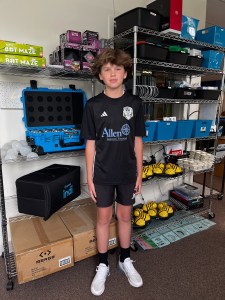
“We wanted to create a space where kids can be creative, they can be innovative, they can explore, and they can engineer,” said Anuszewski. The cart came with three learning tools for students: Sphero Indi Cars, Sphero BOLTs, and Merge Cubes.

Anuszewski used the Mobile Computer Science Labs to transform the library into a vibrant hub for innovation.

“I feel like it went from gray to this burst of color,” said Windsor Principal Heather Wilson. “She pulls out of the students different things that they’re interested in and shows them how technology can enhance that.”

At Windsor, the Learning Commons is designed to blend technology and traditional library lessons seamlessly. Anuszewski was brought on in 2019 to build out and run the program.

“We had this vision of it being called the Learning Commons and not the library because we wanted it to be more than books,” Wilson said. “We wanted it to be about technology, STEM, innovation, and fun. Before Kristal and the [Mobile Computer Science Labs], we viewed technology as one kind of tool, but it wasn’t interactive with the kids. Now, it’s a vibrant, interactive space that sparks creativity and engagement.”

Now, Learning Commons is bursting with color and sound. The moment students walk through the door, they are filled with curiosity. When Anuszewski tells her first-grade class about the day’s assignment, using the Lab’s indi cars for a lesson about Summer, the room fills with cheers.

“Kristel is an astoundingly intuitive teacher when it comes to building instruction around the STEM,” says Anuszewski’s teaching assistant, Ed Frankonis. “Students have developed immense teambuilding skills with each other thanks to the challenges presented by the coding-teaching technology tools.”

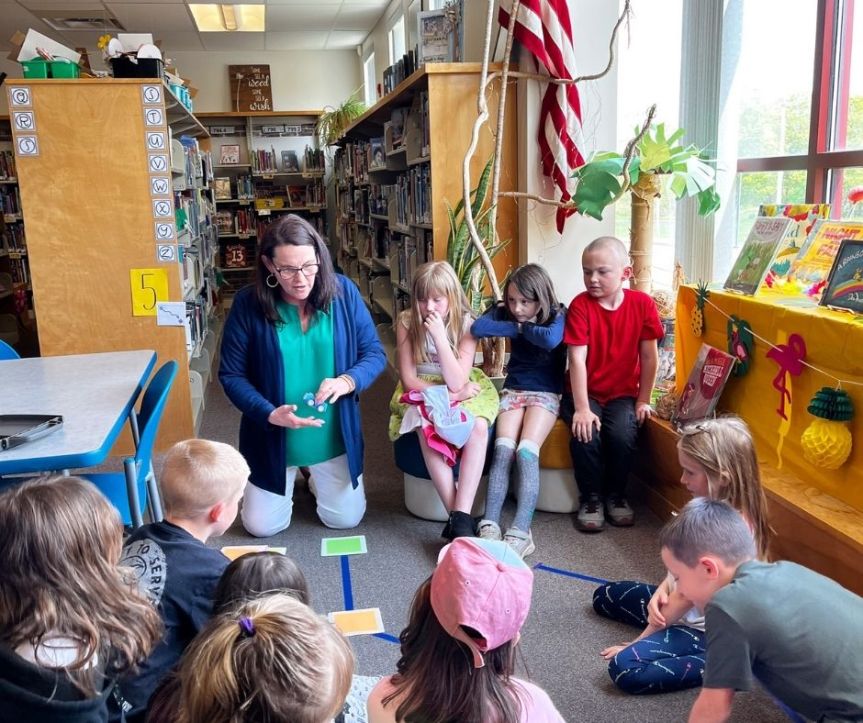
Students enthusiastically engage with Anuszewski’s indi Car assignment.

The indi cars Anuszewski used for the day’s lesson provide a hands-on coding experience using a built-in color sensor and interactive color-coded tiles. For more advanced learning, students can progress to simplified block coding options. In Anuszewski’s first-grade class, they stick to the color sensors.

“Students start out really young, with the directional coding, like the indi cars, and essentially, it’s, here’s where you’re starting, here’s where you’re ending, and what directions do you have to give your robot to be able to get them to where they need to be. So, it’s all about processing and logic,” explains Anuszewski. “Having [the Mobile Computer Science Labs] creates more opportunities. I never had anything that was color coded before, and for the kids who are still learning their lefts and rights, the colors help them flush out those concepts, all the while they are doing directional coding.”

For Pre-K through fifth grade, Anuszewski meets with each class twice a week, once for a traditional library lesson and then again for a STEM lesson. She ties these lessons together with a theme. Her Friday first graders have been learning about seasons, specifically summer. Earlier in the week, they read the book “Stuck” by Oliver Jeffers, a story about a boy whose kite is stuck in a tree and his attempts to knock it loose by throwing more objects up into the tree until it is full of stuck objects. For their following technology lesson, they are strategizing how to move their indi cars down a track to a summer object, like the ones from “Stuck.” To do so, they will have to use indi’s colored cards to tell the robot where to go.

The students pair off, each assigned to a specific section of the library where Anuszewski has laid masking tape tracks for them to lead their cars down. Frankonis goes to each group and lays out their special summer object at the end of the masking tape track.

“It’s hard, but it’s really fun,” said Nevada, one of Anuszewski’s first graders.

“You have to figure out what color to use,” explained another student named Landon. “Sometimes I get it wrong. I try again, though.”

Anuszewski teaches Windsor students up to eighth grade. Older students have more autonomy when it comes to the Learning Commons.

“So my middle school curriculum is very different from a traditional curriculum. I have what is called choice boards, so at the beginning of every month, I present between 12 and 14 choices for students in the areas of reading, technology, coding, engineering, and maker space,” explains Anuszewski. “So, within those headings are four different choices, at least, for students to be able to choose from. They pick the one area that they want to study for the month. There are clickable links that will take students to different places online, whether it’s instruction or the actual site, and they explore the subject independently and kind of prep themselves to be able to be successful with their choice.”

Every year, Anuszewski selects a team of middle school students to attend the Maine DOE’s Maine Learning Technology Initiative (MLTI) Student Conference at the University of Maine Orono (UMaine). She selects students who have shown an aptitude or particular interest in tech. This year, one of her Windsor Middle School students, Emry Michaels St. Ong, won a $1,000 scholarship for UMaine at the conference for a game design challenge.

“I got a scholarship to the University of Maine in Orono at the MLTI conference. I was playing an online game called Bloxels, and I won for creating a character based on one of my favorite teachers,” explained St. Ong.

For those unfamiliar, Bloxels is a game-building platform where players can create games their peers can play.

“At the conference, we would go to different blocks. In the Bloxel block, the presenter told us how to go in and make characters, then gave us time to play around with it,” continued St. Ong. “There was a competition for best character. I didn’t think I was going to win it at all. But Mr. Ed here in the library told us that you never know, just take your chance and you can get it. So, I submitted my character and won one of the scholarships.”

St. Ong stands in front of the Windsor’ Mobile Computer Science Labs.

Anuszewski mentions that game design is very popular for a lot of kids.

“They get to do it in the library during learning commons time,” she said. “But to be able to hear from another presenter, to be able to have that kind of college experience with someone who’s not your teacher is really, really cool for them.”

That being said, St. Ong credits Anuszewski with giving him the tools he needed to win: “She teaches you a lot of stuff that will not just help you in school but help you wherever you go. She has taught us to use our imaginations and to be creative.”

Regarding coding, St. Ong was able to learn more about himself as a learner by using the robots from the Mobile Computer Science Carts.

“I’ve learned I’m a visual learner, and I like to go off on my own to code,” St. Ong explained. His class uses the Sphero Bolt bots. Students like St. Ong will code the bot to move about a room independently. “I’ll code a [Sphero Bolt] a little bit, see where it ends up, and then I’ll use what I learned to change it. I love learning hands-on like that.”

Through programs like the Mobile Computer Science labs, educators like Anuszewski have the means to empower students to engage with technology from a young age, building skills that they will use for the rest of their lives.

“I don’t want kids to ever be afraid of technology. I feel like immersing them in the technology is one way to do that,” says Anuszewski. “If they want to seek a career, technology is going to be a part of that. I don’t ever want them to feel like they don’t understand tech or not pursue something they want because they’re too afraid of what they don’t know. I never want them to be scared to try something.”

The Mobile Computer Science Labs are a part of Maine Teaches CS and were purchased with Federal Emergency Relief Funding. Maine Teaches CS is a part of Maine’s Whole Student Pandemic Response. Discover more of the DOE’s innovative programming at Maine’s Whole Student Pandemic Response page on the Maine DOE website.

Want to share your own federally funded success story? Tell us all about it through our convenient form by tapping or clicking here!

Bucksport Eighth Graders Unplug and Help Out During Camping Trip at Birch Point Beach State Park

(Bucksport eighth graders had the opportunity to watch the aurora borealis over the ocean.)

This May, eighth graders from Bucksport Middle School left the screens behind for a weekend of learning and service at Birch Point Beach State Park in Owls Head. Miles Bisher, Bucksport Middle School’s social studies teacher and outdoor club advisor, brought his students out as part of the Teens to Trails’ Life Happens Outside® Challenge, one of the Maine Outdoor Learning Initiative’s 2024 programs.

The Maine Outdoor Learning Initiative is a state-wide effort to increase access to engaging, hands-on outdoor experiences and career exploration for middle and high school students throughout the state. Since its creation in 2022, the program has brought thousands of students on outdoor adventures inspired by educators like Bisher.

“When I was in high school, my outing club advisor took our club on extended camping trips, and those experiences had a profound impact on my life by exposing me to new experiences outside with peers, in settings that would challenge me physically and mentally, and allow me to grow as a person and develop some resiliency and adaptability in the face of adversity. I wanted to offer a similar experience to my 8th graders,” explained Bisher. “Additionally, the prevalence of screen time and phone/social media usage for teens has skyrocketed, while teen time spent outside and synchronous, in-person time with friends has plummeted, and I wanted to show students the innumerable benefits of flipping those two trends.

Teens to Trails Program Manager Samantha Andrews accompanied the group from Bucksport on their trip. Teens to Trails is a nonprofit organization whose mission is “connecting Maine teens to life-changing experiences.” Their Life Happens Outside® Challenge is a weeklong competition for middle school communities. To compete in the challenge, students track every minute spent outside – whether on a dedicated trip like Bisher planned or doing everyday actions like walking the dog or taking out the trash. The challenge takes place May 10-17, and at the end of the week, the eight schools with the most outside minutes logged win $1,000 to apply to future outdoor activities.

“Teens to Trails hears from healthcare experts, parents, and teachers that teenagers feel better on the inside when they spend time outside,” said Executive Director Alicia Heyburn in a recent press release. “We heard so many amazing stories from students and faculty about the positive impact spending a week outdoors can have.”

Bucksport students were a testament to this effort: “I felt like I didn’t need my phone even after we left and felt better and more in the present,” said one student. It made me feel so much better. I felt more energized and like I had time to do things again,” said another. I had some of the best nights of sleep I’ve had in a long time.”

This is Teens to Trails’ first year working with the Maine Outdoor Learning Initiative, and the Challenge is just one of four free programs they are offering students. The initiative, created by the Maine Department of Education, was born from a promise made during Governor Mill’s 2022 State of the State Address to provide children with more opportunities to learn about and explore Maine’s natural beauty and resources after two years of the pandemic.

“Teens to Trails and Bucksport Middle School are grateful to Maine Outdoor Learning Initiative for supporting a student opportunity to enjoy a weekend of coastal camping. The experience also marked the first overnight trip for this great group of middle schoolers,” said Jennifer Hazard


During their trip, Bucksport Middle School students worked together to complete many important projects, such as cleaning up debris on Birch Point Beach State Park’s trails, replacing picnic tables, and burning branches off fallen trees. There were also opportunities for fun, such as exploring Owls Head Lighthouse and hiking Mt. Megunticook. Students were even lucky enough to watch the colors of the Northern Lights reflect over the water. Experts from the Maine Bureau of Parks & Land visited on Saturday evening to teach students about the solar system and constellations and allowed them to see the moon through a high-power telescope.

When asked about their favorite parts of the trip, students most noted their appreciation for being away from technology and, of course, the best part of any camping trip: s’mores.

“The air in the morning with the ocean a bit away and the smores and the energy that came along with it,” one student told Bisher about their favorite part of the trip.

Another noted, “It was probably one of the best camping experiences that someone could experience. I felt like I always had something fun going on, and it was nice talking to people I usually wouldn’t.”

Bucksport middle schoolers can identify the importance of engaging with nature. “Outdoor experiences like this are important for teenagers because they don’t realize how fun or relaxing it is to do these things until they actually do it,” explained one student, “we are constantly on our phones and so disconnected from the real world. Most kids don’t get to have that experience.”

Bisher agrees with the sentiment: “Outdoor education and experiences are not just important but absolutely critical for the holistic development of children and adolescents. Kids need to take risks, be challenged, face and overcome adversity, learn to be adaptable and flexible, disconnect from screens and the online world, and reconnect with the physical world of nature with their friends. Everything is more real and authentic outside, and students need that, now more than ever.”

There are still dozens of free Maine Outdoor Learning programs happening this summer. If you or a student you know is looking for a fun way to spend the summer outside, please visit our searchable program table by tapping or clicking here.

The Maine Outdoor Learning Initiative was created with Federal Emergency Relief Funding and is a part of Maine’s Whole Student Pandemic Response. Please visit the Maine DOE Website to learn more about Whole Student Pandemic Response and the many other programs that make it up.