Media Release: Maine Department of Education Offers Educators Free Access to Evidence-Based Literacy Modules

Steps to Literacy Modules Build on Maine’s Extensive Efforts to Support Literacy Instruction

Augusta, METo support educators in providing evidence-based literacy instruction, the Maine Department of Education (DOE) announced that all K-5 educators have free access to high-quality literacy modules through June of 2025. Educators who complete the modules by August 23, 2024, will be eligible to receive a stipend for each completed module.

These literacy modules build on the work of the Maine DOE to support literacy instruction across Maine, including the $10 million in grant funding for schools to develop, expand, and enhance evidence-based core literacy instruction and targeted interventions for Maine students announced earlier this year.

“We’re excited to offer these modules at no cost to Maine educators. Educators can delve into evidence-backed literacy instruction topics at their own pace and choose the professional learning modules that best fit their needs,” said Maine Education Commissioner Pender Makin.

The DOE has partnered with the AIM Institute© for Learning & Research to provide Maine educators with no-cost access to these modules. The AIM Steps to Literacy Modules, a unique offering available for individual or bundled learning, provides a wealth of benefits to educators. These fully asynchronous online courses delve into evidence-based literacy topics, such as phonological awareness, dyslexia, and multilingual English learners. Each module presents engaging learning opportunities in a “learn, practice, apply” format, allowing educators to progress at their own pace. With teaching techniques, videos, and printable resources, these modules not only enhance knowledge but also equip educators with practical strategies to implement in the classroom, making them a valuable resource for professional development.

These modules build on the Maine DOE’s efforts to strengthen literacy in Maine. In January, Governor Mills announced $10 million in grant funding for schools to develop, expand, and enhance evidence-based core literacy instruction and targeted interventions for Maine students. This grant, which many schools are already utilizing, provides Maine educators with funding to participate in evidence-based literacy-centered professional learning, internal instruction, review processes, and the means to purchase evidence-based literacy materials and train instructional coaches.

In 2022, the Maine DOE released Literacy for ME 2.0, a revamped state literacy plan grounded in research-based literacy practices and organized around key components central to building comprehensive literacy programs. The Maine DOE also provides interdisciplinary instructional programming and resources around literacy for pre-K, kindergarten, and first grade.

The Mills administration expanded the state’s partnership with Dolly Parton’s Imagination Library, with 4,500 eligible Maine children currently receiving free, high-quality, age-appropriate books through the program. The Maine DOE recently announced a partnership with I’m Your Neighbor Books to provide Welcoming Libraries to 16 schools across Maine, with each library containing 60 books featuring stories of immigrant families and the diversity of America. To foster the love of reading, the Maine DOE also hosts the Read to ME Challenge every February to encourage adults to read aloud to children and Read to Ride Summer, a contest that qualifies students who read at least 500 minutes over the summer a chance to win one of 48 donated bikes and helmets.

The DOE has also created several literacy-related educator groups, for educators and education organizations across Maine to share and develop resources and guide the state’s literacy work, including the State Literacy Team, Maine Association for Improving Literacy (MAIL) Network, State Dyslexia Advisory Group, Screening Project & Dyslexia Plan, and the Higher Education Pre-Service Literacy Faculty Group. These groups also share information, facilitate text studies, and offer training related to dyslexia awareness, the Science of Reading, the neuroscience of the reading brain, systematic and evidence-based Tier I instruction to lower special education referral rates, support for striving readers, alignment and collaboration between general and special education for IDEA, and inclusive literacy instruction for students identified as having specific learning disabilities.

For further details or to register for the AIM Steps to Literacy Modules, please visit the  . Maine Educators who complete modules by August 23, 2024, will be eligible to receive a stipend of $25/hour per the number of contact hours awarded for each completed module.

This program was created with Federal Emergency Relief Funding and is a part of Maine’s Whole Student Pandemic Response. Please visit the Maine Department of Education website to learn more about Maine’s Whole Student Pandemic Response.

###


Maine DOE Seeking Members for SEL4ME State Advisory Team

In November of 2020, the Maine Department of Education (DOE) launched SEL4ME. This FREE PreK-12th grade, Collaborative for Academic and Social Emotional Learning (CASEL)-aligned, trauma-informed web-based resource provides equal access to social emotional learning (SEL) resources for all Maine schools. The online platform of 450 modules for social emotional learning assists educators in embedding SEL practices into daily routines to ensure that youth of all ages in all Maine regions are equipped with the knowledge of the 5 Key Elements of SEL – Self Awareness, Self-Management, Social Awareness, Relationships, and Responsible Decision Making. Since the launch of this resource, over 135 schools have accessed these modules, with more than 90,000 logins during COVID 19 (2020-2022).

Advisory Team Purpose:

The Maine DOE is currently recruiting members for our SEL4ME State Advisory Team. As a critical partner in Maine’s education field, we invite you to serve in an advisory capacity to share your expertise. We will work to review SEL4ME modules, making informed improvements to the efficacy of this resource with updates to meet current knowledge about supportive SEL practices and cultural responsiveness. Alignment with Maine’s whole student approach is of the utmost importance, and we are seeking a diverse advisory team to support this effort. Essential to this team’s success is the involvement of educators, community members, and other stakeholders representing all regions of Maine.

Members:

The Advisory Team will include up to 20 members, including early childhood, early and upper elementary, middle, and high school educators and local—and state-level organizations. We are seeking participants from all regions of Maine.

Advisory Team Expectations:

Commitment is from June 2024 to August 2024. There will be two levels of Advisory Team participation:

  • Level 1 Team comprised of school personnel will review all grade-level modules in each of the 5 competencies aligned with CASEL and recommend the best 5 modules from each competency area for review by Level 2 Members. * The goal is for each grade level to have up to 25 modules in total.
    • Review modules and deliberate asynchronously, with July 12th as the deadline for submission.
    • Forward recommendations for Level 2 consideration.
  • Level 2, comprised of community organizations/parents/educators, will require a deeper level of engagement – synthesizing preliminary   recommendations made by Level 1 participants – with compensation at a higher rate:
    • Review Level 1 recommendations and identify the modules—up to 25 per grade level PreK-12—encompassing the core competencies that CASEL identified.
    • Attend 5 virtual meetings (1.5 hrs. each) to determine the final selection of modules.
    • Attend the first asynchronous meeting on July 18th (with subsequent meetings determined by the team).

Compensation:

Participants will receive a stipend upon completion of all advisory work. If desired, they may apply to be part of both Level 1 and Level 2 teams.

Level 1:

  • Up to 13 members
  • Total commitment is10.5 hours
  • $45/hour

Deadline for submission of selected modules: Friday, July 12th @ 5:00 PM

Level 2:

  • Up to 10 members
  • Total commitment is 8.5 hours
  • $50/hour

Deadline for Level 2 work: on or before Aug. 16, 2024

To indicate your interest in becoming a member of the 2024 SEL4ME Advisory Team, please complete the following form by June 8th:  https://forms.office.com/g/a8RHL0Q0Cx

American Rescue Plan (ARP) funds from the US Department of Education (DOE) support the implementation of this project. The project has an award totaling $10,000, of which 100% is federally funded and directly attributed to project implementation. The contents are those of the author(s) and do not necessarily represent the official views of, nor an endorsement, by the USDOE or the U.S. Government.

Maine Students Explore Postsecondary Life at the First Annual Transition Maine Youth Summit

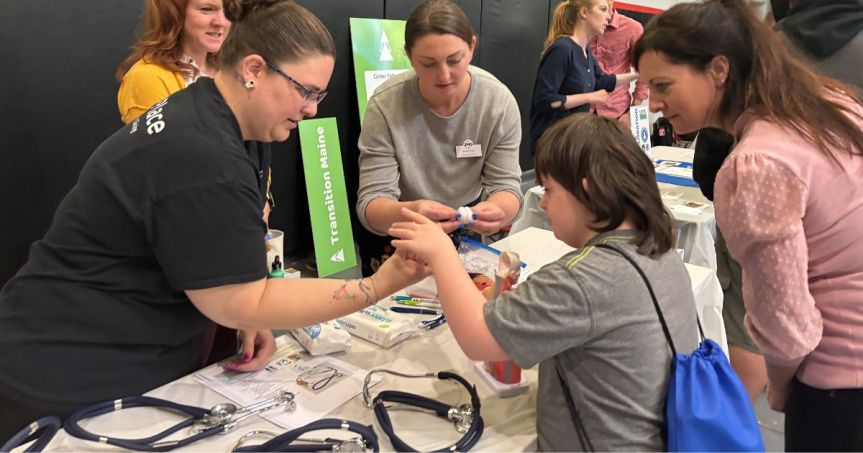
(Volunteers gave students a glimpse into working in the medical field.)

The Maine Department of Education’s (DOE) Office of Special Services and Inclusive Education held its first annual Transition Maine Youth Summit at Central Maine Community College on Thursday, May 30th. Students with disabilities from all over Maine had the chance to explore nearly two dozen career pathways and engage with professionals and peers about post-secondary life.

“It was a fulfilling day for all our students with varying abilities and challenges around belonging and inclusion,” said Co-Chair of the Executive Student Committee Connor Archer.

This year’s Summit theme was I Belong. “Our students belong in all spaces,” Titus O’Rourke, Maine Department of Education Transition Specialist, shared with WMTW. “We must establish high expectations for students with disabilities and create pathways for them to explore their career interests. In doing so, we promote and further secure their opportunities to post-secondary economic inclusion.”

The Maine DOE created the Transition Maine program in early 2022 to provide equitable and inclusive transition services for students beyond high school and into adulthood. Since then, the team has been on a mission to amplify youth voices in Maine and beyond. One of these initiatives, with the support and guidance of the Summit’s Executive Steering Committee and a team of student advocates, promoted the need and value of the Youth Summit for our students with varying abilities.

“It’s an event where other students, like me, come and learn different skills,” said Camren Dubay, a student from Dirigo High School and member of the Summit’s Executive Steering Committee. “We’ve done a lot of planning in the background for this event.”

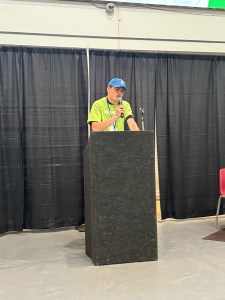
A student in a bright green shirt and blue hat stands at a black podium giving a speech.
Joshua Ellis opened the event with a speech full of his signature humor. 

Throughout the day, students engaged with different career pathway led by their peers and Maine businesses. Students explored potential occupations at each career pathway by participating in an activity highlighting skills needed to work in the respective industry. Joshua Ellis, another Executive Transition Student Committee member, taught his fellow students how to change spark plugs alongside two representatives from Darlings Auto, a skill he learned at Capital Area Technology. “Now I don’t have to pay someone to fix my car,” joked, or as he likes to say, joshed Ellis.

As students completed each activity, they logged their experience in their Career Exploration Passports. These Career Passports serve as student-led transition assessments, which educators can use to help develop the necessary Transition Plan sections of student’s Individualized Education Plans.

Stacey Brown, the climate educator at Revision Energy, led a Career Pathway on Solar Energy that was very popular with students. “I’ve really been enjoying seeing how excited the students are about certain activities. We have kits that students can build showing what they would do if they worked in the warehouse, and students have really enjoyed sorting and organizing those,” Brown explained. “Other students are just having fun understanding solar energy by playing with the circuits and the solar cars. So, it has been fun to have a variety of activities that meet the needs of all the students.”

When students weren’t outside exploring Career Pathways, they visited Let’s Talk Tables to discuss different themes around post-grad life, such as health equity, advocacy, and resume building. Darius Reaves, a student at Maine Virtual Academy, tested Maine’s new accessible voting machines at the Secretary of State’s “Come On, Let’s Vote” table. “It was great,” Reaves said of practicing his voting skills, “I think I might get used to it when I’m 18…I think I might like it!”

At the advocacy table, Anna Schmidt had one crucial message for students: “Know your rights! You can’t protect your rights if you don’t know them.” This message was echoed by the day’s guest speakers, Derek Schmitz and Michael Uher, self-advocates dedicated to making space for young people with disabilities like their own.

“You deserve to have your needs met,” Schmitz urged their peers in the Summit’s opening. “You deserve accommodations.”  Schmitz is a paralegal in his second year at Gadsden State Community College in Alabama. They are also the Lead

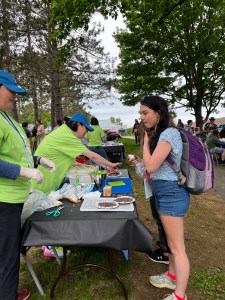
A young woman wearing a blue top and shorts speaks to two women in bright green shirts.
Representatives from the Green Ladle, a culinary arts program at Lewiston Regional Technical Center, taught students how to make cannolis.

Advocate for Derek Schmitz Advocacy, a firm he started in 2018.

Uher is also a college student and disability rights advocate. Uher spoke over Zoom, sharing his experience finding his place after a traumatic event in fourth grade left him with Post Traumatic Stress Disorder and Psychogenic Non-Epileptic Seizures. “My voice wasn’t being heard. I felt like it didn’t matter,” he told the crowd. Today, Uher uses that experience to connect and inspire other students with disabilities. “We all face our own challenges, disability-related or not,” said Uher. “But how we react to and overcome these barriers is what truly matters.”

For everyone present, the Summit was an empowering and inspiring experience. “I love seeing all the students that are coming into the Summit,” expressed Cathy Dionne, Executive Director of the Autism Society of Maine. “They’re looking around at different things that they may want to do in the future. It gives them opportunities to test things out.”

“This may seem like a small thing, but I’ve been told multiple times by my own mother one small action can make a big difference, and this is going to make a big difference in people’s lives,” said Ellis.

“We have so much more work to do. We are already thinking about our next initiatives, next year’s summit, and so much more,” said Archer of the event. “This is our true passion. We believe strongly that all students deserve the opportunity to live a successful life where their future and their plan is at the center of it all, no matter what abilities or challenges they have.

Educators looking to connect with Transition Maine can reach out to Titus O’Rourke at titus.orourke@maine.gov.


The Transition Maine Summit was funded through Federal Emergency Relief and is a part of Maine’s Whole Student Pandemic Response. Please visit the Maine DOE website to learn more about Maine’s Whole Student Pandemic Response.

Maine Employer Summit Engages Youth to Tackle Workforce Challenges

(Pictured: ELO Coordinator Kevin Napilillo and JMG Teacher and Career Counselor Becky Kash brought several Brewer High School students to the Summit. Three of the ELO students were featured as guest speakers on panels; two in construction ELOs and one in a teaching ELO.)

More than 500 employers and young people recently gathered at Bangor’s Cross Insurance Arena for the Maine Employer Summit. Hosted by the Maine Department of Labor and the Maine Department of Economic Development, the event provided a vital platform for employers seeking resources and solutions to pressing workforce challenges. Participants also had the opportunity to connect with young professionals, government agencies, State of Maine resources, and fellow business leaders to explore workforce opportunities.

During the event, there were several opportunities in which participants could engage in discussions on breaking down barriers to attracting, hiring, and retaining employees from diverse communities, sharing best practices, and fostering innovative solutions to create a more inclusive and sustainable workforce.

The Maine Department of Education (DOE) organized a panel on engaging local youth through work-based learning. This panel highlighted multiple forms of work-based learning, including extended learning opportunities, pre-apprenticeship to apprenticeship, and adult education, which includes integrated education and training. As an interactive component of the panel, JMG partnered with Maine DOE to facilitate a conversation with employers on implementing work-based learning into their place of business.

The event featured an Innovation Hall with companies offering job opportunities, virtual reality or live demonstrations, mock interviews, and resume help staffed by Adult Education Career Navigator Kate Points and College and Career Success Coordinator Audrey Kimball, among others with career expertise.

Breakout sessions also delved into strategies for creating more inclusive and sustainable workplaces. These discussions highlighted the importance of understanding and addressing the unique challenges faced by different demographic groups, including New Mainers, young and aging populations, people of color, individuals with disabilities, those seeking re-entry into the workforce and the LGBTQ+ community.

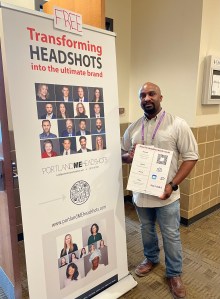
No cost headshots were offered to attendees during the sessions and the Innovative Hall.
No-cost headshots were offered to attendees during the sessions and at the Innovative Hall.

Several presentations and workshops showcased the latest innovations in workforce development. The emphasis was on practical solutions employers could implement to improve workforce dynamics.

Through the many interactive sessions, attendees shared their experiences, challenges, and successes, helping to identify effective practices that could be adopted by other organizations facing similar challenges.

The Maine Employer Summit emphasized the critical role that collaboration and innovation play in addressing workforce challenges. The event not only provided valuable resources and insights but also inspired attendees to think creatively about how to build a more inclusive and resilient workforce. The success of the 2024 Maine Employer Summit sets a positive precedent for future gatherings, ensuring that Maine remains at the forefront of innovative workforce solutions.

Media Release: Governor Mills Announces Major Expansion of Maine Outdoor Learning Initiative 

$6.6 million investment will provide 4,000 students with access to free afterschool and summer outdoor learning and career exploration programs 


Governor Janet Mills today announced a significant expansion of her Maine Outdoor Learning Initiative that will provide thousands of middle and high school students with access to free outdoor learning and career exploration programs this summer and fall. 


Launched by Governor Mills in 2022, the Maine Outdoor Learning Initiative is a statewide effort to connect Maine’s young people to the outdoors through engaging, hands-on learning opportunities. In its first two years, more than 2,500 students have participated in programs ranging from hiking and kayaking to farming and forestry. 


The $6.6 million expansion – utilizing federal funds – will now provide roughly 4,000 students across Maine with access to more than 100 afterschool and summer programs between now and the fall. The expansion triples the total amount of funding invested in the Initiative over last two years.  


“In just two years, the Maine Outdoor Learning Initiative has helped thousands of Maine students to experience different parts of our beautiful state, develop a lifelong love of nature, and learn knowledge and skills that will help them succeed academically. This expansion will allow even more students to benefit from this extraordinary program,” said Governor Janet Mills. “I thank the many partners across Maine for their hard work to make these experiential learning opportunities possible.” 


“The Maine Outdoor Learning Initiative offers hands-on, enriching, highly engaging opportunities that allow Maine students to explore and learn from the great outdoors,” said Maine Education Commissioner Pender Makin. “These opportunities connect students with Maine’s natural beauty, build leadership skills, allow them to work in groups, and support their wellbeing. We thank all of the schools and organizations that stepped up to grow this exciting initiative.” 


The Maine Outdoor Learning Initiative was developed by the Maine Department of Education (DOE) at the direction of Governor Mills, delivering on a promise made during her 2022 State of the State Address to provide children with more opportunities to learn about and explore Maine’s natural beauty and resources after two years of the pandemic. The program has prioritized participation by students from low-income families from regions of Maine where access does not typically exist for such programs. 


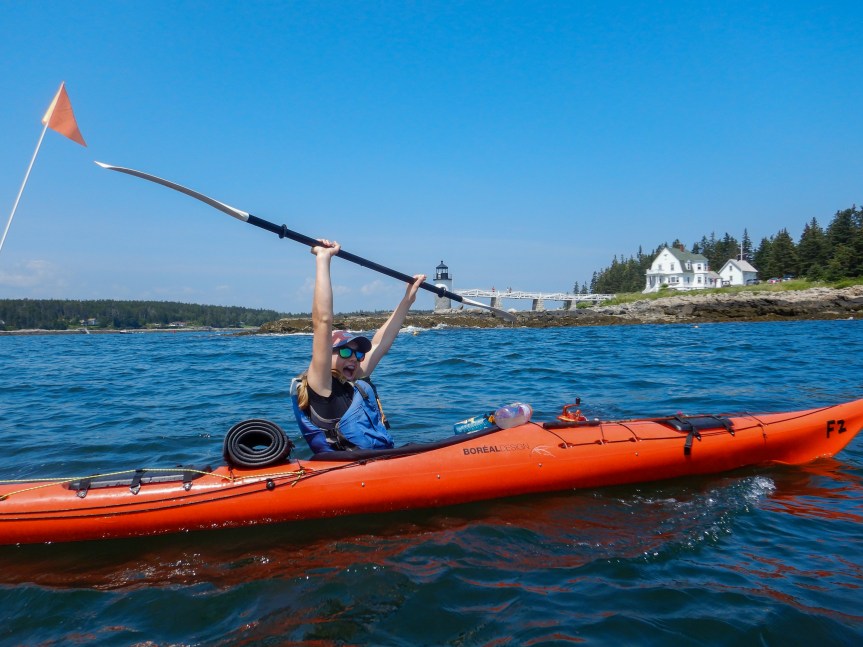
Students have explored clam flats, operated forestry machinery, camped on islands, built boats, kayaked along Maine’s coasts and in the state’s lakes and rivers, worked alongside maritime and forestry workers, learned about scallop farming, and developed outdoor leadership skills while hiking through the woods, and much more.  


Some of the 100 programs made available by the expansion include backpacking trips along the Appalachian Trail offered by the Chewonki Foundation, sailing opportunities with Sailing Ships Maine, and a science career exploration program offered by the Downeast Institute for Applied Marine Research and Education, among others. The Biddeford, Saco, and Dayton School Departments will offer kayaking, hiking, and ocean exploration opportunities for New Mainers and unhoused youth. Sixty-four schools and community organizations received Maine Outdoor Learning Initiative grants. 


“Chewonki is thrilled and honored to take part in the Maine Outdoor Learning Initiative. Maine is home to amazing landscapes and a rich outdoor heritage that presents a world of opportunity for our children. Yet far too many of those children lack access to meaningful outdoor education and outdoor recreation programs. This initiative opens the door to invaluable learning experiences for our youth. Together, we can foster the next generation of Maine students who will cherish the woods, waves, waters, and trails of our state, who can see themselves engaging meaningfully in our outdoor economy, building their families and careers here, and who will always feel proud to be part of such a wonderful place to live,” said Nancy Kennedy, Acting President of the Chewonki Foundation. 


“This grant will allow us to provide a team of students with an outdoor education experience intertwined with their classroom learning in English, science, and math. Our grant also includes an educator component, which gives our middle school teachers an opportunity this summer to spend time writing a unit for the 2024-2025 school year that integrates outdoor education experiences. I believe this opportunity will ultimately prove to be a benefit to all of our middle school students in Scarborough Public Schools,” said Katie Vetro, Director of Curriculum and Assessment of Scarborough Public Schools. 


“The Maine Outdoor Learning Initiative enables us to provide mentorship, hands-on learning, and outdoor adventure to youth who would not otherwise have access to these opportunities. Students are already looking forward to a summer of hiking, paddling, gardening, citizen science, service learning, and career exploration,” said David Wessels, Belfast High School Extended Learning Opportunities Coordinator.  


Maine DOE has launched a new Maine Outdoor Learning Initiative portal to help families easily access available programs and identify opportunities for their children to participate. All programs are at no cost to families, include free transportation, and are designed for students who face economic or other barriers to experiencing high-quality outdoor learning experiences.  


The Outdoor Learning Initiative is paid for through the Governor’s Emergency Education Relief (GEER) Program funds received from the US Department of Education. The Initiative is complimented by the Maine Career Exploration Program, a $25 million initiative of the Governor’s Maine Jobs & Recovery Program to connect teenagers and young adults to high-quality paid work experiences across the state. Since its launch in October 2022, the program has engaged more than 2,700 participants in paid work experiences. 

KVCC College and Career Success Coordinator Eases the Transition from Adult Education to College

What do you get when you combine adult education students, a tour of Kennebec Valley Community College (KVCC), and a variety of delicious pies? The answer is Brighter Futures!

A successful, immersive event occurred earlier this spring when 18 students from four local adult education programs spent two hours on the KVCC campus. In addition to touring the campus, students met the dean of students, key student success support staff, and a Maine Educational Opportunity Center advisor. After the tour, they enjoyed pie and ended the day with a fun activity led by a faculty member. The event was so successful that there are plans to offer it at least once a year.

Carolyn Haskell, the College and Career Success Coordinator (CCSC) at KVCC, a position funded through the Maine Jobs and Recovery Plan, played an integral part in planning the event and worked closely with Teresa Smith, KVCC Director of Enrollment, to make it a success. Area adult education directors and staff marketed the event and accompanied students to the campus.

Part of Haskell’s role is to be the on campus contact for adult education students interested in attending KVCC. Haskell is a resource for students navigating the college process and adult education. Being on campus gives her a unique perspective and informs how she advises students. She helps ease the transition from adult education to college and supports students along their college journey to help them succeed. She also connects current KVCC students to adult education for services to help them while they are in college.

Haskell has seen the power of getting adult learners to college campuses and believes that allowing them to see themselves as college students is monumental. She said, “Once they tour the campus, it is much easier for them to think of college as a goal to be accomplished rather than a dream.”

This story was submitted by Kennebec Valley Community College (KVCC). To submit good news about your school to the Maine Department of Education, complete our Good News Submission form.

Maine Solutionaries: How Maine Educators are Learning to Support the Leaders of Tomorrow

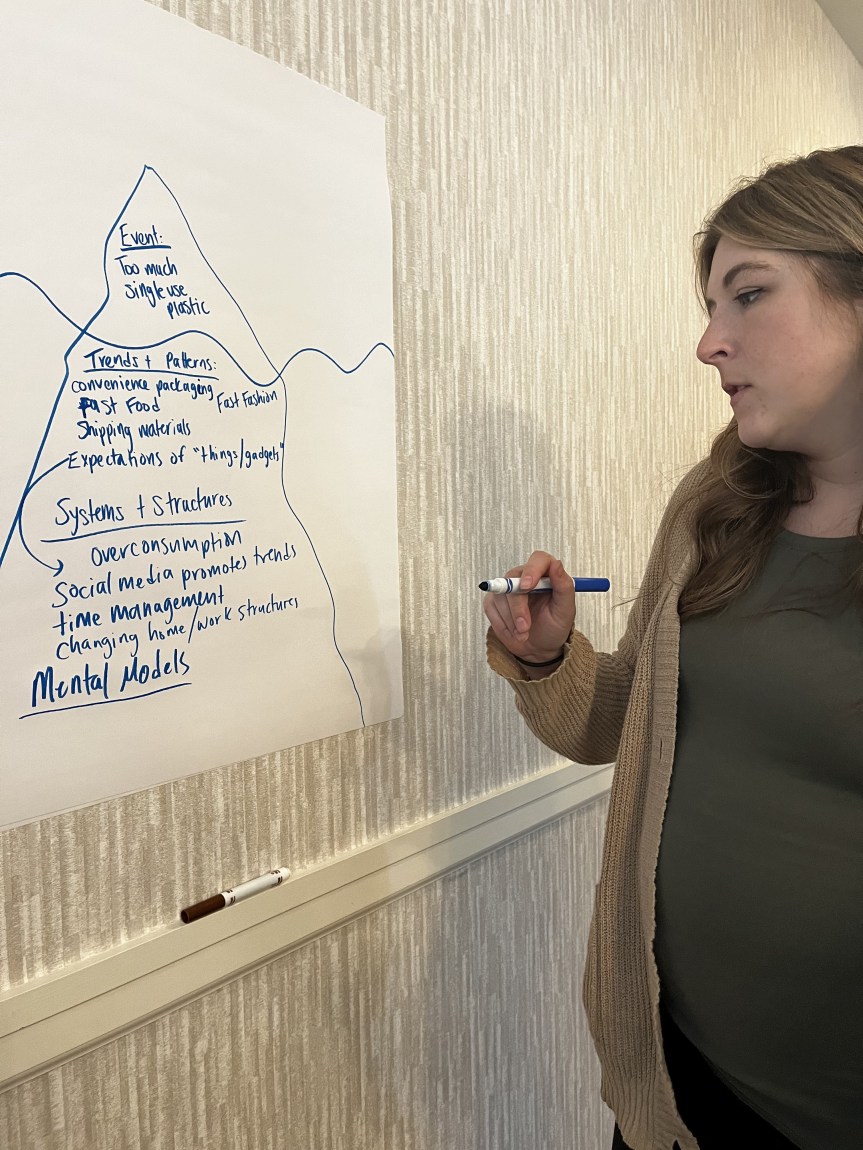
(Delaney Rideout, a high school science teacher from Mattanawcook Academy, participates in the Solutionaries’ iceberg problem-solving exercise.)

More than 40 Maine educators came together recently for the first of four Maine Solutionaries project kick-offs. Guided by the Institute for Humane Education, these educators learned how to use the curriculum to empower students to solve the real-life problems they care about in their schools and communities.

“The Maine Solutionaries Project is a really exciting opportunity for Maine teachers to engage in professional learning. It’s cohort-based, so we are bringing teachers from all over the state together into groups who are focusing on topics such as plastics, food waste, or climate change,” said Julie Meltzer, the Director of K-12 and Teacher Education for the Institute for Human Education.

The Maine Solutionaries Project is an exciting new addition to Maine’s educational toolkit, developed through a collaboration with the Maine Department of Education (DOE) Interdisciplinary Instruction Team and the Institute of Humane Education. Together, the Institute and Maine DOE seek to inspire and support educators to cultivate a generation of Solutionary change-makers capable of effectively addressing and resolving real-world problems, honing their critical thinking and problem-solving skills.

When asked the essential question, “What is a Solutionary?” Meltzer explained,“A Solutionary is a next-level problem-solver change-maker who looks at systems and looks at things in their community or in their school that they want to change for the better and considers all the stakeholders, analyzes why it’s happening, and then comes up with ideas to address the problem, while thinking about what’s good for people, animals and the environment.”

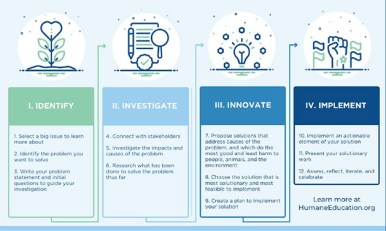
The Solutionary Framework consists of four phases: Identify, Investigate, Innovate, and Implement.

“Maine teachers have seen improved student engagement and deeper learning when they implemented Solutionary inquiry to action projects with their students” reports Meltzer.

Nell Herrmann, an Enrichment Educator at Blue Hill Consolidated School, comes from a field science background but transitioned to education in the early 2000s. After many years of feeling like her students’ personal harbinger of environmental doom, Herrmann wanted to provide students with an opportunity to make some actionable changes in her classroom.

“I started to feel sort of a sense of despair that I was giving these kids all this bad news, and so I reached out to the president of the Institute for Humane Education, and she suggested that I try learning about the Solutionary framework and using it with my students,” Herrmann recounted. “I did and I found that it was very empowering. And it took what I was teaching the kids a step further and gave them the ability to see that they have the power to make a change.”

A blue info Graphic that says: Phase 1: IDENTIFY 1. Select a big issue to learn more about 2. Identify the problem you want to solve 3. Write your problem statement and initial questions to guide your investigation Phase 2: INVESTIGATE 4. Connect with stakeholders 5. Investigate the impacts and causes of the problem 6. Research what has been done to solve the problem thus far Phase 3: INNOVATE 7. Propose solutions that address causes and do the most good and least harm to people, animals and the environment 8. Choose the solution that is most Solutionary and most feasible to implement 9. Create a plan to implement your solution Phase 4: IMPLEMENT 10. Implement an actionable element of your solution 11. Present your Solutionary work 12. Assess, reflect, iterate and celebrate
The four phases of the Solutionairie Framework .

Herrmann’s first Solutionary course was a huge hit with her students and an excellent example of the Solutionary framework in action. Speaking at the Maine Solutionaries Project Kick-Off session, Herrmann shared the story of her first Solutionary project: “My students and I were investigating some environmental threats to the Bagaduce Watershed, our local watershed, and one of the threats they identified were invasive green crabs. And so they were collecting data, which they were inputting into the Gulf of Maine Marine Research Institute webpage and database, but then decided that they didn’t want to put the crabs back into the ecosystem because they’re so destructive to the ecosystem. So, they decided as a solution that they would collect the data as they’ve been doing, but then keep the crabs and test out some different recipes and host a green crab cafe with some of those recipes.”

Herrmann was asked not only to speak at the Maine Solutionaries Project kick-off but also to be a Solutionary coach for one of the project’s first cohorts.  At the kick-off, along with meeting and learning from speakers like Herrmann, these first cohort educators got to know each other through icebreakers, took part in mock Solutionary lessons, and prepared for the next chapter of their Solutionary journey. Speaking with educators after the kick-off, it was clear that the first cohort of the Maine Solutionaries Project can’t wait to bring the framework into their classroom.

“I am really excited about having a bigger community to connect with to work on problems that empower our students to figure out solutions so that they can be taking action instead of feeling like they’re only on the receiving end,” said Heather Martin, the librarian at Harriet Beecher Stowe Elementary School.

From further north in Lincoln, Delany Rideout plans to roll out the Solutionary framework to her Mattanawcook Academy High School science students.

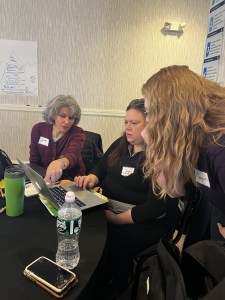
Three women sit at the end of a table. The woman on the far left points at the computer screen of the woman in the middle, and the woman on the right leans over to look at the screen.
Heather Martin, a librarian from Harriet Beacher Stowe, helps her fellow first-cohort educators set up the virtual learning portals where they will build their 2023-2024 Soultionaries classes.

“I think it’s good for teachers in rural Maine to bring solutions to their schools because we are giving students skills to take action,” she said.“That’s really important for them and empowering them to know that they can make changes in their community even though they might not have as many resources as other bigger places.”

The first two cohorts of the Maine Solutionaries project are well on their way. They are completing Solutionary prep work, participating in class meetings online, and beginning to design the projects they will do with students during the 2024-20254 school year.

Bring the Maine Solutionairies Project to your school! Visit The Maine Solutionaries Website to apply for the next six cohorts. The final deadline for applications is July 31.

Apply to Join the Maine Solutionairies Project

The Maine Solutionaries Project is a part of Maine’s whole student Pandemic Response and was funded through Federal Emergency Relief Funding. The project has an award totaling $719,500, of which 100% is federally funded and directly attributed to project implementation. The contents are those of the Maine Solutionaries Project and do not necessarily represent the official views of, nor an endorsement, by the US Department of Education or the U.S. Government. Learn more about how Maine used Emergency Relief funding at Maine’s Whole Student Pandemic Response page!


Mt. Ararat ELO Coordinator Partners with Local Credit Unions to Empower Tomorrow’s Financially Savvy Generation

During financial literacy month in April, Doug Ware, the Extended Learning Opportunities (ELO) Coordinator at Mount Ararat High School, hosted a Financial Fitness Fair for the junior class.

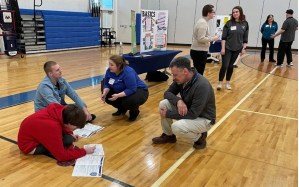
Doug Ware, ELO Coordinator at Mt. Ararat engages with a student working on their financial fitness packet. Around them credit union representatives talk with students about financial literacy.

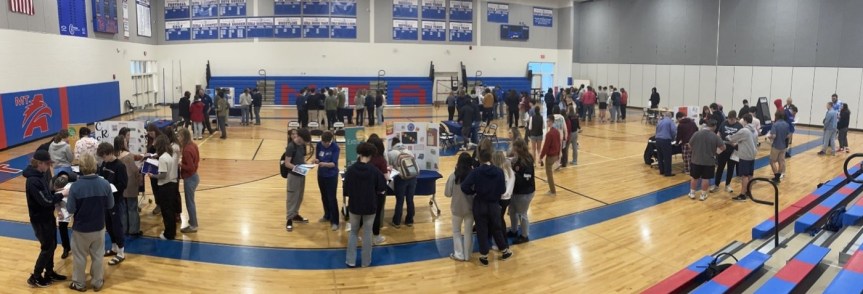
The school gymnasium buzzed with energy as students navigated through booths and interactive activities. Each station provided a hands-on learning experience related to finances. Students experienced a simulation of their future monthly budget based on their career of interest and gained valuable insight into possible financial challenges they may face in adulthood. The goal for the students was to pay for all of their monthly expenses but without paying more than they earn each month.

“Students have really enjoyed the Financial Fitness Fair events,” said Ware. “They report to have learned much about building credit, managing budgets, prioritizing expenses, and planning for the long term.  We are working to ensure that all Mt. Ararat high school students graduate with at least basic financial literacy.”

“This is one of the most enjoyable aspects of working for a credit union,” said Jennifer Anderson, Senior Vice-President of Retail Services at Five County Credit Union and President of the Jeannette G Morin Credit Union Chapter. “I love the fact that multiple credit unions from around the state work together regularly to volunteer at our local high schools and talk to students about budgeting while also sharing our industry knowledge and advice with them. Even though we are each other’s business competition, we believe so strongly in the philosophy of people helping people and financial well-being for all that we bind together as Maine’s credit union industry to bring these events to our communities.”

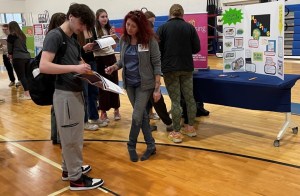
Credit union volunteers discuss housing options with students based on their income.

Incorporating financial literacy into secondary education is crucial in equipping youth with the skills and knowledge needed to navigate the complex world of personal finance. This is an opportunity to instill confidence and empower students to take control of their financial futures.

Credit union volunteers host Financial Fitness Fairs at no cost to schools. Jake Holmes, Director of Outreach and Financial Education at the Maine Credit Union League, shared how, collectively, credit union volunteers have hosted Financial Fitness Fairs for nearly 73,000 Maine students since the program’s inception in 2004. Credit unions that serve the same geographic regions work together to host these money management events.

One of the most popular stations was the “Life Happens” booth, where students could spin a wheel, and the arrow would land on an unexpected life event, ranging from dental work to a car accident. This exercise highlighted the importance of living within one’s means and prioritizing financial goals.

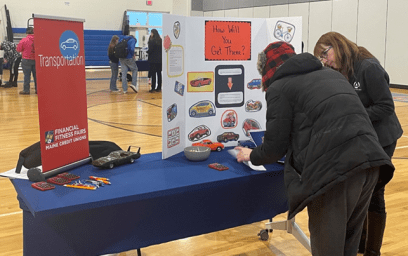
Credit Union Volunteers help students assess the transportation options based on their budgets.

By participating in these fairs, students gain a deeper understanding of the importance of financial responsibility and the long-term implications of their financial decisions. They learn to make informed choices about future savings, avoid debt pitfalls, and plan for major life expenses like college or homeownership.

Financial fitness fairs empower high schoolers to build a solid foundation for their financial well-being and can help set them on a path toward a more secure future.

ELO Coordinators like Doug Ware provide broad connections to the community and hands-on learning experiences for their schools. This event is one example of the immersive educational events that ELO Coordinators across the state help to provide.

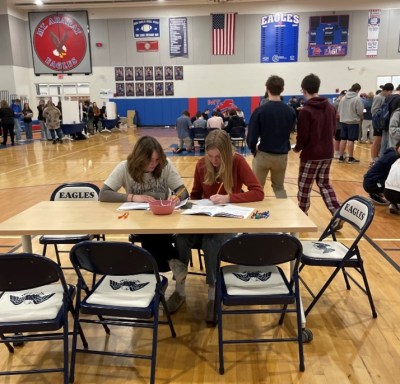
Students take a break from the interactive booths to assess their budgets.

“I have worked to support credit-bearing ELO experiences such as internships, independent studies, and work-based studies,” explained Ware. “I have also made an effort to connect students to unique learning opportunities that enhance the great work that is already happening in our classrooms. Many such opportunities arise from relationships that we have developed with members of our business and non-profit communities. The Financial Fitness Fair is one such example. We feel very fortunate to have incredible partners like Jennifer Andersen, Jake Holmes, and their team of generous volunteers from Maine Credit Unions. Their engagement with students has such an important impact. I also credit the Mt. Ararat staff and administrative team. Our school community places value on these enriching experiences, and many are willing to pitch in when needed to make things happen!”

This month, at Nokomis High School, ELO Coordinator Kristine Eisenhour has arranged a Financial Fitness Fair for their students and others are in the planning stages. Mount Ararat High School and Nokomis High School were both awardees of Maine Job and Recovery Plan grants totaling more than $5.6 million, supporting 26 programs across Maine covering 13 counties. In a world where financial literacy is more important than ever, ELO Coordinators and their communities are helping to pave the way for a brighter tomorrow.

Learn more about Financial Fitness Fairs.

Learn more about the Maine Jobs Recovery Plan.

Learn more about ELOs in Maine or reach out to Lana Sawyer at lana.sawyer@maine.gov.


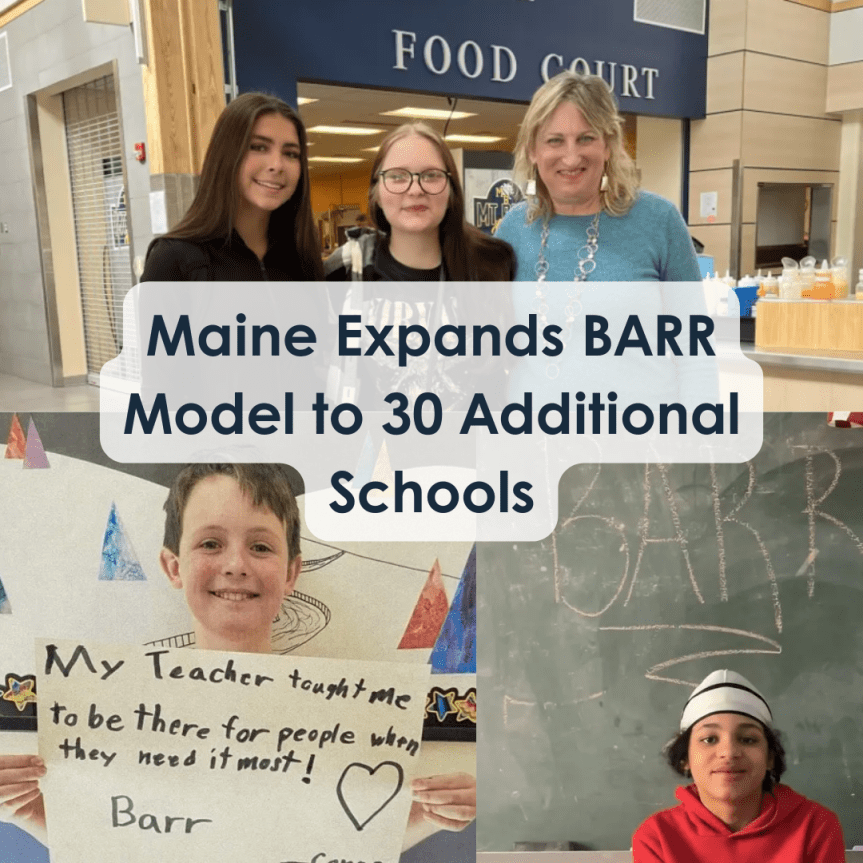
Media Release: Maine Expands Building Assets Reducing Risks (BARR) Model to 30 Additional Schools

Nearly 100 Maine Schools Now Implementing BARR Through Maine DOE Grants to Increase Academic Achievement, Engagement, and Student and Educator Wellbeing

The Maine Department of Education (DOE) announced grants for 30 additional Maine schools to implement the Building Assets Reducing Risks (BARR) model to increase academic achievement, engagement, and student and staff wellbeing. These new grants build on the Maine DOE’s initial BARR investment last summer, with nearly 100 schools now implementing BARR across the state.

BARR offers schools a framework that combines relationship building and asset development with real-time data to support students based on their strengths and connections to school. Empirical studies show that BARR results in increased student engagement, reduced chronic absenteeism, a 40 percent reduction on average in failure rates after one year of implementation, increased student achievement rates, and a reduction in high-risk student behavior and substance use. Educators report increased job satisfaction, higher levels of collaboration, and higher likelihood of persisting in their jobs after implementing BARR.

These positive changes are reflected in Maine schools that are already implementing BARR. Since implementing BARR, Bucksport High School’s graduation rate increased by more than 15 percent and Mt. Blue School High School has experienced a 30 percent decrease in chronically absent students, with a daily attendance rate of 94.14 percent. Through BARR, Noble Middle School has created more than 200 mentor matches to support students with significant risk factors. Westbrook High School’s BARR team was able to identify increased anxiety as the cause of a chronically absent student’s disengagement. They collaborated as staff and worked with the student’s family to create personalized interventions to improve the student’s experience at school. Now actively engaged in school activities and supported by a comprehensive plan, this student is not only coming to school and passing classes but has found a new passion for theatre.

“We are focused on empowering educators and school leaders, providing them with the tools and resources to strengthen the incredible teaching and learning happening in Maine schools. When I speak with educators who have implemented BARR in their schools, they are so enthusiastic about the positive academic and wellbeing changes they’ve experiences with students and the deeper relationships they are building with students and colleagues,” said Maine Education Commissioner Pender Makin. “We’ve invested in BARR as a state because of the extensive research behind it and the overwhelming support it has among Maine educators. BARR offers a flexible framework that any school can adapt to meet their unique needs with results that extend years beyond the initial investment.”

“We are thrilled with the success of the schools implementing BARR in Maine. Bucksport, Maine was the first high school to take on the BARR model after I developed the model as a high school counselor in its original site in Minnesota. Jim Boothby, superintendent of Bucksport, saw BARR’s potential in 2010, and now we are the most researched model in the country,” said BARR Founder and Executive Director Angie Jerabek. “Maine schools continue to show student and educator gains under the BARR model, and we are excited to partner with the Maine Department of Education in this expansion.”

“The numbers speak for themselves,” said Mt. Blue High School social studies teacher Matt Fournier. “BARR doesn’t take time out of our schedule; it makes time. Since we are building relationships, we get greater buy-in, and students are more connected to the school.”

“I’m a true believer in the program. We originally brought it on because the main focus was grades and the transition into ninth grade. For us, it really made a difference when we could see the number of failures in our coursework had changed significantly in the first year and then changed again the next year. And then as time went on, it went into more of the behavioral and checking in with the students and making sure they had trusted adults and really working on how they created a culture within the ninth-grade cohorts,” said Superintendent Mary Anne Spearin, who first implemented BARR as principal of Calais Middle/High School. BARR expanded to Calais Elementary School this year.

“The Loranger team is very excited to be partnering with BARR and implementing their research-based program. We know that this will help us grow and better meet the needs of all of our learners. We’re grateful for the funding to bring a program that has proven results among many schools in our state. We are eager to begin working with BARR to put into practice a system that supports both staff and students,” said Loranger Memorial School Principal Matthew Foster, who first experienced BARR as a classroom teacher at Noble High School. He is enthusiastic about bringing BARR to his school as an administrator in Old Orchard Beach.

“We are excited to welcome BARR to Indian Township School,” said Indian Township School Principal Molly Newell. “BARR’s focus is on building supportive relationships, addressing social-emotional needs, and promoting academic success, which aligns with our school’s goals of culturally relevant education, community involvement, and holistic student development within the context of our Indigenous values and traditions.”

More than 60 Maine educators just attended BARR’s national conference, with Commissioner Makin speaking on a panel of other state education leaders about how they are improving outcomes in their states. Educators from Brunswick Junior High School, Calais Elementary School, Maranacook Community High School in Readfield, Mt. Blue Regional School District, and Saccarappa Elementary School in Westbrook led workshops and served on panels to share the expertise they have gained through BARR implementation.

Maine was selected by the National Governors Association as one of five states who are engaged in exemplary efforts to support the mental health and wellbeing of students and school staff. Through this initiative, the NGA is supporting implementation of the BARR model in other states through technical support at the national level.

Read more about the BARR experience at Mt. Blue High SchoolCalais Elementary School, and Noble Middle School. Listen to Commissioner Makin’s podcast highlighting BARR schools here.

The Maine DOE used American Rescue Plan funding to create a competitive BARR grant to help schools invest in the model. To learn more about this funding, visit Maine’s Whole Student Pandemic Response page.

New BARR Grantees
AOS 94 – Ridge View Community School
AOS 96 – Fort O’Brien School
Baxter Academy for Tech & Sciences
Cherryfield School District – Cherryfield Elementary
Easton School Department – Easton Elementary School
Eustis Public School District – Stratton Elementary School
Indian Township School
Madawaska School Department – Madawaska Middle/High School
MSAD 17 – Paris Elementary School
MSAD 24 / RSU 88 -Van Buren District Secondary Sch
MSAD 6 – Edna Libby Elementary School
MSAD 6 – George E Jack School
MSAD 6 – H B Emery Jr Memorial School
MSAD 61 – Lake Region Middle School
North Haven Community School
RSU 10 – Buckfield Jr-Sr High School
RSU 14 – Jordan-Small Middle School
RSU 14 – Manchester Elementary School
RSU 14 – Windham Primary School
RSU 2 – Hall-Dale Middle and High School
RSU 2 – Monmouth Academy
RSU 2 – Monmouth Memorial School
RSU 23 – Loranger Memorial School
RSU 3 – Mt View High School
RSU 38 – Readfield Elementary School
RSU 39 – Caribou High School
RSU 56 – T W Kelly Dirigo Middle School
RSU 74 – Carrabec Community School
Saco Schools – Saco Middle School
Winthrop Public Schools – Winthrop Middle School
2023 Grantees
Acadia Academy
AOS 90, Princeton Elementary
Biddeford High School
Biddeford Intermediate School
Biddeford Middle School
Brunswick Junior High School
Calais Elementary School
Calais Middle/High School
Camden Hills Regional HS
Gorham School Department- Great Falls Elementary School
Gorham School Department- Narragansett Elementary School
Gorham School Department- Village Elementary School
Islesboro Central School
Kittery- Traip Academy
Maine Academy of Natural Sciences
MSAD 46- Dexter Regional High School
MSAD 44- Telstar Middle School
MSAD 52- Leavitt Area High School
MSAD 52- Tripp Middle School
MSAD 55- Sacopee Valley High School
MSAD 55- Sacopee Valley Middle School
MSAD 58- Day Mountain Regional Middle School
MSAD 58- Kingfield Elementary
MSAD 58- Mt. Abram High School
MSAD 58- Phillips Elementary
MSAD 6- Bonny Eagle Middle School
MSAD 60- Noble Middle School
MSAD 61- Lake Region High School
MSAD 70- Mill Pond School
MSAD 75- Mt. Ararat Middle School
MSAD 17- Oxford Hills Middle School
MSAD 49- Lawrence High School
RSU 24- Charles M. Sumner Learning Campus
RSU 34- Leonard Middle School
RSU 38- Maranacook Community High School
RSU 38- Maranacook Community Middle School
RSU 4- Oak Hill High School
RSU 4- Oak Hill Middle School
RSU 78- Rangeley Lakes Regional School
RSU 10- Mountain Valley High School
RSU 10- Mountain Valley Middle School
RSU 13- Oceanside Middle School
RSU 14- Windham High School
RSU 16- Bruce M. Whittier Middle School
RSU 16- Elm Street School
RSU 16- Minot Consolidated School
RSU 16- Poland Community School
RSU 34- Old Town Elementary
RSU 35- Marshwood High School
RSU 35- Marshwood Middle School
RSU 56- Dirigo High School
RSU 59- Madison High School
RSU 83/MSAD 13- Moscow Elementary School
RSU 83/MSAD 13- Upper Kennebec Valley Jr/Sr High School
RSU 9- Academy Hill School
RSU 9- Cape Cod Hill School
RSU 9- G.D. Cushing School
RSU 9- Mt. Blue High School
RSU 9- Mt. Blue Middle School
RSU 9- W.G. Mallett School
RSU 16- Poland Regional High School
RSU 64- Central High School
RSU9- Cascade Brook School
SAD 17- Oxford Hills Comprehensive High School
Sanford High School
Westbrook School Department- Canal School
Westbrook School Department- Congin Elementary
Westbrook School Department- Saccarappa School
Westbrook School Department- Westbrook High School
Westbrook School Department- Westbrook Middle School


Application Deadline Extended to May 15 for the ‘Maine Out-of-School-Time’ Career Exploration Grants

Apply Now! Schools, community-based organizations, and childcare providers can apply for the 2024 Maine Out-of-School Time Career Exploration grants through the Maine Department of Education (DOE). These grants support meaningful career exploration opportunities for students in grades 4 – 6 that connect students with Maine businesses and career opportunities, which may include experiential learning trips, guest speakers, job shadows, and more! Underlying these experiences is critical to helping students build and strengthen relationships with caring adults and peers in their schools, childcare centers, and communities.

Funded through Governor Mills’ Maine Jobs and Recovery Plan, the 2022 Statewide Expansion of Extended Learning Programming has engaged hundreds of secondary students throughout the state in real-world career exploration experiences. The Maine DOE is excited to build on these successes to reach younger students in this expanded career exploration program. The 2024 Maine Out-of-School Career Exploration Request for Applications (RFA, also known as grants) is available here: Grant RFPs and RFAs | Division of Procurement Services (maine.gov). See RFA 202404087

Schools, nonprofit organizations, licensed or licensed-exempt child care providers, municipal parks and recreation departments that are current members of the Maine Recreation and Park Association, and public libraries may apply.  Please see the RFA for explicit information and definitions on eligibility and allowable uses of funding.

Grant awards will range in size, with $300,000 available. The 2024 Maine Out-of-School Time Career Exploration grant requires a marketing and outreach plan for reaching students from disadvantaged backgrounds as well as an emphasis on Maine DOE’s Whole Student Framework.

This funding can potentially facilitate career exploration for students in grades 4 – 6 before, during, or after school, on weekends, and/or during the summer. Applications will also be considered for schools and organizations that wish to use the funding to enhance or expand existing out-of-school programming. Grants are expected to be awarded at the beginning of June. All programming must be completed by September 1, 2024.

The Maine Out-of-School-Time grant opportunity is available through the Maine Jobs and Recovery Plan, funded in its entirety by the American Rescue Plan Elementary and Secondary School Emergency Relief (ARP ESSER) fund.