Maine Department of Education Launches Maine’s Whole Student Pandemic Response Page

The page showcases programs created with Federal Emergency Relief Funding and elevates the voices of the educators and students they support.

The Maine Department of Education (DOE) has launched a new webpage to showcase how the Maine DOE used federal emergency relief funding to invest in Maine’s Whole Student Pandemic Response. The effort highlights the initiatives the DOE created with federal funding and the impact on students, educators, schools, and communities. View the new webpage here.

A circle with a thick navy outline and a picture of students hands on top of one another over snow.The Maine Department of Education (DOE) prioritized a Whole Student Approach using federal emergency relief funding to help students, educators, and schools respond and recover from the COVID-19 pandemic. The DOE’s Whole Student Approach was developed in partnership with educators, administrators, parents, students, and educational organizations. It seeks to create vibrant school environments where all students are safe, healthy, supported, engaged, challenged, and prepared. Together, these six tenets form the foundation for students’ success in school, life, careers, and as citizens of our great state.

The DOE has invested federal emergency relief funding in efforts to bolster literacy, provide hands-on outdoor learning opportunities, expand engaging project-based learning, bring interdisciplinary computer science education to every Maine school and grade level, expand pre-k, support student and educator wellbeing, ensure safe and healthy schools, and so much more.

The new landing page on the Maine DOE website features descriptions of the programs the Maine DOE created with federal emergency relief funding and stories from educators, students, and schools showcasing the impact of the programs and the continued efforts to support schools with the lingering impacts of the pandemic. The webpage includes details on the total federal emergency relief fundingA large circle with a thick navy line around it, and a picture of students working at their desks wearing masks . received by the Maine DOE and links to a federal relief funding dashboard featuring reimbursements made to school administrative units (SAUs) for their pandemic-related investments.


The Maine DOE will continue to update Maine’s Whole Student Pandemic Response page to feature how emergency relief funding continues to be used to support students, schools, and educators in Maine. We will also feature how schools and SAUs have used the funding they received.

Click Here to Visit Maine’s Whole Student Response Page

If you have a story of how your school or SAU used Federal Emergency Relief Funding, please share it here. We’d love to feature your efforts.

American Rescue Plan Act (ARP) funding supports Maine’s Whole Student Pandemic Response efforts.


Experiencing the Magic at Maranacook Community Middle School

Walk into any classroom at Maranacook Community Middle School and you’d be hard-pressed to identify a 6th grader from an 8th grader in the class. And that’s part of the magic at Maranacook.  Instead of being separated by grade level, students are grouped into multiage teams. 

The school does more than blend grade levels—teacher teams work together to integrate learning across content areas around themes chosen by students each trimester. These themes can range from the end of the world to food to careers. 

Before every trimester, teams get together and teachers will bring them through a process of inquiry. Students ask questions about themselves, the world around them, their community, their interests, and the world in general. Themes start to appear through this inquiry process and the students get to choose the theme they have the most interest in. 

Principal Rick Sirois summed up a big part of the Maranacook approach. 

“Student buy-in is key, giving them voice and choice, which I think we do well, and giving them multiple pathways to demonstrate what they know,” he said. 

Maranacook is a shining example of integrating powerful interdisciplinary instruction and elevating student voice and choice. 

The result? Students are engaged and excited to learn, they have ownership over their learning and immense pride in their school, teachers build strong connections and relationships with one another and with students, and students feel part of the same team regardless of grade level. 

In one class on a team working on an Armageddon theme, students worked in groups to analyze the differences between two maps. One map featured the traditional layout of countries that we’ve all come to know. The other map country sizes were linked to population size. The students worked together to identify what was similar and different about the two maps and then answered the following questions after analyzing the maps: what things surprised you? what things concern you? What questions do you have? 
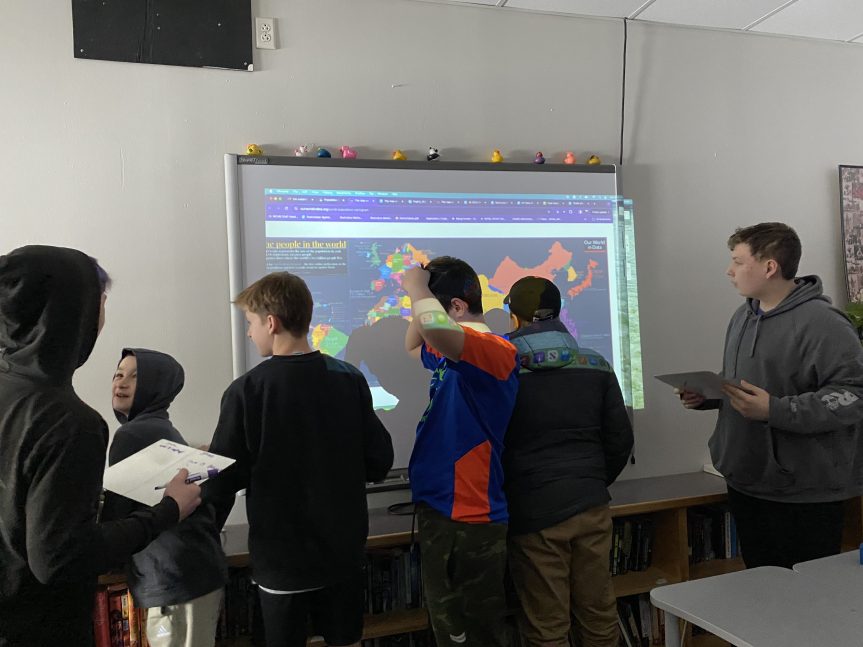
This was the third day of a unit on population. The students learned about global changes and advancements that grew the Earth’s population to 8 billion people and were now focused on the consequences of population changes and the different concentrations of those populations. Students identified consequences such as overpopulation, the overconsumption of resources in some places, deforestation, and how countries with small land masses can continue to handle large population booms. 

Other topics the students will focus on for this theme include water shortages, global warming, nuclear war, and world leaders. Soon they will learn how to build desalinators. 

“Oceanography was the theme in the first trimester and I think the kids thought we were going to do ocean waves, which we talked about, but our focus was how light waves and sound waves change when they’re in the ocean. That’s a heavy thing and they got it,” said teacher Karen Beckler. 

Asked what they enjoy about school, one student shared, “We get to pick what we’re learning.”

“They make it fun while still being able to learn,” said another student. He said his team’s theme for the trimester was games, hobbies, and sports. In one class, students played UNO and had to talk about the probability of each color. In the next class, students had to roll dice 100 times and collect data on how they landed. In another class, each student had to research and do a report on a past Olympic competition and the city where it was held. 

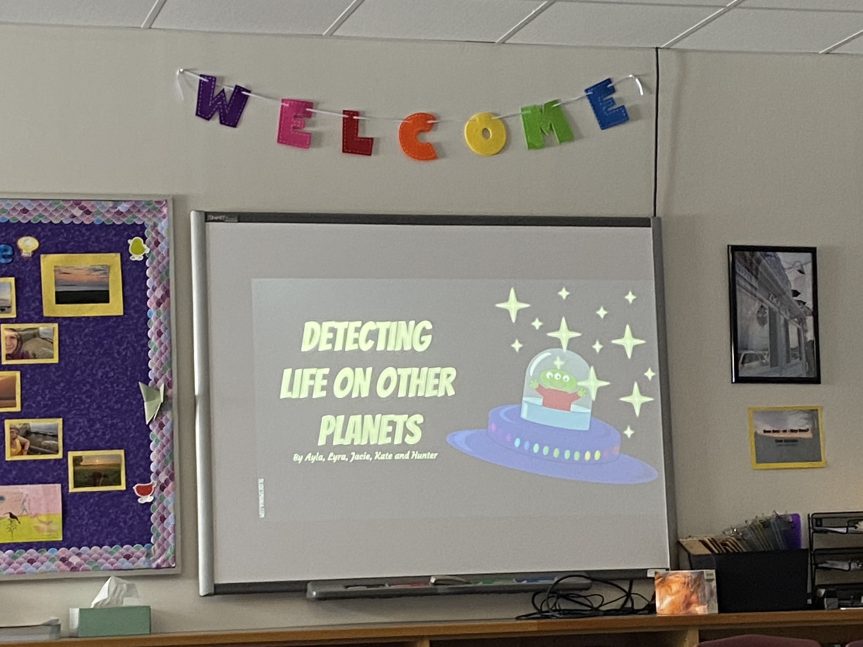
In another class on the same Armageddon-themed team, students were delivering group presentations answering different aspects of the question “are we alone?” The students presented their research investigating what scientists have said to answer that question, how the identification of alien life could impact religion on Earth, detecting life on other planets, and more. Students answered questions about their topic areas from the teacher and other students, and students filled out a rubric on what they learned while their peers delivered their powerpoints. 
“I was a skeptic,” said Beckler, who recently came to Maranacook with decades of experience teaching in other districts. “I thought how are we going to meet all these science standards if the kids are picking the units and it’s not linear? But it’s amazing to me spiraling back on it from other years how much they remember from a unit they had a trimester the year before. And the kids who didn’t get it the first time have another opportunity to learn the same general concept but in a different situation. There’s a big chunk of kids, they’ve got to see it applied and not just once but many times.

Beckler continued, “And their retention is so much better. I did a unit on the organization of the body last year and this year when we did the nervous system, I drew something on the board and they were like oh that’s a nerve cell that makes nerve tissue and the organ is the brain and that is the collection of nerve tissue in the body. They applied what they did earlier.”

She also discussed how team teachers approach the themes in a way that builds off each other. Last trimester, students on her team were really focused on how they can know what is true, how humans learn, why they get distracted so often. Maranacook teacher Amy Tucker focused on AI since students raised questions about AI taking over the world or humans not having to think in the future because AI would do that for them. Another teacher on the team focused on executive functioning, keeping yourself organized, how to plan, how to regulate emotions and explore mindfulness. Beckler taught about the nervous system, how humans receive information and how the brain processes it. And students were able to cross reference and apply things they were learning across the classes. 

“In our AI unit, we included a lot of ELA content, but we also looked at ethics and bias and what AI is actually doing. We focused on programming AI models, trying to add data to improve them. We also tested AI image software, searching for terms like ‘doctor’ and ‘teacher’ and ‘criminal’, and we collected data and found that the AI image generators we used were pretty biased. We then used the data to write about to what degree AI should be regulated,” said Tucker. 

“We did AI last trimester and we saw how AI gives us information and how it could be biased,” reflected a Maranacook student. “AI is a useful tool if you know how to use it.”

Educators and students also shared the value they see in their multiage approach. 

“By the end of trimester one you can’t distinguish who is a 6th grader who is a 7th grader based on their behavior because they have caught on so well and so fast,” said Beckler. 

Teachers highlighted how their multiage approach helps sixth graders quickly integrate into the school, helps teachers better differentiate learning, better behaviors, more socialization between ages, and less of a power dynamic between older students and younger students. 

“In some ways, our 6th graders are working harder so it makes the 8th graders keep their focus,” said Tucker.  

One student said he liked the opportunity to know other kids across grade levels, which wasn’t the case at previous schools. 

“Being an eighth grader, here I don’t have to be like I’m only friends with 8th graders. I’m friends with all grades,” he said. 

“We’re doing a podcast and we’re going to interview people about their experiences on multiage teams and how it impacts them in high school,” said a student who is part of a three-person podcast team who interviewed each other, several of their peers, teachers, and high school students.

Student choice and voice extend beyond choosing themes to learn about. 

During the lunch hour, students get to eat with their peers and have 30 minutes of activity time where they can choose to go outside, play Minecraft or Dungeons and Dragons together in the library, engage in robotics, socialize, catch up on school work, and more. 
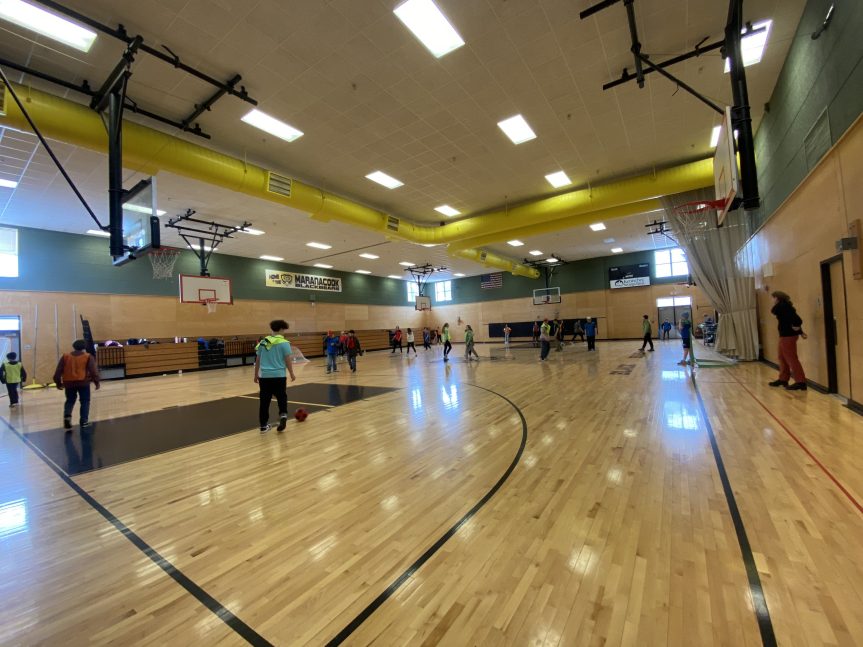
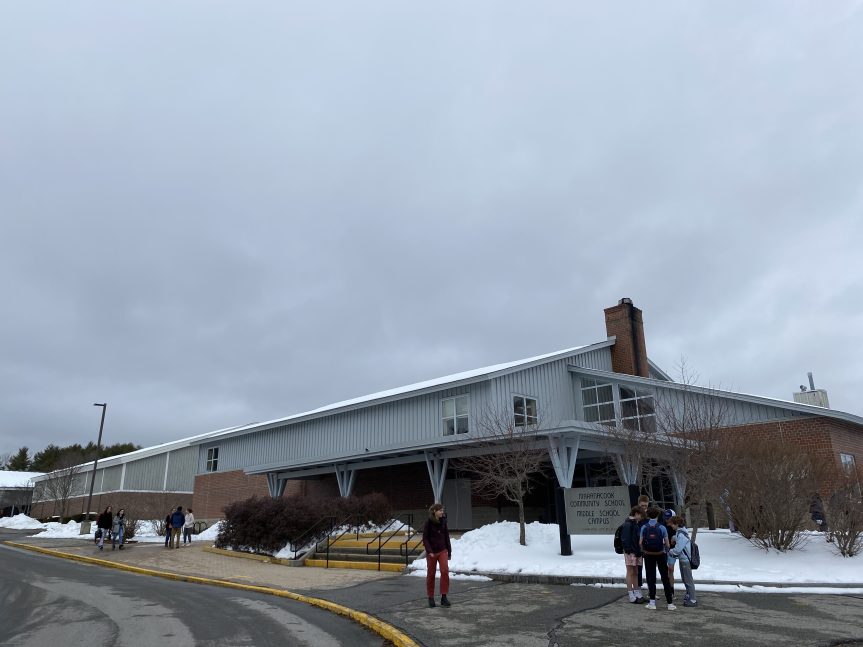
Maranacook Community Middle School sits perched above Maranacook Lake in Readfield and shares a campus with the high school. The school takes a Whole Student Approach built on strong relationships, engaged learning, supporting student and staff wellbeing, and family and community engagement. Each day for the school’s nearly 300 students begins and ends with advisory time to connect with and get support from their advisory teacher. Students have access to the school-based health center in the high school making it easier for families to schedule medical care when they need it, a community food bank, a clothing boutique, toiletries, backpacks, and other supplies. They also have a partnership with Kennebec Behavioral Health providing students with access to their counselors during the school day. The school also offers a mentor program where students can get matched with a high schooler. They meet once a week to play games, help with homework, talk about life and hardships, share experiences, and students get advice from someone a few years older.
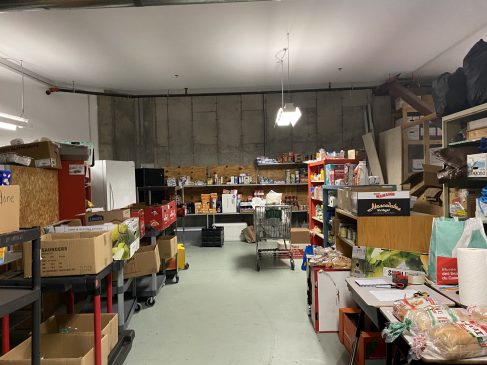
“We try to break down every barrier we can. Sometimes a family can’t get services outside of school hours so why not offer it here,” said Sirois. 

Relationships run deep at Maranacook. 

“One thing we always describe as the cornerstone of our school is the advisory program,” said Sirois. “That’s evidence that relationships are foundational at Maranacook and we start and end our day with our advisees every day. That is a huge piece and gives every student a person [they can lean on].”

Tucker agreed, saying, “Relationships are the biggest key, and every teacher will say that here. It goes a long way when you have those small groups and you can get to know them.”

“It’s not uncommon for an advisor to fill up a backpack with food and give it to a student on their way out,” added Sirois. 

None of this comes easy. While Beckler started a skeptic, she’s leaned fully into the Maranacook way. 

“This is year 30 of education for me and in some ways, I feel like a new teacher,” she said. “I feel like a new teacher in the sense that there’s a lot more planning and I put a lot more time in, but I’m also way more creative. 

“It’s not the easiest place to teach,” Sirois admits. “There’s not a curricular book you can pull off the shelf.”

But the school has built a supportive community and teachers are provided the tools and time they need. 

“The special sauce here is that the staff here work together incredibly well and share things. Every trimester is a different theme, so you are reinventing the wheel a lot. But you have so many colleagues that you can pick their brains and find cool activities that meet the learning standards while at the same time focusing on the theme that the kids chose,” said Beckler. 

Teacher teams meet daily to prepare lessons, share resources, tackle how they are teaching different aspects of the theme students decided, and support one another. 

“We spend a lot of our prep time together. Every day we have this period, and we usually are together. Even if we are working independently, we’re in the same room or checking with each other on what we’re working on and seeing where it all fits together. Sometimes it’s just sharing articles we saw or interesting things we heard about,” said Tucker.  

The school is also in its first year of piloting BARR (Building Assets Reducing Risks) with one of their teams. They took advantage of the Maine Department of Education’s offer to support BARR implementation for any Maine school through federal emergency relief funds. BARR is built on relationship building and data, and the model has been shown to increase student engagement, reduce absenteeism and failure rates, and increase student and educator wellbeing. Since relationship building is core to Maranacook, BARR fits nicely. 

“What I like about [BARR] is that it does everything that we do or that we aim to do and puts it in one neat package and gives us one system,” said Sirois. “It’s been super supportive of our MTSS efforts.”

Tucker agreed, saying, “It’s pulling together a lot of what we do and organizing it.”

The high school is also piloting BARR with its freshman class and both schools are looking at how they might build off their progress in year two of implementation. 

“We’re organized really well for BARR,” said Beckler. “Because of our multiage, we can keep track of a kid over three years, know their background, know what they did the previous year because we keep them for the three years. That’s huge for BARR, that knowledge of [the students] and having flexibility during class time to do the I-Time activities. That would be seamless here.” 

Educators and students also lean into family and community engagement. 

“Every Thursday we run something called the Community Café,” said Sirois. “We have 18 to 25 senior citizens from our community come in and we feed them muffins and coffee and they’re greeted by students from the middle school and high school.  We plan weekly events for the community. We’ve had everything from transportation opportunities for senior citizens to music performances. We’ve had kids help them open and read their mail, set up their phones and technology that they might not be used to, teams have presented what they did in class, sometimes they just play board games with them.”

Principal Sirois also mentioned a day of caring coming up, with middle and high school students going out to do a bunch of community service projects, including spring clean ups, stacking wood for those who can’t, and cleaning up gardens. 

The school is also taking advantage of next week’s eclipse and making it an engaging and exciting learning opportunity. 

“My kids are doing circles right now for math class, so when the eclipse stuff comes along we’re going to calculate the area of the moon, the area of the sun, and the area of the earth and talk about how can that tiny little moon block the sun which is so many increments greater,” said Beckler. 

The school’s Acadia Team will travel to the University of Maine Farmington for a tour and presentation on eclipses. From there, students, educators, and parents will travel to Phillips Community Center for activities and the opportunity to view the eclipse inside the line of totality. Due to bus driver shortages, the school asked parents to volunteer to drive and chaperone the trip and received a huge response. They will be traveling by car caravan for this amazing opportunity. 

Maranacook teacher Anna Satterfield shared that she and students will discuss the differences between a solar eclipse and a lunar eclipse and how something relatively small blocks light from something so large. They will be looking at scale and creating models of the sun-earth-moon system while working to align the planets and use scaled distances to create eclipses. The eclipse timing fits well with their team’s Armageddon theme. 

Maine DOE staff visited the school upon the request of Tucker, who spoke about her school with incredible passion and excitement that it wasn’t an invite to pass up. After spending the day experiencing that same passion from teachers, administrators, and students, it’s easy to see why Amy wanted to share what makes Marancook Community Middle School so special. 

Want us to visit your school? Contact us at Communications.DOE@Maine.gov.

Noble Middle School Builds Stronger Relationships Through BARR

(Seventh grader Chase, above, told us he liked his teachers because they were kind and cared about him.) 

Noble Middle School has created a community of students who genuinely respect and trust their teachers and each other through the Building Assets Reducing Risks  (BARR) model. “The teachers, the students, and everyone just support you. There’s really no negativity,” Chase, a Noble seventh grader, says of his school.

“It’s a really great school,” says James, a sixth grader at Noble who has attended five different schools, traveling from Texas for his father’s job in the Navy. “There are amazing teachers and students, and the classes are really fun,” continued James, sharing that Noble was his favorite school he has attended yet.

Walking down the hall, it is easy to see why Chase and James love their school. One is struck by the way students brighten up when they speak to educators, calling out to them in the halls and even asking how their days are going. Noble’s method to success is its dedication to building positive relationships across the school community through BARR. BARR is an education model that combines relationship building (staff to staff, staff to student, and student to student) and real-time data to strengthen student engagement and well-being. In 2016, BARR and Intervention Coordinator Kristen Hobbs implemented the program at Noble.

“We were one of the first middle schools in the country to use BARR,” remembers Hobbs. “there was a double-blind study with BARR at Noble High School, then we fully implemented the program here the year after.”

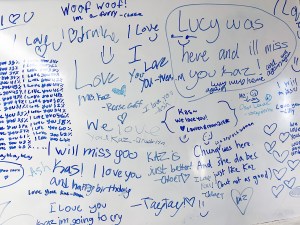
A white board with goodbye messages written in blue that saying things like "I love you Kaz!" and "we'll miss you Kaz!"
Students going-away messages to an educator who recently left Noble.

In BARR’s block meetings, educators discuss students’ strengths and needs, analyze data, and deepen relationships within the school. At Noble Middle, these meetings alternate between sixth and seventh-grade teams.

Principal Michael Archambault details how BARR works at Noble as such: “Every kid is on a team, and they have four regular education or core subject teachers that make up the team. Every other week, the team, plus a school counselor, administrator, BARR coordinator, and potentially some interventionists, attend [a block meeting]. At the meetings, students are leveled zero, one, two, or three based on several indicators. It could be grades, at-risk behavior, or attendance. And then we go through and we talk about some of the kids that have come up that we need to sort of share information on and make sure we’re on the same page.”

As he continues, Principal Archambault shares how the team stays constructive during the meetings: “We start with a spark, like a positive about a kid, like they’re on the basketball team or they really like skateboarding. So, we try to start off with a strength and then talk about the student.”

Sitting in on Noble’s block meeting, one can’t help but note the affection these educators have for their students.

“Before BARR, teams would meet, but it was more about the nuts and bolts of how their team ran” said Hobbs. “BARR makes it so that you have to come up with intervention plans.”

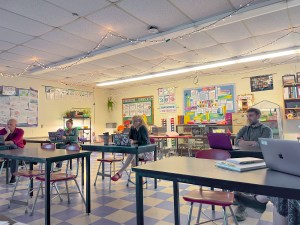
Teachers sit at rectangular tables listening to a woman in the center of the room speak.
The Acadia BARR team at Noble at their block meeting.

During Monday morning’s block meeting, seventh-grade social studies teacher Mark Lafond brought up a student struggling to complete work and come to class. He noted that the student has trouble seeing and that the parents might be unable to afford glasses. As a solution, he offered to bring in frames he had at home and have the lenses replaced with the student’s prescription.My wife used to work for Warby Parker,” Lafond explained, “so we have a ton of [glasses] at home.” The way these educators will go the extra mile to help a child promotes trust and, in turn, creates positive teacher-student relationships, which is precisely what BARR is working to accomplish.

As the year progresses, each student is discussed in a block meeting at least once by their team, with the purpose of acknowledging and seeing every student. When block meeting interventions, such as Lafond’s plan to find his student glasses, are insufficient, they are moved up the risk scale. Students with continuously high-risk ratings are escalated to community connect meetings, which they refer to as “risk reviews” at Noble.

“We have risk reviews Monday and Friday mornings,” said Principal Archambault. “In that meeting, there would be a special education case manager, a social worker, counselors, administrators, and a school psychologist. The idea is to find community intervention.”

Principal Archambault also shared one of the most powerful parts of Noble’s BARR strategy, their mentorship program.

Hobbs created the mentorship early into Noble’s BARR journey to support students with high-risk ratings.

“It is definitely one of the stronger interventions that you can implement,” says Assistant Principal Melinda Luders. Since Noble started the program, Hobbs has personally created more than 200 mentor matches, with some mentors, including Hobbs, working with their mentees well into high school.

“It just continues to support the idea of kids knowing that they have an adult that is going to check in on them,” said Principal Archambault. “It doesn’t have to be like an agenda driven situation or anything like that. It’s about ‘we have a one-on-one relationship where you’re accountable to say hello to me, and I will make time for you.’”

Noble’s success with BARR is well known, which is why Loranger Memorial School Principal Matthew Foster drove  from Old Orchard Beach to observe how the school implements the program.

“The goal for teachers is to get to know the kids in different ways,” said Foster, “That’s what we are looking at BARR for right now.”

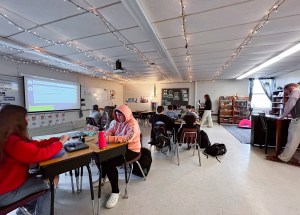
Students sit at desks grouped in fours facing each other. A teacher, Melanie Stevens, walks behind them reading an I-Time story off a piece of paper. In the fair right, Matthew Foster observes the BARR class.
Old Orchard Beach Loranger Memorial School Principal Matthew Foster observes Melanie Stevens’ sixth grade I-Time.

While at Noble, Foster observed a sixth-grade I-Time. I-Time is an activity  taught by block teachers to their assigned group of students. It is a structured time for BARR educators to build those student-to-student and student-to-teacher relationships. This particular I-Time was a true masterclass taught by English Language Arts teacher Melanie Stevens. The respect and adoration Stevens evokes in her students shows how truly she has honed her craft.

As a teacher, Stephens is a big fan of BARR, especially the opportunity to build stronger relationships with her students: “I-Time is used to help these kids identify that they’re not alone in the things that they struggle with. It’s not like your typical SEL-type activities. It’s a little bit different in that some of them do get a little bit deeper because students don’t always have the outlets for the kind of conversation at home.”

Stevens used I-Time to discuss grief and how even the smallest everyday loss can change a person.

“There are so many things that happen in the day to day. [Grief] doesn’t have to be this huge, huge thing. It can be these little things as well,” said Stevens. She illustrated this by reading students a story about a young girl’s attempt to join a prestigious dancing school and having the students rip off a piece of their colored paper sheet whenever they heard something that made them feel bad. In the end, she gave the students tape and had them attempt to put the piece of paper back together again.

“What’s the point? Is it back to normal? Were you able to get it back to the way it was? What are we trying to get you to think about?” Stevens asked her class.

“Even if something happened a while ago, you could still remember it,” responded a student named Jackson. Another student, Sumner, from across the room, answered, “Mean things people say can change you.”

To round out the lesson, Stevens explained to her students the Japanese Art of Kintsugi, a method of repairing broken pottery with gold. Foster showed them an image of a blue bowl, cracks filled with gold, and asked, “It’s broken, but doesn’t it look better this way?”

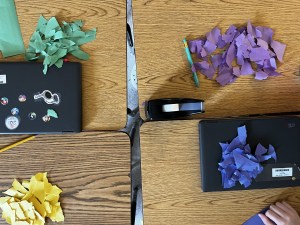
Torn piles of paper on wooden school desk tops with four piles of paper, one green, one purple, one blue and one yellow, with a black tape dispenser.
Students torn paper from the I-Time activity on grief.

Noble is one of more than 70 schools across Maine implementing BARR. Read more about BARR at Mt. Blue High School and Calais Elementary School and listen to Maine Education Commissioner Pender Makin’s podcast episode talking with educators who have implemented BARR at their schools.

If you are inspired by Noble’s story and think BARR would be the right fit for your school, the DOE is offering additional BARR funding for the 2024-2025 school year.

Applications are now open to all willing and qualified public schools that want to become BARR schools. Click here to apply. Applications are due by March 22, 2024, at 5:00 p.m. EST.

The Maine DOE will cover all costs of implementing the program for schools new to BARR for the 2024-2025 school year. (Note: if you are already a BARR school with an existing contract, your costs will also be covered for the 2024-2025 school year, and you do not need to reapply.)

The Maine DOE used American Rescue Plan funding to create a competitive BARR grant to help schools invest in the model.

Calais Elementary School Strengthens Relationships Through BARR

(A Calais Elementary Student celebrates what he’s learned through BARR)

Nestled in the tight-knit community of Calais, Maine, is Calais Elementary, a pre-k through sixth-grade school full of enthusiastic students and dedicated teachers. Calais Elementary is one of more than 70 Maine schools using the Building Assets Reducing Risks (BARR) education model, and this week, Maine Education Commissioner Pender Makin visited to experience BARR in action.

“We started BARR at the elementary school in September,” Principal Sue Carter said. “We applied for the state-provided program, and it has really grown and become part of our school, culture, and climate.”

The BARR framework combines relationship building (staff to staff, staff to student, and student to student) and real-time data to strengthen engagement and wellbeing for all students. By building solid relationships with students and fellow educators, teachers work together to support the whole student.

At Calais Elementary, they are implementing BARR with fifth and sixth-grade teams. Fifth and sixth grade teachers hold weekly block time to discuss student strengths and what they need to thrive. Teachers also engage students through weekly U-Time activities.

“U-Time is the classroom activity part of the BARR Structure where educators and students in their classrooms dedicate a little bit of time to building relationships, deepening their knowledge of themselves as learners, as individuals, and really helping to understand one another,” said Makin.

Commissioner Maiken and Chief Innovation Officer Page Nichols sit at a school table working on their BARR U-Time activity.
Commissioner Makin and Chief Innovation Officer Page Nichols working on their “What’s on your plate?” U-Time activity.

While at the school, Commissioner Makin had the opportunity to participate in a sixth-grade U-Time activity called “What’s on your plate?” Every U-Time is different, and in Carly Davis’s sixth-grade class, it was all about self-discovery. Sixth graders and DOE team members were each given a paper plate, which they folded in half.  On one side were the participants’ responsibilities, and on the other were the things they did in their free time. After making the plates, Davis engaged the students through a series of discussion around having a balanced plate, which portions are taking up too much time, which portions they love, which portions they wish they had less of, and so forth. On the back of the plates, students wrote one thing they wished they could add or take away from their plate.

Delilah, a sixth grader at Calais Elementary, described U-Time as a class where you learn “about your classmates, the people around you, your teachers, and you.”

Jackie, a fellow sixth grader, said that in U-Time, she has learned “to help people if they are going through a hard time, and that if you see someone crying, you should go over there to talk to them.”

“It really sparked a lot of conversation,” said Commissioner Makin. “I could see how it was creating relationships within the classroom, building trust and knowledge of themselves and others.”

Students learn about one another through these activities, about themselves, and teachers about their students in a deeper way. Teachers also share these valuable insights at their block meetings so the entire teaching team has that information.

For example, after the “What’s on Your Plate?” exercise, Davis brought a few of the sixth grader’s plates to a block meeting. “[Davis] talked about the two plates, what they said, and that was put down,” Principal Carter explained, “and we will come back around to that in our next block meeting.”

Block meetings happen weekly, with teacher cohorts discussing not just BARR-informed data but every student’s strengths, passions, and personal goals. This opens a broader,

Six educators sit in a classroom facing the front of the class. They are BARR teachers holding a Block Meeting.
Calais Elementary’ s BARR teacher cohort uses recess as an opportunity to hold Block Meetings.

more positive discussion around the whole student. The team works off a spreadsheet that builds a picture of each student by reviewing a variety of in-school factors, including progress in class, attendance, and behavior. The team also discusses factors outside the school, such as extracurricular interests, personal health, issues with other students, or troubles at home. All this data collection allows the team to flag challenges early and work together to solve problems. Importantly, teachers track not just problems but student strengths to identify achievable goals to get or keep students on track for success. For students coping with the toughest situations in and out of school, BARR’s model requires a weekly Community Connect meeting that involves more specialized staff, such as the school nurse and school psychologist along with school administration.

“BARR really does give the teachers the ability to have a team to work from,” said Superintendent Mary Anne Spearin. “It also allows them to sit and look at the positives that are coming from all the work that they’re doing.”

At this week’s block meeting, the team spent most of their time discussing highly successful students. These students can often receive less attention than students exhibiting behaviors or academic performance requiring intervention. Those students still get the support they need, but BARR focuses conversations on all students.

“To see that data over time is pretty amazing,” remarked Principal Carter. “No other programs that we had held us to that level of accountability.”

“BARR offers two things you don’t usually see in other programs and that is a curriculum that you could work from and the data to prove that the curriculum is working,” said Superintendent Spearin.

Calais Elementary is not the only Calais school utilizing BARR. In 2016, Spearin implemented BARR for ninth graders at Calais Middle/High School.

“It really made a difference. We could see the number of failures in our coursework had changed significantly in the first year and then changed again the next year,” recollects Spearin. “From the superintendent’s role and perspective, I would say that I am 100 percent in support of BARR. When I speak to people, I tell them they should consider the BARR method. It is just crucial to the things that are happening in our world right now. Everybody needs somebody.”

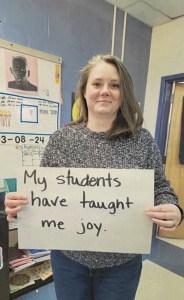
An educator from Calais Elementary school holding up a poster that says "my students have taught me joy"
One of Calais’s BARR teachers.

When Commissioner Makin asked Principal Carter if she would recommend BARR to other schools, she enthusiastically responded, “Absolutely!”

“Every person, adult and student, is able to vocalize what they are getting from BARR,” Principal Carter told Makin. “There’s no way that can’t carry over outside of school because it’s in them. It’s a part of them, and they’ll take that with them when they move on to middle school.”

Interested in joining Calais to become a BARR school? The DOE is offering additional funding for schools to become BARR schools. To learn more, please attend the DOE’s March 14th webinar.

 Click Here To Register for the Thursday, March 14th BARR Webinar at 3:00 PM ET.  

Applications are now open to all willing and qualified public schools that would like to become a BARR (Building Assets, Reducing Risks) school.  Click here to apply. Applications are due by March 22, 2024, by 5:00pm EST.

The Maine DOE will cover all costs of implementing the program for schools new to BARR for the 2024-2025 school year. (Note: if you are already a BARR school with an existing contract, your costs will be covered for the 2024-2025 school year as well, and you do not need to reapply.)

The Maine DOE used American Rescue Plan funding to create a competitive BARR grant to help schools invest in the model.

Extended-Day Enrichment Program Boosts Math Skills and Attendance in Dexter, Maine

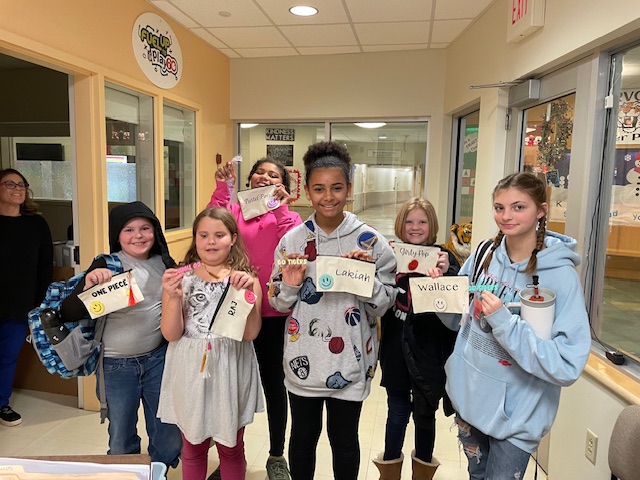
(Pictured: Ridge View Community students proudly display their extended-day enrichment projects.)

When Ridge View Community School (RVCS) in Dexter, Maine, utilized Emergency Relief Funds to establish an extended-day enrichment program for students in grades 3-8, they couldn’t anticipate the immediate positive impact it would bring.

“We wanted to offer our students hands-on opportunities to learn about things outside of their regular curriculum, places where, in essence, they could be learning and not even realize it,” said Pre-K Through 2 Instructional Coach Kelly Gay,

One hundred fifty students stayed after school on Monday and Thursday nights to participate in various enrichment programs and tutoring sessions.

“I look forward to the extended day,” Lizzie, a Ridge View fifth grader, explained, “because there are so many fun activities to choose from!”

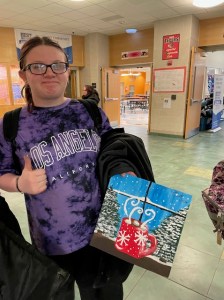
A Ridge View Community School student holds up a painting of a red mug framed by snowy pine trees on a bright blue landscape while giving the camera a thumbs up.
A Ridge View Community School student displays a painting they created during their extend-day enrichment art class.

Students like Lizzie took part in traditional extracurriculars, like woodworking, baking, and art, spent time outside, practiced robotics, conducted mad science experiments, and had a chance to shake out their energy in dance classes.

Older students visited the Tri-County Technical Center to learn about criminal justice, commercial truck driving, early childhood education, and health occupations. In an effort to include the greater Dexter student community, students from Dexter Regional High School came over to teach lessons from their STEM project as part of their coursework.

Gay remembers how touched she was by the students’ enthusiasm.

“It was so amazing watching the kids leave each night with their finished products and the huge smiles on their faces. The tutoring kids even loved heading to their tutoring sessions as the sessions were engaging and hands-on learning,” she said.

Amongst the creative programming, ensuring student received the tutoring help they needed was still a priority. Students would break off for one-on-one tutoring time with staff throughout the sessions.

“In order to make this plan work, we needed teachers who were willing to either tutor or run an enrichment group. Our staff answered our call for help in amazing ways,” said Gay. In all, 30 educators volunteered for the enrichment programs, and their commitment is evident when you speak to their students.

“I think extended days are so fun because the teachers are so nice, and I learn a lot,” ” said fourth grader Khloe.

According to school data, students who participated in the tutoring and enrichment sessions saw significant gains, especially in math fact fluency and attendance.

“We tracked the attendance of all students at Ridge View Community School as part of our school improvement plan and found that almost all students had a positive impact on their attendance rate. They truly wanted to be there and were sad when the program ended,” said Gay.

A student smiles at the camera while holding baked goods they made during an Extended Day Enrichment program.
A Ridge View Community School student smiling after a successful extended-day enrichment baking session.

Students were not the only ones benefiting from the extended-day enrichment. Gay reported that the program fostered relationships with parents and allowed teachers to design lessons beyond the scope of their regular curriculum, centered around their passions.

“We are proud of our school and our students and are incredibly thankful for the opportunity to provide this for them,” commented Gay. The program was so successful that Ridge View extended it to the 2023-2024 school year, expanding both the tutoring and enrichment programs to the high school.

This learning opportunity was made available through the Coronavirus Response Relief Supplemental Appropriations Act (CRRSA). Visit our office of Federal Response Programming here to learn more about CRRSA.

Did your school use Emergency Relief funds to create engaging student programming like Ridge View? If so, we would love to hear from you. Click here to share your story!

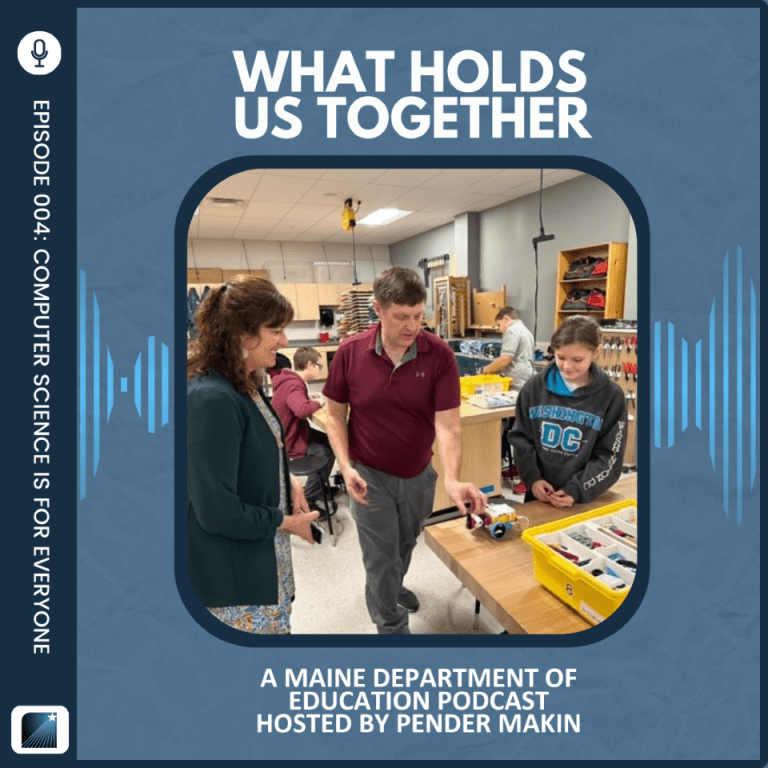
Media Release: Nokomis Computer Science Teachers Featured on Maine DOE Podcast What Holds Us Together

Commissioner Makin Speaks With Kern and Keith Kelley About How They Integrate Hands-On Computer Science Education Across Grade Levels and Content Areas

In the latest episode of her What Holds Us Together podcast, Maine Education Commissioner Pender Makin speaks with Keith and Kern Kelley, brothers and computer science teachers at Nokomis Regional Middle and High School, about Maine’s efforts to integrate computer science education at all grade levels and with all content areas. They talk about how hands-on, real-world computer science education teaches students about technology and computer science as well as strengthening their ability to work in teams, troubleshoot, communicate effectively, lead, and pursue creative passions. You can listen here.

“These are two brothers who are educators integrating really exciting hands-on, real-world computer science education, innovation, and technology with their students. I’ve been to visit their classrooms and have seen the work that they’ve been doing with their students and how much engagement there is. I was so impressed, I wanted to share some of what they’re doing with all of you,” said Makin in the podcast opening.

The three discussed how computer science education has real-world applications across all content areas and areas of life.

“I was a librarian and a language arts teacher, so I’ve come from a different way to get to this. It’s not separate, it’s part of. Language arts teachers are doing coding. When you’re teaching kids you have to use a period, you have to use a comma, you have to be grammatical, and there’s a reason and structure to it, then you get into building a game or a sequence of coding and there’s structure, it’s the same thing. If you’re doing computer science and learning coding, you’re learning a language,” said Keith Kelley, Innovative Technology Teacher at Nokomis Regional Middle School.

He continued, “We do asynchronous grouping, so one kid is building code and he or she has 2 other groupmates and they have to communicate digitally with each other through screen captures and stuff like that. That’s what you do in the real world, we’re virtually meeting all the time. When my kids are doing basic coding they’re learning pre-algebra, they’re learning sequencing, but also they’re learning troubleshooting which translates to everything. It’s not a separate thing, it’s part of what’s already out there. If you’re in math you’re doing numbers, but you are doing language. You’re in science and doing labs and troubleshooting, but you’re doing language.”

Kern Kelley, Director of Technology Integration for the district, described how he began integrating computer science education with different content areas across the high school.

“I’d ask the kids what they’re doing [for a specific teacher] and say ok, for me you’re going to do that same project but you’re going to do it this way—we’re going to do a virtual reality world for that book project you have to do. The kids would do it and bring it to the teachers and almost 100 percent of the time [the teachers] say that’s great, next time let’s make that as an offering,” said Kern Kelley.

Makin described how that approach is setting Maine apart as a computer science education leader.

“That really sets this apart from what I see across the nation in terms of really rote programmatic learning coding for the sake of learning coding. You both take it to that next level where it’s really learning coding to do an important thing that is relevant, whatever that might be,” said Makin.

“There’s elegant coding. Just like in writing you have basic writing then you get to the point where now I’m not writing for writing sake or to get information across I’m trying to make something prose or poetry. The same thing happens with technology and the coding. You go from writing basic coding to make it function to making it function efficiently or elegantly through elegant design,” said Keith Kelley.

They also discussed how this continuum of computer science education that students experience through their school careers develops the leadership and teaching skills of students. High school students can participate in SLAM, developing weekly live shows to teach other students how to create something using a free online tool. Once a month the students also go on the road for a SLAM Show and teach sessions to younger students to get them engaged and excited about computer science.

“As much as we can have students as part of the solution and include them in that process of learning and get opportunities to teach and learn from that experience…and then the idea is those kids get so excited about learning from high school kids about these cool tech topics, that’s usually enough impetus where we can now talk to the teachers afterward [about doing more]. Now we’ve broken the ice and they know how to use these things and have all these ideas,” said Kern Kelley.

Through the Governor’s Emergency Education Relief Fund, the Maine Department of Education (DOE) provided every Maine public school with a free mobile computer science lab to ensure that every student, pre-K through grade 12, has access to interdisciplinary, project-based computer science education with real-world applications.

The DOE has a comprehensive computer science education plan guided by seven key principles: authentic and project-based instruction, computer science as a prek-12 learning continuum, equitable and inclusive access, educator-produced professional learning and statewide sharing, integrated applied learning, educator-informed policy and state planning, and computational thinking as a foundation. You can read more about Maine’s computer science education framework here.

What Holds Us Together is a monthly podcast produced by the Maine DOE and hosted by Makin to highlight the voices of educators, students, and school employees across Maine. Listen to this and all the episodes of What Holds Us Together on Apple and Spotify.

New Extended Learning Opportunities (ELO) Program at Buckfield Jr/Sr High School Expanding Thanks to School and Community Partners

Gretchen Kimball has been working on getting a new ELO program up and running at Buckfield Jr/Sr High School this school year. Serving the communities of Hartford, Sumner, and Buckfield, Kimball has her plate full working with all interested students to coordinate extended learning experiences that enrich their learning.

“I sincerely enjoy when students drop by to tell me their first meeting with their community mentor (game warden, child psychologist, athletic trainer, etc.) went well and they’re excited to get on with the learning,” said Kimball.

Some of the latest successes she is celebrating are helping several special needs students begin their internships at a local convenience store, in addition to coordinating three honors students internships with the school’s athletic trainer.  She has also been working with the Buckfield Jr/Sr High School Alternative Education program where students are working with a race car fabricator, a dentist, and a Maine game warden. Most recently, Kimball has helped a few more students begin an EMS internship with the local Rescue/Fire Station.

“It’s just a smattering of what’s happening but the kids are engaged in their learning, and it gives me hope for future success,” said Kimball.

In addition to the internship opportunities, Kimball says she has a lot of students taking advantage of JMG’s Maine Career Badge this trimester. “I have career presentations lined up every other Friday through March at the middle school level, and we’re exploring the opportunity for a mini-career fair put on by high school students for an audience of middle school students,” she explained.

Looking even further ahead, in conjunction with the Guidance Department, Kimball is working with Central Maine Community College (CMCC) Department Chair of Public Service & Social Sciences Matt Tifft. She’s exploring ways in which she can build ELOs around their sociology, psychology, and conservation law classes at CMCC.

“There’s student interest, but there are no social sciences offered at our school,” explains Kimball. “I’m hoping this will fill a niche!”

Kimball would like to thank the following people and organizations for contributing to the success of students and the Buckfield Jr/Sr High School ELO Program: Korah Soll- Rural Aspirations, Sandra Fickett- Tilton’s Market, Tom McKenney- Maine State Game Warden, Dr. Convey- Oxford Hills Dental, TJ Brackett- Brackett Racecar Fabrication, and JMG (Jobs for Maine Grads).

Extended Learning Opportunities (ELOs) are hands-on, credit-bearing courses outside of the traditional classroom with an emphasis on community-based career exploration. These opportunities are personalized for students and help them explore options for their professional lives. They help students engage in learning through instruction, assignments, and experiential learning. The Maine Department of Education (DOE), along with state-wide partner Jobs for Maine Graduates (JMG), have made a concerted effort to provide working models, support, and funding opportunities for Maine schools to set up ELO programs within their school communities. To learn more about Maine’s initiatives with extended learning opportunities, visit: https://www.maine.gov/doe/index.php/learning/elo or reach out to Maine DOE ELO Coordinator Rick Wilson at rick.wilson@maine.gov.

Media Release: Maine DOE Podcast Highlights Strategies to Support Staff and Student Wellbeing

Educators Discuss the Strategies They Learned Through a Neuroscience-Based Approach Through the DOE’s Partnership with The Regulated Classroom

On the latest episode of her What Holds Us Together podcast, Maine Education Commissioner Pender Makin talked with three educators about the strategies they learned through the Maine DOE’s partnership with The Regulated Classroom to improve staff and student wellbeing, increase student engagement, and help with regulation.

Special education teacher Jenn Whitney, second grade teacher Cecilia Dube, and first grade teacher Sierra Blake were among the 600 Maine teachers trained as trainers in the Regulated Classroom approach, and they shared how they are using the research-based tools and techniques in their classrooms and training other educators on wellbeing and regulation strategies.

“We continue to hear that student behavior, mental health, and dysregulation create some of the biggest barriers to success in the classroom. The Maine DOE offers several programs for student and staff wellbeing, and I loved talking to three educators who were part of a cohort for one of those programs called The Regulated Classroom. This program leverages what we know about neuroscience and the parasympathetic nervous system, offering practical strategies to help students engage in the learning process,” said Makin during her introduction to the podcast episode.

On the podcast, the educators discussed the techniques and strategies they are using and the results they are already seeing for themselves, other staff, and students. The educators report increased wellbeing, attendance, and engagement at their schools.

The COVID-19 pandemic took a tremendous toll on educator and student wellbeing, with educators reporting increased numbers of dysregulated students, stress, and classroom disruptions. Many educators feel overwhelmed by these pandemic-induced behavioral issues. The Regulated Classroom utilizes a neuroscience-based approach to help educators create calm, engaged, and supportive learning environments by cultivating conditions for felt safety. Felt safety references a regulated state in the body’s stress response system.

The program helps educators recognize and manage their own stress levels. It also helps educators manage increased levels of stress in students, which can be displayed as aggression, poor impulse control, limited attention span, and lack of motivation. Educators received access to a collection of practices and sensory tools to embed into daily routines and activities to promote a more regulated and stable environment for learning. This program supports student achievement and increased job satisfaction for educators.

Listen on AppleSpotify, or other major podcast platforms.

Maine DOE Announces No Cost Program to Support Educator Wellbeing and Create Calm and Supporting Learning Environments

600 Educators Can Attend Train-the-Trainer Events Across Maine to Bring Tools and Strategies Back to Their School Communities

The Maine Department of Education (DOE) has partnered with The Regulated Classroom on a program to support educator wellbeing and student engagement at no cost to Maine educators. Six hundred educators can sign up to be trained as trainers in the framework at events across the state and will be able to bring new tools and resources back to their schools.

The COVID-19 pandemic took a tremendous toll on educator and student wellbeing, with educators reporting increased numbers of dysregulated students, stress, and classroom disruptions. Many educators feel overwhelmed by these pandemic-induced behavioral issues. The Regulated Classroom utilizes a neuroscience-based approach to help educators create calm, engaged, and supportive learning environments by cultivating conditions for felt safety. Felt safety references a regulated state in the body’s stress response system.

The program helps educators recognize and manage their own stress levels. It also helps educators manage increased levels of stress in students, which can be displayed as aggression, poor impulse control, limited attention span, and lack of motivation. Educators will have access to a collection of practices and sensory tools to embed into daily routines and activities to promote a more regulated and stable environment for learning. This program supports student achievement and increased job satisfaction for educators.

“The Maine Department of Education is committed to supporting educator and student wellbeing and we’re thrilled to partner with The Regulated Classroom to offer this program at no cost to Maine educators. The Regulated Classroom provides tools and strategies based on brain science that any educator in Maine can infuse into their teaching and daily routines to support themselves and their students in creating calm, safe, joyful, and engaging learning environments,” said Maine Education Commissioner Pender Makin.

“When our nervous system is in a regulated state, the rational part of our brain is online, enabling us to teach and to learn. But when we are in a dysregulated state, the rational thinking part of our brain goes offline and we can’t gather our thoughts and act as we would choose. Environments that feel supportive and safe foster engagement and creative thinking,” said The Regulated Classroom founder Emily Read Daniels, M.Ed., MBA, NCC, SEP™.

Daniels, a New Hampshire school counselor, created The Regulated Classroom in 2020. Since then, it has been implemented in schools and organizations throughout New Hampshire, across the nation, and around the globe.

Ten in-person train-the-trainer certificate events will be held in various regions of the state.

Educators can register for an event at http://www.regulatedclassroom.com/Maine. Maine educators can complete their registration at no cost to them with the code MAINEFREE.

The Maine DOE utilized federal emergency relief funding to offer this program to Maine educators.

71 Maine Schools Begin BARR Model Implementation to Increase Student and Staff Wellbeing and Increase Academic Achievement

Maine DOE Invested $10 Million in Federal Funds to Offer Building Assets, Reducing Risks (BARR) Model to Schools. BARR is a Research-Backed Model Focused on Strengthening Relationships, Improving Achievement, and Reducing High-Risk Student Behavior

As the new school year begins, 71 schools across Maine launched their first year of implementing the BARR (Building Assets, Reducing Risks) model with students and staff. The Maine Department of Education (DOE) invested $10 million in federal emergency relief funds to provide access to the BARR model for Maine schools. BARR is a research-backed model focused on strengthening relationships, reducing high-risk student behavior, and improving academic achievement.

The Maine DOE made the investment to support educators, students, and schools in recovering from the impact the pandemic has had on wellbeing, engagement with school, and school climate. The BARR model strengthens relationships between educators and between students and educators and utilizes real-time data to support students based on their strengths and connections to school. BARR aligns with the Maine Department of Education’s whole student approach focused on ensuring all students are healthy, safe, engaged, supported, challenged, and prepared.

Educators at new BARR model schools spent their summers participating in multi-day trainings with BARR coaches to learn about the model and adapt it to their school cultures. The trainings helped develop stronger ties between educators and between educators, administrators, counseling staff, and other school support staff who will form the school-based BARR teams and work together to support students and one another. They also participated in several interactive, hands-on learning and relationship-building activities that they will be able to lead with their students.

Here are photos from trainings that took place across Maine:

“Camden Hills has always been committed to helping our students transition smoothly into high school, and we are excited to do so in a coordinated and systematic way with the support of the BARR program. Now more than ever, schools need to reinvest in creating a safe and empathetic space for kids to flourish academically, emotionally, and socially. I’m proud to share that our reinvestment includes adding research-based BARR strategies to our dedicated teachers’ toolbox,” said Camden Hills Regional High School Principal Jen Curtis.

“Our [BARR] training last week was just what the doctor ordered. It helped to reestablish our commitment, our structure, and our process. The training also helped to guide a conversation about resiliency which we all need post-pandemic,” said Westbrook High School Co-Principal Wendy Harvey.

“I was just saying to our curriculum director that while I appreciate the contacts she has lined up from a school that is currently implementing BARR, we really don’t need them. The teachers and staff who attended the BARR training are our most compelling supporters of this initiative,” said Maranacook High School Principal Michele LaForge.

“We [BARR trainers] had a great two days with Sanford. The team of freshmen teachers was enthusiastic, excited, and super energized after the two days. Three of the teachers and an assistant principal were a part of the original freshmen teams at Sanford back in 2011 and they all spoke super highly of BARR and how excited they were to bring it back. I heard a few folks making connections to other BARR schools. Two teachers mentioned how much the lessons and resources have grown. Lots of laughter and smiles. All in all a great kickoff to their year,” said Rachel & Andrea, BARR Trainers/Coaches

“The training resuscitated my staff. It felt like we were on life support last year. Yes, we can breathe!,” said a school administrator at Narragansett Elementary School.

Studies show that the BARR model results in increased student engagement, reduced chronic absenteeism, a 40 percent reduction on average in failure rates after one year of implementation, increased student achievement rates, and a reduction in high-risk student behavior and substance use. BARR reports that the effects are strongest for male students, students of color, students eligible for free or reduced-price lunch, multilingual learners, and students with disabilities. Educators report increased job satisfaction and higher levels of collaboration after implementing BARR.

15 Maine schools previously implemented BARR. Noble High School first implemented BARR with half of its 9th grade class in 2014. By the end of the first semester, BARR students had missed roughly half as many days of school as non-BARR students and the school expanded BARR to include all students. Bucksport High School’s graduation rate increased by more than 15 percent after implementing BARR.

Last week, the National Governors Association (NGA) selected Maine as one of five states to participate in a new initiative launched to bolster the mental health and wellbeing of students and school staff. Through this initiative, the NGA will support the implementation of the BARR model. Maine will receive technical support from the NGA and their national and state partners and engage in peer learning opportunities with the other states chosen for the initiative, New Hampshire, North Carolina, Oregon, and Wyoming.

Find more information on the BARR model here.

Watch a video featuring current and past BARR model schools in Maine:

Maine’s 71 new BARR model schools:


School District School Name
Acadia Academy Acadia Academy
AOS 90 Princeton Elementary
Biddeford School Department Biddeford High School
Biddeford School Department Biddeford Intermediate School
Biddeford School Department Biddeford Middle School
Brunswick School District Brunswick Junior High School
Calais Calais Elementary School
Calais School Department Calais Middle/High School
Ellsworth Ellsworth Elementary Middle School
Five Town CSD Camden Hills Regional HS
Gorham School Department Great Falls Elementary School
Gorham School Department Narragansett Elementary School
Gorham School Department Village Elementary School
Islesboro School Department Islesboro Central School
Kittery Traip Academy
Maine Academy of Natural Sciences Maine Academy of Natural Sciences
MSAD #46 Dexter Regional High School
MSAD 44 Telstar Middle School
MSAD 52 Leavitt Area High School
MSAD 52 Tripp Middle School
MSAD 55 Sacopee Valley High School
MSAD 55 Sacopee Valley Middle School
MSAD 58 Day Mountain Regional Middle School
MSAD 58 Kingfield Elementary
MSAD 58 Mt. Abram High School
MSAD 58 Phillips Elementary
MSAD 6 Bonny Eagle Middle School
MSAD 60 Noble Middle School
MSAD 61 Lake Region High School
MSAD 70 Mill Pond School
MSAD 75 Mt. Ararat Middle School
MSAD#17 OXford Hills Middle School
MSAD#49 Lawrence High School
Regional School Unit #24 Charles M. Sumner Learning Campus
RSU #34 Leonard Middle School
RSU #38 Maranacook Community High School
RSU #38 Maranacook Community Middle School
RSU #4 Oak Hill High School
RSU #4 Oak Hill Middle School
RSU #78 Rangeley Lakes Regional School
RSU 10 Mountain Valley High School
RSU 10 Mountain Valley Middle School
RSU 13 Oceanside Middle School
RSU 14 Windham High School
RSU 16 Bruce M. Whittier Middle School
RSU 16 Elm Street School
RSU 16 Minot Consolidated School
RSU 16 Poland Community School
RSU 34 Old Town Elementary
RSU 35 Marshwood High School
RSU 35 Marshwood Middle School
RSU 56 Dirigo High School
RSU 59 Madison High School
RSU 83/MSAD 13 Moscow Elementary School
RSU 83/MSAD 13 Upper Kennebec Valley Jr/Sr High School
RSU 9 Academy Hill School
RSU 9 Cape Cod Hill School
RSU 9 G.D. Cushing School
RSU 9 Mt. Blue High School
RSU 9 Mt. Blue Middle School
RSU 9 W.G. Mallett School
RSU16 Poland Regional High School
RSU64 Central High School
RSU9 Cascade Brook School
SAD17 Oxford Hills Comprehensive High School
Sanford School Department Sanford High School
Westbrook School Department Canal School
Westbrook School Department Congin Elementary
Westbrook School Department Saccarappa School
Westbrook School Department Westbrook High School
Westbrook School Department Westbrook Middle School